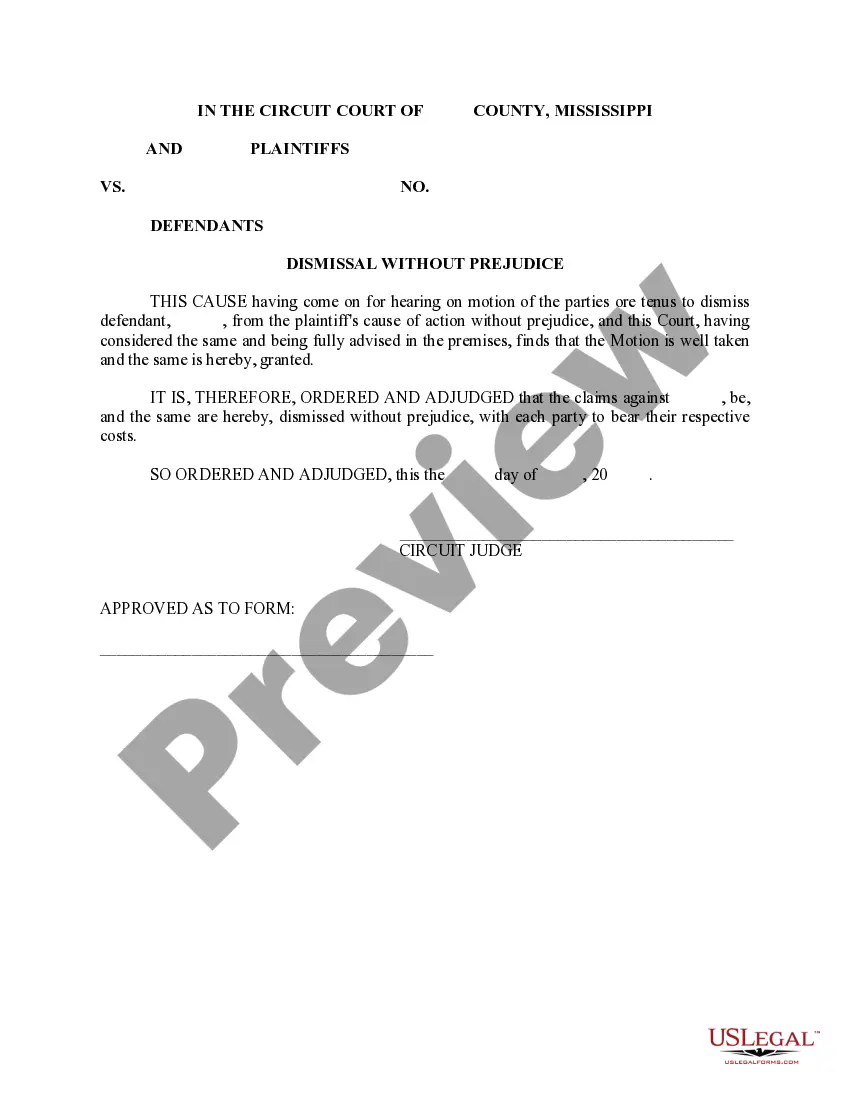
Order imposing stay
Understanding this form
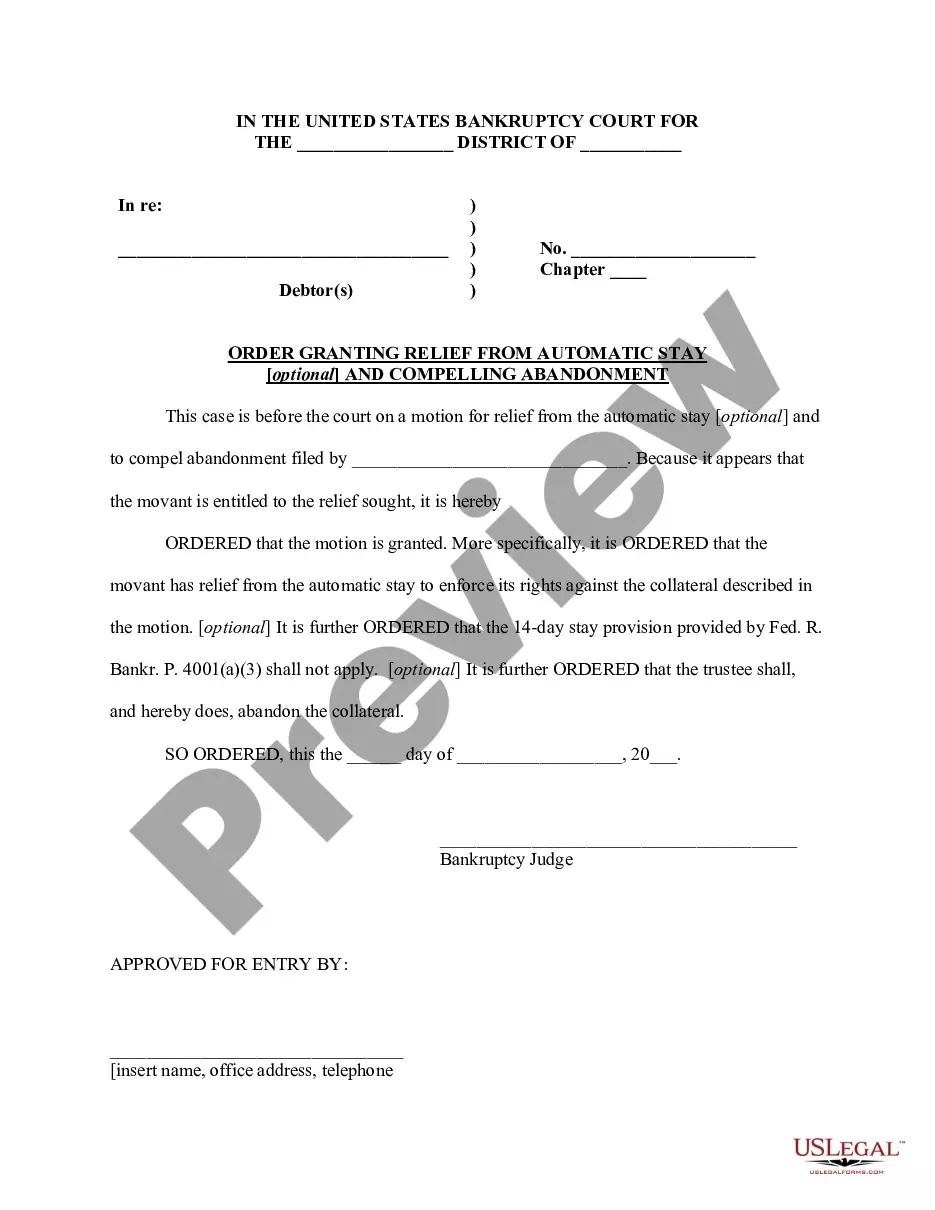
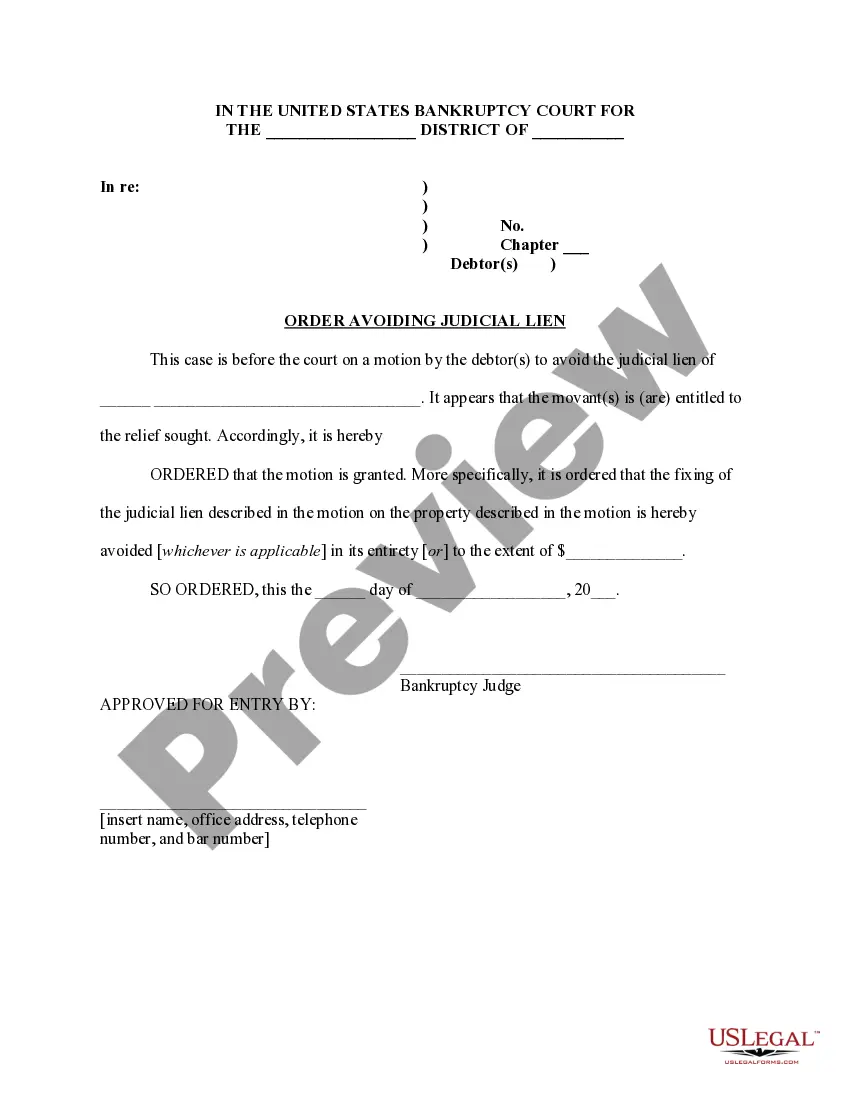
The Order imposing stay is a legal document used in bankruptcy proceedings to officially impose an automatic stay on creditors from pursuing collection actions against a debtor. This form is filed in the United States Bankruptcy Court and differs from similar documents in its specific application of legal protections under 11 U.S.C. § 362(c)(4)(B). It is primarily utilized to ensure that the debtor is provided relief from creditors during the bankruptcy process, highlighting the good faith of the case initiation.
Key components of this form
- Case information: Includes the district, chapter, and case number.
- Findings: A section where the court acknowledges the good faith commencement of the bankruptcy case.
- Stay imposition: The core order stating that the stay becomes effective immediately upon the entry of this order.
- Specific creditor notification: Allows identification of creditors to whom the stay applies, if necessary.
- Judicial approval: Signature and information of the presiding bankruptcy judge.

Situations where this form applies
This form should be used when a debtor wishes to request the court to impose a stay against creditors as they navigate the bankruptcy process. It is applicable in situations where the debtor has previously filed for bankruptcy but needs to demonstrate that the current filing is made in good faith, thereby ensuring protections under federal bankruptcy law.
Who needs this form
- Individuals or entities filing for bankruptcy.
- Debtors who have had prior bankruptcies but need a current court order to stop creditor actions.
- Legal representatives assisting clients with bankruptcy filings.
Completing this form step by step
- Identify the district and chapter of the bankruptcy case at the top of the form.
- Enter the case number assigned by the bankruptcy court.
- Provide details on whether the stay applies to all creditors or specific ones.
- Leave space for the date of the order and the signature of the bankruptcy judge.
- Ensure the attorney's contact information is completed if applicable.
Notarization requirements for this form
This form does not typically require notarization unless specified by local law. It is advisable to check local court rules regarding any additional requirements that may apply to your specific bankruptcy case.
Get your form ready online
Our built-in tools help you complete, sign, share, and store your documents in one place.
Make edits, fill in missing information, and update formatting in US Legal Forms—just like you would in MS Word.
Download a copy, print it, send it by email, or mail it via USPS—whatever works best for your next step.
Sign and collect signatures with our SignNow integration. Send to multiple recipients, set reminders, and more. Go Premium to unlock E-Sign.
If this form requires notarization, complete it online through a secure video call—no need to meet a notary in person or wait for an appointment.
We protect your documents and personal data by following strict security and privacy standards.

Make edits, fill in missing information, and update formatting in US Legal Forms—just like you would in MS Word.

Download a copy, print it, send it by email, or mail it via USPS—whatever works best for your next step.

Sign and collect signatures with our SignNow integration. Send to multiple recipients, set reminders, and more. Go Premium to unlock E-Sign.

If this form requires notarization, complete it online through a secure video call—no need to meet a notary in person or wait for an appointment.

We protect your documents and personal data by following strict security and privacy standards.
Common mistakes to avoid
- Failing to accurately identify the district and chapter of the bankruptcy case.
- Not specifying which creditors are covered by the order when necessary.
- Omitting the bankruptcy judge's signature or date of the order.
Advantages of online completion
- Convenience of downloading and completing the form at your own pace.
- Access to templates created by licensed attorneys, ensuring legal compliance.
- Editability allows users to customize the form to meet their specific needs.
- This order is legally binding once signed by a bankruptcy judge.
- The stay automatically halts most creditor actions, providing immediate relief to the debtor.
- Failure to comply with the stay may result in legal consequences for creditors.
Summary of main points
- The Order imposing stay is essential for protecting debtors from creditor actions during bankruptcy.
- Correct completion of the form is critical to ensuring legal protections under bankruptcy law.
- This form is versatile and can be used in all U.S. states, subject to local requirements.
Looking for another form?
Form popularity
FAQ
Code of Civil Procedure (?CCP?) section 1005 states the amount of time required to give notice of most motions. The moving papers must be personally given to each opposing side at least 21 days before the hearing on the motion, OR mailed to each opposing side at least 26 days before the hearing on the motion.
A stay of proceedings is a ruling by the court in civil and criminal procedure that halts further legal process in a trial or other legal proceeding. The court can subsequently lift the stay and resume proceedings based on events taking place after the stay is ordered.
A ruling by a court to stop or suspend a proceeding or trial temporarily or indefinitely. A court may later lift the stay and continue the proceeding. Some stays are automatic, but others are up to judicial discretion.
2023 California Rules of Court (3) Any opposition must be served and filed within 15 days after the motion is filed. (Subd (a) amended effective January 1, 2007.) (1) The court may rule on a motion at any time after an opposition or other response is filed or the time to oppose has expired.
Any opposition to the motion must be served and filed at least 14 calendar days before the noticed or continued hearing, unless the court for good cause orders otherwise.
Unless otherwise specified in the order, a stay order suspends all proceedings in the action to which it applies. A stay order may be limited by its terms to specified proceedings, orders, motions, or other phases of the action to which the order applies.
Unless otherwise ordered or specifically provided by law, all pretrial motions, accompanied by a memorandum, must be served and filed at least 10 court days, all papers opposing the motion at least 5 court days, and all reply papers at least 2 court days before the time appointed for hearing.
Usually, motions must be filed and served at least 16 court days before a hearing on the motion. Opposing motions must be filed at least 9 court days before the court date and replies are due 5 days before the hearing date. These deadlines also depend on how service is made for each document.