EEO Contractor Agreement
What this document covers
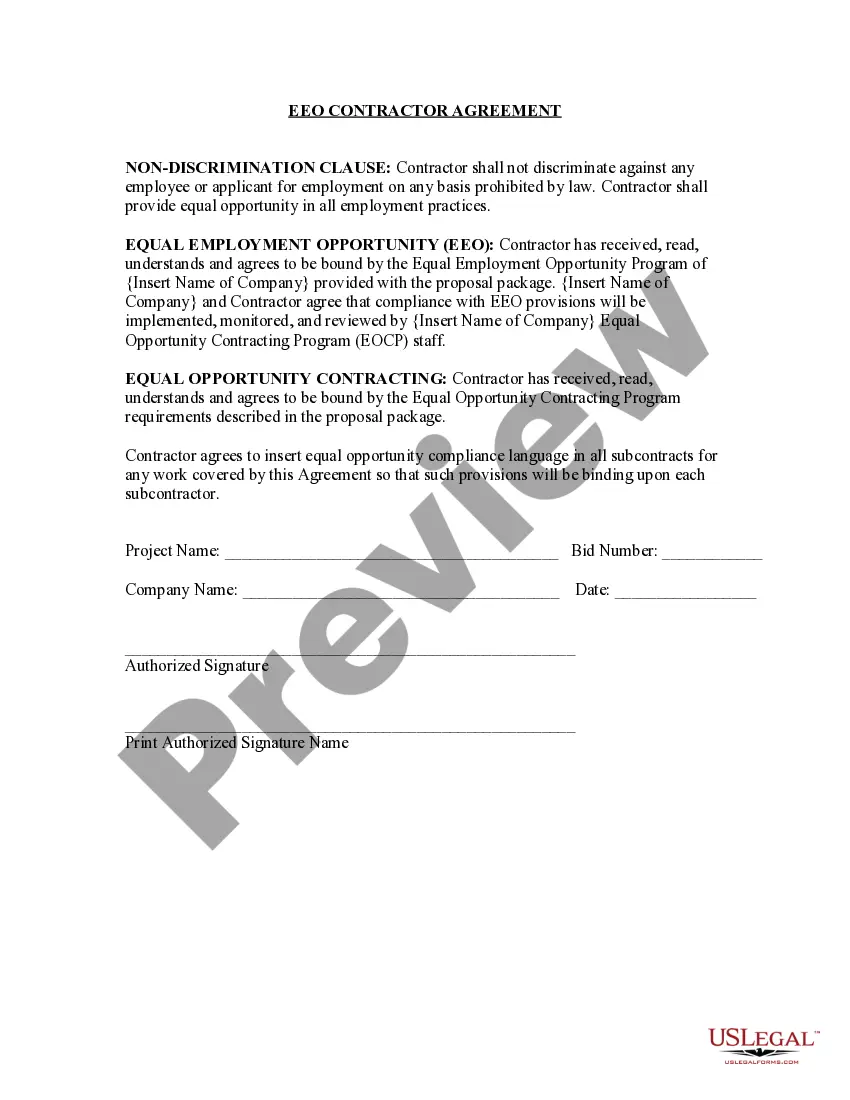
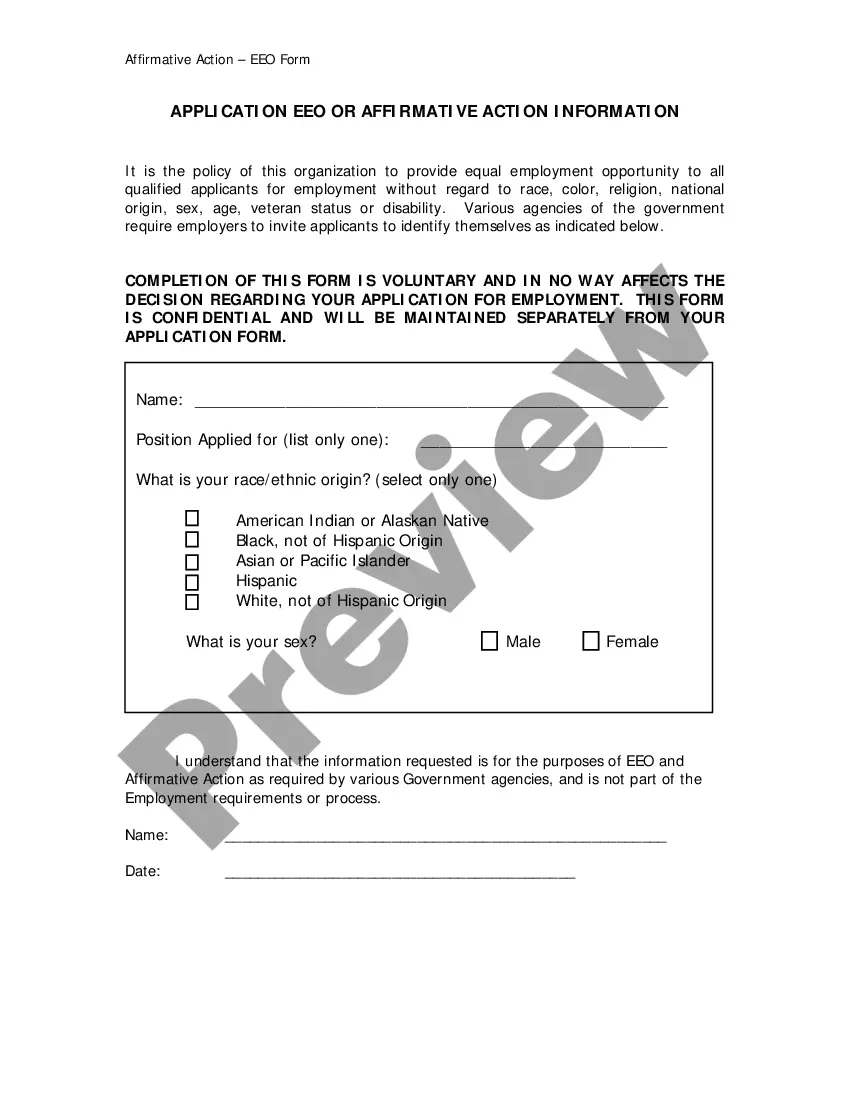
The EEO Contractor Agreement is a legal document designed for contractors to affirm their commitment to equal employment opportunities and non-discrimination in hiring practices. This agreement specifically addresses various employment practices, ensuring compliance with Equal Employment Opportunity (EEO) standards. Unlike other employment forms, this agreement centers on the obligations of contractors regarding equal opportunity in all aspects of employment, making it essential for businesses working with government contracts or those wanting to uphold high standards of workplace equality.
What’s included in this form
- Non-discrimination clause: States that contractors must not engage in discriminatory practices in hiring or employment.
- Equal Employment Opportunity acknowledgment: Confirms the contractor's understanding of and compliance with the EEO Program of the hiring company.
- Equal Opportunity Contracting agreement: Mandates contractors to include EEO language in all related subcontracts.
- Identification fields: Allows parties to list the project name, bid number, company name, date, and authorized signature.
When to use this form
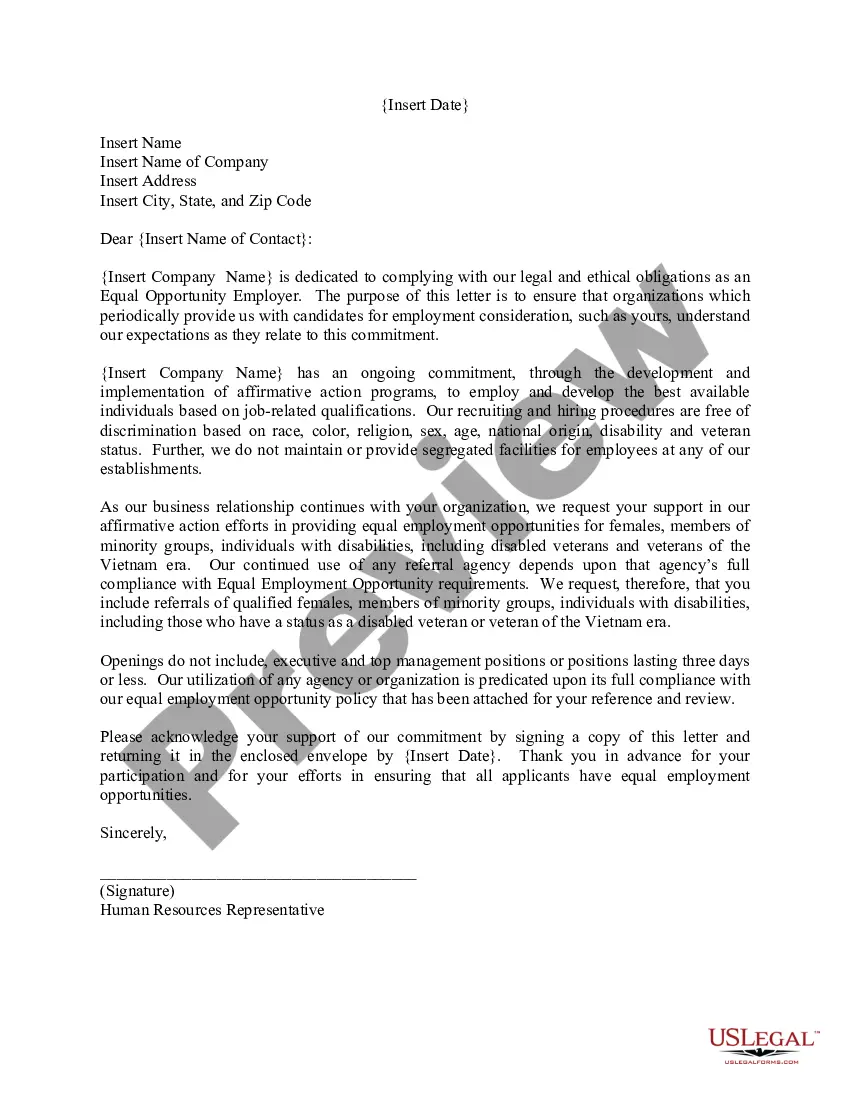
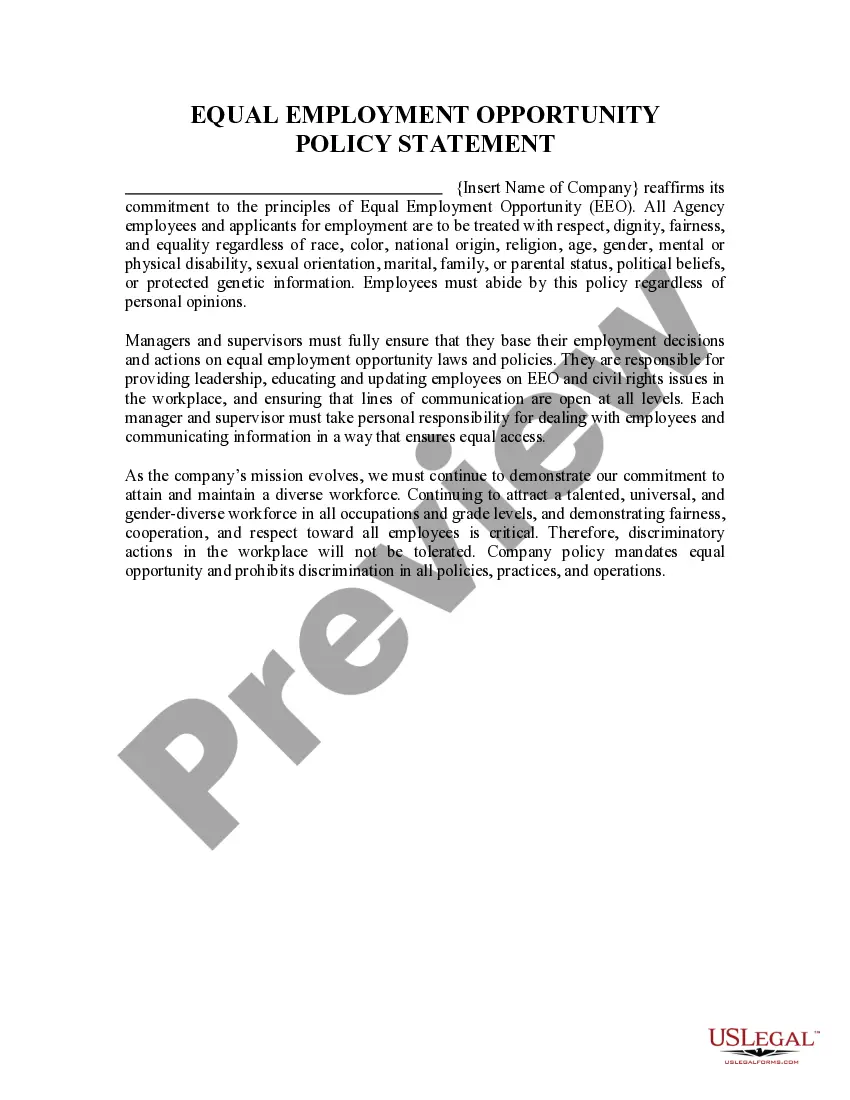
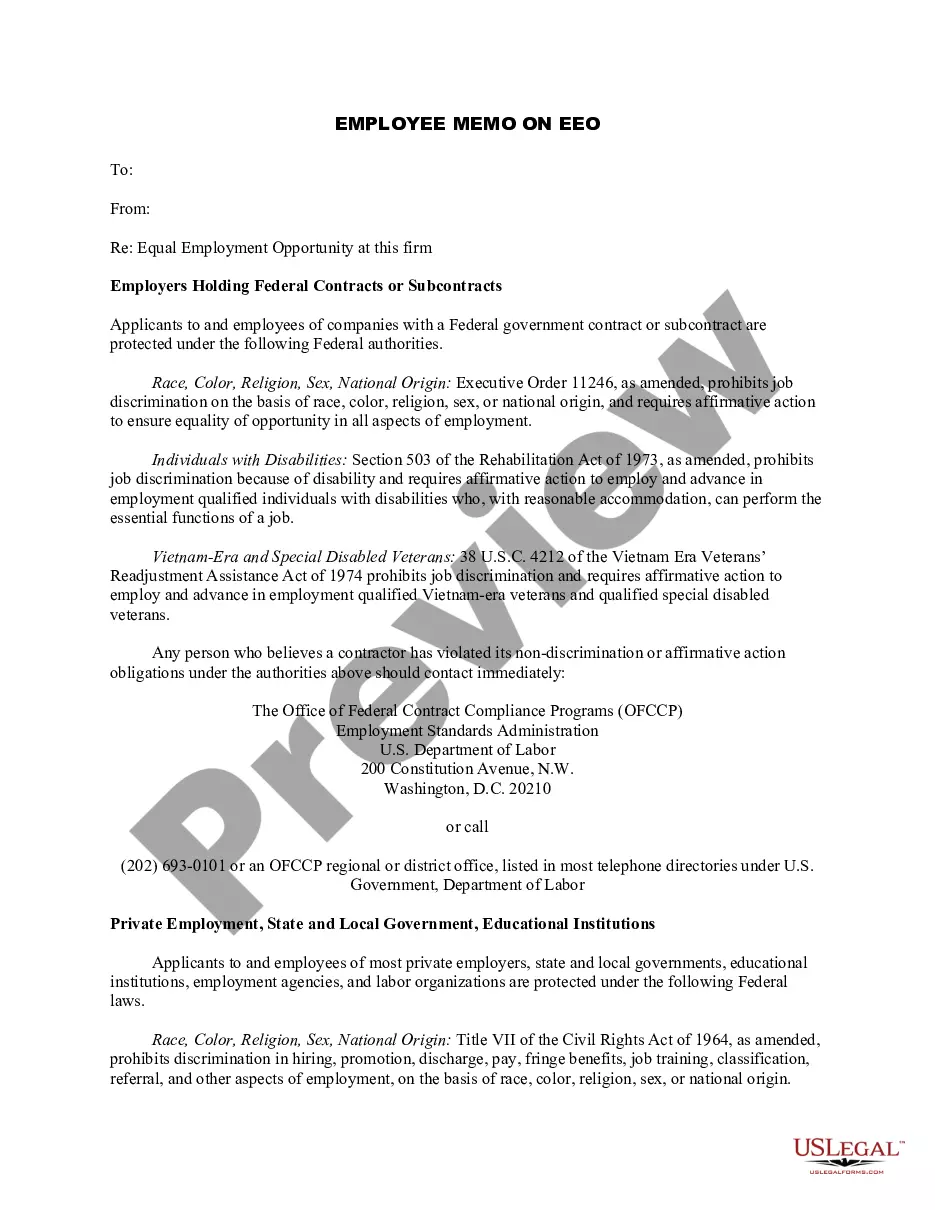
This form is used when a business hires contractors to ensure that their employment practices align with equal opportunity laws. It is particularly necessary when applying for government contracts, as compliance with EEO guidelines is often a requirement. Businesses should use this agreement to promote a fair and inclusive workplace and to protect themselves against potential legal disputes related to employment discrimination.
Who should use this form
Individuals or entities who should consider using the EEO Contractor Agreement include:
- Employers seeking to hire contractors for projects.
- Businesses applying for government contracts.
- Contractors wanting to demonstrate their commitment to equal opportunity employment.
- Human resource professionals responsible for compliance in hiring practices.
Completing this form step by step
- Identify the parties involved by inserting the contractor's name and the hiring company's name.
- Specify the project name and bid number in the designated fields.
- Enter the date of the agreement.
- Obtain an authorized signature from the contractor and print the authorized signer's name.
- Review all clauses to ensure understanding and compliance before signing.
Does this document require notarization?
This form does not typically require notarization unless specified by local law. However, ensuring all parties follow proper signing protocols helps maintain the form's legality and enforceability.
Get your form ready online
Our built-in tools help you complete, sign, share, and store your documents in one place.
Make edits, fill in missing information, and update formatting in US Legal Forms—just like you would in MS Word.
Download a copy, print it, send it by email, or mail it via USPS—whatever works best for your next step.
Sign and collect signatures with our SignNow integration. Send to multiple recipients, set reminders, and more. Go Premium to unlock E-Sign.
If this form requires notarization, complete it online through a secure video call—no need to meet a notary in person or wait for an appointment.
We protect your documents and personal data by following strict security and privacy standards.

Make edits, fill in missing information, and update formatting in US Legal Forms—just like you would in MS Word.

Download a copy, print it, send it by email, or mail it via USPS—whatever works best for your next step.

Sign and collect signatures with our SignNow integration. Send to multiple recipients, set reminders, and more. Go Premium to unlock E-Sign.

If this form requires notarization, complete it online through a secure video call—no need to meet a notary in person or wait for an appointment.

We protect your documents and personal data by following strict security and privacy standards.
Typical mistakes to avoid
- Failing to include all required signatures.
- Neglecting to review state-specific EEO regulations that may affect the agreement.
- Assuming a verbal agreement is sufficient; always ensure written documentation.
Why complete this form online
- Easy access to a legally vetted document prepared by licensed attorneys.
- Quick and convenient downloading, allowing immediate use.
- Editable fields ensure you can personalize the agreement to fit your specific needs.
Legal use & context
- The EEO Contractor Agreement helps establish a legal framework for employment discrimination compliance.
- Utilizing this form can enhance a companyâs reputation for promoting diversity and inclusion in hiring practices.
- Failure to adhere to the agreement may result in legal consequences, reinforcing the importance of signing this document.
Key takeaways
- This form ensures compliance with EEO laws in contractor agreements.
- It is suitable for businesses of any size hiring external contractors.
- Proper completion and use of this form can promote fair labor practices.
Looking for another form?
Form popularity
FAQ
The Equal Employment Opportunity Commission (EEOC) typically has no jurisdiction over complaints of discrimination filed by contractors.Contracted employees who feel their company has discriminated against them can file a complaint with OFCCP.
The U.S. Equal Employment Opportunity Commission notes that the anti-discrimination laws that it enforces don't apply to independent contractors, as well as those working for employment agencies and in various other situations.The federal agency offers more guidelines here and on its website, eeoc.gov.
As an independent contractor, California's labor laws do not protect you from discrimination. However, if you are misclassified as a 1099 independent contractor, then you have a case against an employer who terminates you on a discriminatory basis.
An EEO-1 report (equal employment opportunity) is an annual compliance survey certain employers must fill out. The EEO-1 report is also known as a Standard Form 100.The survey provides a demographic breakdown of the employer's workforce and requires company employment data broken down by: Race/ethnicity. Gender.
An Employment Information Report (EEO1), also known as a Standard Form 100, is filed annually with the EEO-1 Joint Reporting Committee and provides a demographic breakdown of the employer's work force by race and gender.
The Equal Employment Opportunity (EEO) rules and regulations applicable to the federal workforce do not usually transfer to contracted employees. The Equal Employment Opportunity Commission (EEOC) typically has no jurisdiction over complaints of discrimination filed by contractors.
EEO is for civilian matters, and EO is for military matters. The EEO program provides services to current civilian employees, former employees, and applicants for employment in accordance with Army Regulation 690-600.In short, EEO and EO are independent programs governed by different regulations.
Under the laws enforced by EEOC, it is illegal to discriminate against someone (applicant or employee) because of that person's race, color, religion, sex (including gender identity, sexual orientation, and pregnancy), national origin, age (40 or older), disability or genetic information.
Deciding Who Is Covered People who are not employed by the employer, such as independent contractors, are not covered by the anti-discrimination laws.