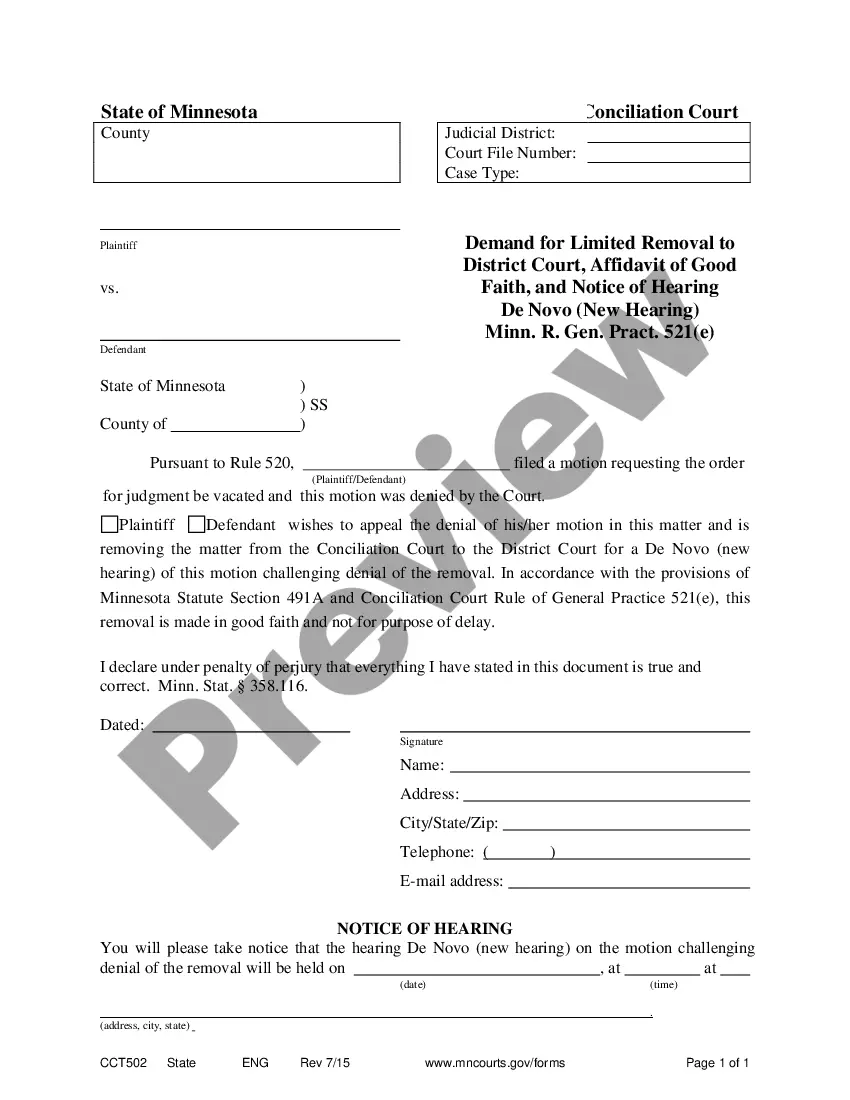
Employee Memo on EEO
What is this form?
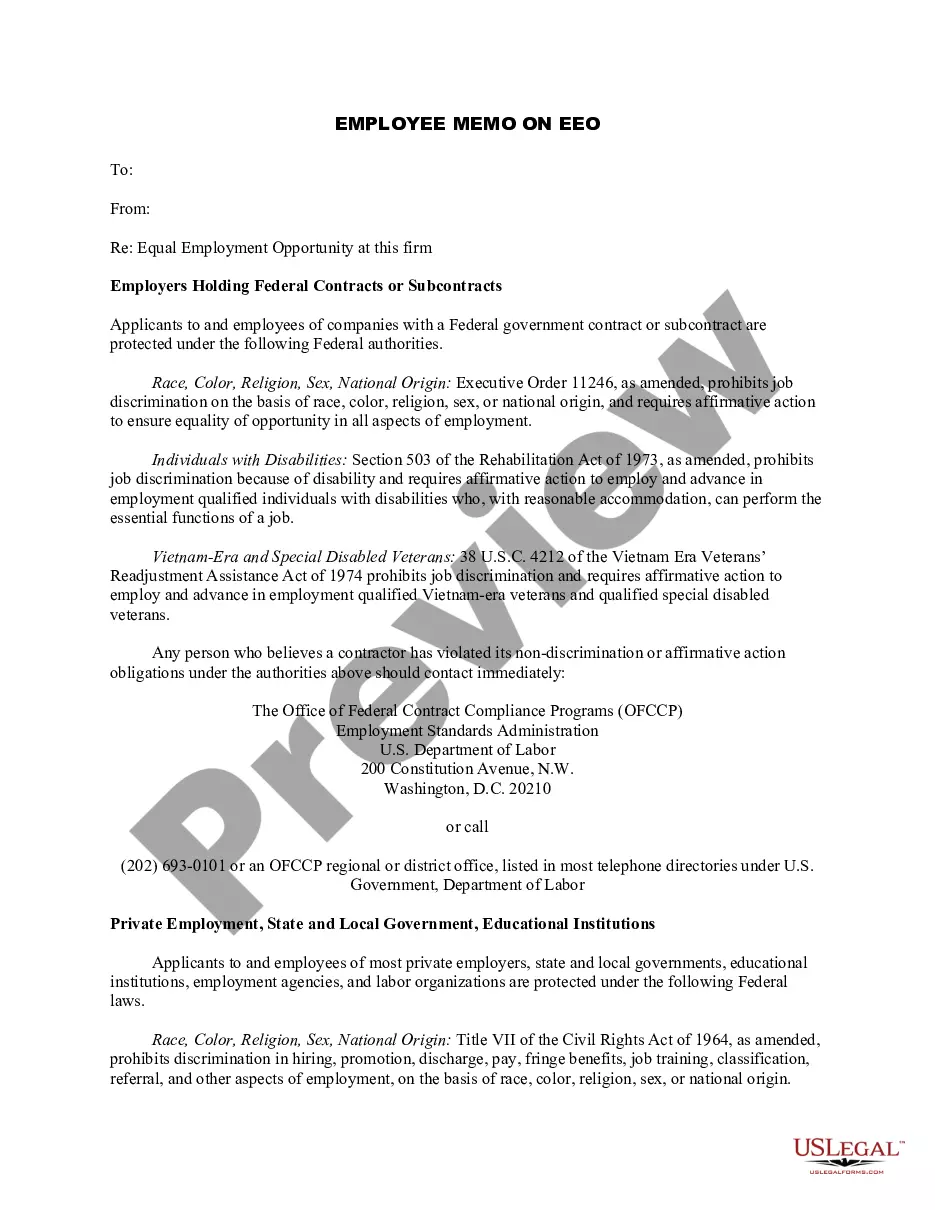
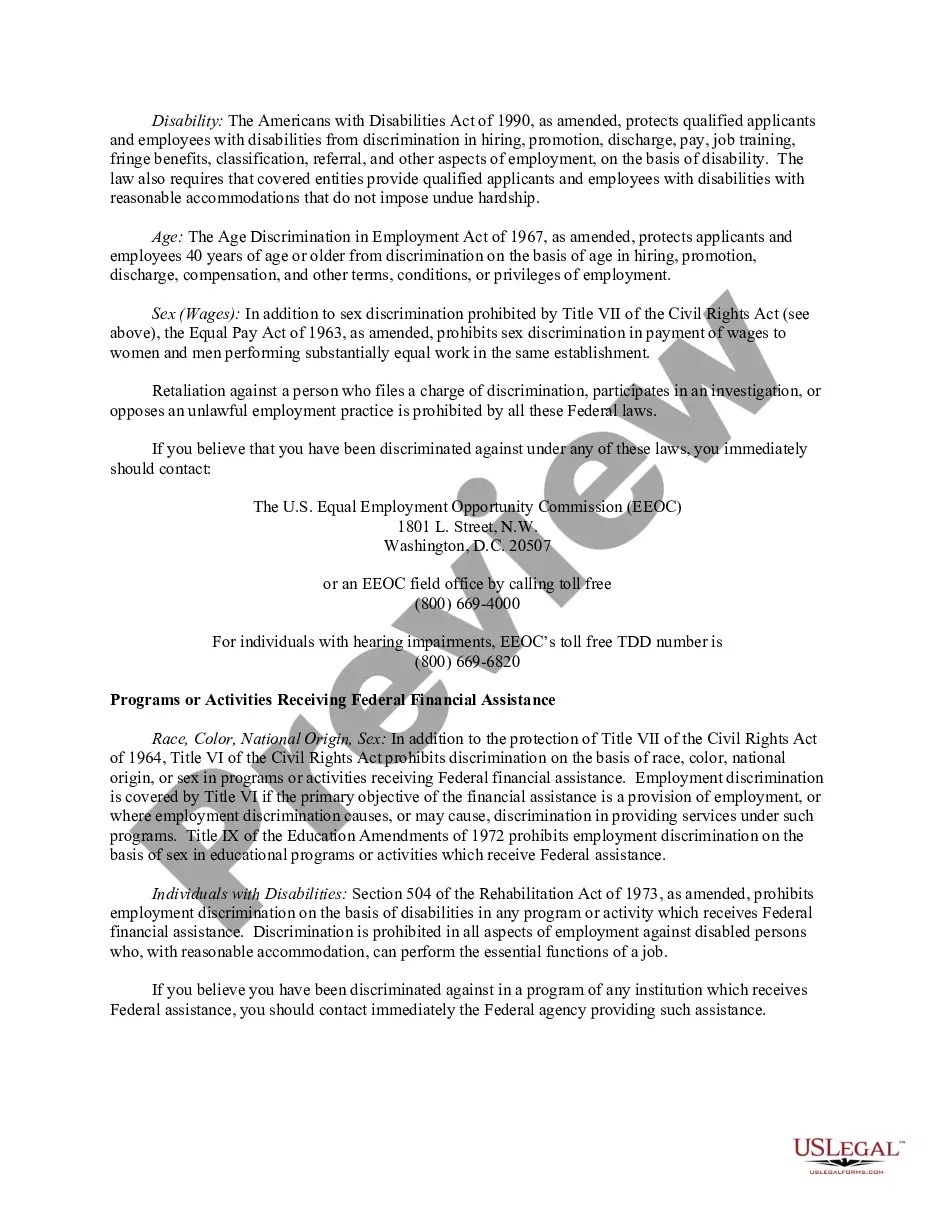
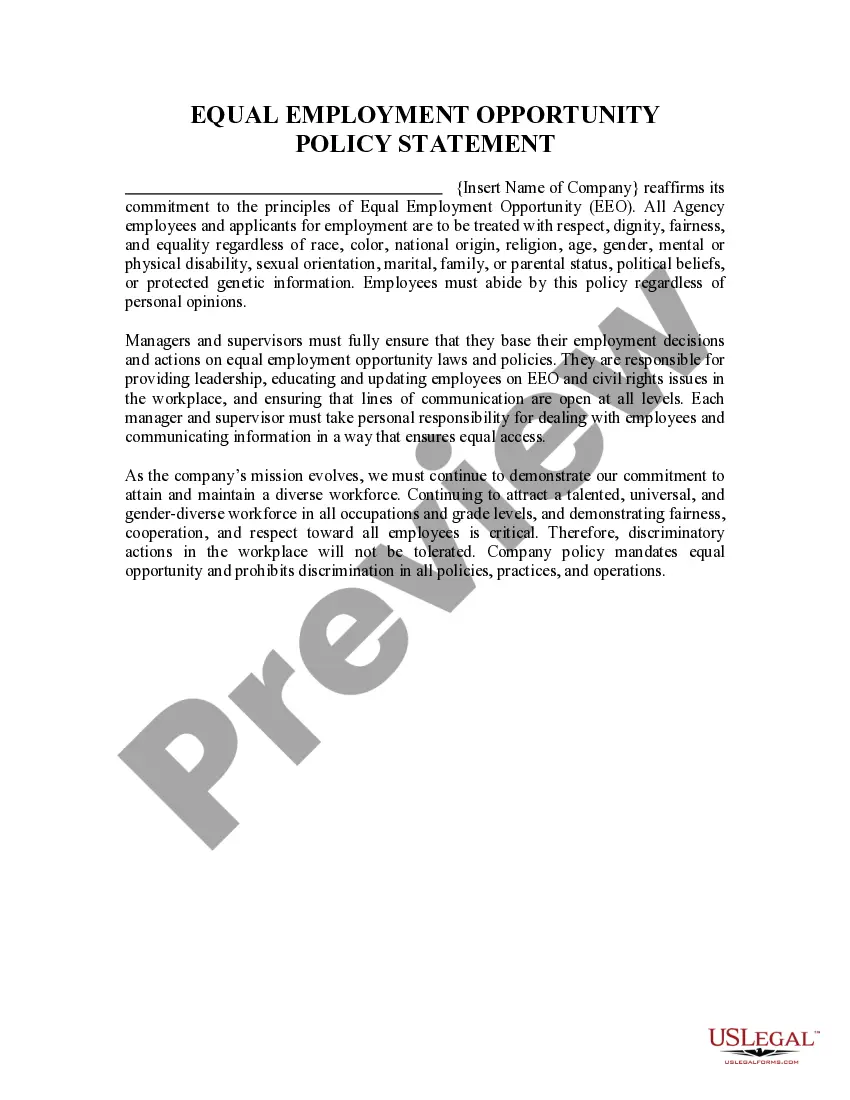
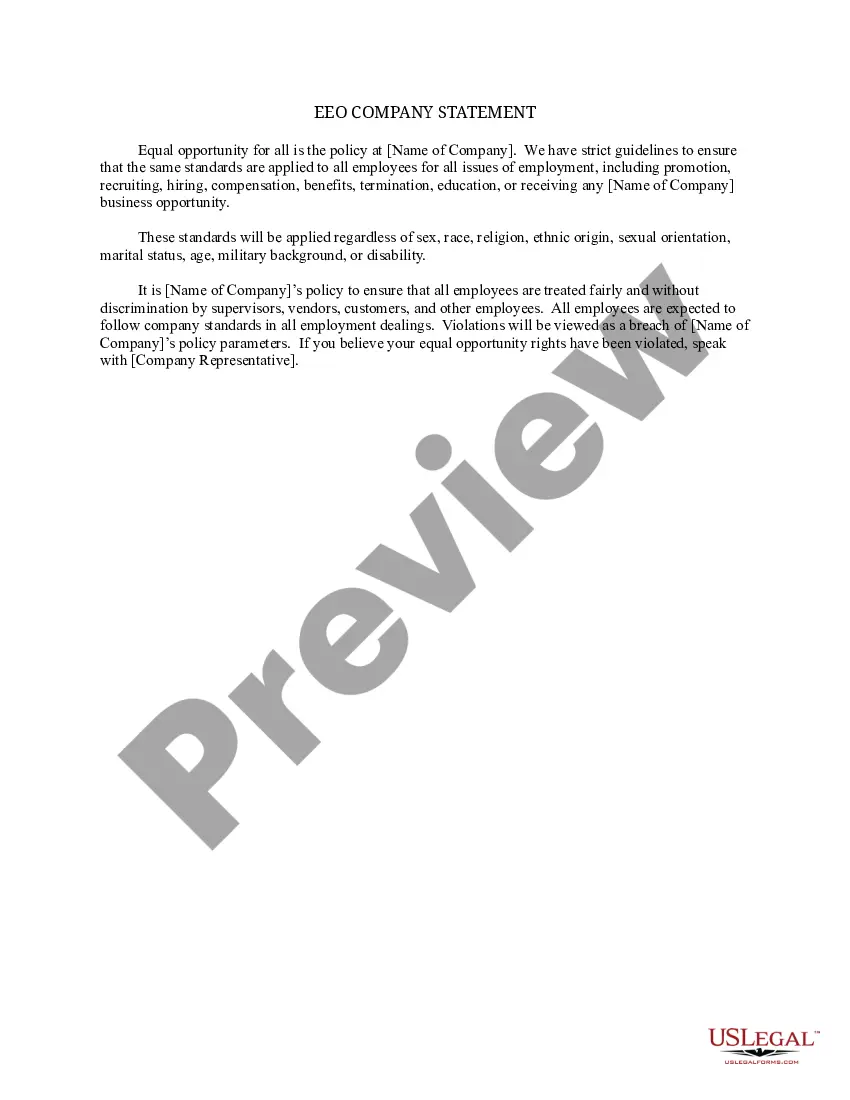
The Employee Memo on Equal Employment Opportunity (EEO) is an essential document that informs employees about their rights and protections under federal anti-discrimination laws. This memo serves as a guide for employees working in various sectors, including federal and private organizations, outlining the applicable laws that protect them against discrimination based on factors such as race, color, religion, sex, national origin, age, and disability. It differs from similar forms by providing specific references to the laws and regulations enforced by the Equal Employment Opportunity Commission (EEOC) and other pertinent authorities, ensuring employees are aware of their rights and the recourse available to them.
Key components of this form
- Identification of the memo's sender and recipient.
- Overview of relevant federal anti-discrimination laws.
- Details regarding protections for employees under federal contracts.
- Information on rights concerning disabilities and veteran status.
- Instructions on how to report perceived discrimination.

When to use this form
This employee memo should be used when organizations need to educate their staff about their rights under EEO laws. It is particularly important during onboarding processes or when there are changes to employment policies that may affect anti-discrimination practices. Additionally, it can be requested by employees who may not be aware of their rights or who need to clarify the organization's commitment to a discrimination-free workplace.
Who can use this document
- Employers or human resource managers in federal, private, and educational institutions.
- Employees who need to understand their rights and protections under EEO laws.
- Organizations looking to enhance their compliance with anti-discrimination laws.
How to complete this form
- Identify the sender (employer) and recipient (employee) of the memo.
- Clearly state the purpose of the memo regarding Equal Employment Opportunity.
- Include information on the specific laws that protect the employees, ensuring to reference relevant sections.
- Provide contact information for reporting discrimination to internal or external authorities.
- Ensure all employees receive and acknowledge the memo, keeping records of distribution.
Notarization guidance
Notarization is not commonly needed for this form. However, certain documents or local rules may make it necessary. Our notarization service, powered by Notarize, allows you to finalize it securely online anytime, day or night.
Get your form ready online
Our built-in tools help you complete, sign, share, and store your documents in one place.
Make edits, fill in missing information, and update formatting in US Legal Forms—just like you would in MS Word.
Download a copy, print it, send it by email, or mail it via USPS—whatever works best for your next step.
Sign and collect signatures with our SignNow integration. Send to multiple recipients, set reminders, and more. Go Premium to unlock E-Sign.
If this form requires notarization, complete it online through a secure video call—no need to meet a notary in person or wait for an appointment.
We protect your documents and personal data by following strict security and privacy standards.

Make edits, fill in missing information, and update formatting in US Legal Forms—just like you would in MS Word.

Download a copy, print it, send it by email, or mail it via USPS—whatever works best for your next step.

Sign and collect signatures with our SignNow integration. Send to multiple recipients, set reminders, and more. Go Premium to unlock E-Sign.

If this form requires notarization, complete it online through a secure video call—no need to meet a notary in person or wait for an appointment.

We protect your documents and personal data by following strict security and privacy standards.
Common mistakes
- Failing to include all relevant federal laws that protect employees, leading to inadequate communication.
- Not distributing the memo to all employees, which can result in some being unaware of their rights.
- Using ambiguous language that may confuse employees about their protections and rights.
Why use this form online
- Easy access for employees to understand their rights without needing a legal expert.
- Ability to update the memo quickly with changes to laws without significant overhead costs.
- Increased transparency within the organization regarding anti-discrimination policies.
Summary of main points
- The Employee Memo on EEO educates employees about their rights under federal law.
- It is crucial for employers to ensure all staff are aware of these rights to maintain compliance and foster an inclusive workplace.
- Regular distribution and acknowledgment can prevent discrimination issues within the organization.
Looking for another form?



Form popularity
FAQ
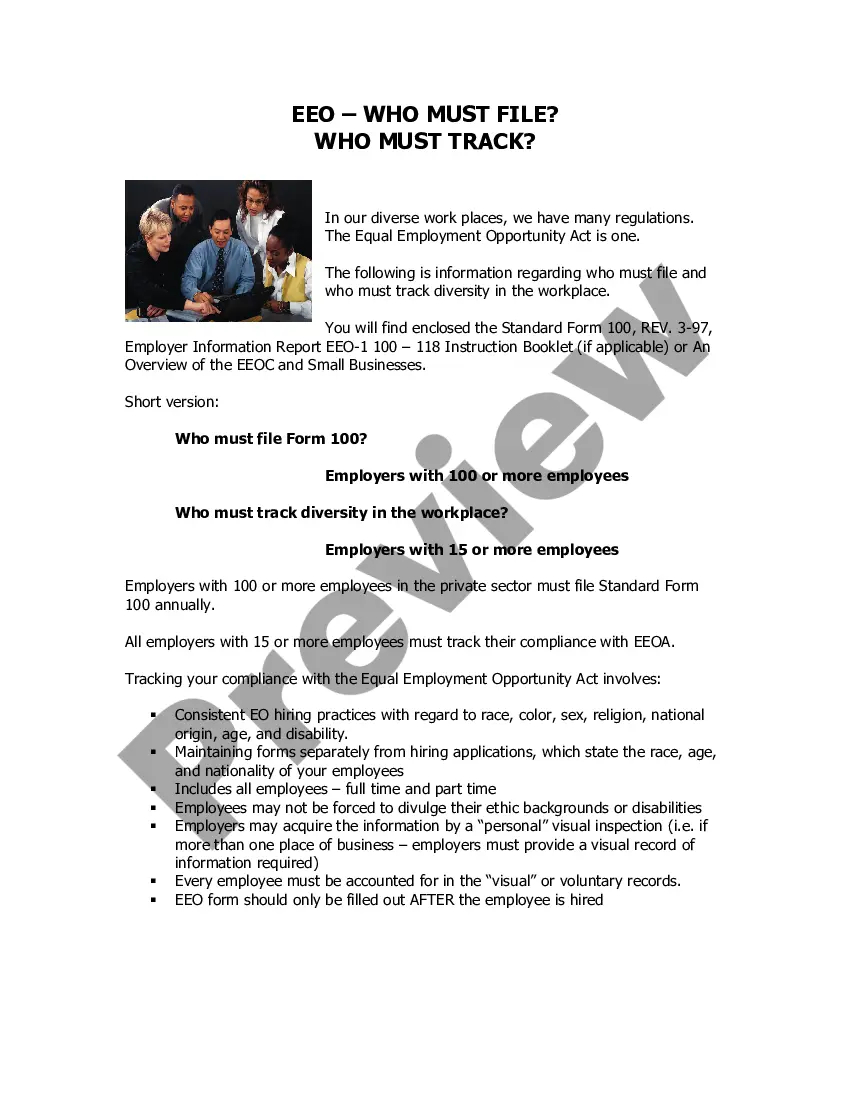
The act requires that employers report on the racial/ethnic and gender composition of their workforce by specific job categories, referred to as component 1 data.EEO-1 data reports must include employment data from a "workforce snapshot period," which is any pay period from October through December.
Be specific. Make sure that your statement emphasizes workplace diversity. Mention which employment practices your EOE statement applies to. State that you make hiring decisions based on merit. Link to your EEO policy. Facebook. Apple. Tesla.
The act requires that employers report on the racial/ethnic and gender composition of their workforce by specific job categories, referred to as component 1 data. In 2019, certain employers were also required to report hours worked and pay data to the EEOC, referred to as component 2 data.
EEO-1 data reports must include employment data from a "workforce snapshot period," which is any pay period from October through December. When counting employees to determine if an employer is required to submit EEO-1 data, only employees on the payroll during the workforce snapshot period are counted.
Step 1: Determine whether you need to file an EEO-1 report. Step 2: Learn the basics of the EEO statement. Step 3: Register as a first-time filer. Step 4: Collect the data for your EEO-1 report. Step 5: Prepare and submit the EEO-1 report. Step 6: Track changes in EEO-1 reporting requirements.
Yes, in the US government contractors report this information to the government to enforce equal opportunity laws. You are not REQUIRED to fill it out, but that is how they report statistics.
To comply with EEO requirements, you must treat all people fairly regardless of national origin, race, religion, color, sex (including pregnancy and sexual orientation), disability or genetic information.
What workers are covered by the EEO-1 report?The employer should not report temporary employees or casual employees. Partners are not considered employees for EEO-1 reporting purposes, so long as those partners are not considered employees for purposes of the employer's social security taxes.