Letter: County Recording
What is this form?
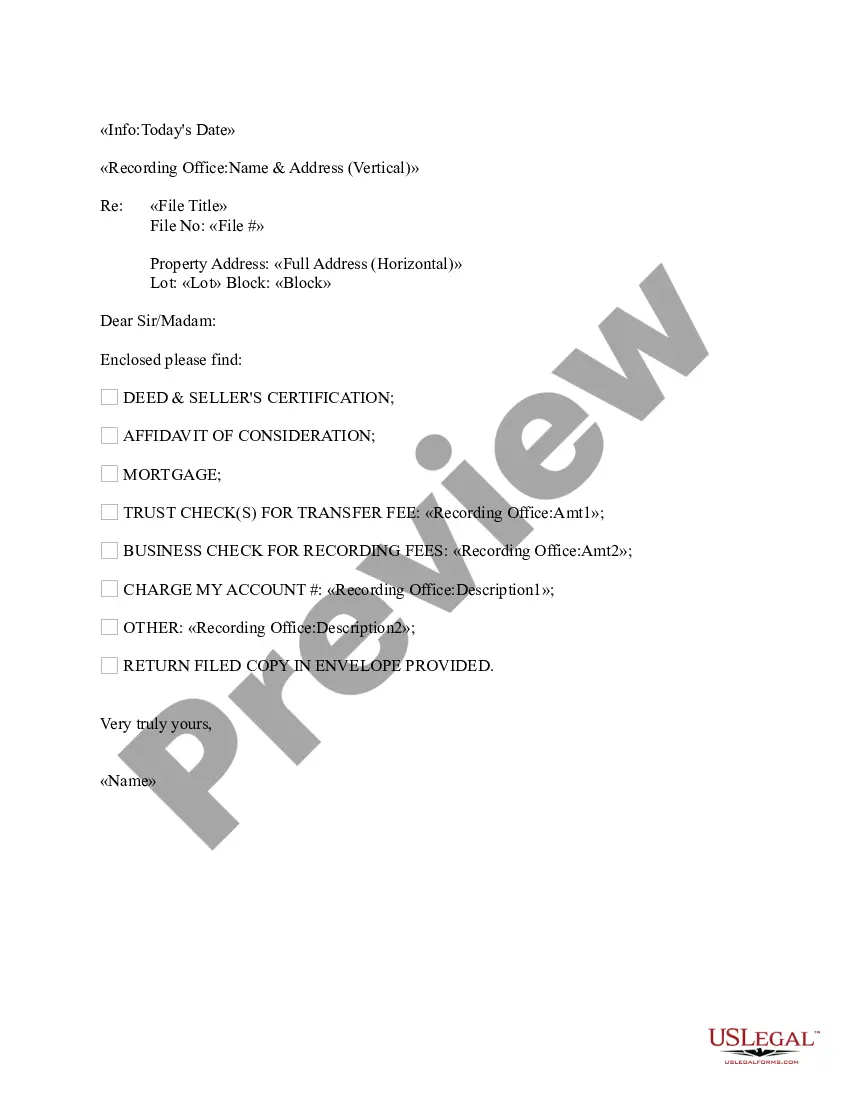
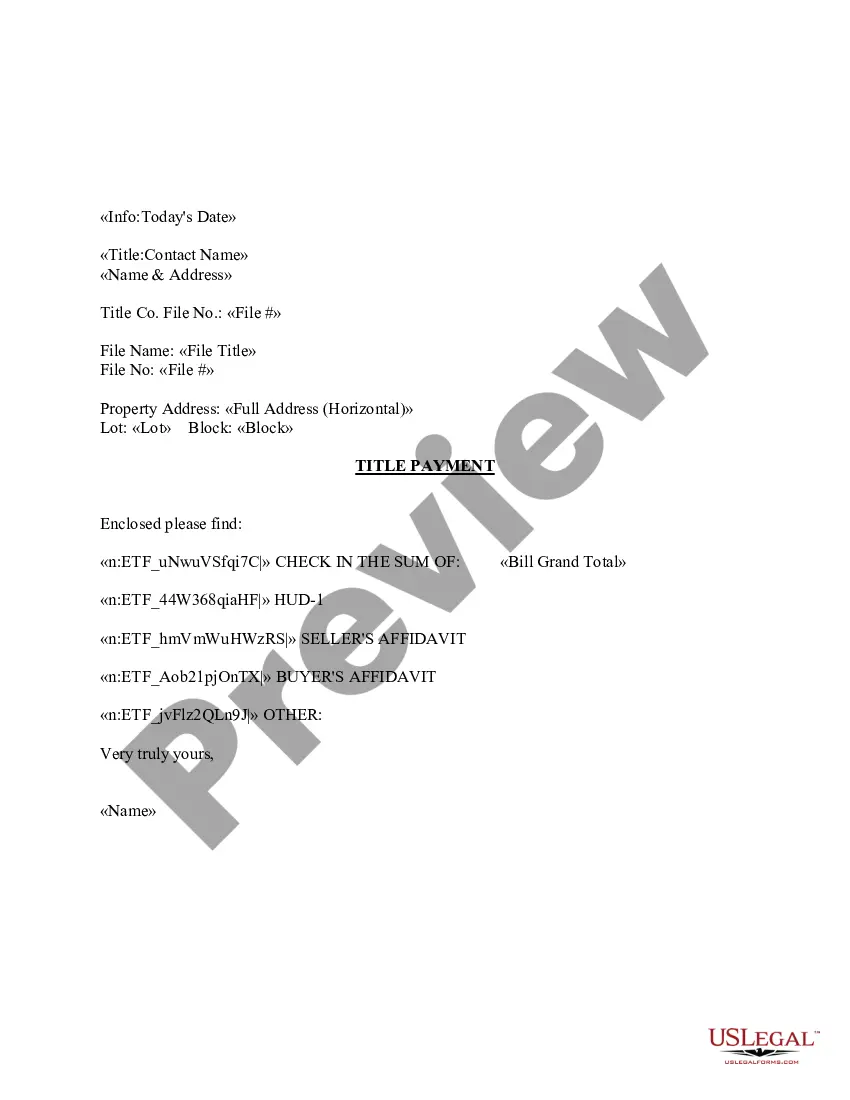
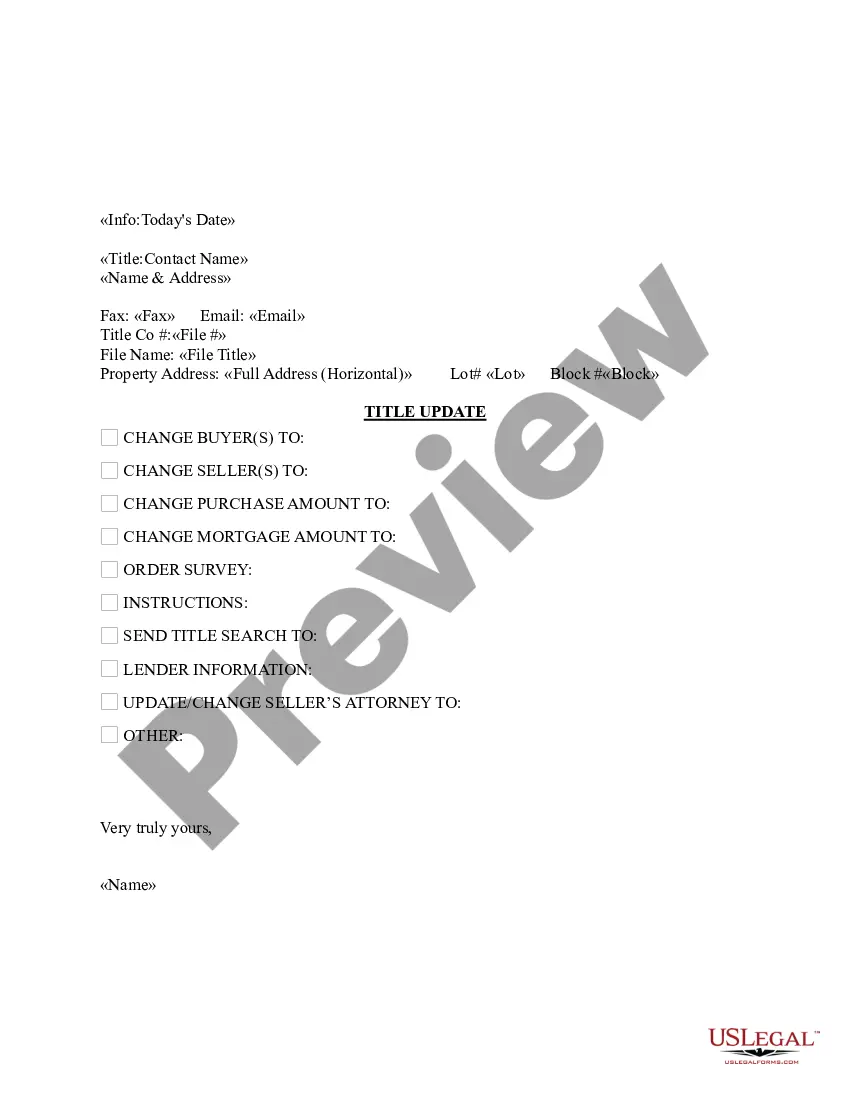
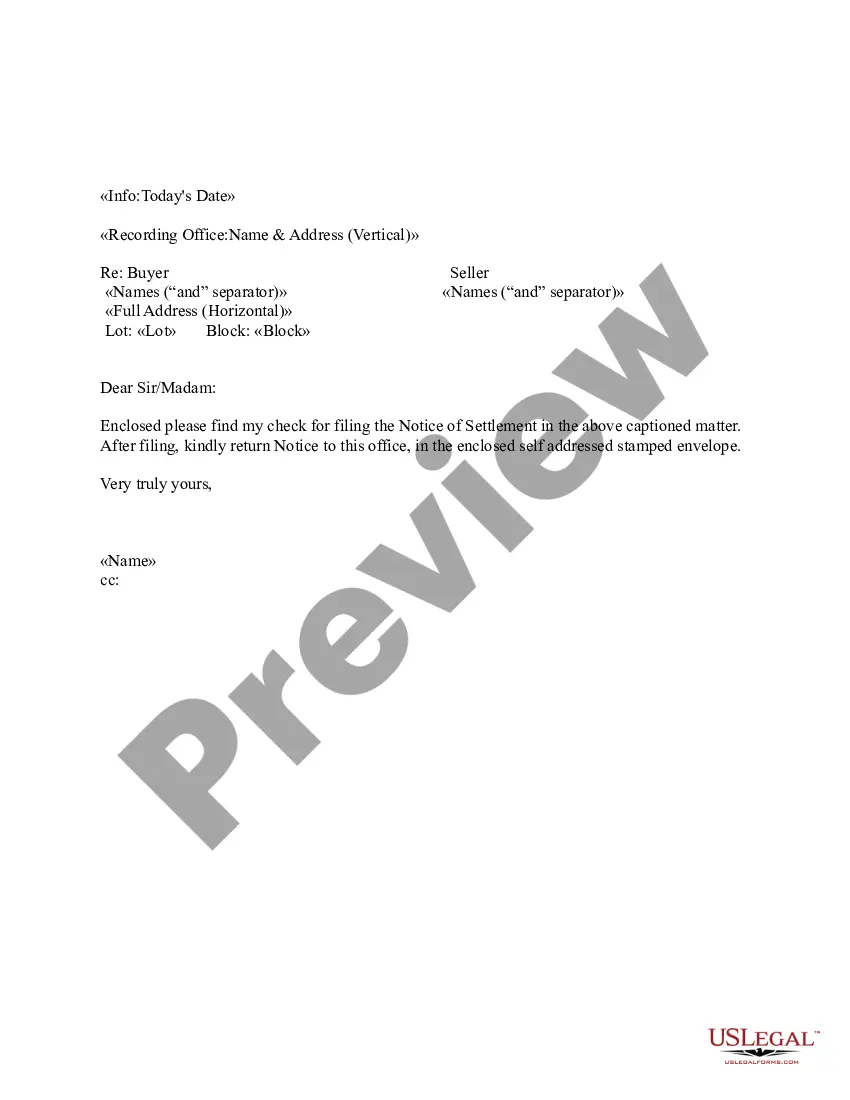
The Letter: County Recording is a formal document used to notify the local county recording office about the submission of specific documents related to property transactions. This letter can include various enclosures such as deeds, seller certifications, or affidavits. Unlike other forms, this letter is tailored for communication with recording offices and can be customized to meet specific needs.
Key components of this form
- Date of the letter
- Recording office name and address
- File title and number
- Property address details
- List of enclosed documents
- Signature line for the sender
When to use this form
This letter should be utilized whenever you need to formally inform your countyâs recording office of submitted documents for property transactions. It is commonly used when transferring ownership or updating records, ensuring that all necessary paperwork is properly acknowledged by the county office.
Who this form is for
- Property sellers and buyers
- Real estate agents and brokers
- Lawyers handling property transactions
- Anyone filing documents with the county recording office
Instructions for completing this form
- Choose the correct recording office and provide its full name and address.
- Fill in your date of writing the letter.
- Input the appropriate property address and file details.
- List all enclosed documents that you are submitting for recording.
- Sign the letter to validate your submission.
Is notarization required?
This form does not typically require notarization unless specified by local law. Always check your specific jurisdiction to confirm the requirements related to notarization before submission.
Get your form ready online
Our built-in tools help you complete, sign, share, and store your documents in one place.
Make edits, fill in missing information, and update formatting in US Legal Forms—just like you would in MS Word.
Download a copy, print it, send it by email, or mail it via USPS—whatever works best for your next step.
Sign and collect signatures with our SignNow integration. Send to multiple recipients, set reminders, and more. Go Premium to unlock E-Sign.
If this form requires notarization, complete it online through a secure video call—no need to meet a notary in person or wait for an appointment.
We protect your documents and personal data by following strict security and privacy standards.

Make edits, fill in missing information, and update formatting in US Legal Forms—just like you would in MS Word.

Download a copy, print it, send it by email, or mail it via USPS—whatever works best for your next step.

Sign and collect signatures with our SignNow integration. Send to multiple recipients, set reminders, and more. Go Premium to unlock E-Sign.

If this form requires notarization, complete it online through a secure video call—no need to meet a notary in person or wait for an appointment.

We protect your documents and personal data by following strict security and privacy standards.
Common mistakes to avoid
- Forgetting to include the date of the letter.
- Not clearly listing all enclosed documents.
- Providing incorrect or incomplete information about the recording office.
- Failing to sign the letter before submission.
Why use this form online
- Easy customization to suit your specific needs.
- Convenient access to download and print at your convenience.
- Reliability ensured by attorney-drafted templates.
- Time-saving compared to gathering forms from multiple sources.
Looking for another form?
Form popularity
FAQ
Abstracts of title and title insurance commitments are fundamentally different in the information they provide and in their uses. A title commitment provides the foundation for the issuance of an indemnity contract, while an abstract provides documents that affect title to property in chronological order.
A typical recording fee is $81.00 for the first page and $5.00 for each additional page.
Abstract vs. Torrens properties have a Certificate of Title that gives conclusive proof of ownership ? with some exceptions. It consolidates records into a single document. Most property in Dakota County is Abstract property, but owners may convert property from Abstract to Torrens through land registration.
With the "abstract system" an abstract is evidence of title. In the "Torrens system" the certificate of title is the title. In Minnesota the County Recorder is the Registrar of Titles. The Registrar is an arm of the District Court and under its control.
Torrens is a system for registration of land under which, upon the landowner's application, the Court may, after appropriate proceedings, direct the issuance of a certificate of title. The Certificate of Title is kept in the office of the Registrar of Titles.
Property owners may request a free electronic copy of their deed and certificate of title without the need for a paid subscription by emailing us at recordsrequest@hennepin.us.
Minnesota Real Estate Titles ? Title Ownership Evidence All Minnesota real property offers one of two types of title ownership evidence: The Abstract Property form of title evidence; or. The Registered Property form of title evidence ? the Torrens Property Certificate of Title.
If you lose or misplace the original deed, you may obtain a certified copy from the County Recorder or Registrar of Titles in the county where the property is located. A certified copy of the deed may be recorded in any county with the same force and effect that the original deed would have if it were so recorded.