Sample Opt Out Disclosure
Understanding this form
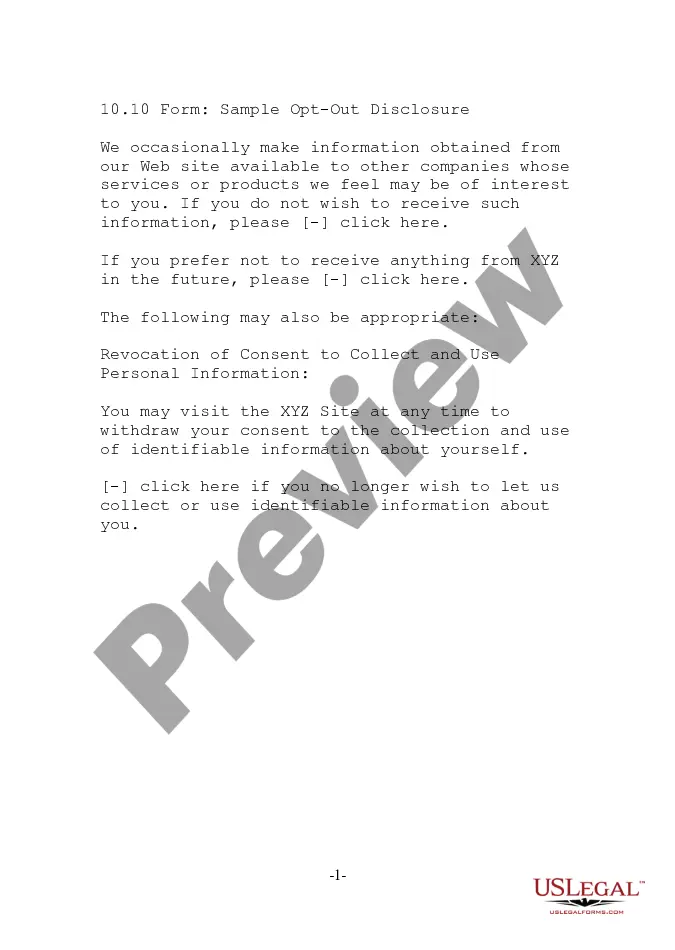
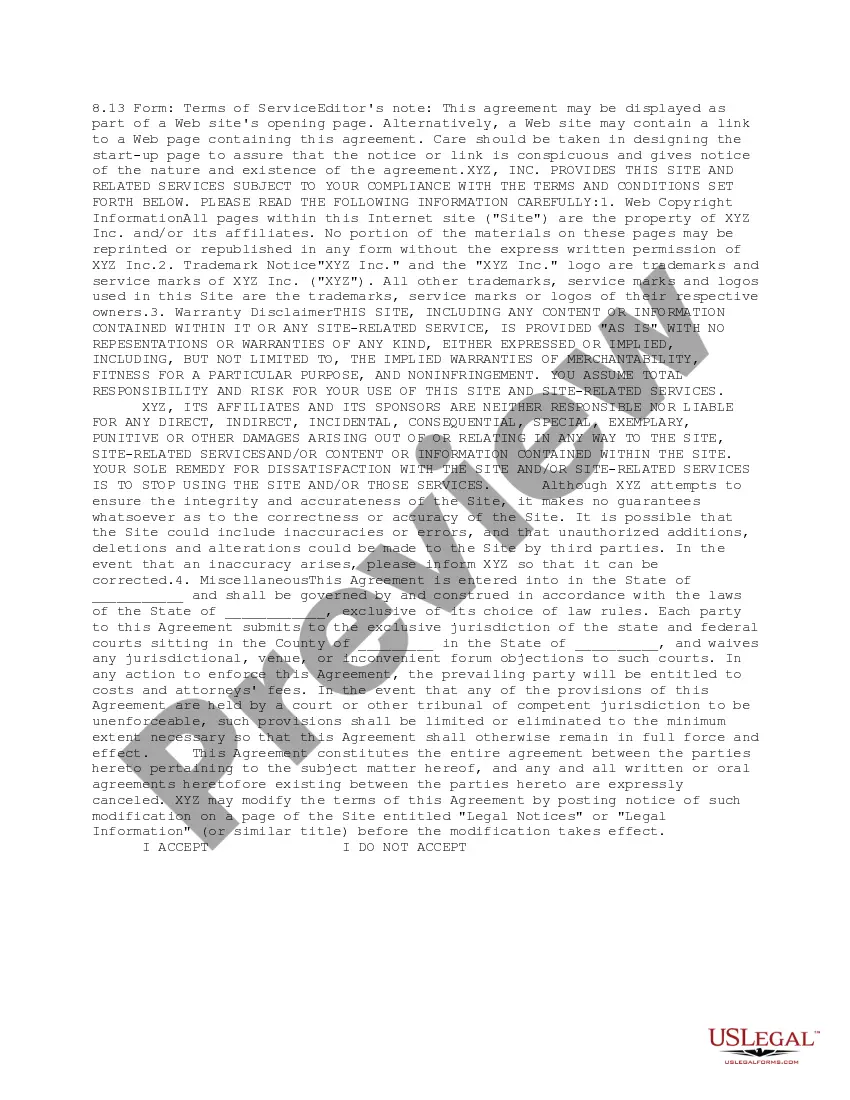
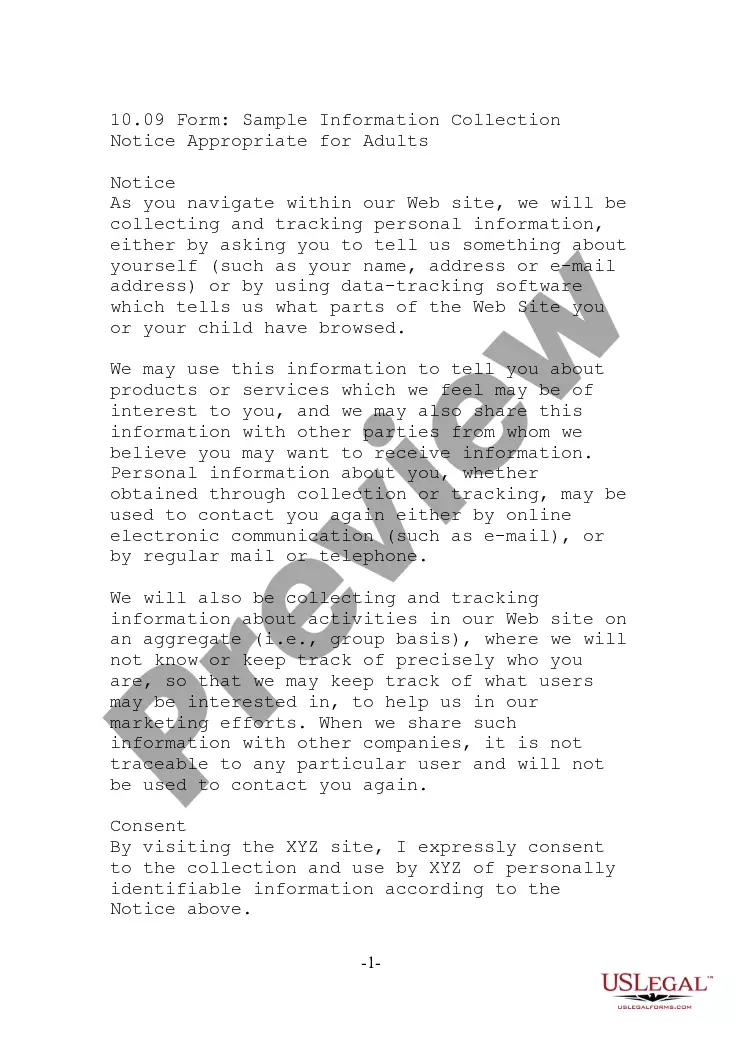
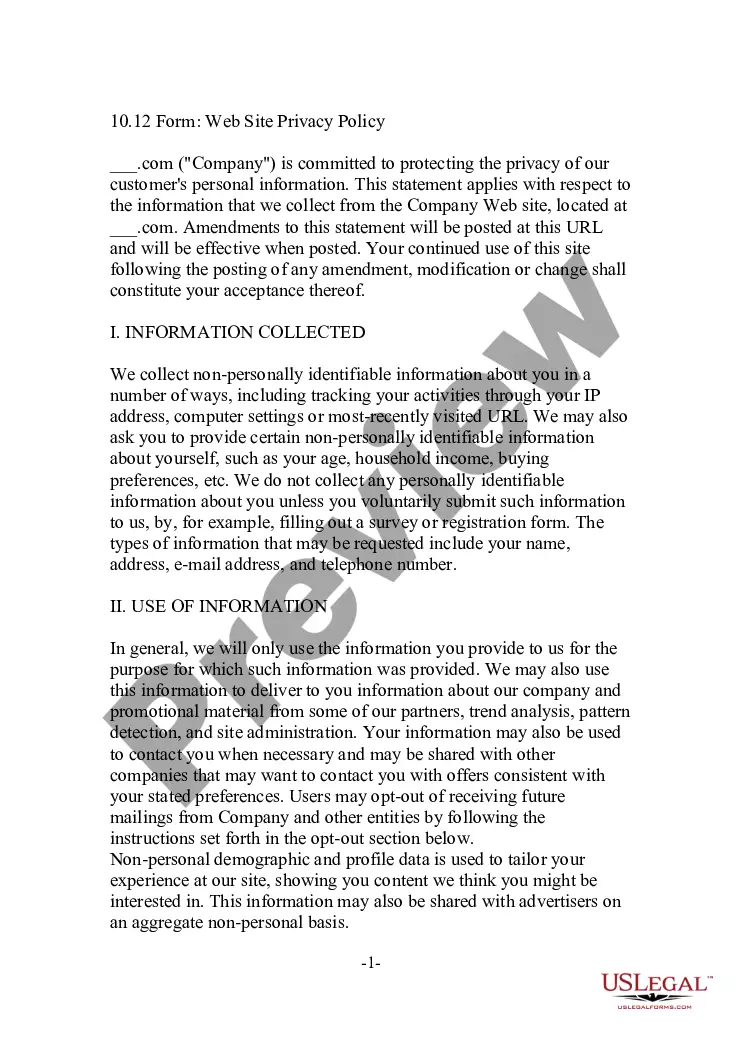
The Sample Opt Out Disclosure is a legal document that informs users about how their personal information is collected and utilized by businesses or service providers. This form specifically allows individuals or entities to opt out of information sharing practices, distinguishing it from other forms that might not offer such options. It is essential for protecting personal privacy in a digital environment.
Main sections of this form
- Disclosure of information sharing practices
- Options to opt out of information collection
- Revocation of consent for future data collection
- Clear instructions for opting out
Common use cases
This form is necessary when an individual or business wants to prevent certain organizations from sharing their personal information. It is particularly useful for those who frequently engage with online services or software companies that may collect and utilize identifiable information for marketing or other purposes.
Who can use this document
- Individuals concerned about their personal data privacy
- Businesses looking to implement opt-out options for their clients
- Contractors who provide software and online services
- Any organization seeking to comply with privacy regulations
How to complete this form
- Identify the parties involved in the information sharing arrangement.
- Clearly state your intention to opt out of information collection.
- Provide necessary personal details to ensure accurate identification.
- Specify any timeframes or conditions under which information may be shared.
- Sign and date the document to formalize your request.
Is notarization required?
This form does not typically require notarization to be legally valid. However, some jurisdictions or document types may still require it. US Legal Forms provides secure online notarization powered by Notarize, available 24/7 for added convenience.
Get your form ready online
Our built-in tools help you complete, sign, share, and store your documents in one place.
Make edits, fill in missing information, and update formatting in US Legal Forms—just like you would in MS Word.
Download a copy, print it, send it by email, or mail it via USPS—whatever works best for your next step.
Sign and collect signatures with our SignNow integration. Send to multiple recipients, set reminders, and more. Go Premium to unlock E-Sign.
If this form requires notarization, complete it online through a secure video call—no need to meet a notary in person or wait for an appointment.
We protect your documents and personal data by following strict security and privacy standards.

Make edits, fill in missing information, and update formatting in US Legal Forms—just like you would in MS Word.

Download a copy, print it, send it by email, or mail it via USPS—whatever works best for your next step.

Sign and collect signatures with our SignNow integration. Send to multiple recipients, set reminders, and more. Go Premium to unlock E-Sign.

If this form requires notarization, complete it online through a secure video call—no need to meet a notary in person or wait for an appointment.

We protect your documents and personal data by following strict security and privacy standards.
Common mistakes
- Not providing complete personal information for identification.
- Failing to read all disclosures before submission.
- Not signing or dating the form, rendering it invalid.
Advantages of online completion
- Convenience of downloading and completing the form at your own pace.
- Editable templates that allow for customization to fit specific needs.
- Access to forms drafted by licensed attorneys for reliability.
Legal use & context
- This form legally permits users to withdraw their consent for data collection.
- It ensures that the rights of individuals are respected under privacy laws.
- Using this form helps maintain compliance with data protection regulations.
Main things to remember
- The Sample Opt Out Disclosure formalizes the refusal to share personal information.
- Utilize this form to protect your privacy effectively in digital transactions.
- Ensure you complete the form accurately to avoid potential enforcement issues.
Looking for another form?
Form popularity
FAQ
Categories of information disclosed. For example, information from an application, such as name, address, and phone number; Social Security number; account information; and account balances. Categories of affiliates and nonaffiliated third parties to whom you disclose the information.
Data covered by the GLBA includes non-public personal information or personally identifiable information, such as names, addresses, and phone numbers, bank and credit card account numbers, income and credit histories, and Social Security numbers of customers.
The notice must include a description of the type of info that the financial institution may disclose, and "reasonable means" to opt-out, such as opt-out forms or toll-free telephone numbers to representatives who will accept the opt-out information.
(1) For customers, the initial privacy notice must be provided at the time of establishing a customer relationship. (2) For consumers who are not customers, the initial privacy notice must be provided prior to disclosing nonpublic personal information about the consumer to a nonaffiliated third party.
You must provide a clear and conspicuous notice to customers that accurately reflects your privacy policies and practices not less than annually during the continuation of the customer relationship. Annually means at least once in any period of 12 consecutive months during which that relationship exists.
You can opt out of receiving these prescreened offers by calling 1-888-567-8688. If you want to opt out of information sharing, you must follow the directions provided by your financial company. For example, you may have to call a toll-free number or fill out a form and return the form to the company.
(g) Duration of consumer's opt out direction. (1) A consumer's direction to opt out under this section is effective until the consumer revokes it in writing or, if the consumer agrees, electronically.
Under the Gramm-Leach-Bliley Act, a financial institution must provide its customers with a notice of its privacy policies and practices, and must not disclose nonpublic personal information about a consumer to nonaffiliated third parties unless the institution provides certain information to the consumer and the