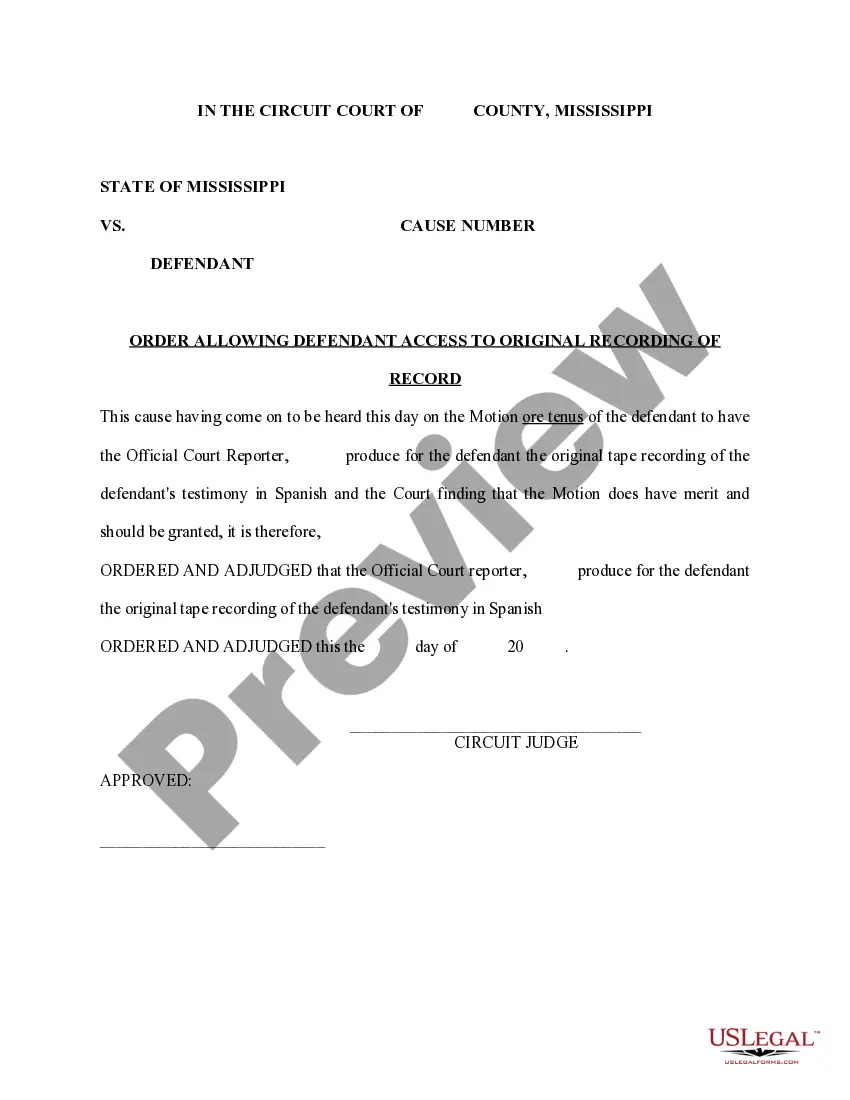
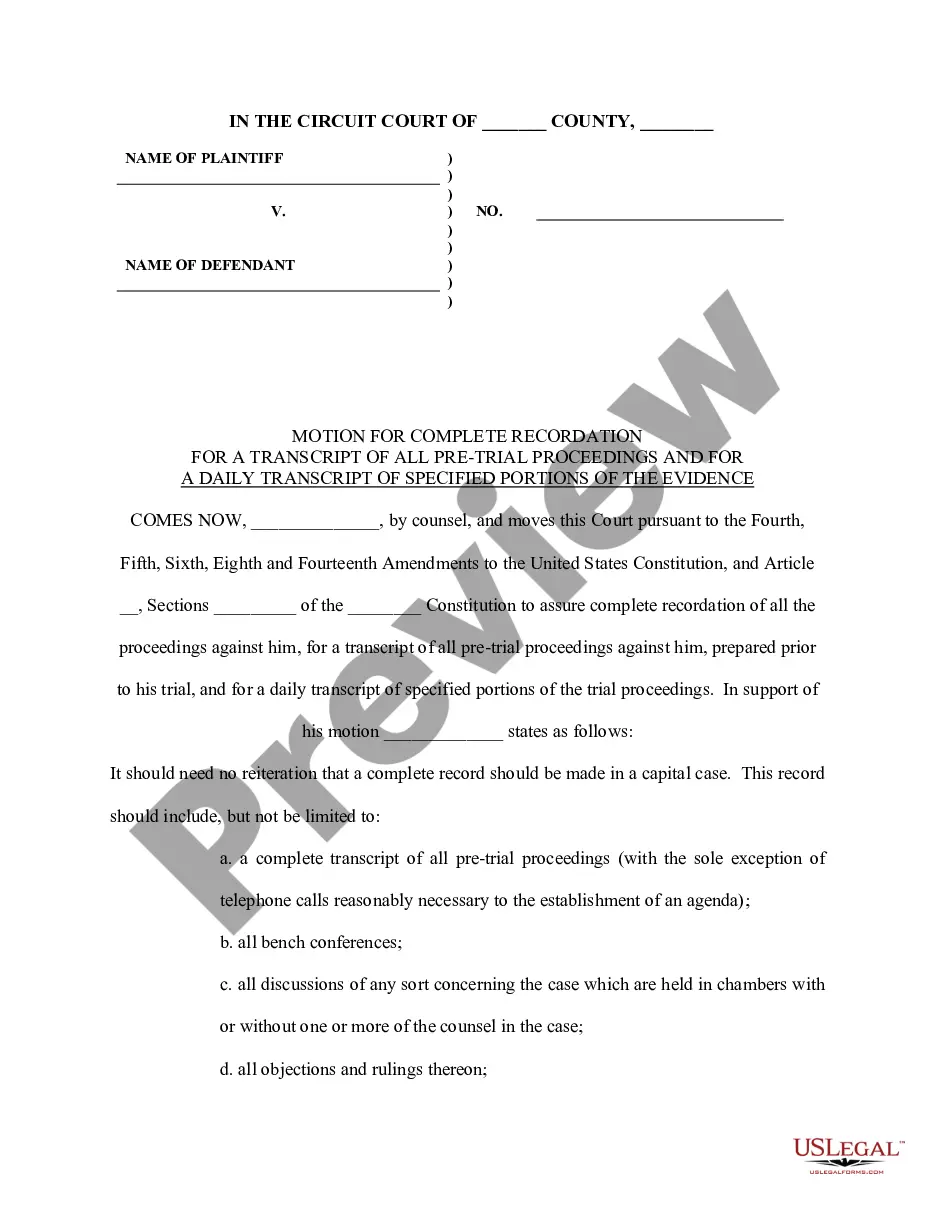
Mississippi Motion for Complete Recordation for a Transcript of All Pretrial Proceedings and For A Daily Transcript of Specified Portions of the Evidence
Understanding this form
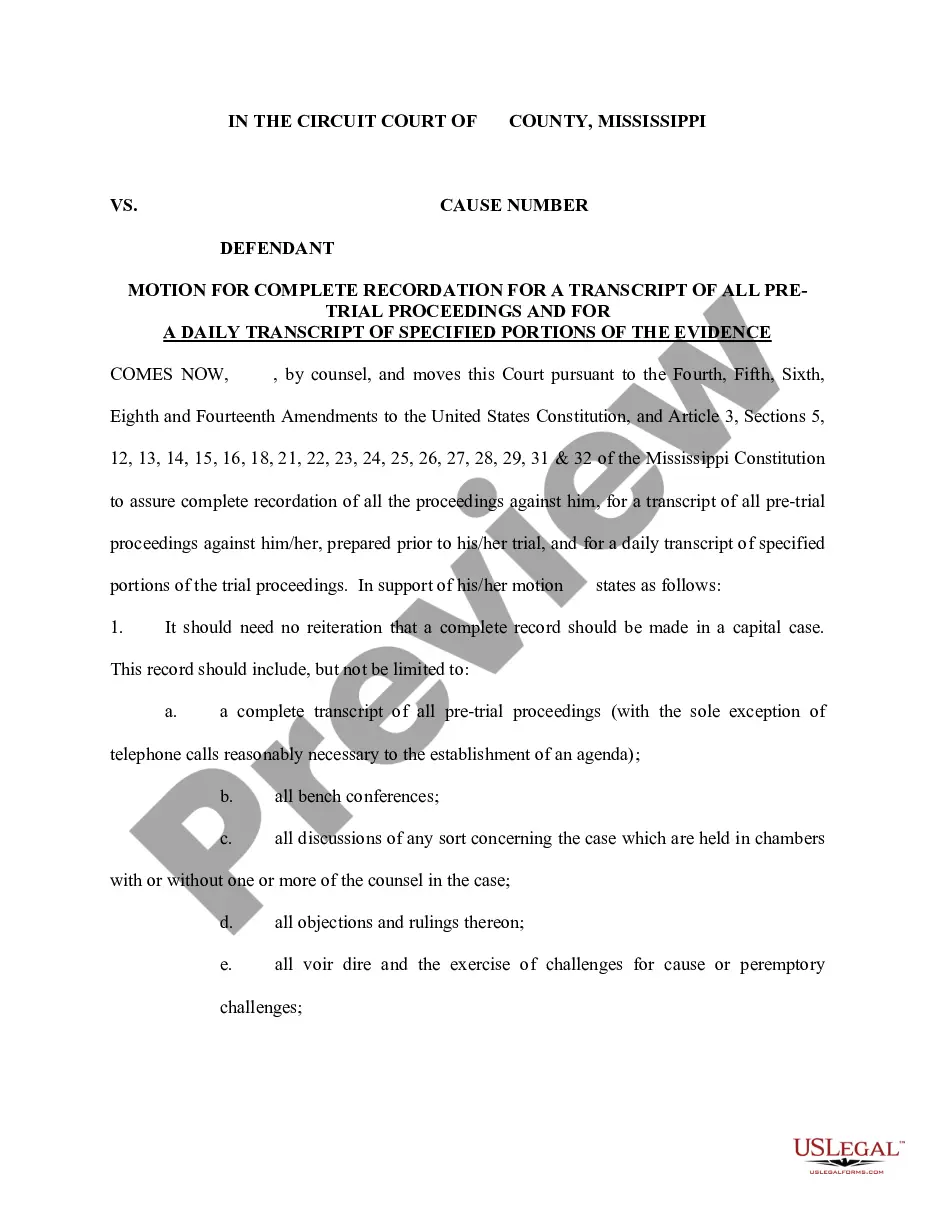
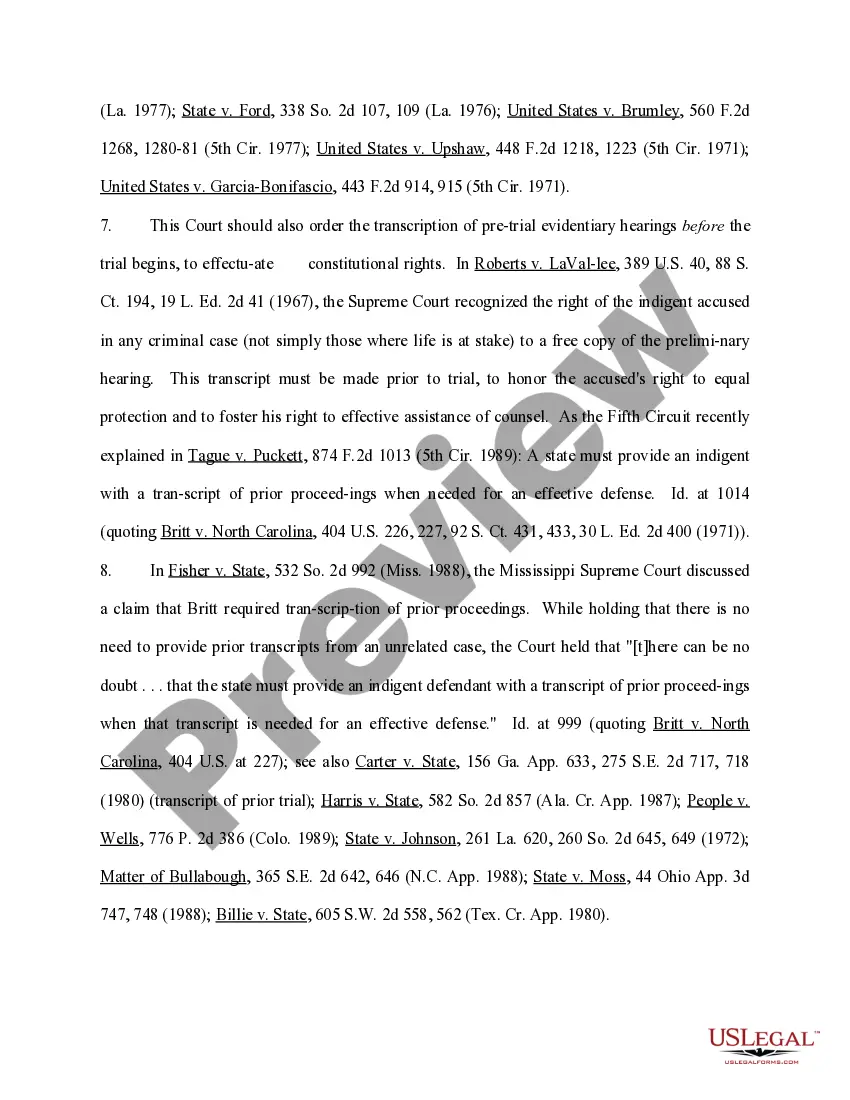
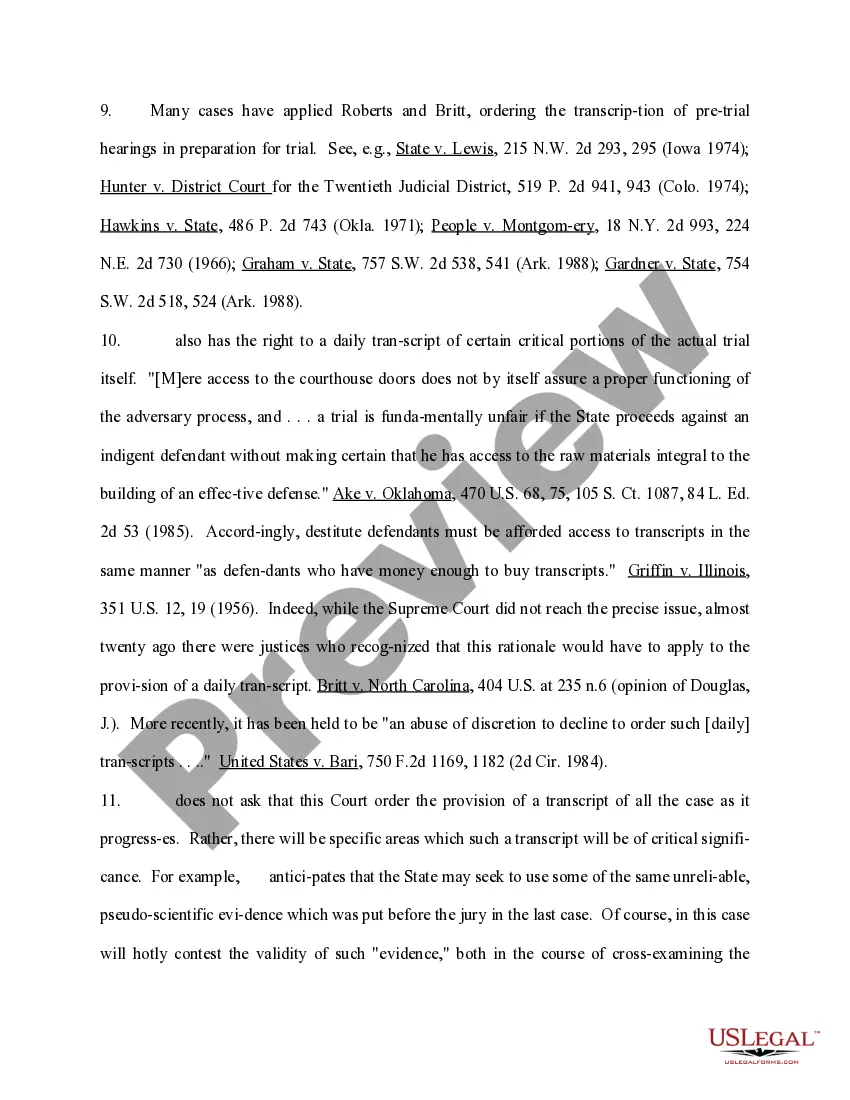
The Motion for Complete Recordation for a Transcript of All Pretrial Proceedings and For A Daily Transcript of Specified Portions of the Evidence is a legal document used to formally request that a court ensure a complete record of all pre-trial and trial proceedings related to a criminal case. This motion is essential in safeguarding the constitutional rights of defendants by ensuring accurate and thorough documentation of all judicial actions. It is particularly important in capital cases where a complete record is crucial for a fair trial and can also help facilitate an effective appeal process.
Main sections of this form
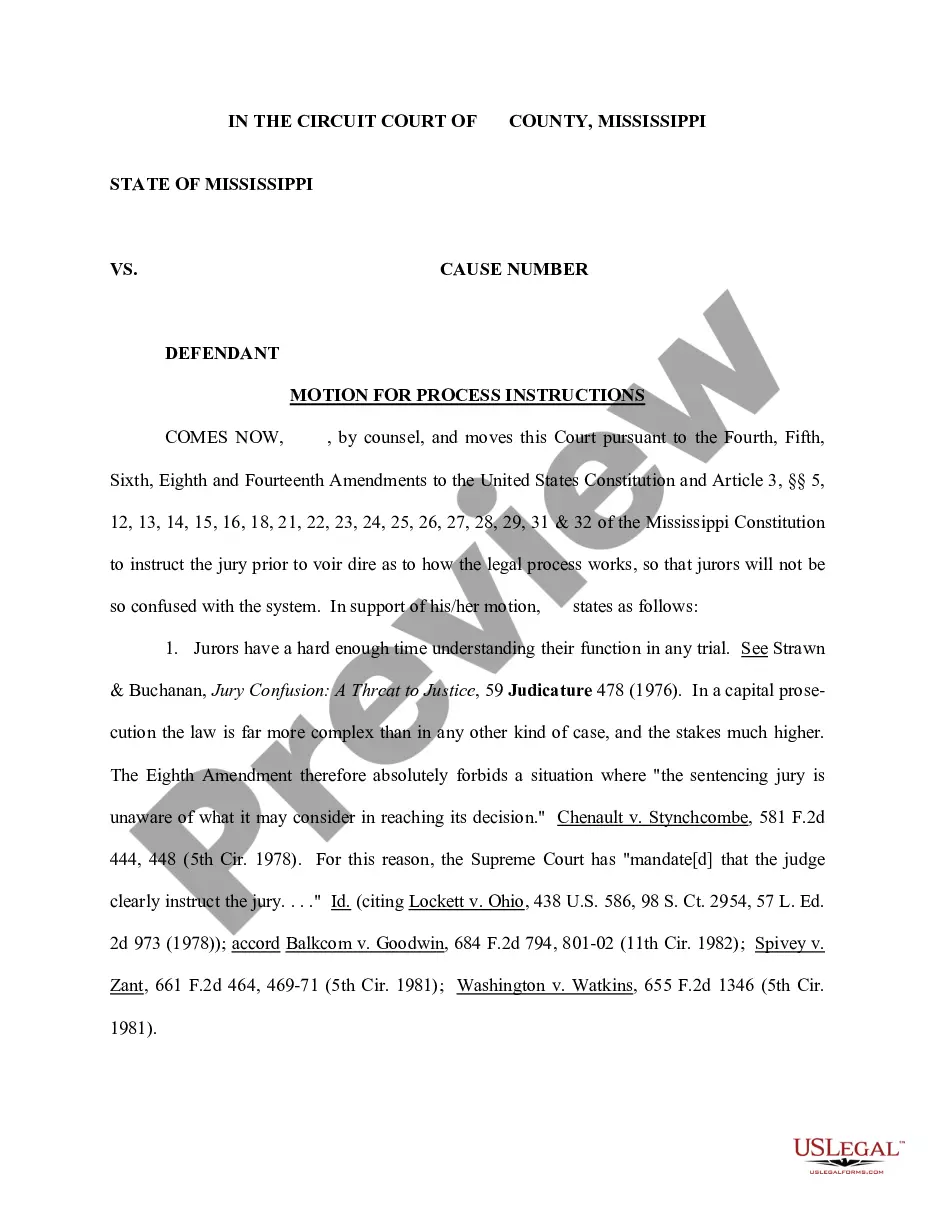
- Caption of the case, including parties involved and cause number.
- Statement of request to the court for complete recordation of all pre-trial proceedings.
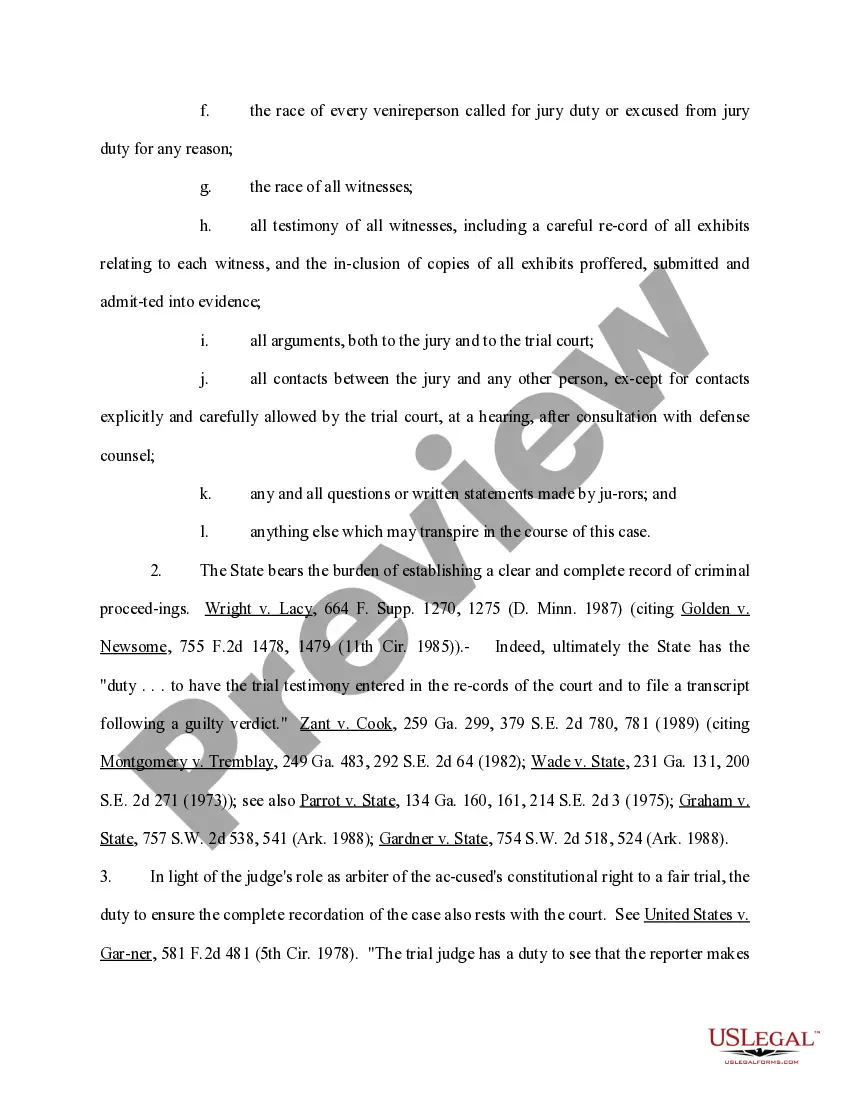
- Specific enumerations of what the complete record should include, such as all testimonies, bench conferences, and jury selection details.
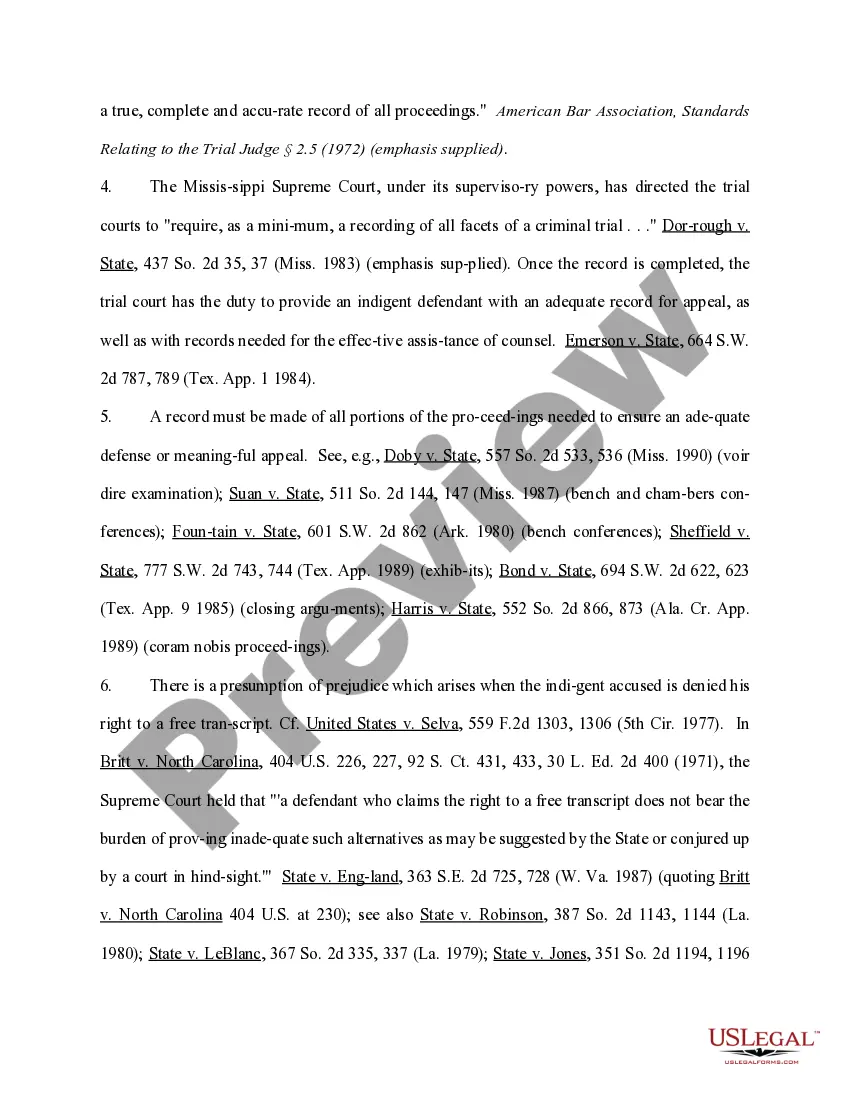
- Legal references supporting the need for complete recordation based on constitutional protections.
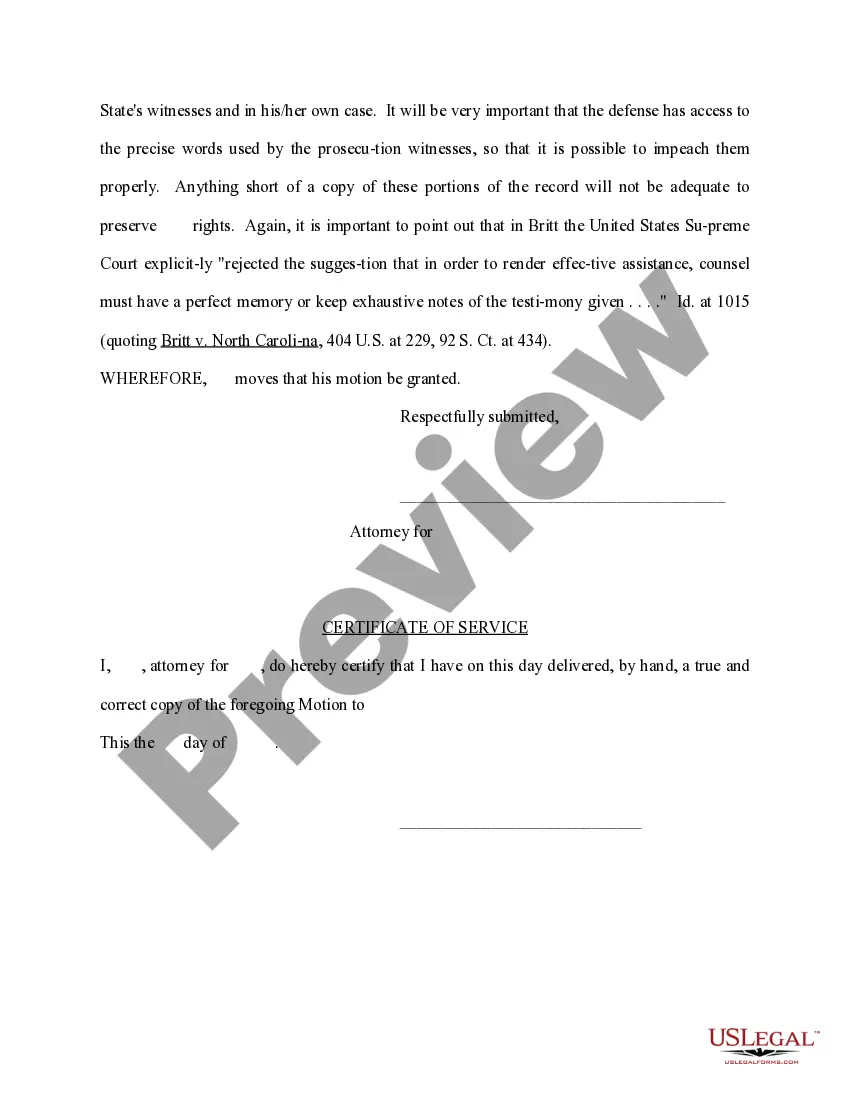
- Signature line for the attorney filing the motion.
When to use this document
This form should be used when a defendant in a criminal case requires a complete and accurate record of all pre-trial and trial proceedings. It is particularly relevant in capital cases or situations where the defense anticipates needing specific portions of trial evidence for effective legal representation or for potential appeals. If you believe that previous proceedings may impact the current case, this motion helps ensure all critical evidence is documented.
Who needs this form
- Defendants in capital or serious criminal cases seeking thorough documentation of their proceedings.
- Defense attorneys advocating for their clients' rights to a complete trial record.
- Individuals involved in pre-trial motions or hearings who need a documented account of the proceedings.
Completing this form step by step
- Identify the case by entering the names of the involved parties and the cause number at the top of the form.
- State your request clearly, specifying the need for a complete record of all pre-trial and trial proceedings.
- Detail what you want included in the record, referencing specific evidence, witness testimony, and proceedings.
- Review and cite applicable constitutional amendments and relevant case law to strengthen your motion.
- Sign the form where indicated, affirming that you are authorized to present this motion.
Does this document require notarization?
Notarization is generally not required for this form. However, certain states or situations might demand it. You can complete notarization online through US Legal Forms, powered by Notarize, using a verified video call available anytime.
Get your form ready online
Our built-in tools help you complete, sign, share, and store your documents in one place.
Make edits, fill in missing information, and update formatting in US Legal Forms—just like you would in MS Word.
Download a copy, print it, send it by email, or mail it via USPS—whatever works best for your next step.
Sign and collect signatures with our SignNow integration. Send to multiple recipients, set reminders, and more. Go Premium to unlock E-Sign.
If this form requires notarization, complete it online through a secure video call—no need to meet a notary in person or wait for an appointment.
We protect your documents and personal data by following strict security and privacy standards.

Make edits, fill in missing information, and update formatting in US Legal Forms—just like you would in MS Word.

Download a copy, print it, send it by email, or mail it via USPS—whatever works best for your next step.

Sign and collect signatures with our SignNow integration. Send to multiple recipients, set reminders, and more. Go Premium to unlock E-Sign.

If this form requires notarization, complete it online through a secure video call—no need to meet a notary in person or wait for an appointment.

We protect your documents and personal data by following strict security and privacy standards.
Common mistakes to avoid
- Failing to include the proper case caption and cause number.
- Not specifying all the components needed in the record.
- Omitting relevant legal citations that support the request.
- Not signing the motion, leading to potential rejection by the court.
Benefits of completing this form online
- Convenient access to legal forms at any time, allowing you to complete your motion at your own pace.
- Editable templates that can be customized according to your specific case needs.
- Drafted by licensed attorneys, ensuring reliability and compliance with legal standards.
- Easy downloading and printing options for immediate filing in court.
Looking for another form?

Form popularity
FAQ
The main forms of discovery include depositions, interrogatories, requests to produce, requests to admit, non-party production subpoenas, independent medical examinations, site visits and product testing.
From interpreting meaning to formatting an entire document, transcription for court and legal needs can be expensive. No matter the length of a court proceeding and what type of legal concern it holds, court transcripts are costlier. It is because the original transcript of a discussion is actually not available.
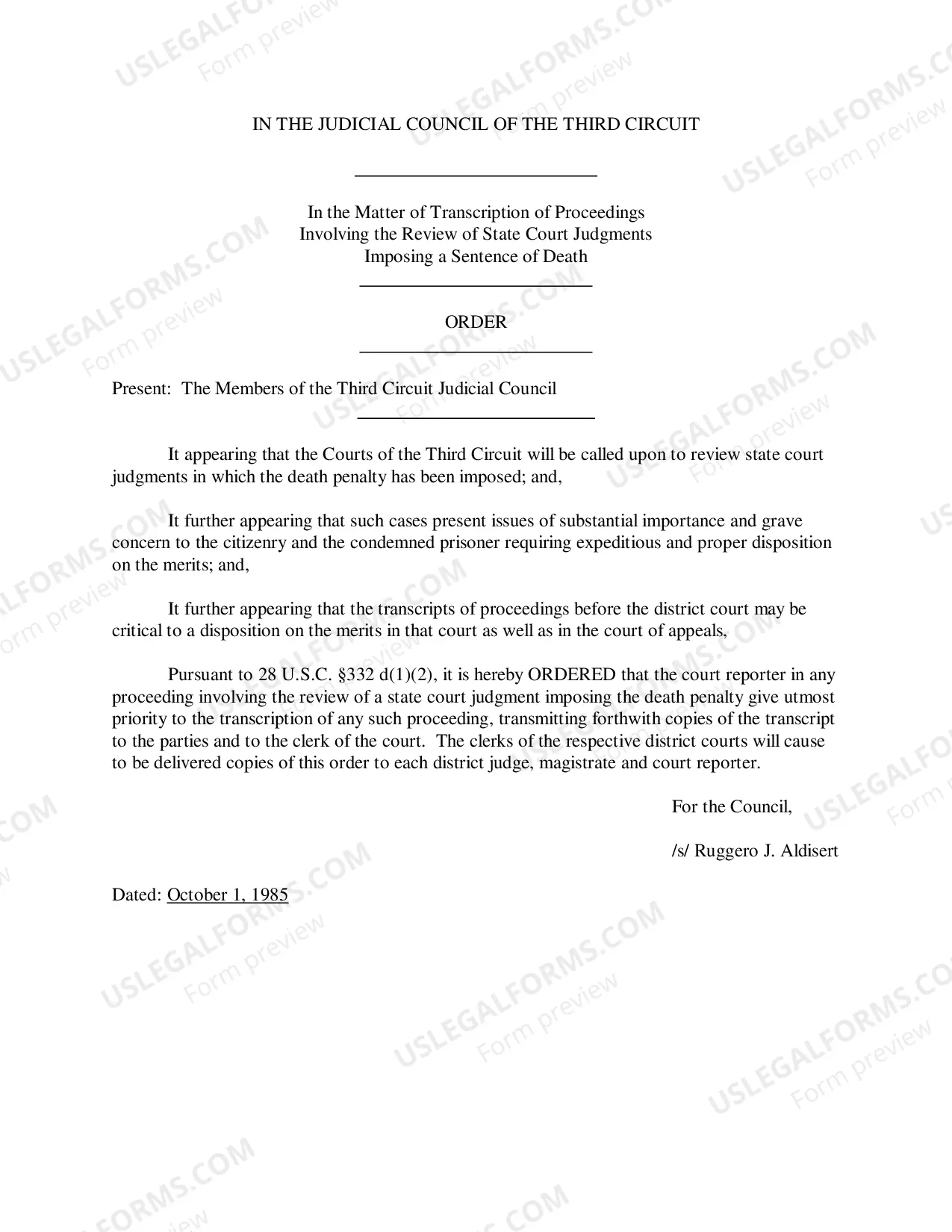
Definition from Nolo's Plain-English Law Dictionary The official written record of all proceedings in a trial, hearing, or deposition, taken down by the court reporter. In most appeals a copy of the trial transcript is required so that the court of appeals can review the entire proceedings in the trial court.
You have the option of requesting transcripts either directly from the court or from a transcription company. A transcript may already be in the possession of the court reporter who might have been present at the mentioned proceedings, so you are simply required to ask for it.
Unfortunately, the court clearly states that a court reporter's transcript is not a copyrightable work.
To obtain access to those records, researchers must contact the appropriate federal court. Online access to case and docket information is provided for a fee by the Administrative Office of the U.S. Courts through PACER. The court may refer you to a Federal Records Center to obtain copies.
When you go to court, you will give information (called evidence) to a judge who will decide your case. This evidence may include information you or someone else tells to the judge (testimony) as well as items like email and text messages, documents, photos, and objects (exhibits).
Pre-trial conferences include full discovery of evidence (bills, receipts, agreements, contracts, photos, etc.). At the pre-trial, you must be prepared to bring all documents that you anticipate will be introduced as evidence at the trial and you must provide a copy of each potential exhibit to the opposing party.
Since transcripts provide a verbatim record of exactly what each participant says, they can be used as evidence in an appeal.