Diligence Compendium
What is this form?
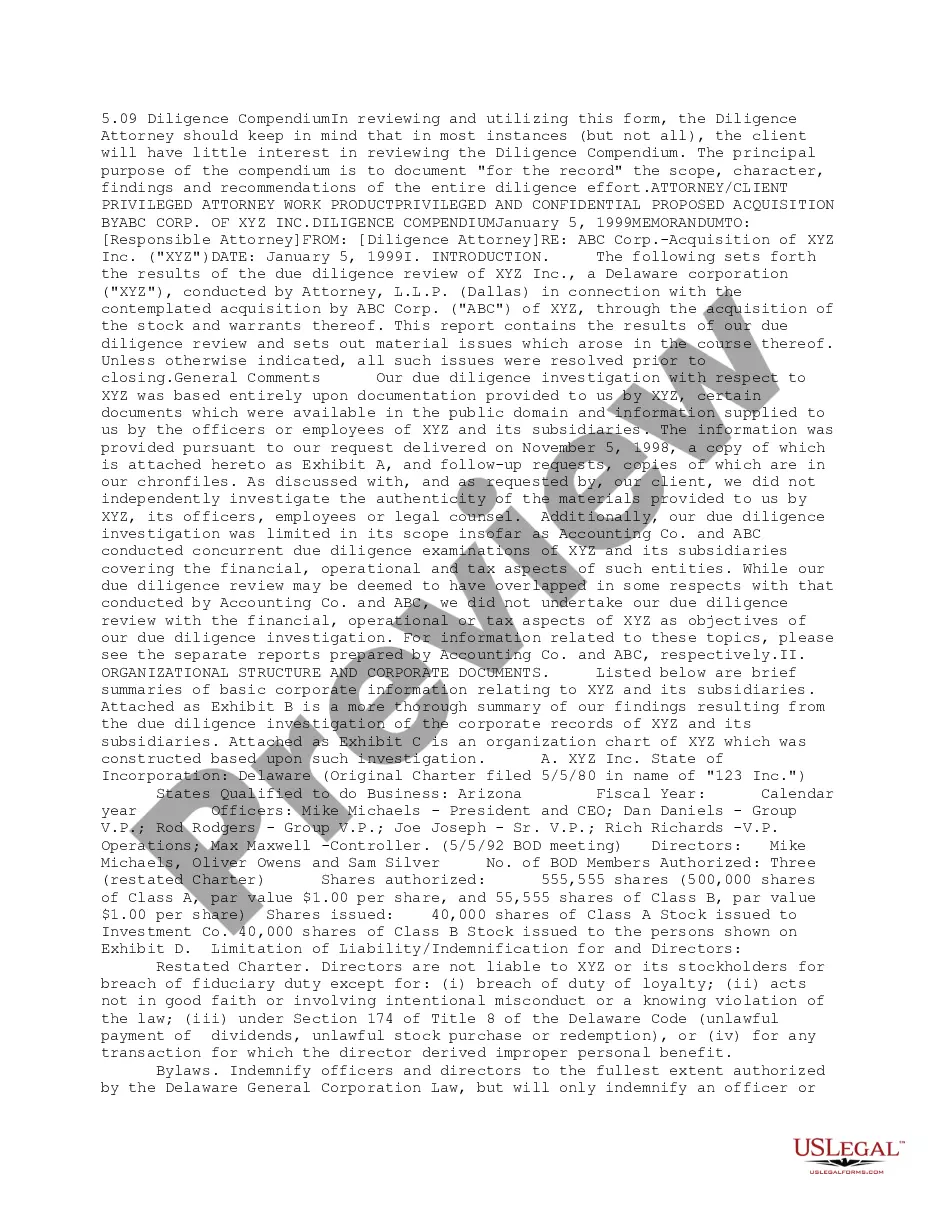
The Diligence Compendium is a comprehensive due diligence document used in business transactions to record the scope, findings, and recommendations derived from a thorough investigation. It significantly differs from other due diligence forms by focusing on the complete documentation of the diligence process, primarily intended for internal record-keeping and to protect attorney-client privilege. This form serves as both a summary and a detailed analysis of the diligence conducted, making it essential for stakeholders examining potential acquisitions or mergers.
What’s included in this form
- Introduction: Overview of the due diligence process and objectives.
- Corporate Structure: Information about the involved entities, including incorporation details and organizational charts.
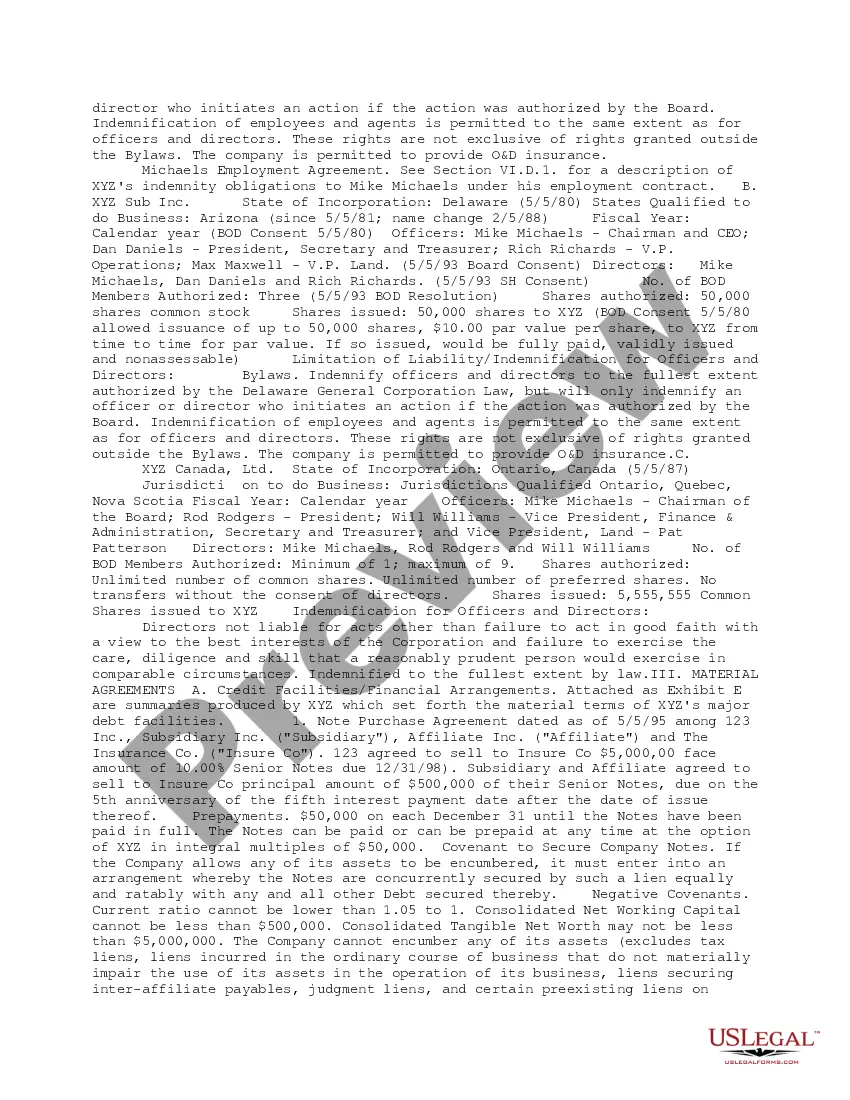
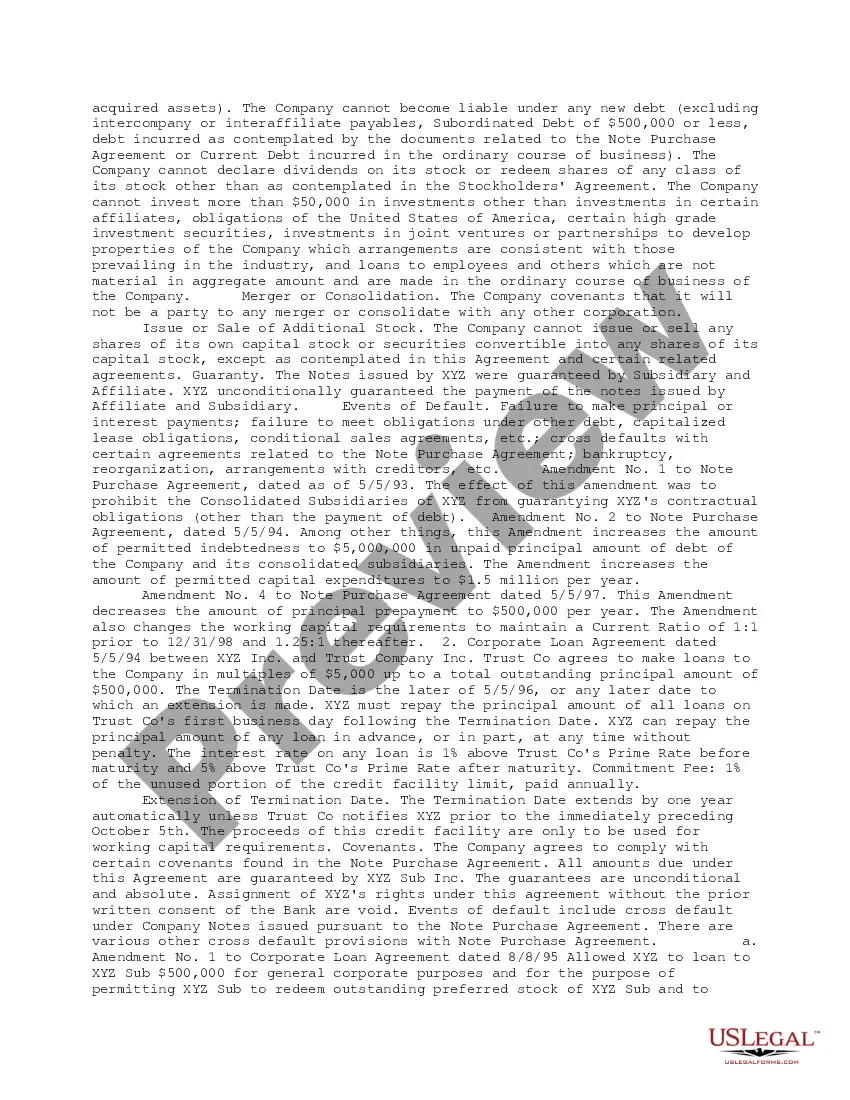
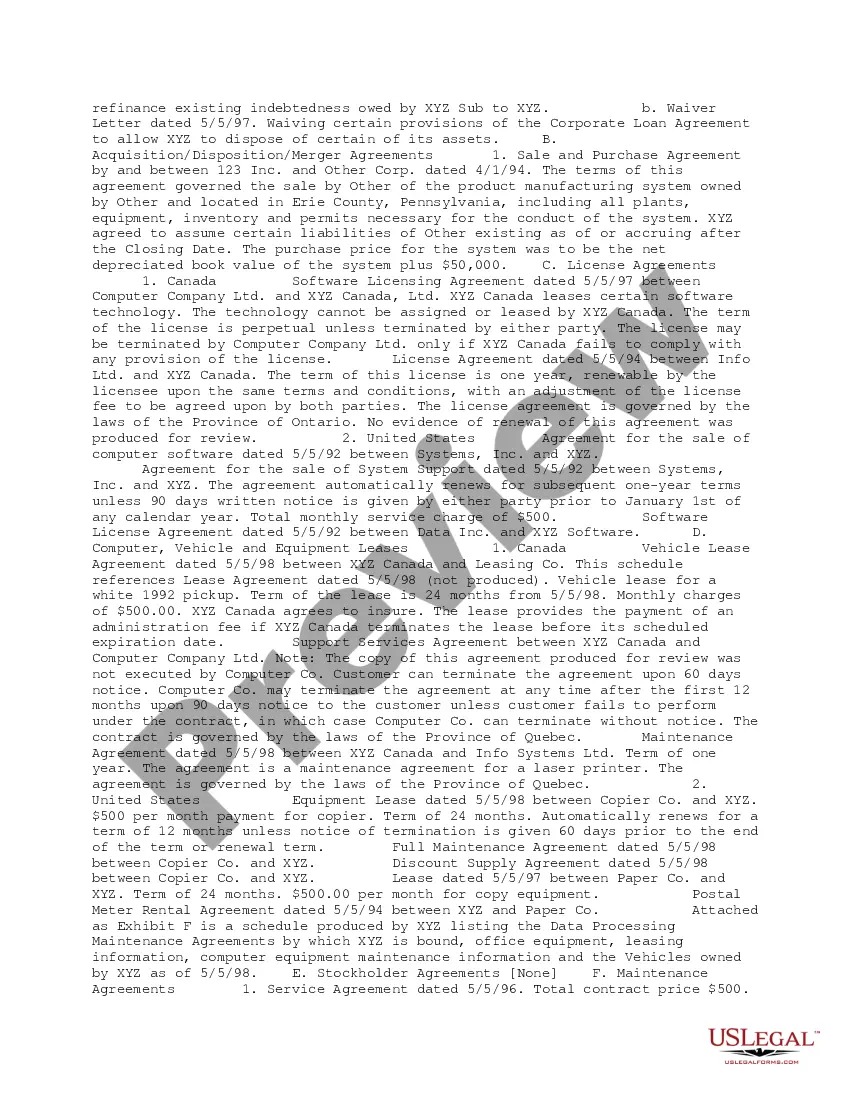
- Material Agreements: Summaries of significant financial and legal agreements relevant to the diligence review.
- Litigation Matters: Assessment of any ongoing or threatened litigation affecting the entities involved.
- Environmental Review: Summary of environmental concerns based on the diligence review.
- Exhibits: Additional documentation backing the findings and recommendations within the compendium.



When this form is needed
The Diligence Compendium is utilized during the acquisition process to ensure that all relevant findings from due diligence investigations are documented. This form is especially important when a company is considering purchasing another business, as it helps identify potential risks and liabilities before the final agreement is made. It also assists in ensuring that all parties retain a comprehensive record of the findings for possible future reference.
Who should use this form
- Attorneys conducting due diligence for corporate acquisitions.
- Corporate executives involved in mergers and acquisitions.
- Compliance officers responsible for regulatory adherence during business transactions.
- Corporate boards of directors needing to understand the findings prior to a major business decision.
Steps to complete this form
- Gather all relevant documents related to the corporate entities involved.
- Identify and record the scope and objectives of the due diligence review.
- Outline the findings, including any legal and financial issues encountered during the review.
- Document any recommendations based on the findings and resolve material issues before finalizing the report.
- Attach relevant exhibits to support the findings and ensure comprehensive documentation.
Is notarization required?
Notarization is not commonly needed for this form. However, certain documents or local rules may make it necessary. Our notarization service, powered by Notarize, allows you to finalize it securely online anytime, day or night.
Get your form ready online
Our built-in tools help you complete, sign, share, and store your documents in one place.
Make edits, fill in missing information, and update formatting in US Legal Forms—just like you would in MS Word.
Download a copy, print it, send it by email, or mail it via USPS—whatever works best for your next step.
Sign and collect signatures with our SignNow integration. Send to multiple recipients, set reminders, and more. Go Premium to unlock E-Sign.
If this form requires notarization, complete it online through a secure video call—no need to meet a notary in person or wait for an appointment.
We protect your documents and personal data by following strict security and privacy standards.

Make edits, fill in missing information, and update formatting in US Legal Forms—just like you would in MS Word.

Download a copy, print it, send it by email, or mail it via USPS—whatever works best for your next step.

Sign and collect signatures with our SignNow integration. Send to multiple recipients, set reminders, and more. Go Premium to unlock E-Sign.

If this form requires notarization, complete it online through a secure video call—no need to meet a notary in person or wait for an appointment.

We protect your documents and personal data by following strict security and privacy standards.
Common mistakes
- Failing to include all relevant agreements or corporate documents.
- Neglecting to clarify the scope and objectives of the due diligence review.
- Omitting the recommendations following the findings of the investigation.
- Not including necessary exhibits and appendices to support documentation.
- Inadequate review of corporate structure which may lead to overlooking key information.
Advantages of online completion
- Convenience of downloading and editing the form to meet specific needs.
- Reliability of templates drafted by licensed attorneys.
- Accessibility to comprehensive legal documentation anytime and anywhere.
- Time efficiency, allowing users to avoid lengthy legal consultations.
Legal use & context
- The Diligence Compendium serves as a vital record in the event of legal disputes regarding the due diligence process.
- It is utilized by attorneys to ensure compliance with federal and state regulations during corporate transactions.
- The findings within the form may be used to support decision-making processes in future corporate governance.
What to keep in mind
- The Diligence Compendium is essential for documenting due diligence efforts in business transactions.
- Accurate completion of this form helps mitigate risks when acquiring corporate entities.
- Users should ensure all findings and recommendations are thoroughly documented to protect legal interests.
- This form must be adapted to comply with state-specific laws when necessary.
Looking for another form?
Form popularity
FAQ
Step 1: Company Capitalization. Step 2: Revenue, Margin Trends. Step 3: Competitors & Industries. Step 4: Valuation Multiples. Step 5: Management and Ownership. Step 6: Balance Sheet Exam. Step 7: Stock Price History. Step 8: Stock Options & Dilution.
Look at past annual and quarterly financial information, including: Review sales and gross profits by product. Look up the rates of return by product. Look at the accounts receivable. Get a breakdown of the business's inventory. Make a breakdown of real estate and equipment.
A due diligence checklist is an organized way to analyze a company. The checklist will include all the areas to be analyzed, such as ownership and organization, assets and operations, the financial ratios, shareholder value, processes and policies, future growth potential, management, and human resources.
Due diligence refers to being able to prove that your business has done everything reasonably possible to comply with current legislation and regulations. In other words, it helps to prove that you applied all reasonable precautions to avoid committing an offence.
Due diligence is the process of examining the details of a transaction to make sure it's legal, and to fully apprise both the buyer and seller of as many facts in the deal as possible. When the deal satisfies both aspects of due diligence, the two parties can finalize and correctly price the transaction.
A Statement describing the subject of research. Documents in support of the research such as corporate reports, legal documents, transaction copies, market research, etc. SWOT Analysis i.e. an overview of the strengths, weaknesses, opportunities, and threats linked with the proposal.
Due Diligence Examples Conducting thorough inspections on a property before buying it in order to make sure that it is a good investment. An underwriter auditing an issuer's business and operations prior to selling it.