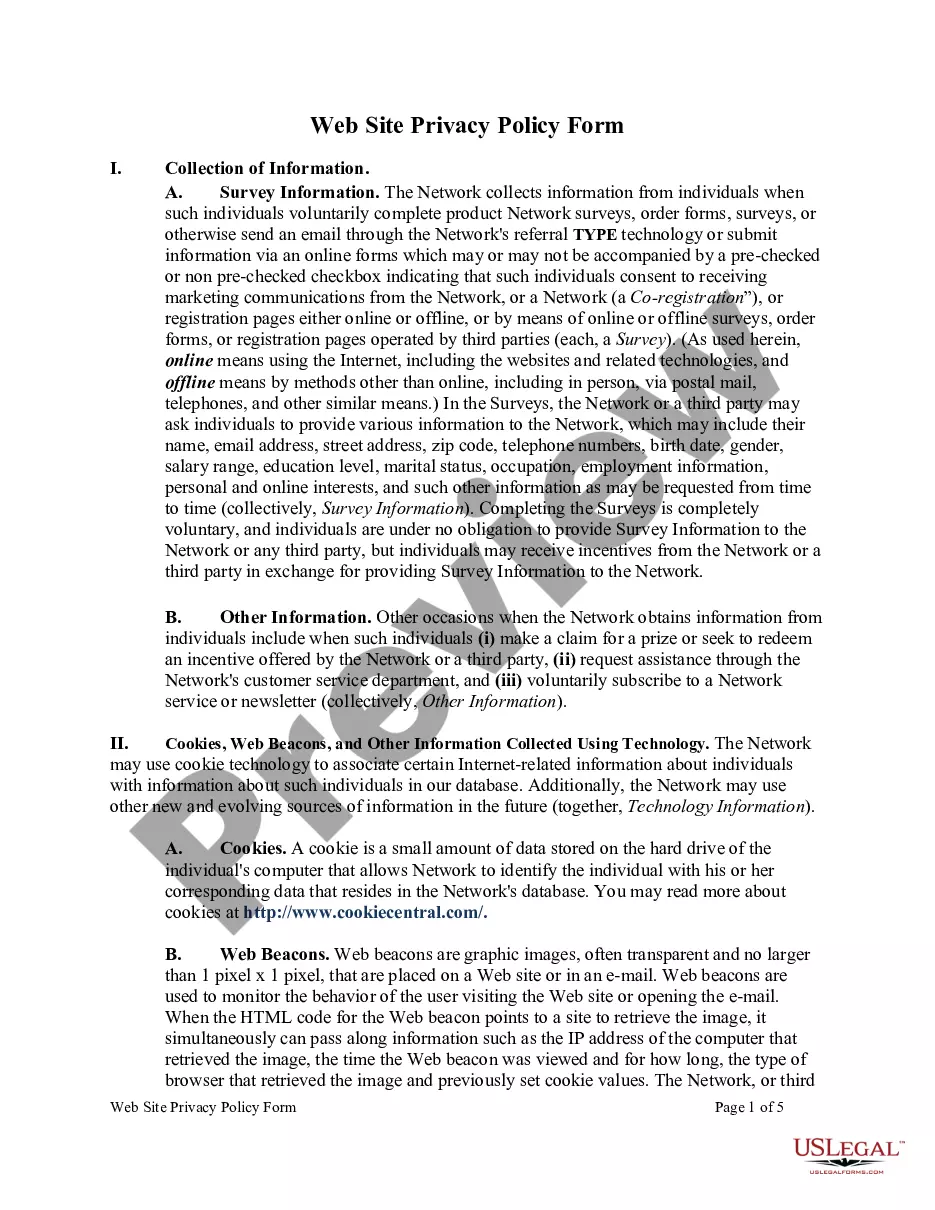
Web Site Privacy Policy Form
Overview of this form
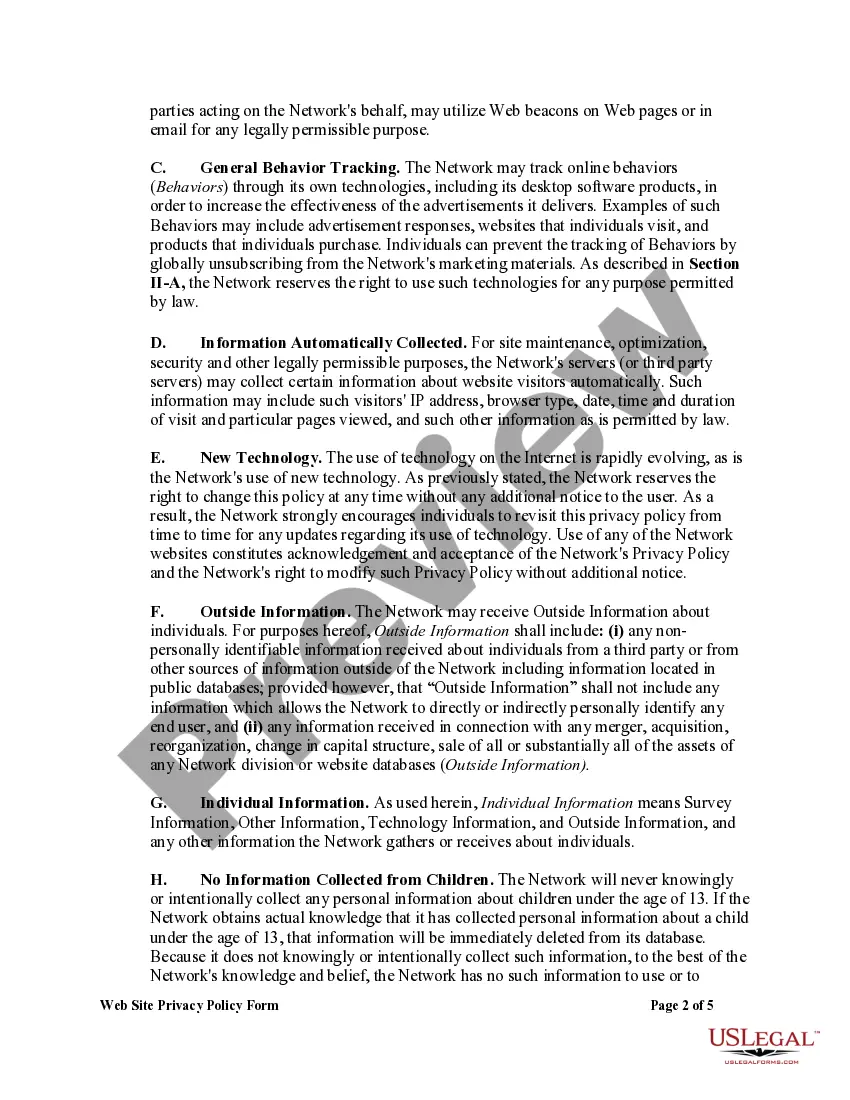
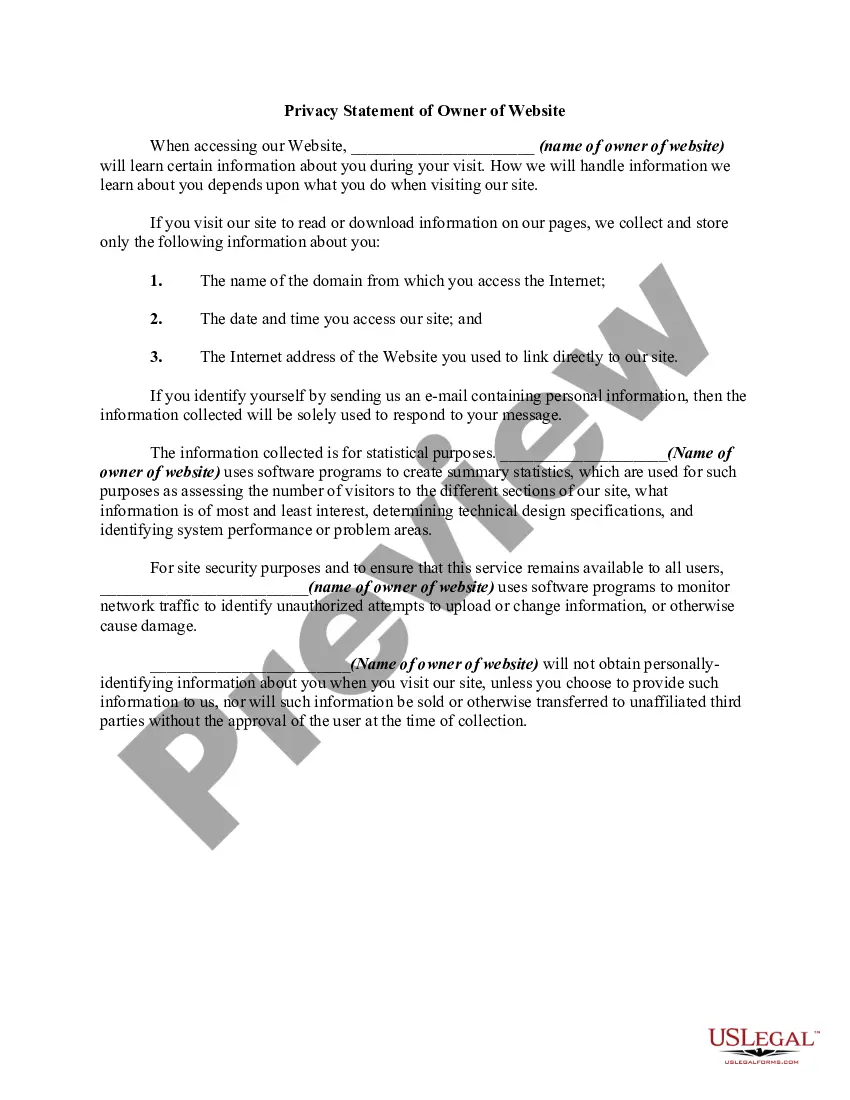
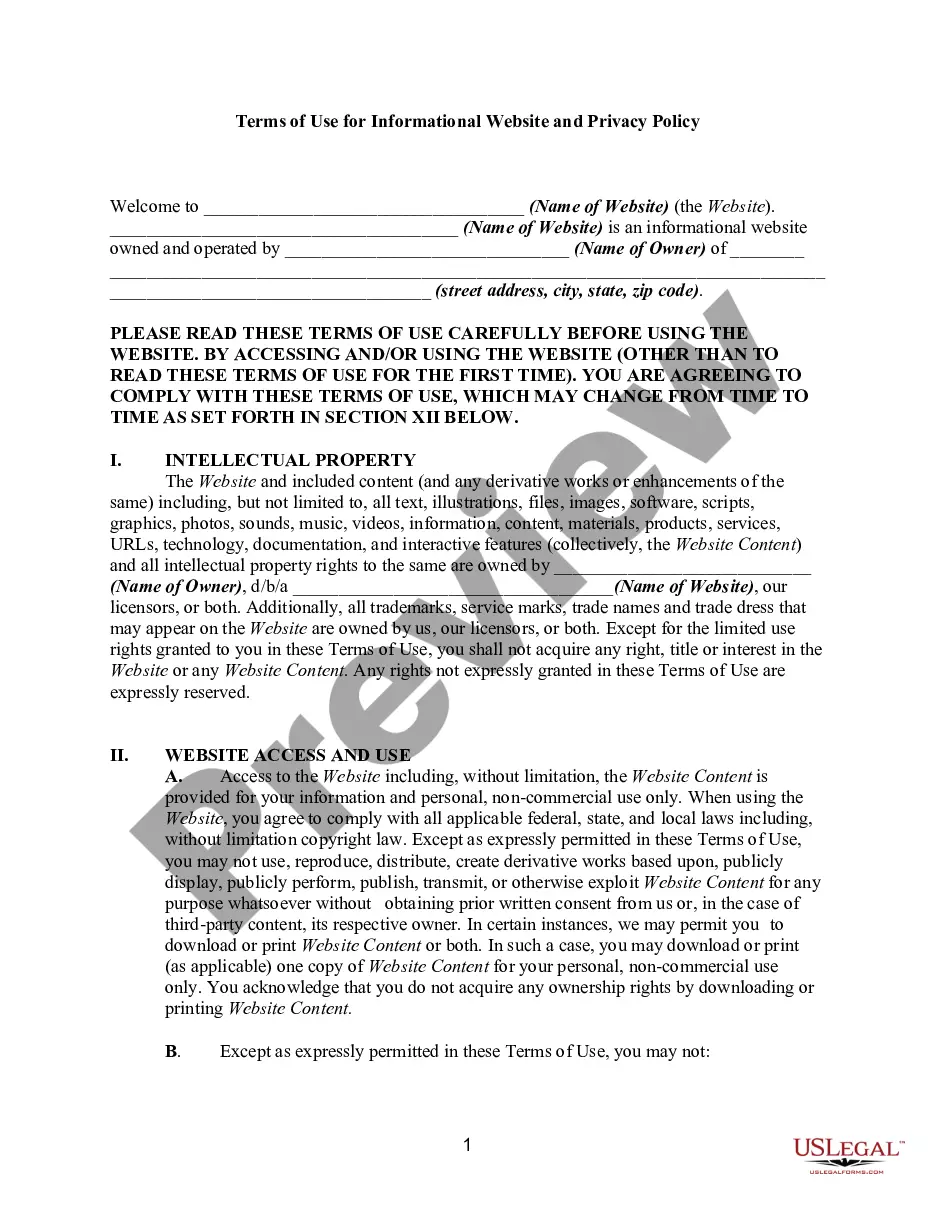
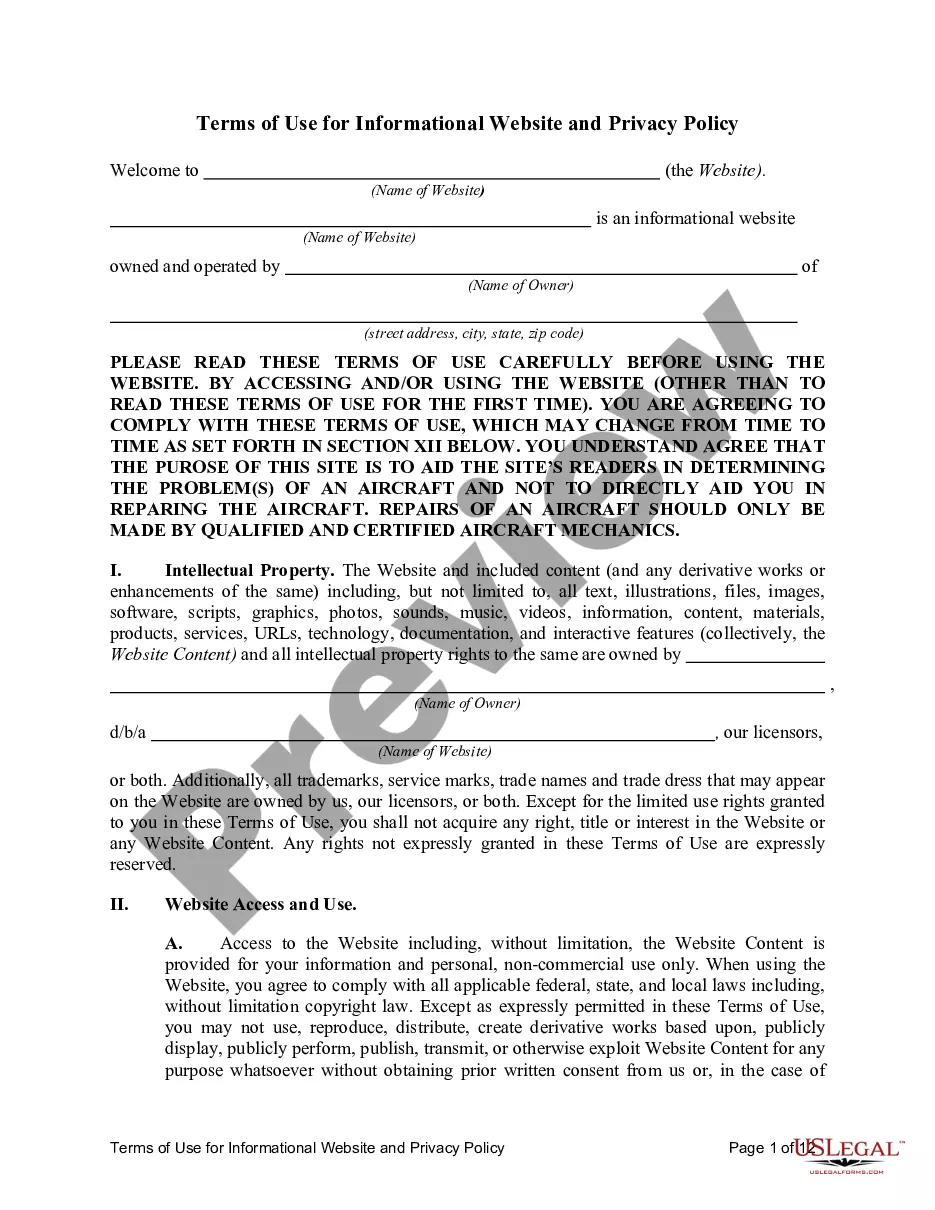
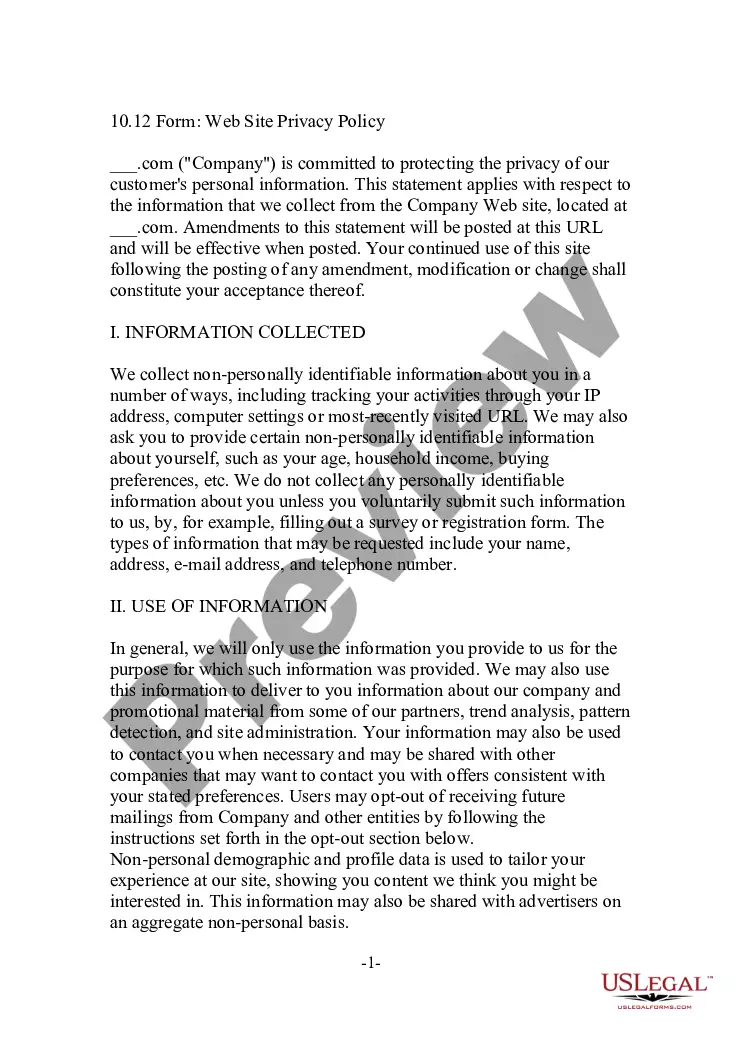
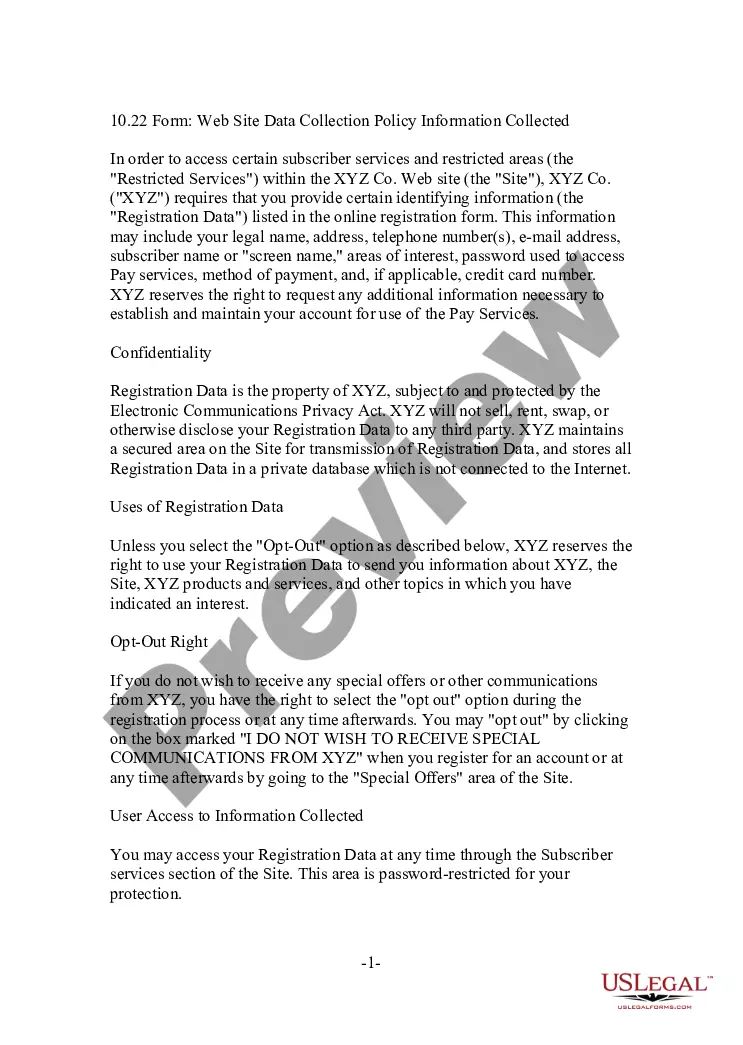
The Web Site Privacy Policy Form is a legal document designed to inform visitors about how their personal information is collected, used, and protected by a website. This form outlines the site's data handling practices, enabling users to make informed decisions about their privacy. Unlike general privacy policies, this specific template can be customized to fit various website needs while ensuring legal compliance.
What’s included in this form
- Collection of Information: Details on how and when user data is collected, including survey data.
- Cookies and Tracking: Explanation of cookie usage and web beacons for monitoring user activity.
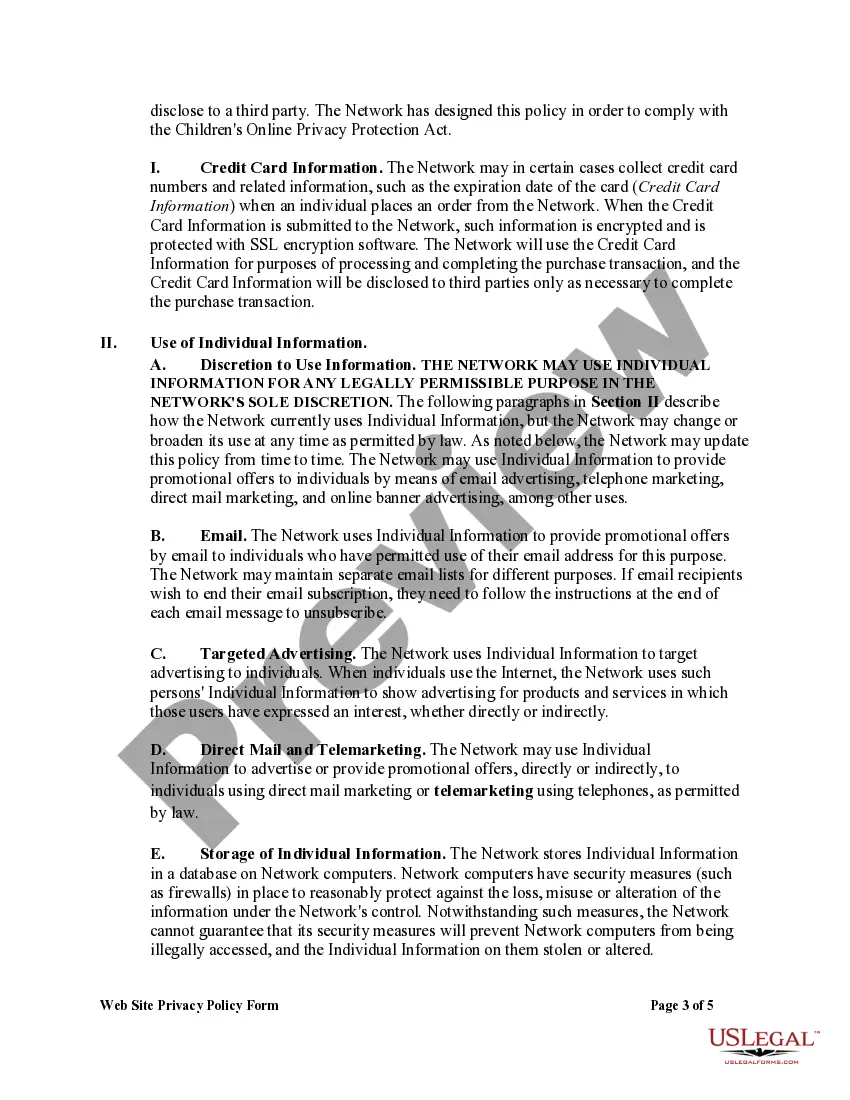
- Use of Information: How the collected data may be used, including for marketing and promotions.
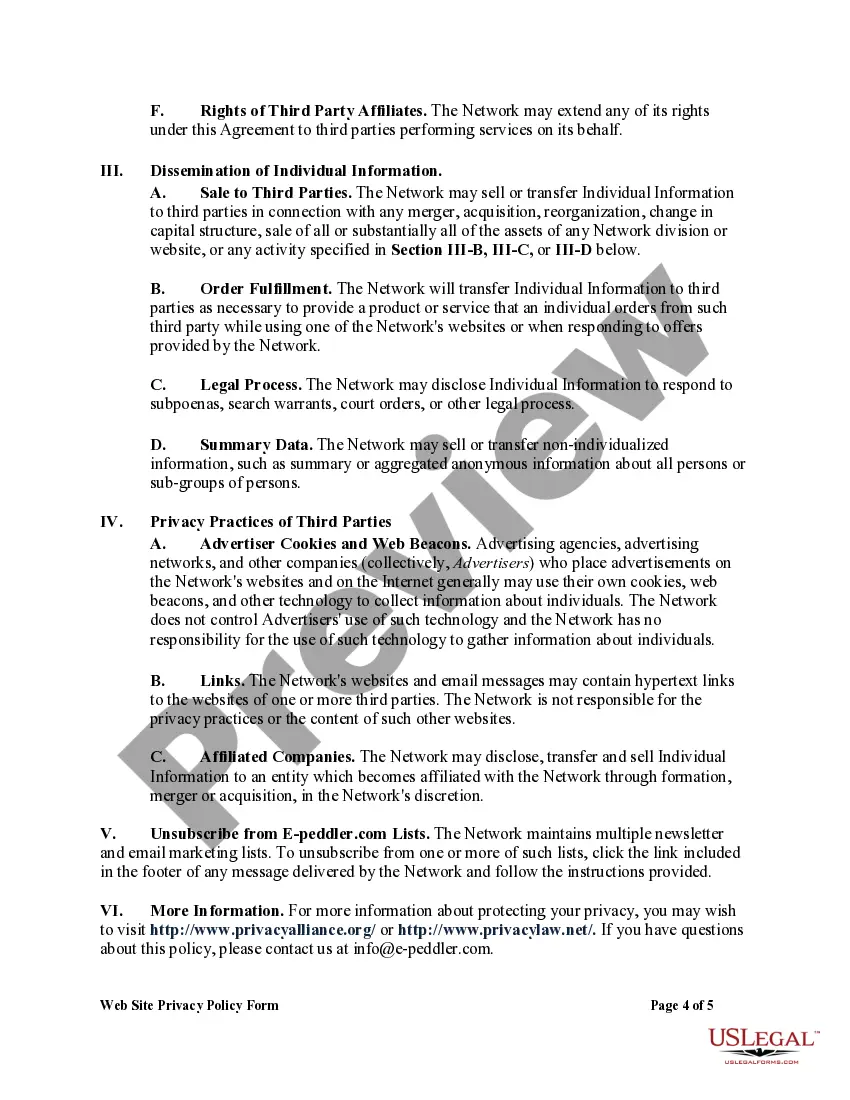
- Dissemination of Information: Guidelines on sharing user data with third parties and under what circumstances.
- User Rights: Information on how users can unsubscribe from marketing lists and manage their privacy.
When this form is needed
Utilize this Web Site Privacy Policy Form when launching a new website or revising an existing one to ensure compliance with privacy laws. It is essential for informing users about your data collection practices, particularly if your site collects personal information, uses cookies, or engages in email marketing. This form is also vital for maintaining transparency and trust with your audience.
Intended users of this form
- Website owners seeking to comply with privacy regulations.
- Businesses that collect personal information from users.
- Organizations intent on building trust with their website visitors.
- Individuals planning to monetize online platforms through advertising or data collection.
Instructions for completing this form
- Review the form sections to understand what information to include regarding data collection practices.
- Specify the types of personal data you collect from users on your website.
- Detail how cookies and tracking technologies will be used on your site.
- Outline the possible uses of the collected information, including marketing and promotions.
- Provide instructions for users on how they can manage their preferences regarding their personal information.
Does this form need to be notarized?
This form does not typically require notarization unless specified by local law. It is recommended to check with legal advisors to confirm any specific requirements that might apply.
Get your form ready online
Our built-in tools help you complete, sign, share, and store your documents in one place.
Make edits, fill in missing information, and update formatting in US Legal Forms—just like you would in MS Word.
Download a copy, print it, send it by email, or mail it via USPS—whatever works best for your next step.
Sign and collect signatures with our SignNow integration. Send to multiple recipients, set reminders, and more. Go Premium to unlock E-Sign.
If this form requires notarization, complete it online through a secure video call—no need to meet a notary in person or wait for an appointment.
We protect your documents and personal data by following strict security and privacy standards.

Make edits, fill in missing information, and update formatting in US Legal Forms—just like you would in MS Word.

Download a copy, print it, send it by email, or mail it via USPS—whatever works best for your next step.

Sign and collect signatures with our SignNow integration. Send to multiple recipients, set reminders, and more. Go Premium to unlock E-Sign.

If this form requires notarization, complete it online through a secure video call—no need to meet a notary in person or wait for an appointment.

We protect your documents and personal data by following strict security and privacy standards.
Avoid these common issues
- Failing to update the policy regularly as data practices change.
- Not being clear about how user data will be used or shared.
- Omitting information on how users can opt-out of data collection or marketing communications.
- Not tailoring the policy to reflect specific data collection practices unique to the website.
Benefits of completing this form online
- Convenience of immediate access to a structured privacy policy template.
- Editability to customize the form to specific business practices.
- Reliability, ensuring that the content has been drafted by licensed attorneys.
Legal use & context
- A privacy policy is often required by law to protect user data.
- Failure to comply with data privacy regulations can result in penalties.
- This form provides a framework that helps in establishing user trust and business credibility.
Summary of main points
- The Web Site Privacy Policy Form is crucial for transparency in data practices.
- It should be tailored to reflect the specific data collection methods of the website.
- Regular updates to the policy are necessary to remain compliant with changing laws.
- Using this form can enhance user trust and business reputation.
Looking for another form?
Form popularity
FAQ
Log in to your WP site backend and open your Dashboard: Hover your mouse over Pages and select Add New in the Pages submenu that opens: Name your page "Privacy Policy" and paste your Policy text in the body of the page:
Privacy laws around the world dictate that if you collect personal information from your website visitors, then you need to have a Privacy Policy posted to your site and available with your mobile app (if applicable).
Your policy should disclose that your site will collect and maintain personal information provided by its users, including their names, addresses, mobile telephone numbers, email addresses, and so forth.
Perhaps the most common location to place a link to a Privacy Policy is in the footer of a website. The Privacy Policy is grouped with similar items such as Contact Us and Terms and Conditions. This ensures the policy is visible for any visitors who wish to see how their personal data will be used by Grape Tree.
Write your Privacy Policy in plain, easy-to-understand language. Update your policy regularly to reflect changes in the law, in your business, or within your protocols. Notify users of these updates, and include the effective date with your policy. Be transparent and remain true to your commitment to user privacy.
Your policy should disclose that your site will collect and maintain personal information provided by its users, including their names, addresses, mobile telephone numbers, email addresses, and so forth.
The most common place to put a link to your Privacy Policy is in the footer at the bottom of every page of your website. The Snapchat website places the Privacy Policy URL at the bottom of every place you might land.
Use of Information. This section should explain to your users how and why you use the information that you collect from them. Third Party Disclosure. Information Protection. Cookies. Notification of Changes. Contact Information.
Inform your store visitors about the private data you collect and manage. Give your visitors a choice to opt in and opt out. Give your visitors access to the information you and third parties collect. Inform your visitors of how you secure their data.