Ratification Agreement
Understanding this form
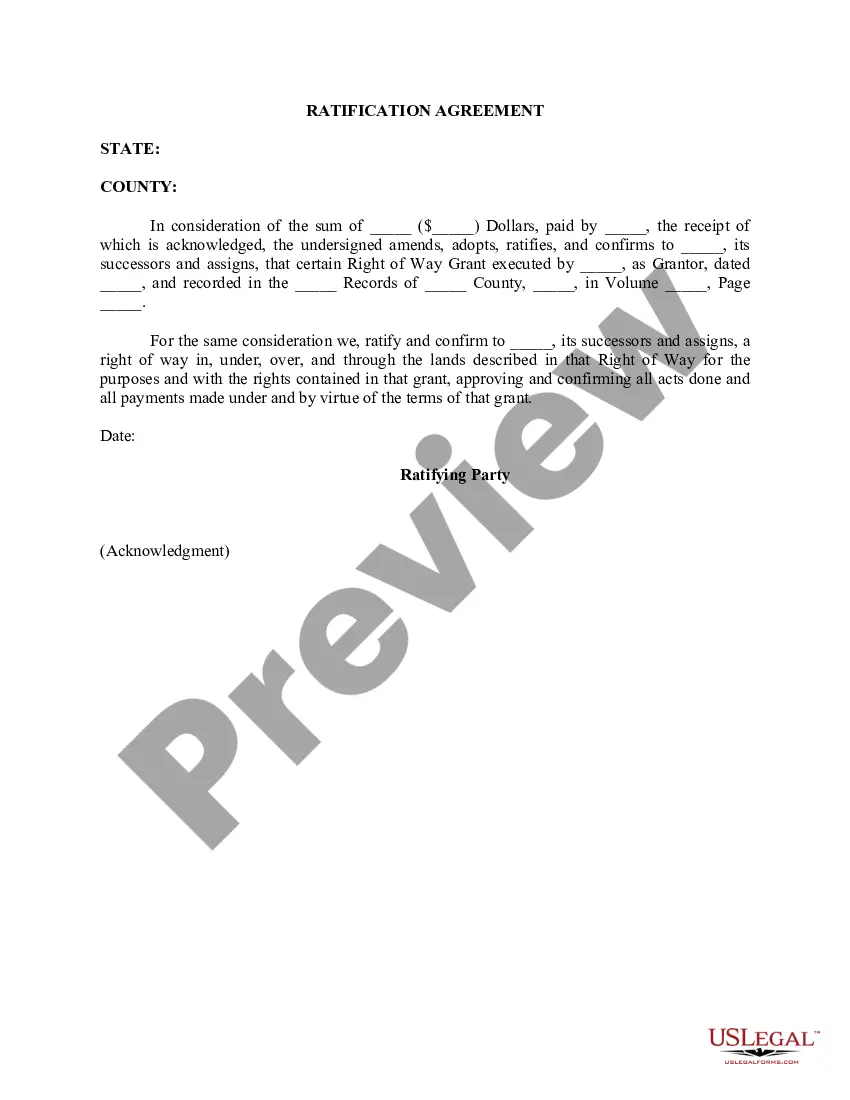
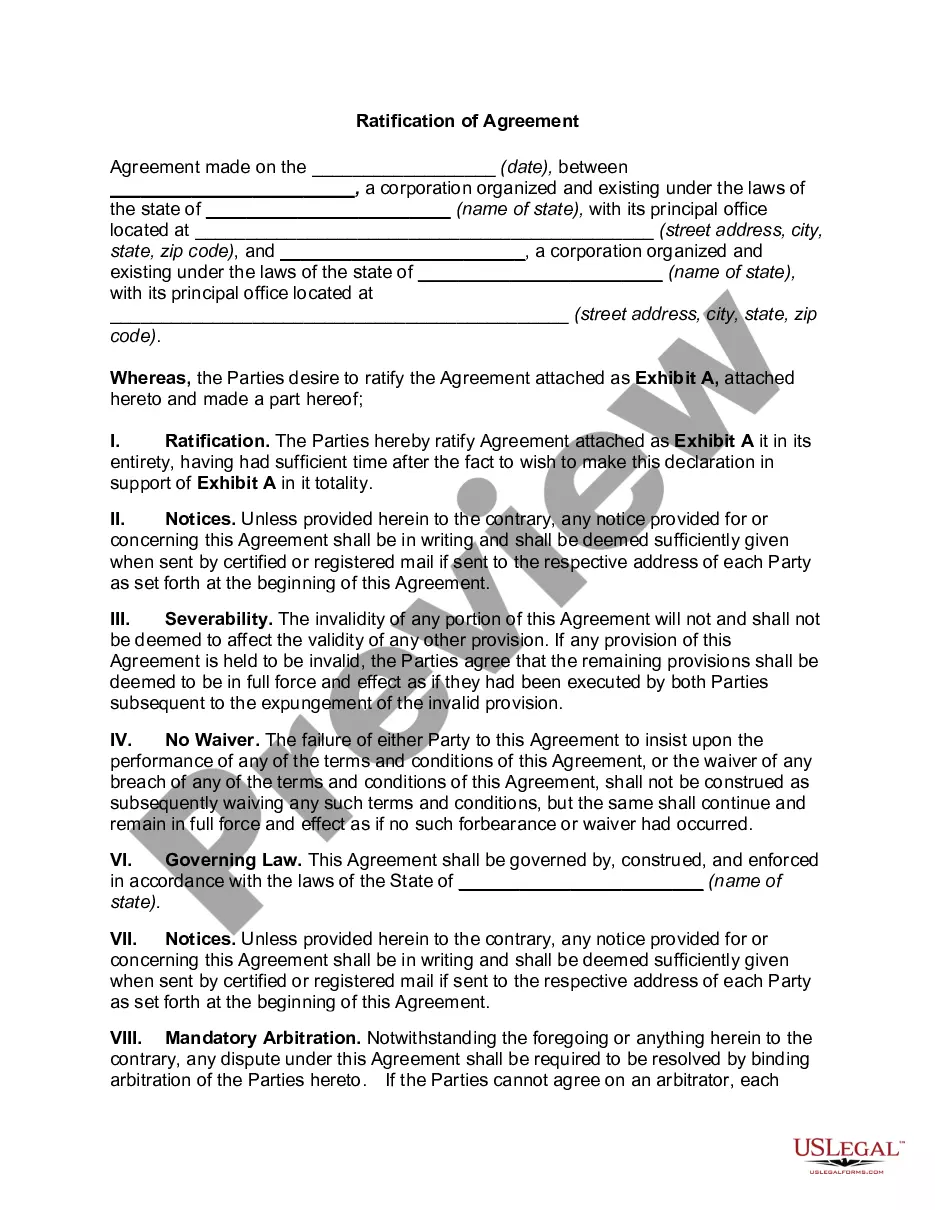
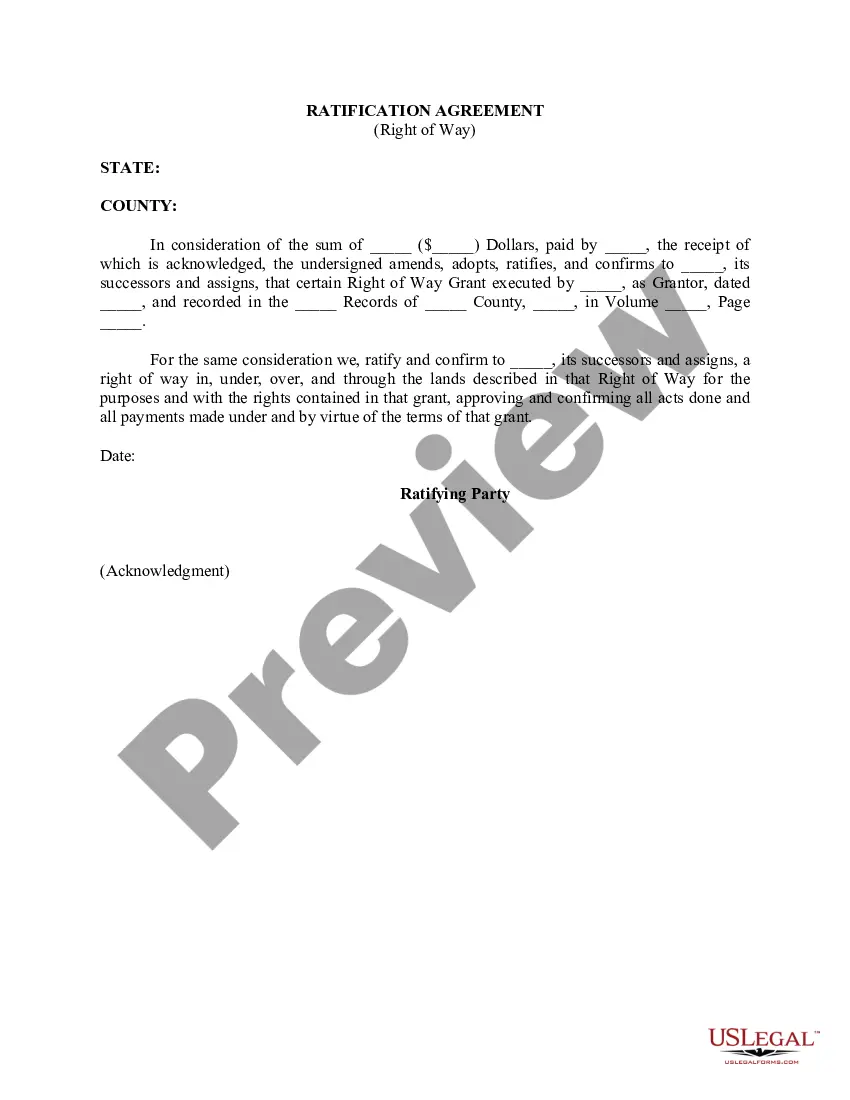
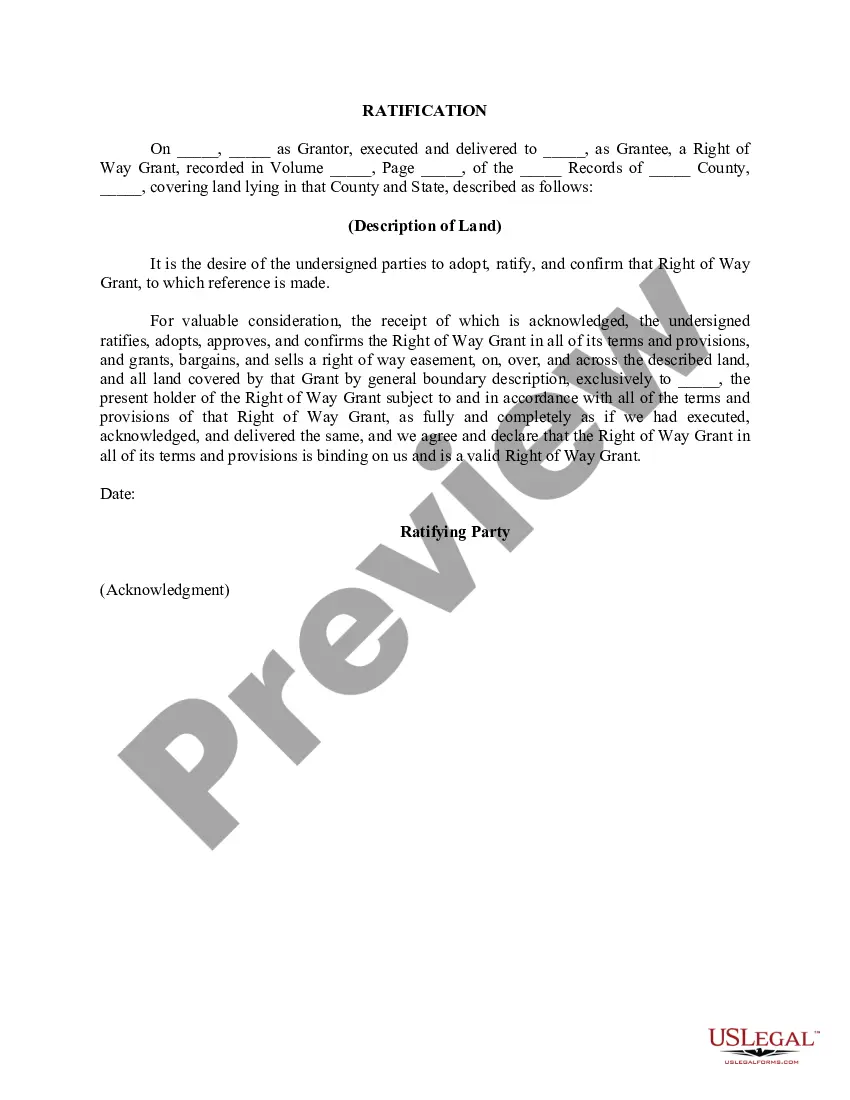
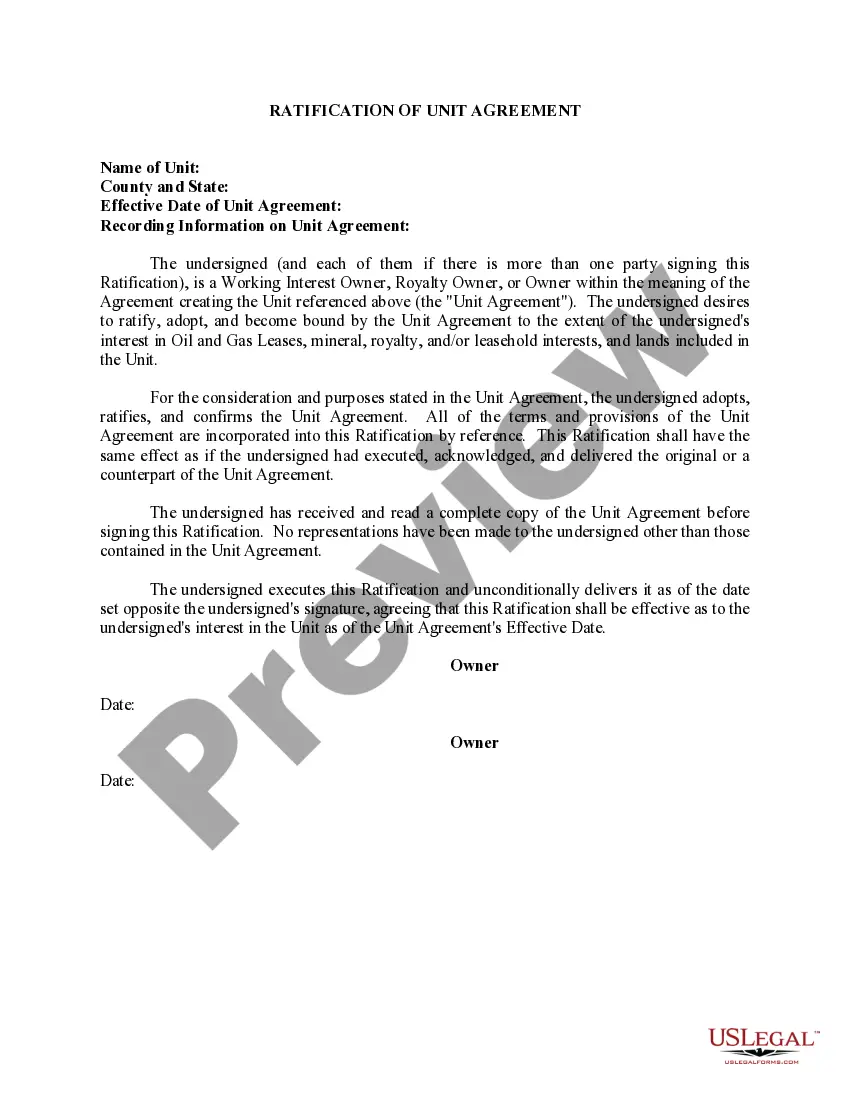
A ratification agreement is a legal document that confirms and adopts a previously executed grant related to property rights. This form is used to amend or reinforce existing agreements by acknowledging prior actions and payments made under the terms of that grant. It serves to validate and affirm the rights and obligations of parties involved, distinguishing it from other property agreements that may not carry the same level of confirmation or acknowledgment.
Key components of this form
- Identification of the parties involved in the agreement.
- Details of the consideration paid as part of the agreement.
- Reference to the original Right of Way Grant, including the date and recording details.
- Specific language confirming the rights granted in the original agreement.
- Signature block for ratifying parties to acknowledge the agreement.
When to use this document
This form is typically used when property rights relating to a right of way need to be reaffirmed or amended. Situations may include when a current landowner must recognize prior agreements with utility companies for installations, access routes, or other use of the land. Additionally, it may be necessary if there are changes in ownership or if parties wish to clarify or extend terms from the original grant.
Intended users of this form
- Property owners looking to reaffirm existing rights related to their land.
- Utility companies needing to confirm access rights for service lines or pipelines.
- Landlords or developers requiring clarification on property rights with tenants or other stakeholders.
- Legal professionals assisting clients with property-related agreements.
How to prepare this document
- Identify and list the parties involved in the original Right of Way Grant.
- Specify the exact amount of consideration paid for the ratification.
- Enter the relevant details from the original grant, including date and recording information.
- Review the original grant's provisions and amend if necessary.
- Have all parties sign and date the document to validate the agreement.
Does this form need to be notarized?
To make this form legally binding, it must be notarized. Our online notarization service, powered by Notarize, lets you verify and sign documents remotely through an encrypted video session.
Get your form ready online
Our built-in tools help you complete, sign, share, and store your documents in one place.
Make edits, fill in missing information, and update formatting in US Legal Forms—just like you would in MS Word.
Download a copy, print it, send it by email, or mail it via USPS—whatever works best for your next step.
Sign and collect signatures with our SignNow integration. Send to multiple recipients, set reminders, and more. Go Premium to unlock E-Sign.
If this form requires notarization, complete it online through a secure video call—no need to meet a notary in person or wait for an appointment.
We protect your documents and personal data by following strict security and privacy standards.

Make edits, fill in missing information, and update formatting in US Legal Forms—just like you would in MS Word.

Download a copy, print it, send it by email, or mail it via USPS—whatever works best for your next step.

Sign and collect signatures with our SignNow integration. Send to multiple recipients, set reminders, and more. Go Premium to unlock E-Sign.

If this form requires notarization, complete it online through a secure video call—no need to meet a notary in person or wait for an appointment.

We protect your documents and personal data by following strict security and privacy standards.
Avoid these common issues
- Failing to include all parties involved in the original right of way agreement.
- Not specifying the correct amount of consideration paid.
- Missing the recording details of the original grant.
- Not obtaining signatures from all required parties.
Why use this form online
- Convenience of downloading and completing the form from home.
- Editable templates to fit specific needs of your agreement.
- Reliability from forms drafted by licensed attorneys to ensure compliance.
Looking for another form?


Form popularity
FAQ
This preview shows page 1 - 3 out of 4 pages. (a) Express (oral or written) (b) Tacit (implied as from conduct implying a WAIVER). Tacit Ratification (a) A minor bought land, but sold the same, after reaching 21 years of age, to a 3rd person.
Definition from Nolo's Plain-English Law Dictionary Approval or confirmation of a previous contract or other act that would not otherwise be binding in the absence of such approval.
Look over the agreement and make sure you understand the terms and conditions. If you ratify one part of the contract, you have to ratify the entire agreement. Make an express or implied declaration that you accept the terms. Continue honoring the terms of the contract as normal.
Ratification is a principal's approval of an act of its agent that lacked the authority to bind the principal legally. Ratification defines the international act in which a state indicates its consent to be bound to a treaty if the parties intended to show their consent by such an act.
A "ratified" contract is one where the parties have agreed in writing to all of the offered terms, however it is not binding until it is delivered to the offeror. It's a technical point (a gap in time, so to speak) but a period ripe for one party to mistakenly think there is a binding contract when one does not exist.
In the context of the United States government, ratification is used in two senses. First, there is the ratification of constitutional amendments. Second, there is the ratification of foreign treaties.
Ratification is a principal's approval of an act of its agent that lacked the authority to bind the principal legally. Ratification defines the international act in which a state indicates its consent to be bound to a treaty if the parties intended to show their consent by such an act.
The Senate ratified the treaty. To ratify is to approve and give formal consent to something. When all the delegates sign a constitution, this is an example of a situation where they ratify the constitution.
Ratifying a contract means approving it, not necessarily signing it. This occurs after two parties negotiate the details of a contract, but one or both of the parties does not have the authority to sign the contract. The contract then needs to be approved by people higher up the chain of command.