Ratification
What this document covers
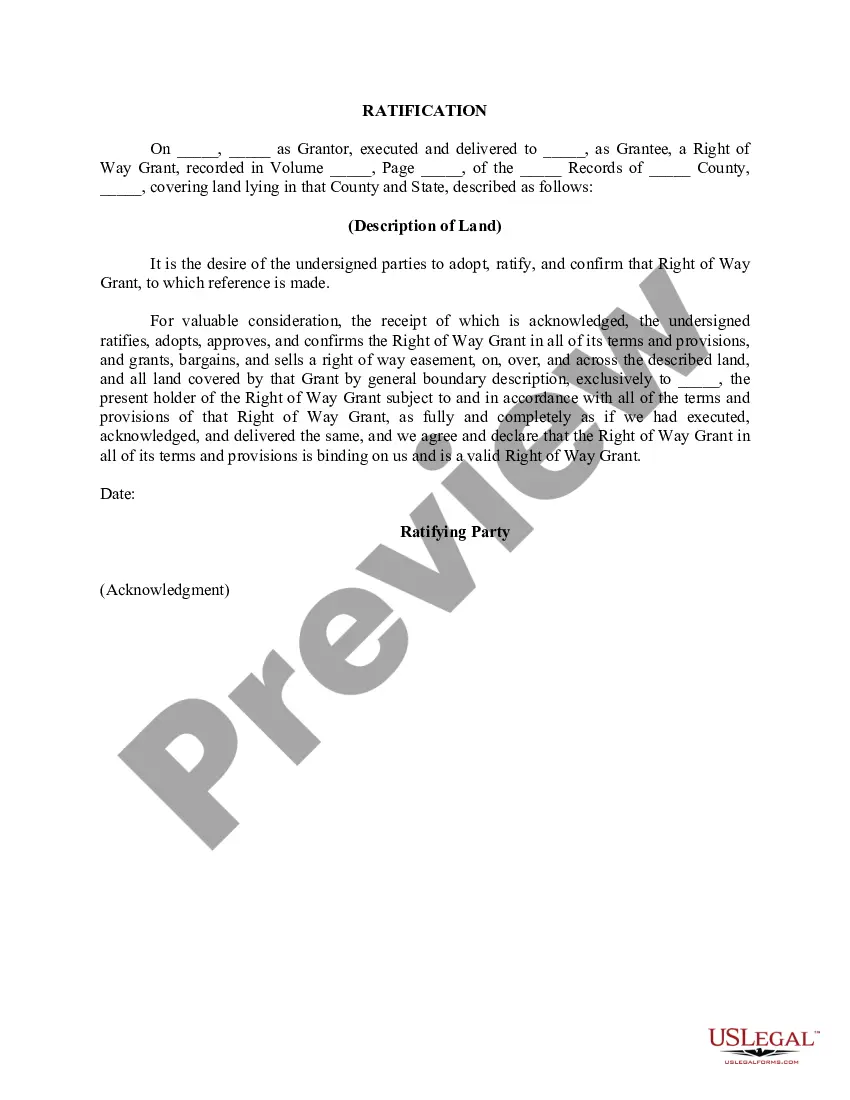
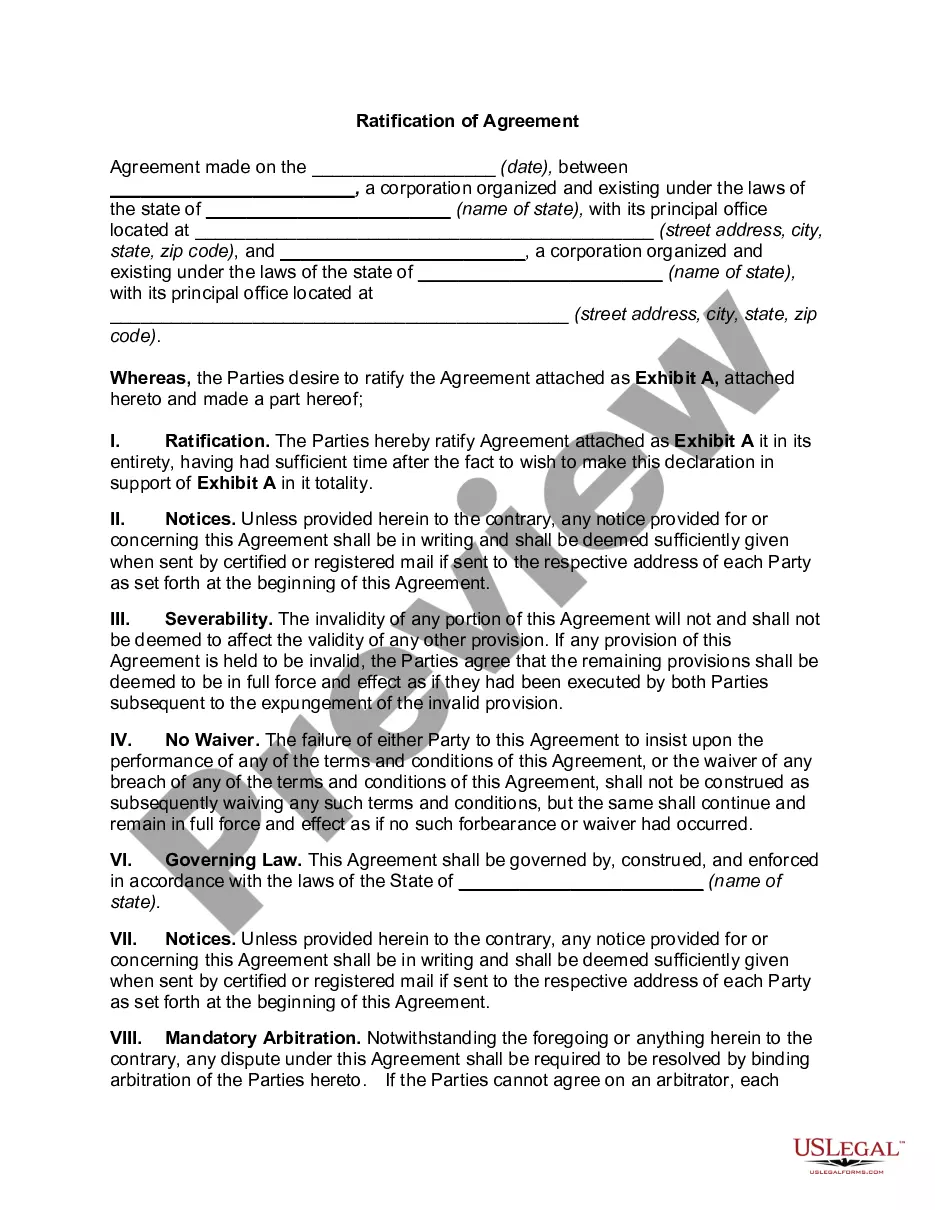
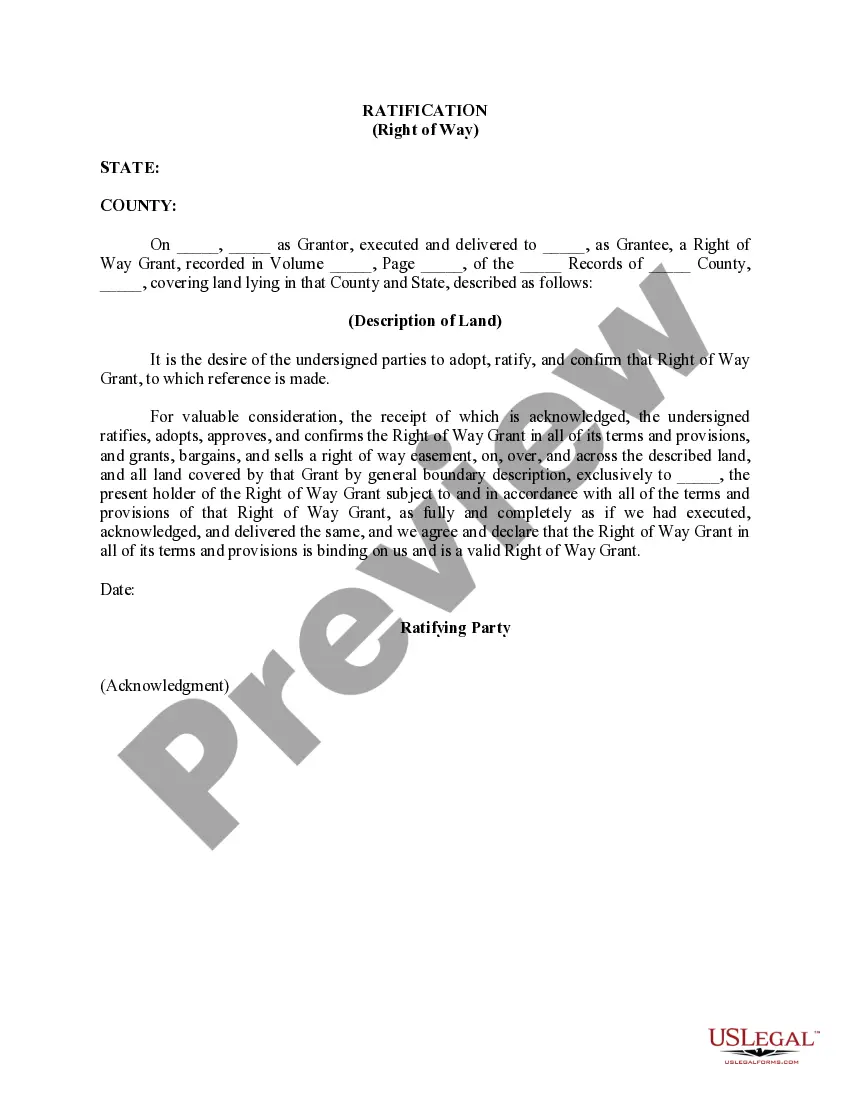
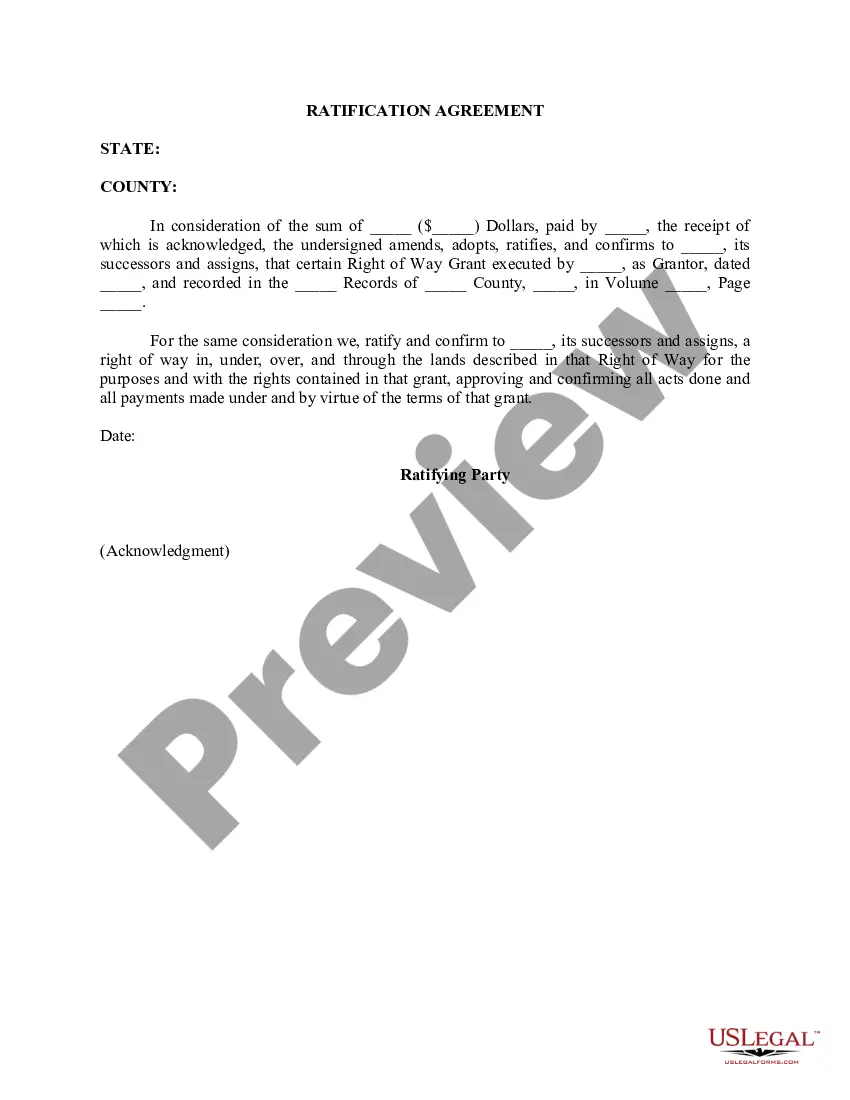
The ratification form is a legal agreement used to confirm and adopt the terms of a previously executed Right of Way Grant. This form is essential for ensuring all parties involved acknowledge the granted rights concerning land use, making it binding and enforceable. Unlike other property agreements, the ratification explicitly affirms prior agreements, reinforcing legal rights over a specified easement on the designated land.
Form components explained
- Grantor and Grantee Information: Identifies the parties involved in the agreement.
- Property Description: Details the land covered by the Right of Way Grant.
- Ratification Clause: Confirms adoption of the existing Right of Way Grant.
- Signatures: Requires signatures of the ratifying parties to validate the form.
- Date of Execution: The date on which the ratification agreement is signed.
Common use cases
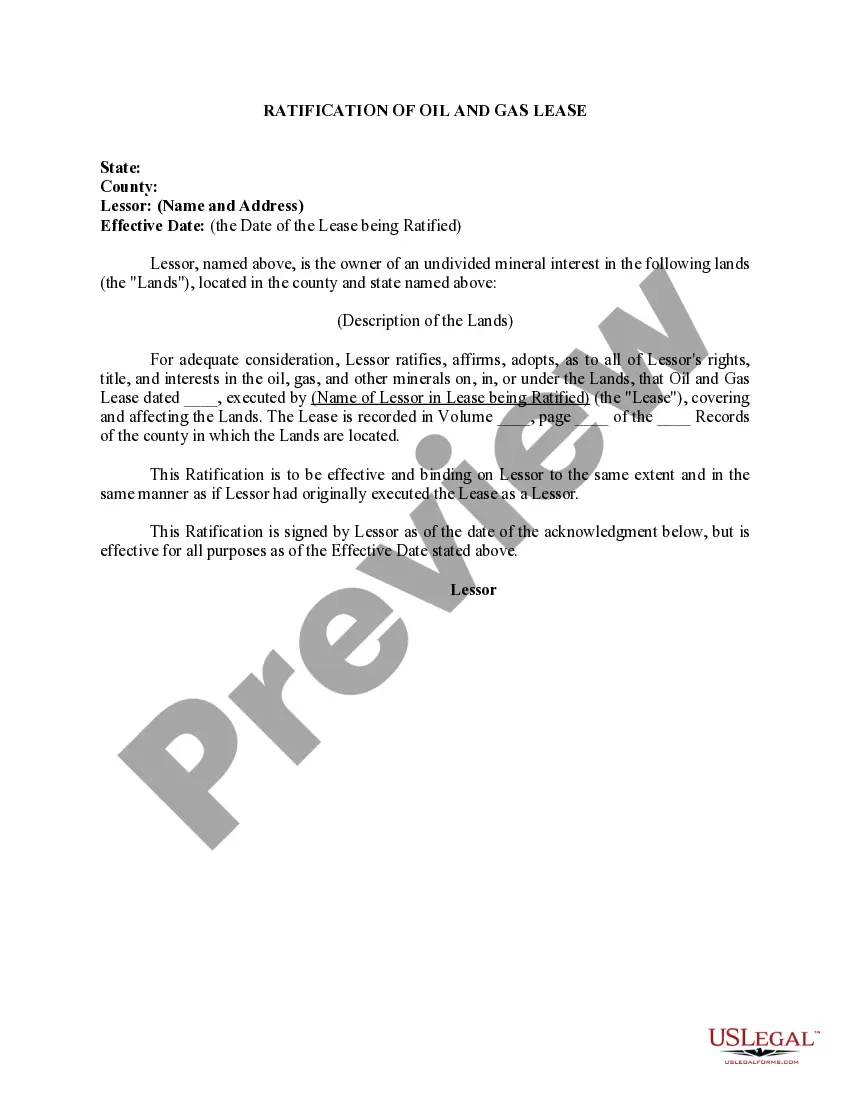
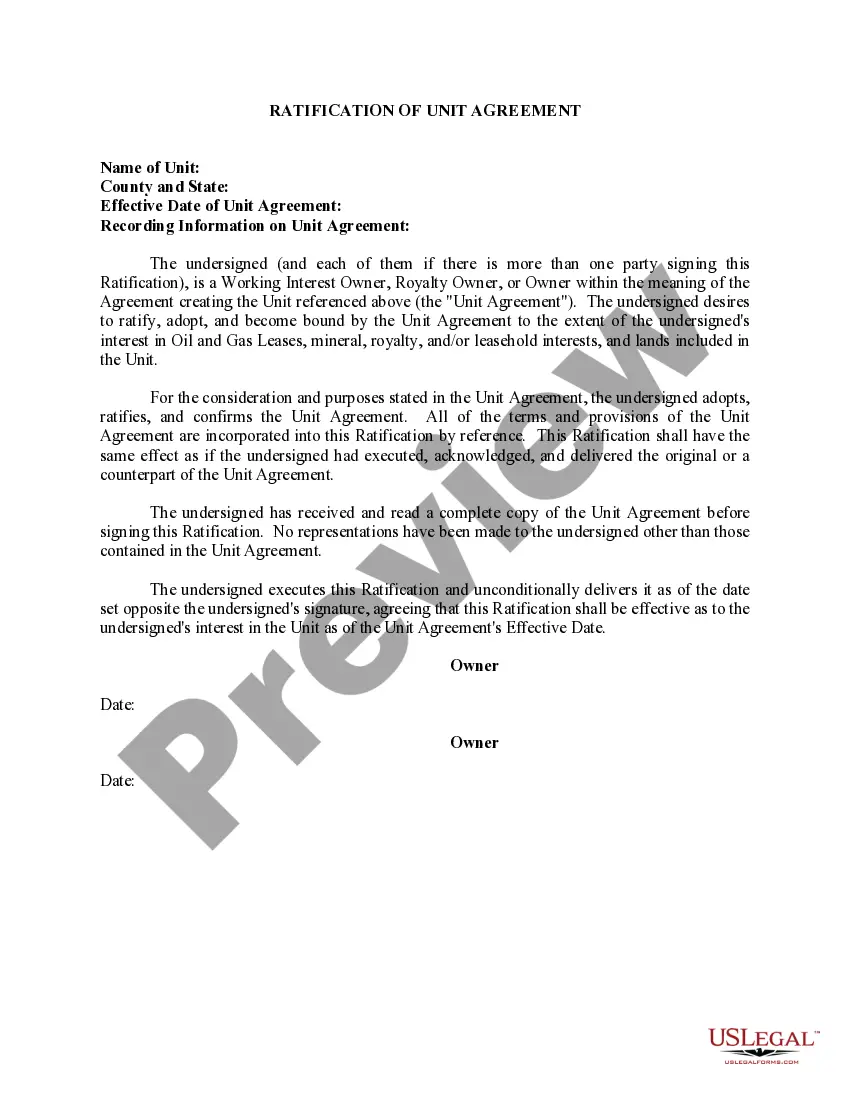
This form is commonly used when parties wish to reaffirm a Right of Way Grant that has already been executed but needs formal acknowledgment. It is applicable in situations where there may be disputes about the terms or when parties change ownership and require confirmation of existing rights. Additionally, it can be valuable during property transactions to clarify and validate easements for future land use.
Who this form is for
- Property owners who wish to clarify or confirm rights of way on their land.
- Buyers or sellers involved in real estate transactions requiring knowledge of existing easements.
- Legal representatives or real estate agents managing property agreements.
- Parties who have previously entered into a Right of Way Grant and require formal ratification.
How to complete this form
- Identify the parties involved: Enter the names of the Grantor and Grantee.
- Specify the property: Provide a detailed description of the land involved in the Right of Way Grant.
- Enter the date: Fill in the date on which the ratification is being executed.
- Include the recording details: Add the volume and page number from the county records where the Right of Way Grant is filed.
- Obtain signatures: Ensure all ratifying parties sign and date the form to validate the agreement.
Notarization guidance
This form needs to be notarized to ensure legal validity. US Legal Forms provides secure online notarization powered by Notarize, allowing you to complete the process through a verified video call, available anytime.
Get your form ready online
Our built-in tools help you complete, sign, share, and store your documents in one place.
Make edits, fill in missing information, and update formatting in US Legal Forms—just like you would in MS Word.
Download a copy, print it, send it by email, or mail it via USPS—whatever works best for your next step.
Sign and collect signatures with our SignNow integration. Send to multiple recipients, set reminders, and more. Go Premium to unlock E-Sign.
If this form requires notarization, complete it online through a secure video call—no need to meet a notary in person or wait for an appointment.
We protect your documents and personal data by following strict security and privacy standards.

Make edits, fill in missing information, and update formatting in US Legal Forms—just like you would in MS Word.

Download a copy, print it, send it by email, or mail it via USPS—whatever works best for your next step.

Sign and collect signatures with our SignNow integration. Send to multiple recipients, set reminders, and more. Go Premium to unlock E-Sign.

If this form requires notarization, complete it online through a secure video call—no need to meet a notary in person or wait for an appointment.

We protect your documents and personal data by following strict security and privacy standards.
Typical mistakes to avoid
- Failing to provide a complete property description.
- Not including all necessary signatures which can invalidate the agreement.
- Using outdated or inaccurate recording information.
- Ignoring local laws that affect the ratification process.
Why complete this form online
- Easy access to customizable templates that can be tailored to your specific needs.
- Convenient online editing to ensure accuracy before printing.
- Reliable legal formats drafted by licensed attorneys, minimizing legal risks.
- Immediate availability, allowing for quick execution and submission.
Summary of main points
- The ratification form clarifies and confirms previously granted property easements.
- It's essential for property owners and real estate transactions to formalize rights of way.
- Accurate completion of this form is crucial for its legal standing and enforceability.
Looking for another form?
Form popularity
FAQ
A "ratified" contract is one where the parties have agreed in writing to all of the offered terms, however it is not binding until it is delivered to the offeror. It's a technical point (a gap in time, so to speak) but a period ripe for one party to mistakenly think there is a binding contract when one does not exist.
Can you back out of an accepted offer? If you or the seller can't meet the contract contingencies for the sale, it will be voided and you can back out. Once you sign the contract, you'll be given a set period of time to clear these contingencies or cancel the transaction.
: the act or process of ratifying something (such as a treaty or amendment) : formal confirmation or sanction Slavery officially ended in New Jersey in 1804, but in practice some people remained slaves until 1865, when the ratification of the 13th Amendment formally abolished slavery in the United States.
Look over the agreement and make sure you understand the terms and conditions. If you ratify one part of the contract, you have to ratify the entire agreement. Make an express or implied declaration that you accept the terms. Continue honoring the terms of the contract as normal.
A "ratified" contract is one where the parties have agreed in writing to all of the offered terms, however it is not binding until it is delivered to the offeror. It's a technical point (a gap in time, so to speak) but a period ripe for one party to mistakenly think there is a binding contract when one does not exist.
Typically, you do not pay a fee to a buyer's agent. The selling agent has a contract with the seller for a commission. If a buyer comes to them with their own realtor, then the selling agent splits their commission with that realtor.In many parts of the country, the buyer's agent is paid from the seller.
The Senate ratified the treaty. To ratify is to approve and give formal consent to something. When all the delegates sign a constitution, this is an example of a situation where they ratify the constitution.
The President may form and negotiate, but the treaty must be advised and consented to by a two-thirds vote in the Senate. Only after the Senate approves the treaty can the President ratify it. Once it is ratified, it becomes binding on all the states under the Supremacy Clause.
As a buyer, your agent and the seller's agent split a commission fee typically 5-6% of the purchase price of the home. And while this fee is technically paid by the seller, it's factored in to how much sellers list their home for.