Ratification (Right of Way)
Understanding this form
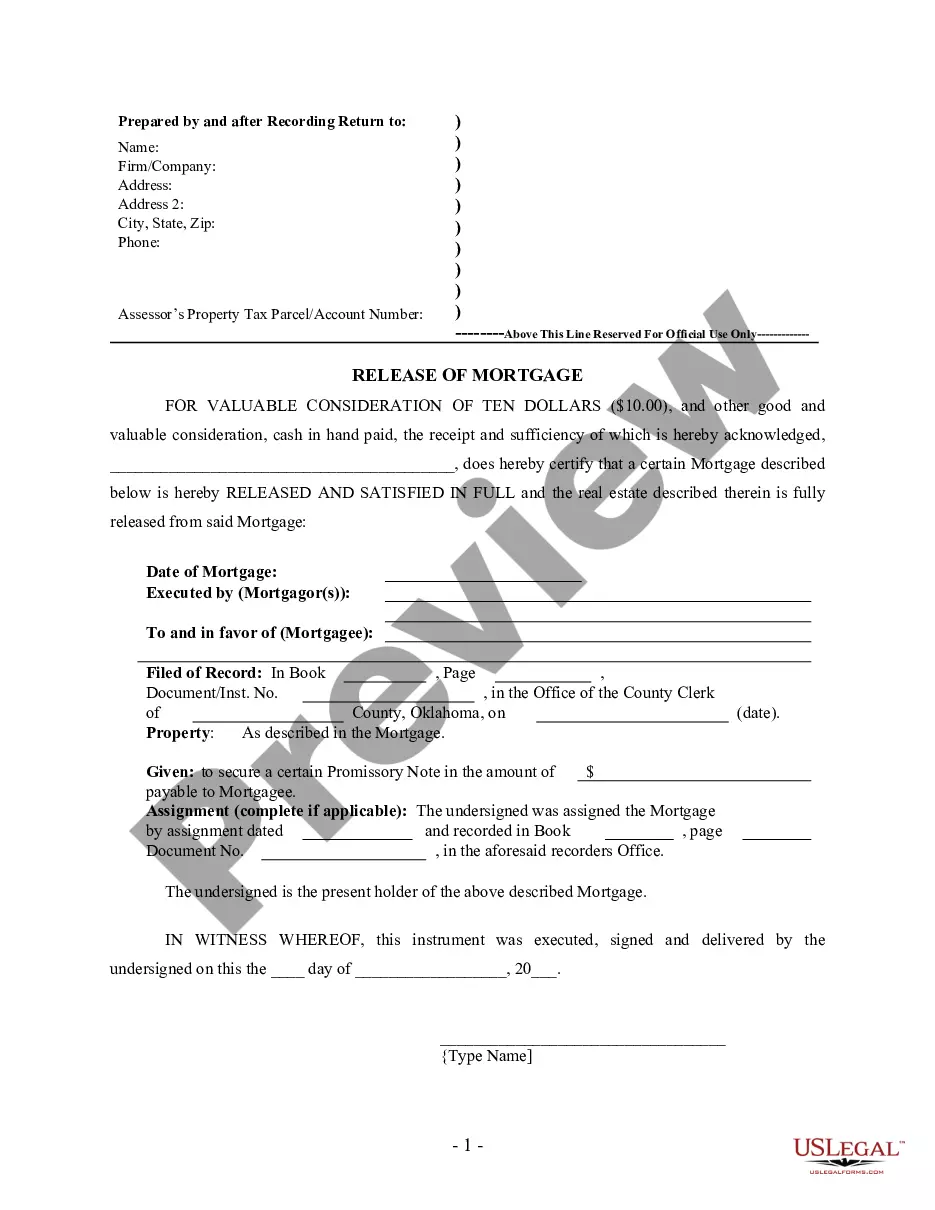
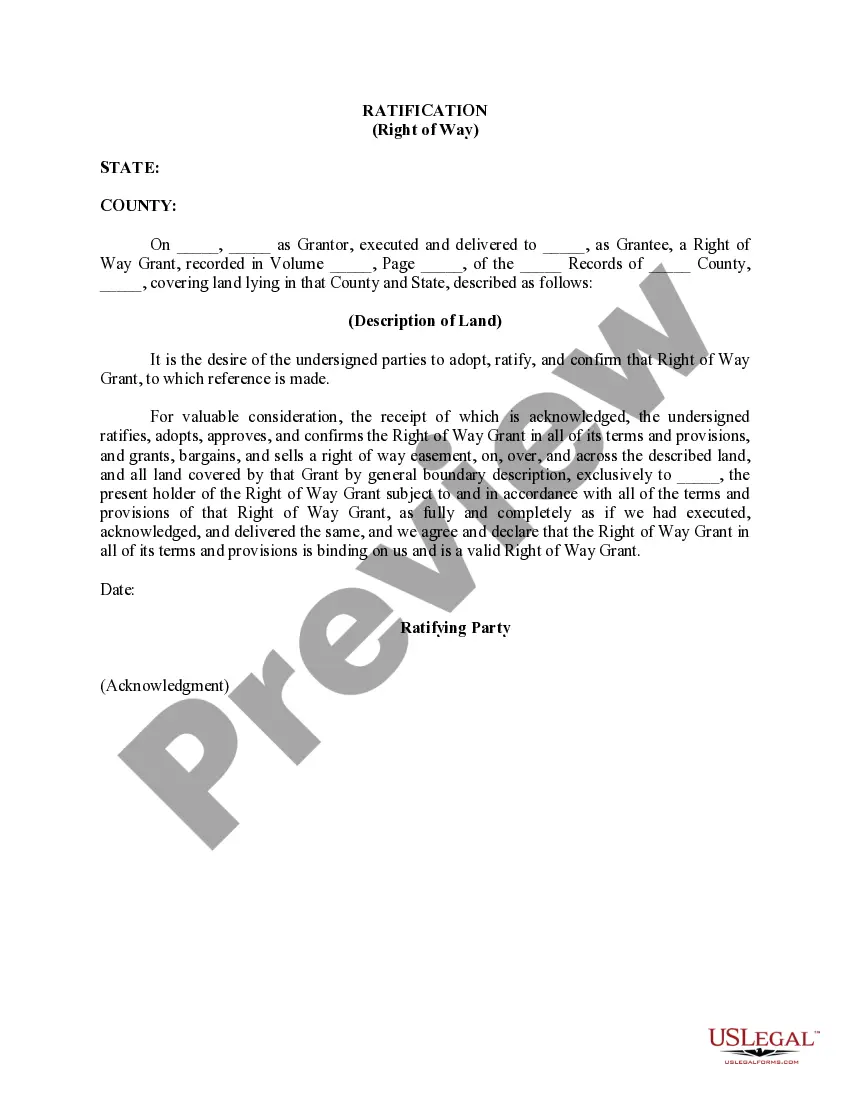
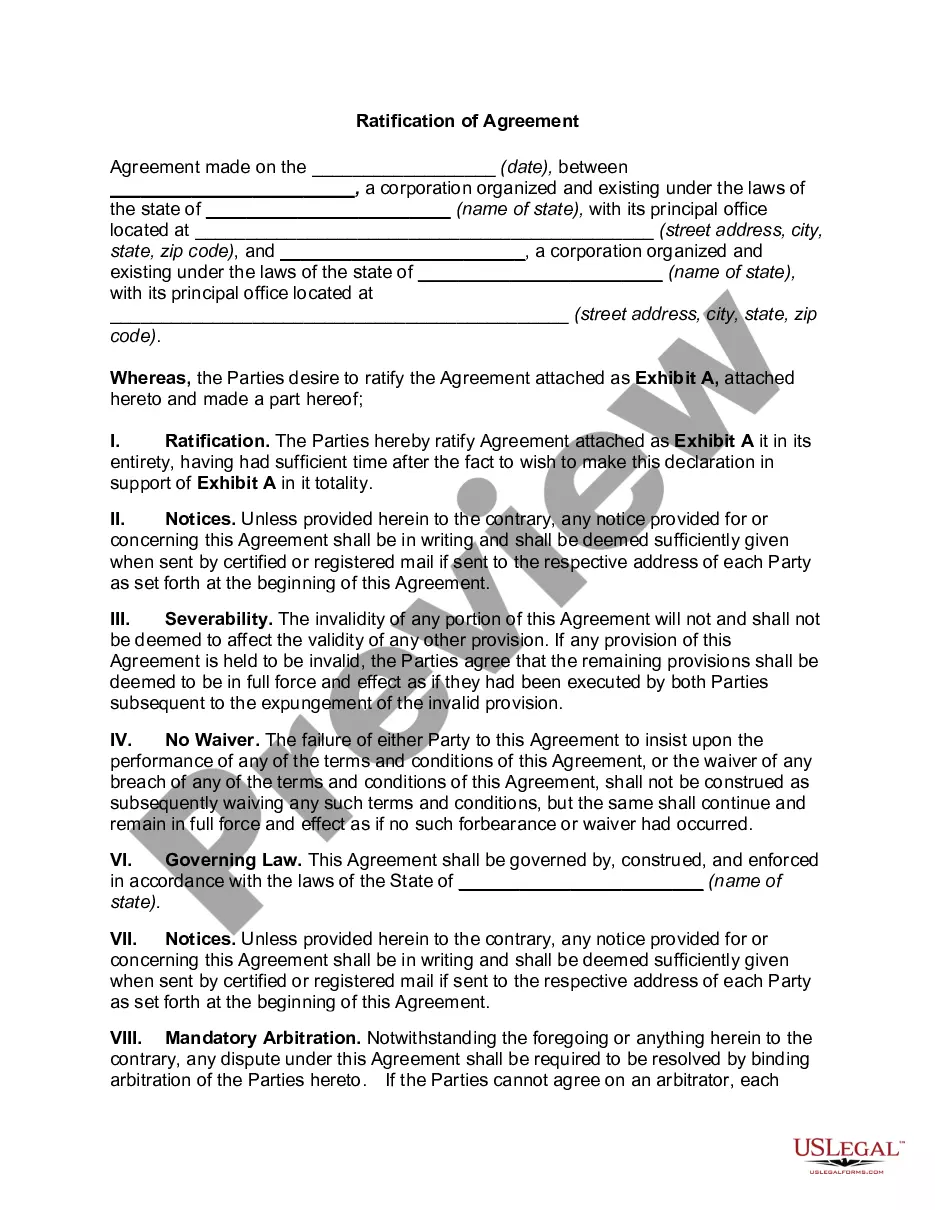
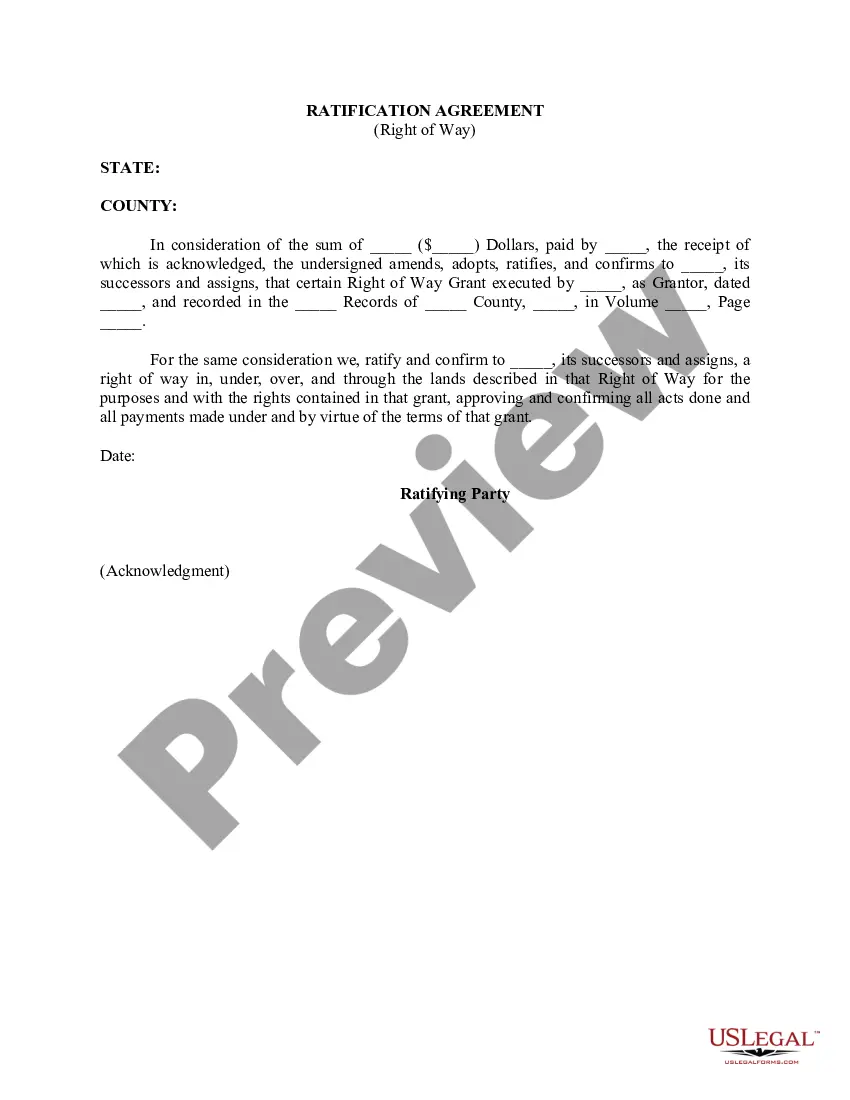
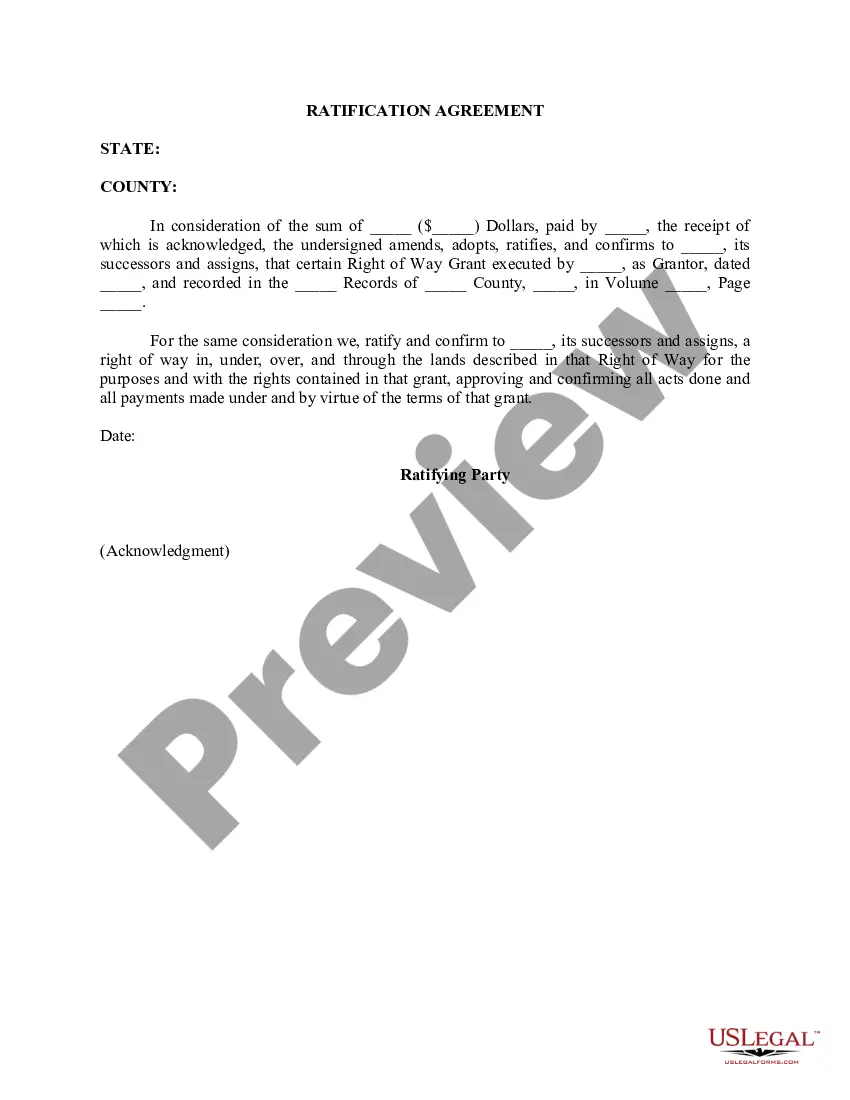
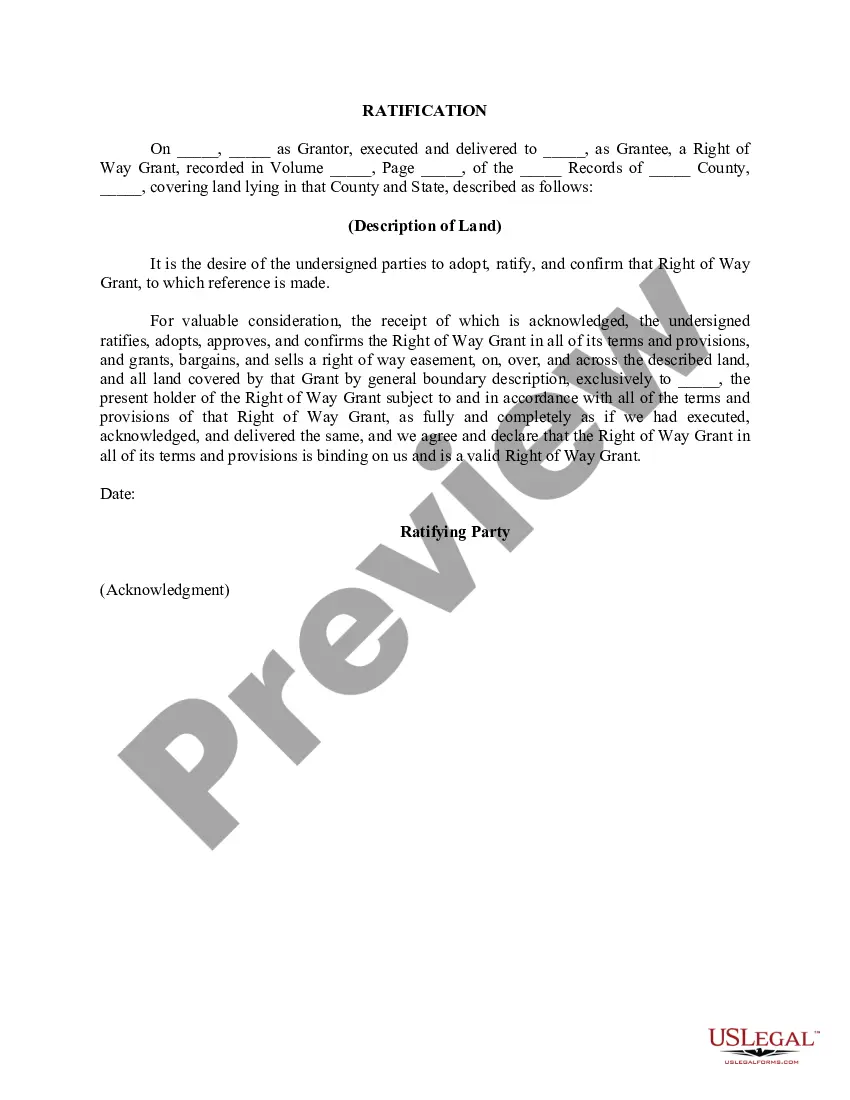
The Ratification (Right of Way) form is a legal document used to affirm and confirm the terms of a previously executed right of way grant. This form solidifies the agreement between the parties involved, ensuring their rights regarding the use of land for a specific purpose, such as access for utilities or transportation. Unlike other documents that may initiate such agreements, this form focuses on ratifying existing rights, making it essential for validating prior contracts.
Key parts of this document
- Date of ratification.
- Identification of the grantor and grantee.
- Description of the originally granted right of way.
- Confirmation and ratification language.
- Signature lines for the ratifying party.
Common use cases
This form should be used when parties wish to formally recognize and affirm a prior right of way agreement that has already been recorded. It is applicable in scenarios such as: - Transfer of ownership of the land to a new party who requires acknowledgment of the prior right. - Modification of existing agreements where continued use of the right of way is necessary. - Confirmation of rights for easements where the original document needs validation by current landowners.
Intended users of this form
- Landowners who have previously granted a right of way.
- Individuals or entities acquiring property with established easements.
- Attorneys or legal representatives handling property matters.
- Real estate professionals assisting with property transactions involving rights of way.
How to prepare this document
- Enter the date of the ratification.
- Clearly identify the parties involved by providing their names and addresses.
- Include a detailed description of the right of way being ratified.
- Ensure all parties sign the document, indicating their agreement to the ratification.
- Consider having the document notarized if required by state law.
Notarization guidance
This form needs to be notarized to ensure legal validity. US Legal Forms provides secure online notarization powered by Notarize, allowing you to complete the process through a verified video call, available anytime.
Get your form ready online
Our built-in tools help you complete, sign, share, and store your documents in one place.
Make edits, fill in missing information, and update formatting in US Legal Forms—just like you would in MS Word.
Download a copy, print it, send it by email, or mail it via USPS—whatever works best for your next step.
Sign and collect signatures with our SignNow integration. Send to multiple recipients, set reminders, and more. Go Premium to unlock E-Sign.
If this form requires notarization, complete it online through a secure video call—no need to meet a notary in person or wait for an appointment.
We protect your documents and personal data by following strict security and privacy standards.

Make edits, fill in missing information, and update formatting in US Legal Forms—just like you would in MS Word.

Download a copy, print it, send it by email, or mail it via USPS—whatever works best for your next step.

Sign and collect signatures with our SignNow integration. Send to multiple recipients, set reminders, and more. Go Premium to unlock E-Sign.

If this form requires notarization, complete it online through a secure video call—no need to meet a notary in person or wait for an appointment.

We protect your documents and personal data by following strict security and privacy standards.
Common mistakes
- Failing to accurately describe the land subject to the right of way.
- Not including signatures of all required parties.
- Using an outdated version of the form without necessary revisions.
- Neglecting to record the ratification after completion.
Why use this form online
- Convenience of accessing and downloading the form immediately.
- Editability allows for customization to fit specific scenarios.
- Reliability, as forms are drafted by licensed attorneys.
Legal use & context
- Ratification of Right of Way grants serves to confirm existing permissions for land use.
- It provides legal backing for both grantors and grantees, avoiding future disputes.
- Ensures that new property owners can exercise their rights without legal complications.
Summary of main points
- The Ratification (Right of Way) form is essential for confirming existing rights of way.
- It is necessary for parties looking to affirm previously established agreements.
- Complete the form accurately to avoid common mistakes and ensure legal validity.
Looking for another form?

Form popularity
FAQ
Transitive verb. : to approve and sanction formally : confirm ratify a treaty.
Definition from Nolo's Plain-English Law Dictionary Approval or confirmation of a previous contract or other act that would not otherwise be binding in the absence of such approval.
In the context of the United States government, ratification is used in two senses. First, there is the ratification of constitutional amendments. Second, there is the ratification of foreign treaties.
A) The most common way to add an amendment to the Constitution would be to propose it by a 2/3 vote of each house of Congress and be ratified by 3/4 of the state legislatures.
: the act or process of ratifying something (such as a treaty or amendment) : formal confirmation or sanction Slavery officially ended in New Jersey in 1804, but in practice some people remained slaves until 1865, when the ratification of the 13th Amendment formally abolished slavery in the United States.
The traditional constitutional amendment process is described in Article V of the Constitution. Congress must pass a proposed amendment by a two-thirds majority vote in both the Senate and the House of Representatives and send it to the states for ratification by a vote of the state legislatures.
The Senate ratified the treaty. To ratify is to approve and give formal consent to something. When all the delegates sign a constitution, this is an example of a situation where they ratify the constitution.
Ratification: approval of agreement by the state After approval has been granted under a state's own internal procedures, it will notify the other parties that they consent to be bound by the treaty. This is called ratification.