South Carolina Deed of Distribution - Personal Representative to Beneficiary
Understanding this form
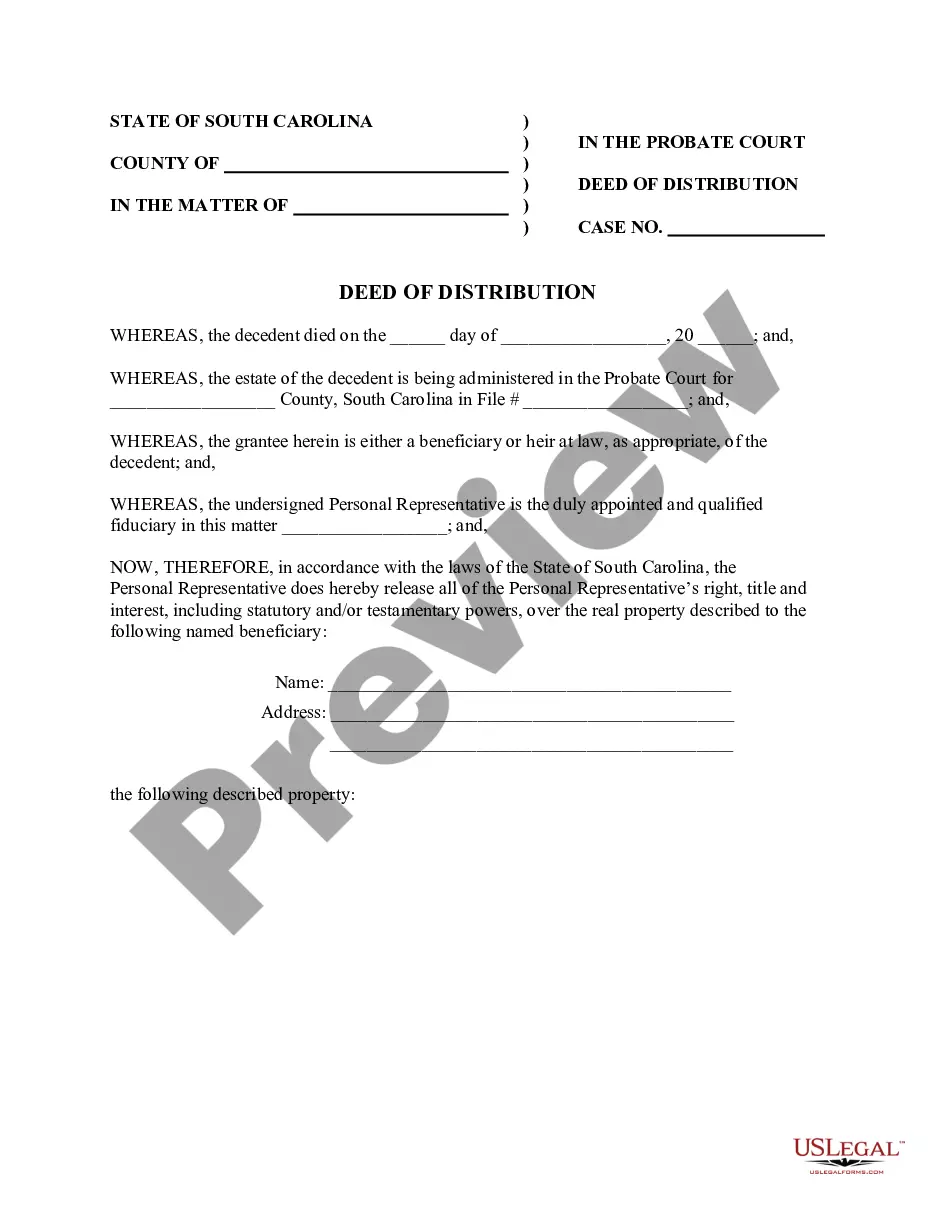
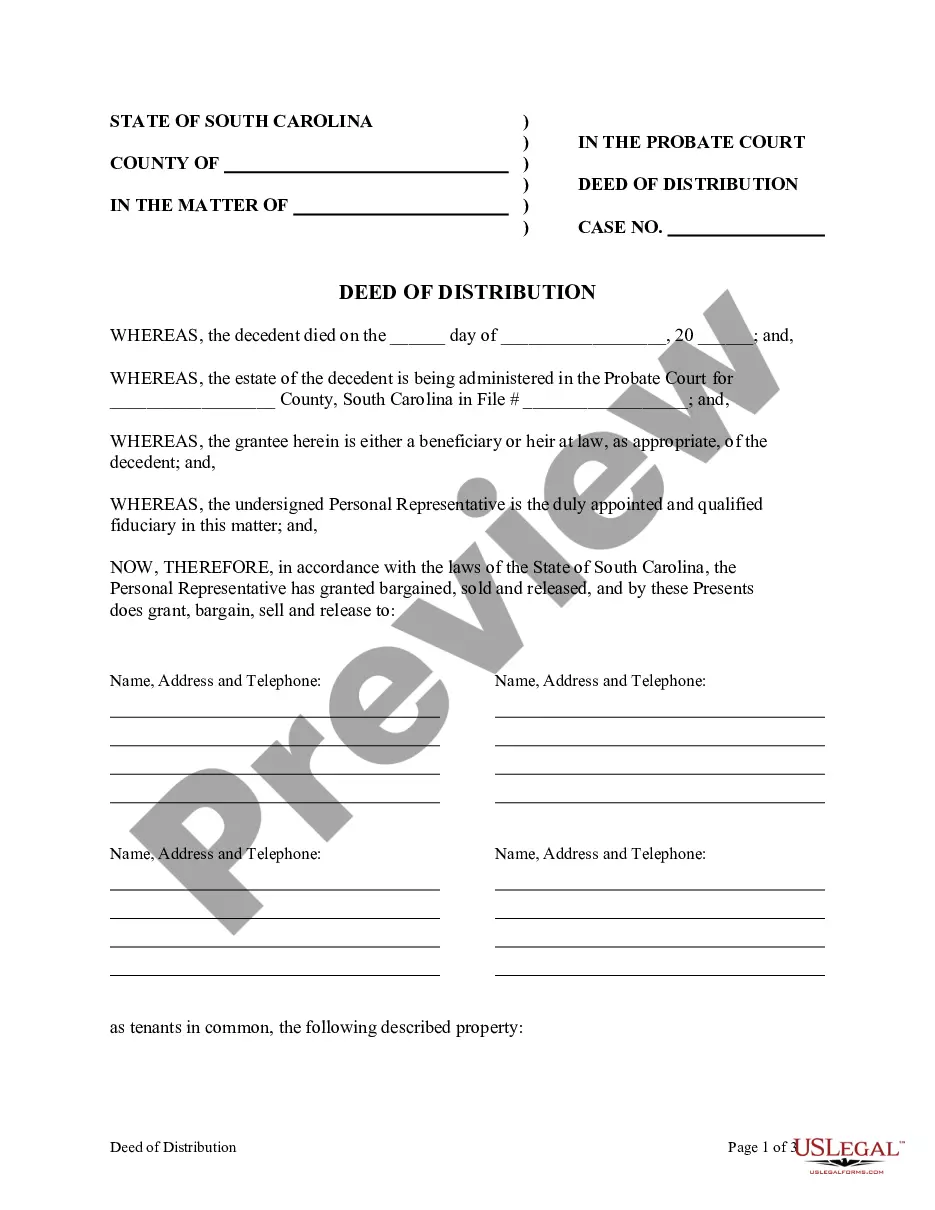
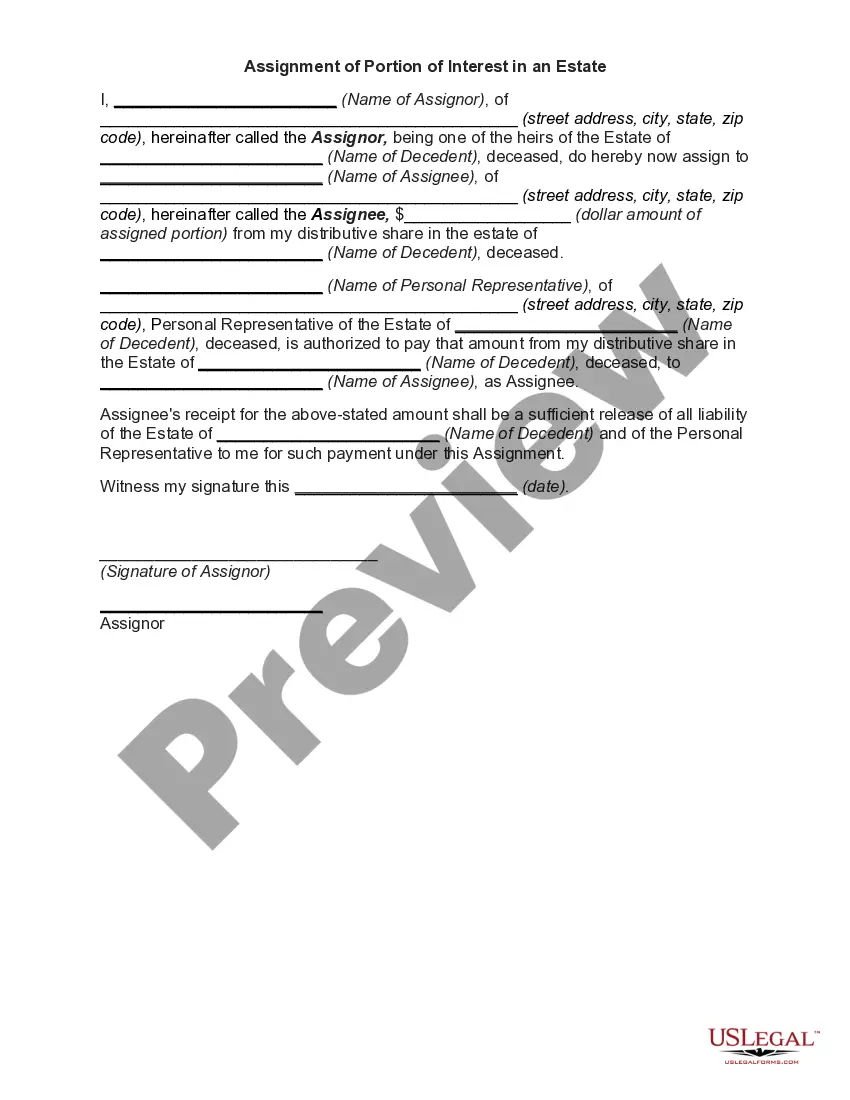
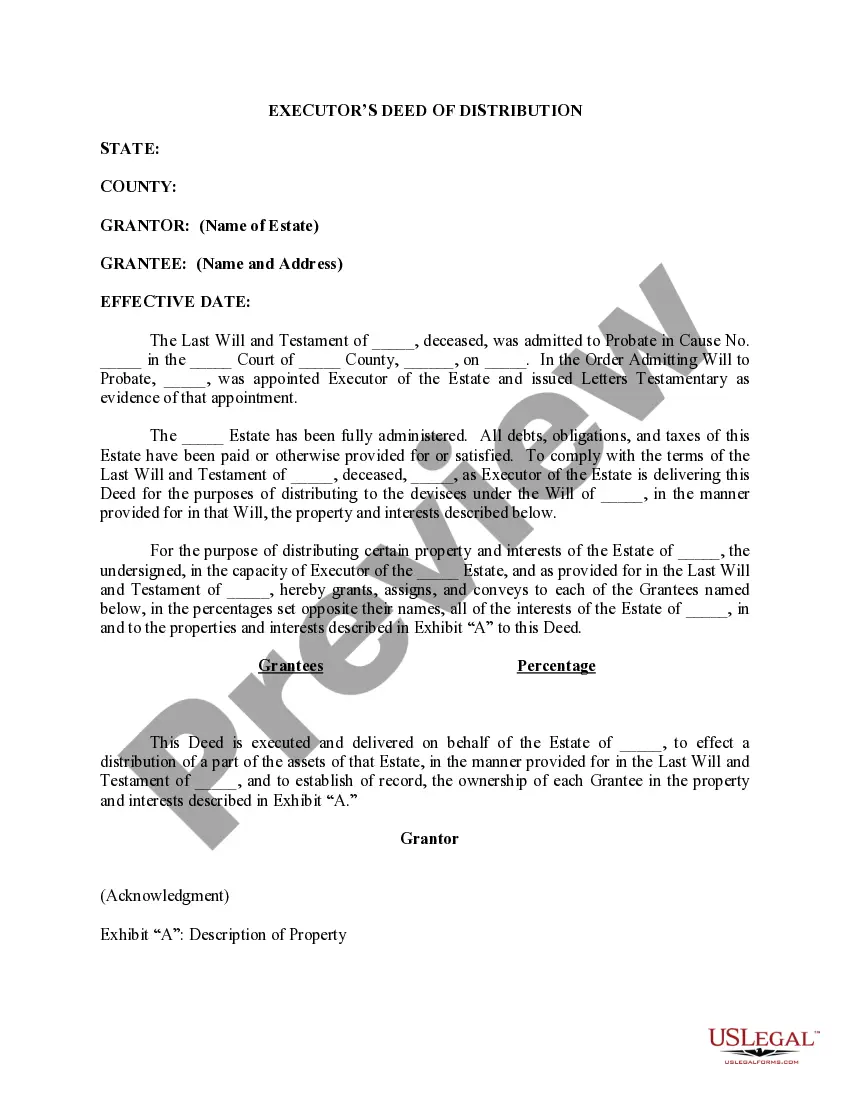
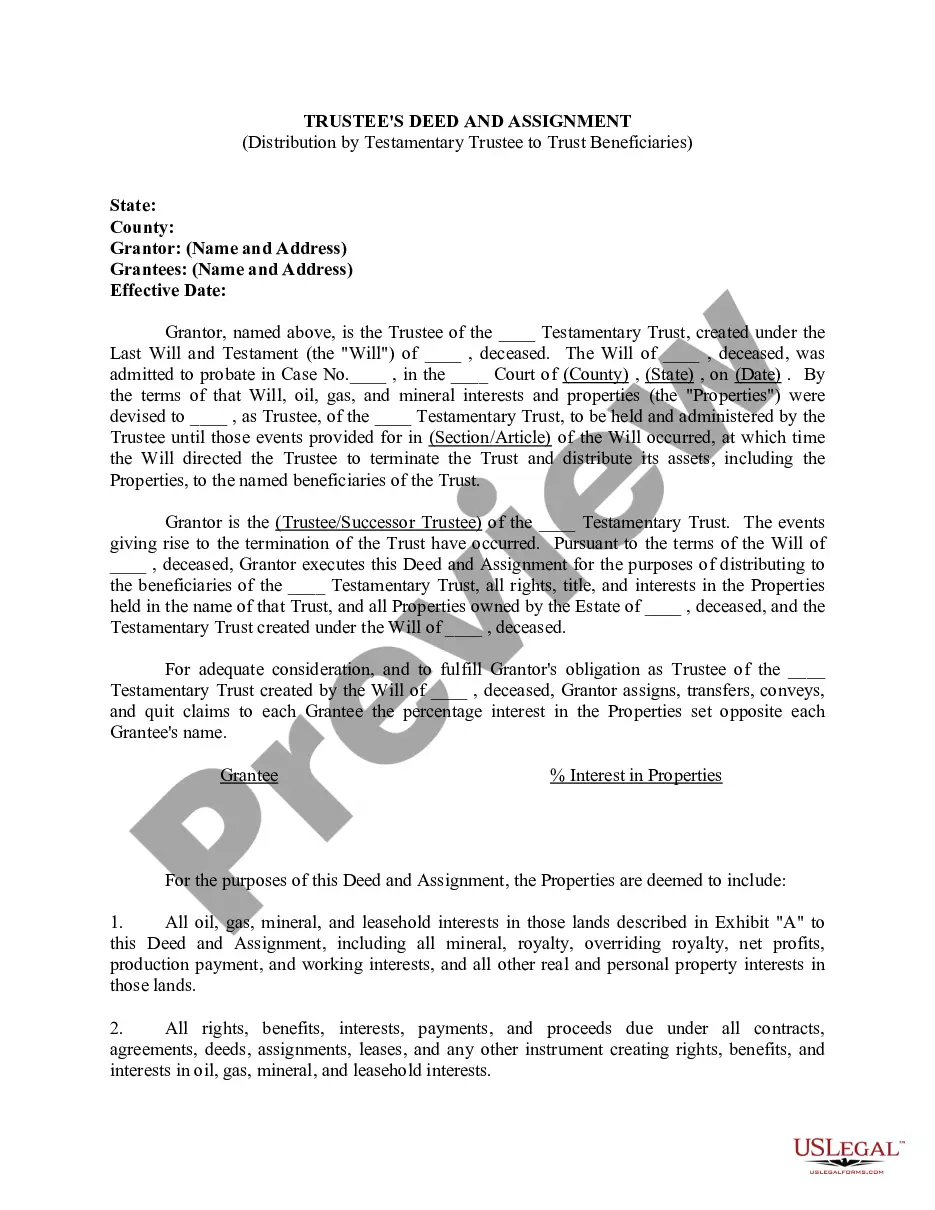
The Deed of Distribution - Personal Representative to Beneficiary is a legal document that transfers property from the estate of a deceased person to their beneficiaries. This form is used when a personal representative, who is responsible for managing the estate, formally distributes the decedent's assets. Unlike other forms of property transfer, this deed specifically involves transactions occurring after probate proceedings are completed.
Key parts of this document
- Identification of the personal representative and the estate of the decedent.
- Details of the property being distributed to the beneficiary.
- Reference to the probate court and case file number.
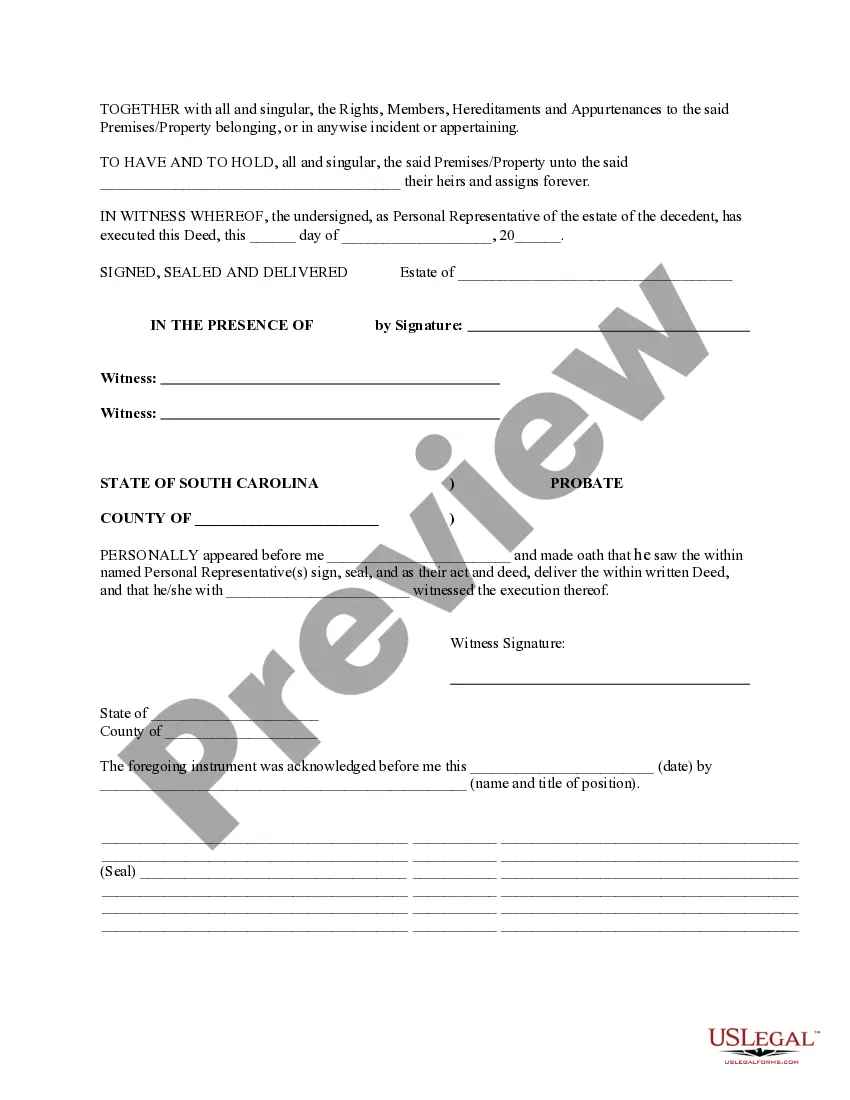
- Legal declaration of the personal representativeâs authority.
- Signature of the personal representative with date of execution.
Common use cases
This form is typically used after an estate has gone through the probate process and is ready for asset distribution. You should use this deed when the personal representative of the estate is prepared to transfer ownership of property to a beneficiary or heir, formalizing the distribution of assets in accordance with the decedent's wishes.
Who can use this document
- Personal representatives appointed by the court to oversee the estate.
- Beneficiaries or heirs receiving property from the estate.
- Individuals involved in the estate administration process.
Steps to complete this form
- Identify the personal representative and the decedent's estate details.
- Specify the property being distributed, including its legal description.
- Enter the probate court and case file number as required.
- Provide the date of execution and signature of the personal representative.
- Ensure the document is delivered to the appropriate beneficiary.
Notarization guidance
This form does not typically require notarization unless specified by local law. However, verifying any additional requirements in your jurisdiction is advisable to ensure the deed's legal validity.
Get your form ready online
Our built-in tools help you complete, sign, share, and store your documents in one place.
Make edits, fill in missing information, and update formatting in US Legal Forms—just like you would in MS Word.
Download a copy, print it, send it by email, or mail it via USPS—whatever works best for your next step.
Sign and collect signatures with our SignNow integration. Send to multiple recipients, set reminders, and more. Go Premium to unlock E-Sign.
If this form requires notarization, complete it online through a secure video call—no need to meet a notary in person or wait for an appointment.
We protect your documents and personal data by following strict security and privacy standards.

Make edits, fill in missing information, and update formatting in US Legal Forms—just like you would in MS Word.

Download a copy, print it, send it by email, or mail it via USPS—whatever works best for your next step.

Sign and collect signatures with our SignNow integration. Send to multiple recipients, set reminders, and more. Go Premium to unlock E-Sign.

If this form requires notarization, complete it online through a secure video call—no need to meet a notary in person or wait for an appointment.

We protect your documents and personal data by following strict security and privacy standards.
Avoid these common issues
- Failing to include the probate court and case file number.
- Not properly identifying the property being distributed.
- Omitting the signature or the date of execution.
Advantages of online completion
- Convenient access to legal forms at any time.
- Edit and customize the document as needed.
- Reliable templates drafted by licensed attorneys to ensure legal compliance.
Quick recap
- The Deed of Distribution legally formalizes the transfer of property from an estate to beneficiaries.
- It is essential in the probate process after the settlement of an estate.
- Proper completion and execution ensure compliance with state laws and protect the interests of heirs.
Looking for another form?




Form popularity
FAQ
In South Carolina, it will take a minimum of eight months to probate because the law requires it to remain open to allow creditors to file claims. Beyond the minimum eight months, several factors determine how long probate takes to conclude.
First, the relevant statute limits personal representative fees to 5% of the value of personal property, plus 5% of the sale of real property.
As the Personal Representative, you are responsible for doing the following: 2022 Collecting and inventorying the assets of the estate; 2022 Managing the assets of the estate during the probate process; 2022 Paying the bills of the estate. Making distribution to the heirs or beneficiaries of the estate.
In South Carolina, the grantor must sign the deed in front of two witnesses and in the presence of an individual authorized by the state to administer an oath. Record the completed deed at the local county Recorder's office, along with an Affidavit of True Consideration (S.C. Code Ann.
Generally speaking, a Personal Representative is responsible for opening the estate, collecting the assets of the estate, protecting the estate property, preparing an inventory of the property, paying various estate expenses, valid claims (including debts and taxes) against the estate, representing the estate in claims
The deed of distribution is evidence of the beneficiary's title to the house, land or other real property interest of the decedent. An ancillary probate is often opened in South Carolina for the purpose of preparing a deed of distribution when an out-of-state decedent died owning real property in South Carolina.
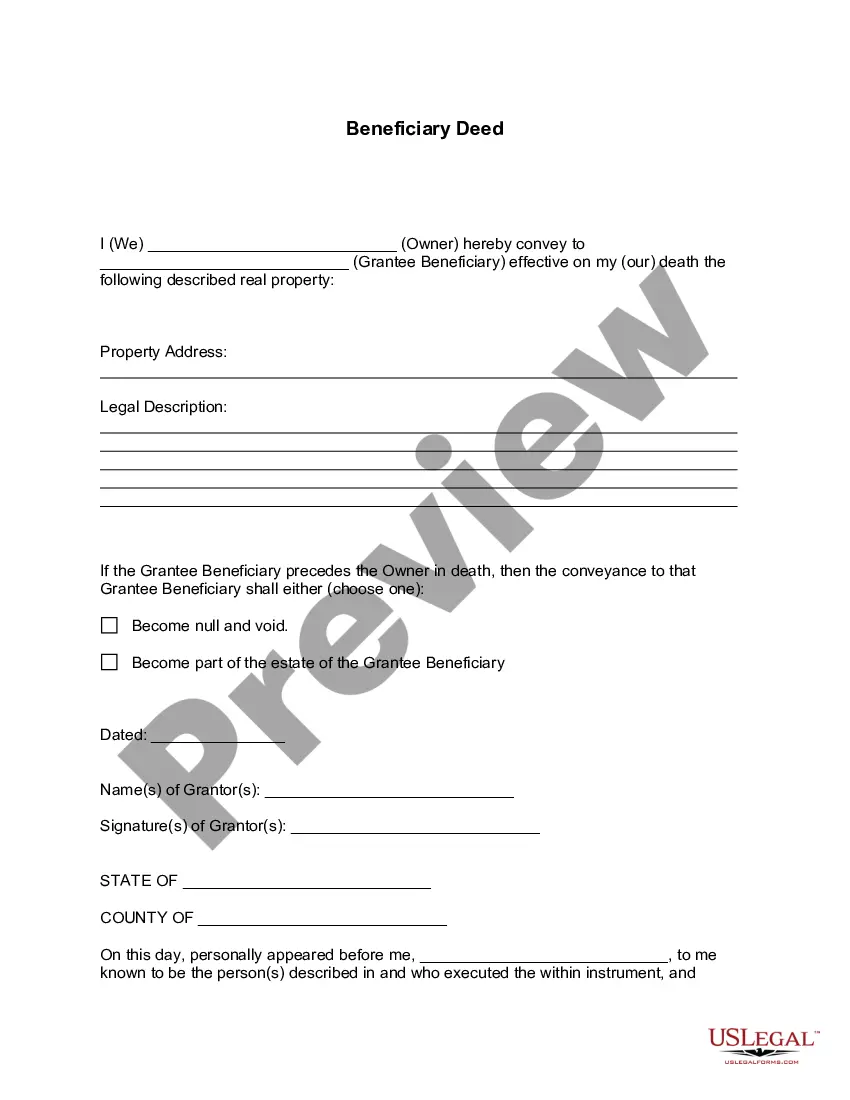
South Carolina does not allow real estate to be transferred with transfer-on-death deeds.
A distribution deed is a way to legally transfer real property when the party who is supposed to receive the property cannot be determined from the decedent's will. In most cases, the distribution of a deceased person's estate will be done in accordance with the directions contained in the terms of their will.