Executor's Deed of Distribution
About this form
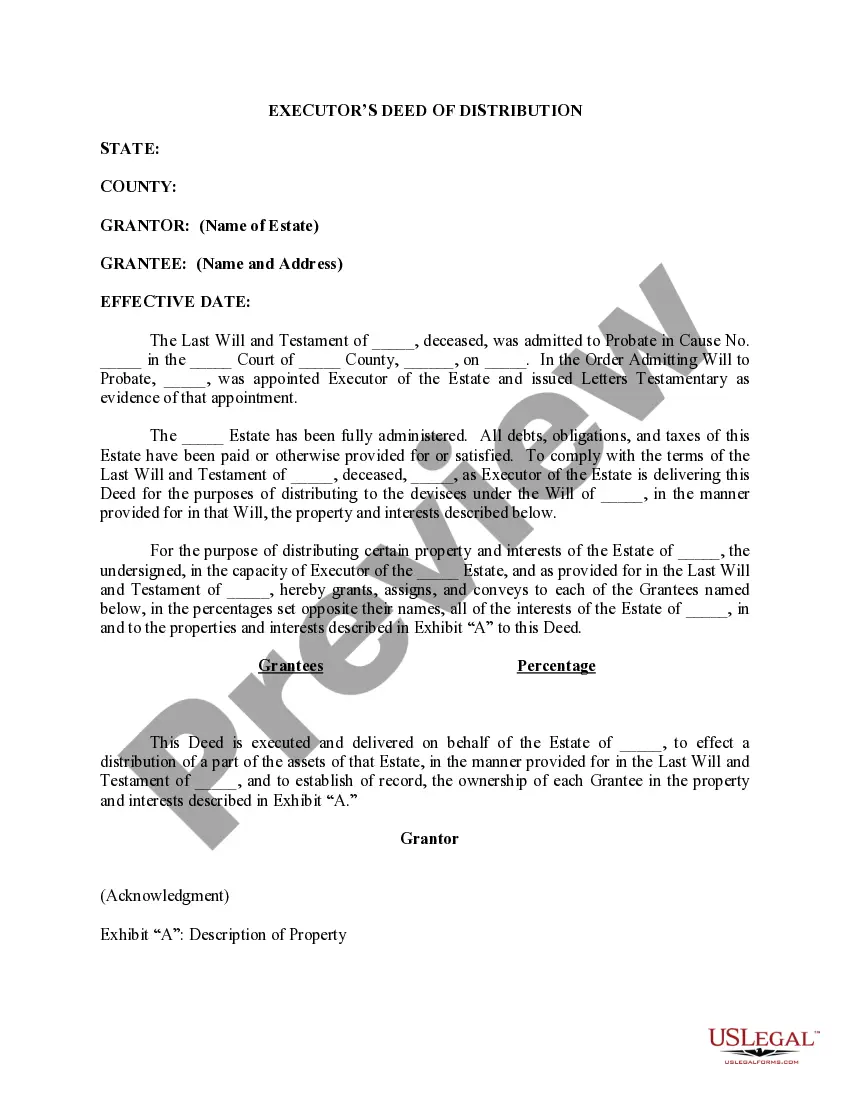
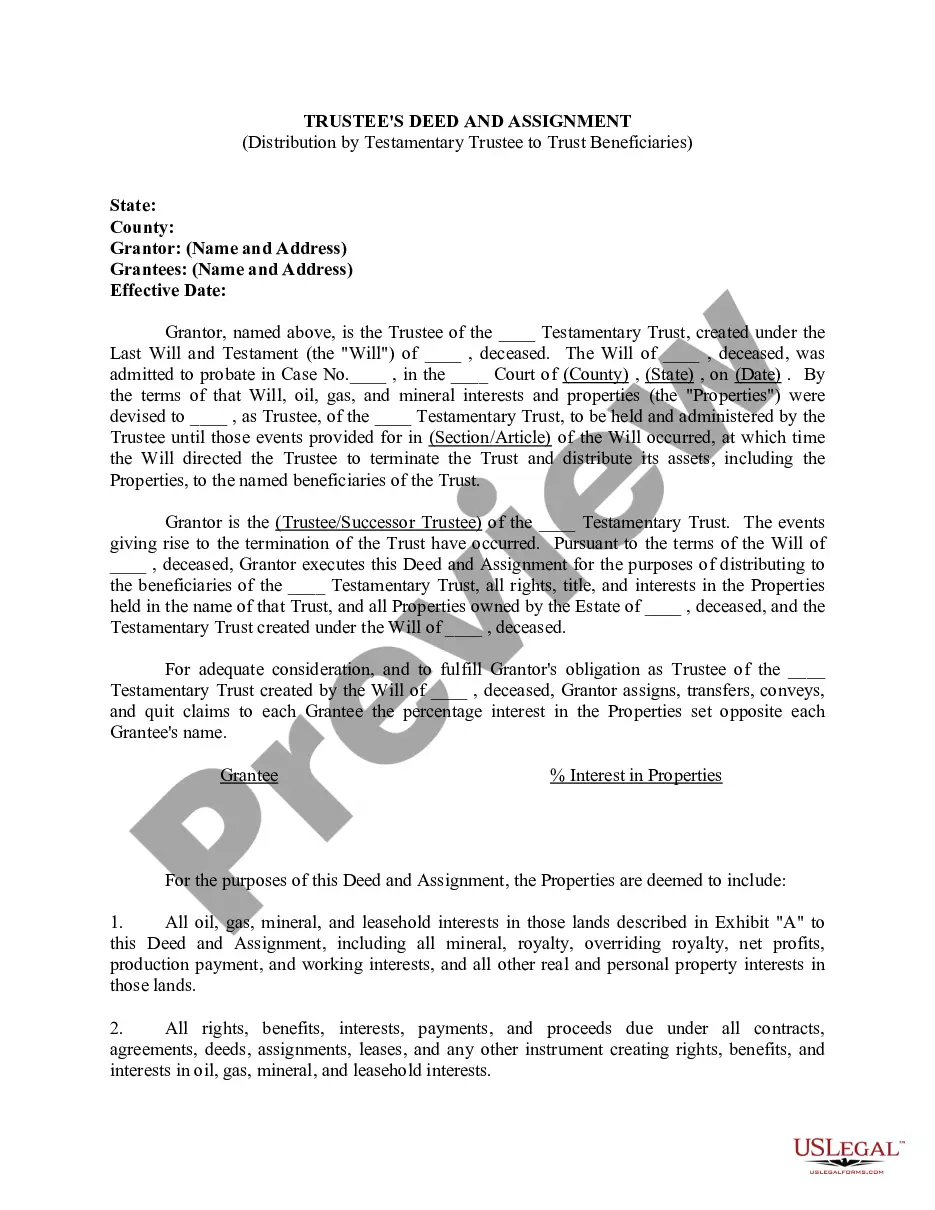
The Executor's Deed of Distribution is a legal document used to transfer property from an estate to its beneficiaries after the administration of the estate has concluded. This form serves to formally distribute the assets as outlined in the decedentâs will, ensuring that each beneficiary receives their designated share. Unlike other estate forms, this deed specifically addresses the closing of estate matters by establishing and recording the ownership of property by the heirs or devisees as dictated by the will.
What’s included in this form
- Grantor information: Name of the estate and the executor.
- Grantee details: Names and addresses of the beneficiaries receiving property.
- Effective date of the deed distribution.
- Reference to the probate case and appointment of the executor.
- Declaration of the estate's full administration and satisfaction of debts.
- Description of property being distributed, typically included as an exhibit.

When to use this form
This form should be used when the executor has completed the administration of an estate and is ready to distribute remaining assets to beneficiaries. It is appropriate in cases where a last will and testament directs the distribution of property and all estate debts and taxes have been paid. If you are an executor looking to formally convey property to heirs, this deed is necessary to finalize the distribution process.
Who needs this form
This form is intended for:
- Executors or administrators of an estate who are responsible for distributing assets.
- Beneficiaries who are receiving property as outlined in the will.
- Legal representatives involved in estate administration.
How to prepare this document
- Identify the executor and estate names as the grantor.
- List all beneficiaries receiving property, including their names and addresses.
- Fill in the effective date of the distribution.
- Reference the probate case and include the date the will was admitted to probate.
- Describe the property being distributed, ensuring to attach or reference any necessary exhibits.
- Obtain signatures and acknowledgements from the executor.
Notarization requirements for this form
This form does not typically require notarization unless specified by local law. It is recommended to verify local regulations to ensure compliance in your jurisdiction.
Get your form ready online
Our built-in tools help you complete, sign, share, and store your documents in one place.
Make edits, fill in missing information, and update formatting in US Legal Forms—just like you would in MS Word.
Download a copy, print it, send it by email, or mail it via USPS—whatever works best for your next step.
Sign and collect signatures with our SignNow integration. Send to multiple recipients, set reminders, and more. Go Premium to unlock E-Sign.
If this form requires notarization, complete it online through a secure video call—no need to meet a notary in person or wait for an appointment.
We protect your documents and personal data by following strict security and privacy standards.

Make edits, fill in missing information, and update formatting in US Legal Forms—just like you would in MS Word.

Download a copy, print it, send it by email, or mail it via USPS—whatever works best for your next step.

Sign and collect signatures with our SignNow integration. Send to multiple recipients, set reminders, and more. Go Premium to unlock E-Sign.

If this form requires notarization, complete it online through a secure video call—no need to meet a notary in person or wait for an appointment.

We protect your documents and personal data by following strict security and privacy standards.
Mistakes to watch out for
- Failing to properly identify all beneficiaries.
- Not including necessary descriptions of the property being distributed.
- Omitting to reference the probate case number or relevant court details.
- Inaccurate completion of signatures or dates.
Benefits of completing this form online
- Quick and convenient access to the Executor's Deed of Distribution.
- Editable online format allows for easy customization.
- Reliable templates drafted by licensed attorneys ensure legal compliance.
- Instant download saves time compared to traditional legal processes.
Looking for another form?


Form popularity
FAQ
In most states, an executor's deed must be signed by a witness and notarized. An executor's deed should be recorded in the real estate records of the county in which the property being conveyed is located.
Once the COURT appoints you as executor, you will record an affidavit of death of joint tenant to get your mother's name of the property. Then, when you get an order for final distribution, you will record a certified copy to get the property into the names of the beneficiaries under the will.
When the executor has paid off the debts, filed the taxes and sold any property needed to pay bills, he can submit a final estate accounting to the probate court. Once the probate court approves the accounting, he can distribute assets to you and other beneficiaries according to the terms of the will.
Executor's Deed: This may be used when a person dies testate (with a will). The estate's executor will dispose of the decedent's assets and an executor's deed may be used to convey the title or real property to the grantee.
If an Executor breaches this duty, then they can be held personally financially liable for their mistakes, and the financial claim that is made against them can be substantial. In an extreme example of this, one Personal Representative failed to settle the Inheritance Tax bill before distributing the Estate.
Q: How Long Does an Executor Have to Distribute Assets From a Will? A: Dear Waiting: In most states, a will must be executed within three years of a person's death.
Those requirements are: That the estate assets are distributed at least 6 months after the deceased's date of death; That the executor has published a 30 day notice of his/her intent to distribute the estate; and. That the time specified in the notice has expired.
If there's enough money in the estate account, an interim payment can be made to beneficiaries, with executors holding back some money to cover potential costs. These payments should be recorded by asking the beneficiaries to sign a written receipt.