Trustee's Deed and Assignment for Distribution of Trust, Oil and Gas Properties
Overview of this form
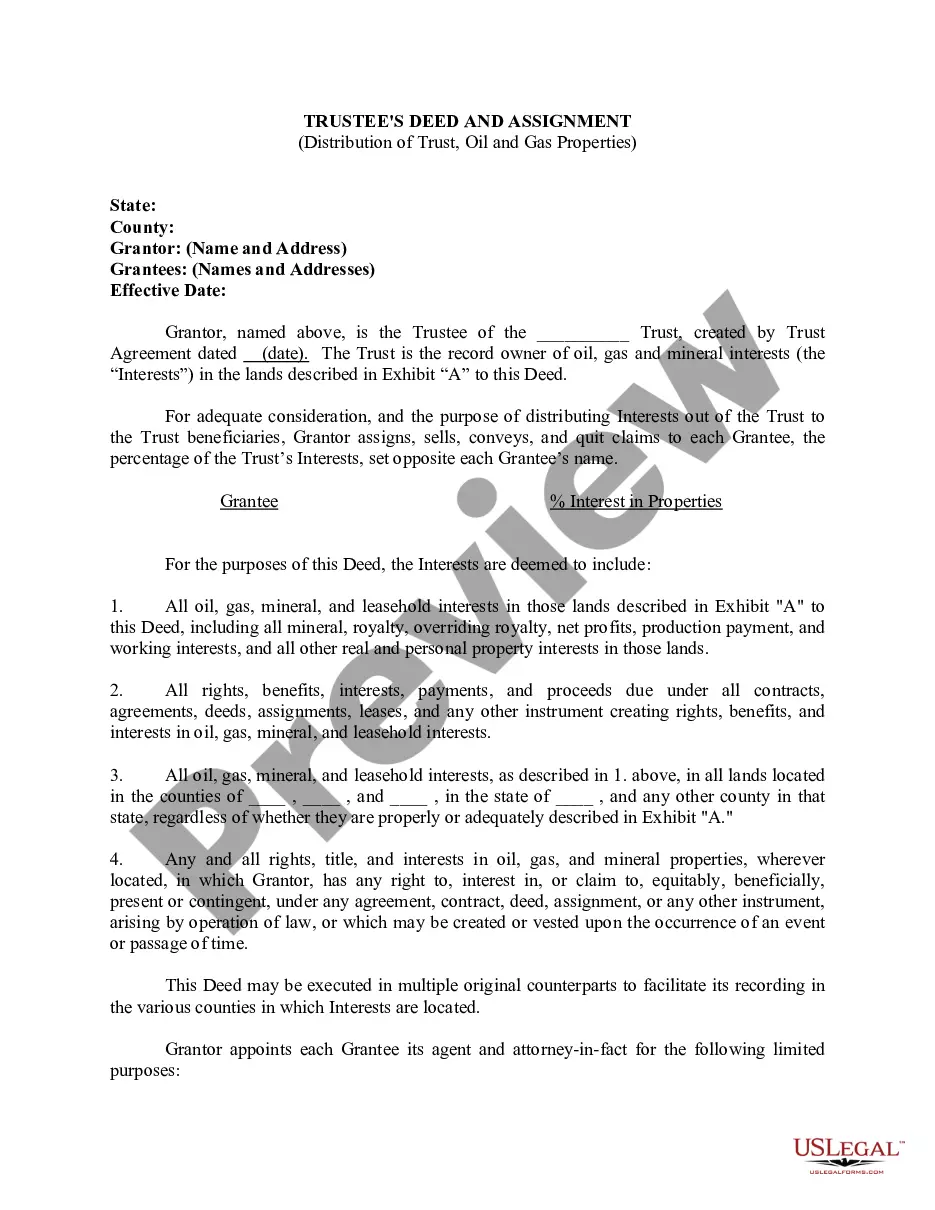
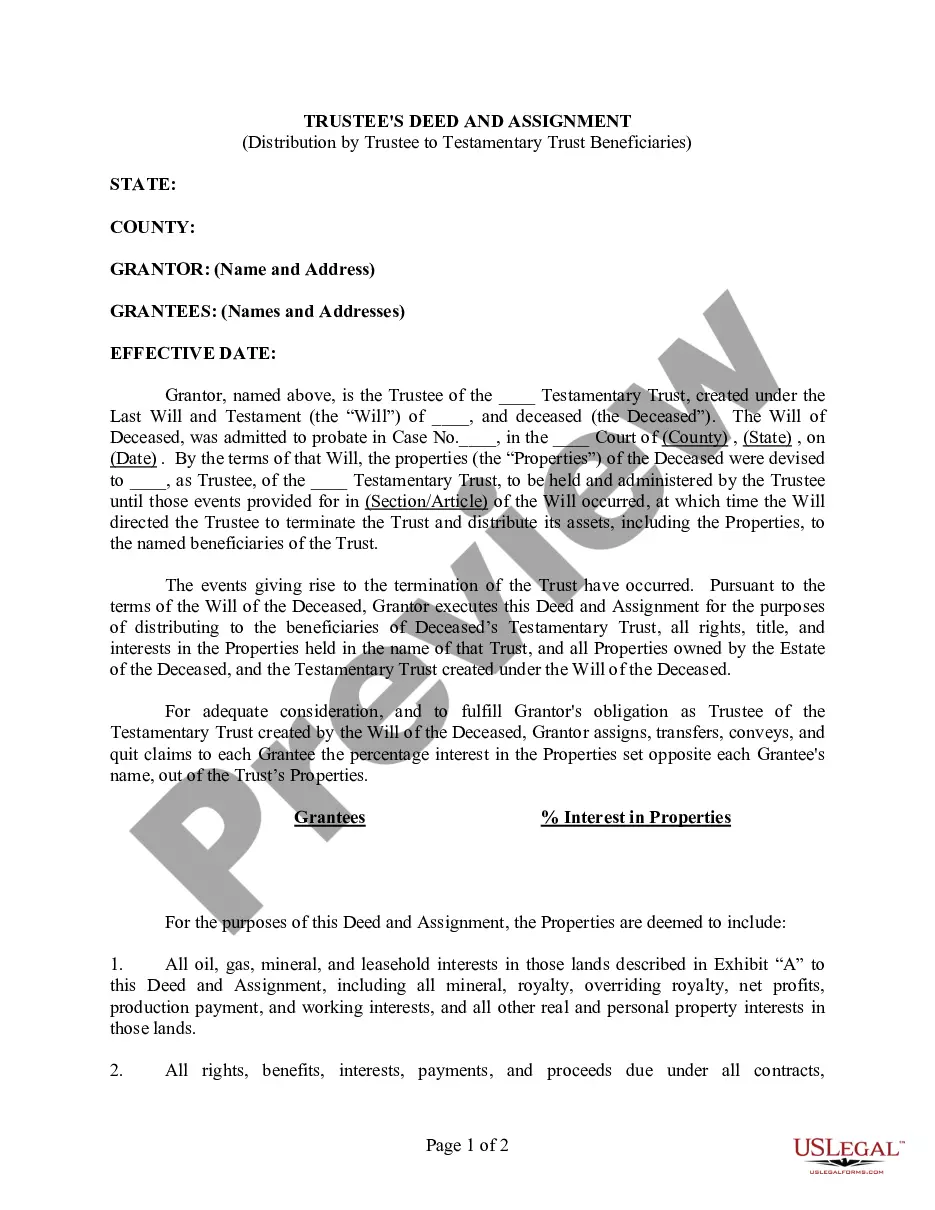
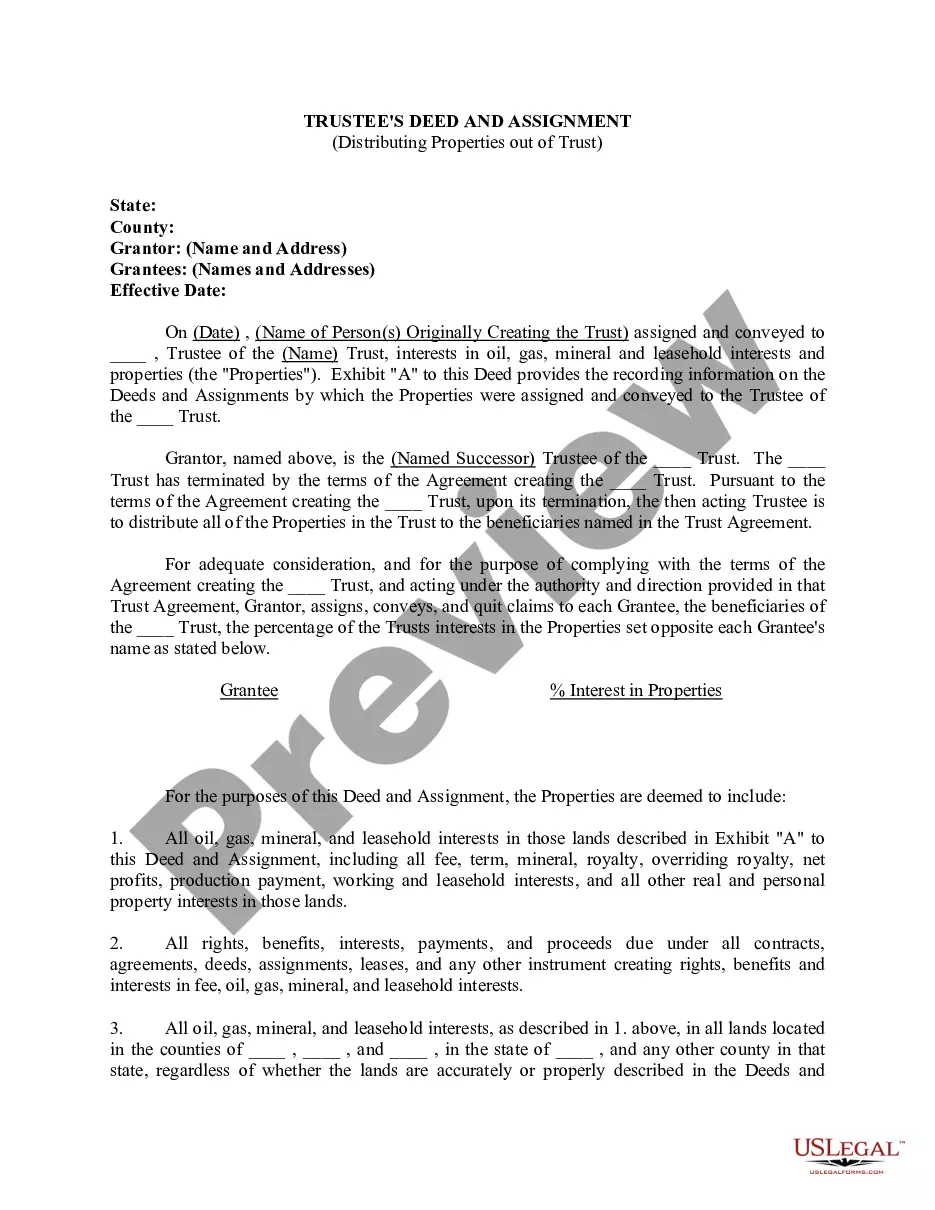
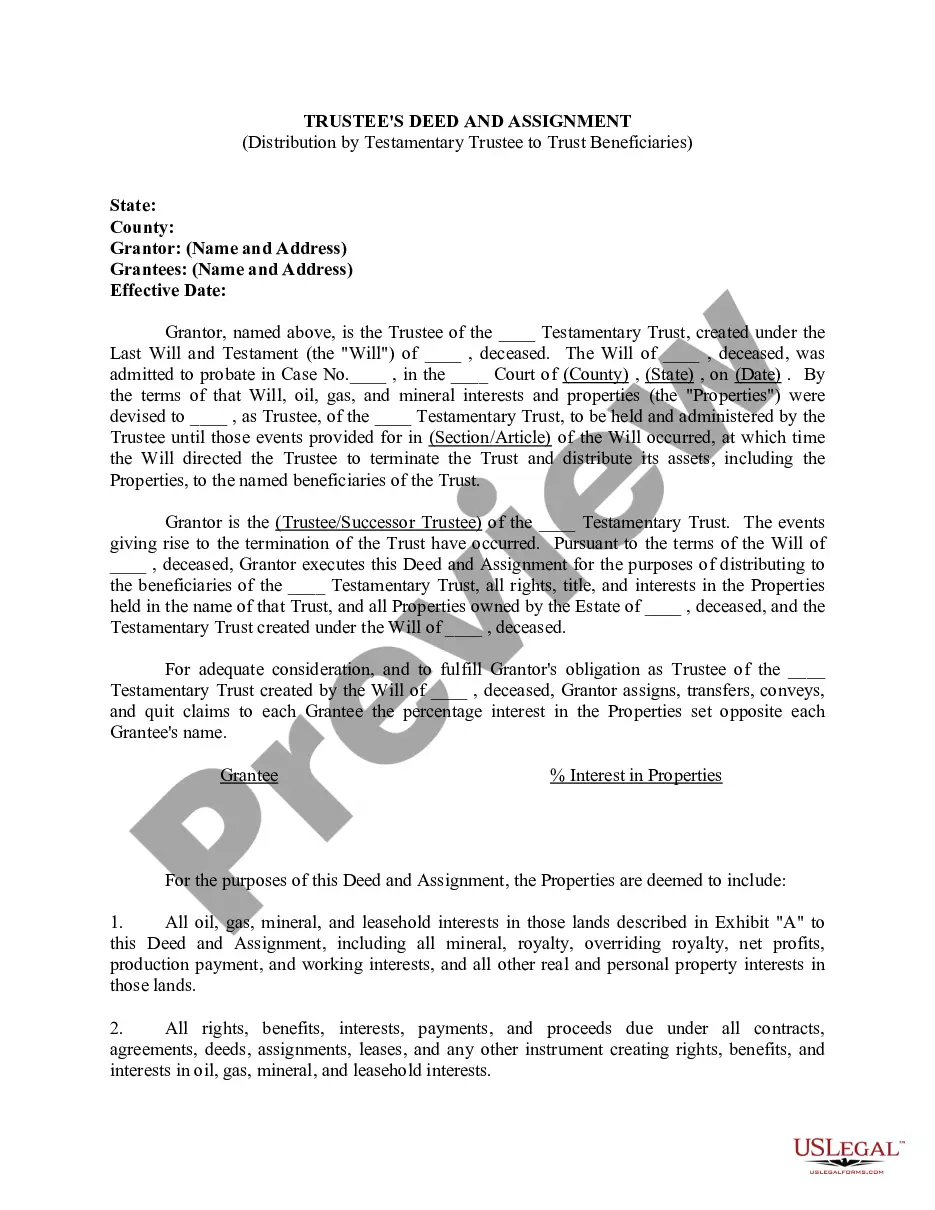
The Trustee's Deed and Assignment for Distribution of Trust, Oil and Gas Properties is a legal document used to distribute interests in oil, gas, and mineral properties that have been placed in a trust. This form allows the Trustee to assign these interests to the beneficiaries specified in the trust, ensuring that the transfer is properly documented and legally binding. Unlike other property transfer documents, this form specifically addresses the unique nature of trusts and the assets contained within them, protecting the interests of all parties involved.
Main sections of this form
- Names and addresses of the Grantor (Trustee) and Grantees (beneficiaries).
- Effective date of the transfer.
- Description of the oil and gas properties included in the trust.
- Details on the percentage of interests assigned to each Grantee.
- Provisions for rights and interests in the properties, including royalties and profits.
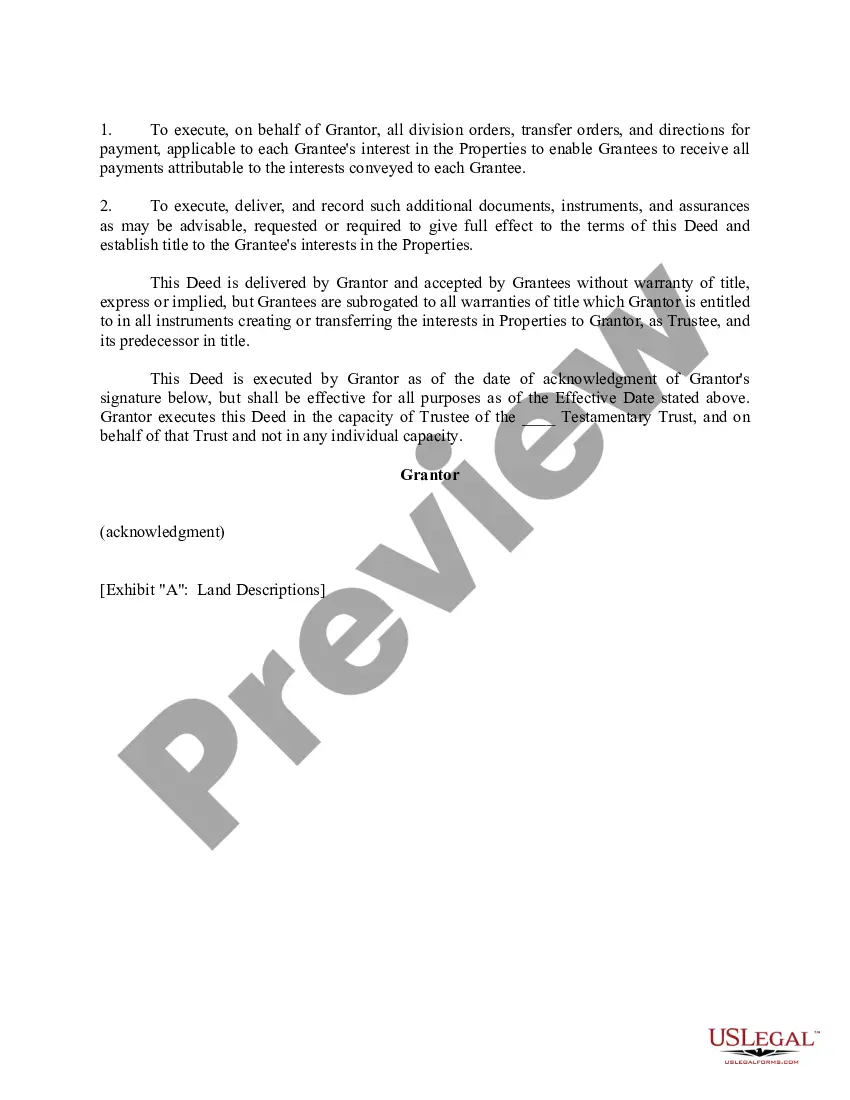
- Agent and attorney-in-fact appointment for Grantees to facilitate transactions.

Common use cases
You should use the Trustee's Deed and Assignment for Distribution of Trust, Oil and Gas Properties when you are the Trustee of a trust that holds interests in oil, gas, or mineral properties and are ready to distribute these interests to the designated beneficiaries. This form is essential in ensuring that the distribution is executed in compliance with the trust agreement and applicable laws, minimizing the risk of disputes among beneficiaries.
Intended users of this form
- Trustees managing trusts that include oil, gas, or mineral properties.
- Beneficiaries receiving distributions from a trust.
- Legal professionals assisting in the administration of trust distributions.
How to prepare this document
- Identify the Grantor (Trustee) and enter their name and address.
- List the Grantees and their respective names and addresses.
- Specify the effective date of the deed.
- Detail the oil, gas, and mineral interests being conveyed in Exhibit A.
- Assign the percentage interests to each Grantee accordingly.
- Sign and date the form in the presence of a notary, if required.
Notarization guidance
Notarization is required for this form to take effect. Our online notarization service, powered by Notarize, lets you verify and sign documents remotely through an encrypted video session, available 24/7.
Get your form ready online
Our built-in tools help you complete, sign, share, and store your documents in one place.
Make edits, fill in missing information, and update formatting in US Legal Forms—just like you would in MS Word.
Download a copy, print it, send it by email, or mail it via USPS—whatever works best for your next step.
Sign and collect signatures with our SignNow integration. Send to multiple recipients, set reminders, and more. Go Premium to unlock E-Sign.
If this form requires notarization, complete it online through a secure video call—no need to meet a notary in person or wait for an appointment.
We protect your documents and personal data by following strict security and privacy standards.

Make edits, fill in missing information, and update formatting in US Legal Forms—just like you would in MS Word.

Download a copy, print it, send it by email, or mail it via USPS—whatever works best for your next step.

Sign and collect signatures with our SignNow integration. Send to multiple recipients, set reminders, and more. Go Premium to unlock E-Sign.

If this form requires notarization, complete it online through a secure video call—no need to meet a notary in person or wait for an appointment.

We protect your documents and personal data by following strict security and privacy standards.
Typical mistakes to avoid
- Failing to accurately describe the properties in Exhibit A.
- Not including all necessary signatures from Grantors and Grantees.
- Omitting the effective date or making it unclear.
- Not appointing the appropriate agent and attorney-in-fact for the Grantees.
- Neglecting to follow state-specific provisions, if applicable.
Benefits of completing this form online
- Convenience of downloading and completing the form at your own pace.
- Editability allows for easy updates to beneficiary information.
- Access to reliable templates drafted by licensed attorneys.
- Ensures compliance with legal requirements for a successful distribution.
Looking for another form?


Form popularity
FAQ
When you're ready to transfer trust real estate to the beneficiary who is named in the trust document to receive it, you'll need to prepare, sign, and record a deed. That's the document that transfers title to the property from you, the trustee, to the new owner.
California Property TaxesTransferring real property to yourself as trustee of your own revocable living trust -- or back to yourself -- does not trigger a reassessment for property tax purposes. (Cal. Rev. & Tax Code § 62(d).)
Locate the deed that's in trust. Use the proper deed. Check with your title insurance company and lender. Prepare a new deed. Sign in the presence of a notary. Record the deed in the county clerk's office.
How to sign as a Trustee. When signing anything on behalf of the trust, always sign as John Smith, Trustee. By signing as Trustee, you will not be personally liable for that action as long as that action is within the scope of your authority under the trust.
Assets Held in the Trustee's Name Kahane Revocable Living Trust or the Nessler Family Trust. In particular, look for a list of assets at the end of the document. It will likely be labeled Schedule A or something similar, and should list the items the person who set up the trust intended to hold in the trust.
A quitclaim deed can be used to transfer property from a trust, but a Special Warranty Deed seems to be a more common way to do this.
Distribute trust assets outright The grantor can opt to have the beneficiaries receive trust property directly without any restrictions. The trustee can write the beneficiary a check, give them cash, and transfer real estate by drawing up a new deed or selling the house and giving them the proceeds.
In the context of a California mortgage transaction, a trust deed also transfer ownership. Only this time, the title is being placed in the hands of a third-party trustee, who holds the property on behalf of the lender and the homeowner-borrower until the mortgage is paid.
Most Trusts take 12 months to 18 months to settle and distribute assets to the beneficiaries and heirs.