Sample Letter for Trust Account Check
What is this form?
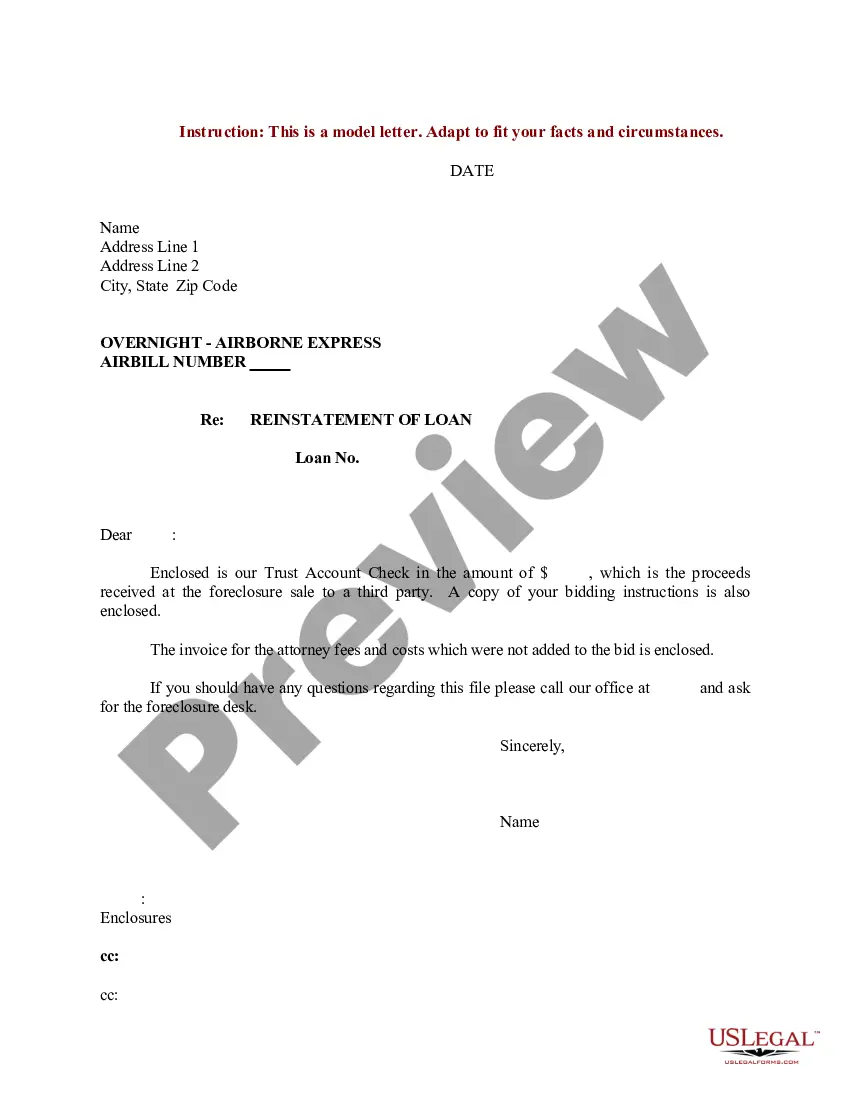
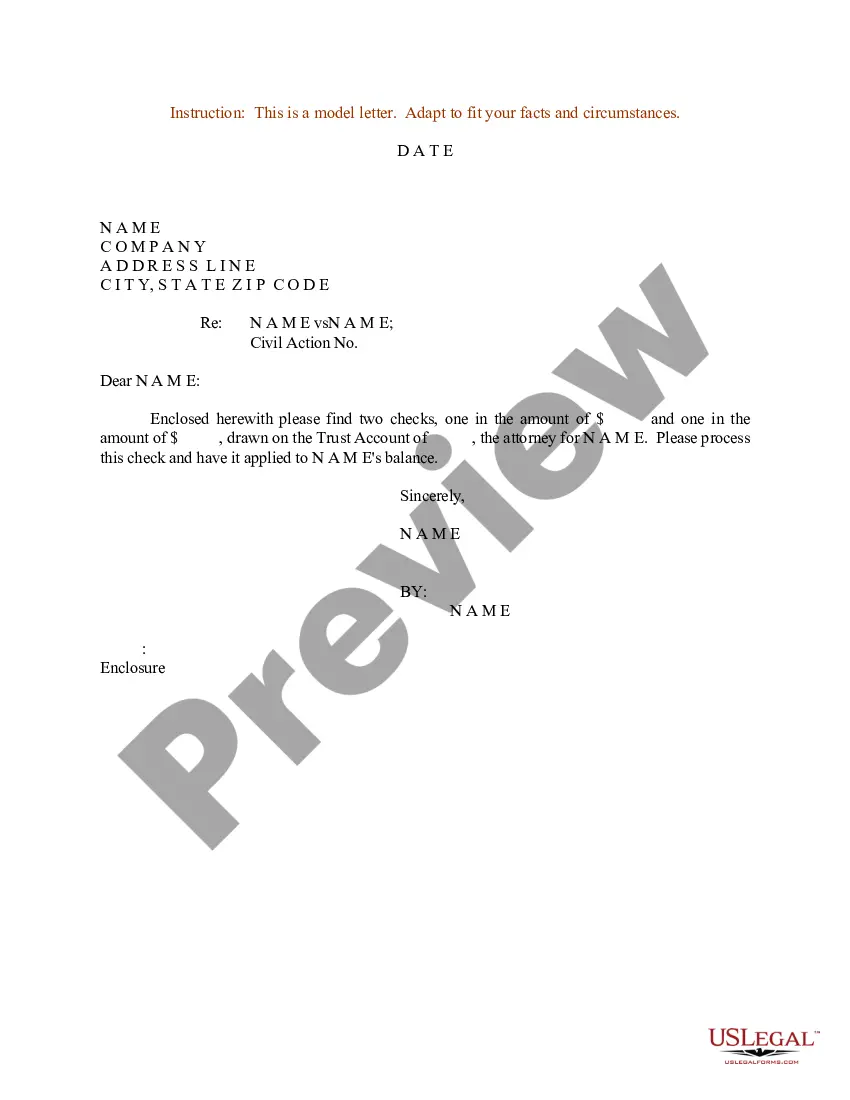
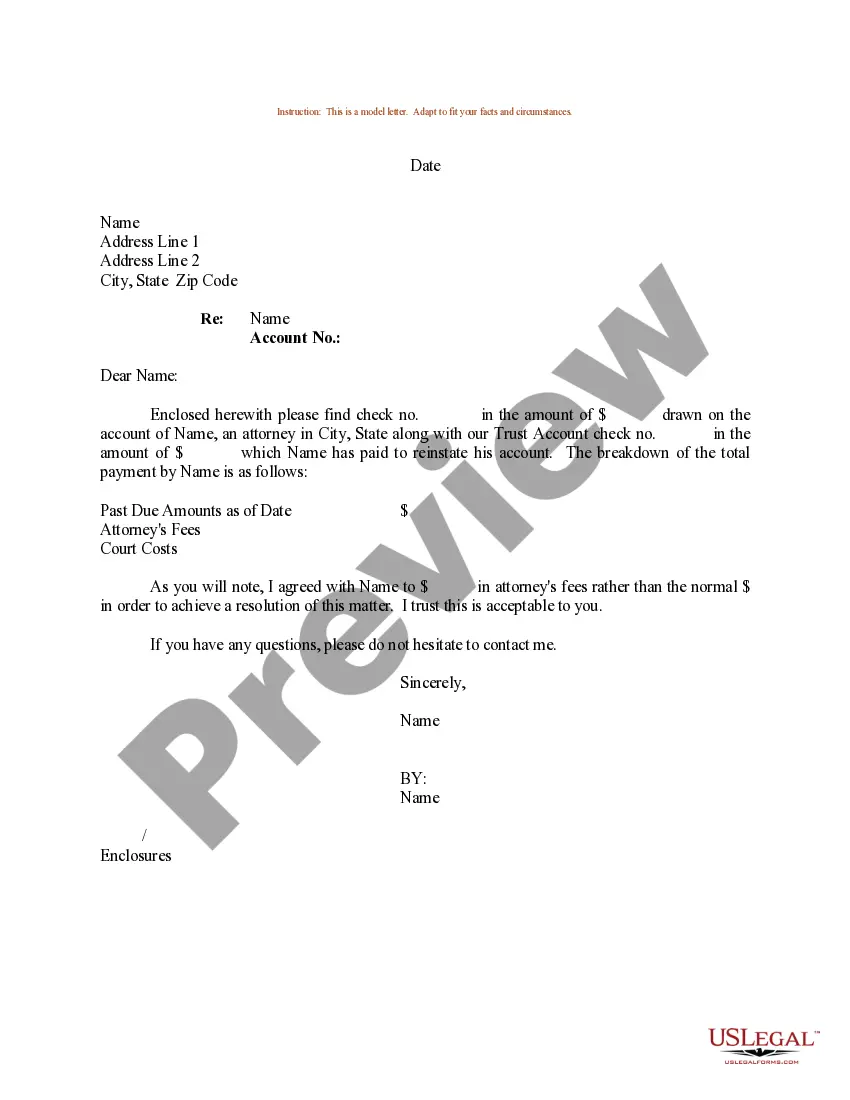
The Sample Letter for Trust Account Check is a template letter designed to formally request payment for attorney fees and costs that were not included in a bid. This letter serves as a professional communication tool between attorneys and clients, ensuring clarity in financial transactions related to trust accounts. Unlike other payment requests, this sample letter focuses specifically on fees associated with legal services and is structured to accommodate the specifics of your case.
What’s included in this form
- Date: The date the letter is being sent.
- Recipient's name and address: Client's or relevant party's contact information.
- Invoice attachment: Reference to the enclosed invoice for attorney fees and costs.
- Professional closing: A courteous sign-off to maintain professionalism.
Common use cases
This letter is typically used when an attorney needs to collect unpaid fees from a client or when additional costs incurred during a case need to be communicated. It is relevant in scenarios such as finalizing accounts after legal services or providing a clear breakdown of additional charges not previously disclosed.
Who can use this document
This form is intended for:
- Attorneys who need to request payment from clients.
- Legal professionals managing trust accounts.
- Clients who are reviewing their invoices from attorneys.
How to prepare this document
- Enter the current date at the top of the letter.
- Add the recipient's name and address in the provided fields.
- Attach the relevant invoice and mention its inclusion in the letter.
- Use a professional tone throughout the letter to enhance clarity and formality.
- Sign and date the letter before sending it to the recipient.
Notarization guidance
Notarization is not commonly needed for this form. However, certain documents or local rules may make it necessary. Our notarization service, powered by Notarize, allows you to finalize it securely online anytime, day or night.
Get your form ready online
Our built-in tools help you complete, sign, share, and store your documents in one place.
Make edits, fill in missing information, and update formatting in US Legal Forms—just like you would in MS Word.
Download a copy, print it, send it by email, or mail it via USPS—whatever works best for your next step.
Sign and collect signatures with our SignNow integration. Send to multiple recipients, set reminders, and more. Go Premium to unlock E-Sign.
If this form requires notarization, complete it online through a secure video call—no need to meet a notary in person or wait for an appointment.
We protect your documents and personal data by following strict security and privacy standards.

Make edits, fill in missing information, and update formatting in US Legal Forms—just like you would in MS Word.

Download a copy, print it, send it by email, or mail it via USPS—whatever works best for your next step.

Sign and collect signatures with our SignNow integration. Send to multiple recipients, set reminders, and more. Go Premium to unlock E-Sign.

If this form requires notarization, complete it online through a secure video call—no need to meet a notary in person or wait for an appointment.

We protect your documents and personal data by following strict security and privacy standards.
Typical mistakes to avoid
- Failing to include the invoice attachment.
- Using informal language or tone in the letter.
- Not double-checking recipient details for accuracy.
- Overlooking the importance of professionalism in closing remarks.
Why complete this form online
- Convenience: Download and edit the form any time.
- Editability: Customize the letter to fit your specific situation.
- Reliability: Ensure that the template meets professional standards.
What to keep in mind
- The Sample Letter for Trust Account Check provides a clear format for communicating payment details.
- Utilize it to maintain transparency in financial transactions related to legal services.
- Ensure all necessary information is included to avoid common mistakes.
Looking for another form?




Form popularity
FAQ
Only the trustee not the beneficiaries can access the trust checking account. They can write checks or make electronic transfers to a beneficiary, and even withdraw cash, though that could make it more difficult to keep track of the trust's finances. (The trustee must keep a record of all the trust's finances.)
You will need to bring your Certification of Trust and or the trust agreement itself. The bank will have you complete a new signature card for the account, and the account will be held in your name "as trustee," for the trust. The bank will also require a tax identification number for the trust.
If a trust pays out a portion of its assets as income, or holds assets that appreciate or generate interest income such as real estate or stocks, then the person receiving the money must pay income taxes. In a revocable trust, this is typically the grantor.
Reference the name of the irrevocable trust, and the trust account number if applicable. Write a salutation followed by a colon. Identify yourself as a beneficiary of the irrevocable trust in the body of the letter. State that you are requesting money from the trust, and the reason for the request.
Trustees Can Withdraw For Trust UseTrust law varies from state to state, but under no circumstances can a trustee withdraw funds from the trust for the personal use of the trustee.Common trust law dictates that the trustee (or trustees) are the only parties that can disburse funds from a trust account.
If you have a revocable trust, you can get money out by making a request via the trustee. Should you yourself be listed as the trustee, you'll be able to transfer funds and assets out of the trust as you see fit.
Write the purpose of the disbursement on the memo line. For example, if the trust requires the trustee to pay $500 to the beneficiary every two months, write Trust Disbursement, Month. Sign the check in your capacity as trustee. The line should look similar to Your signature, Trustee of Name of Trust.
How to sign as a Trustee. When signing anything on behalf of the trust, always sign as John Smith, Trustee. By signing as Trustee, you will not be personally liable for that action as long as that action is within the scope of your authority under the trust.
Most Trusts take 12 months to 18 months to settle and distribute assets to the beneficiaries and heirs. What determines how long a Trustee takes will depend on the complexity of the estate where properties and other assets may have to be bought or sold before distribution to the Beneficiaries.