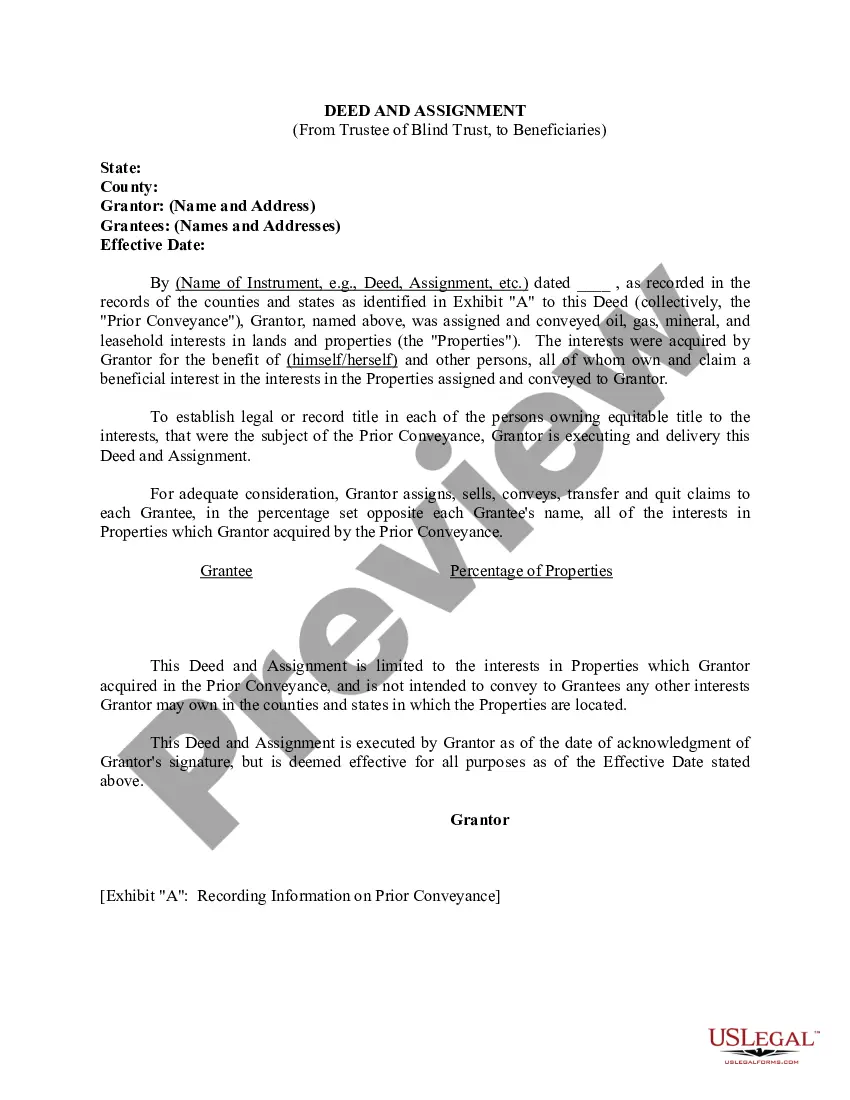
Deed and Assignment from Trustee to Trust Beneficiaries
Understanding this form
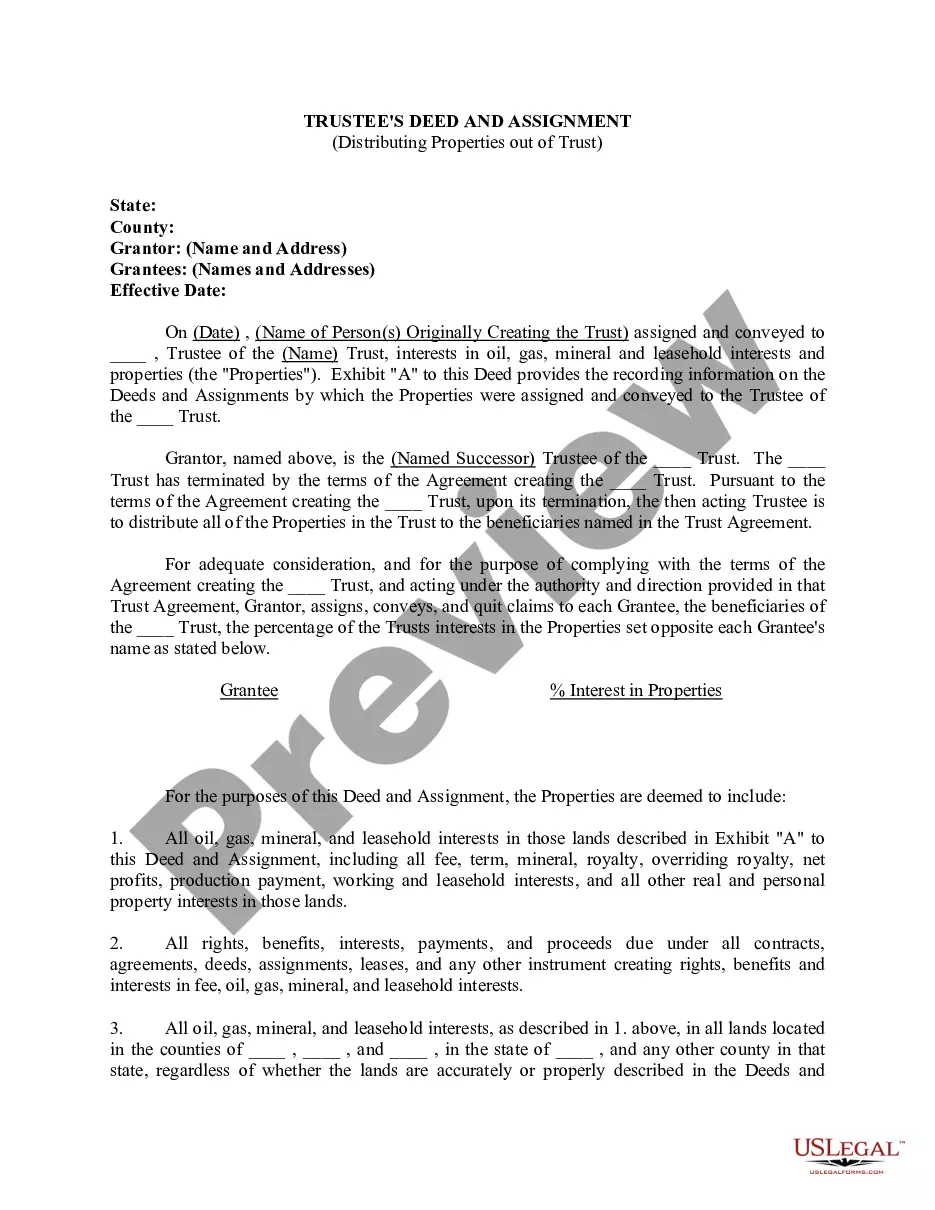
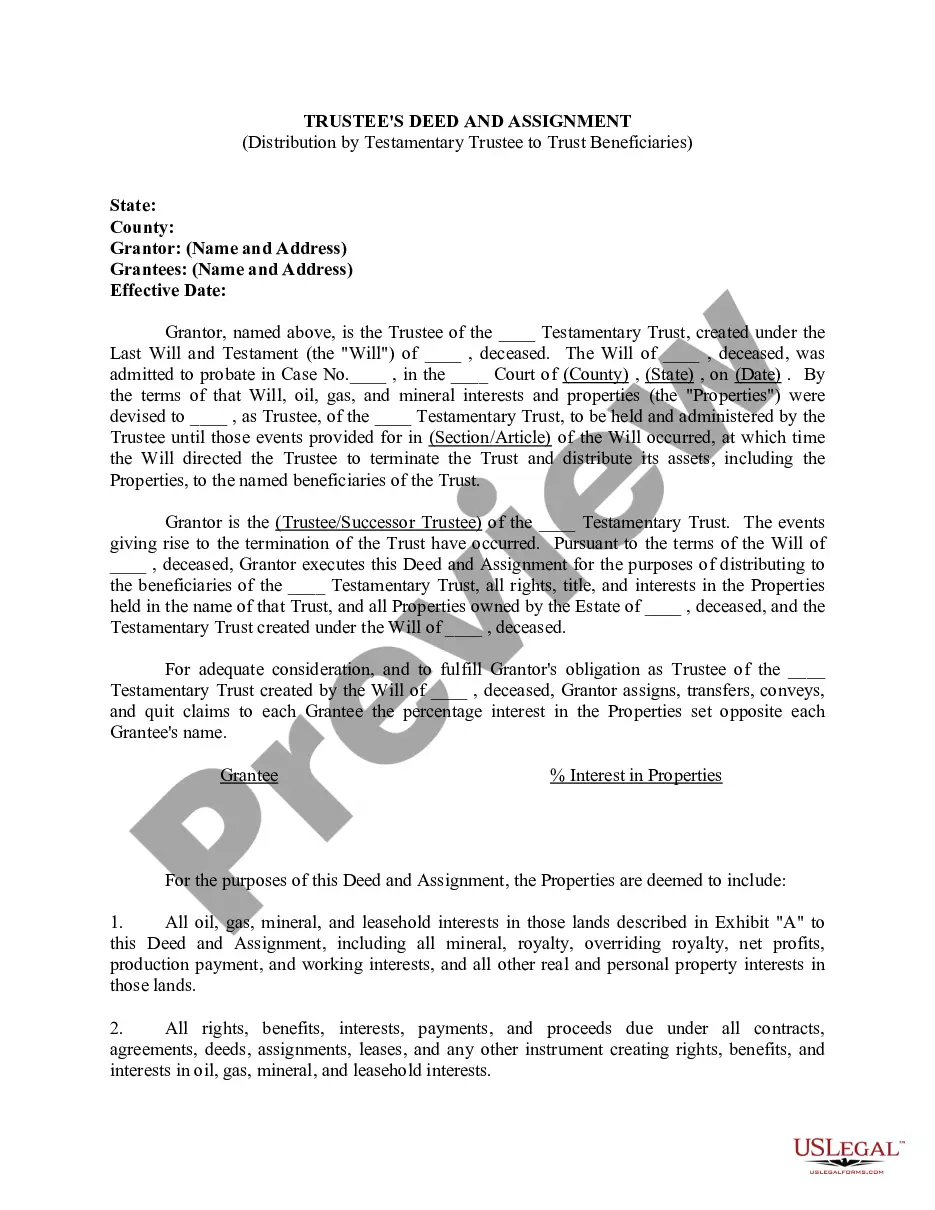
The Deed and Assignment from Trustee to Trust Beneficiaries is a legal document used to transfer property held in a trust from a trustee to the beneficiaries named in the trust agreement. This form ensures that the beneficiaries receive their entitled interests in the property, distinguishing it from other legal forms related to property transfers, such as simple deeds or assignments without beneficiaries specified in a trust context.
Form components explained
- Grantor Information: Includes the name and address of the trustee transferring the property.
- Grantee Information: Details the names and addresses of each trust beneficiary receiving the property.
- Effective Date: Specifies the date when the transfer becomes effective.
- Prior Conveyance Reference: Provides details about the previous documents related to the property transfer.
- Property Description: Identifies the oil, gas, mineral, and leasehold interests involved in the transfer.
- Percentage of Properties: States the percentage of property interests each grantee receives.
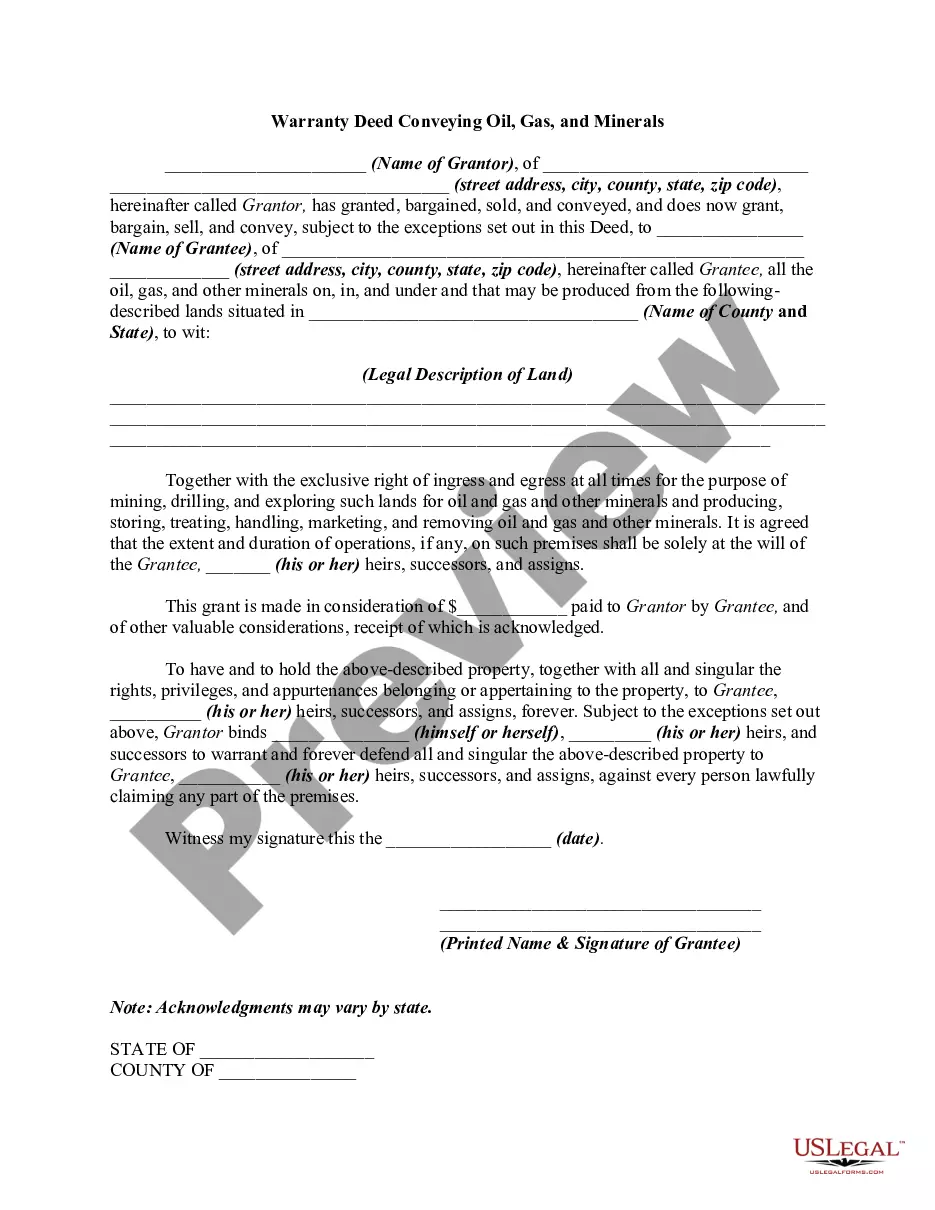
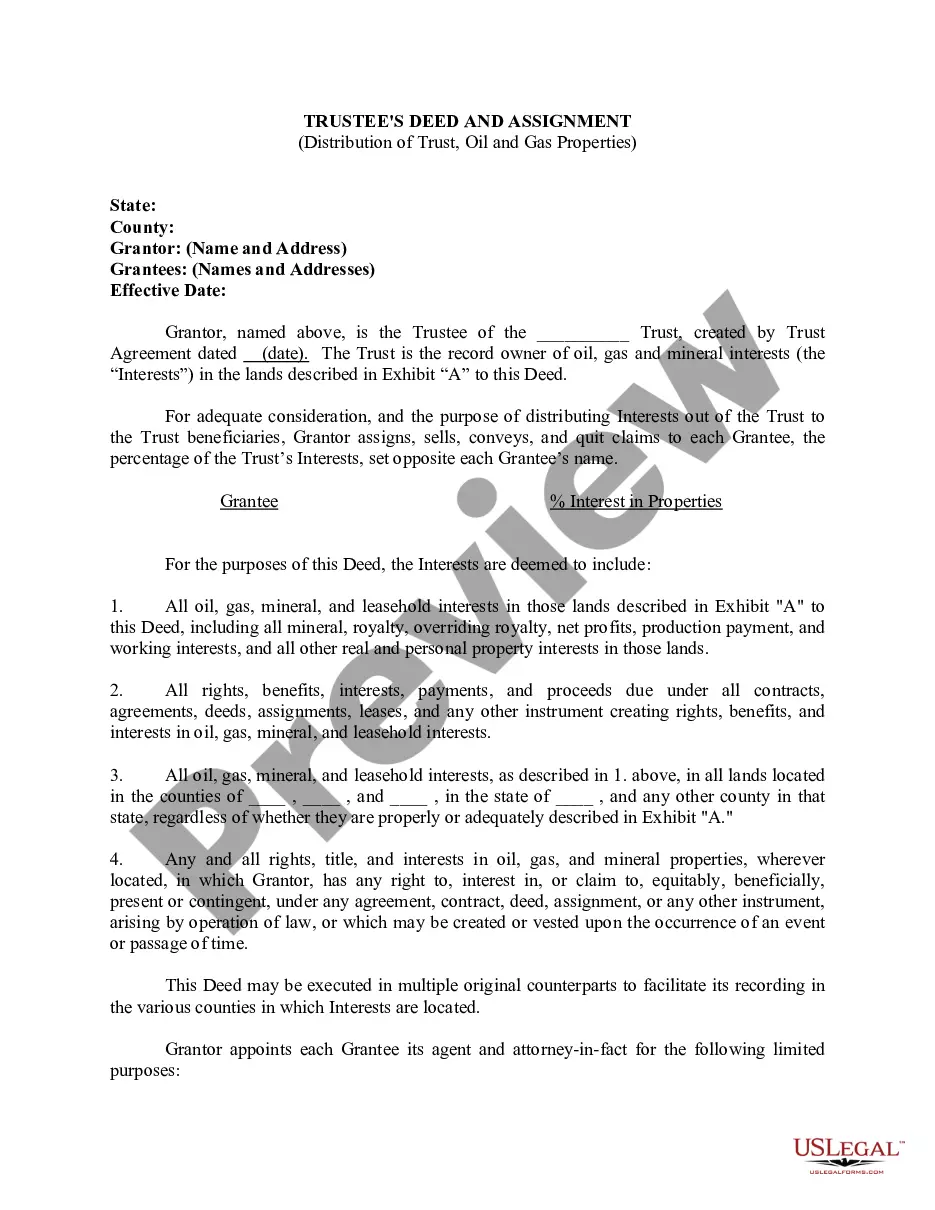
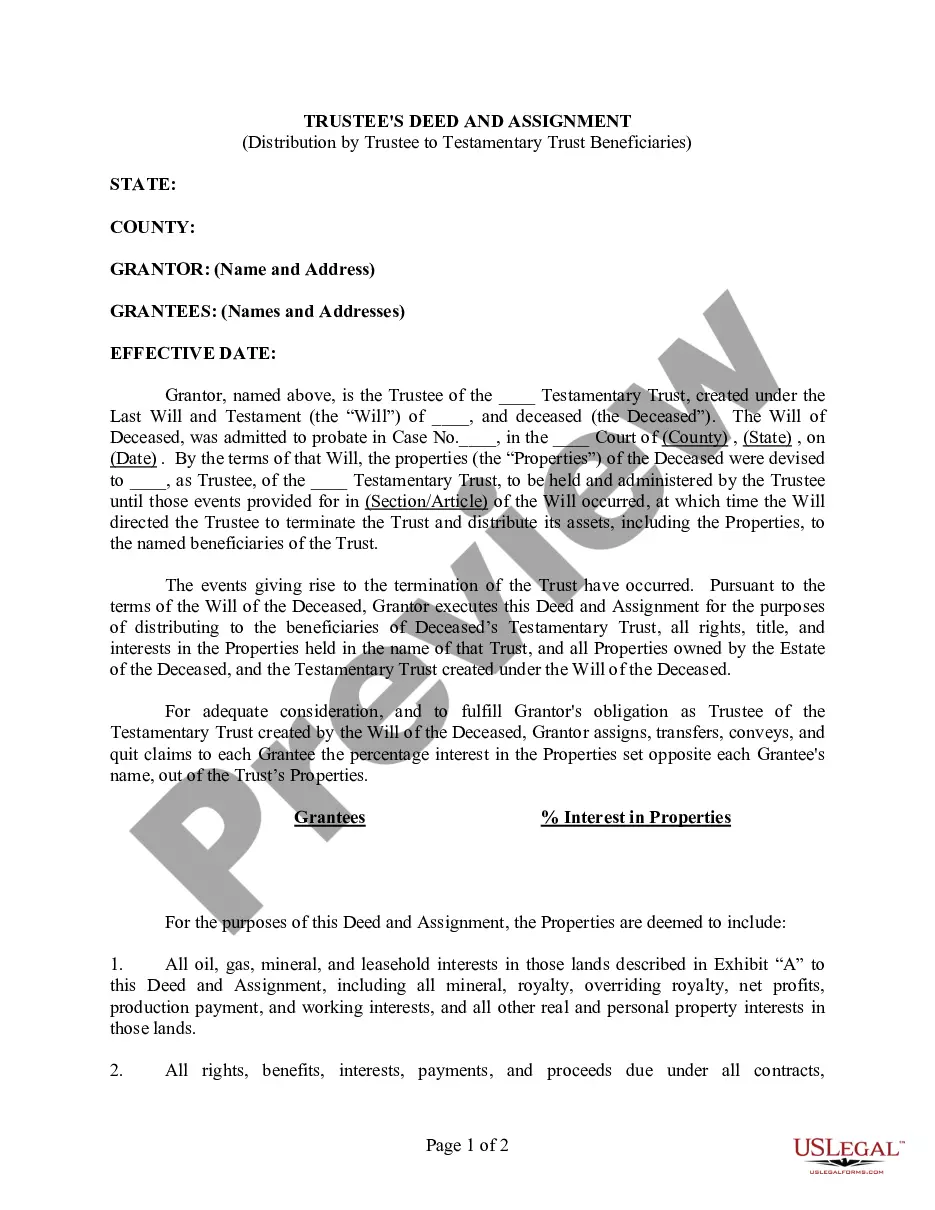
When this form is needed
This form is used in scenarios where a trustee wishes to officially transfer property interests to the beneficiaries of a trust. Typically, this occurs after the trust has been established and the trustee is ready to distribute the trust assets according to the terms defined in the trust agreement. It may also be utilized when the properties need to be recorded in the beneficiaries' names for legal or financial purposes.
Intended users of this form
This form is intended for:
- Trustees acting on behalf of a trust that holds property.
- Beneficiaries named in a trust who are set to receive property or assets.
- Legal representatives or attorneys who assist with the transfer of property interests from a trust.
How to complete this form
- Identify the parties: Enter the names and addresses of the trustee and the beneficiaries.
- Specify the property: Clearly detail the oil, gas, mineral, and leasehold interests being transferred.
- Indicate the effective date: Enter the date when the transfer takes effect.
- Complete the Prior Conveyance reference: Fill in details regarding any previous property transfer documents.
- Assign percentages: Specify the percentage of the property interests that each beneficiary will receive.
Notarization requirements for this form
This form must be notarized to be legally valid. US Legal Forms provides secure online notarization powered by Notarize, allowing you to complete the process through a verified video call.
Get your form ready online
Our built-in tools help you complete, sign, share, and store your documents in one place.
Make edits, fill in missing information, and update formatting in US Legal Forms—just like you would in MS Word.
Download a copy, print it, send it by email, or mail it via USPS—whatever works best for your next step.
Sign and collect signatures with our SignNow integration. Send to multiple recipients, set reminders, and more. Go Premium to unlock E-Sign.
If this form requires notarization, complete it online through a secure video call—no need to meet a notary in person or wait for an appointment.
We protect your documents and personal data by following strict security and privacy standards.

Make edits, fill in missing information, and update formatting in US Legal Forms—just like you would in MS Word.

Download a copy, print it, send it by email, or mail it via USPS—whatever works best for your next step.

Sign and collect signatures with our SignNow integration. Send to multiple recipients, set reminders, and more. Go Premium to unlock E-Sign.

If this form requires notarization, complete it online through a secure video call—no need to meet a notary in person or wait for an appointment.

We protect your documents and personal data by following strict security and privacy standards.
Common mistakes to avoid
- Neglecting to provide accurate beneficiary information, which can lead to disputes later.
- Forgetting to reference the prior conveyance properly, which may cause confusion over property ownership.
- Not including the effective date, potentially complicating legal records.
Benefits of using this form online
- Convenient access allows for easy completion and download at any time.
- Editable templates ensure that you can customize the document to fit your specific situation.
- Reliably drafted by licensed attorneys, providing peace of mind regarding legal compliance.
Looking for another form?


Form popularity
FAQ
Some use deeds of trust instead, which are similar documents, but they have some fundamental differences.With a deed of trust, however, the lender must act through a go-between called the trustee. The beneficiary and the trustee can't be the same person or entity.
When you're ready to transfer trust real estate to the beneficiary who is named in the trust document to receive it, you'll need to prepare, sign, and record a deed. That's the document that transfers title to the property from you, the trustee, to the new owner.
Two documents are needed to transfer California real property from a trust to beneficiaries of the trust; a deed and an 'affidavit of death of trustee. ' An 'affidavit death of trustee' is a declaration, under oath, by the successor trustee.
Locate your current deed. Use the proper deed. Check with your title insurance company and lender. Prepare a new deed. Sign in the presence of a notary. Record the deed in the county clerk's office. Locate the deed that's in trust. Use the proper deed.
A quitclaim deed can be used to transfer property from a trust, but a Special Warranty Deed seems to be a more common way to do this.
The act of transferring a property that is owned by an individual into a trust, will see the trust liable to pay stamp duty on acquisition of the asset. Additionally, the individual who is transferring ownership to the trust, will be liable to pay capital gains tax on the disposal of the asset.
Transferring Real Property to a Trust You can transfer your home (or any real property) to the trust with a deed, a document that transfers ownership to the trust. A quitclaim deed is the most common and simplest method (and one you can do yourself).
Distribute trust assets outright The grantor can opt to have the beneficiaries receive trust property directly without any restrictions. The trustee can write the beneficiary a check, give them cash, and transfer real estate by drawing up a new deed or selling the house and giving them the proceeds.
California Property TaxesTransferring real property to yourself as trustee of your own revocable living trust -- or back to yourself -- does not trigger a reassessment for property tax purposes. (Cal. Rev. & Tax Code § 62(d).)