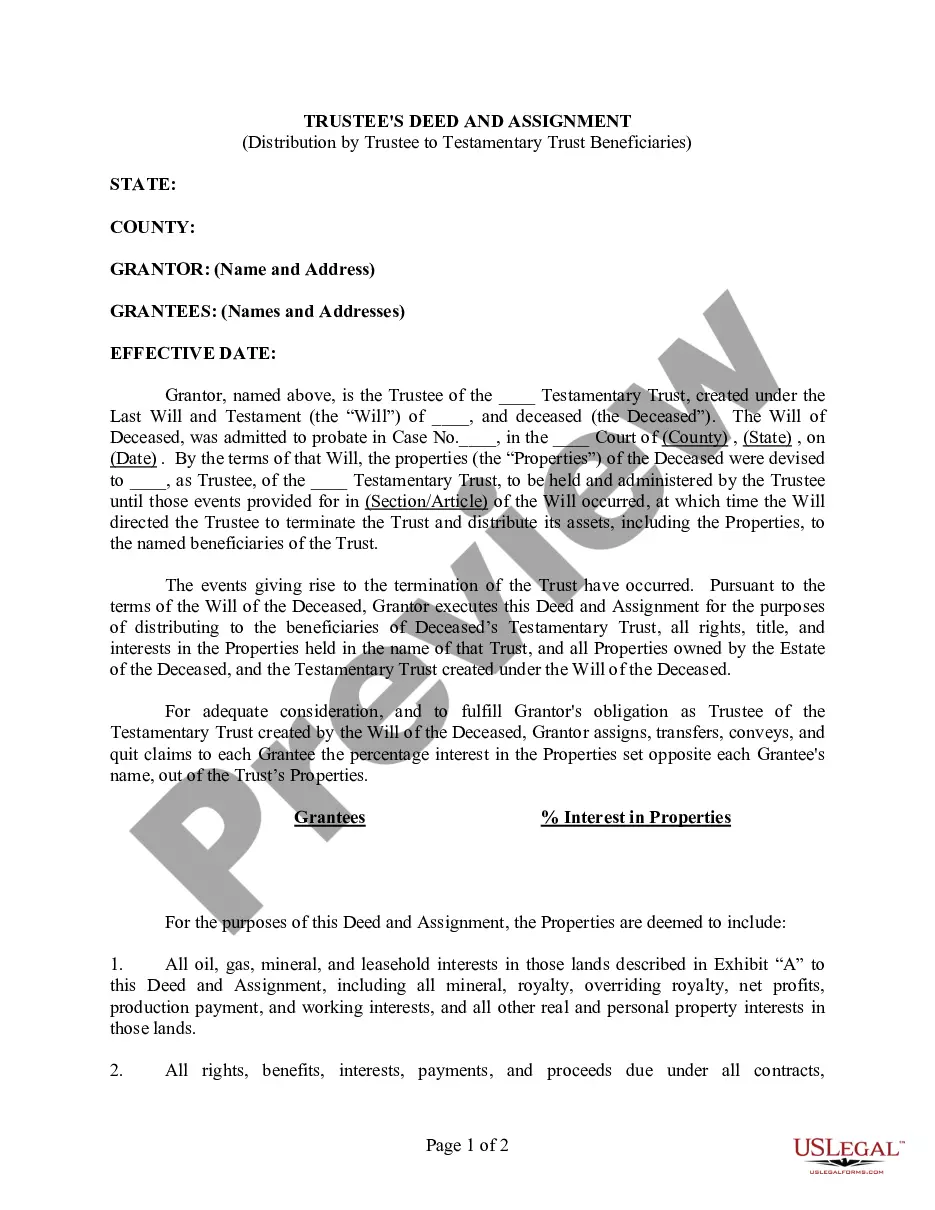
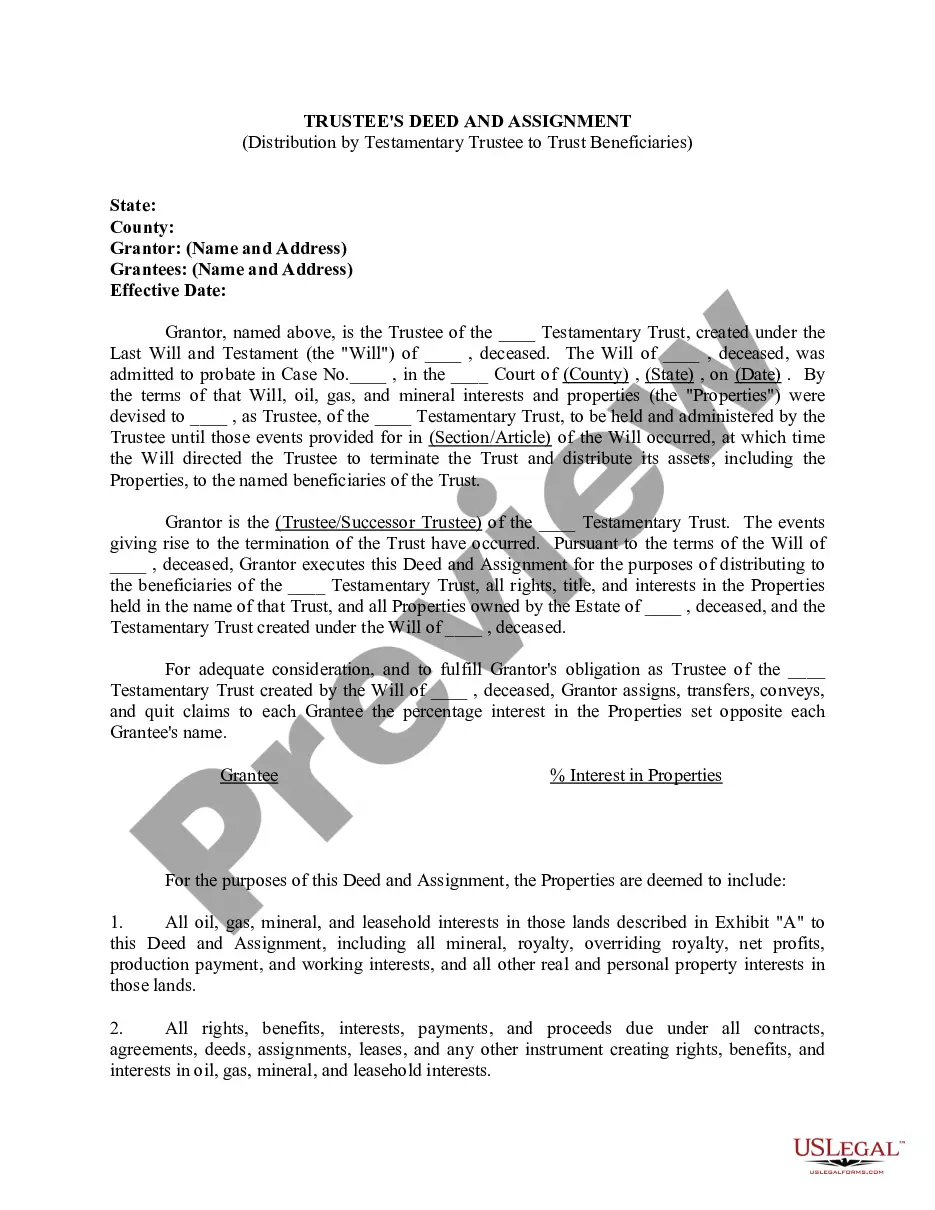
Trustee's Deed and Assignment for Distribution by Trustee to Testamentary Trust Beneficiaries
What is this form?
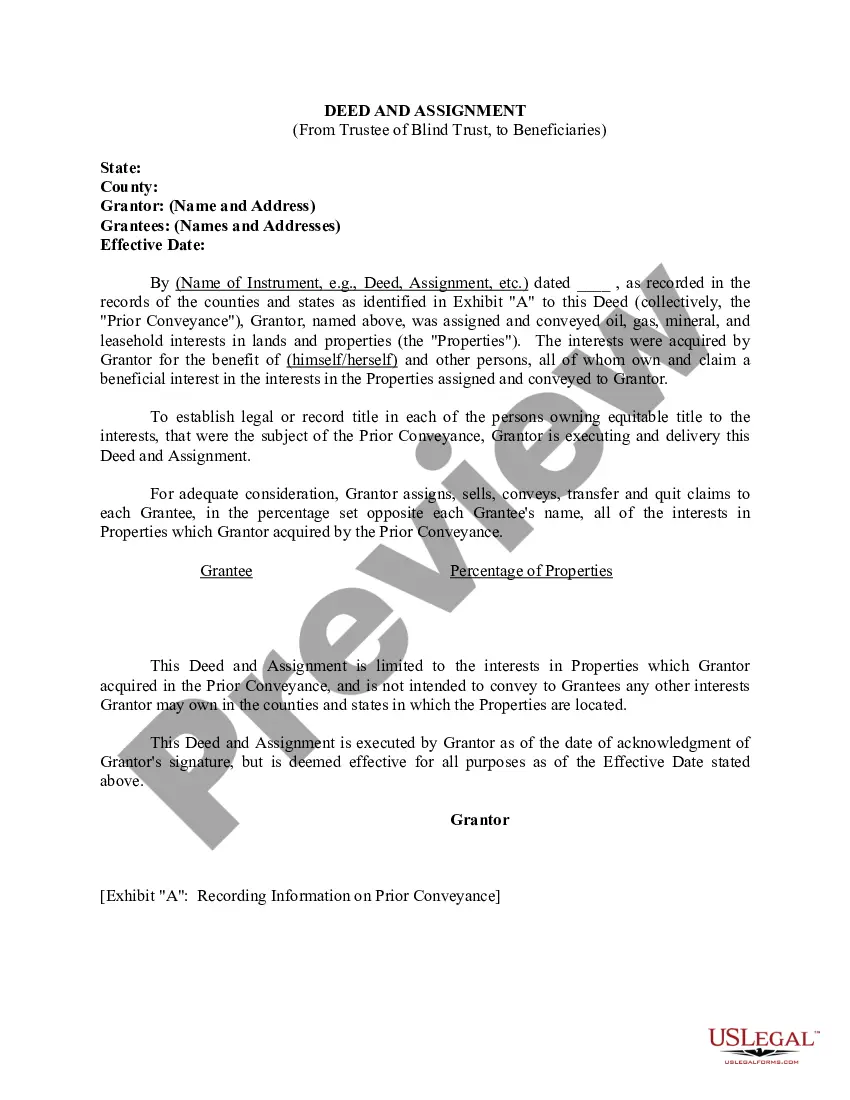
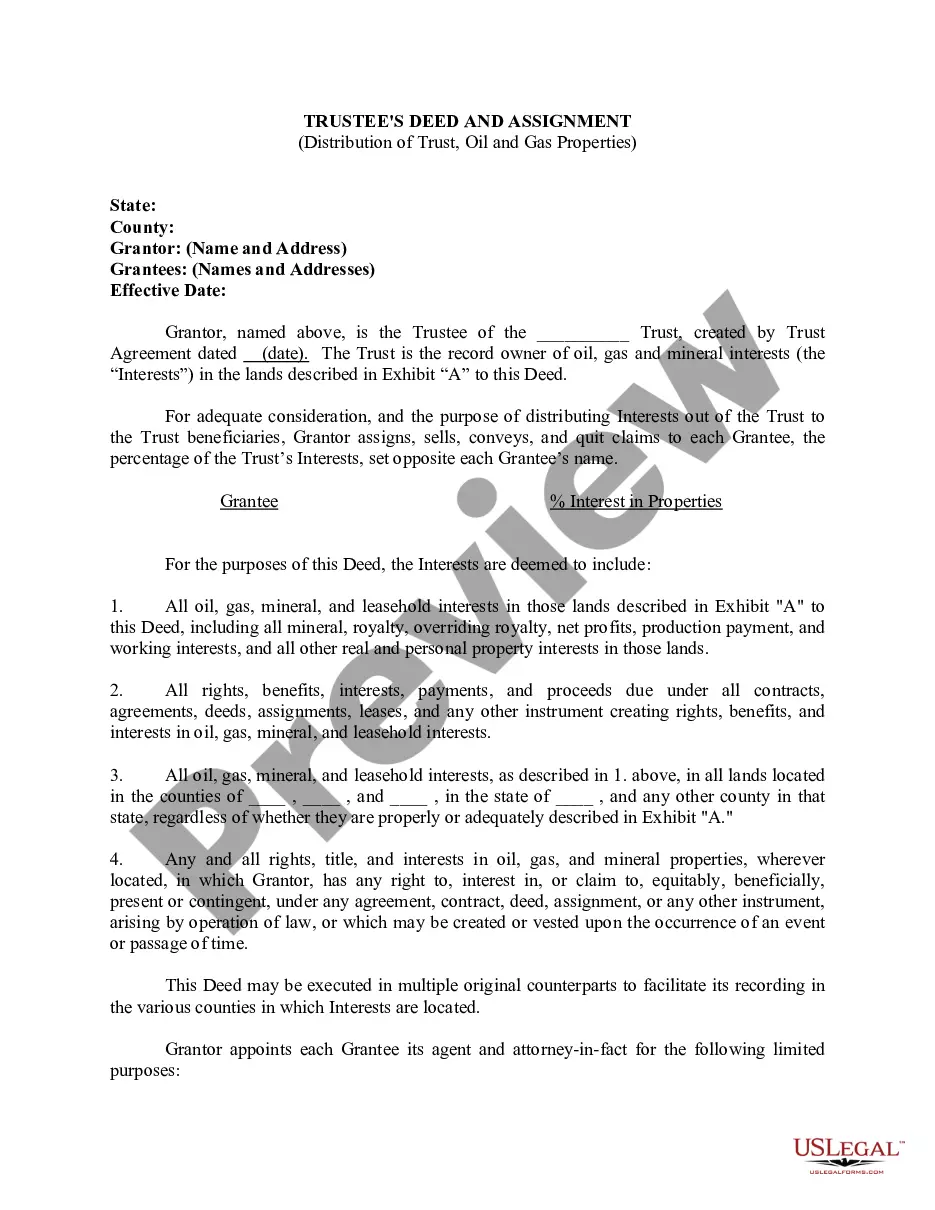
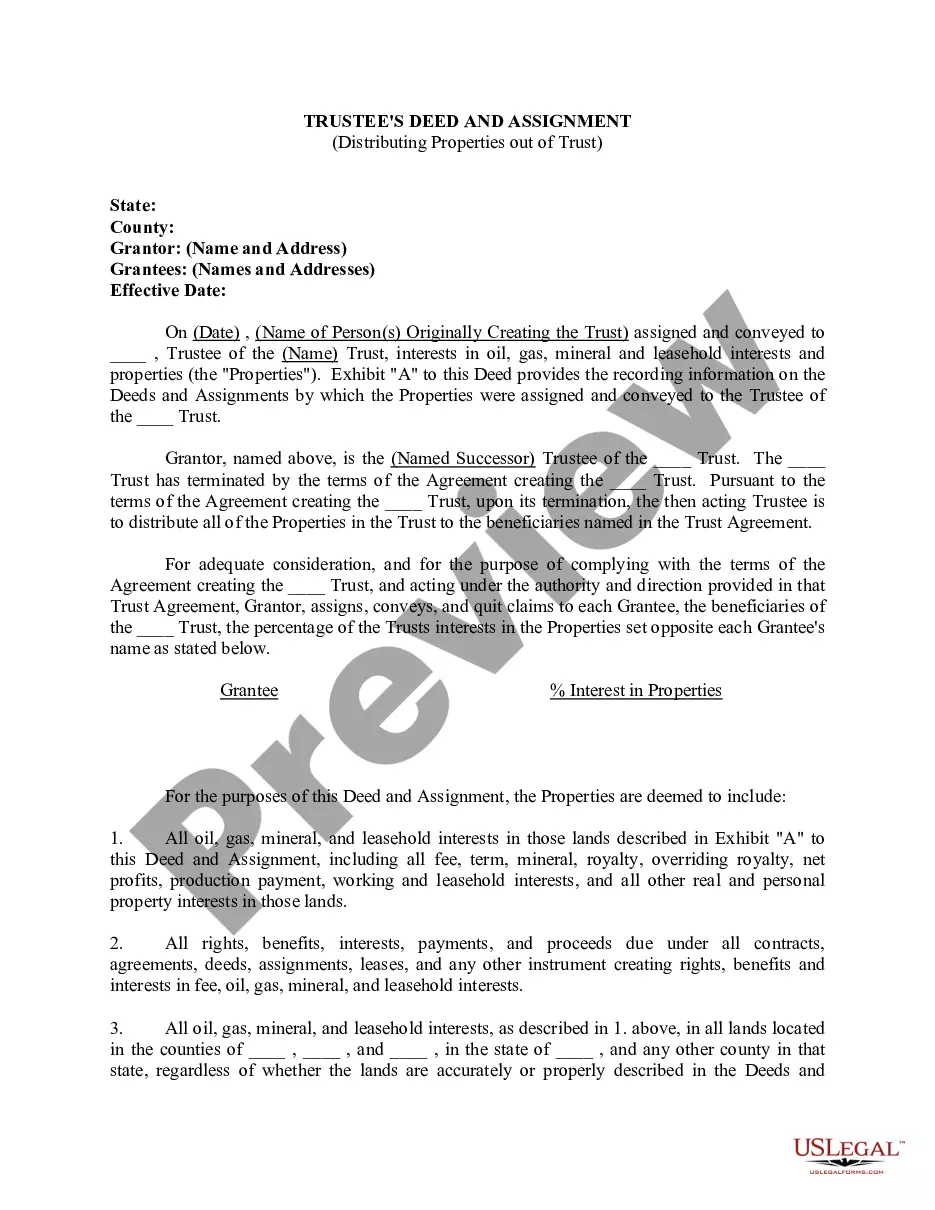
The Trustee's Deed and Assignment for Distribution by Trustee to Testamentary Trust Beneficiaries is a legal document used by a trustee to distribute assets held in a testamentary trust. This form allows the trustee to formally transfer property and interests from the trust to the beneficiaries specified in the deceased person's will. It serves a crucial role in fulfilling the deceased's wishes and ensuring that beneficiaries receive their allocated shares according to the terms of the will.
Key components of this form
- Grantor and Grantees: Identifies the trustee (grantor) and the beneficiaries (grantees) receiving the property.
- Effective Date: States when the distribution of assets will take effect.
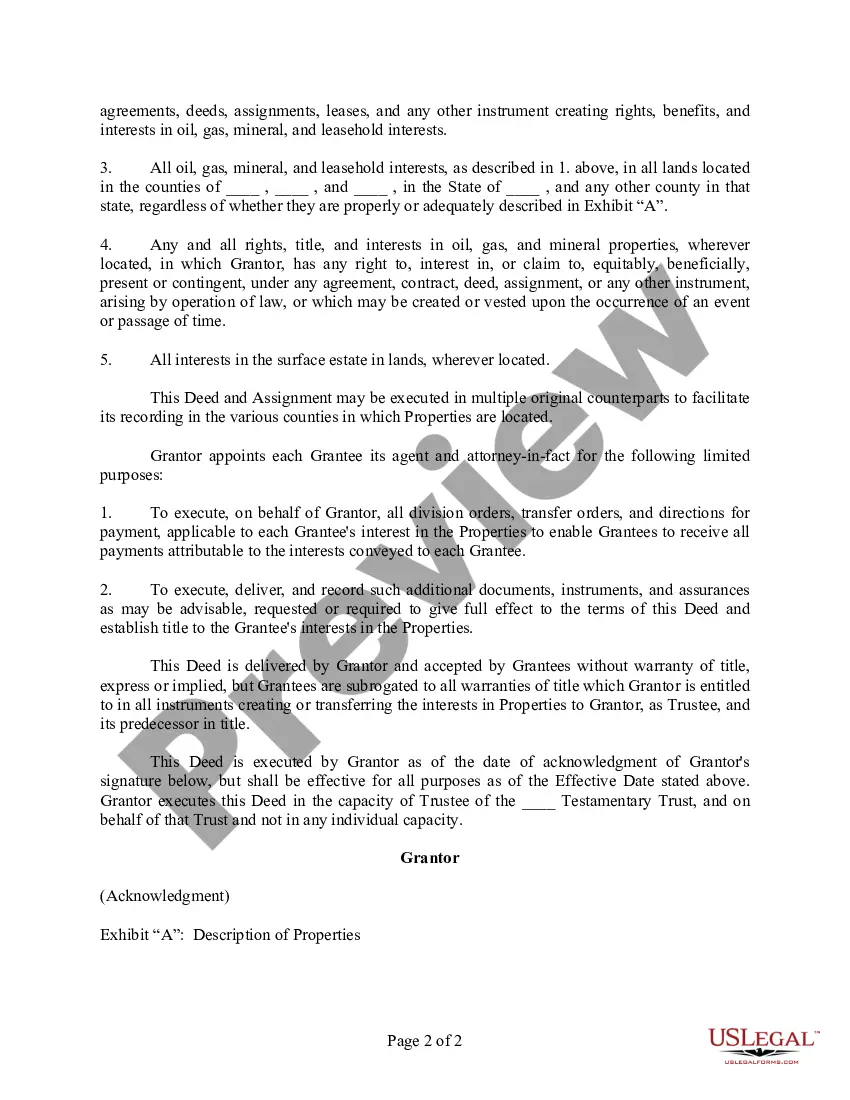
- Property Description: Details the properties being transferred, including oil, gas, and mineral interests, along with other real and personal properties.
- Agent Appointment: Grants each grantee the authority to act on behalf of the trustee for specific purposes related to the property.
- Execution and Acknowledgment: Outlines the process for signing the deed and acknowledges its legal validity.
When to use this form
This form is used when a trustee is ready to distribute assets from a trust created under a will after the death of the trust's creator. It is applicable in scenarios where the trustee needs to formally transfer ownership of properties to beneficiaries according to the specific provisions of the will, ensuring that the assets are distributed fairly and legally.
Intended users of this form
- Trustees managing a testamentary trust wishing to distribute assets.
- Beneficiaries named in a will looking to receive their share of the trust assets.
- Legal representatives involved in the fulfillment of a deceased person's last wishes regarding asset distribution.
Steps to complete this form
- Identify the parties involved: Write the names and addresses of the trustee (grantor) and the beneficiaries (grantees).
- Specify the properties: Clearly describe the assets and interests being transferred, ensuring they match the provisions of the will.
- Enter the effective date: Specify when the transfer of assets should take effect.
- Sign the document: The trustee must sign the deed, acknowledging their capacity to act on behalf of the trust.
- Submit for recording: File the completed deed with the appropriate county office to ensure its legal standing.
Notarization requirements for this form
This form does not typically require notarization unless specified by local law. However, it is recommended to have it notarized to enhance its legal validity and acceptance in the court system.
Get your form ready online
Our built-in tools help you complete, sign, share, and store your documents in one place.
Make edits, fill in missing information, and update formatting in US Legal Forms—just like you would in MS Word.
Download a copy, print it, send it by email, or mail it via USPS—whatever works best for your next step.
Sign and collect signatures with our SignNow integration. Send to multiple recipients, set reminders, and more. Go Premium to unlock E-Sign.
If this form requires notarization, complete it online through a secure video call—no need to meet a notary in person or wait for an appointment.
We protect your documents and personal data by following strict security and privacy standards.

Make edits, fill in missing information, and update formatting in US Legal Forms—just like you would in MS Word.

Download a copy, print it, send it by email, or mail it via USPS—whatever works best for your next step.

Sign and collect signatures with our SignNow integration. Send to multiple recipients, set reminders, and more. Go Premium to unlock E-Sign.

If this form requires notarization, complete it online through a secure video call—no need to meet a notary in person or wait for an appointment.

We protect your documents and personal data by following strict security and privacy standards.
Common mistakes to avoid
- Failing to provide accurate property descriptions which can lead to disputes.
- Not specifying the effective date, causing confusion over when the transfer occurs.
- Omitting signatures which can invalidate the deed.
- Not recording the deed in the proper jurisdiction, risking legal issues in the future.
Why complete this form online
- Convenience: Easily download and fill out the form at your own pace.
- Editability: Customize the template to suit your specific needs and circumstances.
- Reliability: Access a form vetted by licensed attorneys, ensuring legal compliance.
Looking for another form?

Form popularity
FAQ
This form is a deed used by a trustee to distribute assets held in a testamentary trust to the beneficiaries named in the deceased’s will. It records who is transferring to whom, when the distribution takes effect, and describes the property being transferred, including oil, gas, and mineral interests, with any required agent appointments and signing acknowledgments.
The form identifies the trustee (grantor) and the beneficiaries (grantees), states the effective date of distribution, and provides a property description for the assets to be transferred. It also may grant agents authority to act for specific purposes related to the property and requires execution and acknowledgment to validate the transfer.
In a testamentary trust, the trustee holds legal title to trust assets and administers them for the beneficiaries. This Trustee's Deed and Assignment supports transferring property from the trust to named beneficiaries, aligning with the will’s terms and helping ensure the beneficiaries receive their allocated shares.
Common mistakes include missing or inaccurate property descriptions, failing to name all grantors and grantees, omitting the effective date, or neglecting an agent appointment and the execution/acknowledgment language. This form's included components help prevent those errors when transferring oil, gas, mineral interests and other trust assets.
A testamentary trust is created by the decedent's will, and its assets are distributed in accordance with that will. This form documents the distribution from the trust to beneficiaries, reflecting the will’s terms and the trustee’s authority to transfer property held in the trust.
This form differs by targeting distributions from a trust created under a will (a testamentary trust) to named beneficiaries and by including elements such as an effective date, agent appointment, and a detailed property description (including oil, gas, and mineral interests) to govern the transfer.