Ohio Real Estate AS-IS Purchase Agreement
About this form
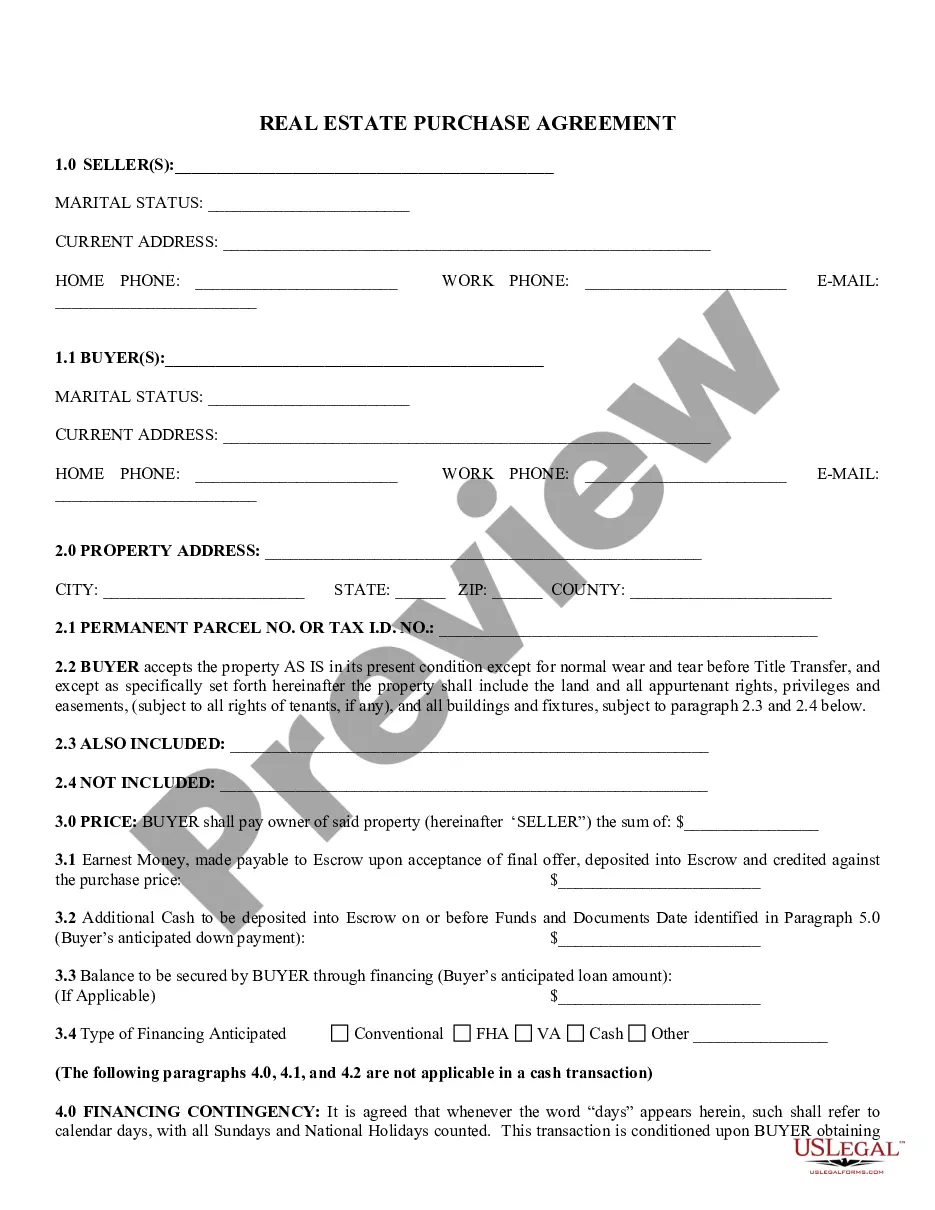
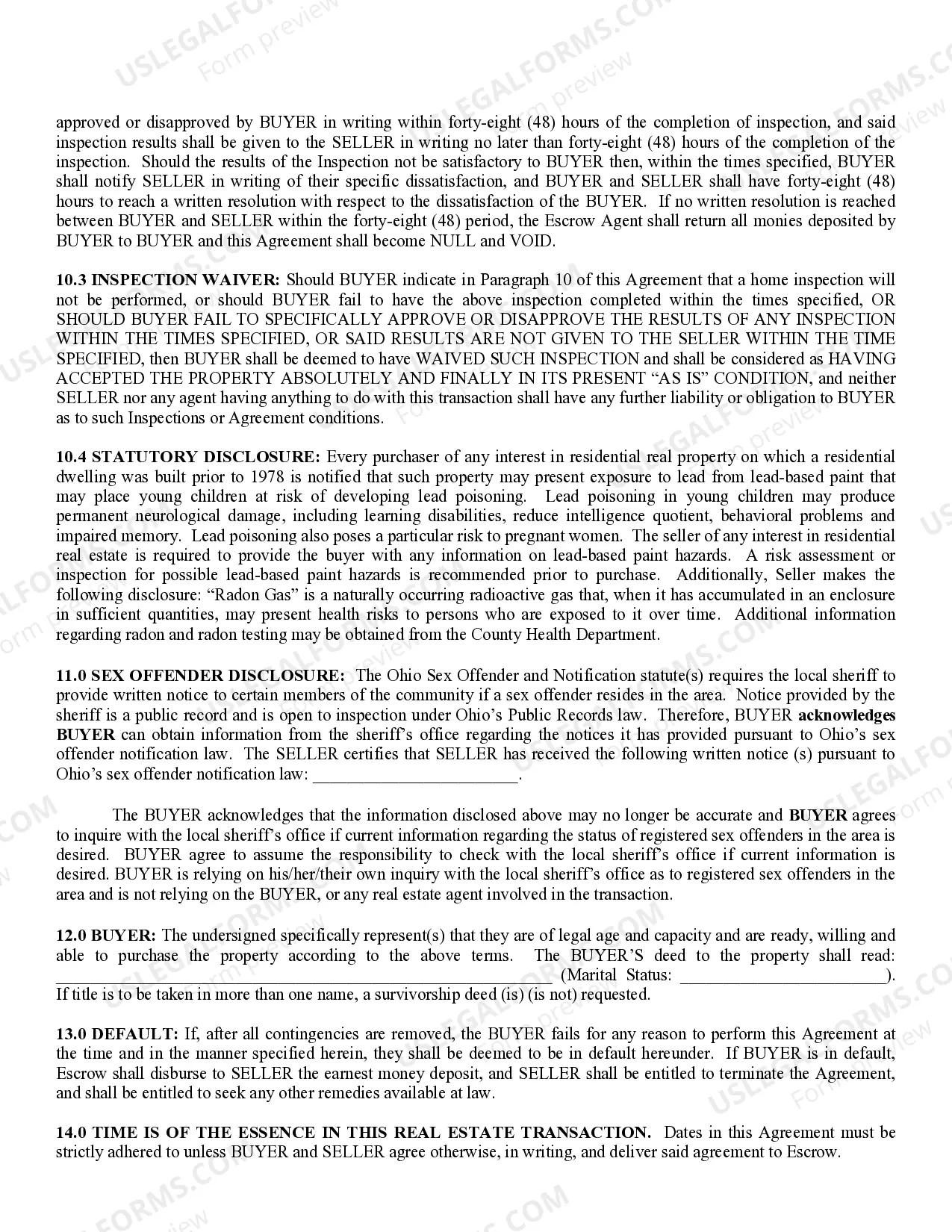
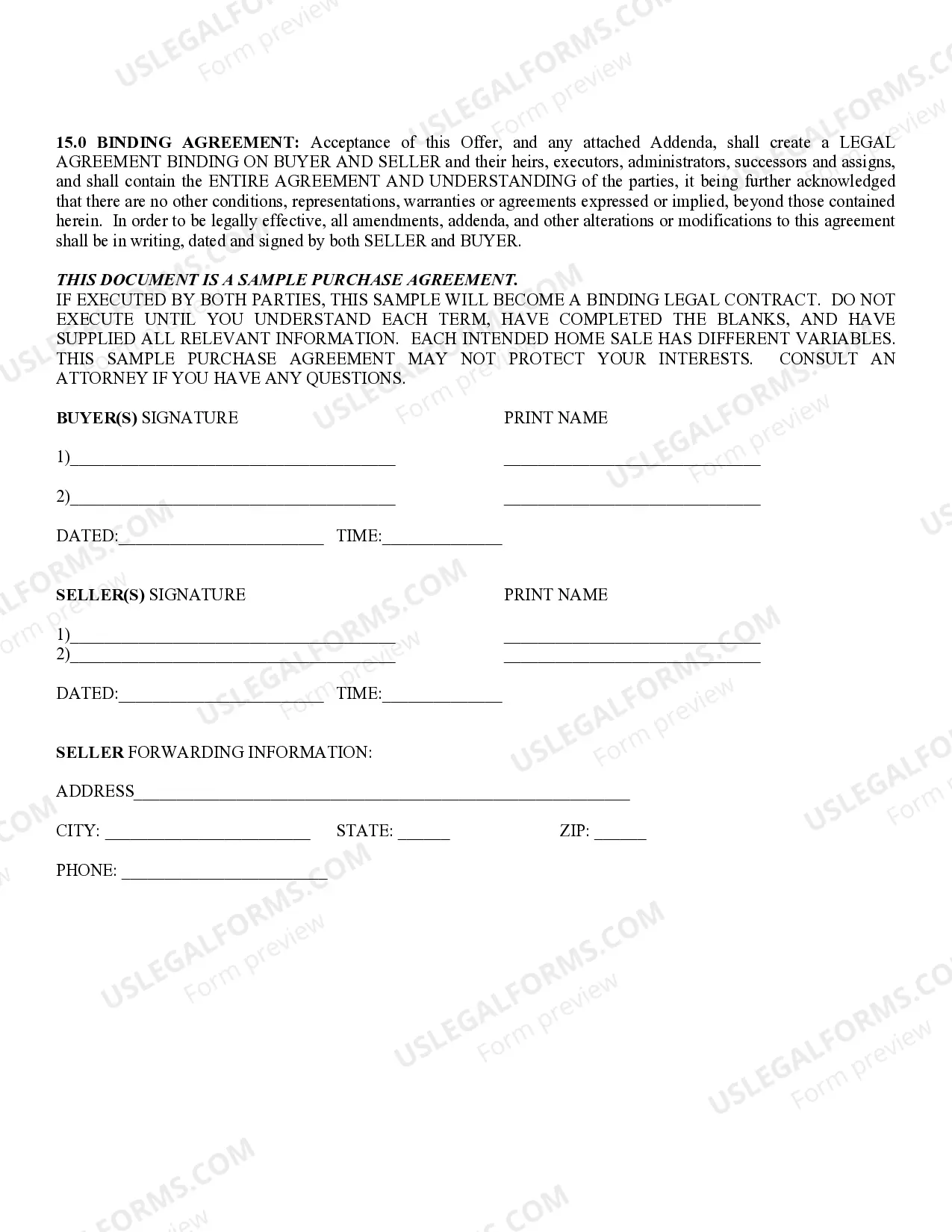
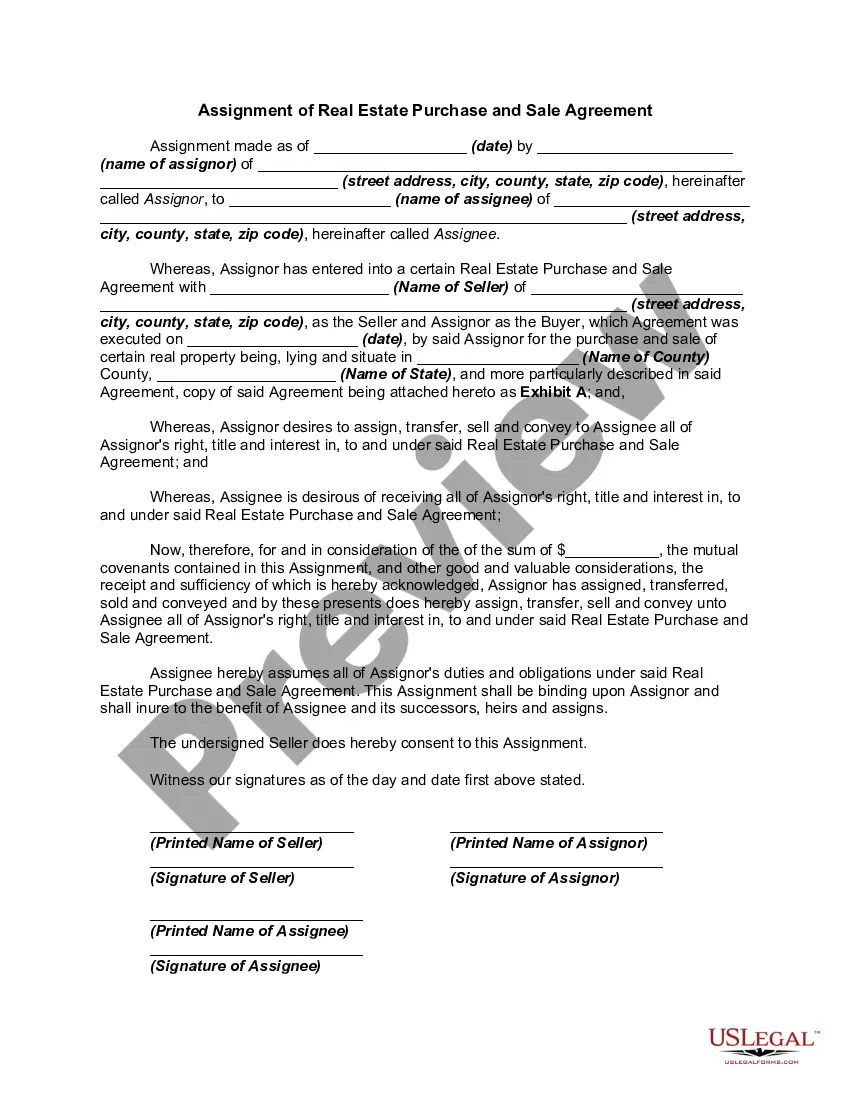
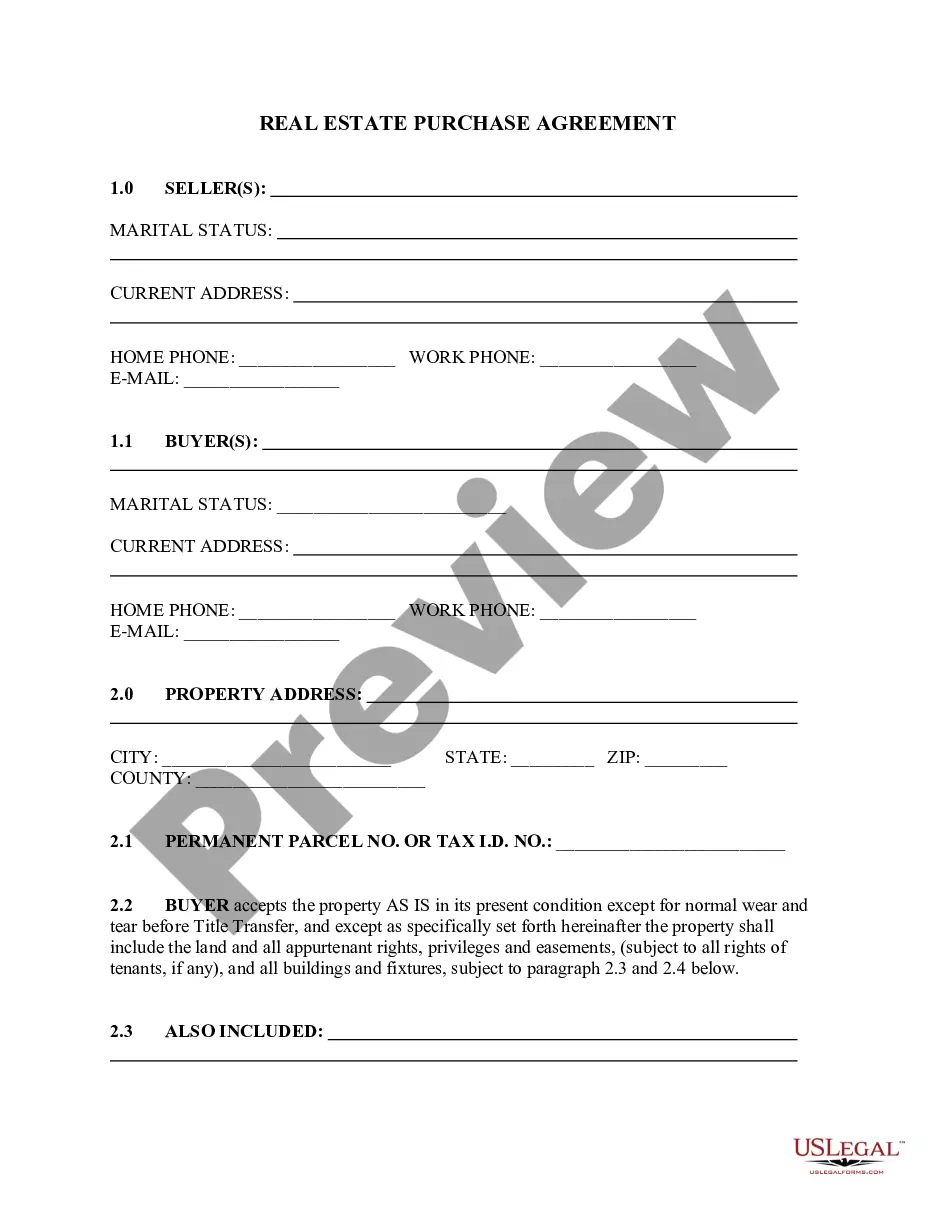
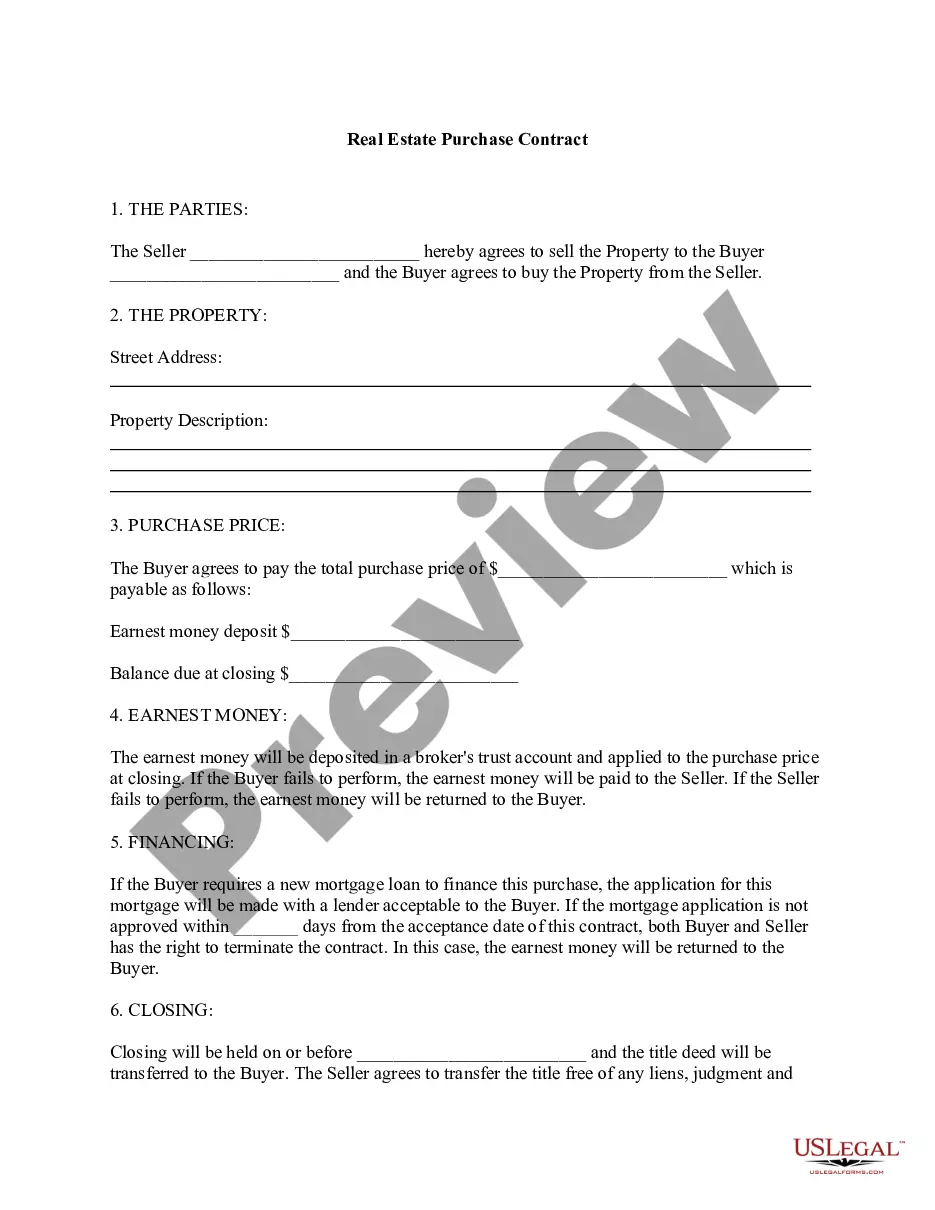
The Ohio Real Estate AS-IS Purchase Agreement is a legally binding contract used for the sale of real estate in Ohio when the property is sold "as is." This means the buyer agrees to accept the property in its current condition without expecting the seller to make any repairs prior to closing. This form is essential for cash sales, assumption of loans, or new loan buyers and outlines the terms typically included in real estate transactions, excluding the involvement of real estate brokers.
What’s included in this form
- Identification of the buyer(s) and seller(s).
- Details of the property being sold, including the address and tax identification number.
- Price and payment terms, including earnest money and financing details.
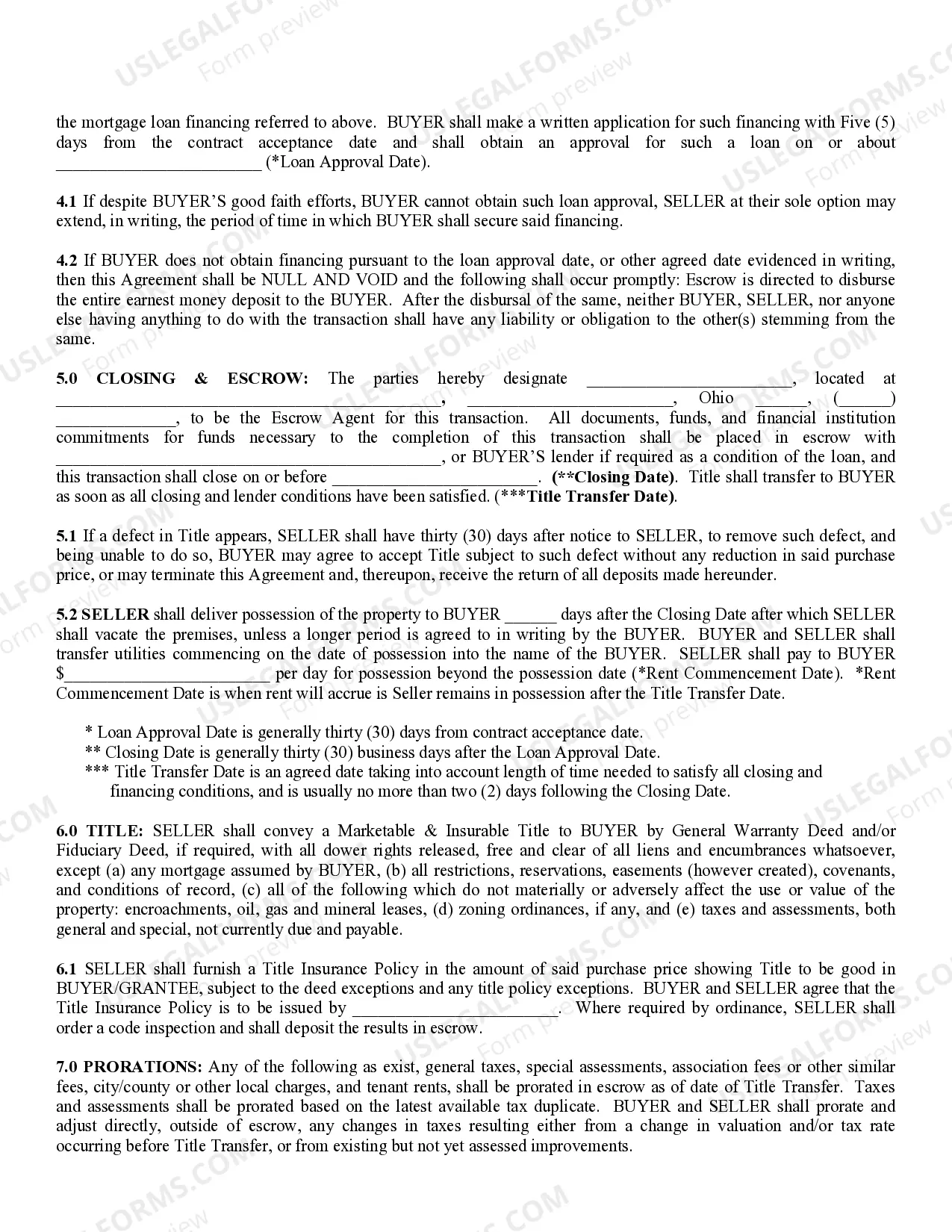
- Closing and escrow details, including the designated escrow agent.
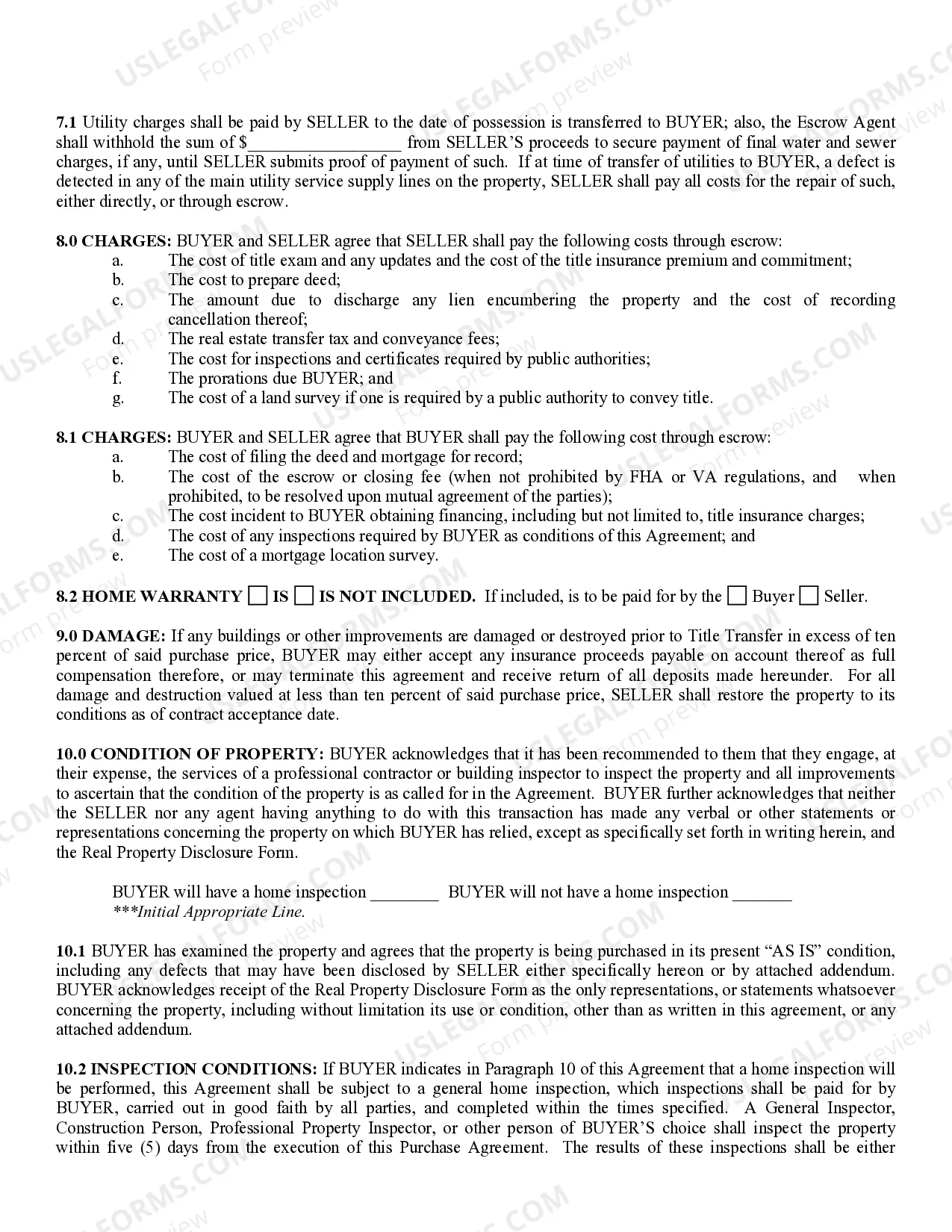
- Conditions regarding the title and responsibilities for inspections or repairs.
- Provisions for damages or defects prior to title transfer.
When to use this document
This form should be used when a buyer intends to purchase real estate in Ohio without any expectations for repairs or changes to the property. It is ideal in scenarios where the buyer is either experienced in real estate transactions or has conducted due diligence regarding the property condition. This agreement is particularly useful for investors or buyers looking for properties to renovate or flip.
Who can use this document
- Home buyers in Ohio looking to purchase property without seller repairs.
- Real estate investors seeking to acquire properties in their current condition.
- Individuals familiar with real estate transactions who are ready to enter a binding agreement.
How to prepare this document
- Identify the parties involved in the sale by entering the names and contact information of the seller(s) and buyer(s).
- Specify the property address and any relevant tax identification numbers.
- Fill in the purchase price, including any earnest money and financing details.
- Designate the escrow agent and enter closing dates per the agreement.
- Review inspection and disclosure clauses, ensuring all parties acknowledge the propertyâs "as is" condition.
Notarization guidance
This form does not typically require notarization unless specified by local law. However, you may want to consult with a legal professional to ensure compliance with Ohio requirements.
Get your form ready online
Our built-in tools help you complete, sign, share, and store your documents in one place.
Make edits, fill in missing information, and update formatting in US Legal Forms—just like you would in MS Word.
Download a copy, print it, send it by email, or mail it via USPS—whatever works best for your next step.
Sign and collect signatures with our SignNow integration. Send to multiple recipients, set reminders, and more. Go Premium to unlock E-Sign.
If this form requires notarization, complete it online through a secure video call—no need to meet a notary in person or wait for an appointment.
We protect your documents and personal data by following strict security and privacy standards.

Make edits, fill in missing information, and update formatting in US Legal Forms—just like you would in MS Word.

Download a copy, print it, send it by email, or mail it via USPS—whatever works best for your next step.

Sign and collect signatures with our SignNow integration. Send to multiple recipients, set reminders, and more. Go Premium to unlock E-Sign.

If this form requires notarization, complete it online through a secure video call—no need to meet a notary in person or wait for an appointment.

We protect your documents and personal data by following strict security and privacy standards.
Avoid these common issues
- Failing to accurately document the property condition and disclosing necessary information.
- Overlooking the timeline for securing financing and closing dates.
- Neglecting to thoroughly read terms regarding property damages or inspection waivers.
Why use this form online
- Convenience of downloading and filling out the form at your own pace.
- Easy access to templates drafted by licensed attorneys ensuring legal validity.
- Ability to edit the document to suit your specific transaction needs.
Looking for another form?
Form popularity
FAQ
The ?As Is? Clause is used by sellers to avoid having to disclose latent defects with the property. Latent defects are those defects that cannot be discovered by a reasonably diligent inspection.
(A) In addition to any right otherwise to revoke an offer, the buyer has the right to cancel a home solicitation sale until midnight of the third business day after the day on which the buyer signs an agreement or offer to purchase.
The purchase agreement usually is preceded in the process by a ?letter of intent? (referred to in this article as the ?LOI?). While certain terms in the LOI are legally binding, the LOI is not intended to bind the parties to do the sale itself. The LOI instead expresses the parties' intent to pursue the sale.
With that caveat, Ohio law gives you: Three business days to cancel most -- but not all -- contracts resulting from door-to-door sales. That includes home-repair contracts sold by salesmen who show up at your home uninvited. Sales under $25 are exempted.
The answer is that real estate purchase agreements do not need to be notarized or witnessed in order to be legally binding.
Usually those times to walk away and get the earnest money back apply during the contingency periods written into the contract. A buyer can walk away though at any time from the contract up until the actual signing of all documents at closing.
To cancel the contract, the consumer may sign and date the form and mail it to the address provided for cancellation. If the seller does not provide a cancellation form for the consumer to use, consumers may write a letter to notify the seller of the cancellation.
Yes ? if you back out of a signed contract for a reason not explicitly stipulated as a contingency, not only do you risk losing your earnest money, but the seller could possibly seek further legal action. It's easier to back out of buying a house before the purchase agreement is signed.