Complaint - Damages for Wrongful Termination of Lease
About this form
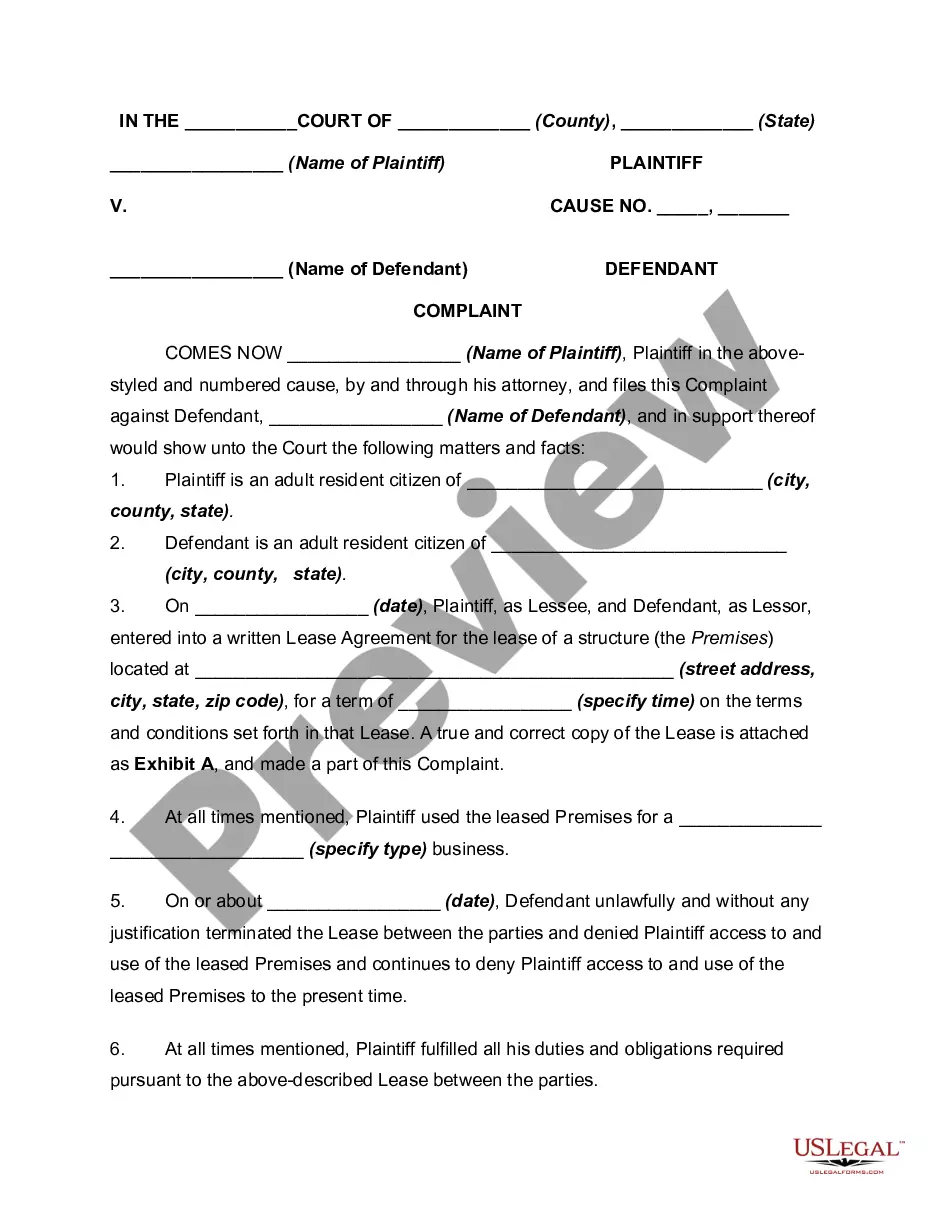
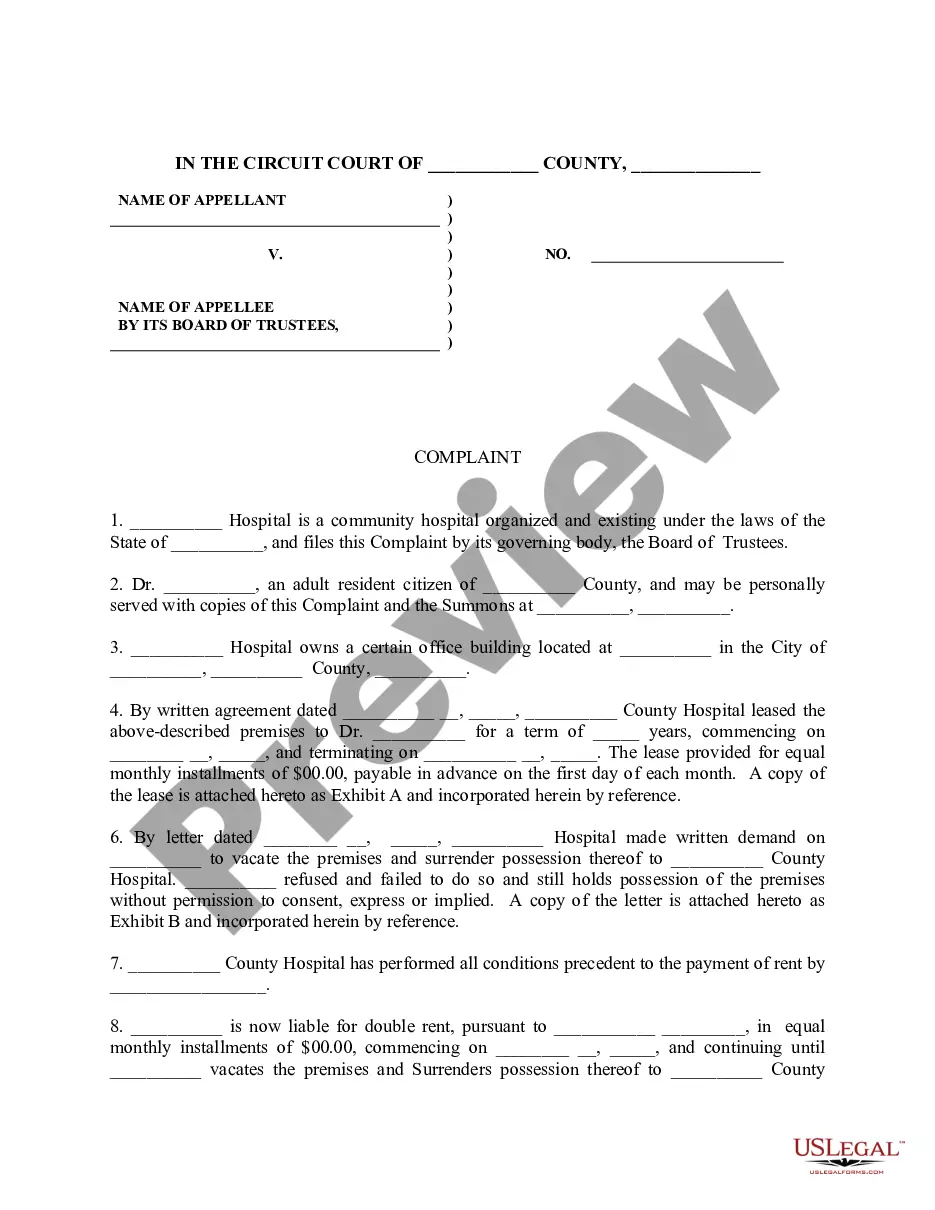
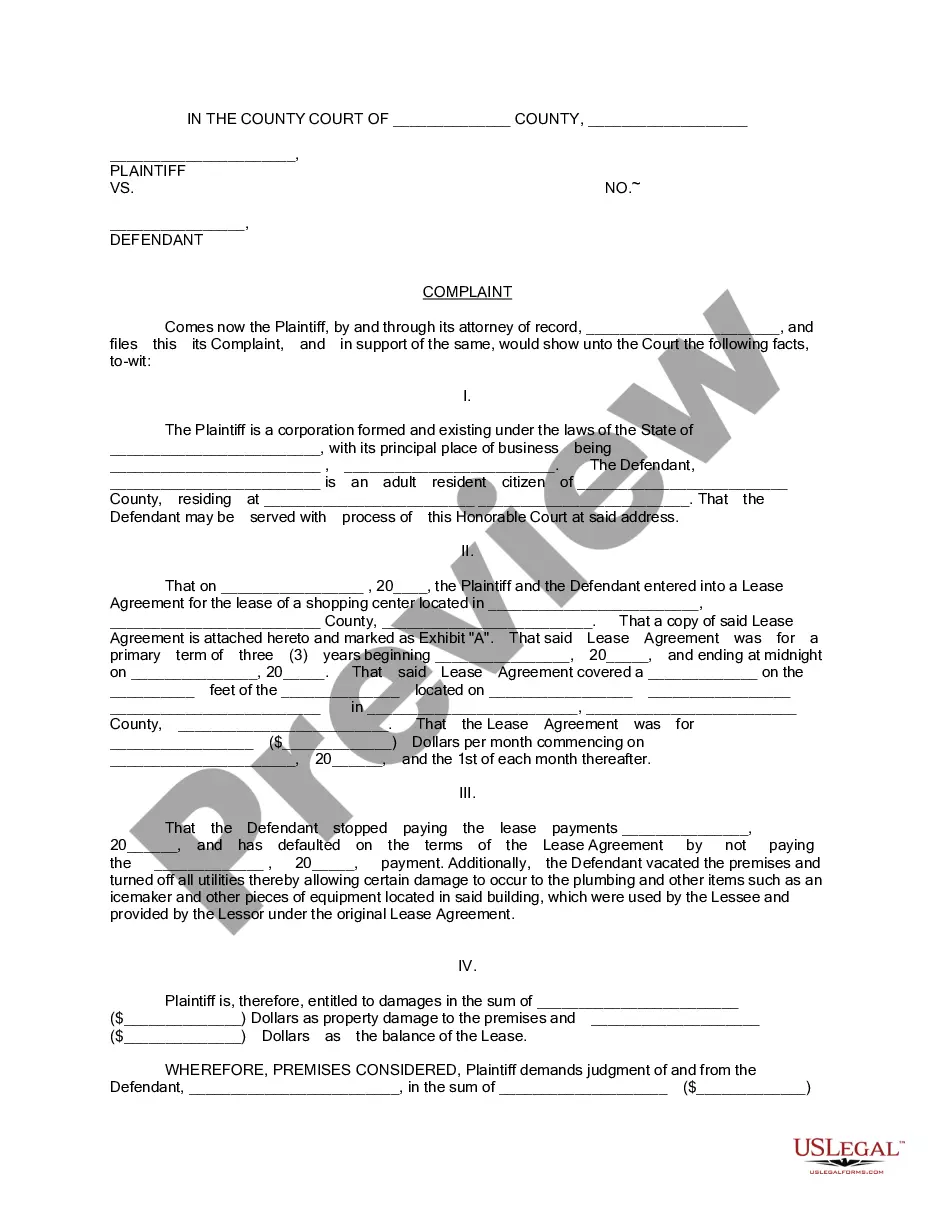
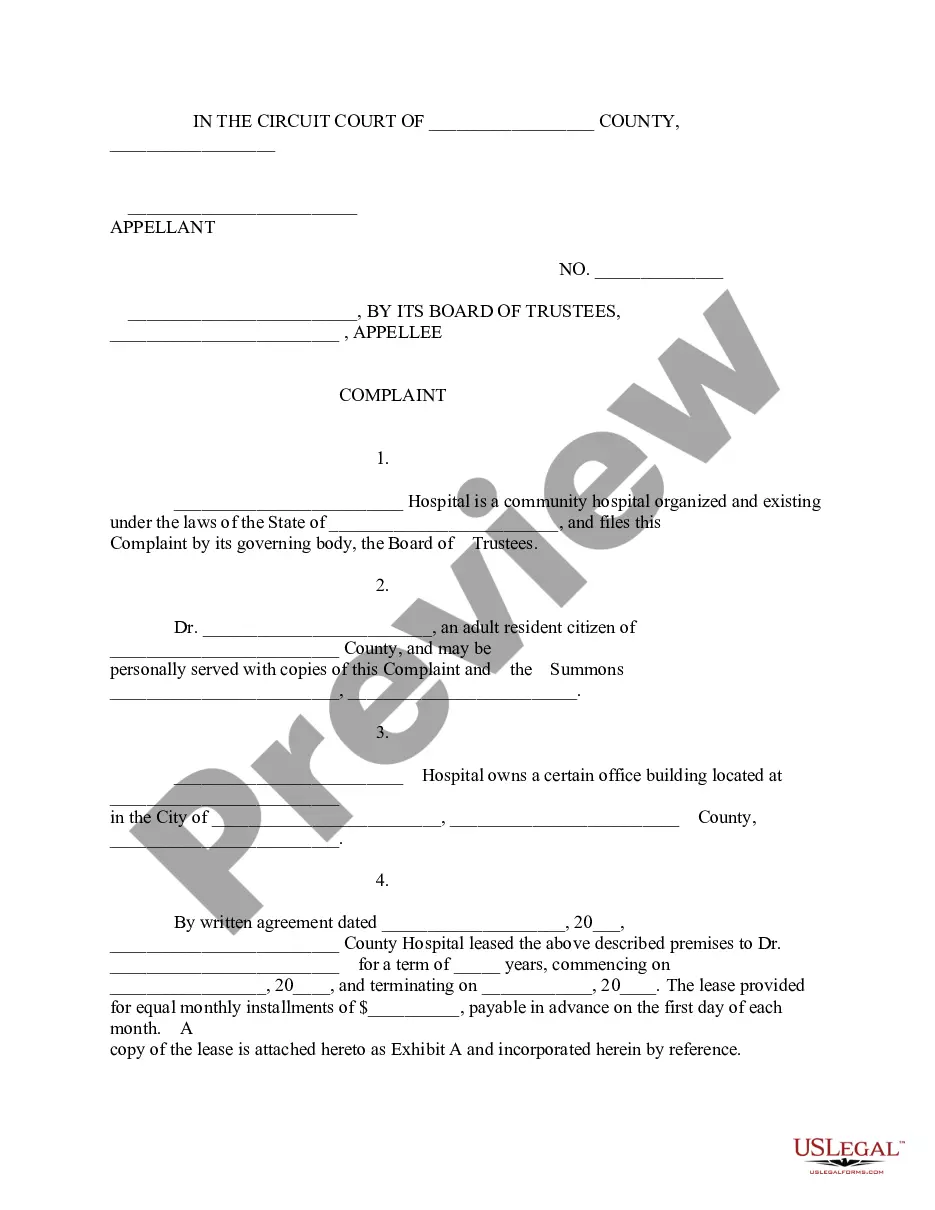
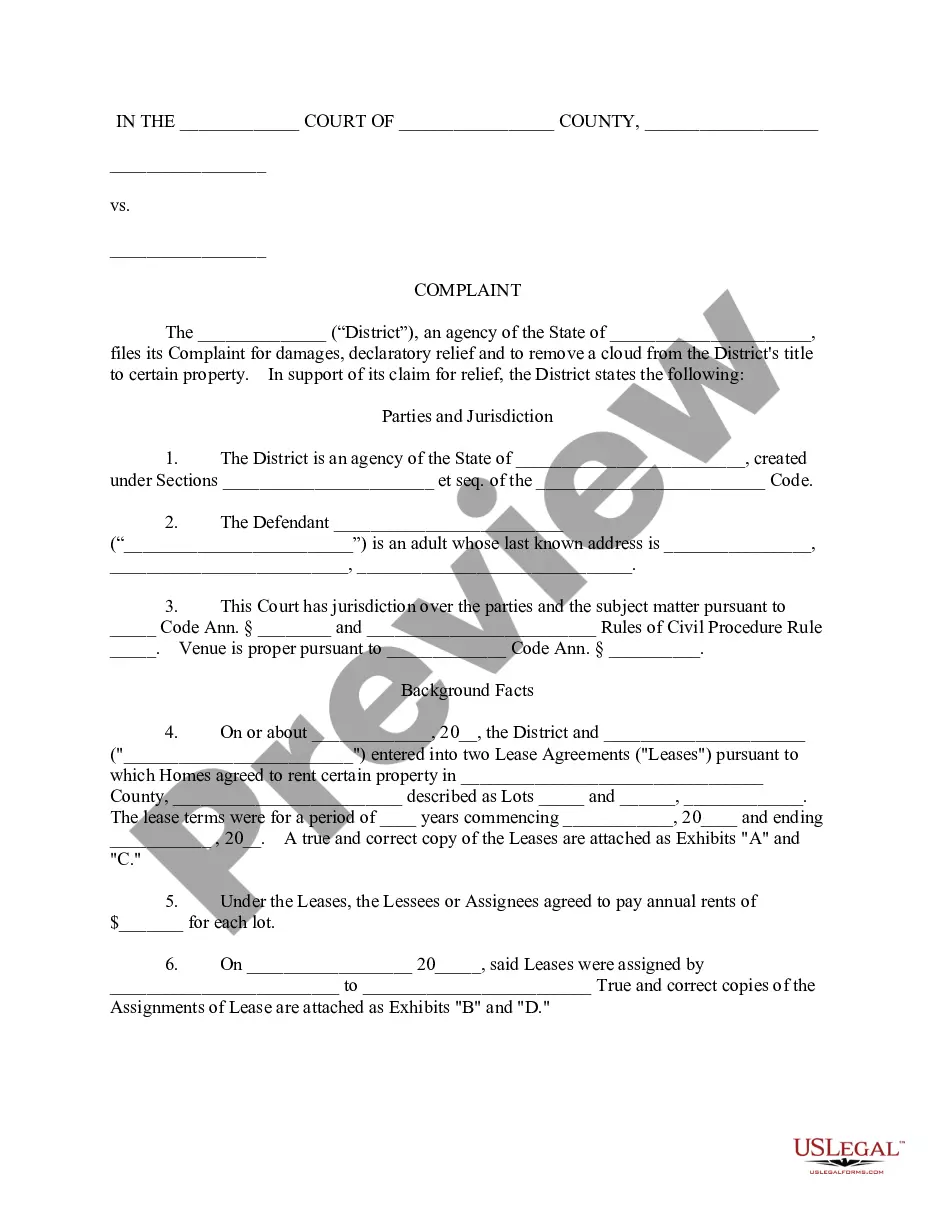
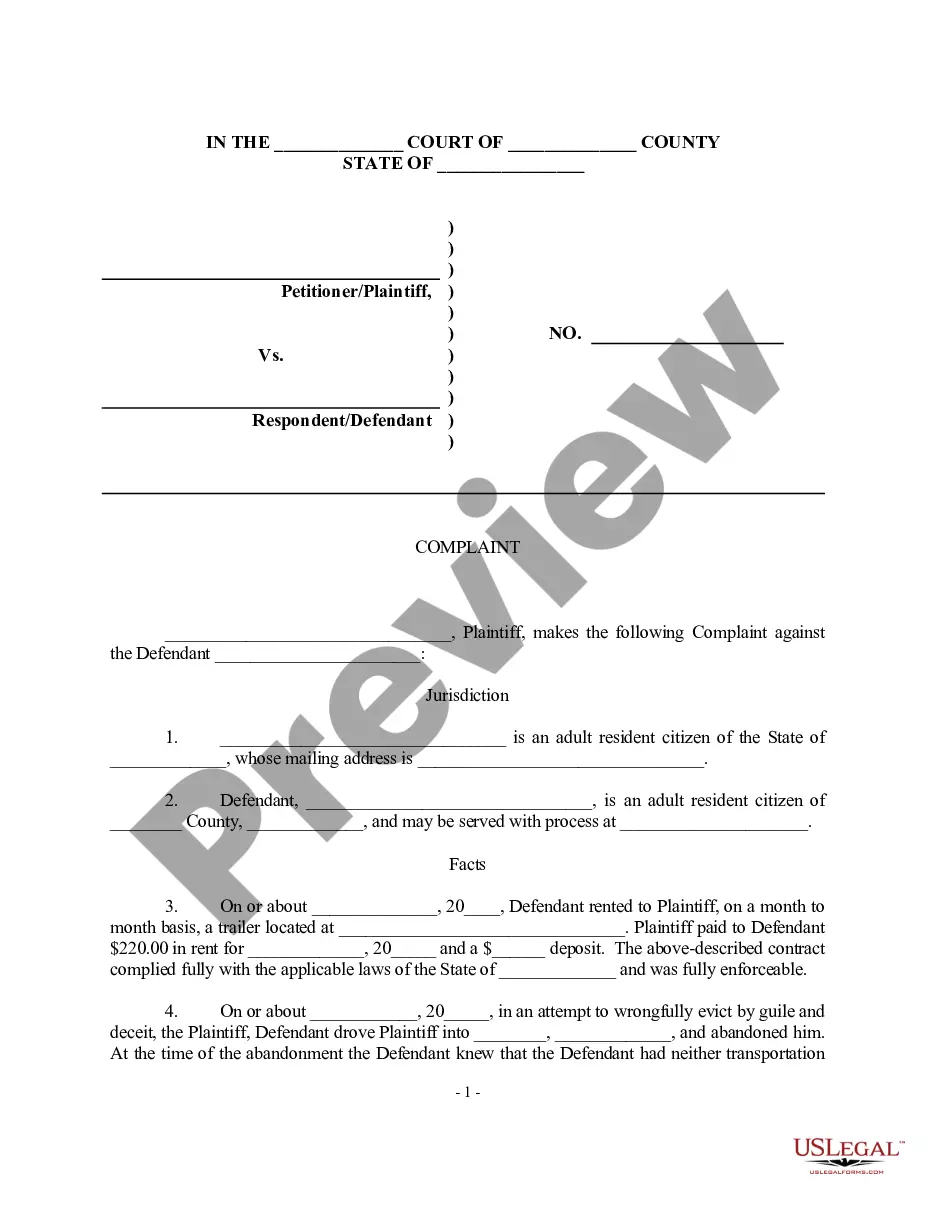
The Complaint for Damages for Wrongful Termination of Lease is a legal document used to initiate a lawsuit against a lessor who has unlawfully terminated a lease agreement. This form adheres to the "notice pleadings" format derived from the Federal Rules of Civil Procedure, which is widely accepted across most states. It allows the plaintiff to claim damages resulting from the loss of access to leased premises and is distinct from other eviction-related forms in its focus on asserting claims for damages instead of mere possession.
What’s included in this form
- Name of the plaintiff and defendant.
- Details of the lease agreement, including dates and property location.
- Allegations of wrongful termination of the lease.
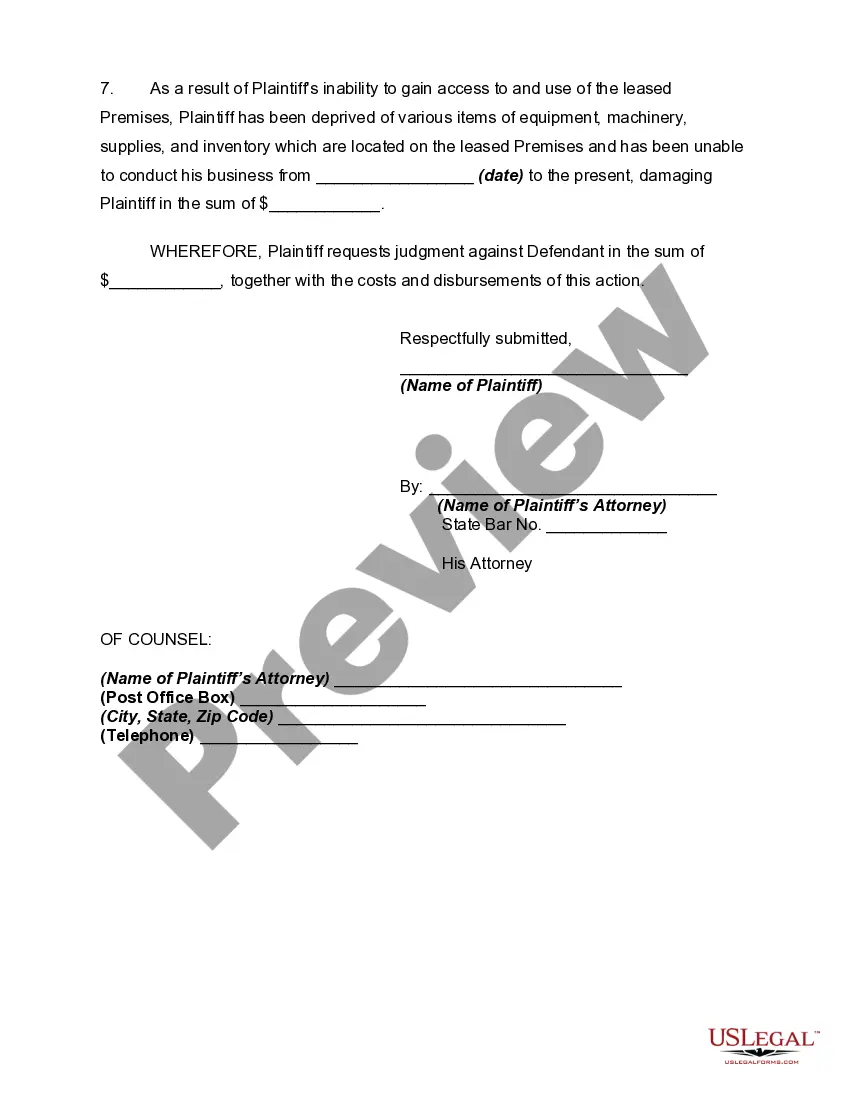
- Statement of damages suffered by the plaintiff as a result of the termination.
- Request for judgment against the defendant, including the amount of damages sought.
Situations where this form applies
This form should be used when a tenant believes that their lease has been wrongfully terminated by the landlord. It is appropriate in situations where the tenant has adhered to the lease terms but was denied access to the premises due to the landlord's unlawful actions. If the tenant has incurred financial losses and seeks to recover damages, this complaint is necessary to formally present their case in court.
Who this form is for
- Individuals who have entered into a lease agreement as tenants.
- Tennants experiencing wrongful lease termination by their landlords.
- Those seeking monetary compensation for damages resulting from loss of access to leased property.
How to complete this form
- Identify and enter the names of the plaintiff and defendant at the top of the form.
- Fill in the case number and provide details about the lease agreement, including property address and lease term.
- Specify the type of business operated on the leased premises, if applicable.
- Detail the date of the wrongful termination and the specific actions taken by the defendant.
- Quantify the damages suffered and state the total amount being sought in the complaint.
- Sign and date the complaint, including the attorney's details if represented.
Does this form need to be notarized?
This form does not typically require notarization unless specified by local law. It is advisable to check your local court requirements to ensure compliance.
Get your form ready online
Our built-in tools help you complete, sign, share, and store your documents in one place.
Make edits, fill in missing information, and update formatting in US Legal Forms—just like you would in MS Word.
Download a copy, print it, send it by email, or mail it via USPS—whatever works best for your next step.
Sign and collect signatures with our SignNow integration. Send to multiple recipients, set reminders, and more. Go Premium to unlock E-Sign.
If this form requires notarization, complete it online through a secure video call—no need to meet a notary in person or wait for an appointment.
We protect your documents and personal data by following strict security and privacy standards.

Make edits, fill in missing information, and update formatting in US Legal Forms—just like you would in MS Word.

Download a copy, print it, send it by email, or mail it via USPS—whatever works best for your next step.

Sign and collect signatures with our SignNow integration. Send to multiple recipients, set reminders, and more. Go Premium to unlock E-Sign.

If this form requires notarization, complete it online through a secure video call—no need to meet a notary in person or wait for an appointment.

We protect your documents and personal data by following strict security and privacy standards.
Common mistakes
- Failing to include all relevant details about the lease agreement.
- Not specifying the exact date of termination, which can weaken the case.
- Omitting evidence of efforts to resolve the issue outside of court.
- Neglecting to properly file the complaint with the court or serve the defendant.
Benefits of completing this form online
- Easy access to legally drafted forms available for immediate download.
- Time-saving, as users can fill out and customize the form online at their convenience.
- Reliable templates designed for accuracy to ensure compliance with legal standards.
Legal use & context
- The form is used to file a legal complaint in civil court.
- It serves as actionable evidence of the tenant's claim against the landlord.
- Ensures adherence to the pleading standards set forth by applicable laws.
What to keep in mind
- This form is specifically for tenants seeking damages after wrongful lease termination.
- Proper completion and filing can facilitate the process of seeking justice for lost business.
- Consult state-specific rules to ensure compliance when filing your complaint.
Looking for another form?




Form popularity
FAQ
Your name, and the landlord's name and address. The date you're writing the letter. Informing the landlord you're breaking your lease early. The reason why you're breaking your lease. The building and apartment you're vacating. The date by which you're vacating.
A lease is automatically void when it is against the law, such as a lease for an illegal purpose. In other circumstances, like fraud or duress, a lease can be declared void at the request of one party but not the other.
If your tenant has caused damages, here are a few points2026 Landlord's right: Of course, you have the right to claim against any damages caused by your tenant (not to be confused with wear and tear). Tenancy Deposit: the deposit is there to be used against damages.
The rental property address, including unit number (if applicable) The names of all tenants on the lease agreement. The date the lease violation notice was written. The specific reason for the notice. The time and date the violation occurred (if applicable)
In most cases when a rental property is damaged, you have the right to keep all or part of the security deposit to offset the repair costs. But again, security deposits are heavily regulated by the landlord-tenant laws in your location.
Identify. The first step is to identify the situation. Categorize. Eliminate. Leave us a message for the RentPrep Podcast: Take Pictures and Video. Gather Bids for Repairs. Deduct from the Security Deposit. Call Your Local Police.
The date that the tenant warning letter was written. The name and the basic personal information of the tenant. The name of the landlord or the owner of the property. The reason why a tenant warning letter has been written.
If you're seeking damages for emotional distress caused by a landlord's discrimination, or punitive damages for especially blatant and intentional discrimination, a lawsuit may well be your best bet. Understand what's involved in suing your landlord. You may file a lawsuit in either federal or state court.
Any malicious or accidental damage to the property caused by a tenant or their guests is the tenant's responsibility. However, it should still be reported to the property manager or landlord.Tenants are also responsible for ensuring that all repairs are reported to their landlord or property manager promptly.