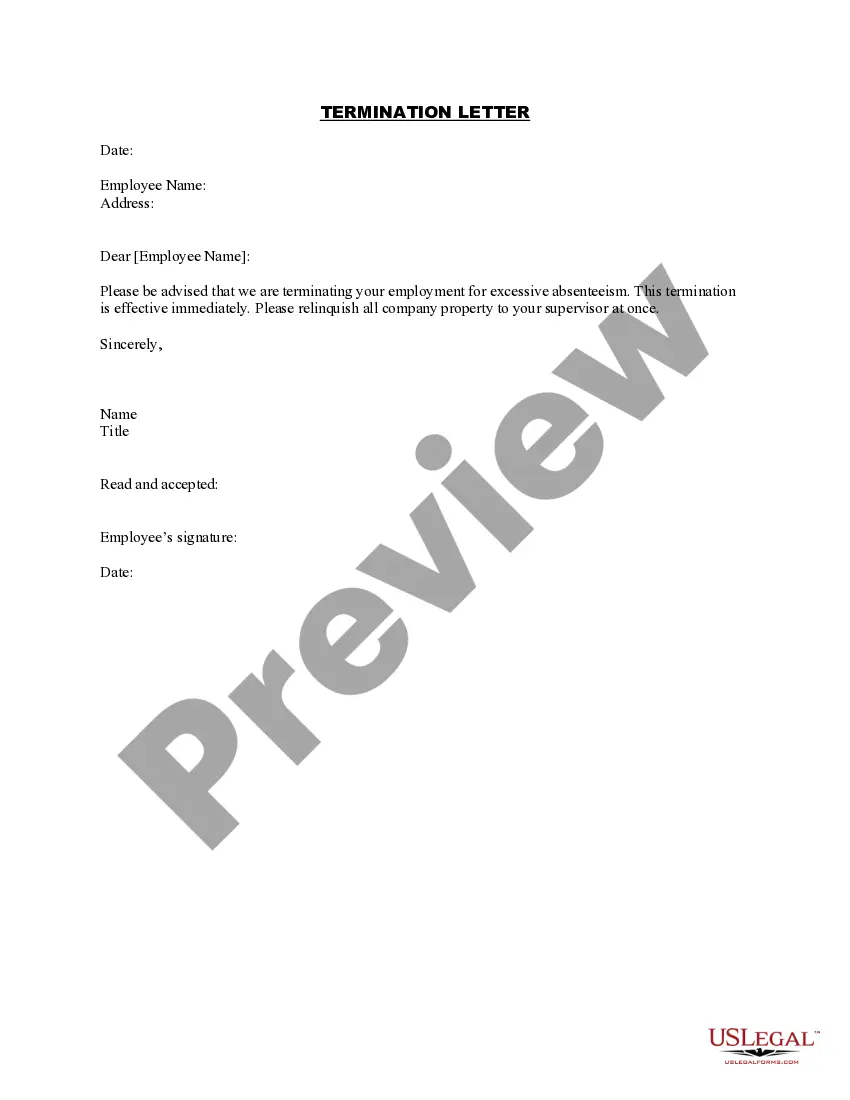
Termination Letter - Excessive Absenteeism
Overview of this form
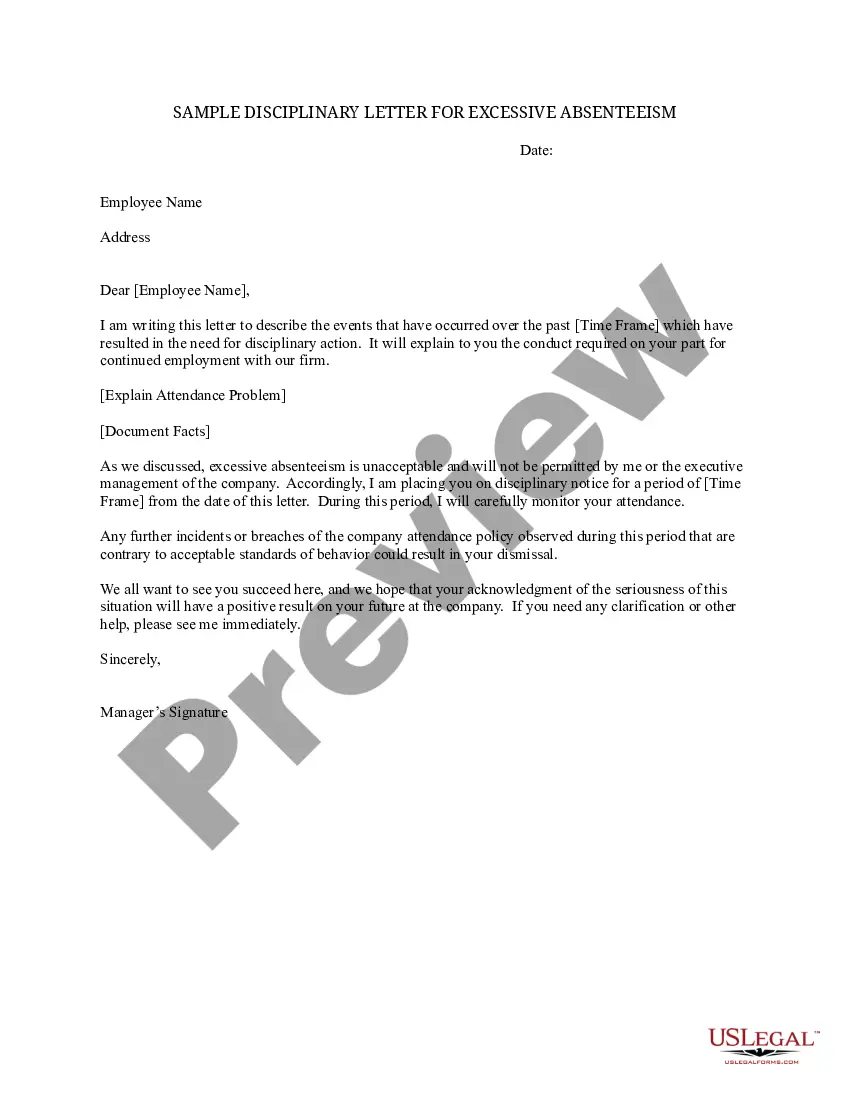
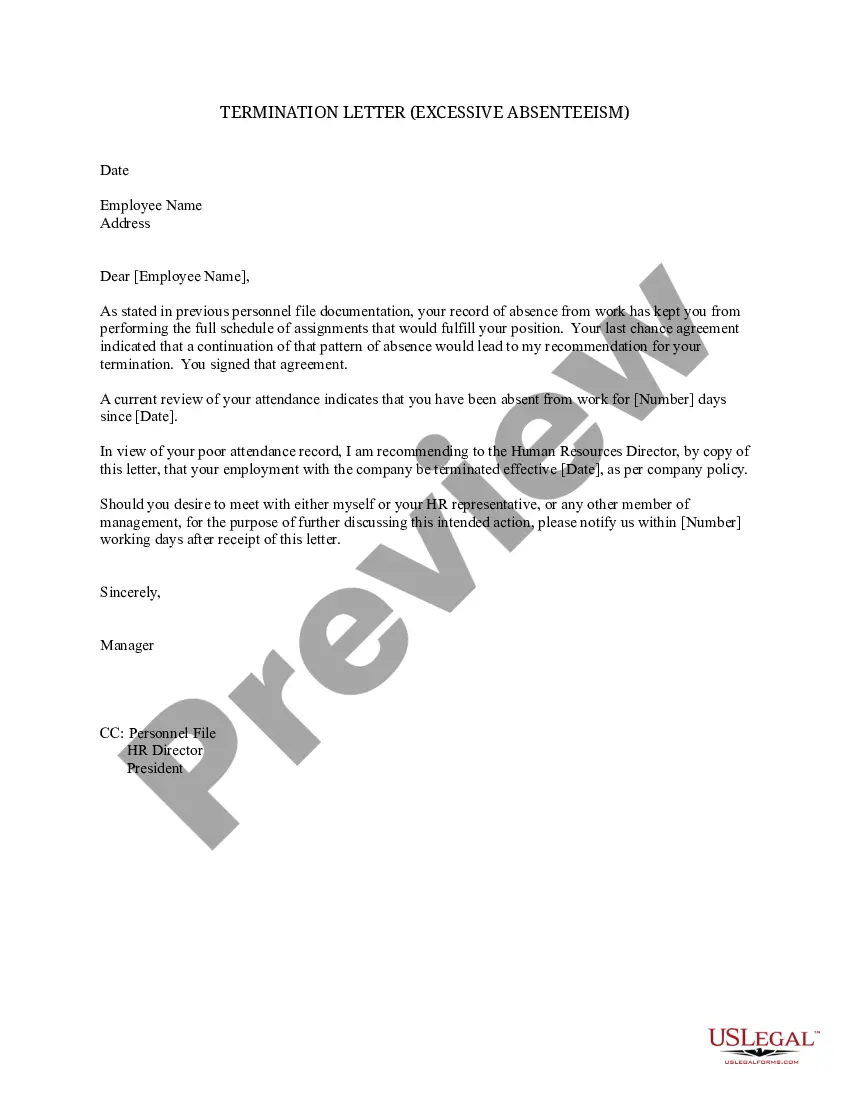
A termination letter for excessive absenteeism is a formal document used by employers to officially end an employee's employment due to frequent and unjustified absences. This letter serves as a critical communication tool to ensure that the termination process is documented properly and that all relevant details are communicated clearly. Unlike other termination letters, this specific form focuses on absenteeism as the primary reason for dismissal.
Key parts of this document
- Employee's name and position
- Date of termination
- Documented instances of absenteeism
- Explanation of the company's absenteeism policy
- Signature of the employer or authorized representative
Situations where this form applies
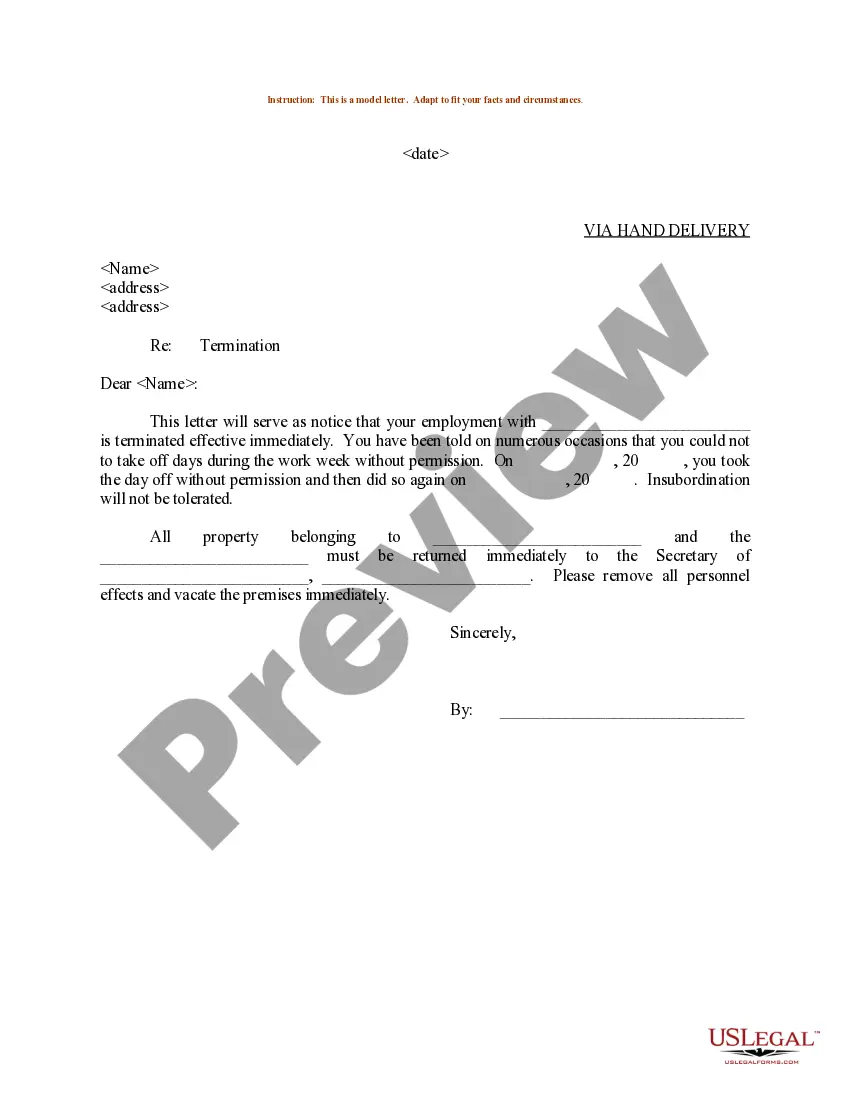
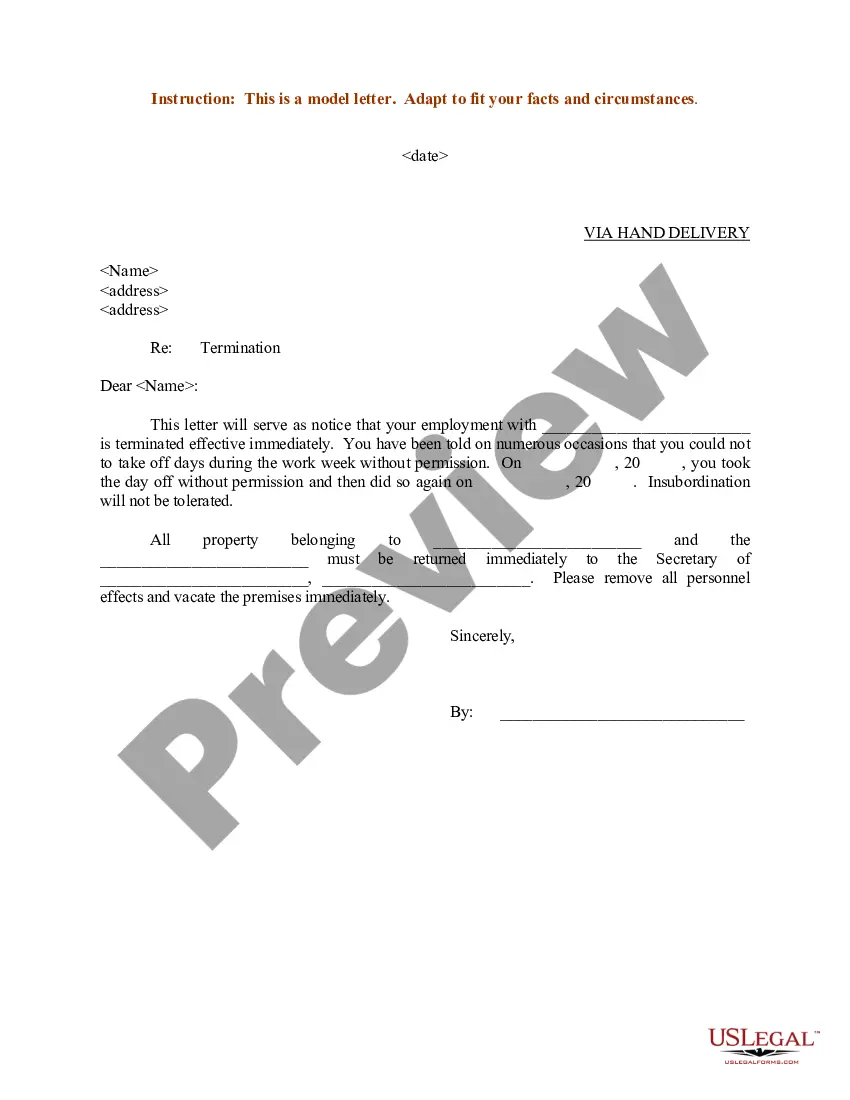
This form should be used when an employer decides to terminate an employee due to a pattern of excessive absenteeism. It is applicable in situations where the employee's absences negatively affect the company, productivity, or team dynamics. Additionally, this letter provides a clear record that the employee was informed of their absences and the consequences outlined in company policy.
Who needs this form
This form is intended for:
- Human resource managers or personnel
- Employer representatives responsible for employee management
- Business owners who handle staffing directly
Instructions for completing this form
- Identify the employee's full name and their job title.
- Enter the date when the termination will take effect.
- Clearly outline the instances of absenteeism documented in the employee's records.
- Reference the company's absenteeism policy and state that it has been breached.
- Sign the letter and include your title within the organization.
Is notarization required?
Notarization is not commonly needed for this form. However, certain documents or local rules may make it necessary. Our notarization service, powered by Notarize, allows you to finalize it securely online anytime, day or night.
Get your form ready online
Our built-in tools help you complete, sign, share, and store your documents in one place.
Make edits, fill in missing information, and update formatting in US Legal Forms—just like you would in MS Word.
Download a copy, print it, send it by email, or mail it via USPS—whatever works best for your next step.
Sign and collect signatures with our SignNow integration. Send to multiple recipients, set reminders, and more. Go Premium to unlock E-Sign.
If this form requires notarization, complete it online through a secure video call—no need to meet a notary in person or wait for an appointment.
We protect your documents and personal data by following strict security and privacy standards.

Make edits, fill in missing information, and update formatting in US Legal Forms—just like you would in MS Word.

Download a copy, print it, send it by email, or mail it via USPS—whatever works best for your next step.

Sign and collect signatures with our SignNow integration. Send to multiple recipients, set reminders, and more. Go Premium to unlock E-Sign.

If this form requires notarization, complete it online through a secure video call—no need to meet a notary in person or wait for an appointment.

We protect your documents and personal data by following strict security and privacy standards.
Mistakes to watch out for
- Failing to document specific instances of absenteeism before issuing the letter.
- Not following company policy regarding termination procedures.
- Overlooking to provide the employee an opportunity to respond to the absenteeism claims.
Benefits of using this form online
- Convenient downloading and easy access to the form whenever needed.
- Editability allows for tailoring the document to fit specific situations.
- Reliability as the forms are drafted by licensed attorneys to ensure compliance with legal standards.
What to keep in mind
- This termination letter is specifically focused on absenteeism as the grounds for dismissal.
- It is crucial that employers document all relevant instances of absenteeism.
- Understanding state-specific termination laws is important for compliance.
Looking for another form?
Form popularity
FAQ
Create an employee attendance policy. Enforce your attendance policy consistently. Keep track of employee absences. Address unscheduled absences and no-show's immediately. Don't just treat the symptoms, discover the cause. Don't forget to reward good behavior.
Notify the employee of their termination date. State the reason(s) for termination. Explain their compensation and benefits going forward. Notify them of any company property they must return. Remind them of signed agreements. Include HR contact information.
For example, the employee was absent for three days without permission and the dates listed. The reprimand should be stated in the first paragraph. It should inform the employee that the letter is a formal warning that may result in further action if the situation continues.
Remain aware that the meeting is investigative in nature and not disciplinary. Ensure the meeting is private. Have your facts ready before the meeting. Ask the employee for more details about the absences. Explain to the employee that their absences are affecting operations.
Create a clear attendance policy and set expectations. Provide support. Reduce workplace stress. Provide feedback. Reward good attendance.
Making use of electronic registers, regular reporting, and communication between individual teachers, as well as between the school and the student's families can help reduce the risk of an individual student falling into the pattern of absenteeism.
Put Your Attendance Policy in Writing. Take Time to Collect Evidence. Make Sure Employees Know You Are Aware of What is Going On. Show Concern For Employees. Keep Lines of Communication Open. Be Willing to Accommodate Employees.
John, there is no easy way to say this, but we have decided to let you go. Your last day will be on (Date). Thank you for everything you have done here and I hope we can leave on good terms. I'll go over some logistics with you, then we can address any questions you might have.
It's a natural human thing to want to say 'I'm sorry,' says Grote. But when it comes to firing a poor performer, he recommends couching your regret in terms where personal responsibility lies squarely on the individual. He suggests saying something like, 'I'm sorry that the situation has gotten to this point.