Sample Letter for Revised Quitclaim Deed
Overview of this form
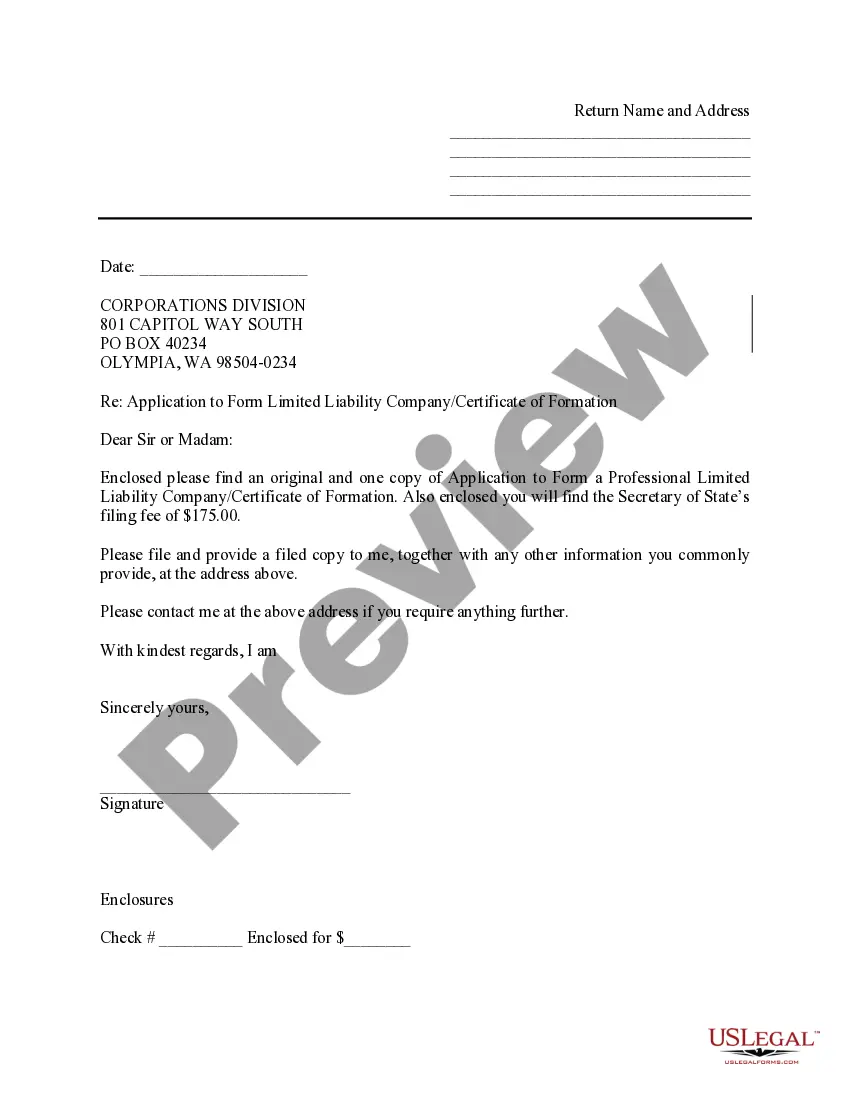
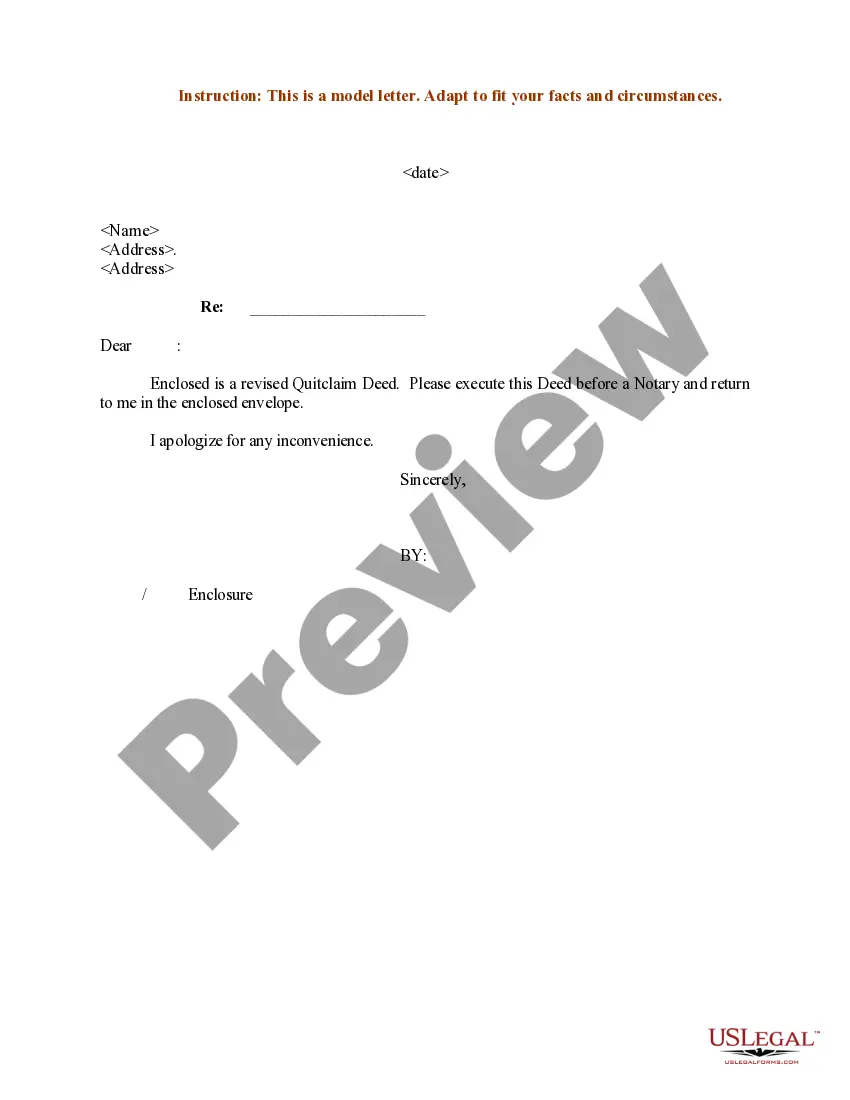
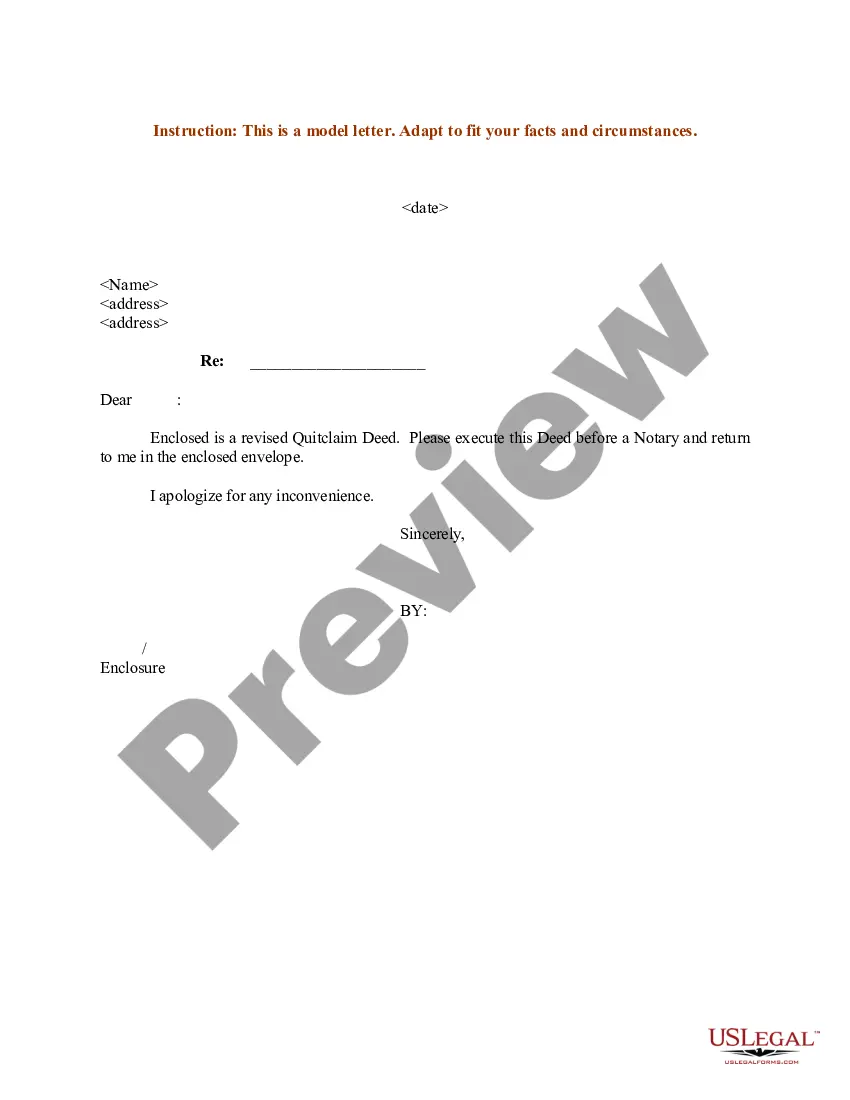
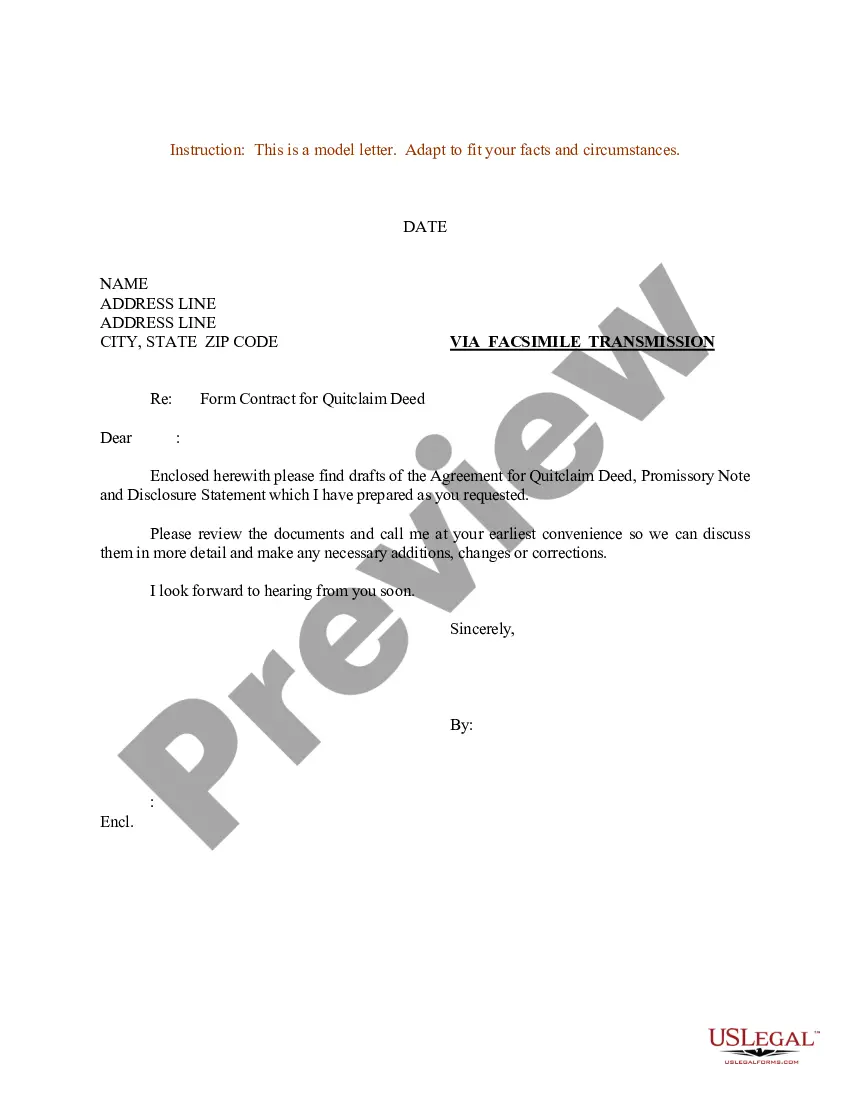
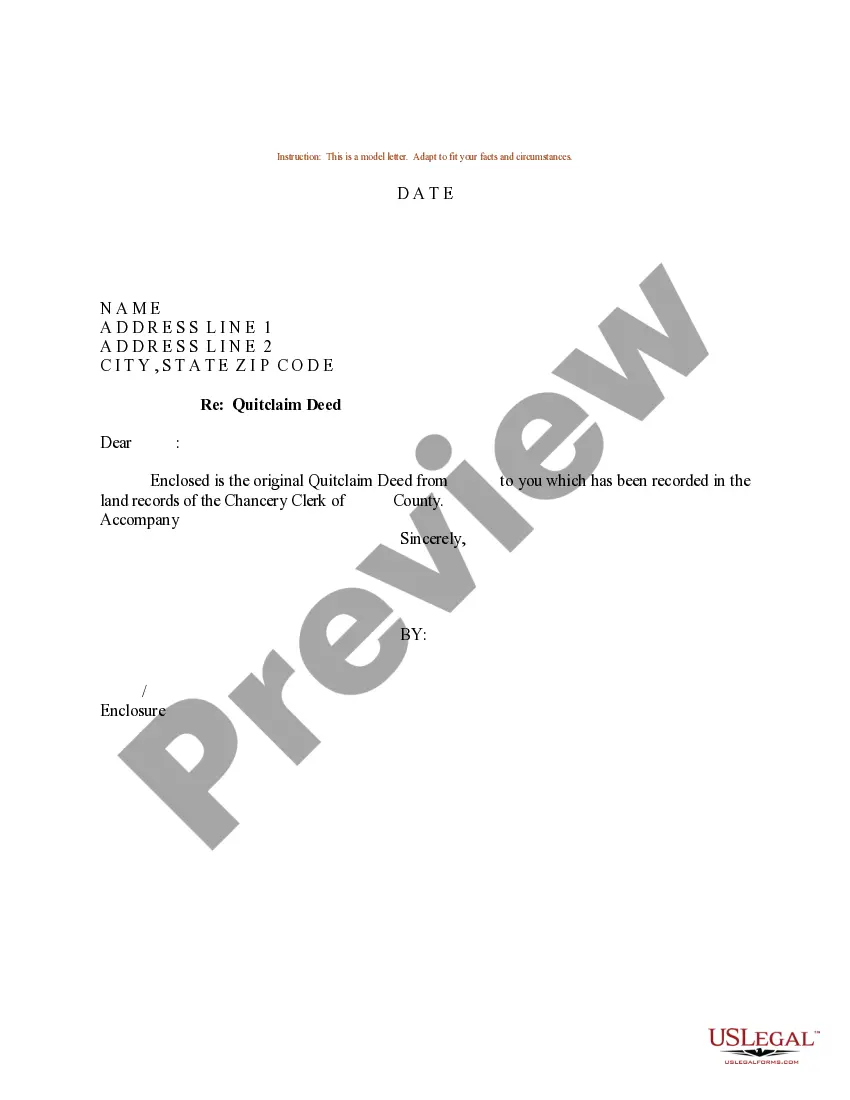
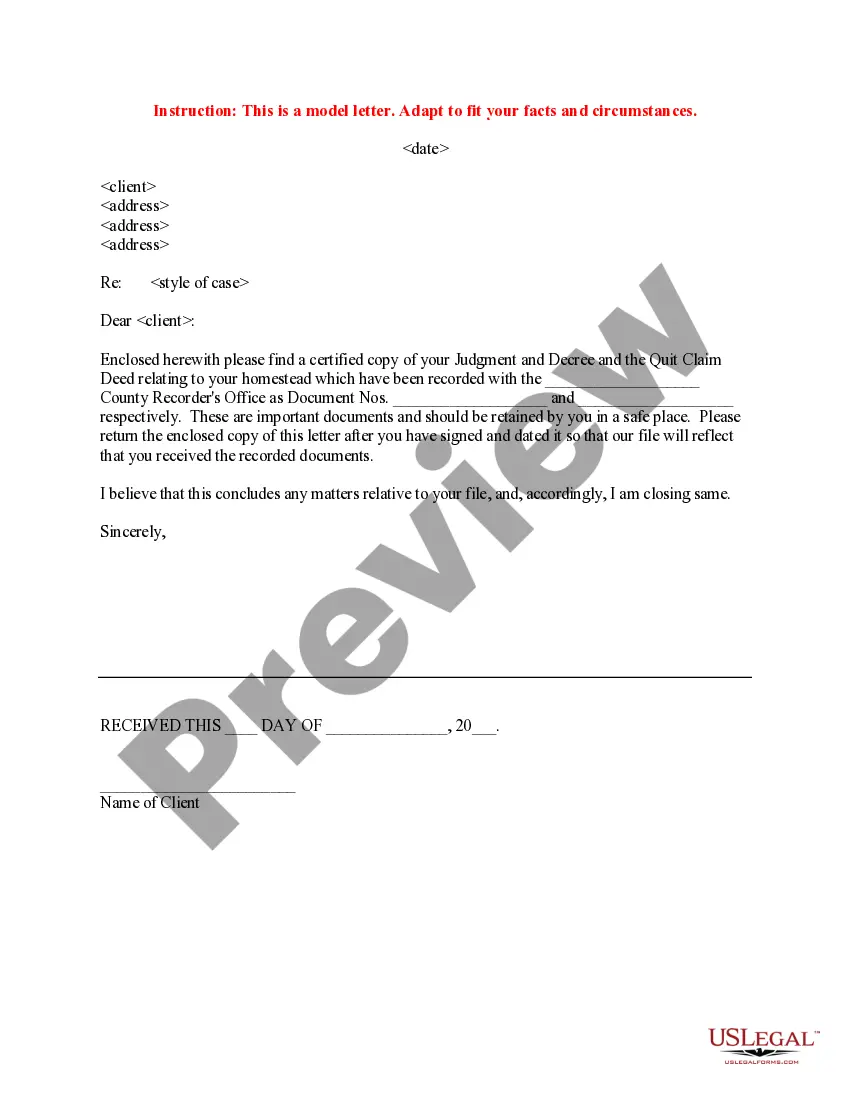
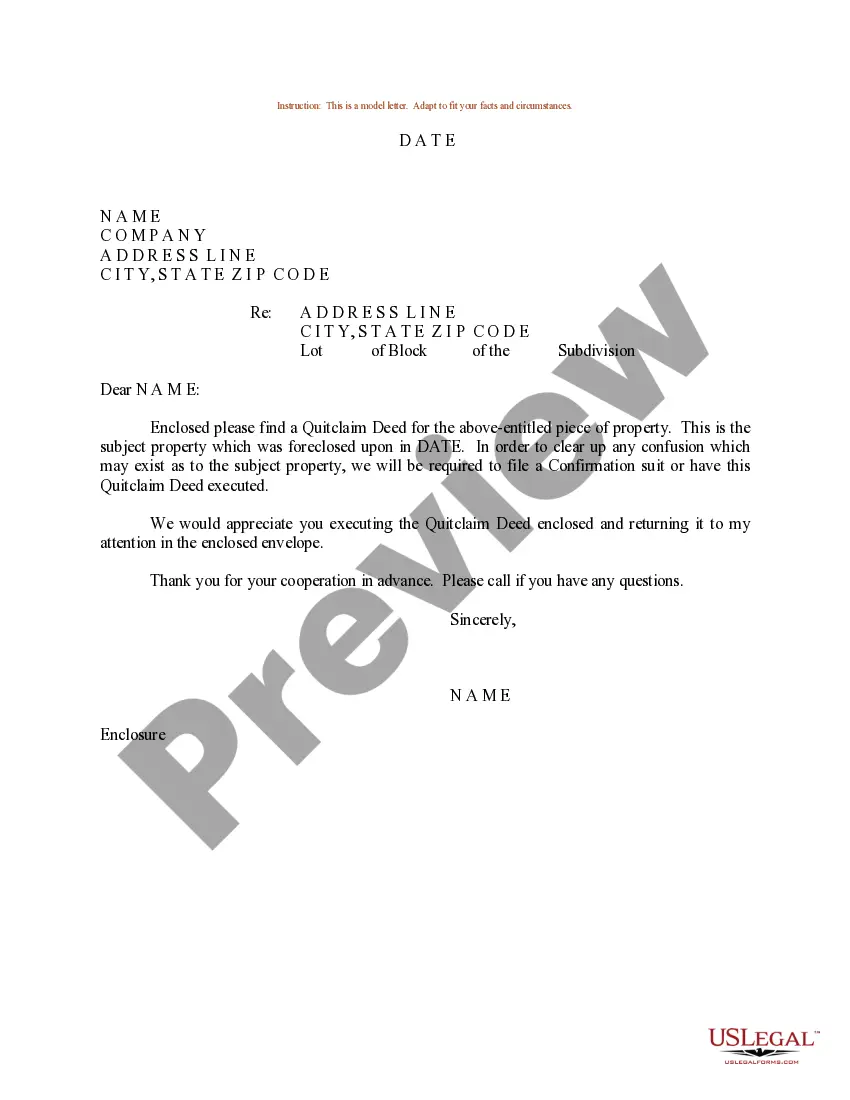
The Sample Letter for Revised Quitclaim Deed is a template designed to assist individuals in drafting a formal letter to revise an existing quitclaim deed. This letter typically serves as a communication tool to notify relevant parties about the changes being made to property ownership. Unlike other legal documents, this form focuses specifically on the amendment aspect of a quitclaim deed, making it a valuable resource for those looking to correct or update property records efficiently.
What’s included in this form
- Subject line indicating the purpose of the letter.
- Identification of the parties involved in the quitclaim deed.
- Description of the property in question.
- Details of the revision being requested.
- Contact information for follow-up communications.
Common use cases
This form is useful in various scenarios, such as when a property owner needs to update names on a title due to marriage, divorce, or ownership changes. It is also appropriate for correcting clerical errors in the existing quitclaim deed or when additional conditions need to be specified. By using this letter, individuals can formalize their requests for revision in a clear and legal manner.
Who can use this document
- Property owners seeking to amend an existing quitclaim deed.
- Individuals involved in property transfers.
- Attorneys representing clients in real estate matters.
- Title companies handling property documentation.
Steps to complete this form
- Identify the parties involved: clearly state the names of the current owners and any new parties.
- Specify the property: include the address and legal description of the property to avoid confusion.
- Clearly outline the revisions: provide a detailed explanation of what changes are requested in the quitclaim deed.
- Include dates and signatures: ensure all parties sign and date the letter to validate the request.
- Keep a copy for records: make sure to retain a signed copy for your documents.
Does this document require notarization?
This form does not typically require notarization unless specified by local law. However, having it notarized can provide additional legal validity and security, especially in real estate transactions.
Get your form ready online
Our built-in tools help you complete, sign, share, and store your documents in one place.
Make edits, fill in missing information, and update formatting in US Legal Forms—just like you would in MS Word.
Download a copy, print it, send it by email, or mail it via USPS—whatever works best for your next step.
Sign and collect signatures with our SignNow integration. Send to multiple recipients, set reminders, and more. Go Premium to unlock E-Sign.
If this form requires notarization, complete it online through a secure video call—no need to meet a notary in person or wait for an appointment.
We protect your documents and personal data by following strict security and privacy standards.

Make edits, fill in missing information, and update formatting in US Legal Forms—just like you would in MS Word.

Download a copy, print it, send it by email, or mail it via USPS—whatever works best for your next step.

Sign and collect signatures with our SignNow integration. Send to multiple recipients, set reminders, and more. Go Premium to unlock E-Sign.

If this form requires notarization, complete it online through a secure video call—no need to meet a notary in person or wait for an appointment.

We protect your documents and personal data by following strict security and privacy standards.
Common mistakes
- Failing to include all parties involved in the quitclaim deed.
- Neglecting to provide a clear description of the property.
- Not stating the specific changes requested in the revision.
- Omitting signatures or dates from the letter.
Advantages of online completion
- Convenient access: Download the form anytime, from anywhere.
- Editability: Customize the template to meet your specific needs easily.
- Reliability: Forms are drafted by licensed attorneys, ensuring accuracy and compliance with legal standards.
What to keep in mind
- The Sample Letter for Revised Quitclaim Deed is essential for formally requesting changes to a quitclaim deed.
- Ensure accurate details about the parties and property are included to avoid common mistakes.
- Understand state-specific requirements to maintain legal compliance.
Looking for another form?
Form popularity
FAQ
The Sample Letter for Revised Quitclaim Deed is a template for requesting changes to an existing quitclaim deed. It provides a structured format to explain the intent to revise, identify the parties, describe the property, specify the requested changes, and secure signatures. It helps property owners communicate and document revisions clearly and formally.
This form focuses on revising an existing quitclaim deed, not drafting a new one. Common mistakes that prompt revision include incorrect party names, an inaccurate or incomplete legal property description, missing or unclear revision details, and failure to include a clear closing and signature section. The letter template guides you through identifying parties, the property, the requested changes, and signatures.
This form is designed to request revisions to an existing quitclaim deed, not to reverse a transfer of ownership. Reversing or undoing a quitclaim typically requires additional instruments or steps outside this template. For guidance on options, consult a licensed attorney who can advise based on the specific circumstances.
This form is a revision letter, not a voiding instrument. It is used to request changes to an existing quitclaim deed and does not determine validity or void conditions. If a deed is invalid or needs correction, consult a licensed attorney to explore proper remedies and corrective documents outside this template.
How to write a quitclaim deed?
The Sample Letter for Revised Quitclaim Deed is a letter template used to request changes to an existing quitclaim deed. It guides the user through introducing the revision, identifying parties, describing the property, detailing the proposed changes, and obtaining signatures. A standard quitclaim deed is the actual instrument that transfers ownership, not a revision request.