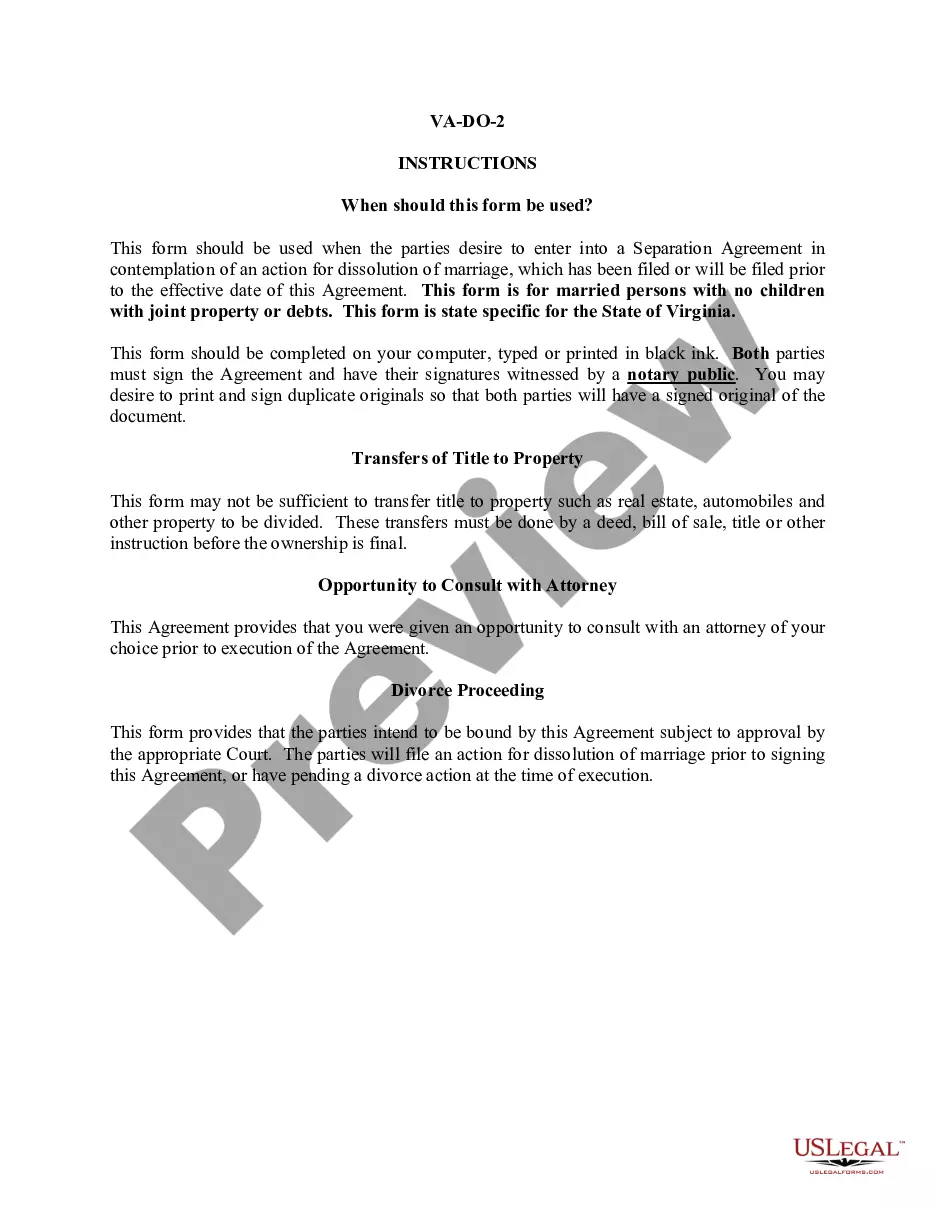
Washington Promissory Note with Due on Sale and Commerical Property options
What this document covers
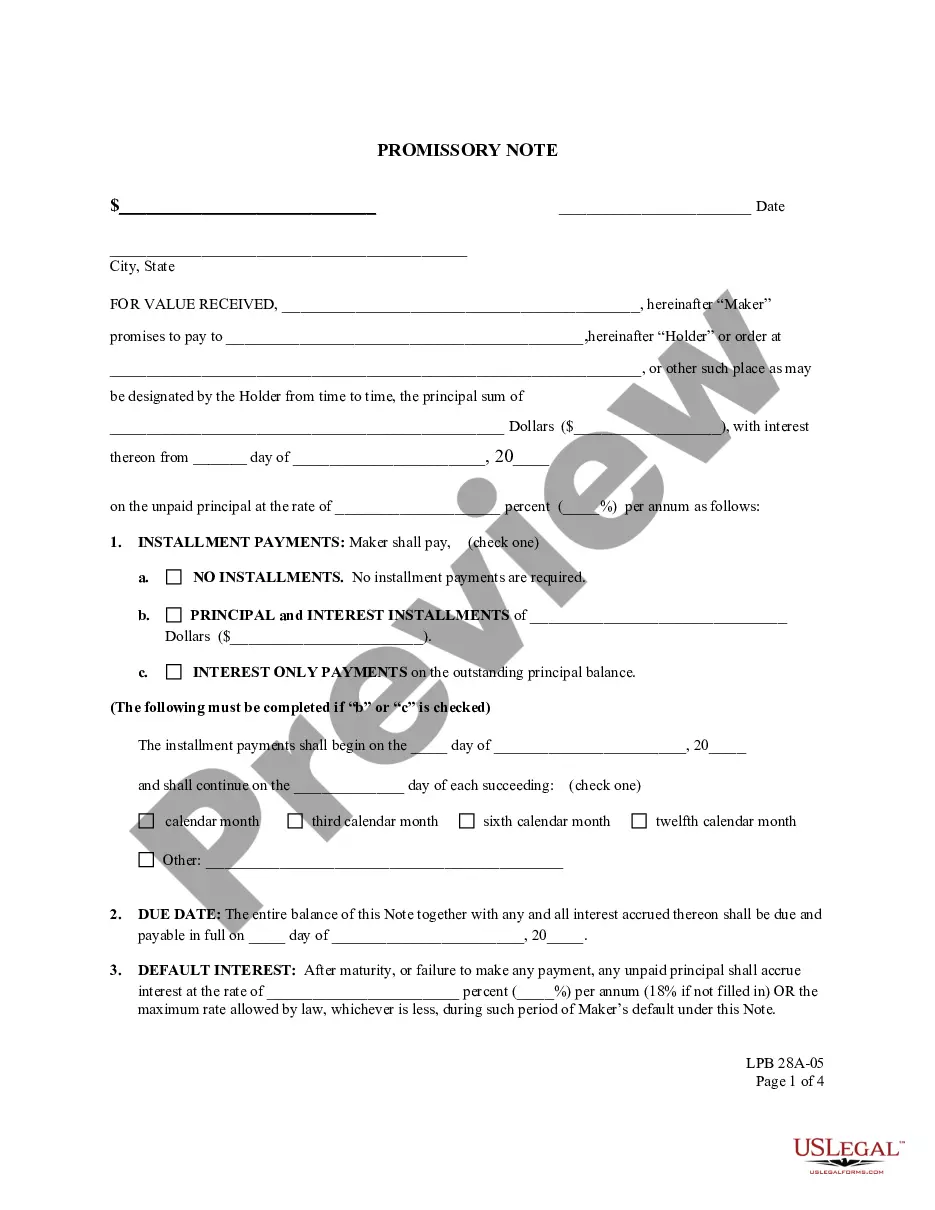
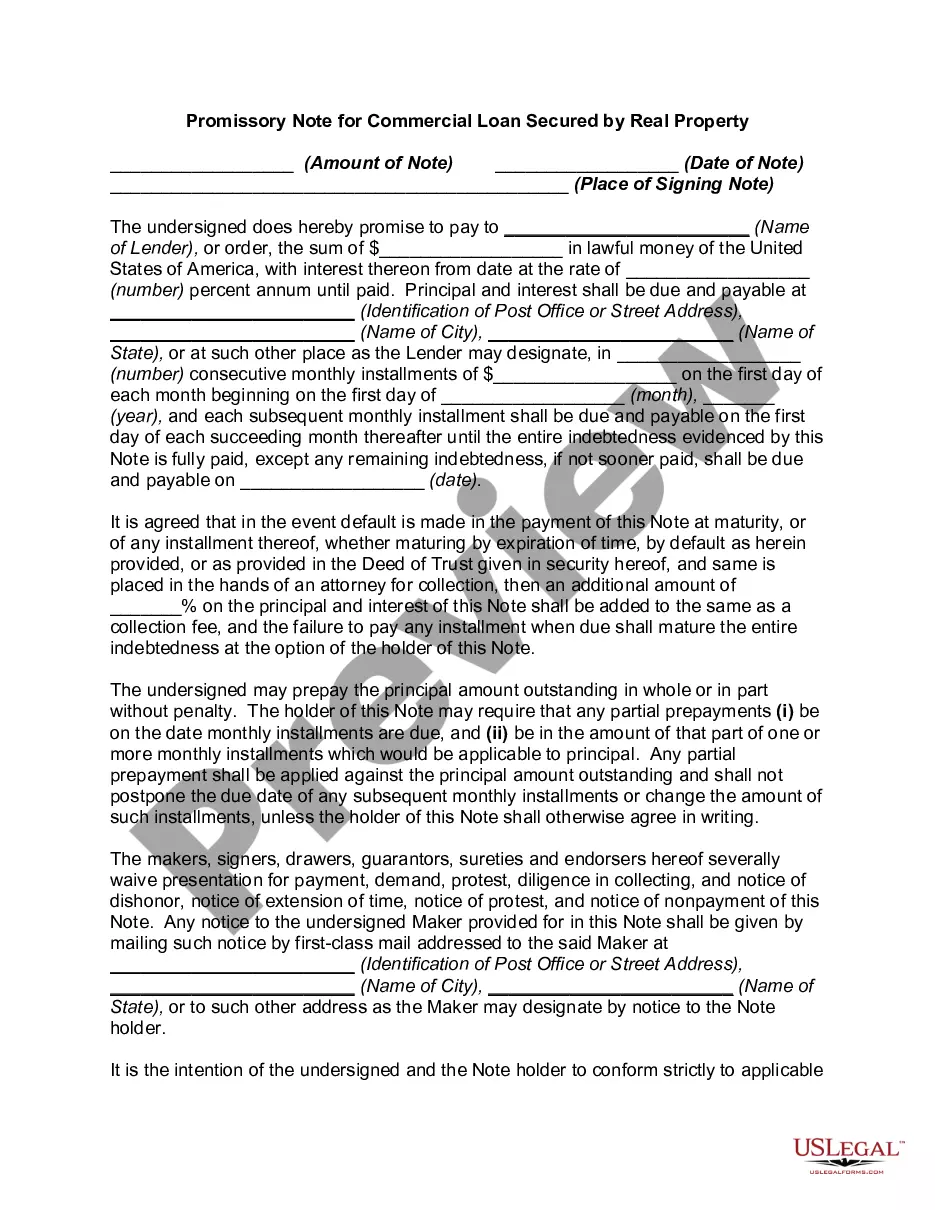
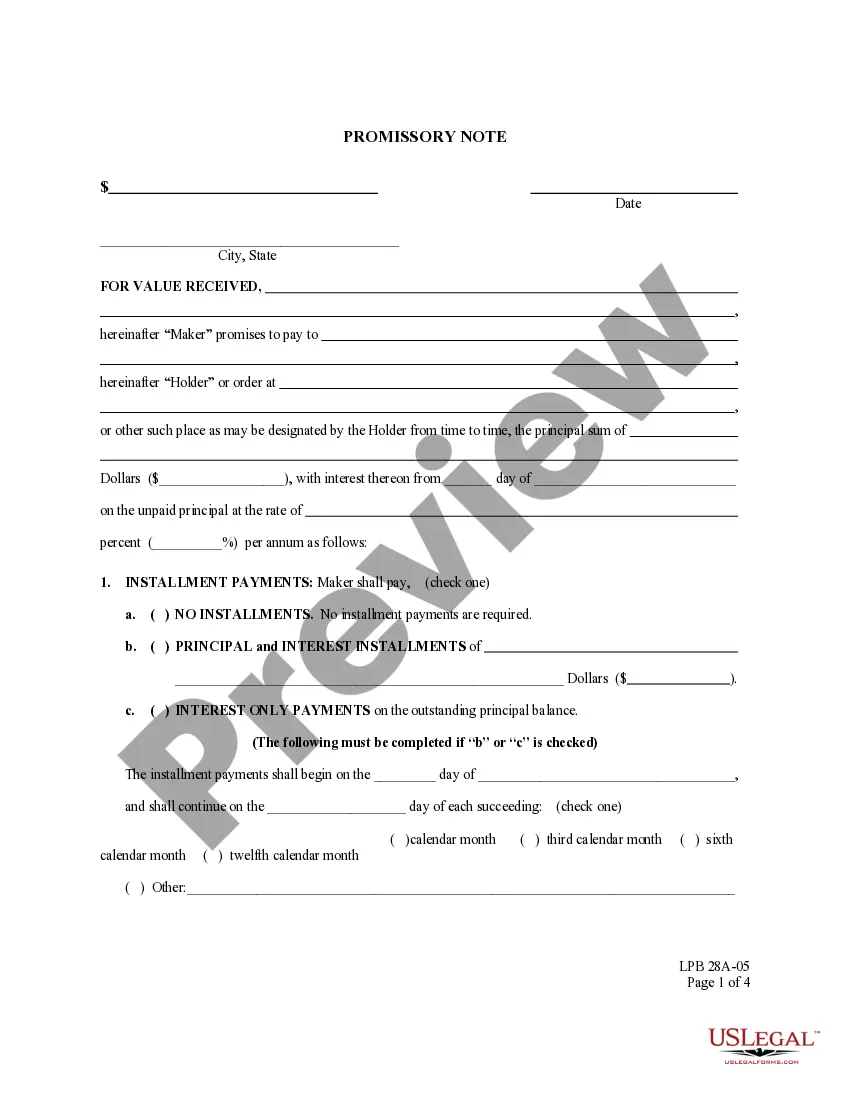
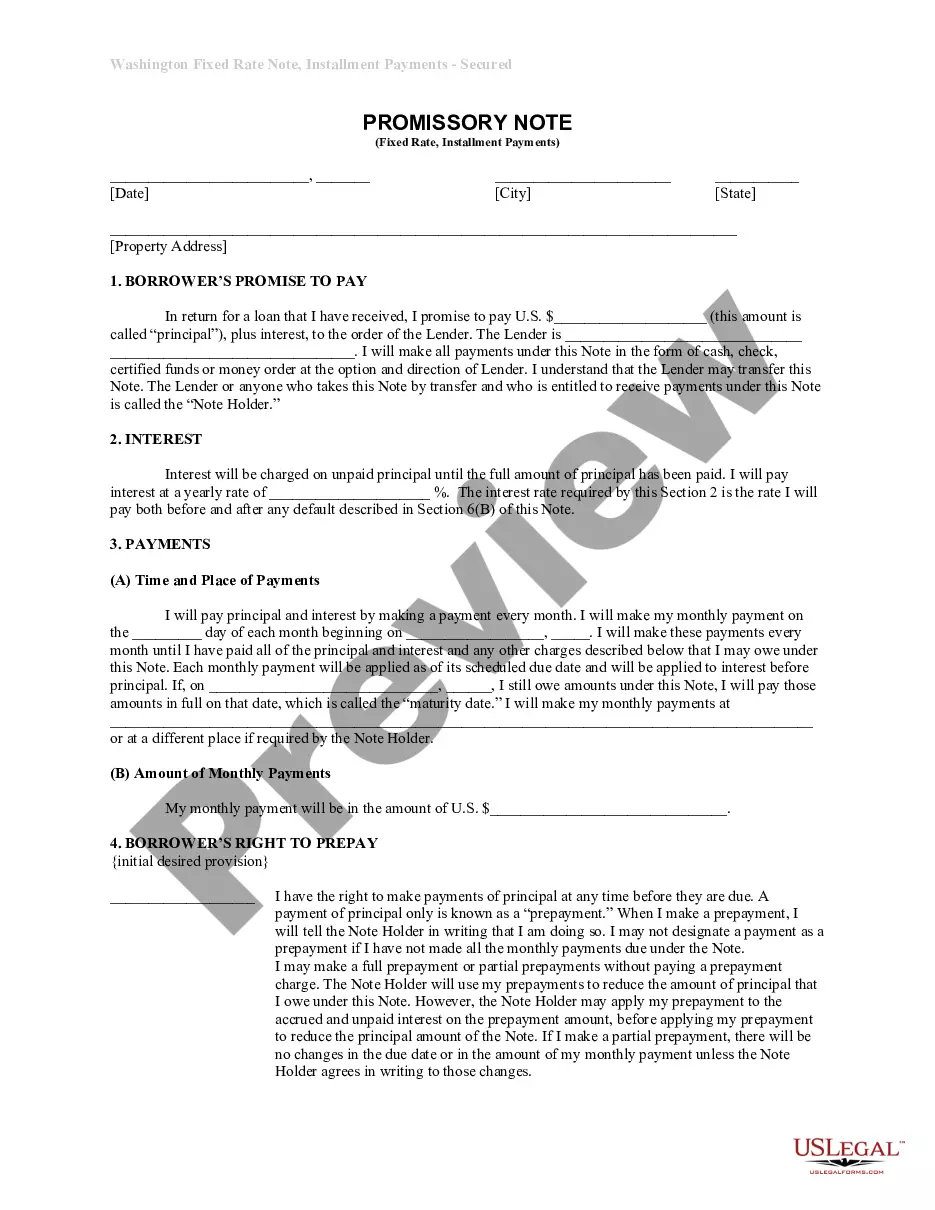
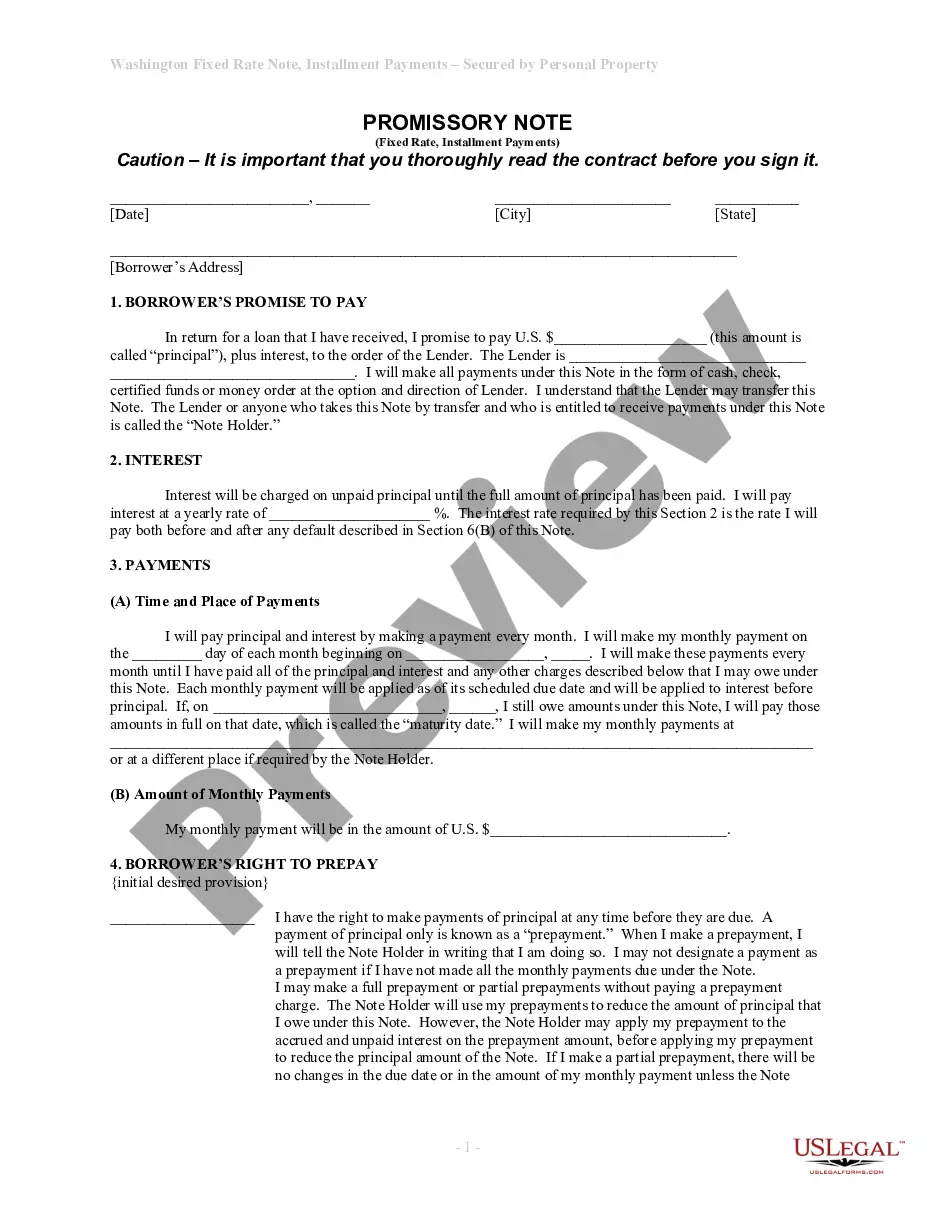
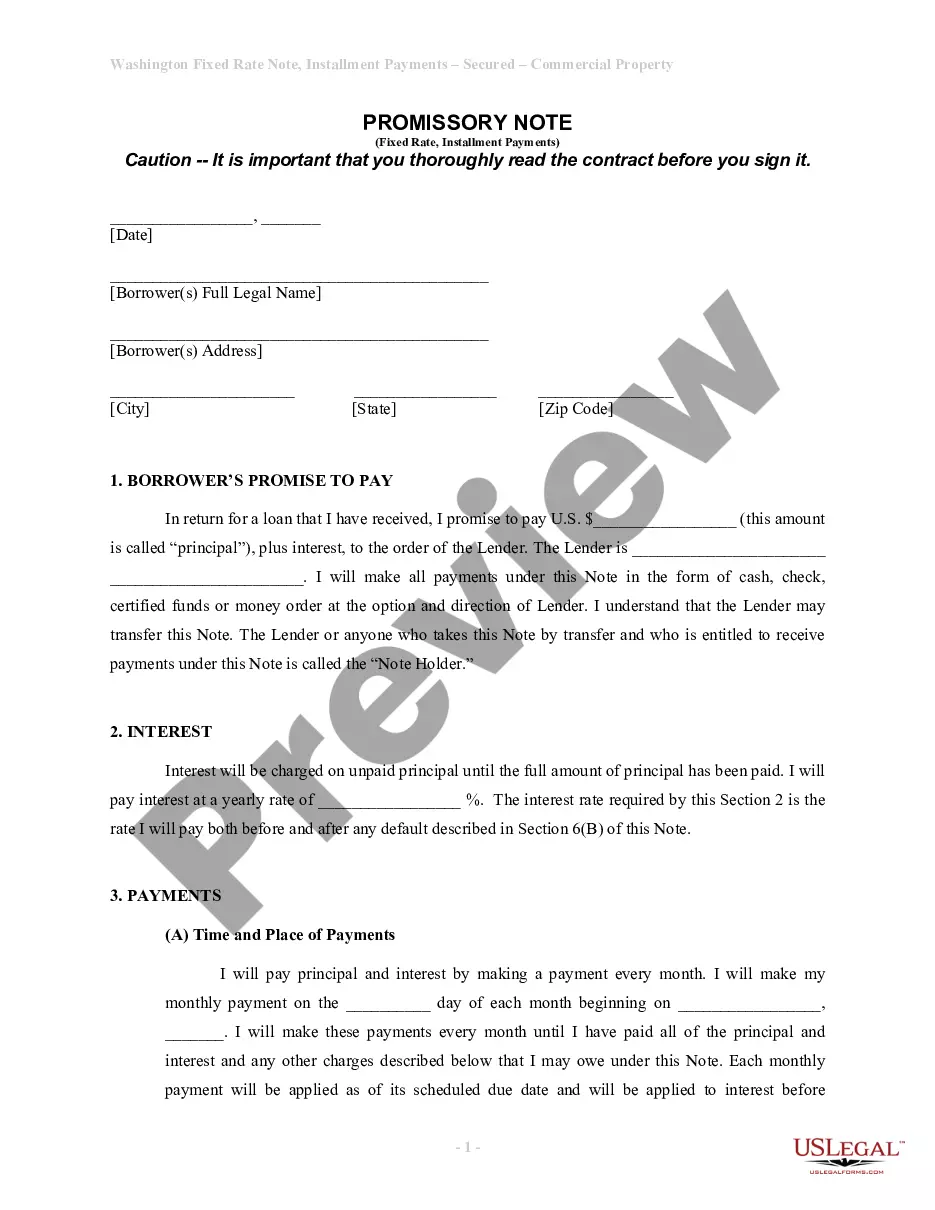
The Promissory Note with Due on Sale and Commercial Property options is a legal document in which a borrower (the Maker) agrees to repay a specified amount of money to a lender (the Holder). This form distinguishes itself by allowing for various payment structures, including periodic payments or interest-only options, and includes provisions for a due on sale clause applicable to secured loans used for business or investment purposes rather than personal expenses. This makes it useful for those engaging in commercial transactions or investments.
Form components explained
- Payment structure options: No installments, principal and interest installments, or interest-only payments.
- Due date for full repayment along with accrued interest.
- Default interest provisions in case of late payments.
- Optional due on sale clause to protect the lenderâs interests.
- Provisions for prepayment without penalties.
- Legal requirements for repayment methods and currency specifications.


Common use cases
This form is needed when a borrower enters into a loan agreement with a lender for business or investment purposes. It is particularly applicable when the loan is secured with property via a deed of trust and when the lender wishes to have control over the property in the event of a sale. It can also be utilized in various commercial transactions where clear repayment terms and legal protections are necessary.
Who should use this form
- Individuals or businesses seeking to formalize a loan agreement for commercial purposes.
- Lenders who want to ensure legal protection on their loans.
- Borrowers needing flexible repayment options for their business investments.
Instructions for completing this form
- Identify the parties involved: the Maker (borrower) and the Holder (lender).
- Specify the loan amount and interest rate.
- Select the preferred payment structure by checking the appropriate box.
- Complete the due date for the loan repayment and any applicable late charge terms.
- Initial the optional clauses if applicable, such as due on sale and commercial property use.
- Ensure all parties sign the document in the designated areas.
Does this document require notarization?
This form does not typically require notarization unless specified by local law. Always check your jurisdiction for specific requirements regarding notarization to ensure the document's enforceability.
Get your form ready online
Our built-in tools help you complete, sign, share, and store your documents in one place.
Make edits, fill in missing information, and update formatting in US Legal Forms—just like you would in MS Word.
Download a copy, print it, send it by email, or mail it via USPS—whatever works best for your next step.
Sign and collect signatures with our SignNow integration. Send to multiple recipients, set reminders, and more. Go Premium to unlock E-Sign.
If this form requires notarization, complete it online through a secure video call—no need to meet a notary in person or wait for an appointment.
We protect your documents and personal data by following strict security and privacy standards.

Make edits, fill in missing information, and update formatting in US Legal Forms—just like you would in MS Word.

Download a copy, print it, send it by email, or mail it via USPS—whatever works best for your next step.

Sign and collect signatures with our SignNow integration. Send to multiple recipients, set reminders, and more. Go Premium to unlock E-Sign.

If this form requires notarization, complete it online through a secure video call—no need to meet a notary in person or wait for an appointment.

We protect your documents and personal data by following strict security and privacy standards.
Common mistakes to avoid
- Failing to clearly specify the payment option can lead to confusion.
- Neglecting to initial optional clauses that are applicable may limit legal protections.
- Leaving out the due date could lead to disputes about when repayment is required.
- Not including the correct interest rate may affect the enforceability of the note.
Advantages of online completion
- Convenient access and immediate download allow for quick implementation.
- Editable format lets users customize details as needed.
- Reliability of templates drafted by licensed attorneys ensures legal compliance.
Legal use & context
- Enforceable as a legally binding contract if properly completed and executed.
- Includes protection for lenders against potential defaults by requiring specific conditions.
- Utilized primarily for business and investment purposes, distinguishing it from personal loans.
Summary of main points
- The promissory note is crucial for formalizing loans in commercial contexts.
- Flexibility in payment options allows borrowers to choose the best fit for their situation.
- Legal protections for both parties are included, particularly with the due on sale clause.
Glossary of terms
- Maker: The borrower responsible for repaying the loan.
- Holder: The lender who provides the loan and is entitled to repayment.
- Due on Sale Clause: A provision that allows the lender to demand full repayment if the secured property is sold.
- Principal: The original amount of money borrowed, excluding interest.
Looking for another form?
Form popularity
FAQ
The note always should set forth, at a minimum, the parties, the amount owed, the payment terms, the interest rate, and the creditor's remedies upon default. Promissory notes can operate as security agreements if the right provisions are included.
A promissory note is a key piece of a home loan application and mortgage agreement, ensuring that a borrower agrees to be indebted to a lender for loan repayment. Ultimately, it serves as a necessary piece of the legal puzzle that helps guarantee that sums are repaid in full and in a timely fashion.
There are two major types of promissory notes, secured and unsecured. Secured promissory notes have collateral behind them to secure the loan. Unsecured notes might have a personal guarantee but no valuable collateral, which carries a higher degree of risk of financial loss.
Promissory notes are legally binding, but if a note becomes invalid, it may not be enforceable. A promissory note could become invalid if: It isn't signed by both parties.
1. Commercial promissory notes: A commercial promissory note is a formal type of promissory note that institutions like credit unions or banks typically issue to borrowers. Commercial lenders might use these for auto loans, personal loans, or business loans to private individuals.
At its most basic, a promissory note should include the following things: Date. Name of the lender and borrower. Loan amount. Whether the loan is secured or unsecured. If it's secured with collateral: What is the collateral?Payment amount and frequency. Payment due date. Whether the loan has a cosigner, and if so, who.
But specific to real estate and the mortgage process, promissory notes serve as an agreement that the borrower will repay their mortgage loan by the maturity date.
The key difference between commercial paper and promissory notes is who they are typically issued to. Commercial paper is usually issued by businesses to other businesses, while promissory notes are usually issued by businesses to individuals.