EVIDENCE-DEFINED
What is this form?
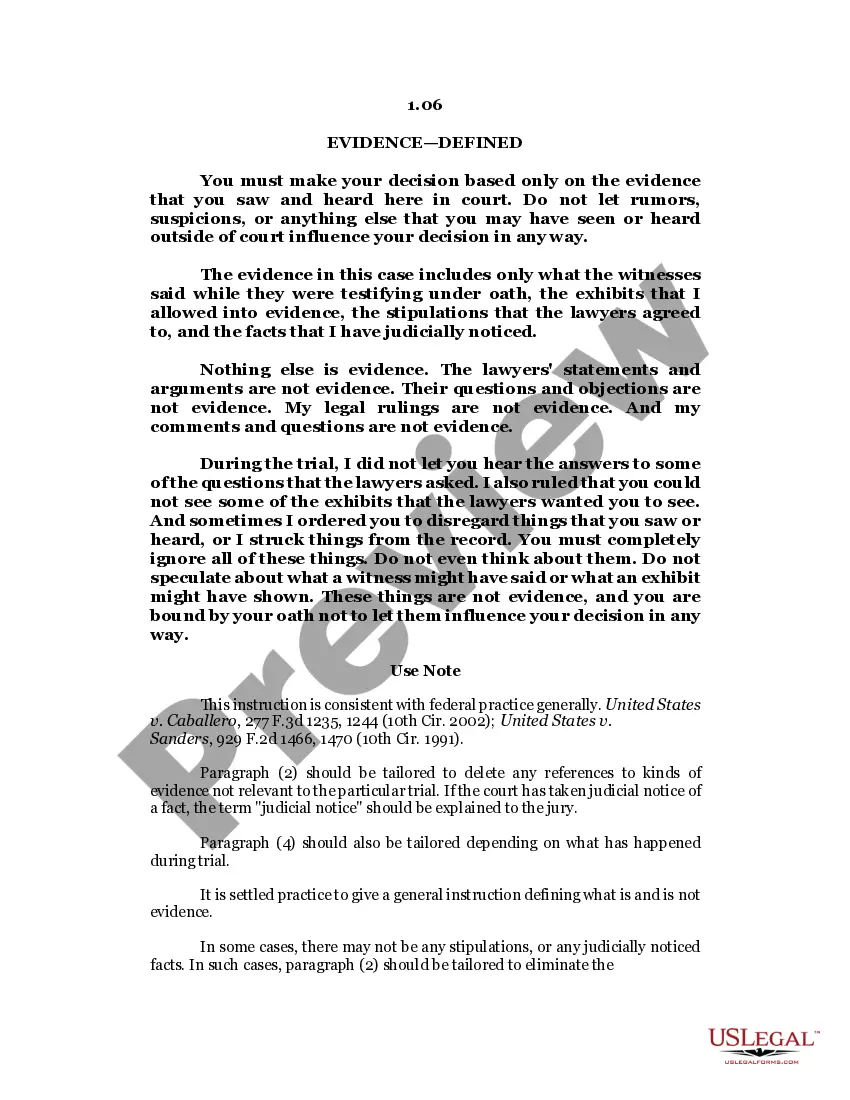
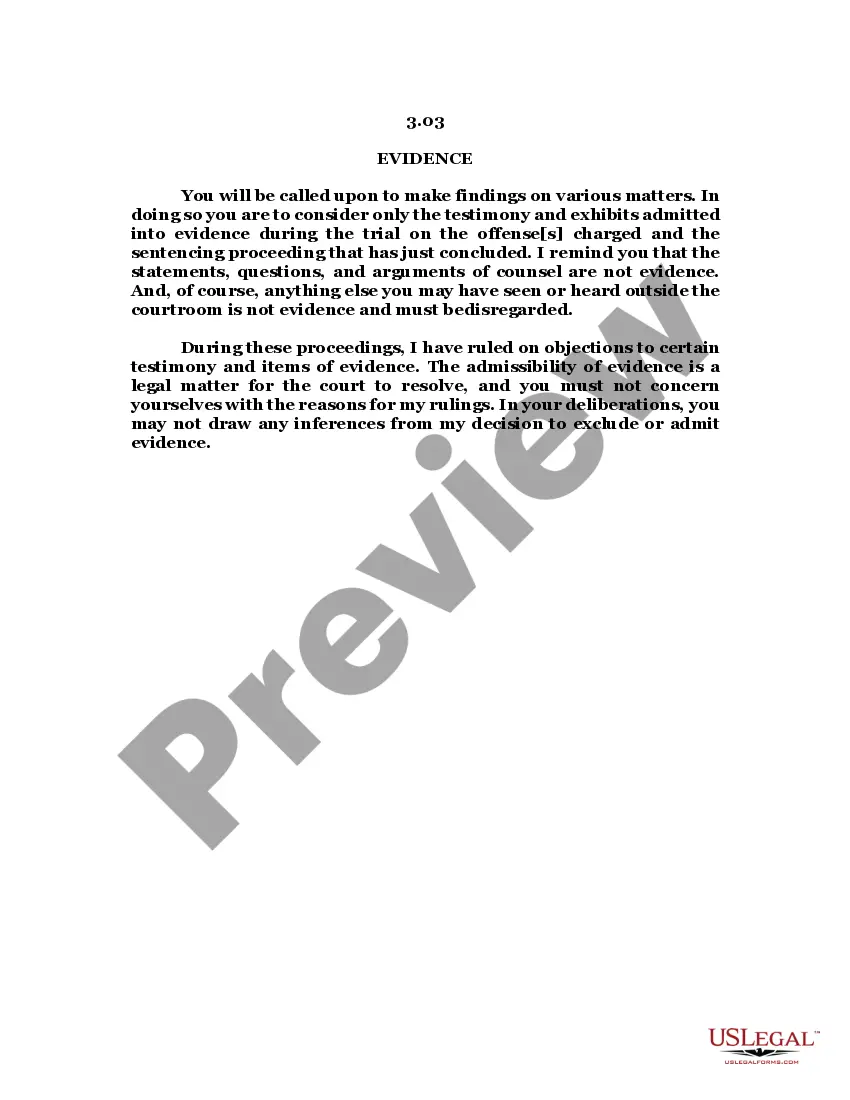
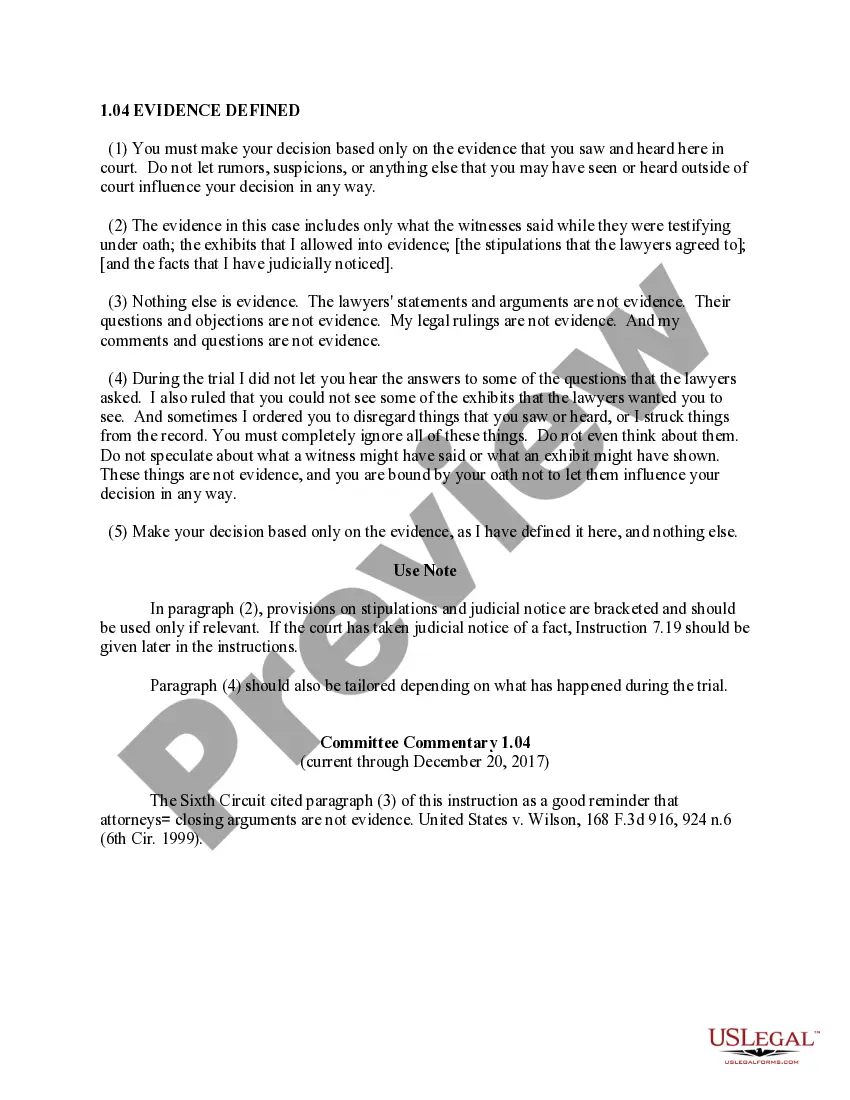
The Evidence-Defined form provides a clear framework for understanding what constitutes evidence during a trial. It outlines the types of information that jurors can rely on when making their decisions, distinguishing between admissible evidence and other statements, such as lawyers' arguments or judicial comments. This form is essential for guiding jurors' assessment of the case based solely on the evidence presented in court, ensuring a fair trial process.
Key components of this form
- Definition of evidence: Clarifies what is considered evidence in the context of a trial.
- Inadmissible information: States that rumors or statements made outside of court are not to be considered evidence.
- Framework for jurors: Guides jurors on how to approach the evidence they are presented with.
- Judicial notice: Explains the concept of judicial notice and what it means for jurors.
- Specific instructions: Provides tailored guidance based on the case circumstances.


When this form is needed
This form is used in court settings, particularly during jury trials, to inform jurors of their responsibilities regarding evidence. It is applicable in situations where clear delineation between admissible and inadmissible evidence is crucial to the trial process, helping jurors adhere to legal standards and focus solely on the evidence presented in court.
Who can use this document
This form is intended for:
- Jurors participating in trials who need to understand what constitutes acceptable evidence.
- Judges who must provide evidence definitions to jurors during a trial.
- Legal professionals who aim to clarify evidence standards for clients or in instructional settings.
How to complete this form
- Identify the relevant evidence presented in court during the trial.
- Assess witness testimony to determine its reliability and relevance.
- Exclude any information that was ruled inadmissible by the judge.
- Take note of any judicially noticed facts that have been established.
- Discuss evidence only based on what was allowed in court, disregarding any outside influence.
Is notarization required?
This form usually doesn’t need to be notarized. However, local laws or specific transactions may require it. Our online notarization service, powered by Notarize, lets you complete it remotely through a secure video session, available 24/7.
Get your form ready online
Our built-in tools help you complete, sign, share, and store your documents in one place.
Make edits, fill in missing information, and update formatting in US Legal Forms—just like you would in MS Word.
Download a copy, print it, send it by email, or mail it via USPS—whatever works best for your next step.
Sign and collect signatures with our SignNow integration. Send to multiple recipients, set reminders, and more. Go Premium to unlock E-Sign.
If this form requires notarization, complete it online through a secure video call—no need to meet a notary in person or wait for an appointment.
We protect your documents and personal data by following strict security and privacy standards.

Make edits, fill in missing information, and update formatting in US Legal Forms—just like you would in MS Word.

Download a copy, print it, send it by email, or mail it via USPS—whatever works best for your next step.

Sign and collect signatures with our SignNow integration. Send to multiple recipients, set reminders, and more. Go Premium to unlock E-Sign.

If this form requires notarization, complete it online through a secure video call—no need to meet a notary in person or wait for an appointment.

We protect your documents and personal data by following strict security and privacy standards.
Common mistakes to avoid
- Misunderstanding what constitutes evidence, such as including hearsay or assumptions.
- Failing to disregard struck evidence or rulings as instructed by the judge.
- Allowing outside information, such as news articles or social media, to affect decision-making.
Key takeaways
- The Evidence-Defined form clarifies what evidence is admissible in a court trial.
- Jurors must solely rely on evidence presented and rule out outside influences.
- Judicial notice helps establish certain facts without requiring additional evidence.
Looking for another form?

Form popularity
FAQ
3 Types of Evidence & How They're Used For Investigations Physical Evidence. The first thing investigators look for is physical evidence at or near the crime site.Forensic Evidence.Digital Evidence.
Examples of real evidence include fingerprints, blood samples, DNA, a knife, a gun, and other physical objects. Real evidence is usually admitted because it tends to prove or disprove an issue of fact in a trial.
The four types of evidence recognized by the courts include demonstrative, real, testimonial and documentary.
Generally speaking, there are four main kinds of evidence. These are testimonial, documentary, demonstrative, and what's called real evidence.
Best Practice Guidelines for a Well-Written Statement Write Chronologically and In First Person.What You Include In Your Report Is Key!Tell the Whole Story.Be Honest and Factual.Avoid Hearsay.Be Brief and Be Organized.Document Anguish, Emotional and Physical Pain.Avoid Abbreviations, Lingo, or Professional Jargon.
There are two types of evidence; namely, direct evidence and circumstantial evidence.
Evidence: Definition and Types Demonstrative evidence; Documentary evidence; and. Testimonial evidence.
The court recognizes these five types of evidence, as discussed in this piece. Real evidence. Real evidence is any material that was used or present in the crime scene at the time of the crime.Documentary evidence.Demonstrative evidence.Testimonial evidence.Digital evidence.