1.7 EVIDENCE-DIRECT ANDCIRCUMSTANTIAL-INFERENCES
Overview of this form
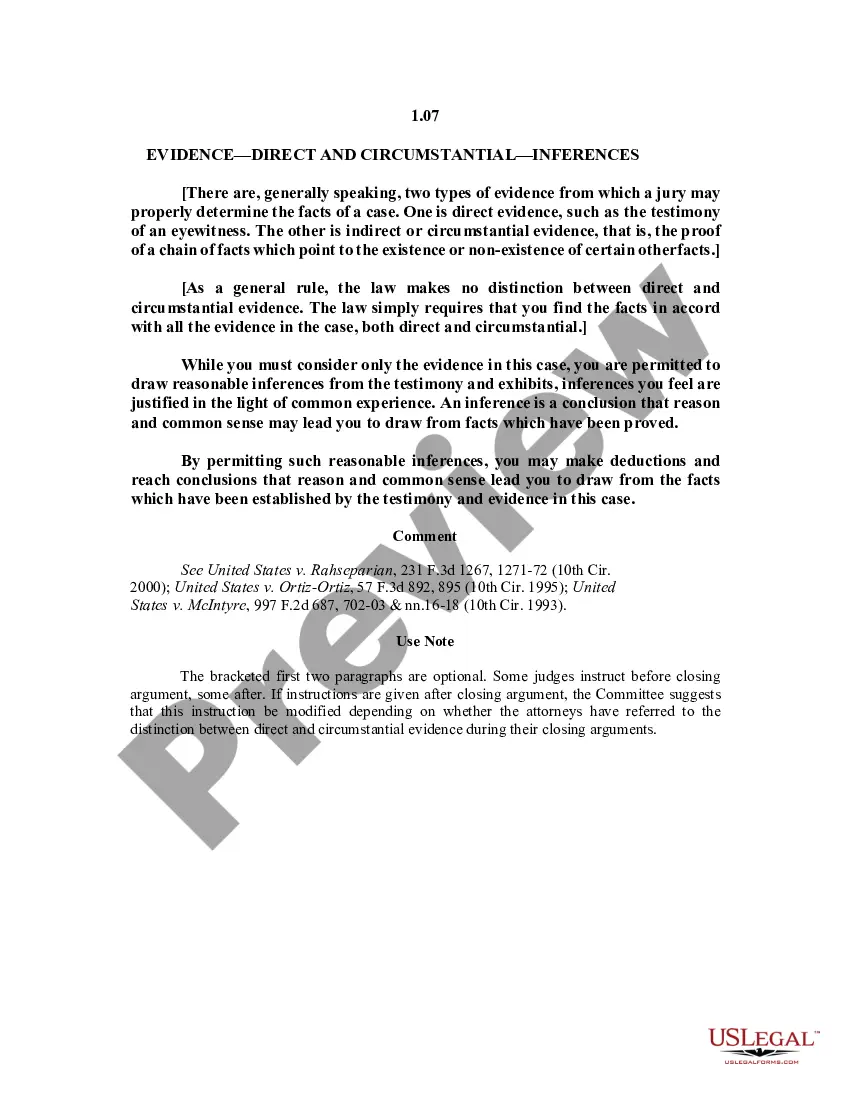
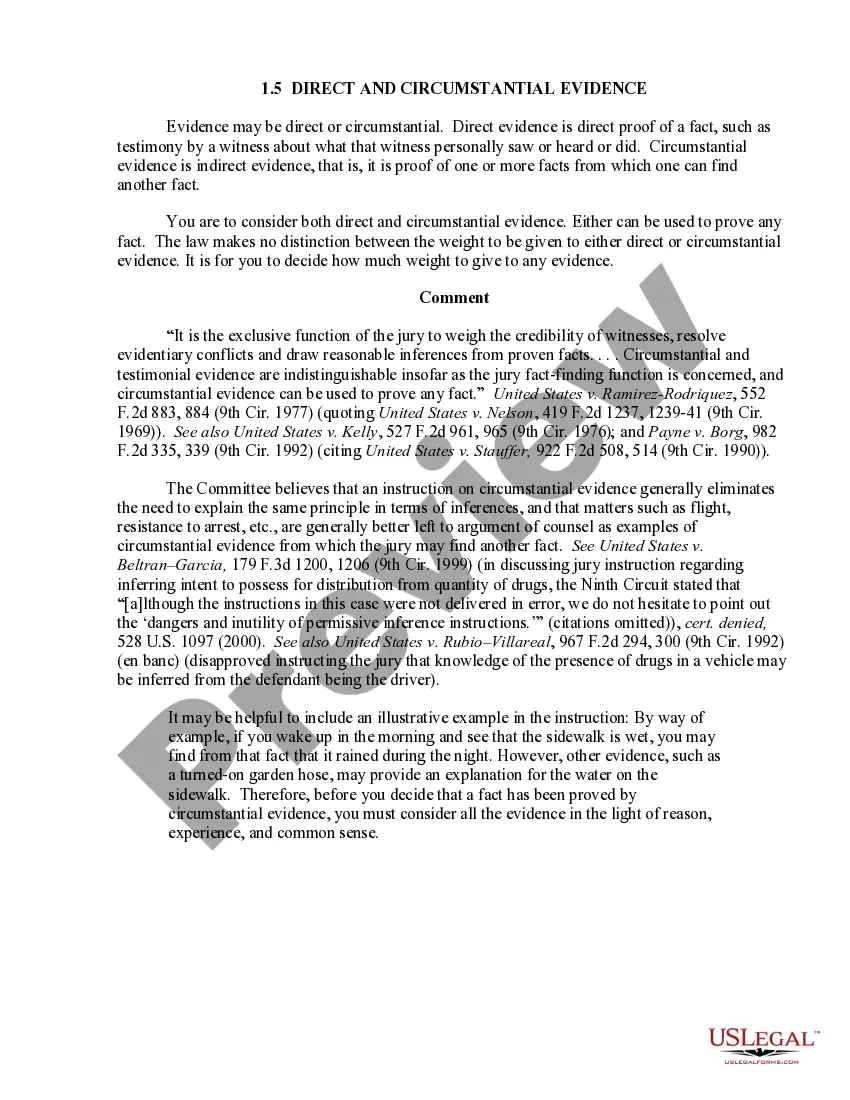
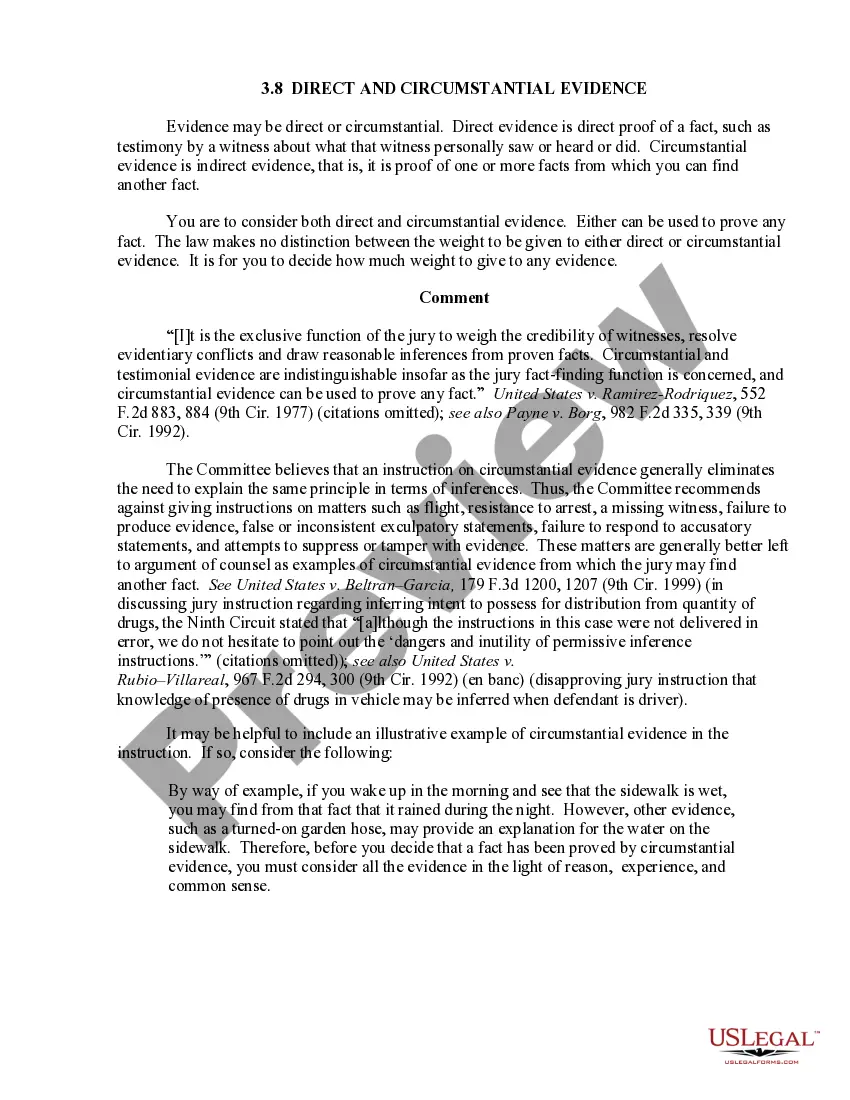
The Evidence: Direct and Circumstantial form helps establish the standards for evaluating evidence in a legal case. It explains the distinction between direct evidence, like eyewitness testimony, and circumstantial evidence, which involves proof through a series of facts that suggest a conclusion. This form is essential in guiding jurors on how to interpret various types of evidence during a trial, ensuring a comprehensive understanding of what constitutes sufficient proof to make decisions in a case.
Form components explained
- Definition of direct evidence and circumstantial evidence.
- Explanation of the legal equality of both types of evidence.
- Guidance for drawing reasonable inferences based on evidence presented.
- References to legal precedents for context.
- Optional instruction timing clarification for judges.
Situations where this form applies
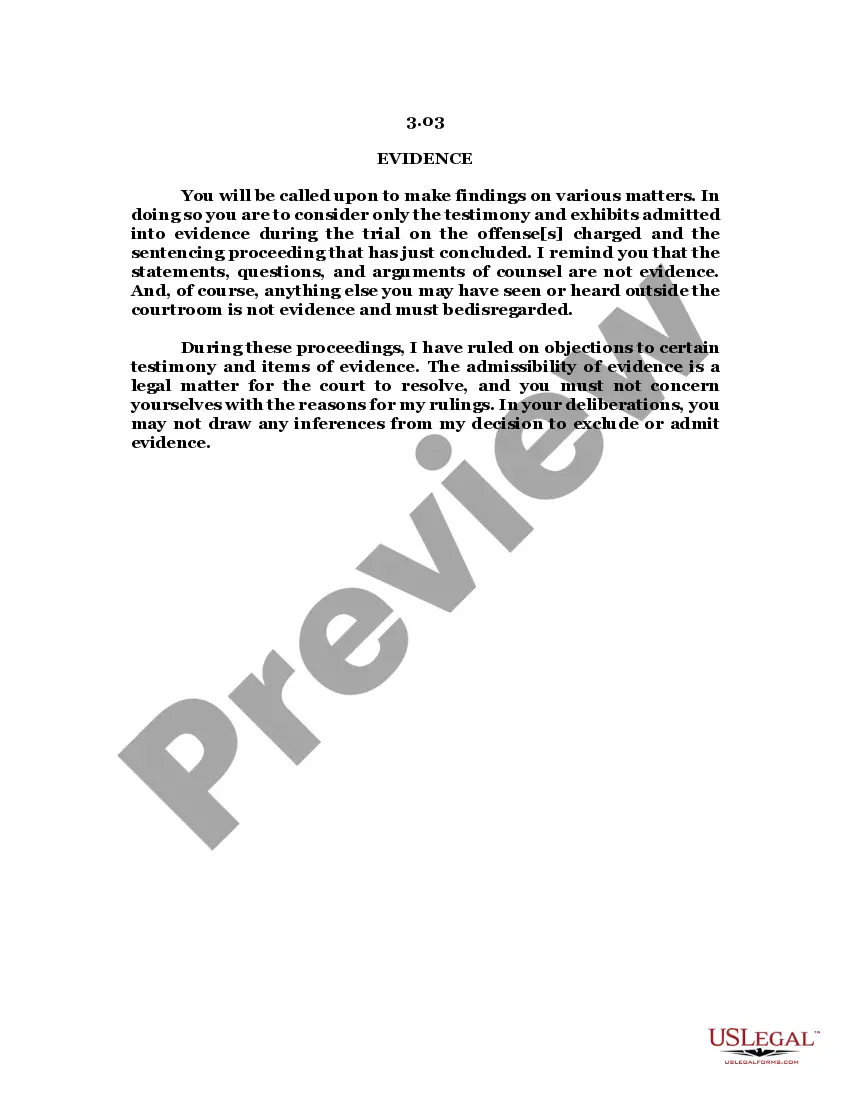
This form is used during court proceedings when evidence is being presented and evaluated. It is particularly relevant during trials when jurors must decide on the facts of the case based on the evidence provided, ensuring that they understand how to differentiate between types of evidence and how to form inferences from the facts established during the trial.
Who should use this form
This form is intended for use by:
- Judges, to guide juries in evaluating evidence.
- Lawyers, to prepare jurors for the evidence they will encounter.
- Juries, to understand how to consider and weigh different types of evidence during a trial.
Steps to complete this form
- Prepare clear definitions of direct and circumstantial evidence based on standard legal definitions.
- Include instructions on drawing reasonable inferences from the evidence presented.
- Cite relevant legal cases to provide authority for the instructions.
- Clarify the timing of instructions based on whether they are given before or after closing arguments.
Notarization requirements for this form
Notarization is generally not required for this form. However, certain states or situations might demand it. You can complete notarization online through US Legal Forms, powered by Notarize, using a verified video call available anytime.
Get your form ready online
Our built-in tools help you complete, sign, share, and store your documents in one place.
Make edits, fill in missing information, and update formatting in US Legal Forms—just like you would in MS Word.
Download a copy, print it, send it by email, or mail it via USPS—whatever works best for your next step.
Sign and collect signatures with our SignNow integration. Send to multiple recipients, set reminders, and more. Go Premium to unlock E-Sign.
If this form requires notarization, complete it online through a secure video call—no need to meet a notary in person or wait for an appointment.
We protect your documents and personal data by following strict security and privacy standards.

Make edits, fill in missing information, and update formatting in US Legal Forms—just like you would in MS Word.

Download a copy, print it, send it by email, or mail it via USPS—whatever works best for your next step.

Sign and collect signatures with our SignNow integration. Send to multiple recipients, set reminders, and more. Go Premium to unlock E-Sign.

If this form requires notarization, complete it online through a secure video call—no need to meet a notary in person or wait for an appointment.

We protect your documents and personal data by following strict security and privacy standards.
Mistakes to watch out for
- Failing to explain the difference between direct and circumstantial evidence clearly.
- Overlooking the importance of using reasonable inferences drawn from the evidence.
- Not adhering to relevant legal precedents when formulating the instructions.
Advantages of online completion
- Convenient access to essential legal forms at any time.
- Editable templates that can be customized for specific legal needs.
- Reliability in having forms drafted by licensed attorneys.
Legal use & context
- This form is legally recognized in court for guiding juror decision-making regarding evidence.
- It helps ensure that jurors understand how to properly evaluate and weigh the evidence presented.
- Failure to follow these guidelines may result in misinterpretation of evidence and affect the trial's outcome.
Quick recap
- Understanding direct and circumstantial evidence is crucial in legal proceedings.
- Jurors are allowed to draw reasonable inferences based on the facts established in court.
- This form is essential in providing clear guidance for jurors during the trial process.