Sample Letter for Request to Respond to Settlement Offer
What this document covers
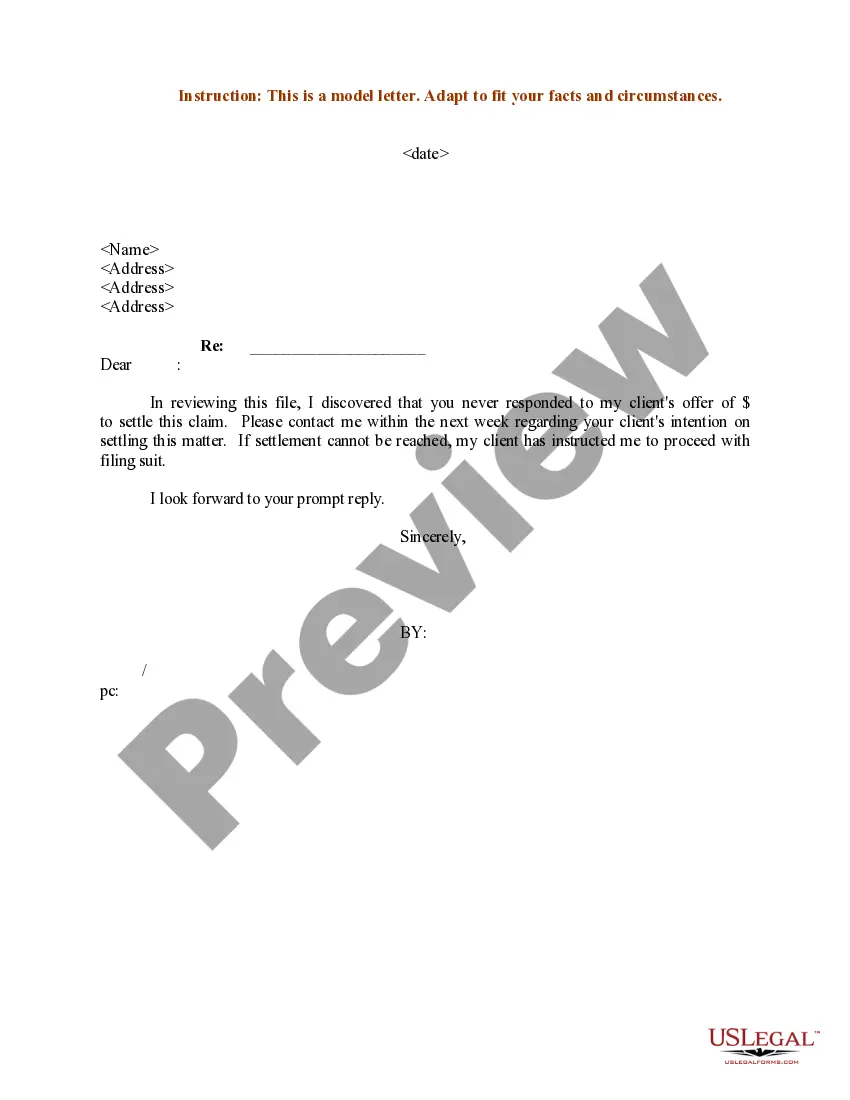
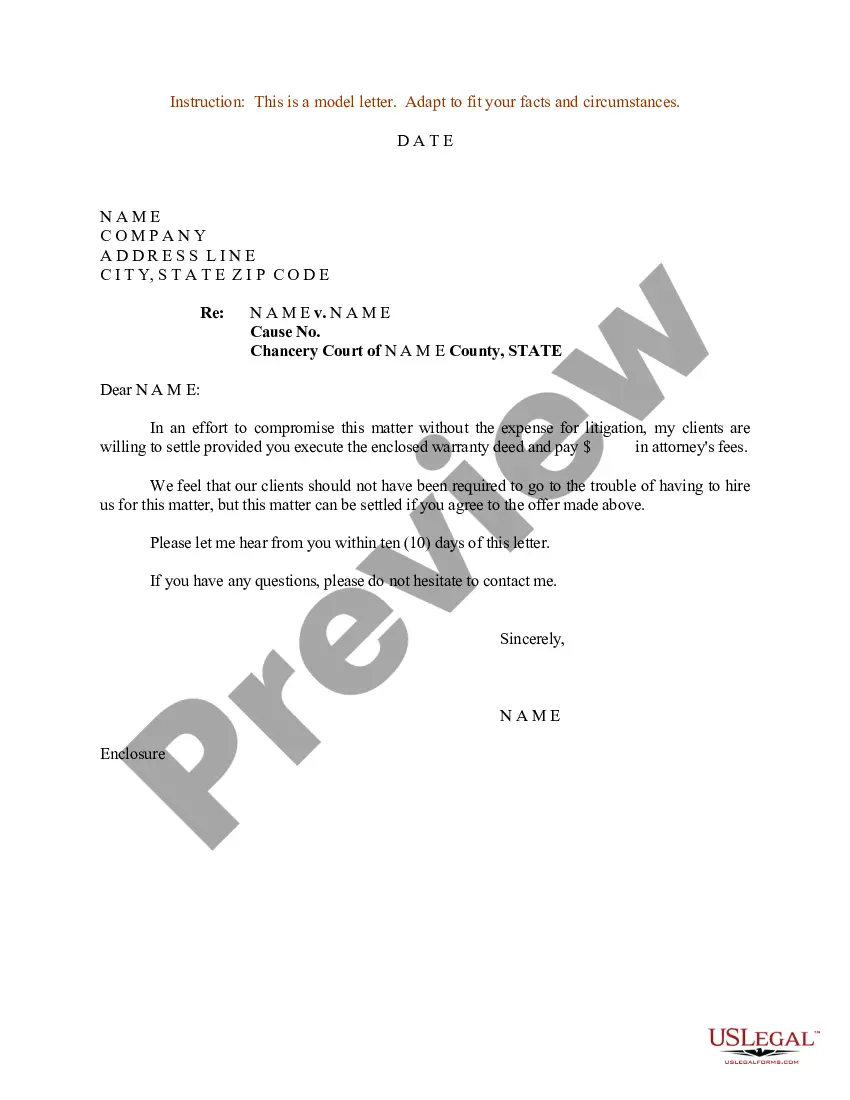
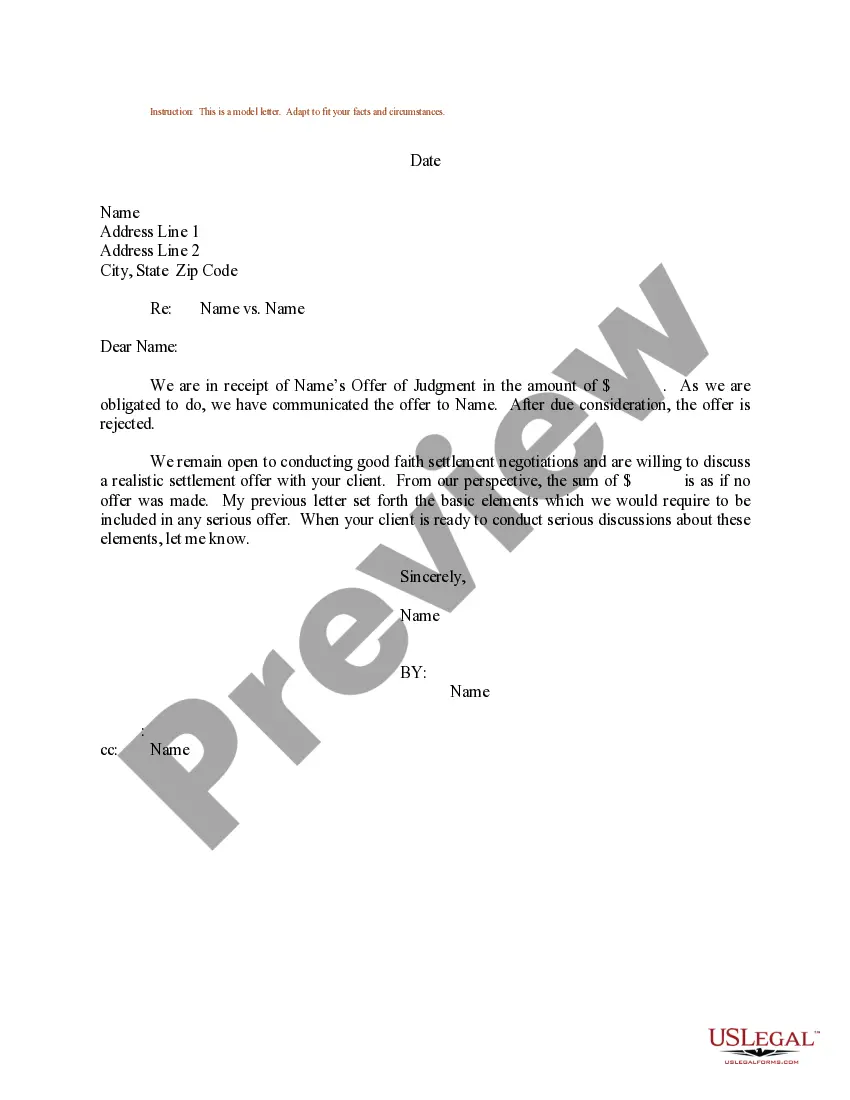
This Sample Letter for Request to Respond to Settlement Offer is a template designed to assist individuals in formally requesting a response to a settlement offer. This letter serves as a communication tool in various legal matters, ensuring that parties remain engaged and informed during negotiations. Unlike other legal correspondences, this form focuses specifically on prompting a reply to a proposed settlement, making it a critical component of the negotiation process.
Main sections of this form
- Date of the letter
- Your name and address
- Recipient's name and address
- Subject line indicating the purpose of the letter
- Content of the letter requesting a response to the settlement offer

When to use this form
This form is appropriate to use when you have received a settlement offer related to a legal matter and wish to prompt the other party for a response. Situations may include personal injury claims, contractual disputes, or other civil cases where reaching an agreement is necessary. Utilizing this letter can help maintain communication and ensure that your position is clearly conveyed.
Who this form is for
This letter is suitable for individuals who are currently engaged in negotiations regarding a legal settlement, including:
- Individuals pursuing personal injury claims
- Parties involved in contract disputes
- Claimants in civil proceedings
- Attorneys seeking to communicate on behalf of clients
Instructions for completing this form
- Enter the date at the top of the letter.
- Fill in your name and address in the designated sections.
- Add the recipient's name and address to address the letter properly.
- Include a clear subject line that states the purpose of the letter.
- Draft the content of the letter to request a response to the settlement offer.
- Sign and date the letter before sending it.
Notarization requirements for this form
This form does not typically require notarization unless specified by local law. It is, however, advisable to check with legal counsel regarding any specific requirements that may apply in your jurisdiction.
Get your form ready online
Our built-in tools help you complete, sign, share, and store your documents in one place.
Make edits, fill in missing information, and update formatting in US Legal Forms—just like you would in MS Word.
Download a copy, print it, send it by email, or mail it via USPS—whatever works best for your next step.
Sign and collect signatures with our SignNow integration. Send to multiple recipients, set reminders, and more. Go Premium to unlock E-Sign.
If this form requires notarization, complete it online through a secure video call—no need to meet a notary in person or wait for an appointment.
We protect your documents and personal data by following strict security and privacy standards.

Make edits, fill in missing information, and update formatting in US Legal Forms—just like you would in MS Word.

Download a copy, print it, send it by email, or mail it via USPS—whatever works best for your next step.

Sign and collect signatures with our SignNow integration. Send to multiple recipients, set reminders, and more. Go Premium to unlock E-Sign.

If this form requires notarization, complete it online through a secure video call—no need to meet a notary in person or wait for an appointment.

We protect your documents and personal data by following strict security and privacy standards.
Avoid these common issues
- Failing to include relevant contact information for both parties.
- Not specifying the date clearly in the letter.
- Using unclear language that could lead to misunderstandings.
- Neglecting to sign and date the letter before sending.
Benefits of completing this form online
- Convenient access to a professionally drafted template.
- Easy to edit and customize according to your specific situation.
- Reliable content that aligns with legal standards and practices.
Main things to remember
- This letter is designed to formally request a response to a settlement offer.
- Utilizing a structured letter helps maintain professionalism in legal communications.
- This sample can be customized to fit various legal situations.
Looking for another form?

Form popularity
FAQ
Remain Polite. Stay polite and professional when negotiating with an insurance claims adjuster, even if you believe he or she is trying to take advantage of you or is using bad faith tactics. Ask Questions. Present the Facts. Respond in Writing. Do Not Fall for Common Insurance Tactics.
Outline The Incident. You will need to start by outlining the details of the accident. Detail Your Injuries. Explain All Of Your Damages. Calculate Your Settlement Demand. Attach Relevant Documents. Get Help From An Attorney.
To put it bluntly, no. You should not accept the insurance company's first settlement offer. Why? Because the amount of money you are awarded in your settlement is extremely importantnot just for covering your current medical bills, but also for helping you get back on your feet.
Scenario 3: Protect Your Legal Rights by Filing a Lawsuit The most dramatic result of a rejected settlement offer is a lawsuit against the party who injured you, the insurance company, or both.
Always reject a settlement offer in writing. Type a letter to your contact at the insurance company listing the reasons you think that their offer is too low. Back up these reasons with concrete evidence attached to the letter. Finally, provide a counteroffer of a sum you think is more reasonable.
A settlement demand letter is used to ask for a settlement. The demand letter indicates that you are willing and ready to settle your claim related to your slip and fall accident, car crash, construction accident, or other injury.
Most cases settle out of court before proceeding to trial. Some say that the measure of a good settlement is when both parties walk away from the settlement unhappy.This means that the defendant paid more than he wanted to pay, and the plaintiff accepted less than he wanted to accept.
State that the offer you received is unacceptable. Refute any statements in the adjustor's letter that are inaccurate and damaging to your claim. Re-state an acceptable figure. Explain why your counteroffer is appropriate, including the reasons behind your general damages demands.
State that the offer you received is unacceptable. Refute any statements in the adjustor's letter that are inaccurate and damaging to your claim. Re-state an acceptable figure. Explain why your counteroffer is appropriate, including the reasons behind your general damages demands.