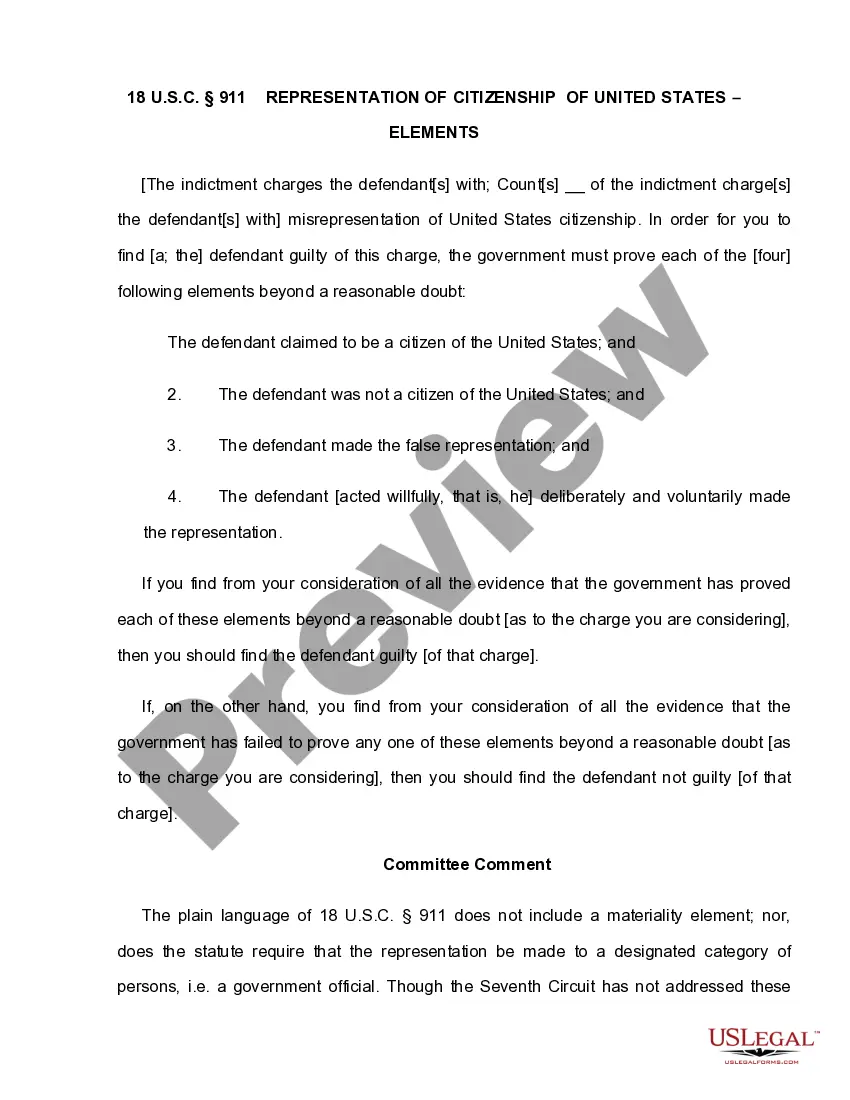
Sample Letter to Opposing Counsel with Settlement Offer
About this form
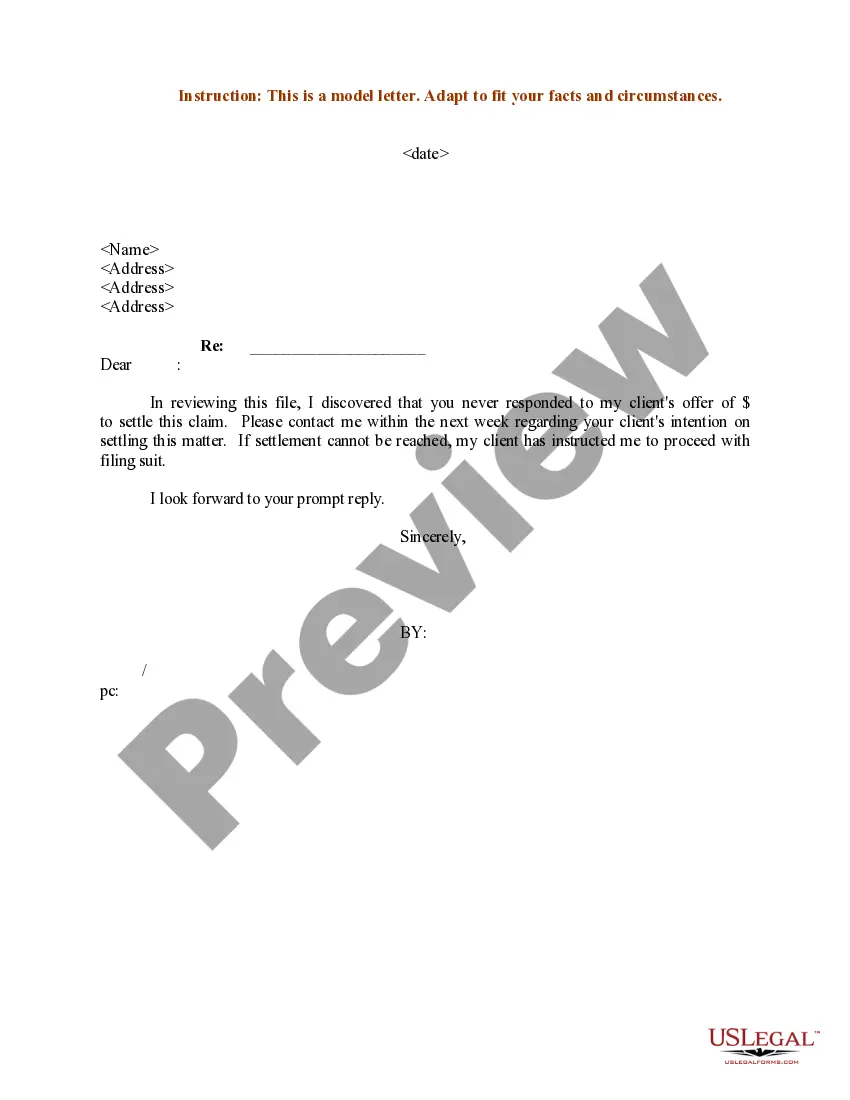
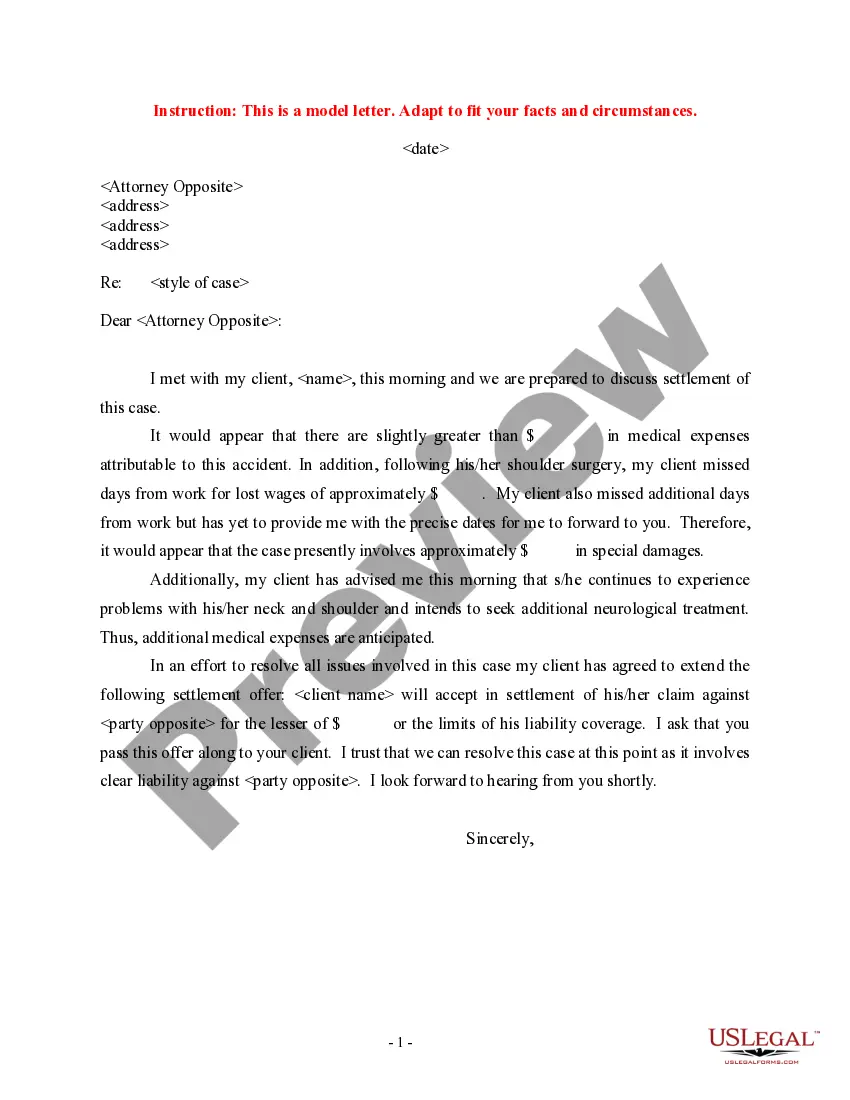
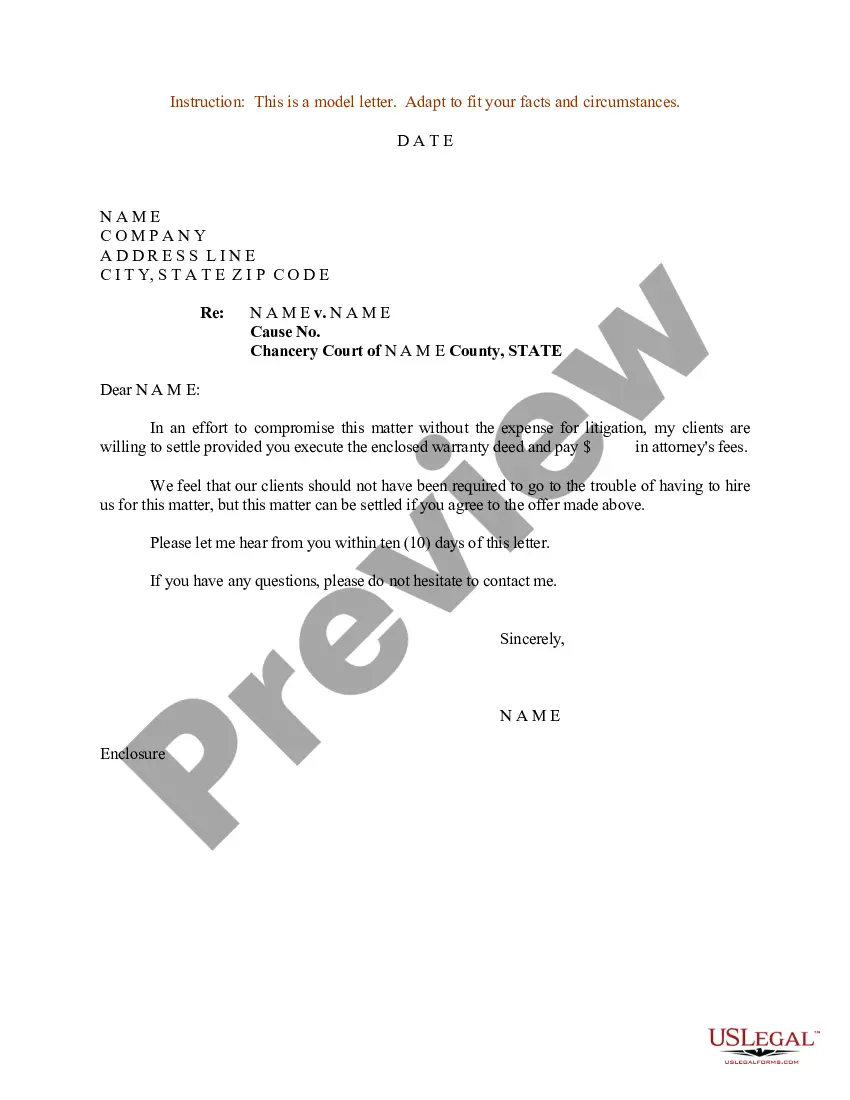
The Sample Letter to Opposing Counsel with Settlement Offer is a legal template designed to help parties communicate settlement proposals in a formal manner. This letter serves as a structured way to outline the terms of a settlement and is essential for negotiations between legal representatives. It is specifically formatted to ensure clarity and professionalism, setting it apart from other informal communication methods such as emails or phone calls.
Main sections of this form
- Date field for establishing the timeline of correspondence.
- Recipient information section to identify opposing counsel.
- Subject line indicating the purpose of the letter.
- Body of the letter detailing the settlement offer and terms.
- Signature area for formal acknowledgment of the letter.


When to use this document
This form is useful when you or your attorney are ready to propose a settlement to opposing counsel in a legal dispute. It helps to formalize the negotiation process and provides clear documentation of the offer being made, which can be important for future reference or legal proceedings.
Who should use this form
- Individuals involved in legal disputes seeking to negotiate settlements.
- Attorneys representing clients in civil litigation cases.
- Anyone wishing to communicate a formal settlement offer to opposing parties.
How to prepare this document
- Enter the date of the letter at the top.
- Insert the name and address of the opposing counsel.
- Specify the subject of the letter clearly.
- Draft the body of the letter to include the terms of the settlement offer.
- Sign the letter to finalize it.
Does this document require notarization?
This form does not typically require notarization unless specified by local law. However, it is recommended to consult with an attorney to ensure compliance with specific jurisdictional standards.
Get your form ready online
Our built-in tools help you complete, sign, share, and store your documents in one place.
Make edits, fill in missing information, and update formatting in US Legal Forms—just like you would in MS Word.
Download a copy, print it, send it by email, or mail it via USPS—whatever works best for your next step.
Sign and collect signatures with our SignNow integration. Send to multiple recipients, set reminders, and more. Go Premium to unlock E-Sign.
If this form requires notarization, complete it online through a secure video call—no need to meet a notary in person or wait for an appointment.
We protect your documents and personal data by following strict security and privacy standards.

Make edits, fill in missing information, and update formatting in US Legal Forms—just like you would in MS Word.

Download a copy, print it, send it by email, or mail it via USPS—whatever works best for your next step.

Sign and collect signatures with our SignNow integration. Send to multiple recipients, set reminders, and more. Go Premium to unlock E-Sign.

If this form requires notarization, complete it online through a secure video call—no need to meet a notary in person or wait for an appointment.

We protect your documents and personal data by following strict security and privacy standards.
Avoid these common issues
- Failing to include complete recipient information.
- Omitting the date, which can lead to confusion about the timeline.
- Using vague language in the offer terms.
- Not properly signing the letter, making it less formal.
Benefits of completing this form online
- Convenience of immediate access and download.
- Editability to customize the letter according to specific needs.
- Reliability with templates drafted by licensed attorneys.
Legal use & context
- The letter serves as a formal record of your settlement offer, which may be referenced in negotiations or court proceedings.
- Proper use of this form can assist in demonstrating a willingness to settle and may impact court perceptions.
- Verify that your settlement offer complies with any relevant legal standards in your jurisdiction.
What to keep in mind
- This form is essential for communicating settlement offers effectively and professionally.
- Utilizing this template can save time and reduce misunderstandings in legal negotiations.
- Always keep a copy for your records after sending the letter.
Looking for another form?

Form popularity
FAQ
Opposing counsel call each other 'friend' in increasingly popular SCOTUS lingo. The Supreme Court under the leadership of Chief Justice John G. Roberts Jr. is increasingly using the word friend to refer to opposing counsel in oral arguments, a term also picked up by the lawyers appearing before the court.
A settlement demand letter is used to ask for a settlement. The demand letter indicates that you are willing and ready to settle your claim related to your slip and fall accident, car crash, construction accident, or other injury.
2714 Retain relevant documents. 2714 Decide whether (and when) to make offer. 2714 Evaluate the reasons for settling. 2714 Assess motivating factors to settle. 2714 Confirm client's ability to settle. 2714 List all covered parties. 2714 List all legal issues to be settled.
A lawyer is not prohibited from calling another party's attorney or another member of the party's attorney's firm as a witness, either in discovery or at trial, where such attorney may have unprivileged knowledge relevant to the case or unprivileged knowledge reasonably calculated to lead to the discovery of admissible
Outline The Incident. You will need to start by outlining the details of the accident. Detail Your Injuries. Explain All Of Your Damages. Calculate Your Settlement Demand. Attach Relevant Documents. Get Help From An Attorney.
A settlement demand letter is used to ask for a settlement. The demand letter indicates that you are willing and ready to settle your claim related to your slip and fall accident, car crash, construction accident, or other injury.
But by default, communications to the other side are addressed to the designated attorney-in-charge/top-named lawyer, with cc's to everyone else. In a rare situation where you are sending a letter specifically to multiple attorneys as opposed to the other side as a whole, it's Dear Messrs. Smith and Jones, Dear Ms.
Never Refer To Counsel In Argument Resist the impulse in Court to address opposing counsel directly always address through the Court. It will keep you more civil and calmer (and it's what the Court wants anyway).
Never Refer To Counsel In Argument Resist the impulse in Court to address opposing counsel directly always address through the Court. It will keep you more civil and calmer (and it's what the Court wants anyway).