Management Agreement between a Trust and a Corporation
What is this form?
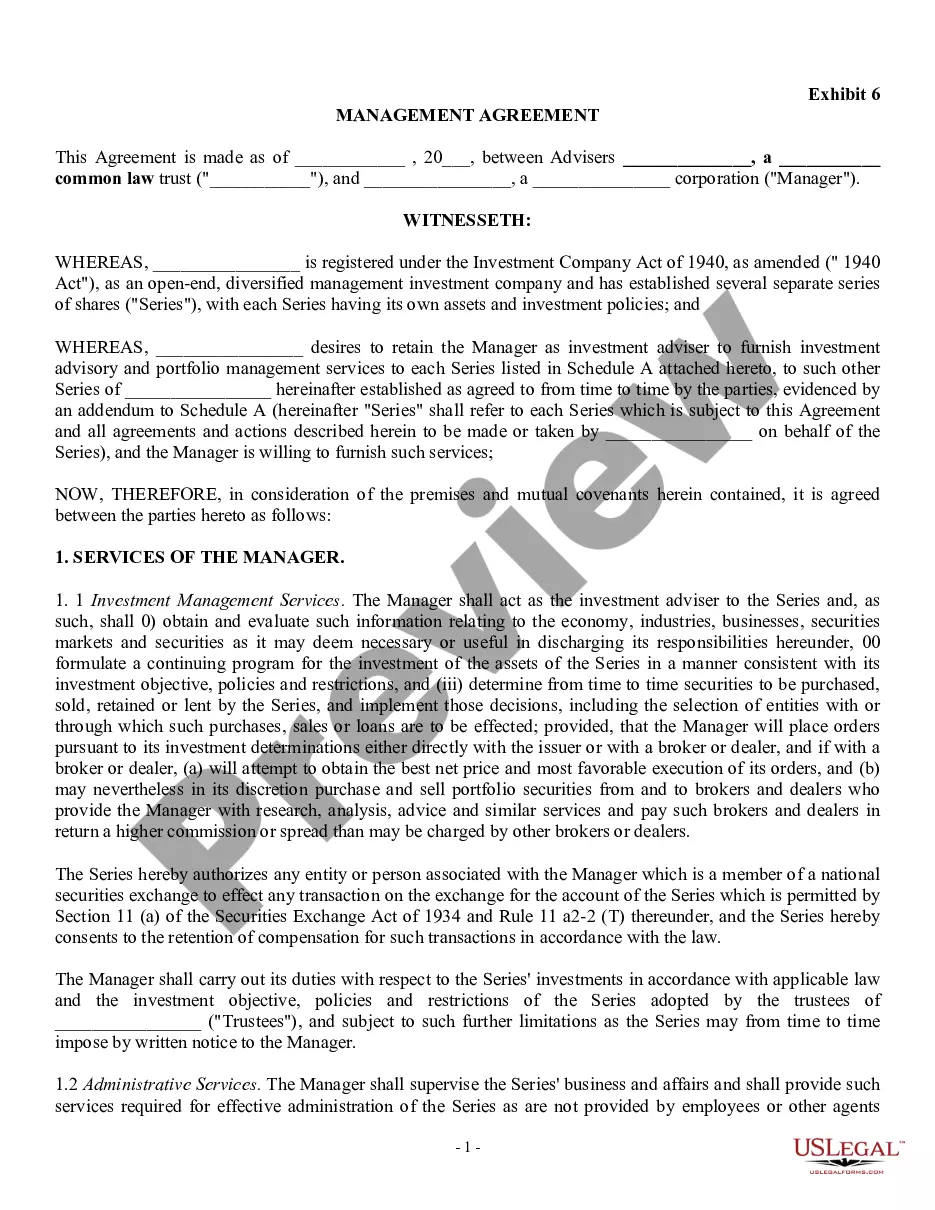
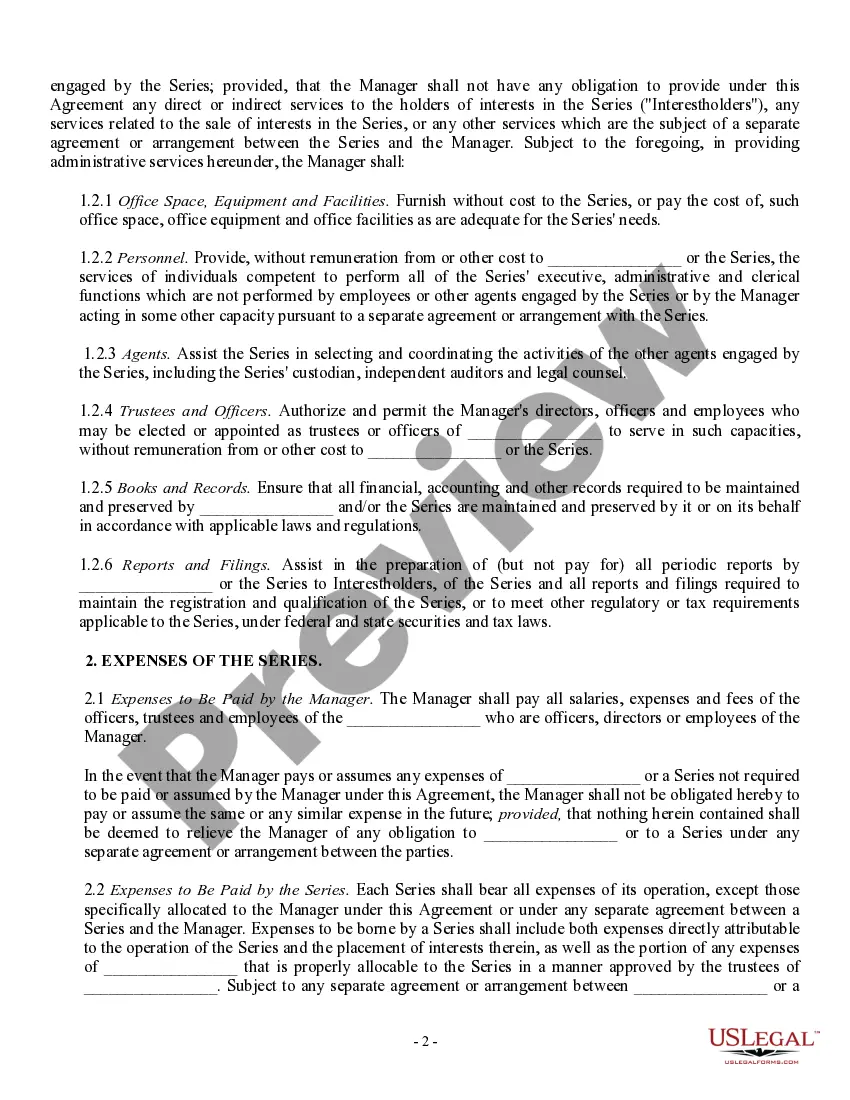
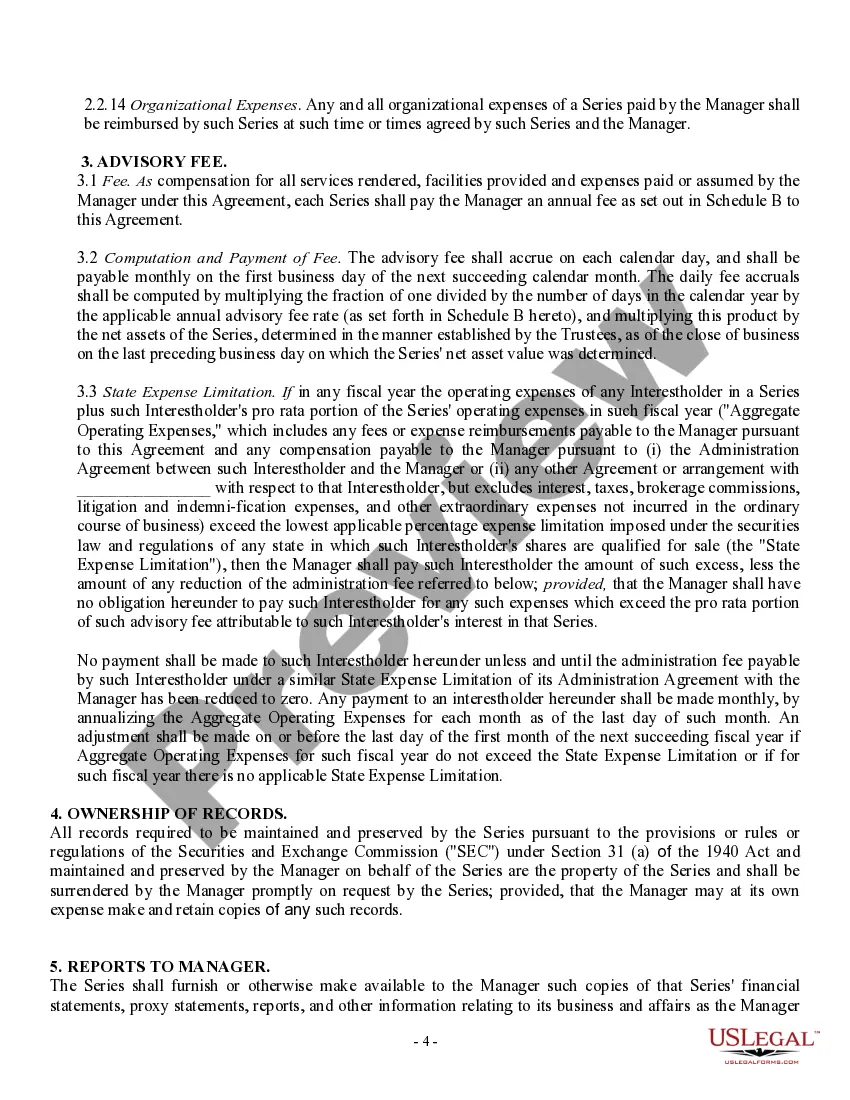
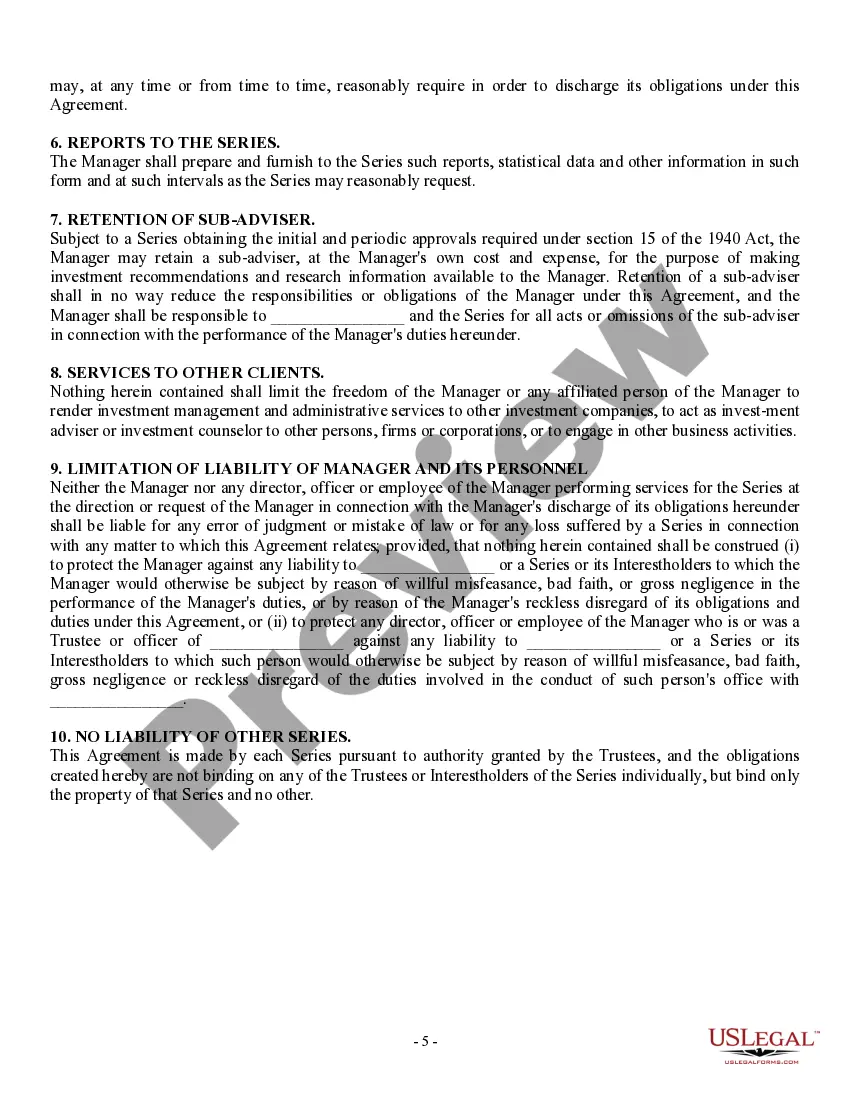
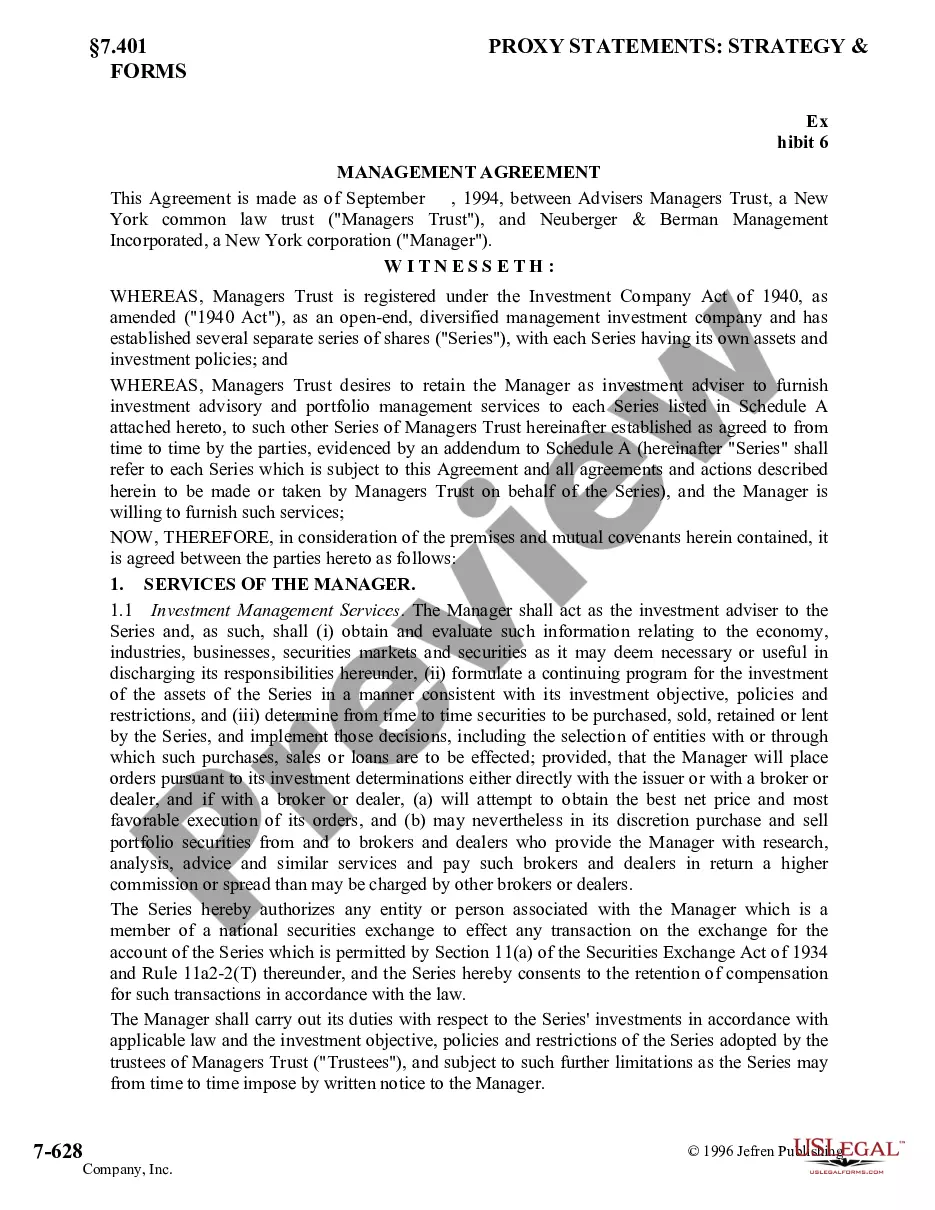
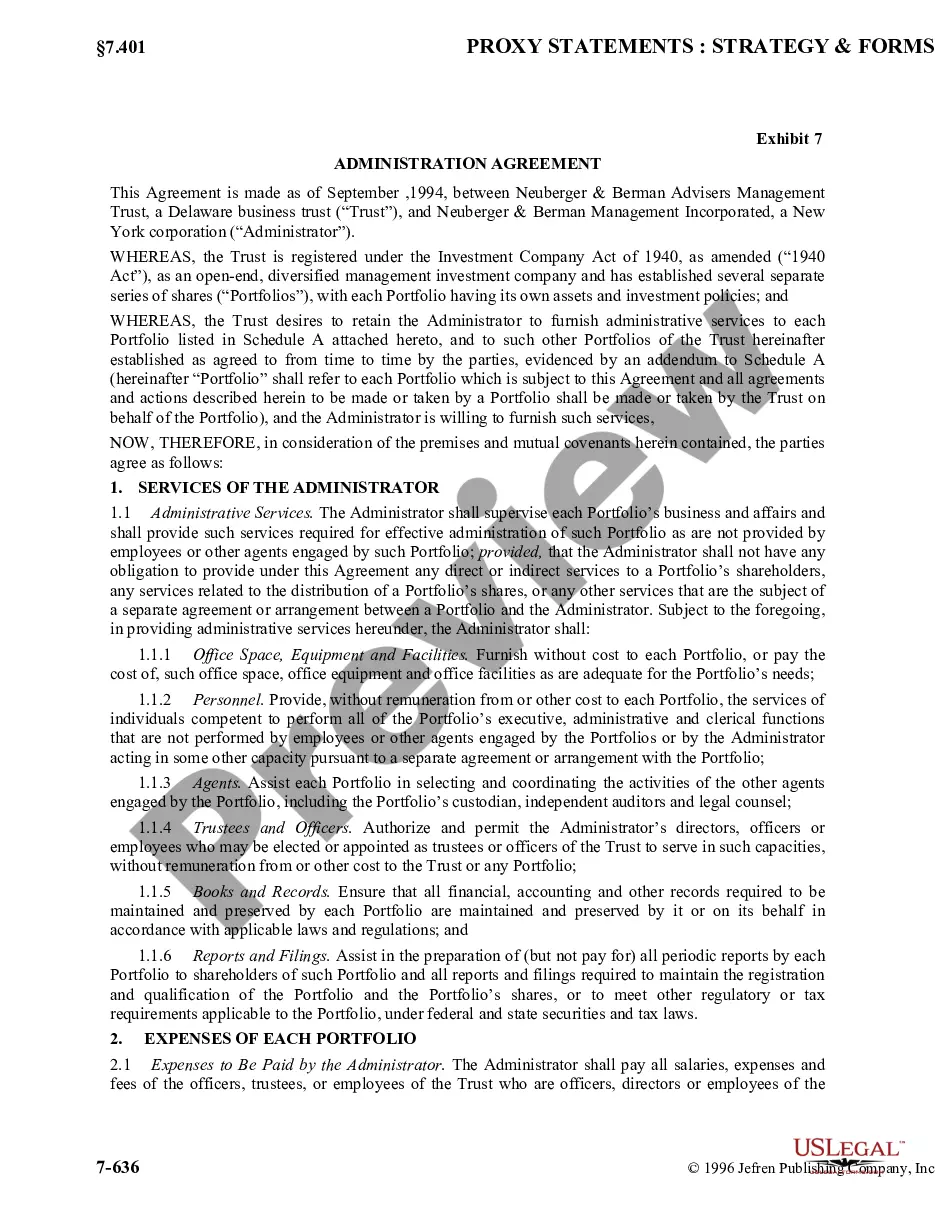
The Management Agreement between a Trust and a Corporation is a legal document that establishes the relationship between a common law trust and a corporation acting as a manager. This agreement outlines the responsibilities of the manager in providing investment advisory and portfolio management services for various series of shares held by the trust. Unlike general management agreements, this form specifically addresses the intricacies of managing investment portfolios tied to multiple series within the framework of trust law and regulations under the Investment Company Act of 1940.
What’s included in this form
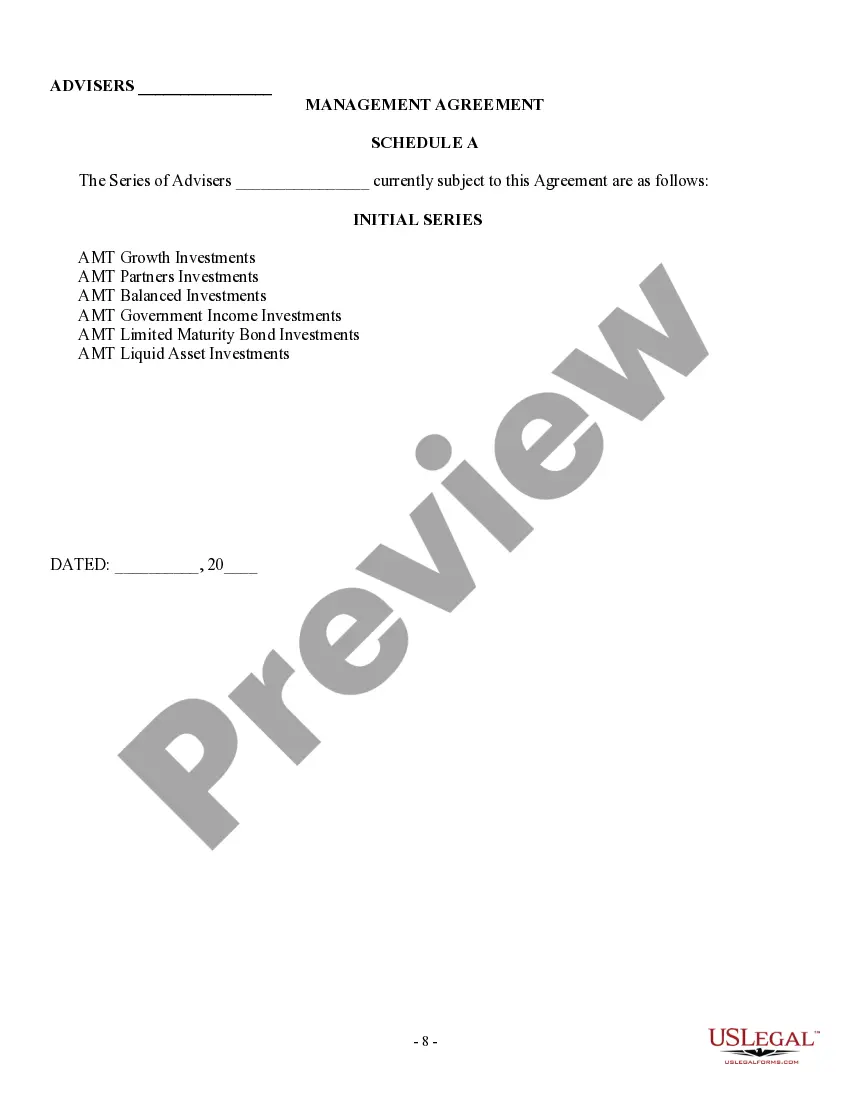
- Identification of the parties involved (the trust advisers and the managing corporation).
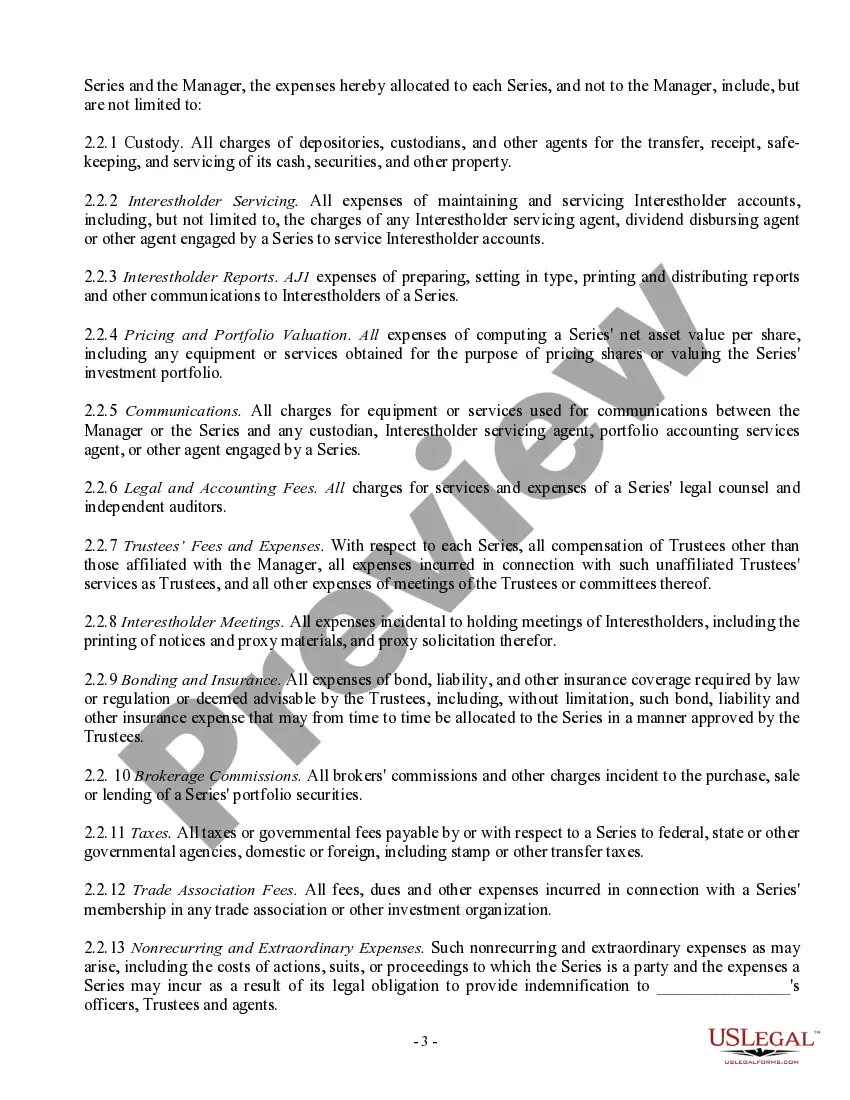
- Definitions of services provided by the manager, including investment management and administrative tasks.
- Details on expenses to be borne by the series and who is responsible for those payments.
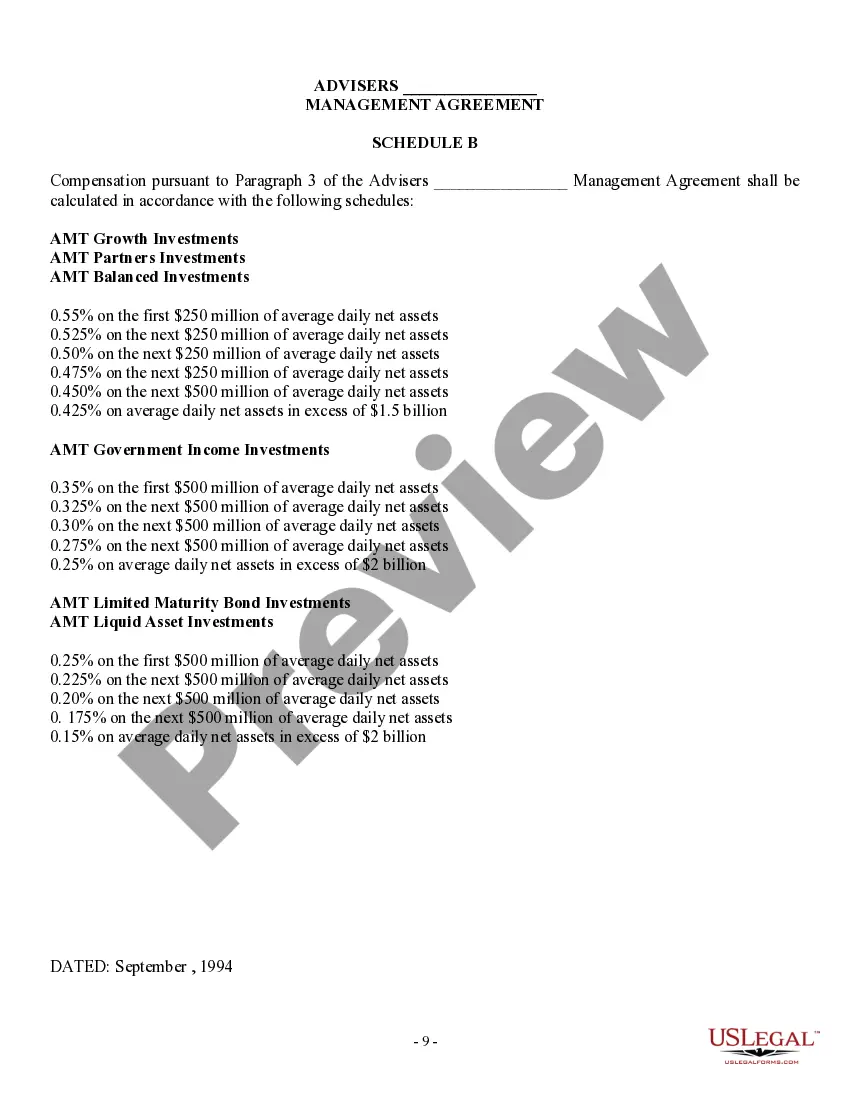
- Provisions for the advisory fee structure based on net assets.
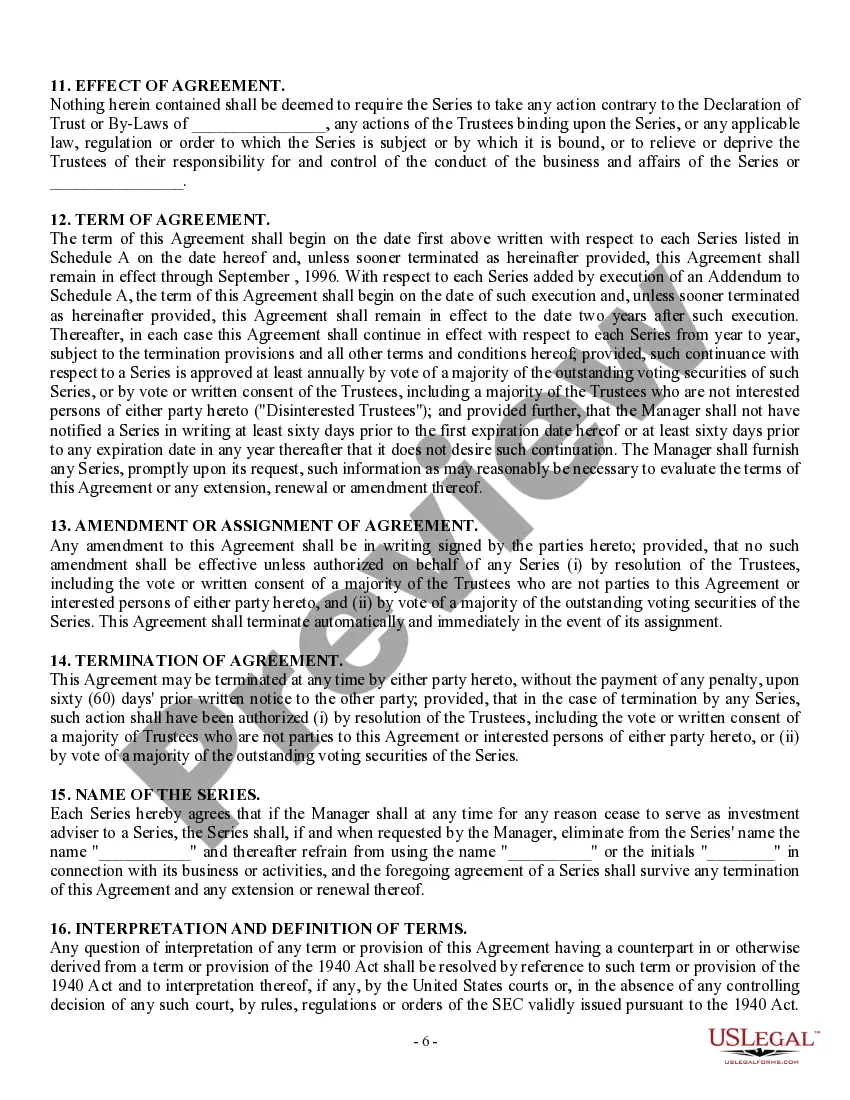
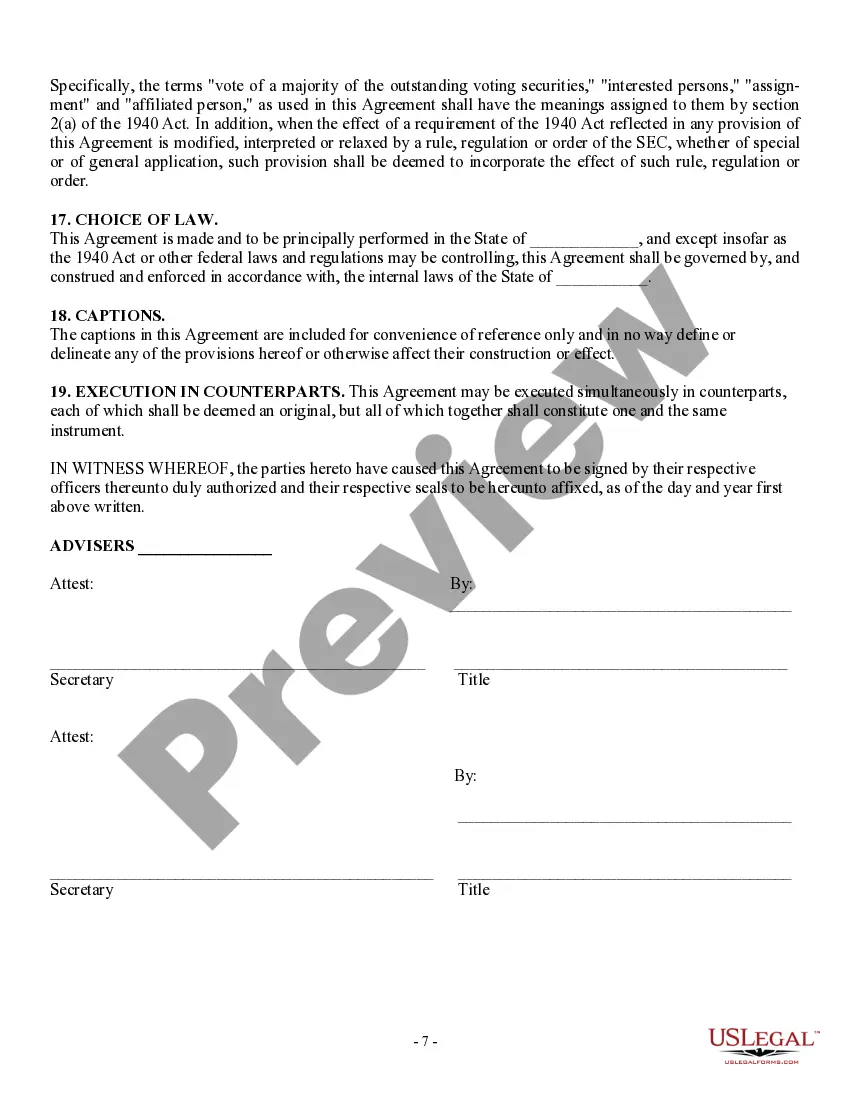
- Conditions for amendment or termination of the agreement.


Situations where this form applies
This form should be used when a common law trust needs to formalize a relationship with a corporate manager for investment advisory services. It is particularly relevant when the trust has established multiple series of shares and requires a structured approach to manage investments across these various portfolios. This form is essential whenever there is a need for clear documentation of duties, compensation, and liabilities among the parties.
Who needs this form
- Advisers of a common law trust seeking to retain a corporate management entity.
- Corporations offering investment management services to trusts.
- Investment firms managing multiple series of shares within a structured investment company.
- Legal professionals drafting agreements for trusts and corporations in the financial sector.
How to complete this form
- Identify the parties involved and enter their names and business types.
- Specify the date the agreement is made and fill in the effective duration of the agreement.
- Detail the services provided by the manager, including investment management and administrative responsibilities.
- Outline the fee structure for the management services in the attached schedule.
- Review and sign the agreement, ensuring all parties have agreed to the terms.
Does this form need to be notarized?
Notarization is not commonly needed for this form. However, certain documents or local rules may make it necessary. Our notarization service, powered by Notarize, allows you to finalize it securely online anytime, day or night.
Get your form ready online
Our built-in tools help you complete, sign, share, and store your documents in one place.
Make edits, fill in missing information, and update formatting in US Legal Forms—just like you would in MS Word.
Download a copy, print it, send it by email, or mail it via USPS—whatever works best for your next step.
Sign and collect signatures with our SignNow integration. Send to multiple recipients, set reminders, and more. Go Premium to unlock E-Sign.
If this form requires notarization, complete it online through a secure video call—no need to meet a notary in person or wait for an appointment.
We protect your documents and personal data by following strict security and privacy standards.

Make edits, fill in missing information, and update formatting in US Legal Forms—just like you would in MS Word.

Download a copy, print it, send it by email, or mail it via USPS—whatever works best for your next step.

Sign and collect signatures with our SignNow integration. Send to multiple recipients, set reminders, and more. Go Premium to unlock E-Sign.

If this form requires notarization, complete it online through a secure video call—no need to meet a notary in person or wait for an appointment.

We protect your documents and personal data by following strict security and privacy standards.
Common mistakes to avoid
- Failing to clearly identify all series of shares under management.
- Not specifying the complete fee structure, leading to potential disputes.
- Omitting required signatures or dates, which may invalidate the agreement.
- Not reviewing state-specific regulations that affect trust management or investment companies.
Advantages of online completion
- Convenience of downloading the form for immediate use.
- Editability to customize the agreement to suit specific needs and circumstances.
- Access to templates drafted by licensed attorneys, ensuring compliance with legal standards.
Legal use & context
- This form accurately reflects legal standards for investment management in trusts.
- Enforceable in jurisdictions that recognize common law trusts and corporate management agreements.
- Properly executed agreements can help prevent disputes between trusts and managers.
Main things to remember
- The Management Agreement serves as a crucial document for the relationship between a trust and a managing corporation.
- Understanding the key components ensures all parties know their responsibilities and fees.
- Completing the form accurately helps in avoiding common pitfalls that may render the agreement ineffective.
Looking for another form?

Form popularity
FAQ
A trust company is a legal entity that acts as a fiduciary, agent, or trustee on behalf of a person or business for a trust. A trust company is typically tasked with the administration, management, and the eventual transfer of assets to beneficiaries.
Avoid Probate Court. Your Personal And Financial Matters Remain Private. You Maintain Control Of Your Finances After You Pass Away. Reduce The Possibility Of A Court Challenge. Prevent A Conservatorship.
A trust company is a financial institution that operates under either provincial or federal legislation and conducts activities similar to those of a bank.The following institutions are regulated under the federal Trust and Loan Companies Act.
No. A trust is a relationship to property. It is not a separate legal entity like a corporation.
A trust that a corporation creates to secure a bond or other debt security. That is, a corporate trust is effectively money set aside to ensure that bondholders are covered in the event of default on the issue.
A trust company is a legal entity that acts as a fiduciary, agent, or trustee on behalf of a person or business for a trust. A trust company is typically tasked with the administration, management, and the eventual transfer of assets to beneficiaries.
Companies are usually more tax-effective when income generated is retained to fund ongoing working capital requirements. In contrast, trusts are generally taxed at higher rates when profits are retained.
The trustees must file to incorporate according to the laws of their state.They can then transfer the assets from the trust to the new corporation, or the corporation can administer the trust, depending on state law.
Trusts are a way that individuals own property for personal and family purposes just as corporations are a way that individuals own property for business purposes.Corporations are intended to operate businesses for profit for the benefit of the shareholders (the owners).