Mississippi Motion to Discharge, Substitute Trustee from Liability and for Payment of Attorneys Fees and Costs
Overview of this form
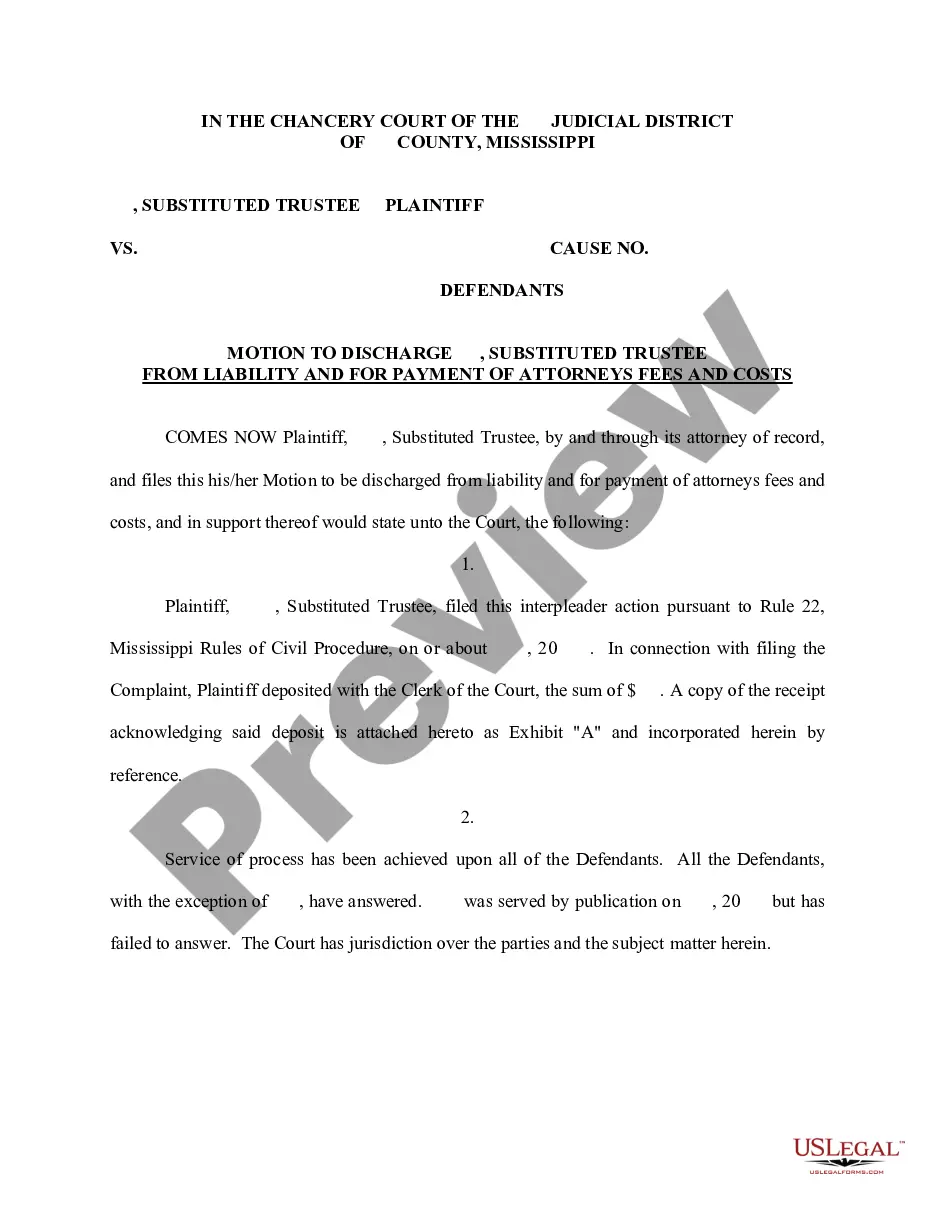
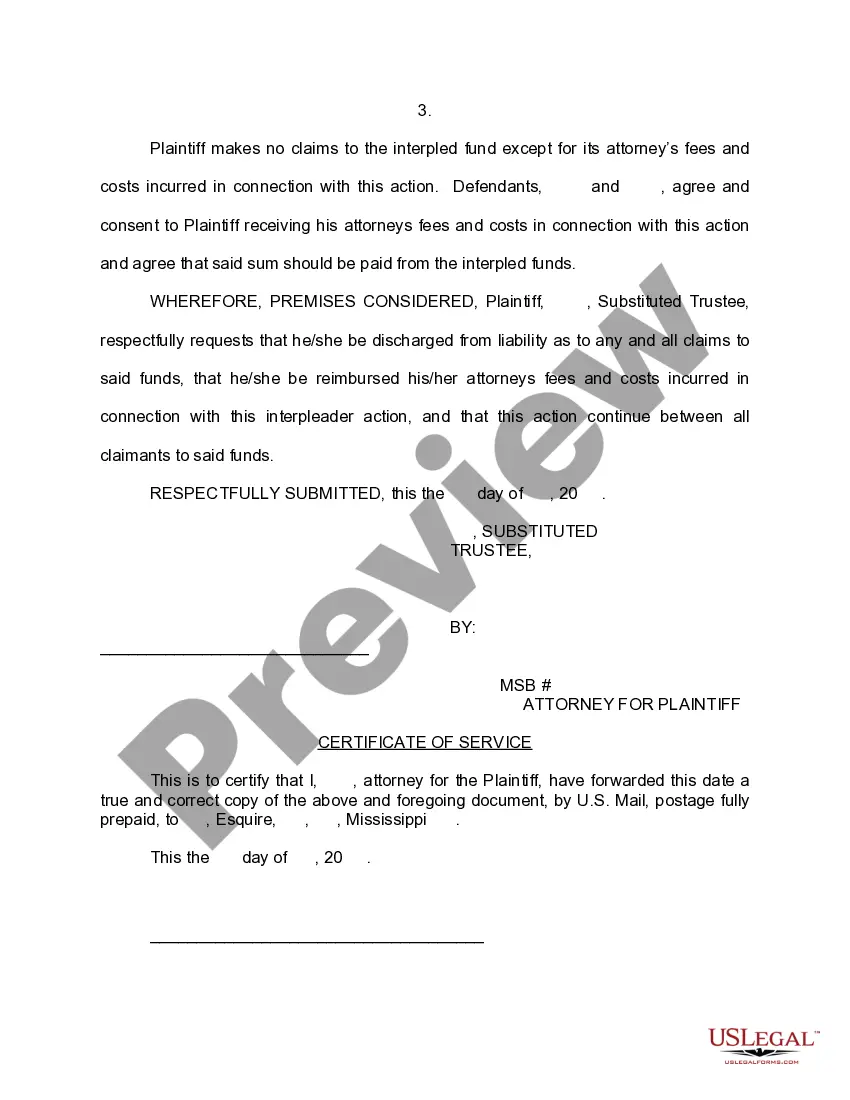
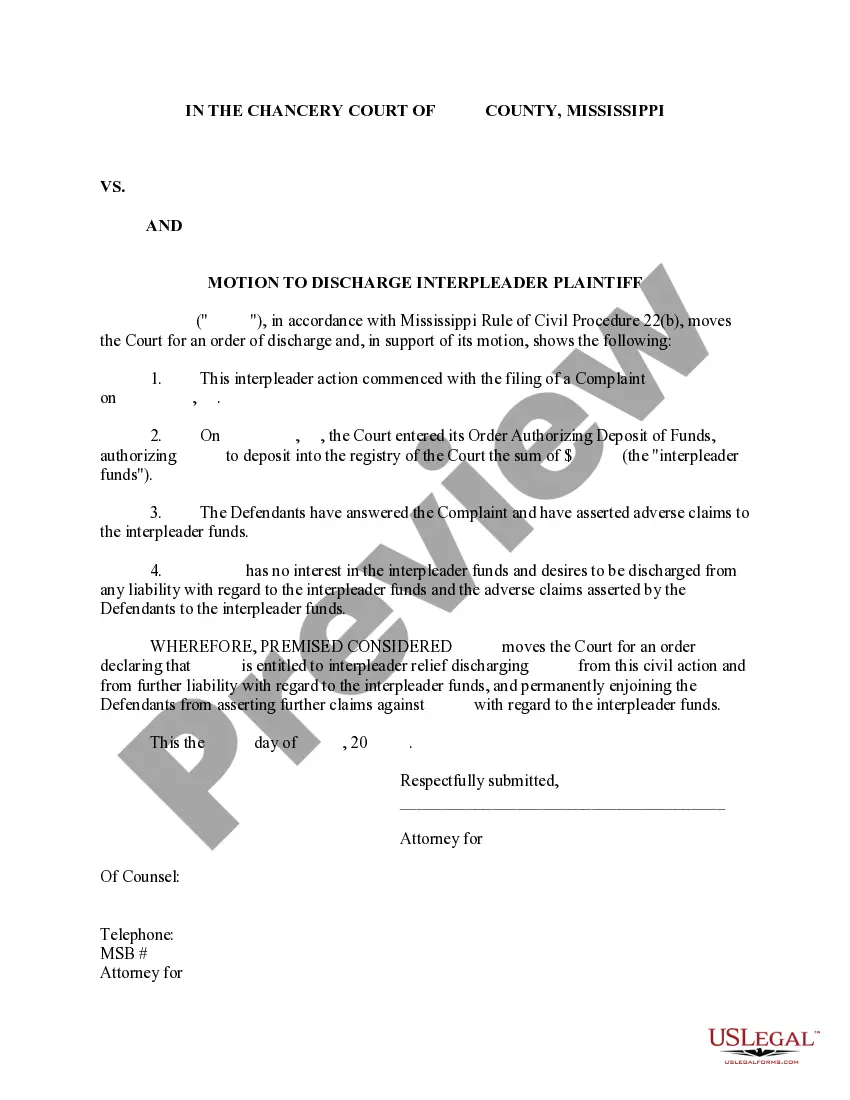
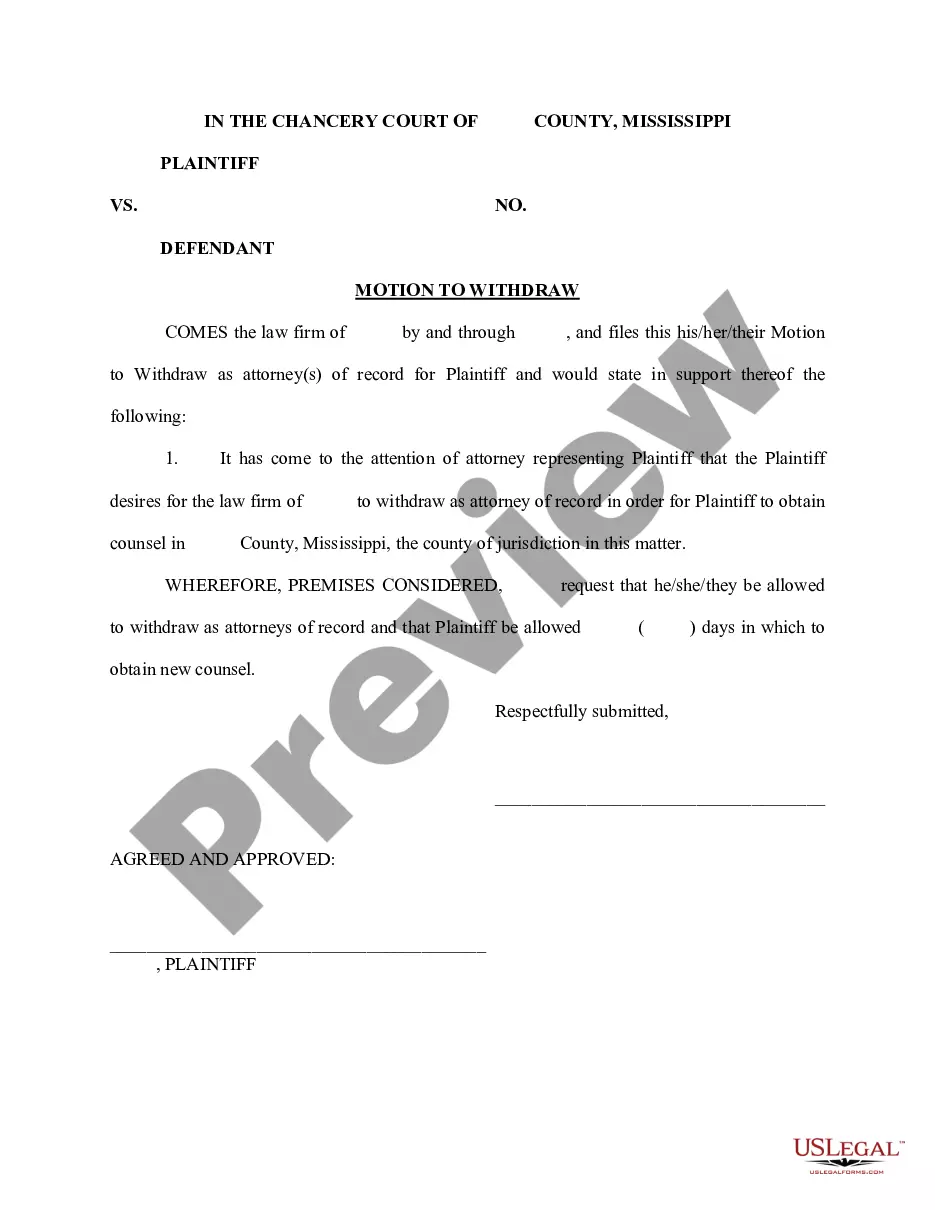
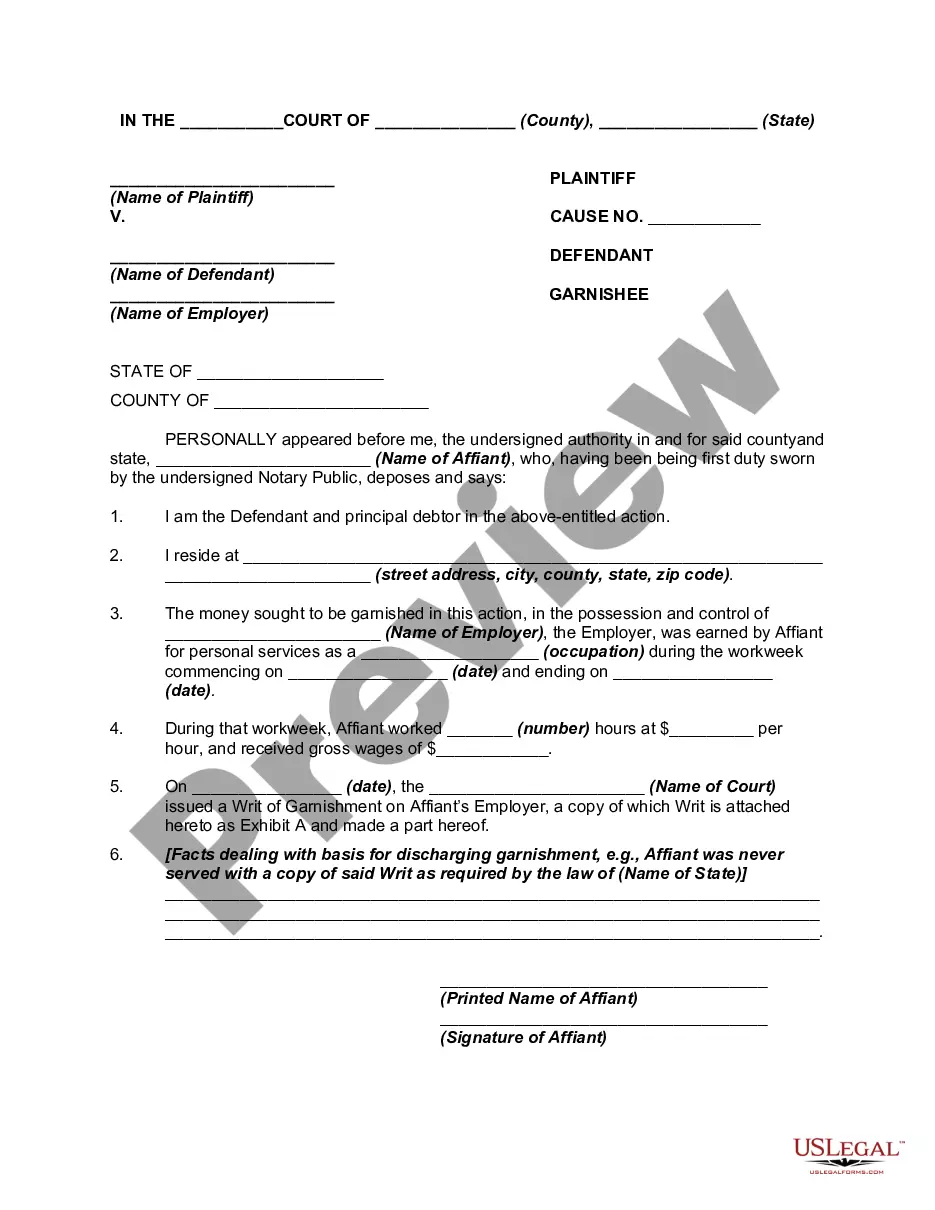
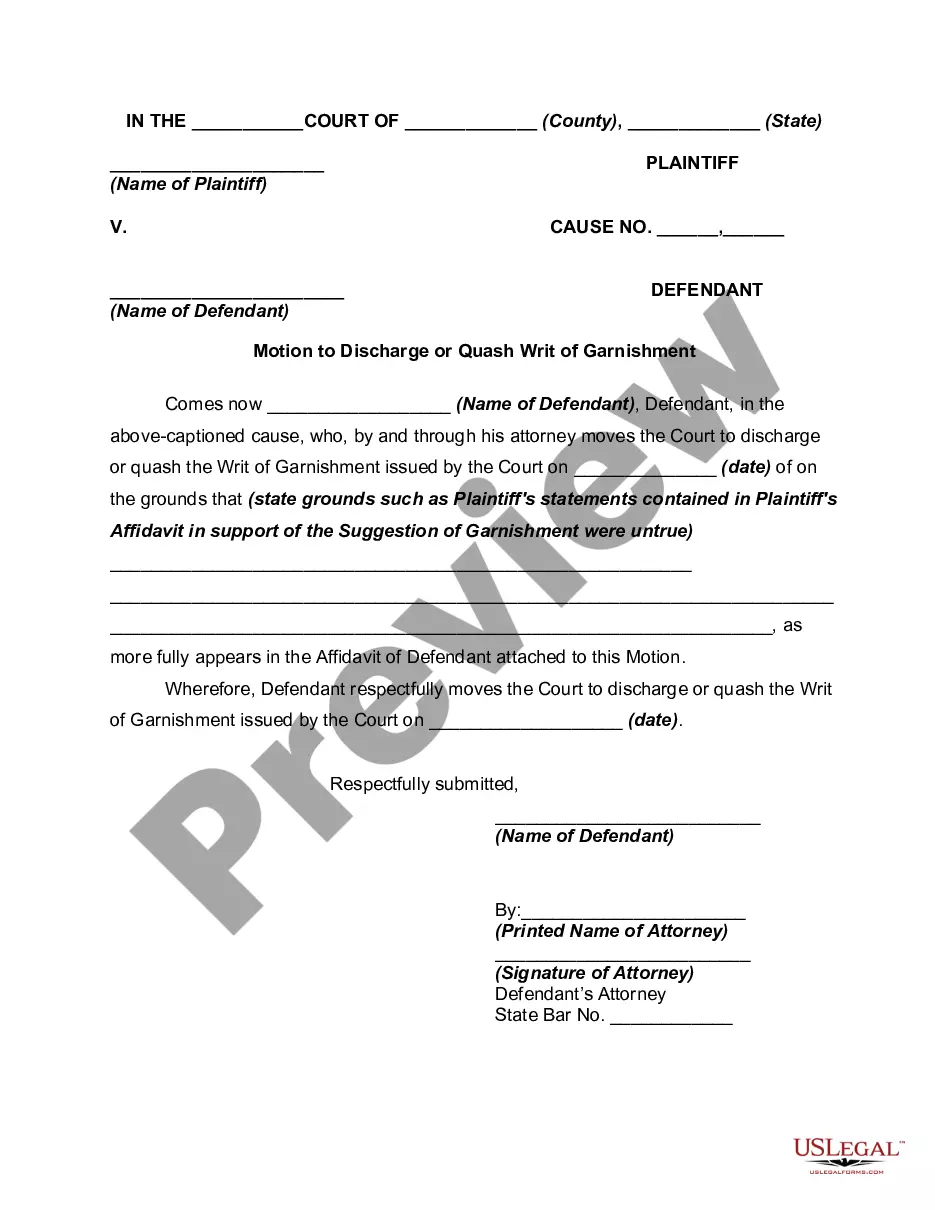
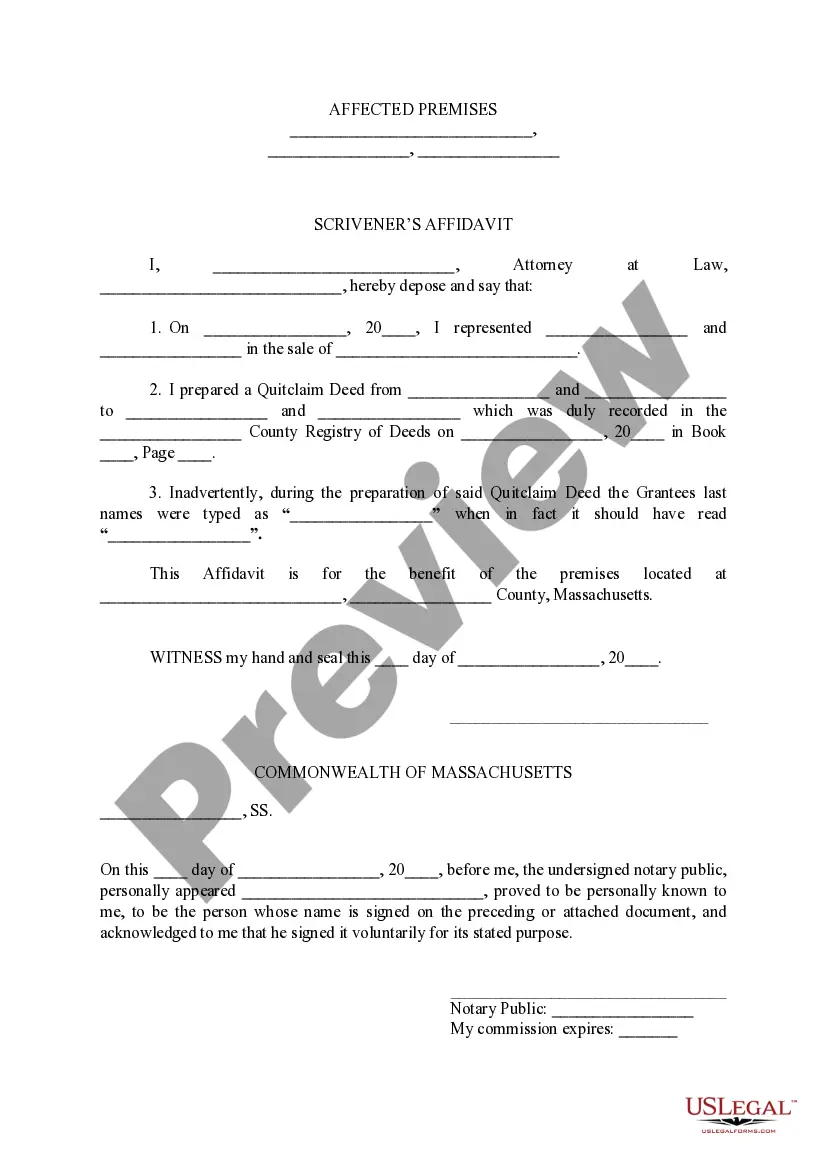
The Motion to Discharge, Substitute Trustee from Liability and for Payment of Attorneys Fees and Costs is a legal document submitted to the court. This motion requests the court to formally release the substituted trustee from any liability connected to a specific action, while also seeking payment for the attorney's fees and associated costs incurred during the process. Unlike general motions, this form is tailored specifically for situations involving substituted trustees in Mississippi, ensuring compliance with state laws.
What’s included in this form
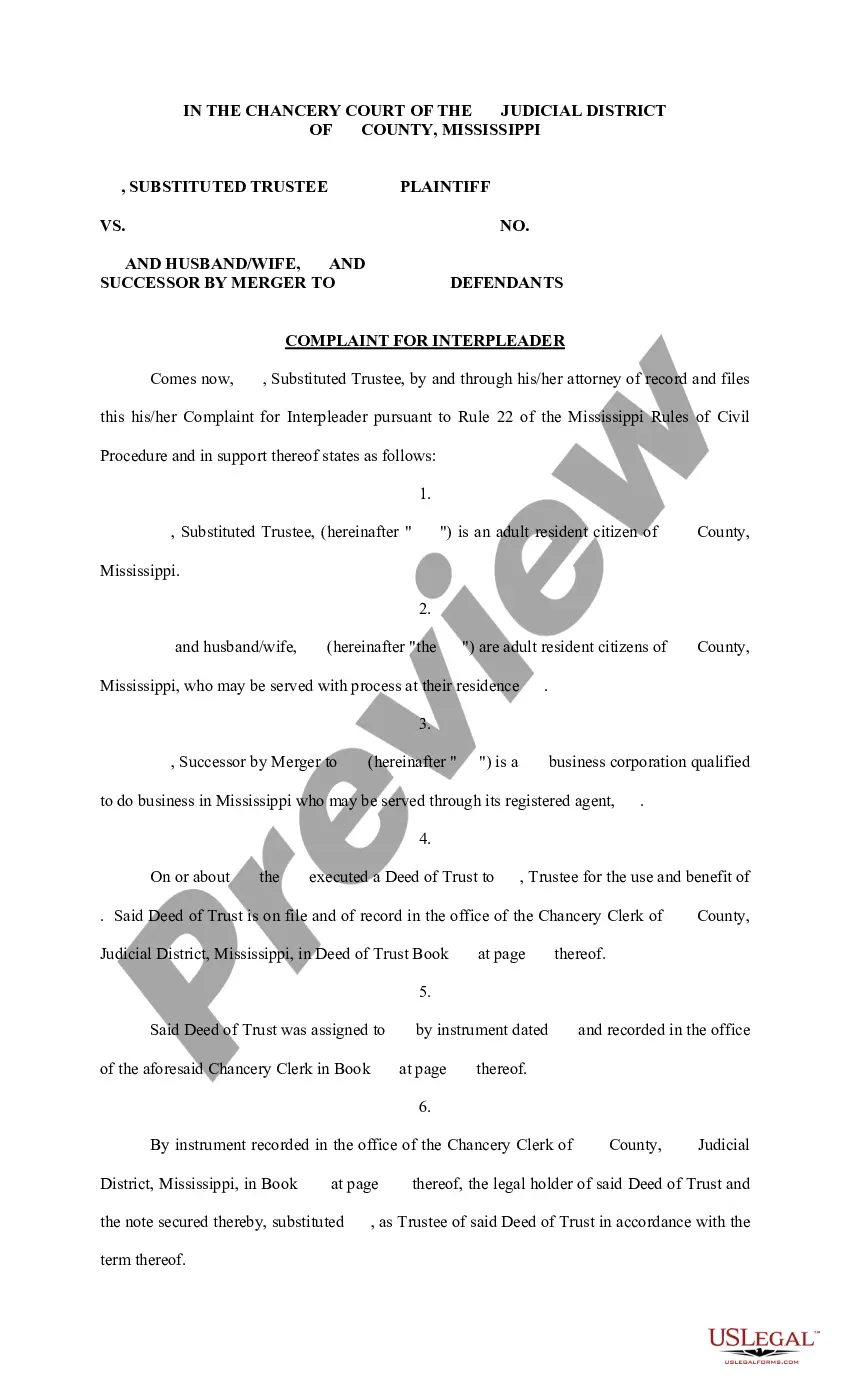
- Identification of the parties involved, including the substituted trustee and defendants.
- Details regarding the interpleader action filed under Mississippi Rules of Civil Procedure.
- Information about the deposit amount made with the Clerk of the Court to support the claim.
- Affirmation that all defendants have been served and their responses (or lack thereof).
- Request for reimbursement of attorney's fees and costs from the interpled funds.
Situations where this form applies
This form is needed when a substituted trustee seeks to be released from liability related to a specific interpleader action. It is appropriate to use this motion when there are multiple claimants to a fund and the trustee has incurred legal expenses while navigating the situation. If the trustee has received agreement from other parties regarding the payment of attorney fees, this form should be utilized to formalize that agreement before the court.
Who can use this document
This form is intended for the following individuals:
- Substituted trustees who have completed their duties regarding an interpleader action.
- Attorneys representing substituted trustees in Mississippi.
- Individuals involved in a legal dispute over interpled funds who need to formalize the trustee's discharge.
How to prepare this document
- Identify the parties involved in the motion, including the substituted trustee and relevant defendants.
- Enter the details of the interpleader action, including the case number and filing date.
- Specify the amount deposited with the Clerk of the Court and attach the receipt as an exhibit.
- Indicate which defendants have answered and summarize any agreements about attorney fees based on their consent.
- Sign and date the motion, ensuring you include your title and bar number if applicable.
Is notarization required?
This form does not typically require notarization unless specified by local law. Always check with local procedures for confirmation, as certain jurisdictions may have additional requirements.
Get your form ready online
Our built-in tools help you complete, sign, share, and store your documents in one place.
Make edits, fill in missing information, and update formatting in US Legal Forms—just like you would in MS Word.
Download a copy, print it, send it by email, or mail it via USPS—whatever works best for your next step.
Sign and collect signatures with our SignNow integration. Send to multiple recipients, set reminders, and more. Go Premium to unlock E-Sign.
If this form requires notarization, complete it online through a secure video call—no need to meet a notary in person or wait for an appointment.
We protect your documents and personal data by following strict security and privacy standards.

Make edits, fill in missing information, and update formatting in US Legal Forms—just like you would in MS Word.

Download a copy, print it, send it by email, or mail it via USPS—whatever works best for your next step.

Sign and collect signatures with our SignNow integration. Send to multiple recipients, set reminders, and more. Go Premium to unlock E-Sign.

If this form requires notarization, complete it online through a secure video call—no need to meet a notary in person or wait for an appointment.

We protect your documents and personal data by following strict security and privacy standards.
Avoid these common issues
- Failing to include all party names and accurate case details.
- Not attaching the required documentation, such as the deposit receipt.
- Overlooking the need for consent from all relevant defendants.
- Submitting the form without proper signatures and date.
Why use this form online
- Convenient access to a legally vetted form that saves time.
- Editable format allows for specific details to be easily customized.
- Reliable sourcing from licensed attorneys ensures legal compliance.
- Download in multiple standard formats to suit your needs.
Legal use & context
- This form is intended for legal actions within the jurisdiction of Mississippi regarding interpleader claims.
- It is important to ensure that all procedural rules are followed to maintain the motion's validity.
- The motion serves to protect the substituted trustee from future claims related to the interpleaded funds.
Main things to remember
- The motion effectively releases a trustee from liability while seeking attorney fee reimbursement.
- It is crucial for substantiated trustees involved in multi-claimant disputes to file this motion appropriately.
- Understanding the formâs structure and required elements is key to successful completion and submission.
Looking for another form?


Form popularity
FAQ
So, they think their credit score might increase after bankruptcy discharge. Unfortunately, making regular debt payments is the only method that could improve your credit. But, you can still start working on raising your credit score immediately after a bankruptcy. Your score won't go up right away.
A discharge is a type of sentence imposed by a court whereby no punishment is imposed.Once the stated period has elapsed and no further offence is committed then the conviction may be removed from the defendant's record.
Being discharged from a job means the working relationship between you and your employer has been terminated.
Debt cancellation happens when a lender forgives or discharges some or all of a debt that you owe. The process typically doesn't affect your credit scoreunless it happens in bankruptcybut it could end up costing you. Debt cancellation typically happens in accordance with a debt forgiveness program.
A discharge is a type of sentence imposed by a court whereby no punishment is imposed.Once the stated period has elapsed and no further offence is committed then the conviction may be removed from the defendant's record.
Discharged loans are a form of discharged debt. Simply defined, a discharged loan is when an outstanding debt has been forgiven. Nearly all loans can be discharged under the right circumstances, though the most commonly discharged are student loans and home loans, or mortgages.
When you're discharged from bankruptcy, you're freed from any debts that were included in your bankruptcy. You'll still need to pay any debts bankruptcy doesn't cover or any caused by your fraudulent activity. Check a full list of debts you'll still need to pay after discharge.
(2) : to release from service or duty discharge a soldier was discharged from the Navy. b : to get rid of (something, such as a debt or obligation) by performing an appropriate action (such as payment) failing to discharge their debts. c law : to set aside or dismiss : annul discharge a court order.