Mississippi Motion to Withdraw
What this document covers
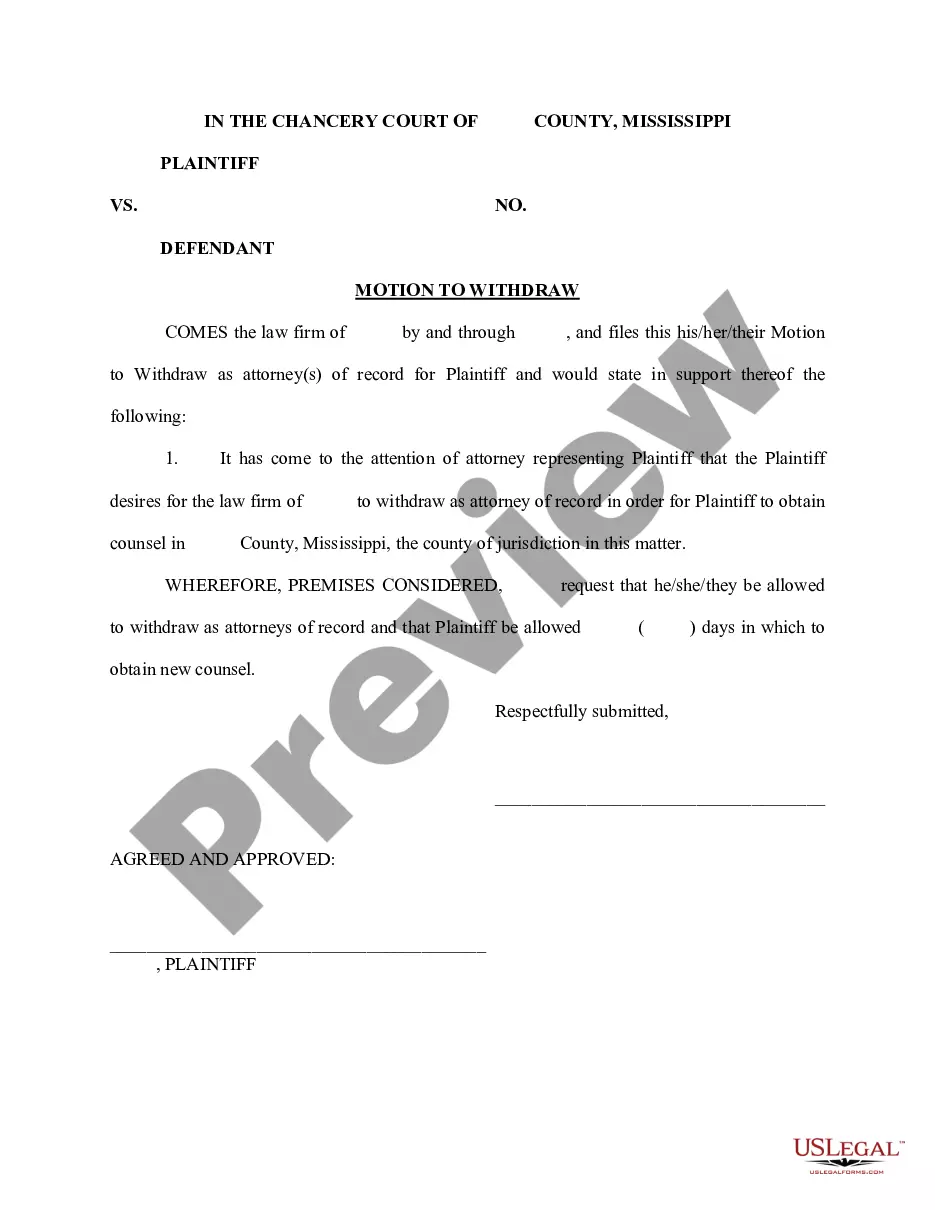
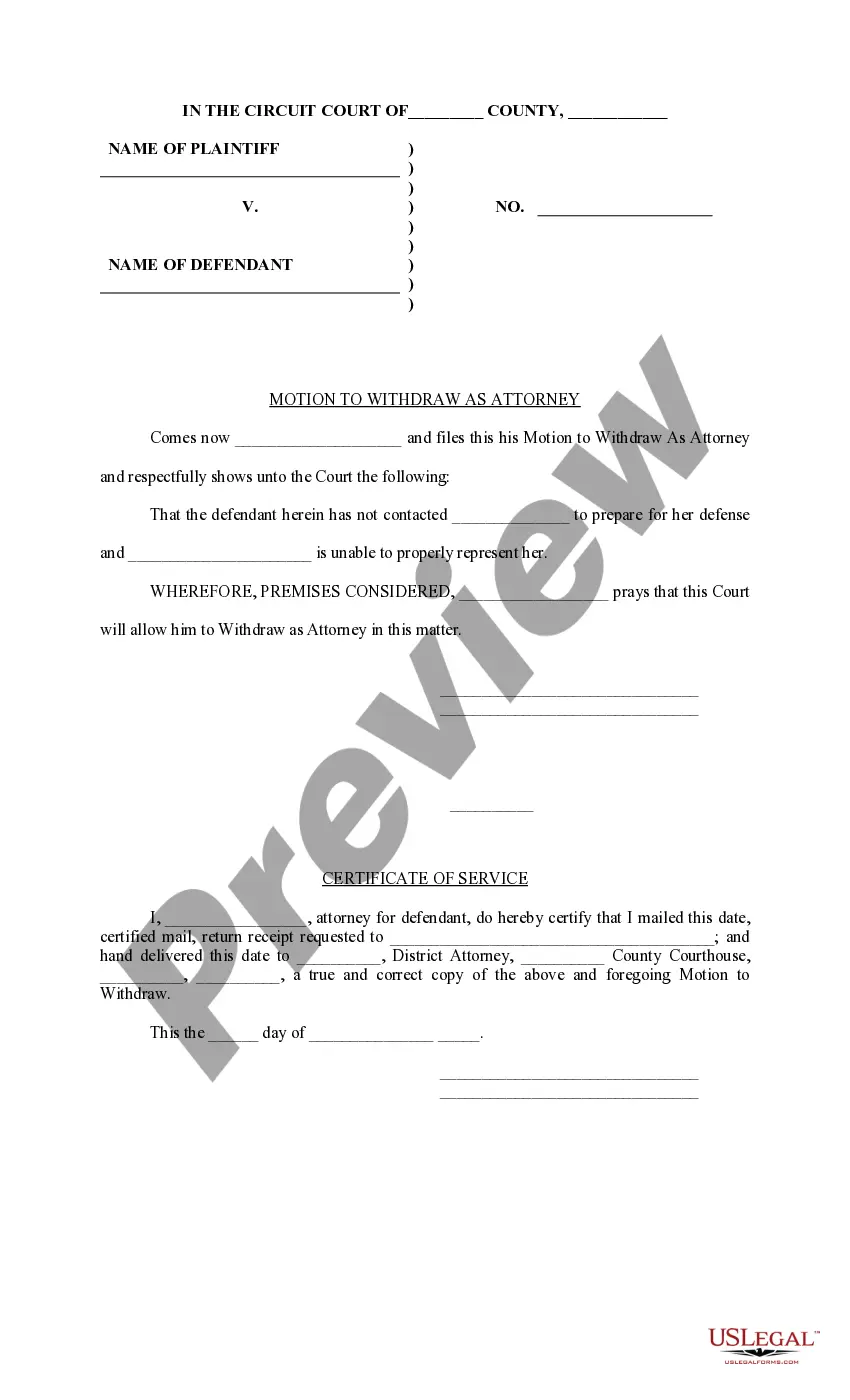
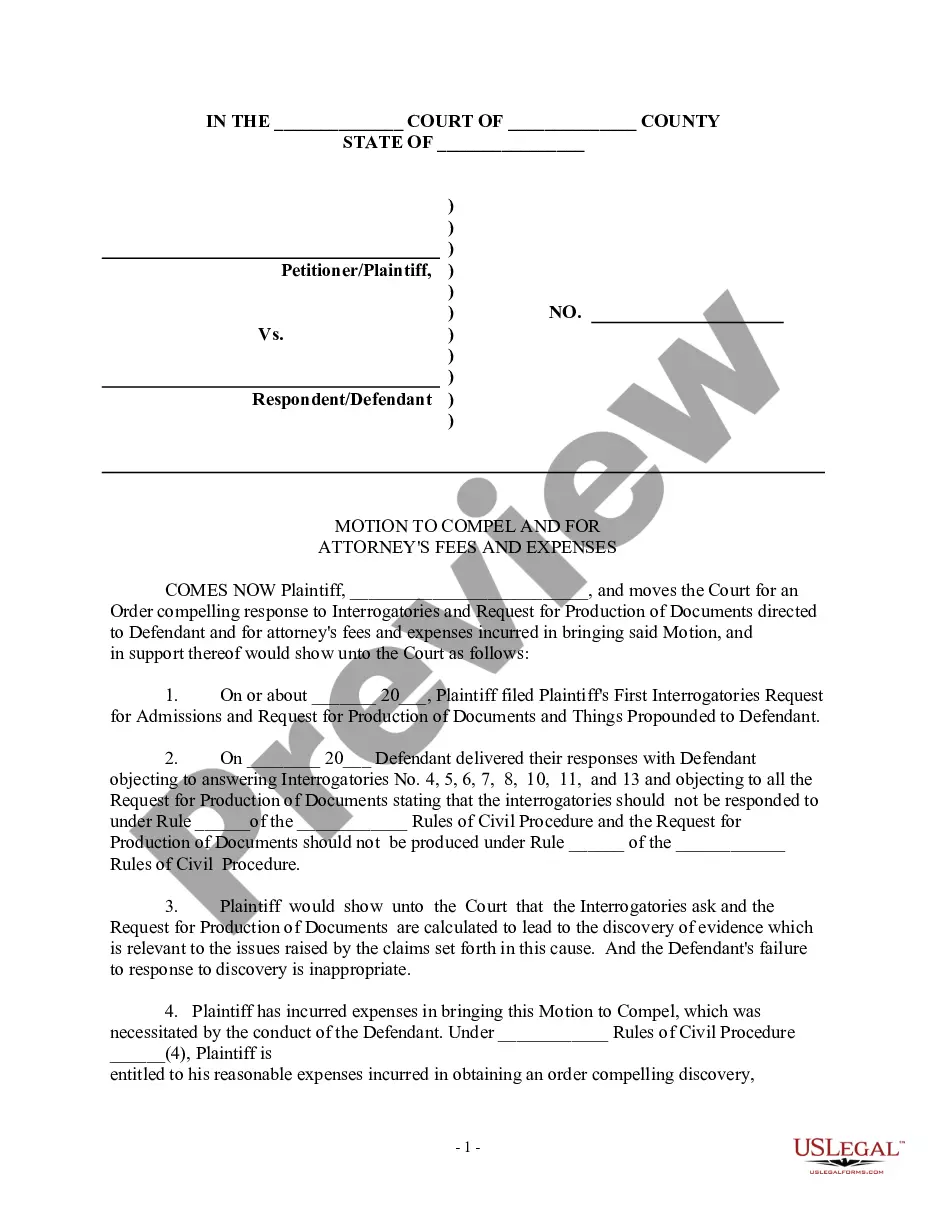
A Motion to Withdraw is a formal written request made to the court to retract or withdraw a previous motion. This document facilitates the process in which a party seeks to revoke a request or application they previously submitted. Its purpose differs from other motions, as it specifically focuses on rescinding prior motions instead of requesting new actions. US Legal Forms provides a model Motion to Withdraw that users can easily adapt to their specific situation.
Form components explained
- Title of the motion: States it is a Motion to Withdraw.
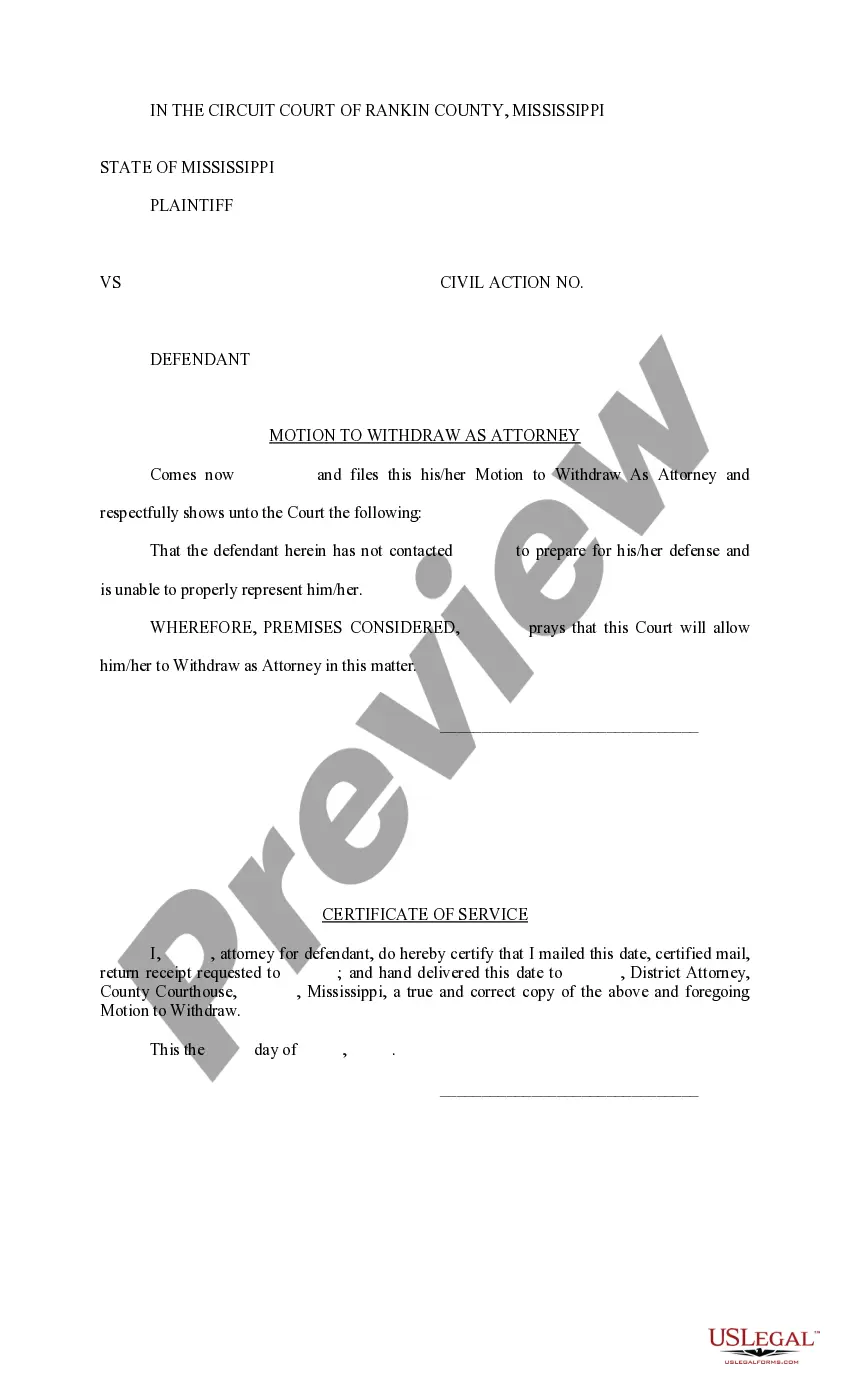
- Case information: Includes the court name, case number, and names of parties involved.
- Reason for withdrawal: A section where the applicant explains the reason for withdrawing the previous motion.
- Signature line: Required space for the applicant's signature and date.
- Certificate of service: Confirms that the motion has been served to relevant parties.

Situations where this form applies
This form should be used when an individual or attorney wishes to officially withdraw a motion they have filed with the court. Common scenarios include changes in circumstances, new evidence that alters the case, or strategic decisions that may impact the position of the parties involved. It is an essential tool to ensure that the court is accurately informed of the status of the motions pending before it.
Who needs this form
- Individuals who have previously filed a motion and wish to retract it.
- Attorneys representing clients in legal proceedings who need to withdraw motions.
- Parties involved in a legal case that has changed enough to warrant withdrawing a prior request.
Steps to complete this form
- Fill in the title, specifying it as a Motion to Withdraw.
- Enter the court name, case number, and names of all relevant parties.
- Clearly state the reason for the withdrawal in the appropriate section.
- Sign and date the form in the designated area.
- Complete the certificate of service to confirm that all parties have been notified.
Does this document require notarization?
This form does not typically require notarization unless specified by local law. However, check local court rules to ensure compliance with any specific requirements applicable in your jurisdiction.
Get your form ready online
Our built-in tools help you complete, sign, share, and store your documents in one place.
Make edits, fill in missing information, and update formatting in US Legal Forms—just like you would in MS Word.
Download a copy, print it, send it by email, or mail it via USPS—whatever works best for your next step.
Sign and collect signatures with our SignNow integration. Send to multiple recipients, set reminders, and more. Go Premium to unlock E-Sign.
If this form requires notarization, complete it online through a secure video call—no need to meet a notary in person or wait for an appointment.
We protect your documents and personal data by following strict security and privacy standards.

Make edits, fill in missing information, and update formatting in US Legal Forms—just like you would in MS Word.

Download a copy, print it, send it by email, or mail it via USPS—whatever works best for your next step.

Sign and collect signatures with our SignNow integration. Send to multiple recipients, set reminders, and more. Go Premium to unlock E-Sign.

If this form requires notarization, complete it online through a secure video call—no need to meet a notary in person or wait for an appointment.

We protect your documents and personal data by following strict security and privacy standards.
Common mistakes to avoid
- Failing to provide a clear and concise reason for the withdrawal.
- Not signing or dating the form, leading to potential rejection by the court.
- Omitting to serve the motion to all relevant parties, which can result in procedural issues.
Advantages of online completion
- Convenience of downloading and completing the form at your own pace.
- Editability allows you to tailor the document to your specific case details easily.
- Reliability of documents prepared by licensed attorneys ensures compliance with legal standards.
What to keep in mind
- A Motion to Withdraw is used to formally request the cessation of a legal action.
- Ensure all required information and reasons for withdrawal are clearly stated.
- Review local rules to adapt the form to your specific jurisdictionâs requirements.
Looking for another form?
Form popularity
FAQ
Withdrawal from representation, in United States law, occurs where an attorney terminates a relationship of representing a client.Where litigation has been filed and an attorney is representing the client in court, permission of the court must usually be sought in support of an attorney's withdrawal.
Prior to taking any action, a lawyer should explain his reasons for withdrawing. This explanation should be objective, concise and clearly understandable rather than confrontational. If the reason is based on client conduct, the client should be afforded a reasonable opportunity to take corrective action.
Lawyers can withdraw based on the fact their client refuses to be truthful, refuses to follow the attorney's advice, demands to pursue an unethical course of action, demands unrealistic results, desires to mislead the Court, refuses to cooperate with their counsel as well as countless other reasons.
Typically, it is legally mandatory for an attorney to withdraw from the case if the client fires him or her. Your old attorney requests permission from the judge to withdraw as your attorney by filing a motion to withdraw.
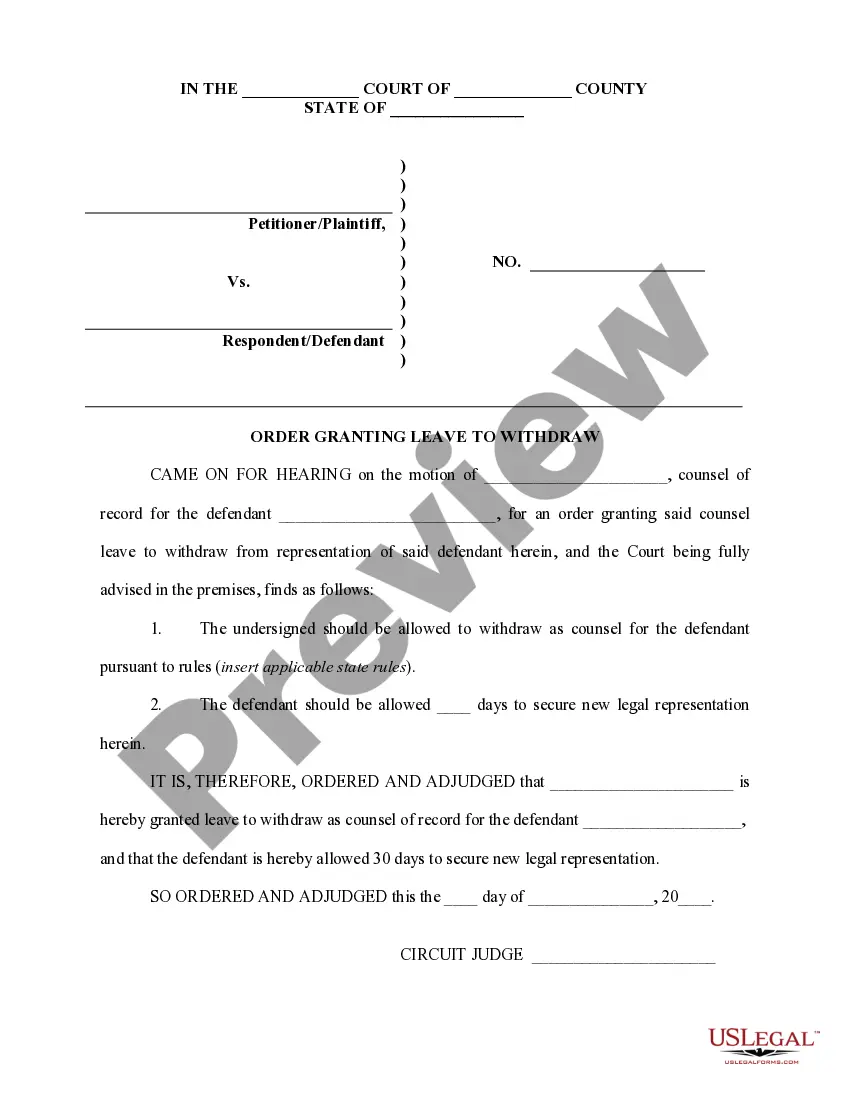
A motion to withdraw is a document an attorney files with the court when that attorney no longer wishes to represent his client.
The answer depends. If the attorney is withdrawing due to your inability to pay or a difference in opinion as to bow the case should be presented should not have a negative affect on you. However, if the attorney withdraws for ethical reasons that may look questionable.
A Motion to Withdraw Appearance is filed by an attorney to ask the judge for leave (permission) to discontinue representing a person/party. Usually happens when a client-attorney relationship has been terminated (lawyer quits or is fired)...
The circumstances under which an attorney may withdraw mid-case include: the client is refusing to pay the attorney for his or her services in violation of their fee agreement. the client is refusing to follow the attorney's advice. the client is engaged in fraudulent conduct, and.
If a lawyer does withdraw from a case, he or she still has ongoing duties. For example, he or she must maintain client confidentiality. Additionally, if the lawyer has any of the client's property, he or she must return it. He or she must provide the client's file upon request and cooperate with the transfer process.