Intentionally
Overview of this form
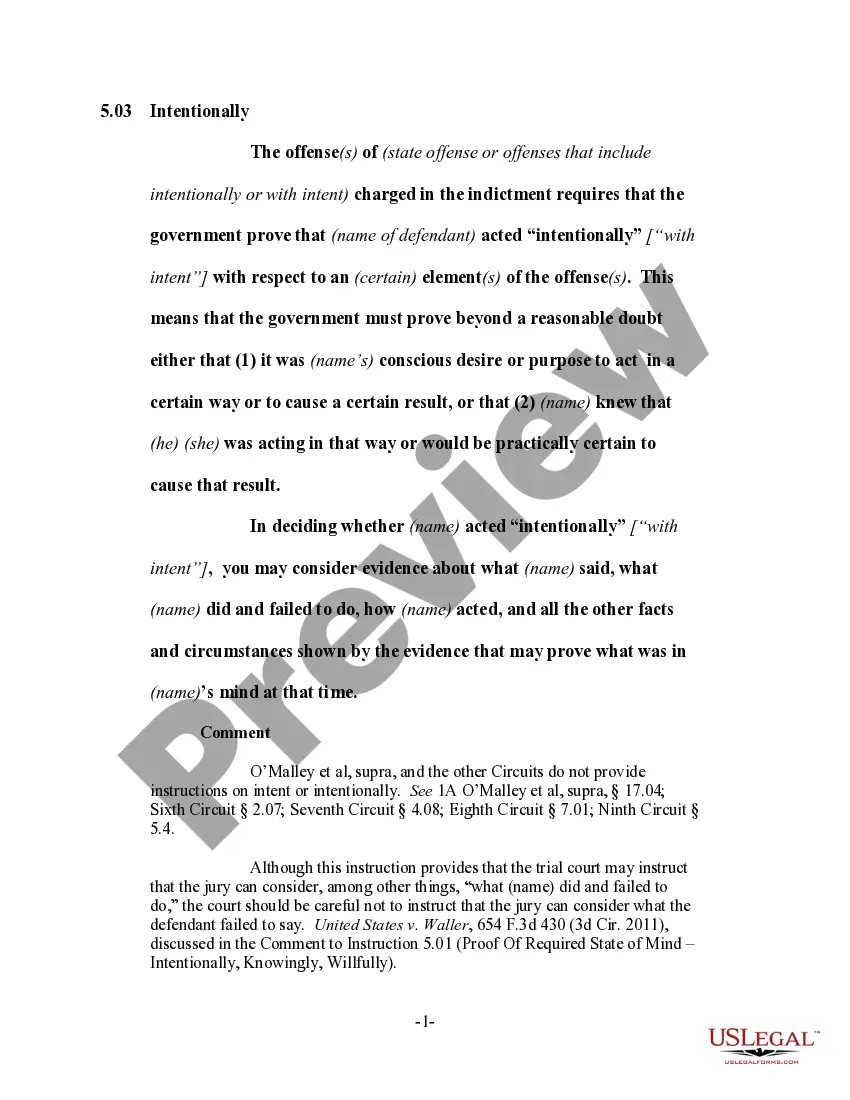
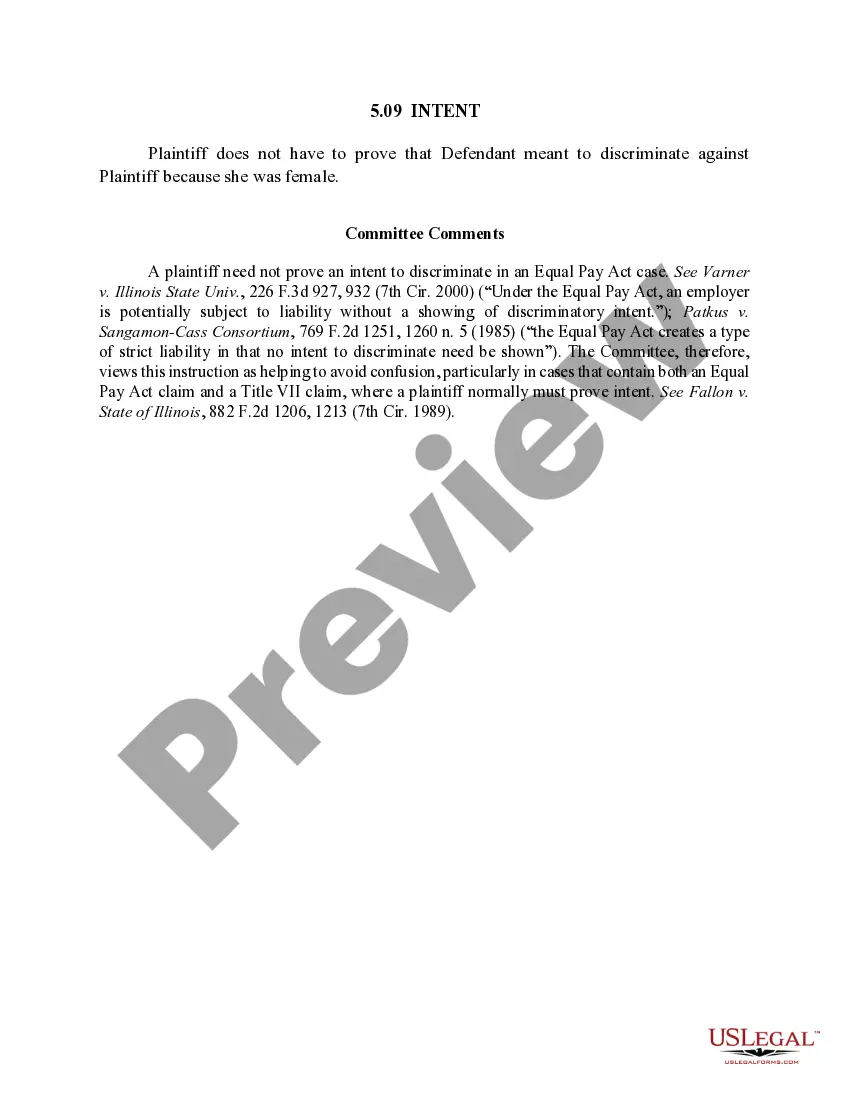
The Intentionally form provides a legal framework for defining the concept of intentionality in the context of criminal law. This form is particularly useful in jury instructions, as it outlines the government's responsibility to prove that the defendant acted with intent regarding specific elements of a charge. Unlike other forms that may only focus on acts, this one emphasizes the mental state, which is crucial in determining culpability in criminal cases.
Form components explained
- Definition of "intentionally" in a legal context
- Criteria for proving intentionality, including conscious desire and awareness
- Factors for jurors to consider in establishing a defendant's intent
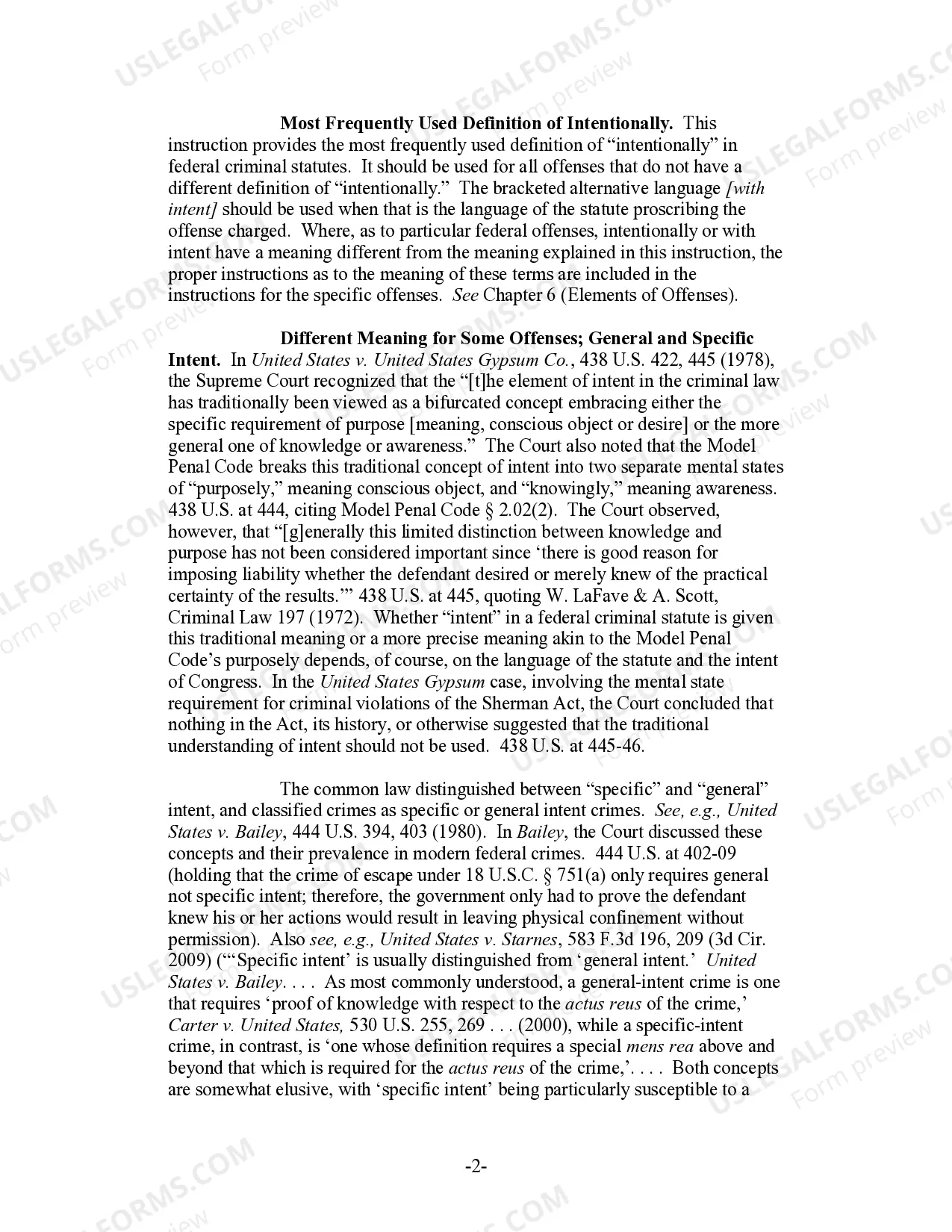
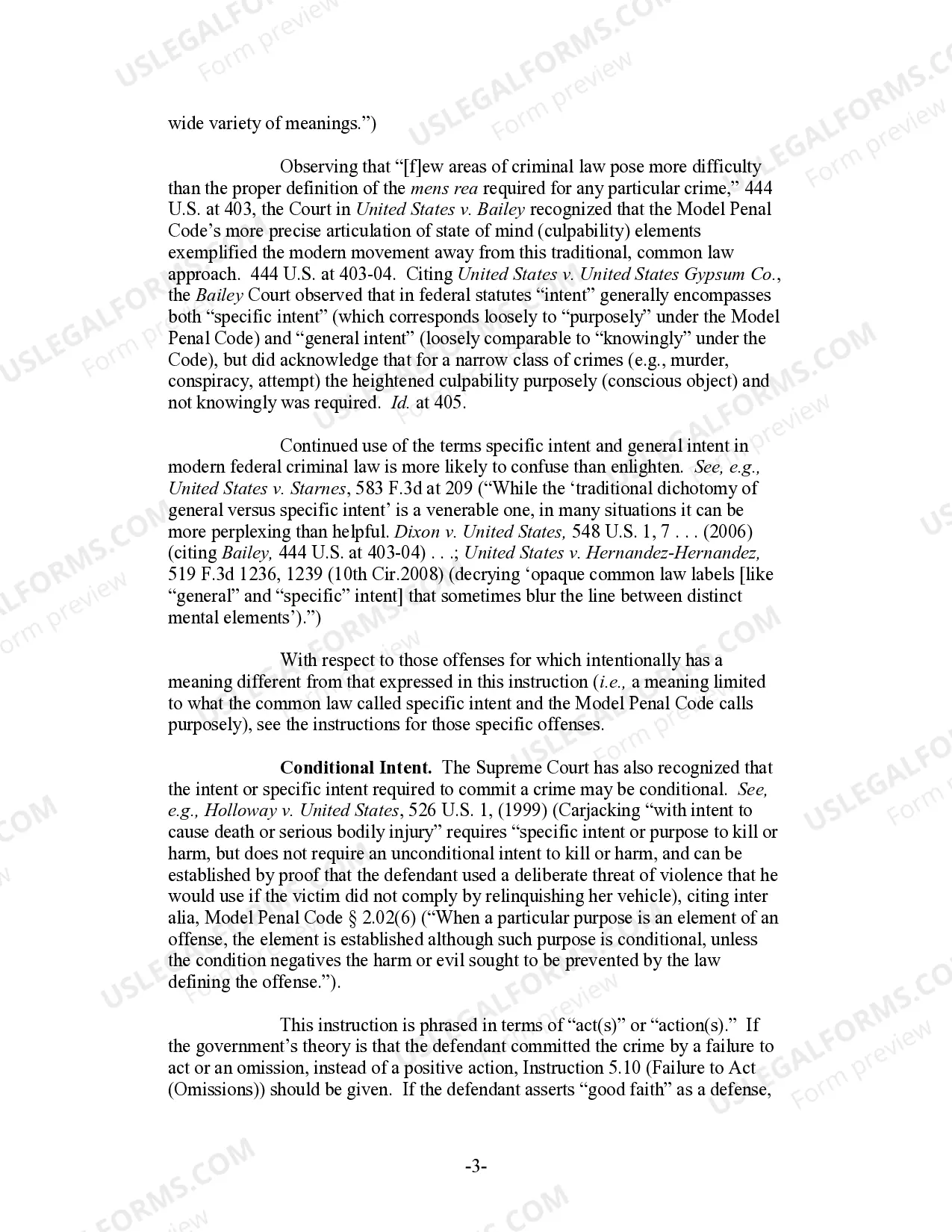
- Clarifications on the distinction between general and specific intent
- Guidance on conditional intent and omissions

When this form is needed
This form is essential when a defendant is charged with a crime that requires proof of intentionality. It is commonly used in criminal trials where the prosecution must demonstrate that the defendant acted with a purposeful desire to commit the alleged offense. This may occur in cases involving serious charges such as assault, theft, or any other crime where the defendant's mental state is a critical factor in establishing guilt.
Who should use this form
- Judges who provide jury instructions in criminal trials
- Attorneys involved in defense or prosecution
- Legal professionals seeking to clarify standards of intent
- Individuals interested in understanding the nuances of criminal intention
How to complete this form
- Identify the specific offense(s) charged against the defendant.
- Define "intentionally" as it applies to the charge, incorporating any relevant legal definitions.
- List evidence that may demonstrate the defendant's conscious desire or awareness in relation to the offense.
- Clarify any distinctions between general and specific intent relevant to the case.
- Ensure the instructions detail how jurors should consider both actions and omissions in their deliberations.
Does this form need to be notarized?
In most cases, this form does not require notarization. However, some jurisdictions or signing circumstances might. US Legal Forms offers online notarization powered by Notarize, accessible 24/7 for a quick, remote process.
Get your form ready online
Our built-in tools help you complete, sign, share, and store your documents in one place.
Make edits, fill in missing information, and update formatting in US Legal Forms—just like you would in MS Word.
Download a copy, print it, send it by email, or mail it via USPS—whatever works best for your next step.
Sign and collect signatures with our SignNow integration. Send to multiple recipients, set reminders, and more. Go Premium to unlock E-Sign.
If this form requires notarization, complete it online through a secure video call—no need to meet a notary in person or wait for an appointment.
We protect your documents and personal data by following strict security and privacy standards.

Make edits, fill in missing information, and update formatting in US Legal Forms—just like you would in MS Word.

Download a copy, print it, send it by email, or mail it via USPS—whatever works best for your next step.

Sign and collect signatures with our SignNow integration. Send to multiple recipients, set reminders, and more. Go Premium to unlock E-Sign.

If this form requires notarization, complete it online through a secure video call—no need to meet a notary in person or wait for an appointment.

We protect your documents and personal data by following strict security and privacy standards.
Common mistakes
- Failing to specify the exact elements of the crime that require proof of intent.
- Neglecting to differentiate between general and specific intent, leading to confusion.
- Assuming jurors understand the legal implications without proper guidance.
Why complete this form online
- Convenient access to a legally vetted template, ensuring compliance with legal standards.
- Editability allows users to tailor the form to specific cases or jurisdictions.
- Reliability of content drafted by licensed attorneys enhances trust in the legal process.
Legal use & context
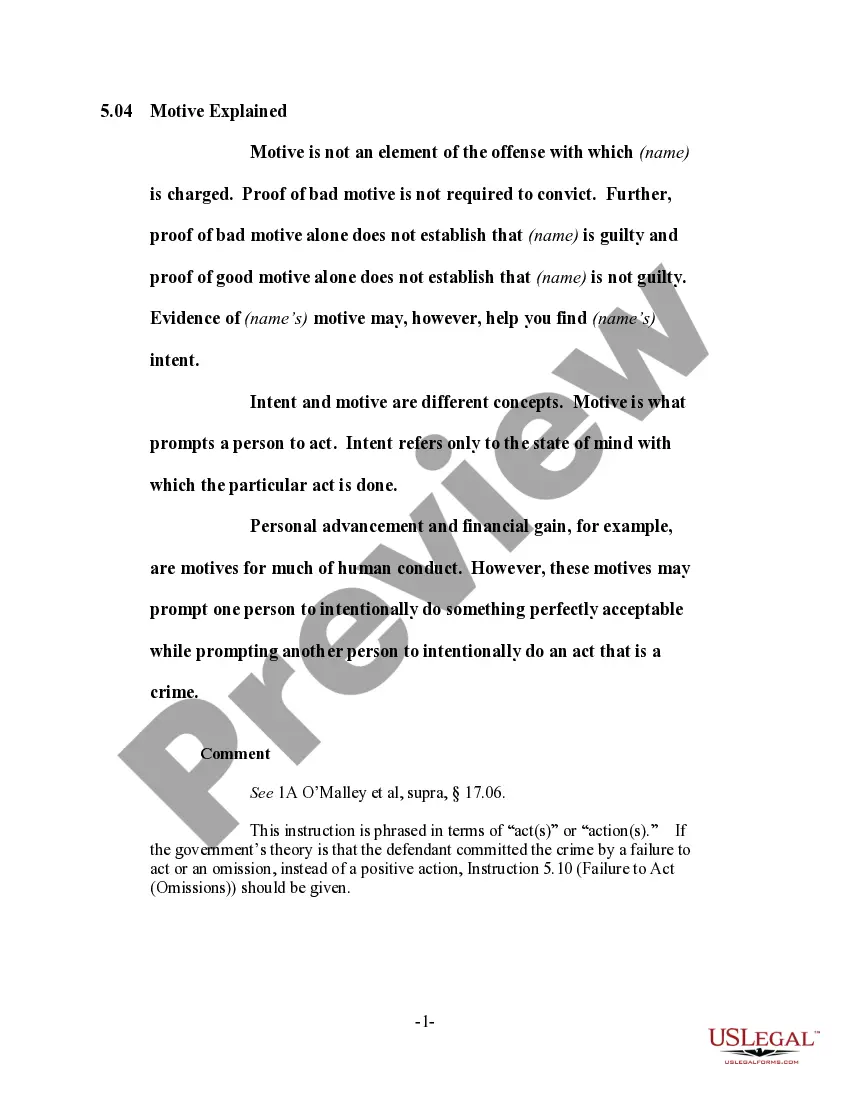
- This form helps clarify the prosecution's burden regarding intent in criminal cases.
- It aligns with federal statutes, maintaining consistency across jurisdictions.
- Judges can use it to guide jury deliberations on cases involving intent.
Quick recap
- The Intentionally form is crucial for defining the mental state required for criminal charges.
- Understanding the nuances of intent is essential for jurors in making informed decisions.
- The form serves as a guiding tool for legal professionals in both prosecution and defense contexts.
Looking for another form?
Form popularity
FAQ
Direct evidence It often takes the form of: testimony from someone who says that the defendant told them that he or she intended to commit the crime, an eyewitness saying that the defendant acted deliberately, or. the defendant's confession that he or she intended to act.
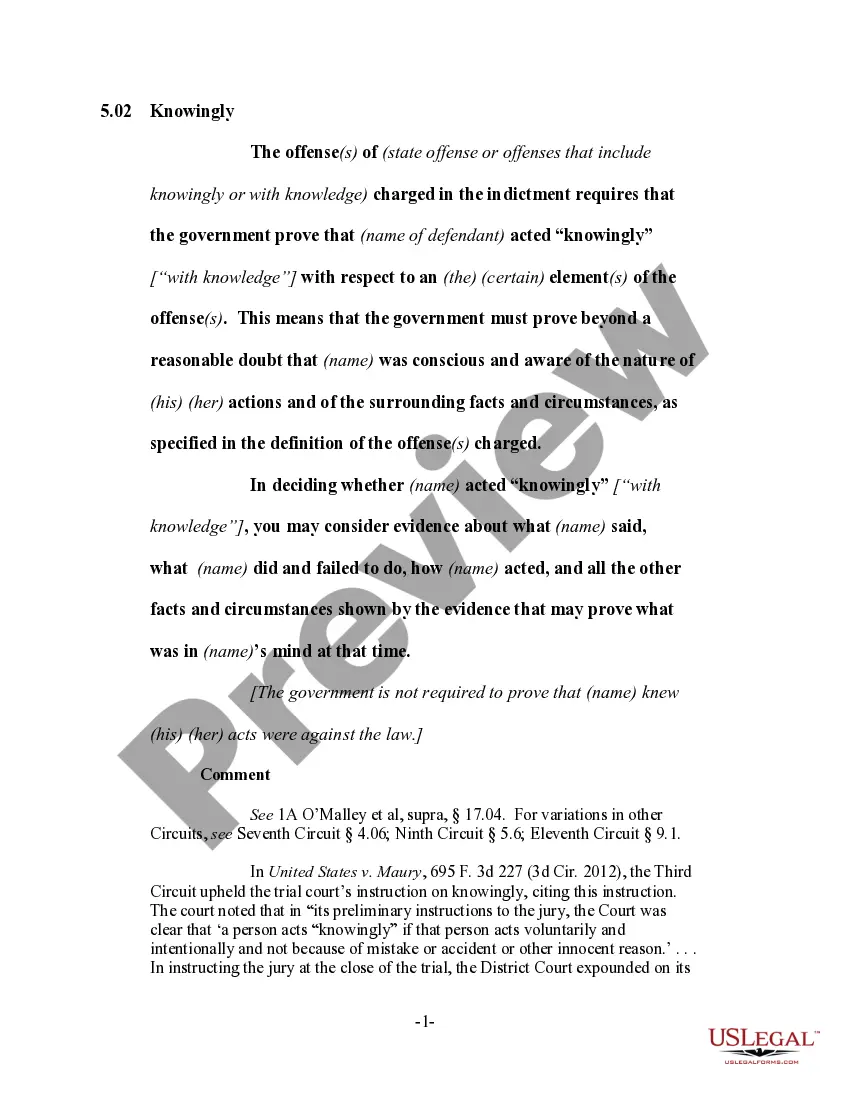
As in other situations, to commit an act "knowingly" is to do so with knowledge or awareness of the facts or situation, and not because of mistake, accident or some other innocent reason. See Fifth Circuit Pattern Jury Instructions, § 1.35 (1990). Knowledge of the criminal statute governing the conduct is not required.
Purposely is similar to specific intent to cause a particular result. Knowingly is awareness that results are practically certain to occur.
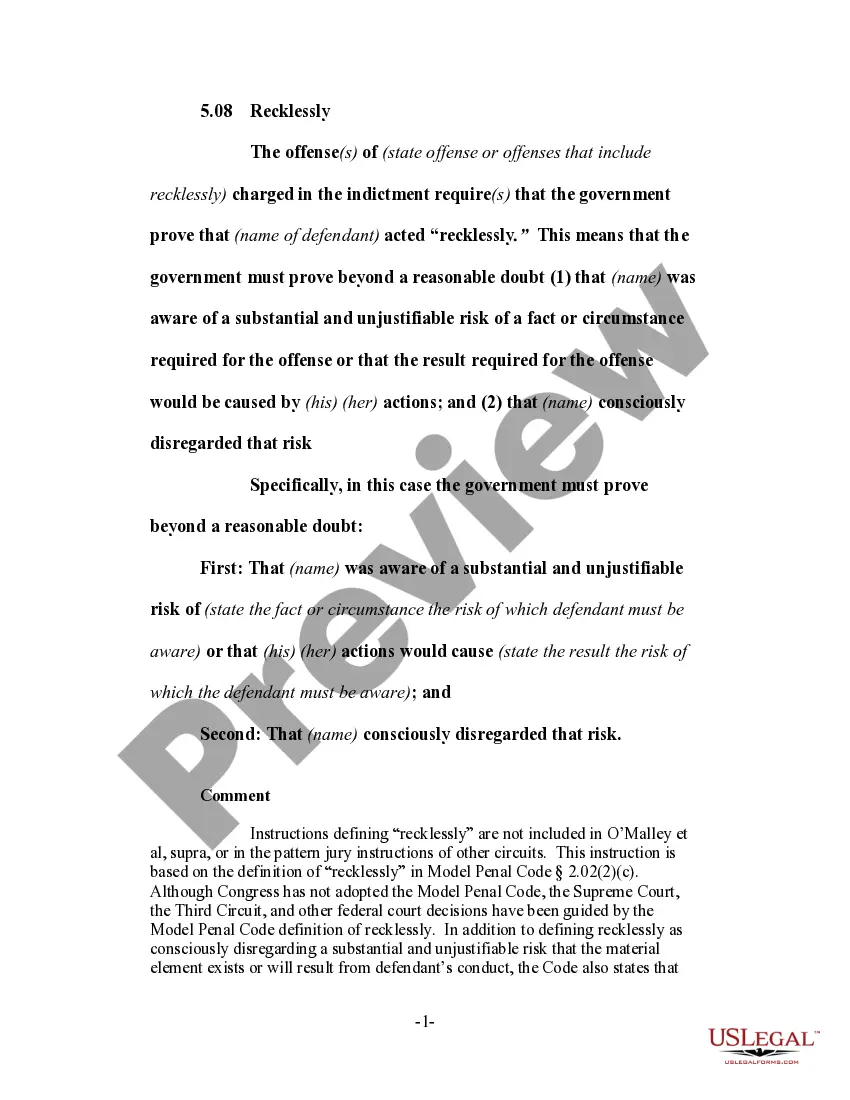
A person acts ?knowingly? when he is aware that his conduct is of a particular nature or knows that his conduct will cause a particular result. A person acts recklessly when he knows of an unjustifiable risk and consciously disregards it.
Acting purposely - the defendant had an underlying conscious object to act. acting knowingly - the defendant is practically certain that the conduct will cause a particular result. acting recklessly - The defendant consciously disregarded a substantial and unjustified risk.
Black's Law Dictionary defines ?knowingly? as ?with knowledge; consciously; intelligently; willfully; inten- tionally. An individual acts 'knowingly' when he acts with awareness of the nature of his conduct.?
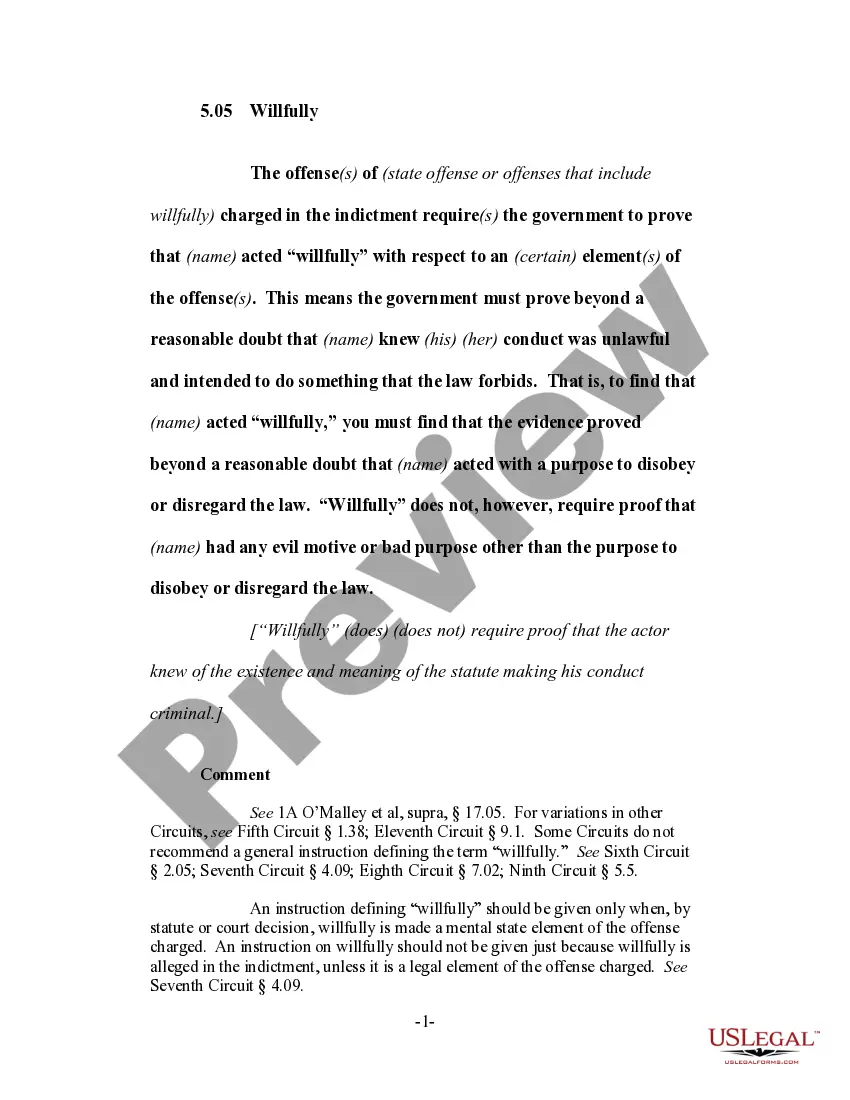
Knowingly and willfully means that the person or entity had actual knowledge of the falsity of the claim, or acted with deliberate ignorance or reckless disregard of the truth or falsity of the claim. Persons or entities that violate the federal False Claims Act are subject to civil monetary penalties (42 U.S.C.
The word "knowingly," as that term has been used from time to time in these instructions, means that the act was done voluntarily and intentionally and not because of mistake or accident.
Knowingly and willfully means that the person or entity had actual knowledge of the falsity of the claim, or acted with deliberate ignorance or reckless disregard of the truth or falsity of the claim.