Willfully
What is this form?
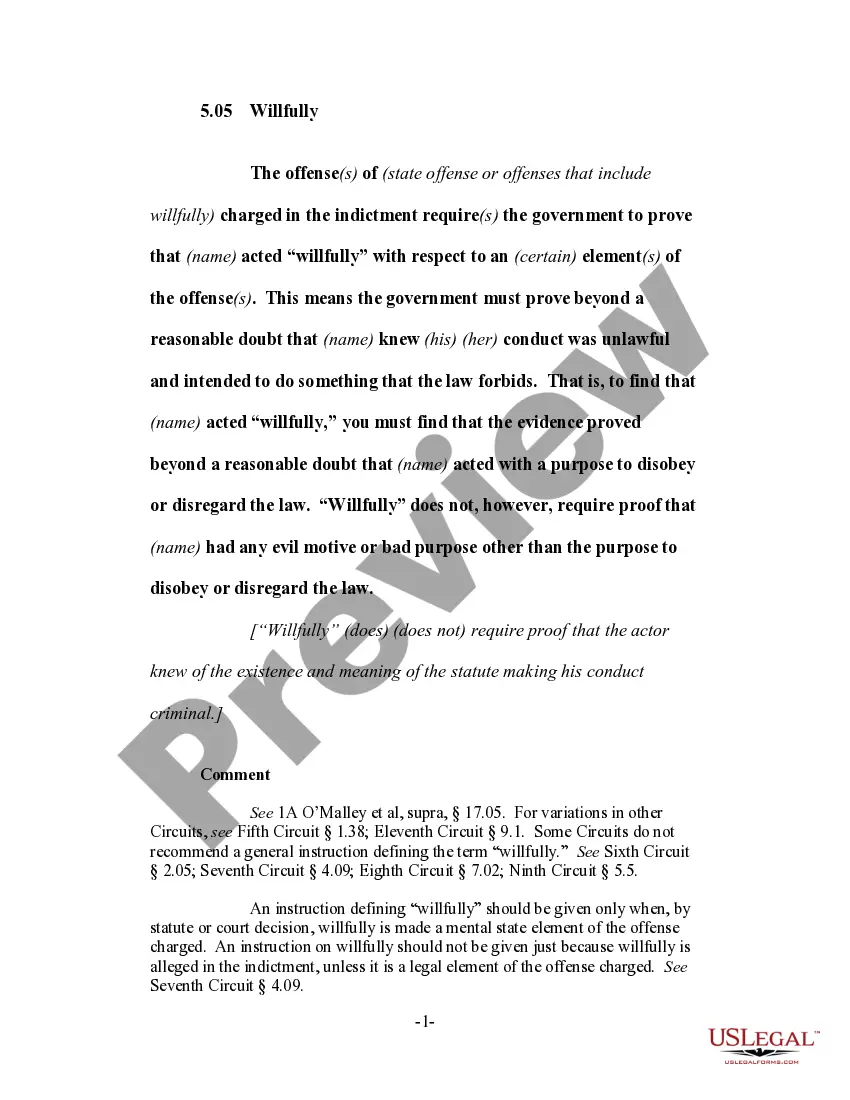
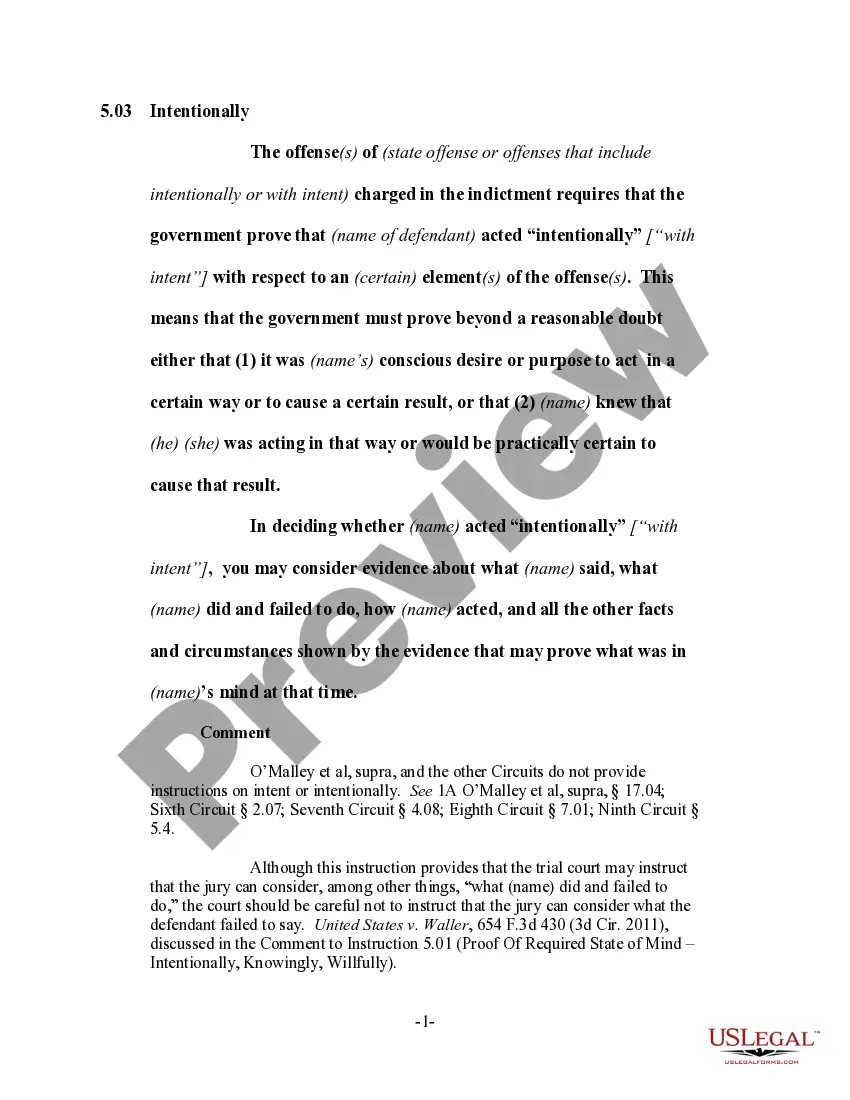
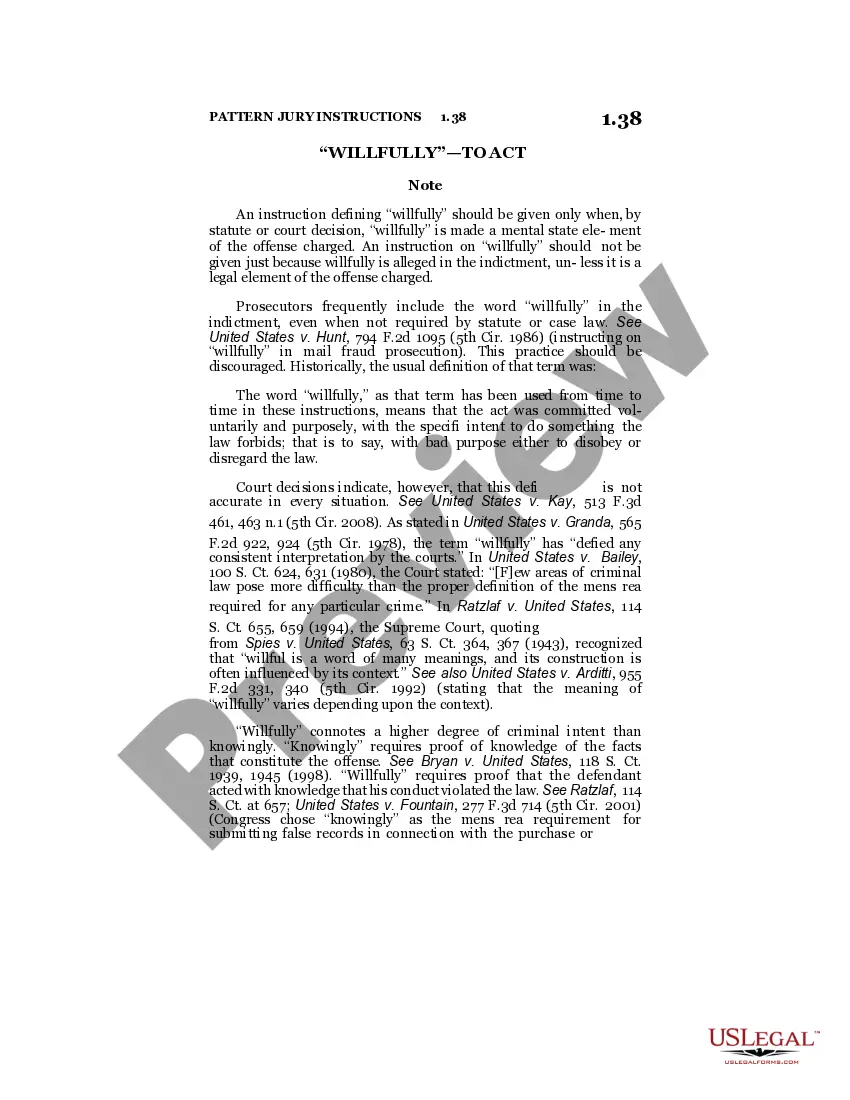
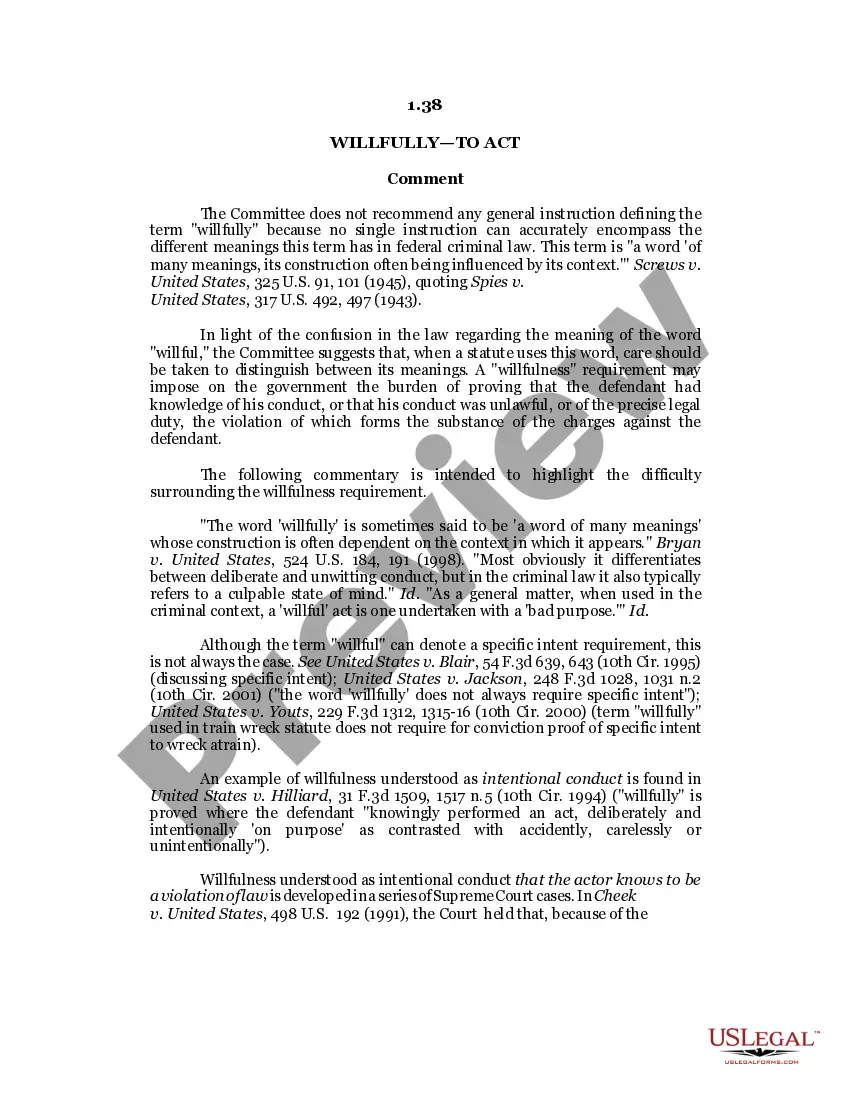
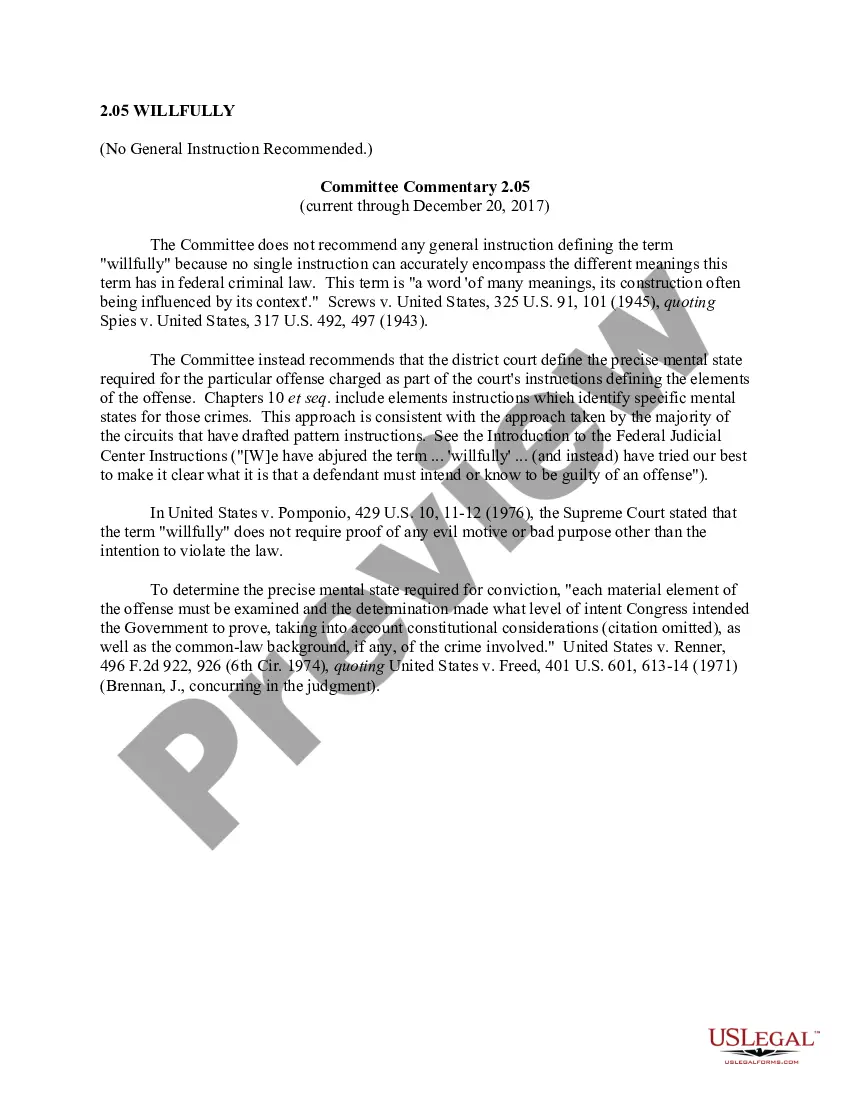
The term "willfully" is used in legal contexts to signify that an individual acted with intention and knowledge that their conduct was unlawful. This instruction is often essential in criminal cases, particularly those involving statutes that include a willfulness element. Understanding the nuances of willfully is important for anyone engaged in legal matters, as it helps distinguish between different mental states in criminal law.
Key parts of this document
- Definition of Willfully: It requires the government to prove that the individual knew their actions were unlawful and intended to disregard the law.
- Purpose to Disobey: The term signifies a purpose to disobey or disregard the law, rather than requiring proof of evil intentions.
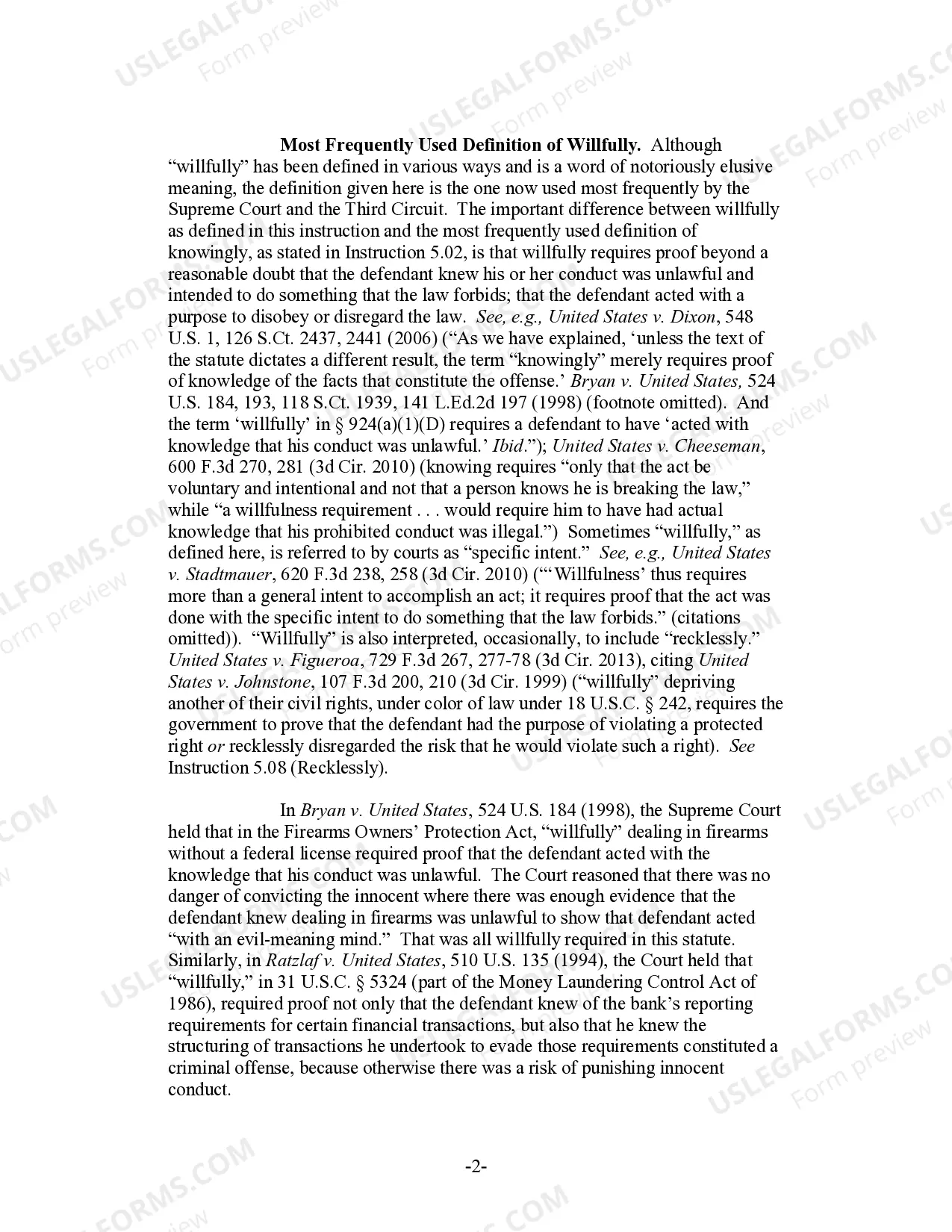
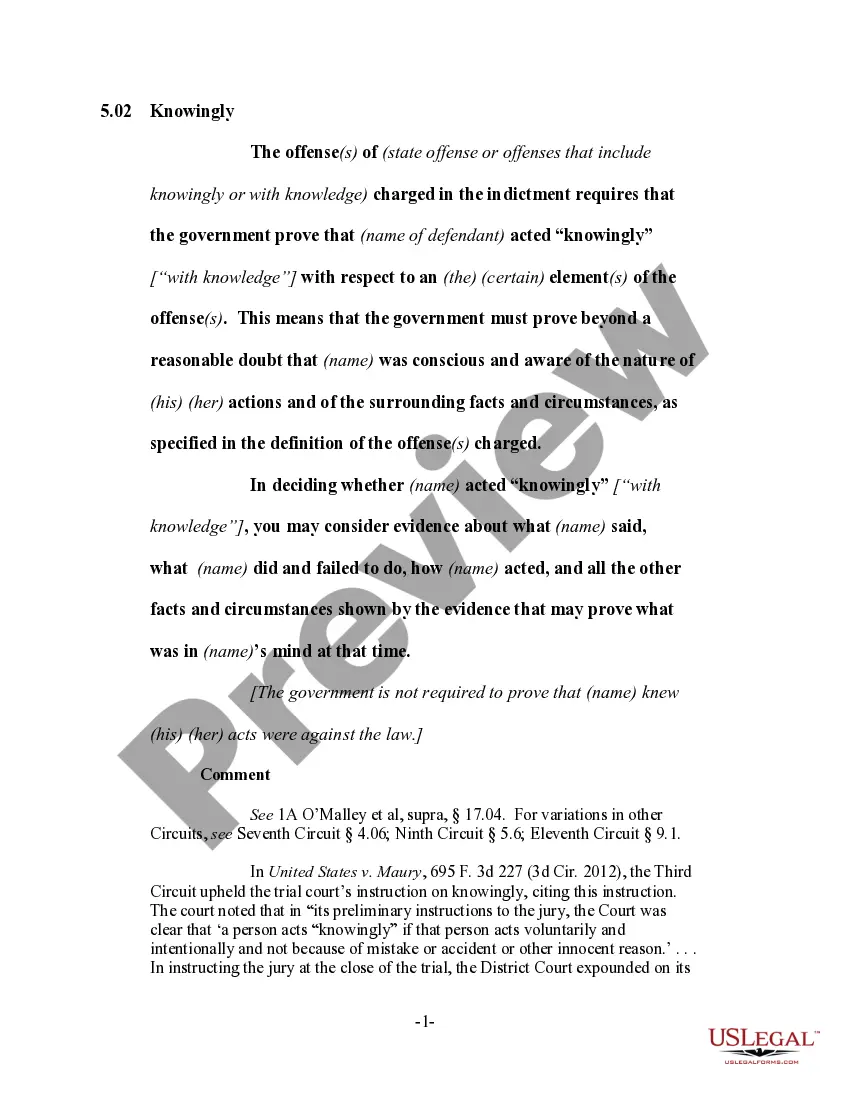
- Comparative Definitions: Differentiates willfully from similar terms, such as "knowingly," which has a different legal standard.
- Specific Intent: Willfully often involves a specific intent to commit an act that the law forbids, highlighting the mental state required for conviction.
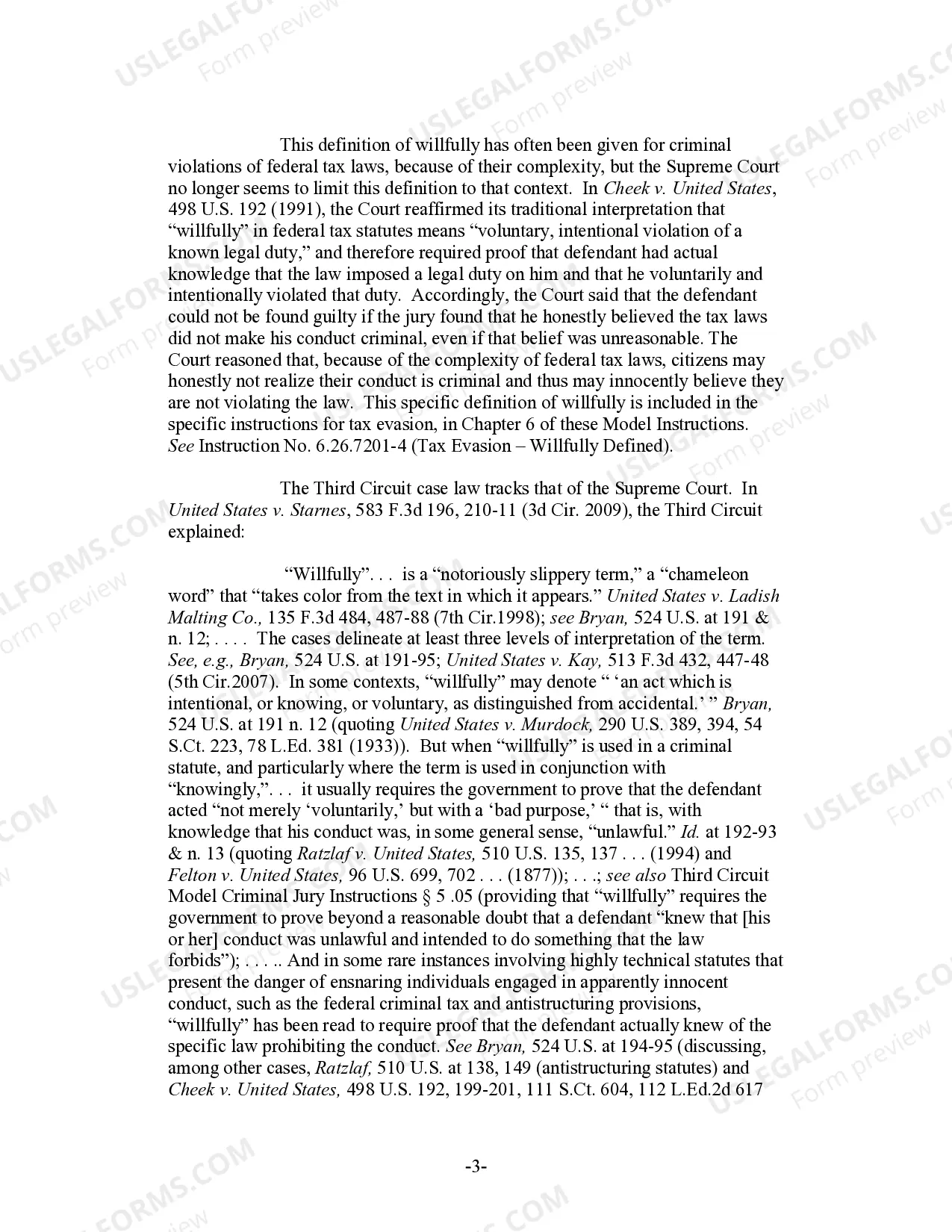
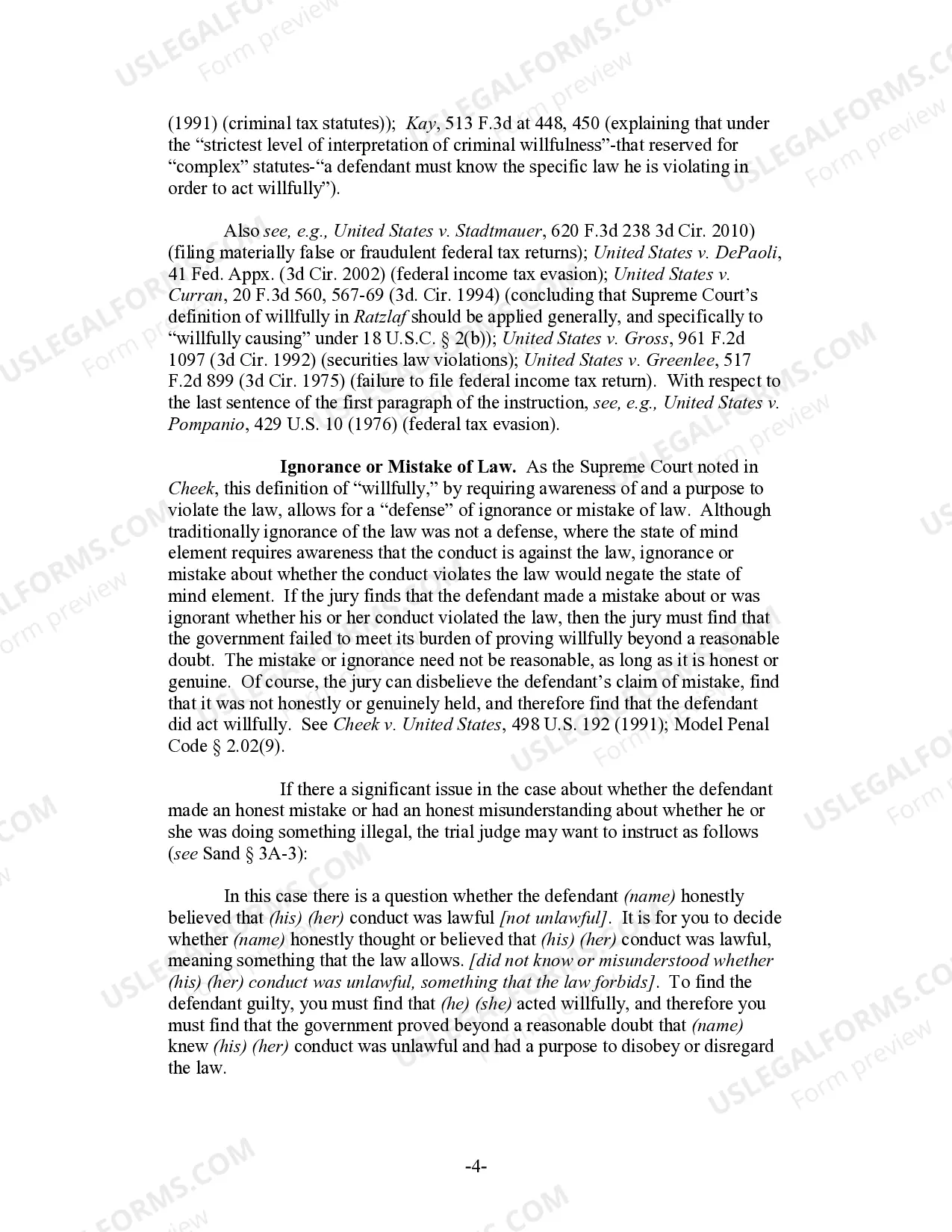
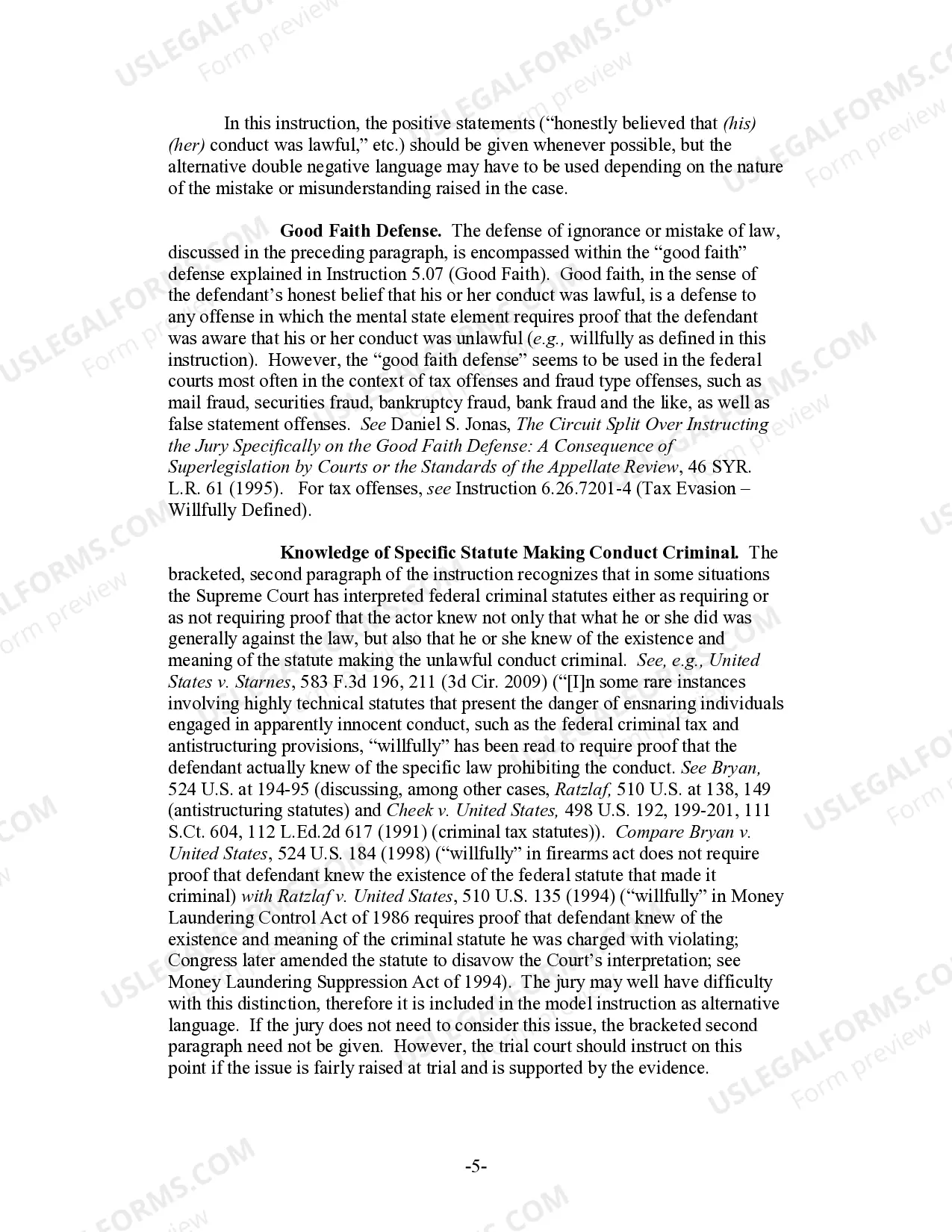
- Application in Various Contexts: Discusses how willfully has been applied in different legal cases and the nuances regarding knowledge of the law.
When to use this form
This form is essential when addressing criminal charges that require the establishment of willfulness as a mental state. It is applicable in cases such as tax evasion, fraud, or violations that necessitate proof of intent to break the law. Use this instruction when willfulness is a disputed point in a trial, or when clarifying to a jury the level of intent required to establish guilt.
Who needs this form
This form is intended for:
- Legal practitioners preparing for criminal defense or prosecution.
- Juries in trials requiring clarity on the definition and implications of willfully.
- Students of law seeking to understand key concepts in criminal law.
Instructions for completing this form
To utilize this form effectively, follow these steps:
- Identify the legal context in which willfully is relevant for your case.
- Gather evidence that demonstrates the defendant's intent and knowledge regarding their unlawful conduct.
- Review applicable statutes and case law to understand how willfully is interpreted in your jurisdiction.
- Present arguments or instructions that clarify the meaning of willfully to the jury or judge.
- Ensure all necessary elements of the charge are supported by the documented intention and actions of the defendant.
Notarization requirements for this form
Notarization is not commonly needed for this form. However, certain documents or local rules may make it necessary. Our notarization service, powered by Notarize, allows you to finalize it securely online anytime, day or night.
Get your form ready online
Our built-in tools help you complete, sign, share, and store your documents in one place.
Make edits, fill in missing information, and update formatting in US Legal Forms—just like you would in MS Word.
Download a copy, print it, send it by email, or mail it via USPS—whatever works best for your next step.
Sign and collect signatures with our SignNow integration. Send to multiple recipients, set reminders, and more. Go Premium to unlock E-Sign.
If this form requires notarization, complete it online through a secure video call—no need to meet a notary in person or wait for an appointment.
We protect your documents and personal data by following strict security and privacy standards.

Make edits, fill in missing information, and update formatting in US Legal Forms—just like you would in MS Word.

Download a copy, print it, send it by email, or mail it via USPS—whatever works best for your next step.

Sign and collect signatures with our SignNow integration. Send to multiple recipients, set reminders, and more. Go Premium to unlock E-Sign.

If this form requires notarization, complete it online through a secure video call—no need to meet a notary in person or wait for an appointment.

We protect your documents and personal data by following strict security and privacy standards.
Mistakes to watch out for
- Assuming "willfully" requires an evil intent when it only requires an intention to disobey the law.
- Neglecting to clarify the difference between "willfully" and "knowingly," potentially confusing judges or juries.
- Failing to provide adequate evidence of intent when willfulness is a required element of the charge.
Benefits of completing this form online
- Convenience of accessing a structured legal instruction that clarifies the term willfully.
- Editability and adaptability for various legal contexts and jurisdictions.
- Reliability ensured through templates drafted by licensed attorneys.
- The term "willfully" is central to proving intention in criminal cases.
- The definition is well-established in law and must be applied precisely to avoid misinterpretation.
Summary of main points
- Understanding "willfully" is vital when dealing with legal issues involving intent.
- This term differs from "knowingly" and requires specific proof of mindset.
- Use the form appropriately to ensure clarity in legal proceedings.
Looking for another form?
Form popularity
FAQ
An act is done "willfully" if done voluntarily and intentionally and with the specific intent to do something the law forbids. There is no requirement that the government show evil intent on the part of a defendant in order to prove that the act was done "willfully." See generally United States v.
Knowingly and willfully means that the person or entity had actual knowledge of the falsity of the claim, or acted with deliberate ignorance or reckless disregard of the truth or falsity of the claim.
The important difference between willfully as defined in this instruction and the most frequently used definition of knowingly, as stated in Instruction 5.02, is that willfully requires proof beyond a reasonable doubt that the defendant knew his or her conduct was unlawful and intended to do something that 16 Page 17
When applied to the intent with which an act is done or omitted, ?willfully? implies simply a purpose or willingness to commit the act, or the omission. It does not require any intent to violate the law, or to injure another, or to acquire any advantage.