WILLFULLY
Understanding this form
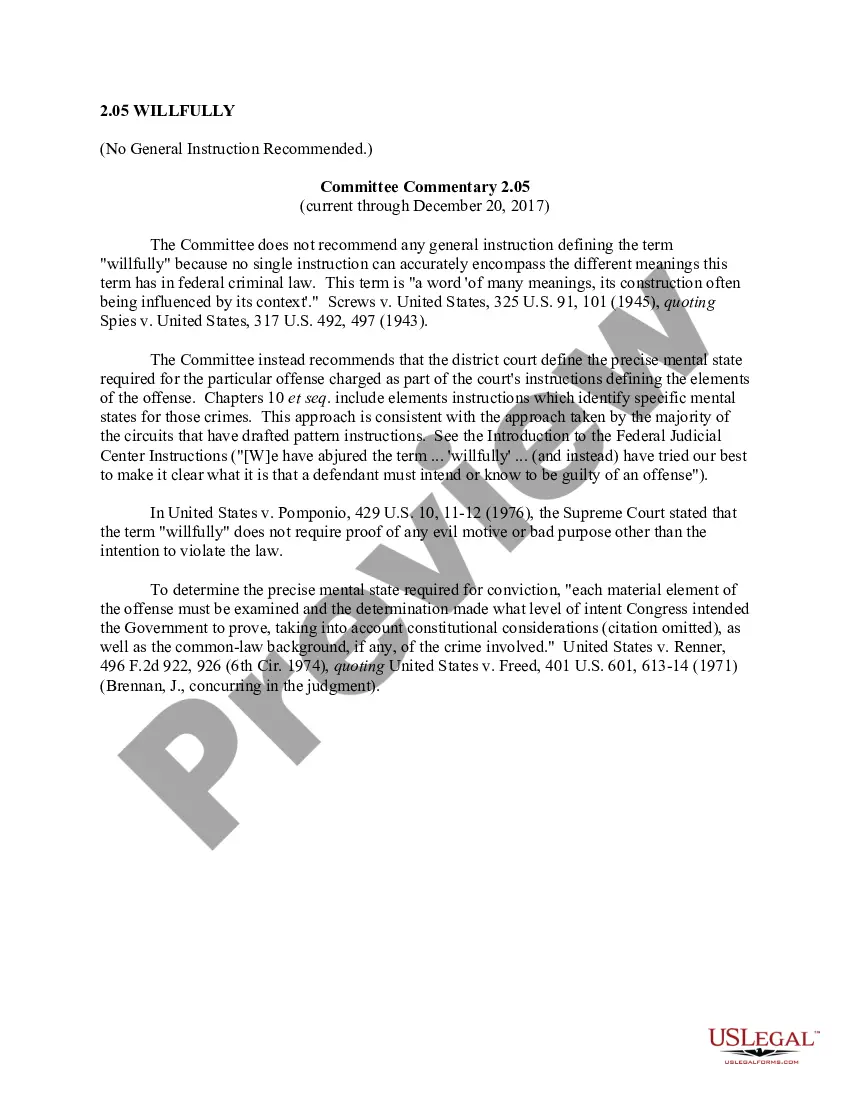
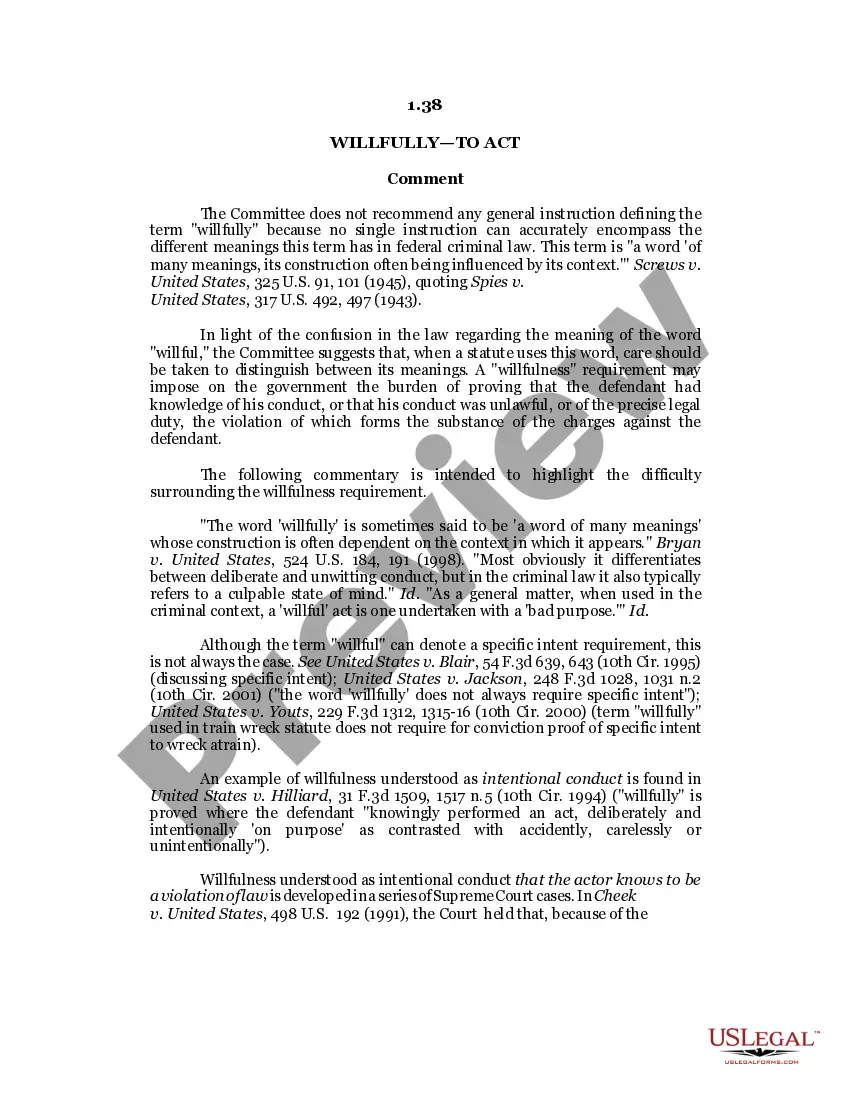
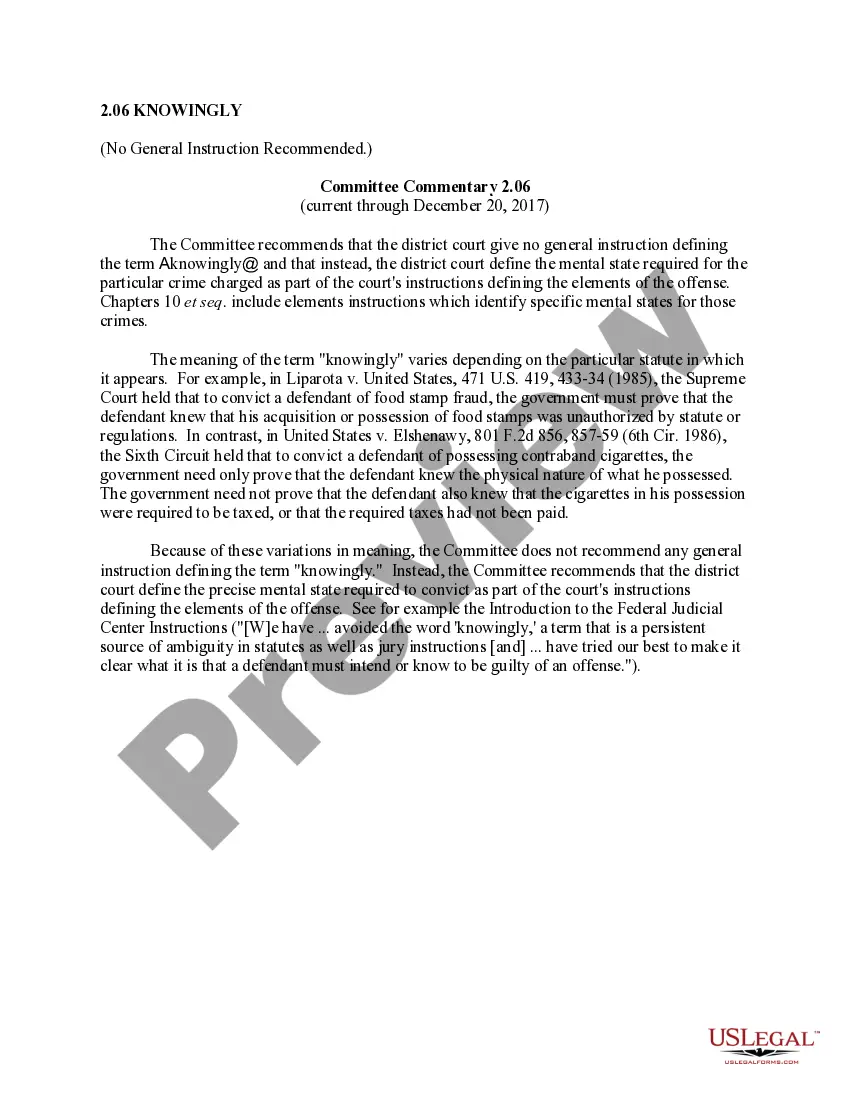
The term "willfully" is a legal concept often used in criminal law to describe the mental state of an individual when committing an offense. This form provides context for understanding the various implications of "willfully," emphasizing that it does not carry a singular definition. Instead, it requires a nuanced understanding based on the specific circumstances of each case, making it essential for legal professionals and defendants alike.
Main sections of this form
- Definition of "willfully": Explores various interpretations of the term within federal criminal law.
- Contextual significance: Discusses the importance of context in defining "willfully" for different offenses.
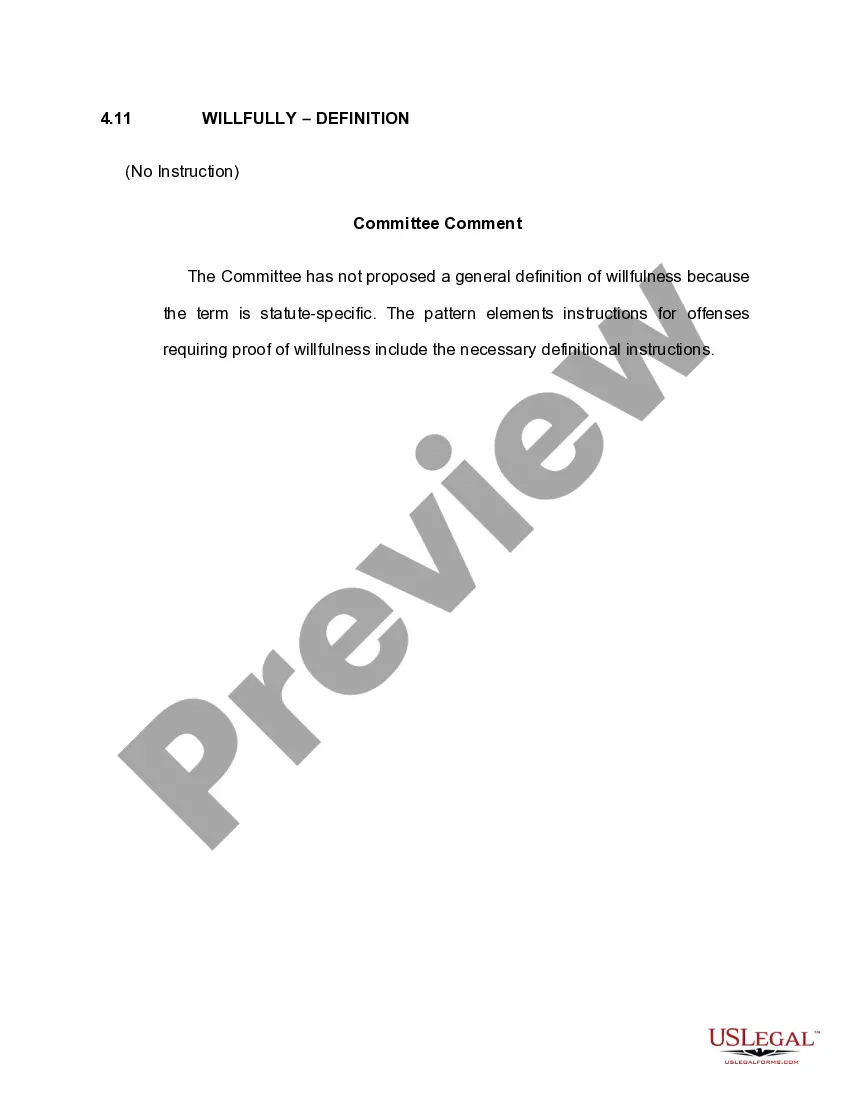
- Court instructions: Outlines the recommendation for district courts to specify the required mental state for each charge.
- Judicial references: Includes significant case law that illustrates the application of "willfully."
Situations where this form applies
This form is utilized when dealing with cases that involve the interpretation of the term "willfully" in offenses. It is particularly relevant for legal practitioners crafting jury instructions or for defendants who need to understand the mental state required for their charges.
Intended users of this form
- Legal professionals: Attorneys and judges needing to communicate legal standards effectively.
- Defendants: Individuals facing charges that require a clear understanding of intent.
- Law students: Those studying criminal law and the complexities of legal terminology.
How to complete this form
- Read the commentary: Familiarize yourself with the nuances of the term "willfully."
- Determine the context: Assess the specific charge in question to understand how "willfully" applies.
- Consult case law: Reference significant cases that highlight variations in the interpretation of "willfully."
Does this document require notarization?
In most cases, this form does not require notarization. However, some jurisdictions or signing circumstances might. US Legal Forms offers online notarization powered by Notarize, accessible 24/7 for a quick, remote process.
Get your form ready online
Our built-in tools help you complete, sign, share, and store your documents in one place.
Make edits, fill in missing information, and update formatting in US Legal Forms—just like you would in MS Word.
Download a copy, print it, send it by email, or mail it via USPS—whatever works best for your next step.
Sign and collect signatures with our SignNow integration. Send to multiple recipients, set reminders, and more. Go Premium to unlock E-Sign.
If this form requires notarization, complete it online through a secure video call—no need to meet a notary in person or wait for an appointment.
We protect your documents and personal data by following strict security and privacy standards.

Make edits, fill in missing information, and update formatting in US Legal Forms—just like you would in MS Word.

Download a copy, print it, send it by email, or mail it via USPS—whatever works best for your next step.

Sign and collect signatures with our SignNow integration. Send to multiple recipients, set reminders, and more. Go Premium to unlock E-Sign.

If this form requires notarization, complete it online through a secure video call—no need to meet a notary in person or wait for an appointment.

We protect your documents and personal data by following strict security and privacy standards.
Avoid these common issues
- Assuming a uniform definition of "willfully" across different cases.
- Failing to consult relevant case law that could impact the interpretation of intent.
- Overlooking the specific context in which "willfully" is applied to an offense.
Why use this form online
- Accessibility: Easily download and refer to the form whenever needed.
- Up-to-date information: Stay informed with the latest definitions and interpretations.
- Convenience: Quickly access and print necessary legal information from anywhere.
Legal use & context
- Understanding "willfully" is crucial for identifying the mental state required for various criminal charges.
- This term is pivotal in jury instructions, as clarity in its meaning can significantly affect case outcomes.
- Different jurisdictions may interpret "willfully" in varied ways; thus, context is key.
Looking for another form?
Form popularity
FAQ
When applied to the intent with which an act is done or omitted, ?willfully? implies simply a purpose or willingness to commit the act, or the omission. It does not require any intent to violate the law, or to injure another, or to acquire any advantage.
Knowingly and willfully means that the person or entity had actual knowledge of the falsity of the claim, or acted with deliberate ignorance or reckless disregard of the truth or falsity of the claim.
Willful. Black's Law Dictionary: 2nd Edition. Definition: Proceeding from a conscious motion of the will; intending the result which actually comes to pass; designed; intentional ; malicious.
Knowingly and willfully means that the person or entity had actual knowledge of the falsity of the claim, or acted with deliberate ignorance or reckless disregard of the truth or falsity of the claim. Persons or entities that violate the federal False Claims Act are subject to civil monetary penalties (42 U.S.C.
Black's Law Dictionary defines ?knowingly? as ?with knowledge; consciously; intelligently; willfully; inten- tionally. An individual acts 'knowingly' when he acts with awareness of the nature of his conduct.?
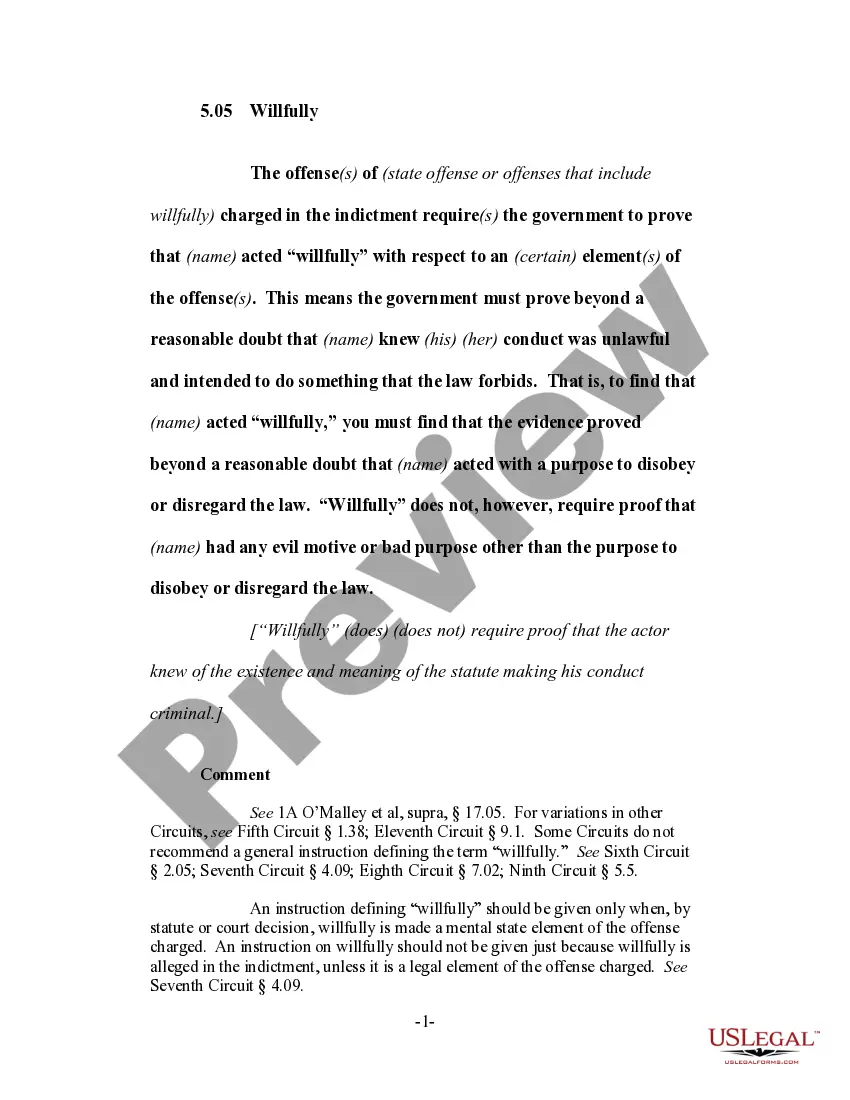
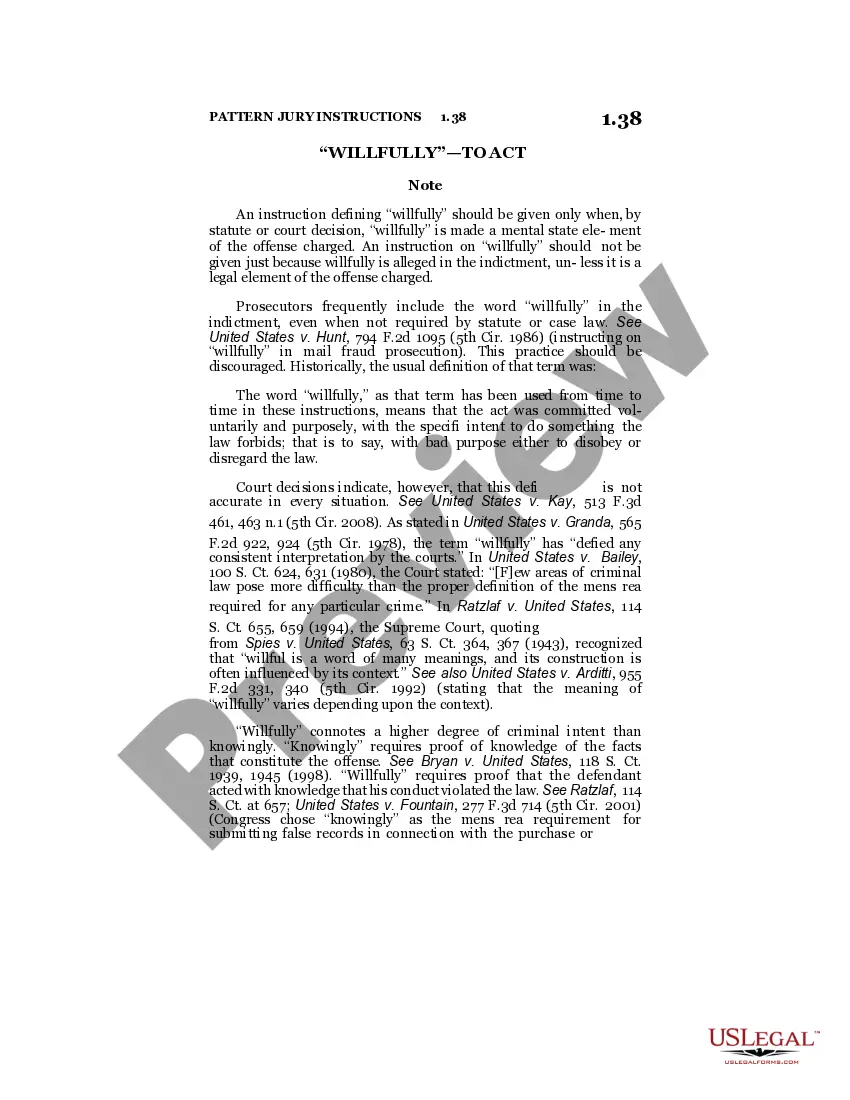
The important difference between willfully as defined in this instruction and the most frequently used definition of knowingly, as stated in Instruction 5.02, is that willfully requires proof beyond a reasonable doubt that the defendant knew his or her conduct was unlawful and intended to do something that 16 Page 17
The term knowingly, with respect to conduct, a circumstance, or a result, means that a person has actual knowledge, or should have known, of the conduct, the circumstance, or the result.