Mississippi Complaint for Interpleader by Trustee
Overview of this form
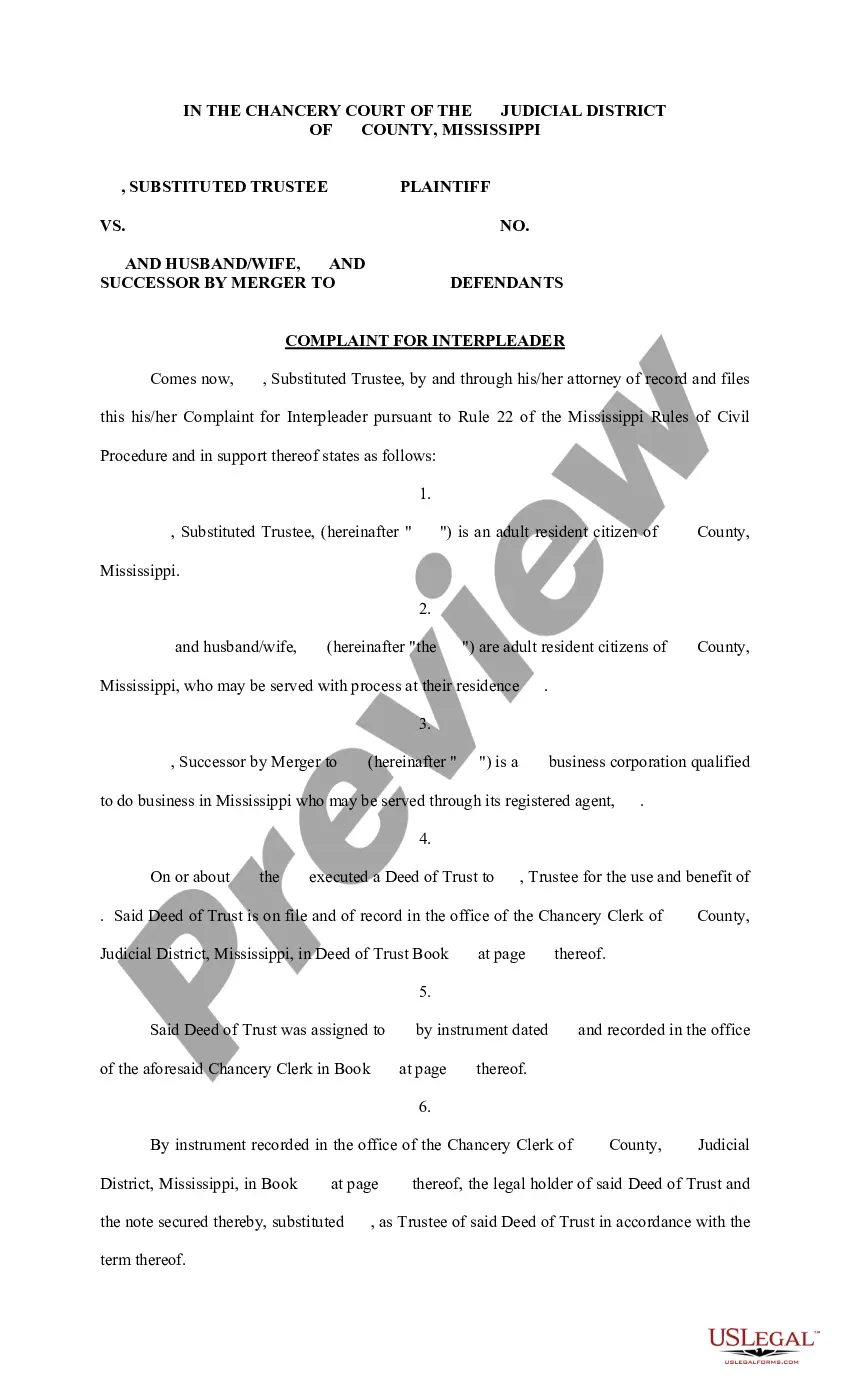
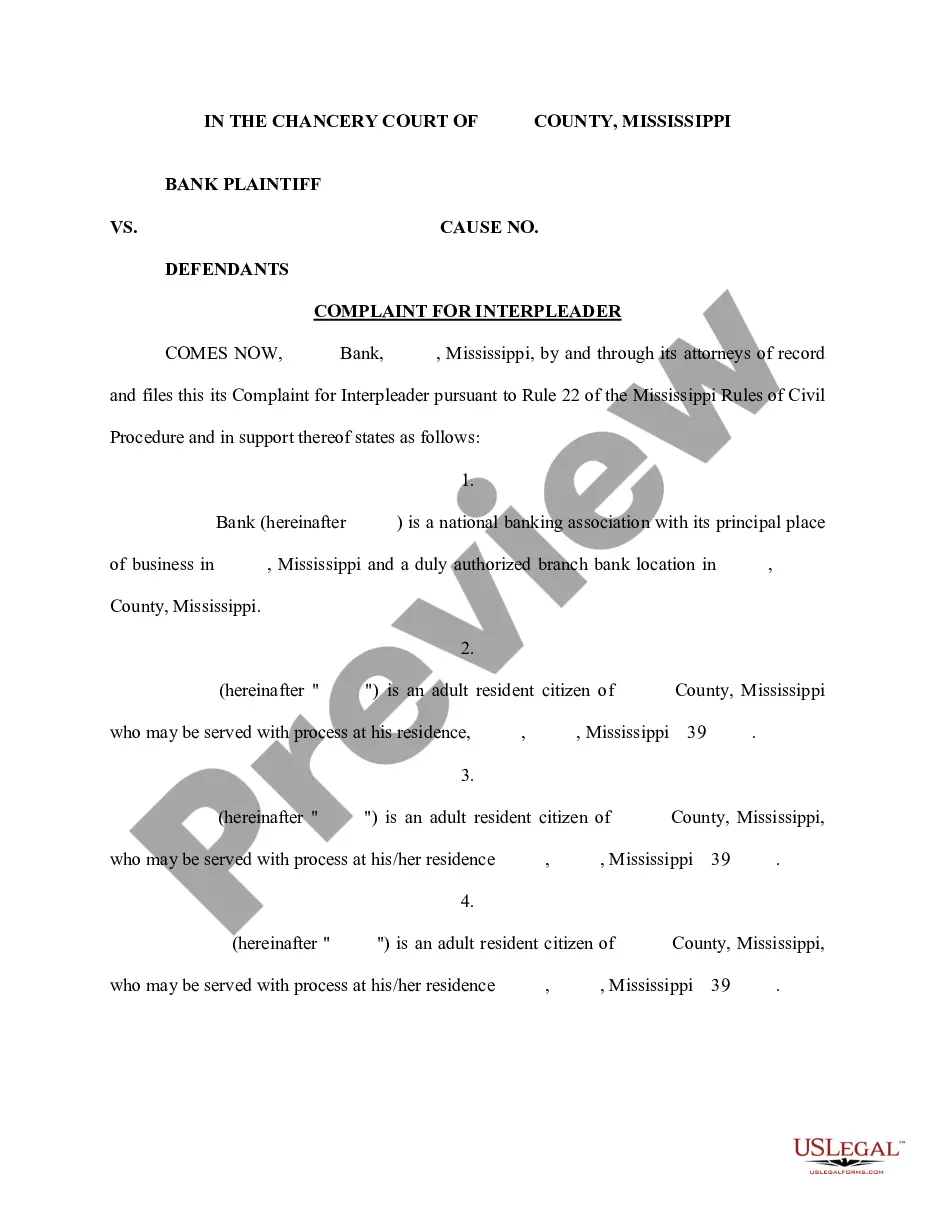
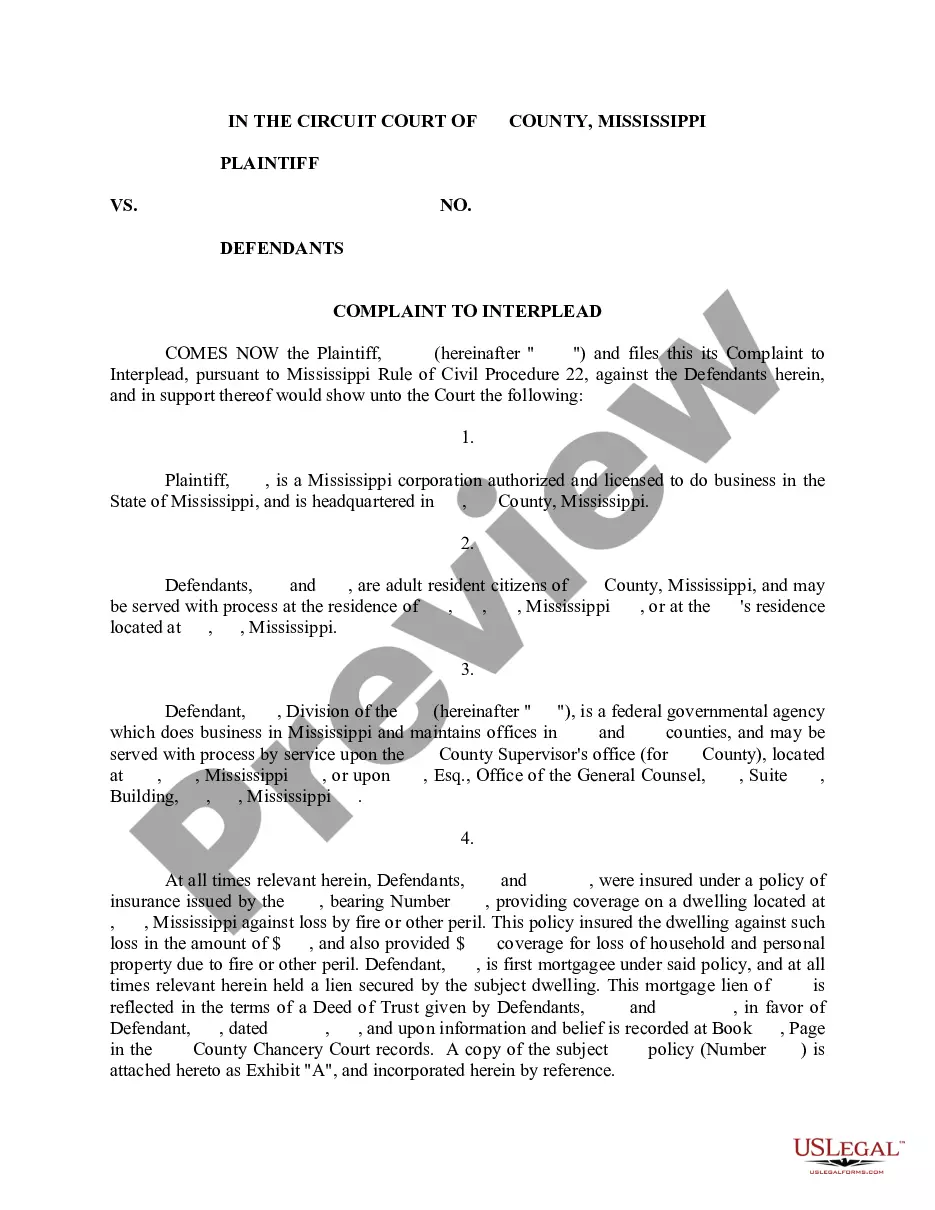
The Complaint for Interpleader by Trustee is a legal document used to initiate a court action when a trustee is uncertain about competing claims to funds resulting from a foreclosure sale. This type of complaint allows the trustee to bring all interested parties before the court to resolve conflicting claims without admitting liability. It is distinct from other complaints because it addresses multiple claimants and involves the distribution of excess proceeds from a foreclosure sale.
Key parts of this document
- The identification of the plaintiff (Substituted Trustee) and defendants (claimants to the excess funds).
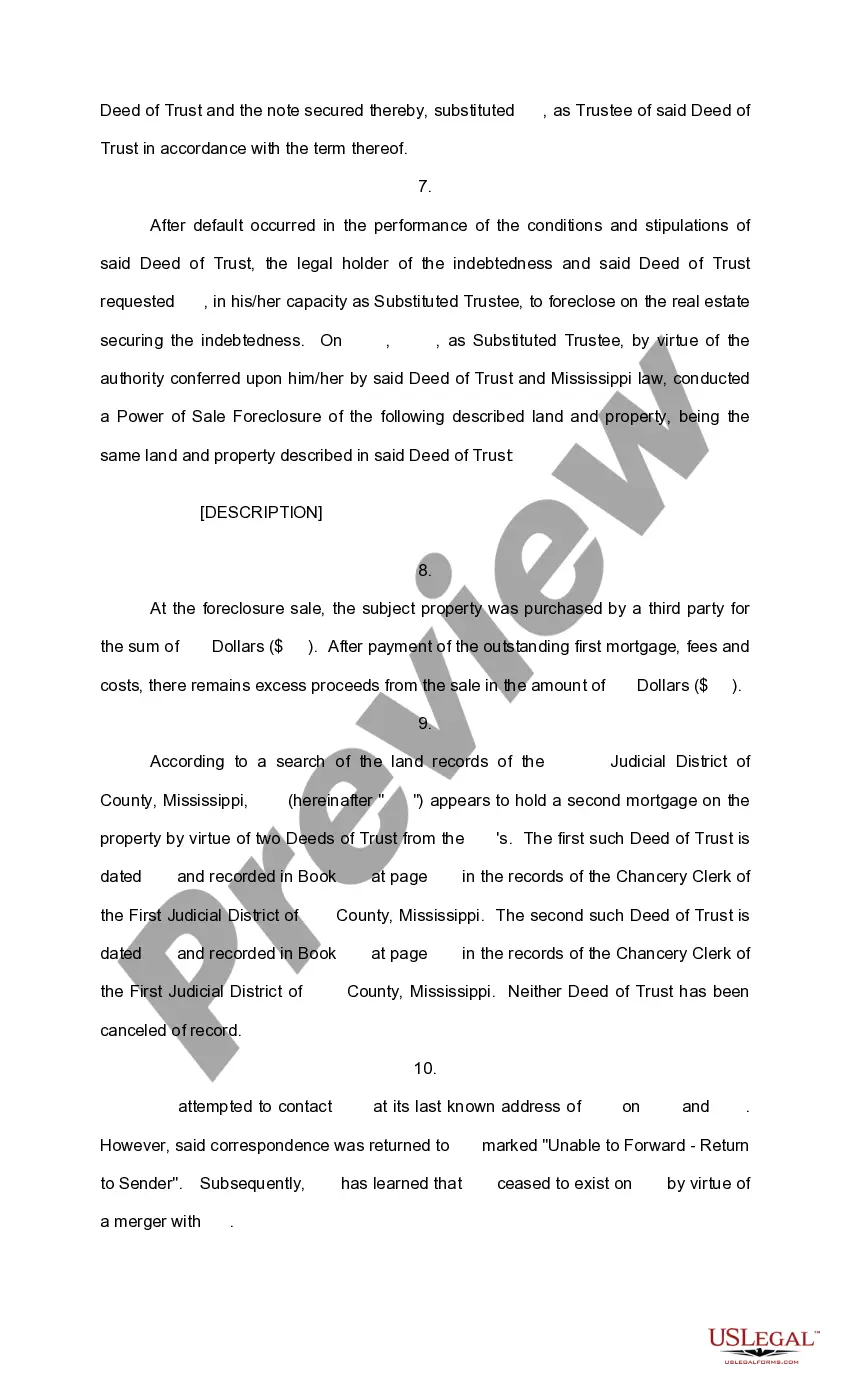
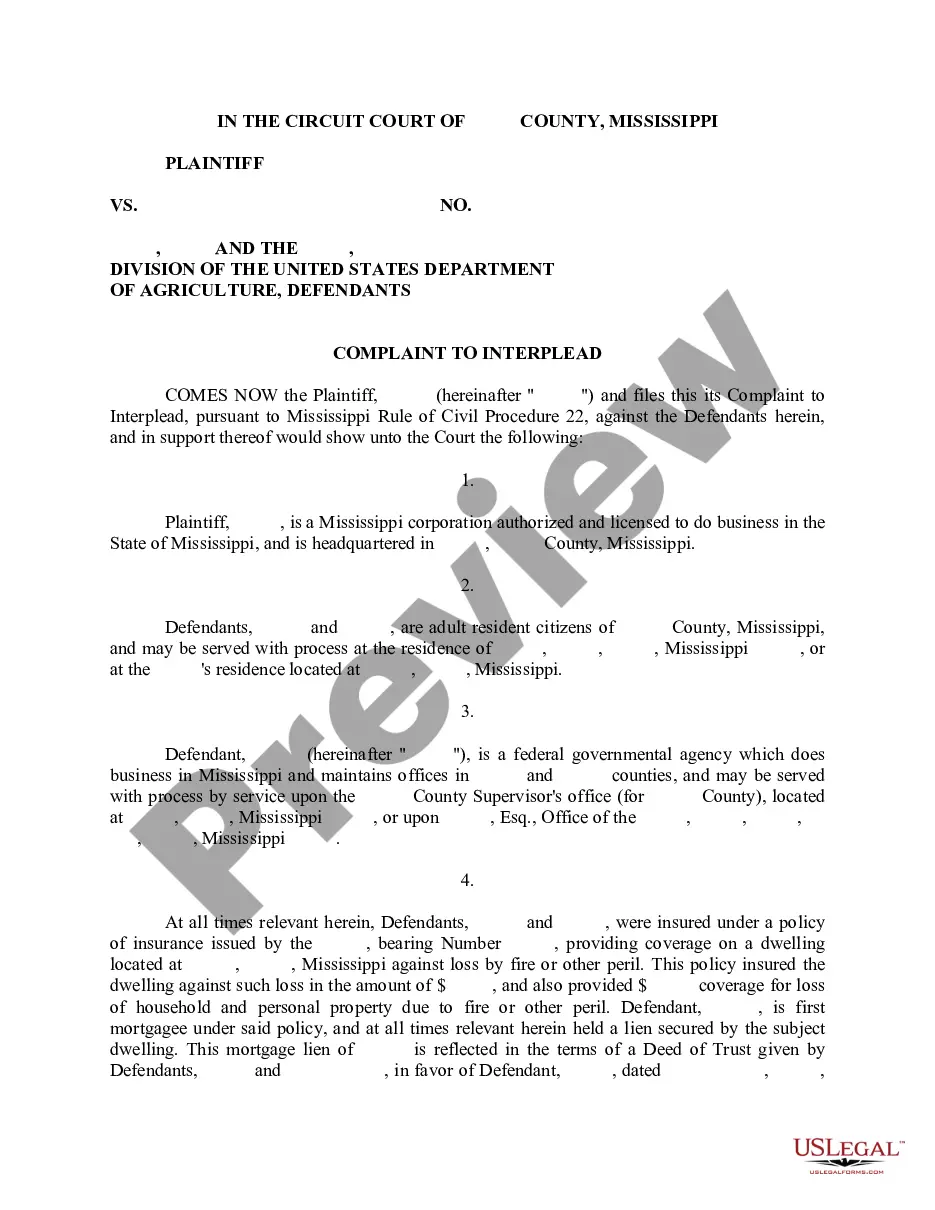
- Details about the deed of trust and mortgage agreements involved.
- A statement indicating the existence of excess proceeds from a foreclosure sale.
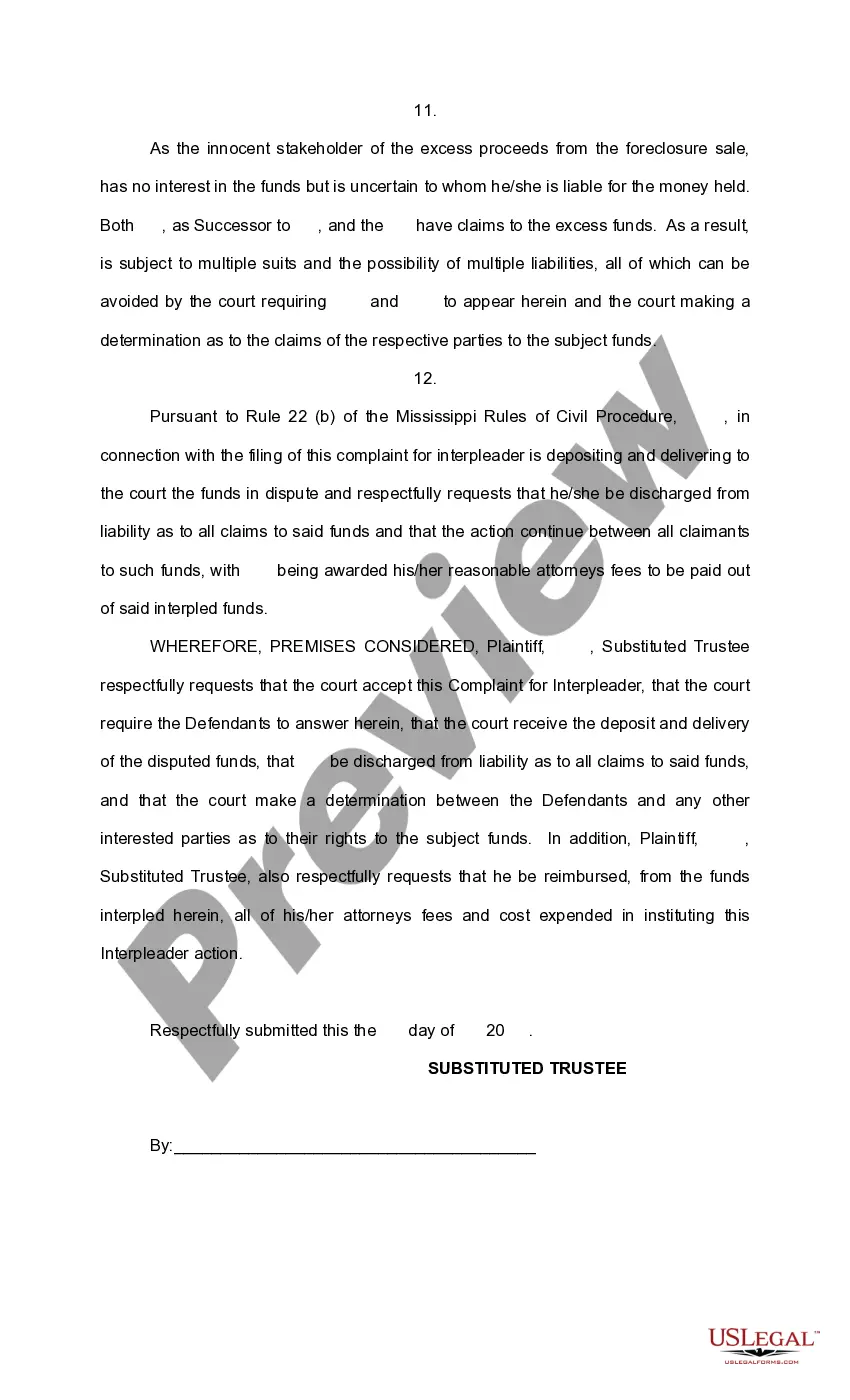
- A request for the court to determine the rightful claimants to the disputed funds.
- A request for discharge from liability for the trustee related to the claims upon the funds.
When to use this document
This form is used when a trustee has conducted a foreclosure and is left with excess proceeds from the sale. It is particularly relevant in situations where multiple parties claim rights to those excess funds. By filing this complaint, the trustee aims to protect themselves from future liability and ensure a fair resolution regarding the claims to the funds.
Who this form is for
- Substituted trustees managing foreclosures with excess proceeds.
- Individuals or entities uncertain about how to distribute funds from a foreclosure sale.
- Legal representatives seeking to clarify claims involving multiple parties.
Completing this form step by step
- Identify the parties involved, including the plaintiff, defendants, and their capacities.
- Complete the sections regarding the deed of trust, noting any relevant dates and documents.
- Include a description of the property and details of the foreclosure sale.
- Specify the amount of excess proceeds and the claims by different parties.
- Sign the form and include the date of submission.
Is notarization required?
This form does not typically require notarization unless specified by local law. However, involving a legal representative or an attorney may ensure adherence to specific legal requirements.
Get your form ready online
Our built-in tools help you complete, sign, share, and store your documents in one place.
Make edits, fill in missing information, and update formatting in US Legal Forms—just like you would in MS Word.
Download a copy, print it, send it by email, or mail it via USPS—whatever works best for your next step.
Sign and collect signatures with our SignNow integration. Send to multiple recipients, set reminders, and more. Go Premium to unlock E-Sign.
If this form requires notarization, complete it online through a secure video call—no need to meet a notary in person or wait for an appointment.
We protect your documents and personal data by following strict security and privacy standards.

Make edits, fill in missing information, and update formatting in US Legal Forms—just like you would in MS Word.

Download a copy, print it, send it by email, or mail it via USPS—whatever works best for your next step.

Sign and collect signatures with our SignNow integration. Send to multiple recipients, set reminders, and more. Go Premium to unlock E-Sign.

If this form requires notarization, complete it online through a secure video call—no need to meet a notary in person or wait for an appointment.

We protect your documents and personal data by following strict security and privacy standards.
Common mistakes
- Failing to clearly identify all potential claimants in the complaint.
- Omitting key facts regarding the foreclosure and the deed of trust.
- Not providing complete information about the excess proceeds and their distribution.
Why use this form online
- Easy access to professionally drafted forms, saving time and reducing stress.
- Editable templates allow customization to fit specific circumstances.
- Convenient downloading and printing options for immediate use.
Looking for another form?


Form popularity
FAQ
You typically must initiate your interpleader action by filing your complaint with the clerk of the court in the county where the money or property at issue is located. Depending on the defendants and the amount of money at stake, federal court may be proper.
Impleader:The third party becomes a participant in the lawsuit and is known as a third party defendant. Interpleader: Interpleader occurs when a third party enters into a lawsuit, usually to determine that party's rights with regard to property at issue in the lawsuit.
A way for a holder of property to initiate a suit between two or more claimants to the property.Interpleader avoids the problem of A being sued separately by both B and C, and potentially losing the same piece of property twice.
Interpleader is a procedure whereby a person holding money or personal property to which conflicting claims are being made by others, can join the adverse claimants and force them to litigate their claims among themselves.