Sample Letter for Payroll Dispute
What is this form?
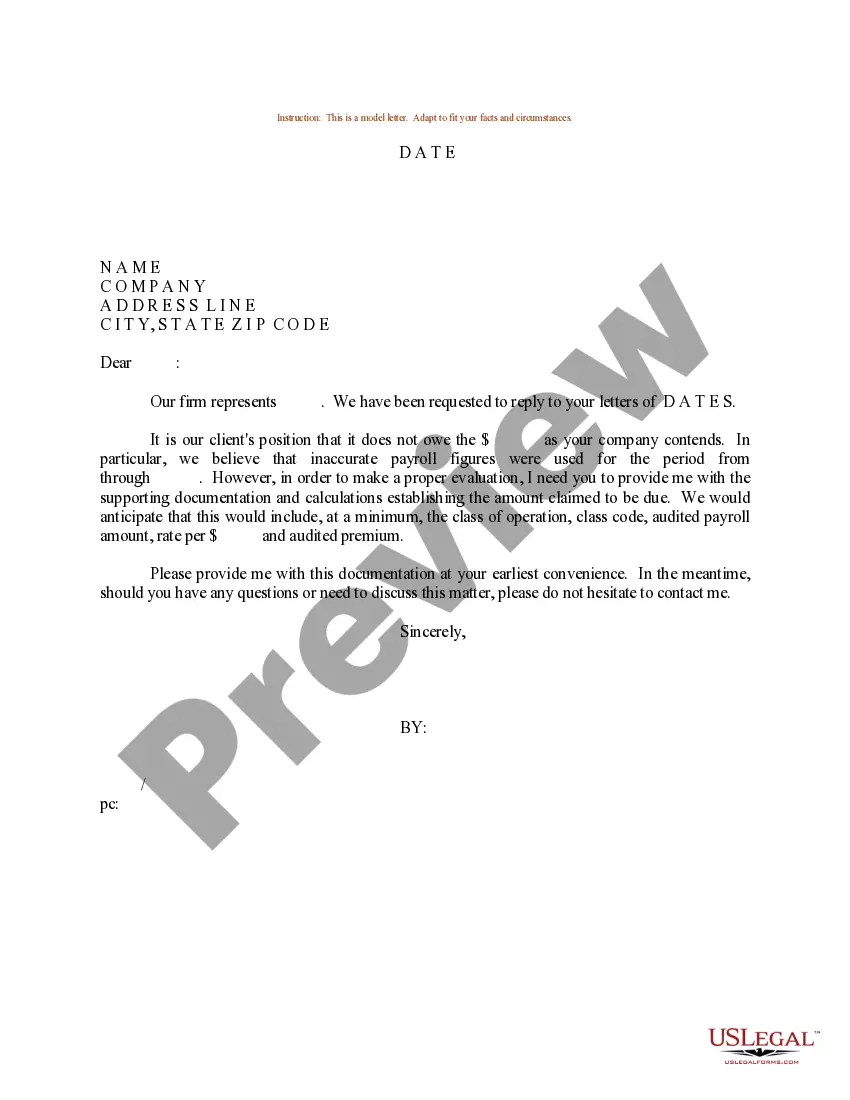
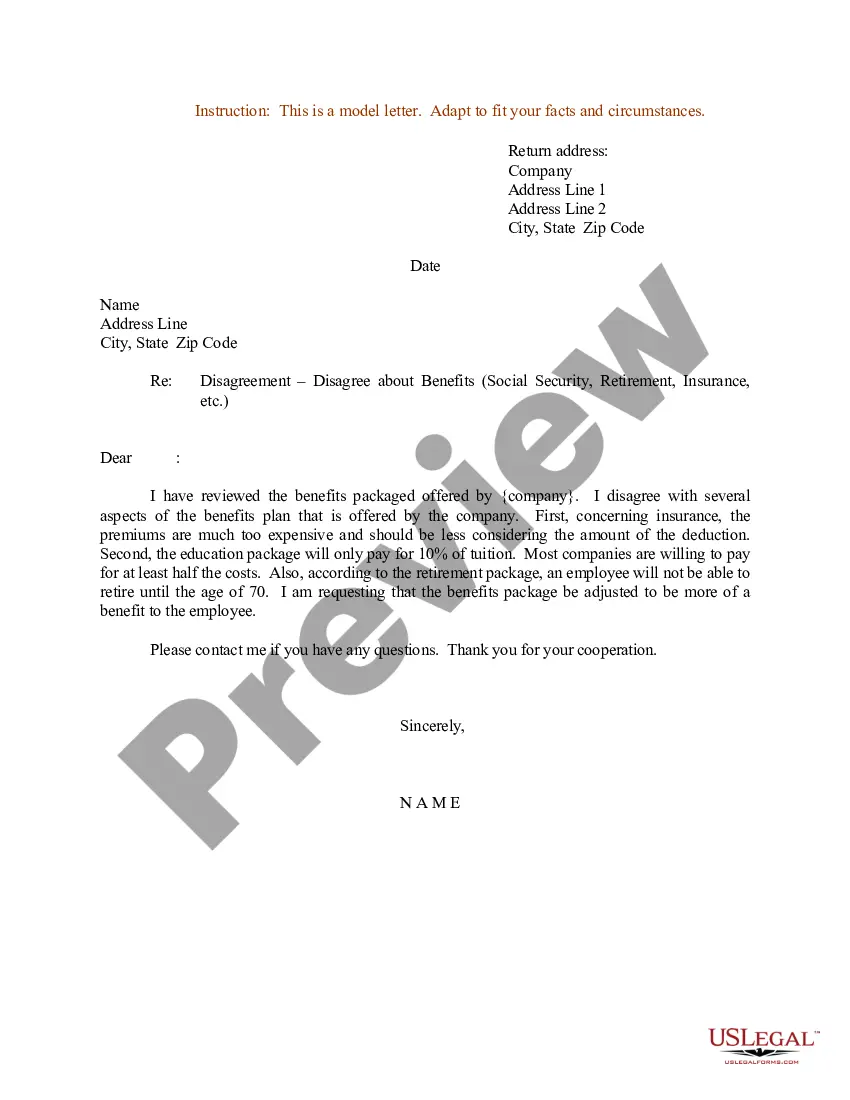
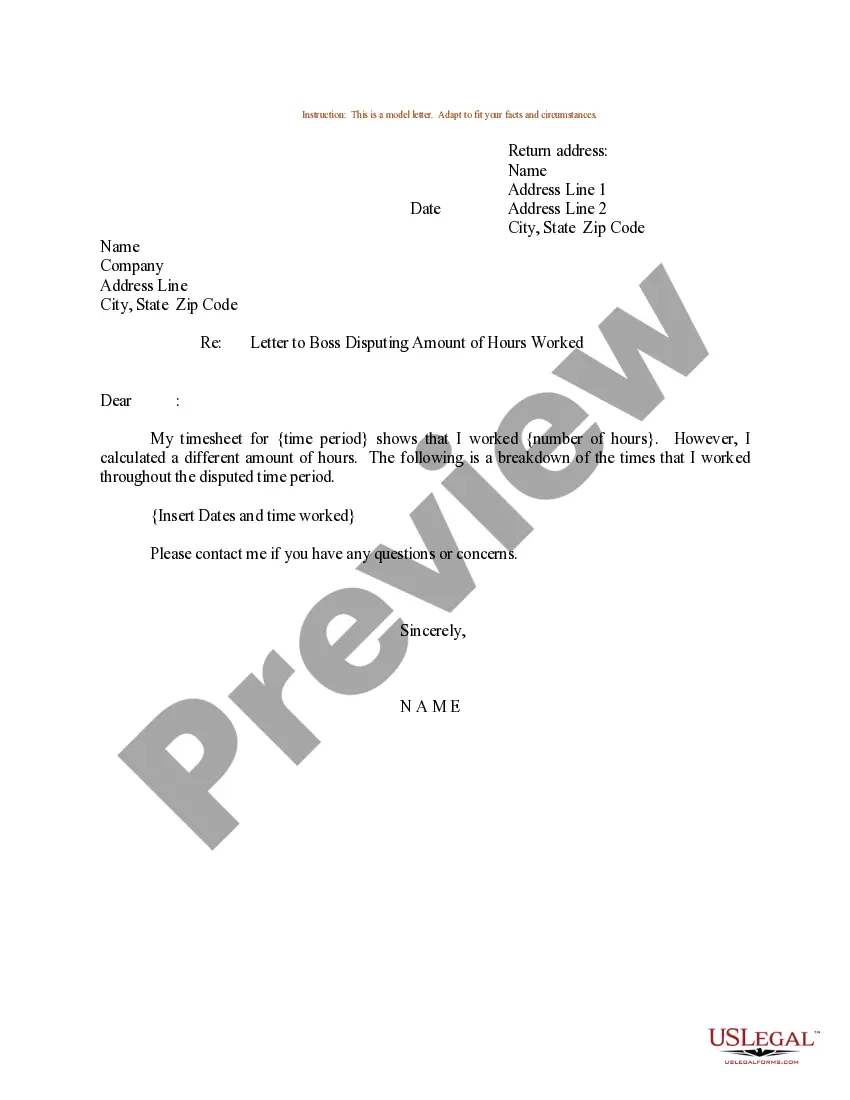
The Sample Letter for Payroll Dispute is a formal document that enables an employee to address discrepancies in their payroll. This letter is essential for clearly communicating issues related to salary errors, unpaid wages, or other payroll-related disputes. Unlike informal email or verbal communications, using this template ensures a structured and professional approach to resolving payroll discrepancies.
Form components explained
- Date of the letter
- Recipient's name and company details
- Clear statement of the payroll dispute
- Specific details regarding the disputed amount
- Request for prompt resolution
Common use cases
This letter should be used when an employee identifies a problem with their paycheck, such as incorrect amounts, missing bonus payments, or discrepancies in hours worked. It is important to address these issues as soon as they are noticed to ensure timely correction by the employer.
Who this form is for
This letter can be used by:
- Employees experiencing payroll issues
- Personnel in human resources handling payroll disputes
- Managers addressing employee concerns regarding payment
Steps to complete this form
- Enter the date at the top of the letter.
- Fill in the recipient's name and their company details, ensuring accurate information.
- Clearly state the nature of the payroll dispute, including specific errors or discrepancies.
- Detail the amount in question and any supporting evidence if available.
- Conclude with a request for a prompt response and resolution.
Notarization guidance
This form does not typically require notarization unless specified by local law. It is advisable to confirm any additional requirements based on specific circumstances to ensure its legitimacy.
Get your form ready online
Our built-in tools help you complete, sign, share, and store your documents in one place.
Make edits, fill in missing information, and update formatting in US Legal Forms—just like you would in MS Word.
Download a copy, print it, send it by email, or mail it via USPS—whatever works best for your next step.
Sign and collect signatures with our SignNow integration. Send to multiple recipients, set reminders, and more. Go Premium to unlock E-Sign.
If this form requires notarization, complete it online through a secure video call—no need to meet a notary in person or wait for an appointment.
We protect your documents and personal data by following strict security and privacy standards.

Make edits, fill in missing information, and update formatting in US Legal Forms—just like you would in MS Word.

Download a copy, print it, send it by email, or mail it via USPS—whatever works best for your next step.

Sign and collect signatures with our SignNow integration. Send to multiple recipients, set reminders, and more. Go Premium to unlock E-Sign.

If this form requires notarization, complete it online through a secure video call—no need to meet a notary in person or wait for an appointment.

We protect your documents and personal data by following strict security and privacy standards.
Mistakes to watch out for
- Not providing specific details about the payroll issue.
- Failing to include important supporting documentation.
- Using informal language or tone.
Why complete this form online
- Convenience of downloading and customizing the template.
- Editability allows for quick adjustments based on individual circumstances.
- Reliability in following a formal structure to enhance clarity and professionalism.
Legal use & context
- This letter serves as a formal notification to the employer regarding payroll issues.
- A documented letter can help in legal disputes regarding unpaid wages or payroll errors.
- Employers may be required under state law to address payroll discrepancies within a specified timeframe.
Summary of main points
- The Sample Letter for Payroll Dispute helps formalize payroll-related issues.
- Use this letter for clarity and professionalism when addressing discrepancies.
- Ensure you provide accurate details to facilitate prompt resolution.
Looking for another form?
Form popularity
FAQ
The Sample Letter for Payroll Dispute is a formal template employees use to address payroll errors, including incorrect pay, missing wages, or hours discrepancies. It guides the user to include the date, recipient's name and company details, a clear statement of the payroll dispute, specific details about the disputed amount, and a request for prompt resolution. Use it when issues are identified to ensure a professional, organized request.
To resolve payroll discrepancies using this form, gather pay stubs and records, then complete the letter with the date, recipient details, a clear dispute statement, and the exact amount in dispute. State the desired remedy and request prompt correction. Send or deliver the letter to the employer’s HR or payroll department and keep copies for the records.
A good dispute letter should be clear, concise, and factual when using this form. Start with the date and recipient, state the exact payroll issue, provide the disputed amount, reference supporting records, and conclude with a request for prompt resolution.
Maintain a formal tone in this letter, address the appropriate HR contact, include the date and recipient details, describe the payroll error with exact figures, attach supporting documents if available, and request a specific resolution timeline.
Yes, the letter can be handwritten as long as it is legible and contains all required elements: the date, recipient name and company, a clear statement of the dispute, specific amount details, and a request for prompt resolution. If possible, also keep a typed copy for records.
What sets this form apart is its formal, structured template with defined components—date, recipient and company details, a clear dispute statement, exact amount details, and a request for prompt remedy—providing a consistent, professional approach to payroll issues across multi-state workplaces.