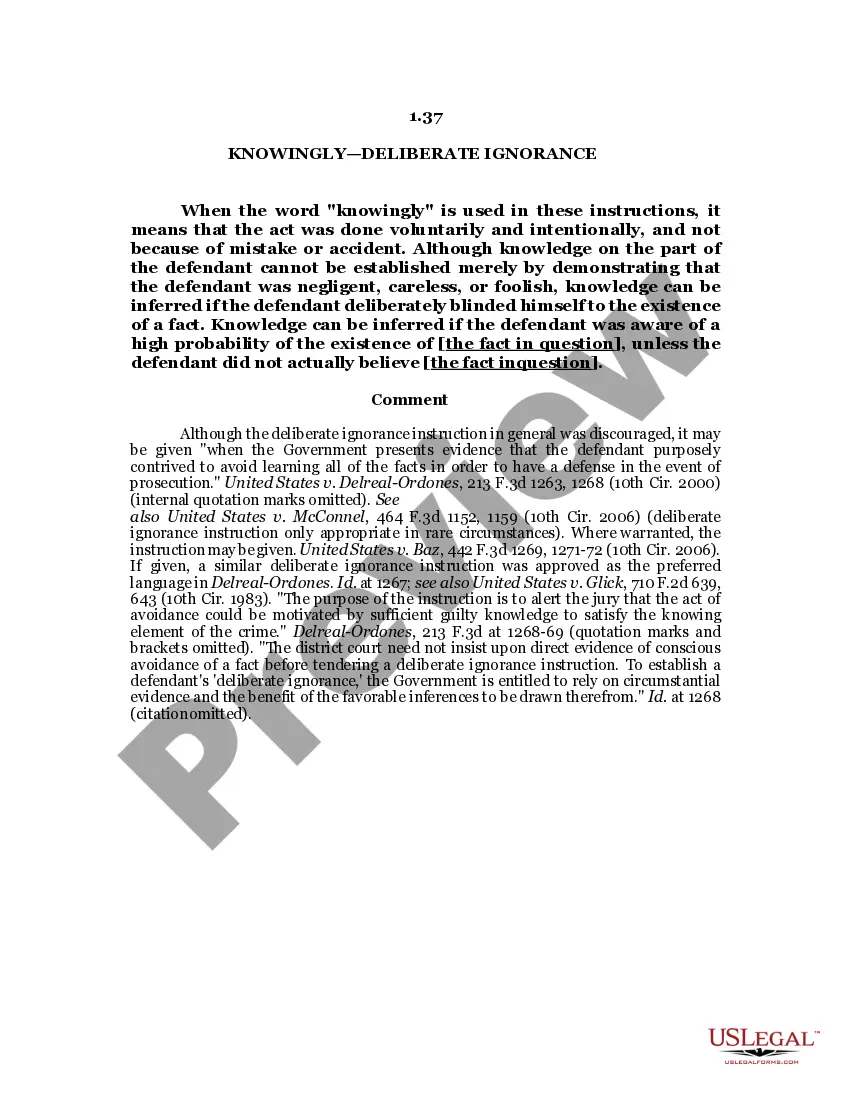
KNOWINGLY-DELIBERATE IGNORANCE
About this form
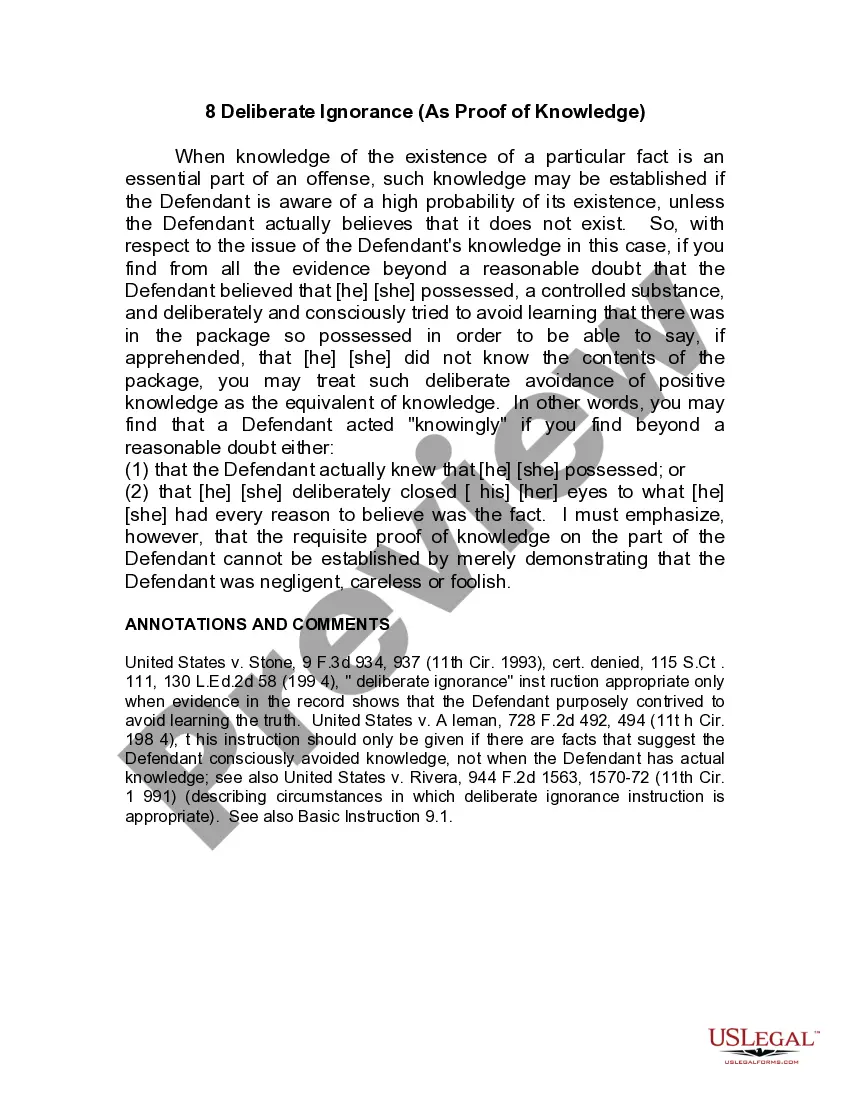
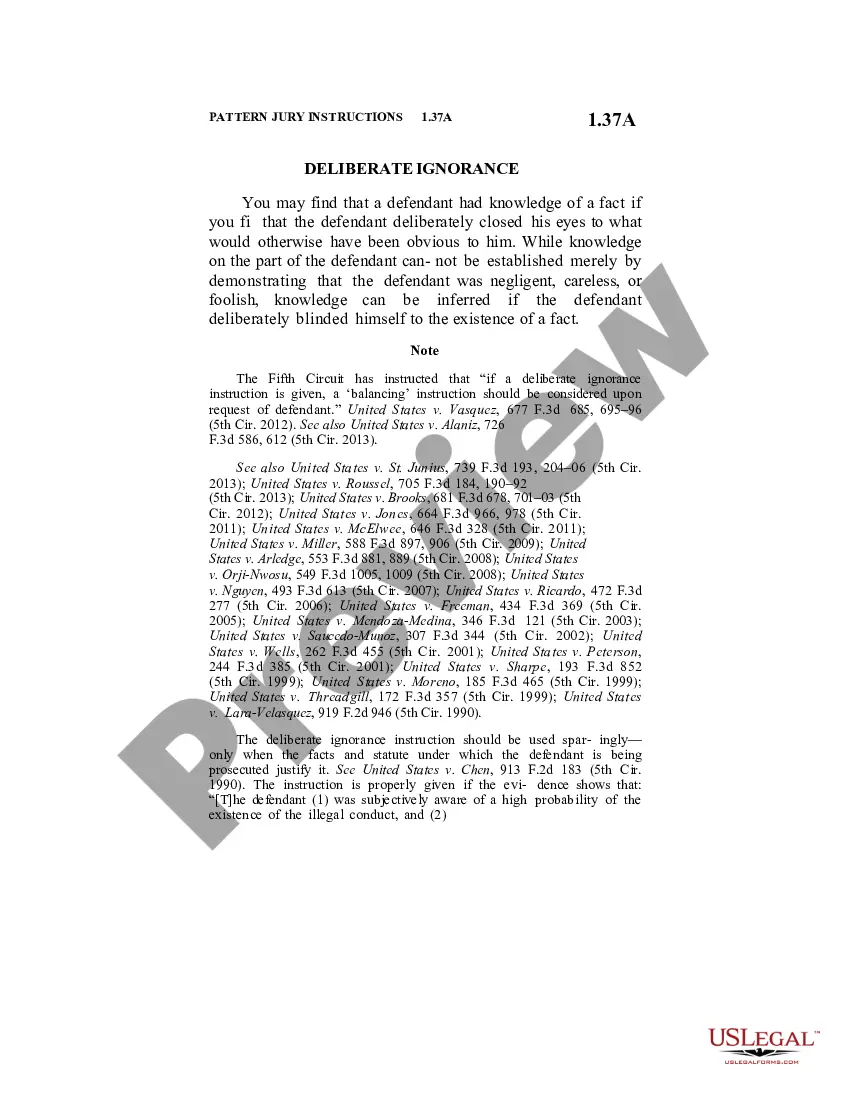
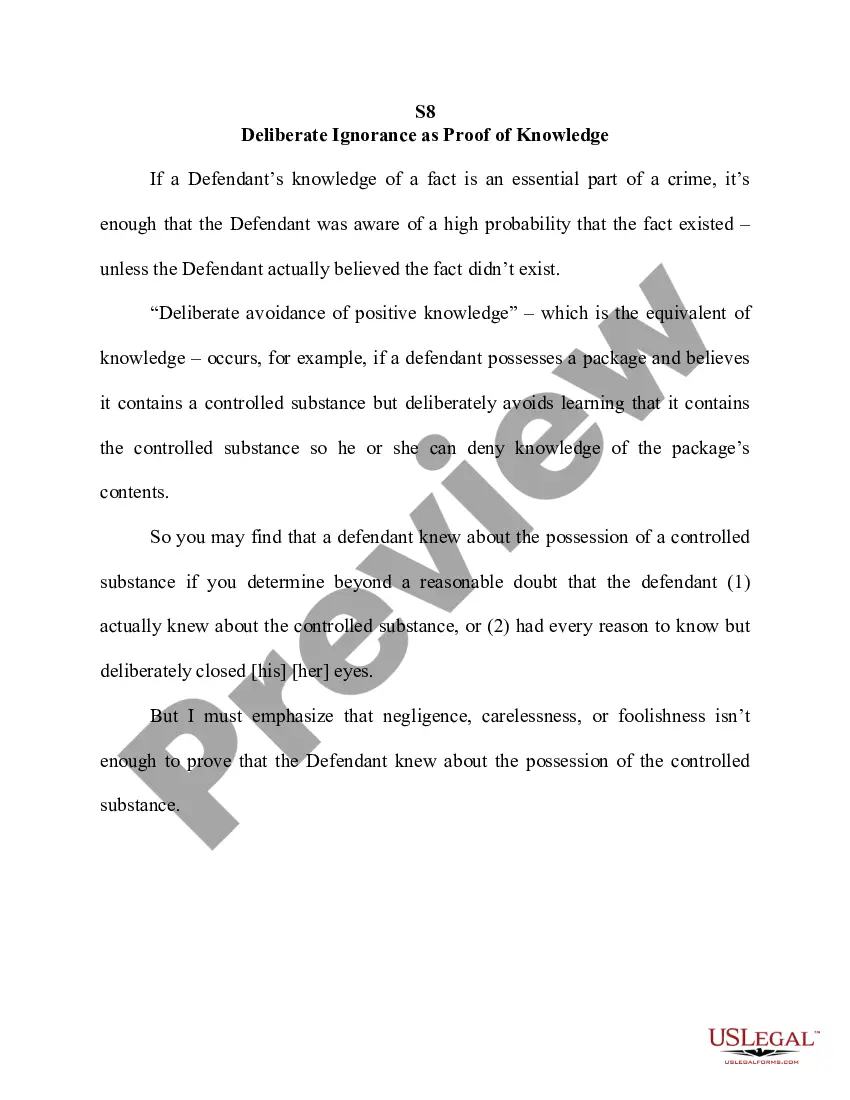
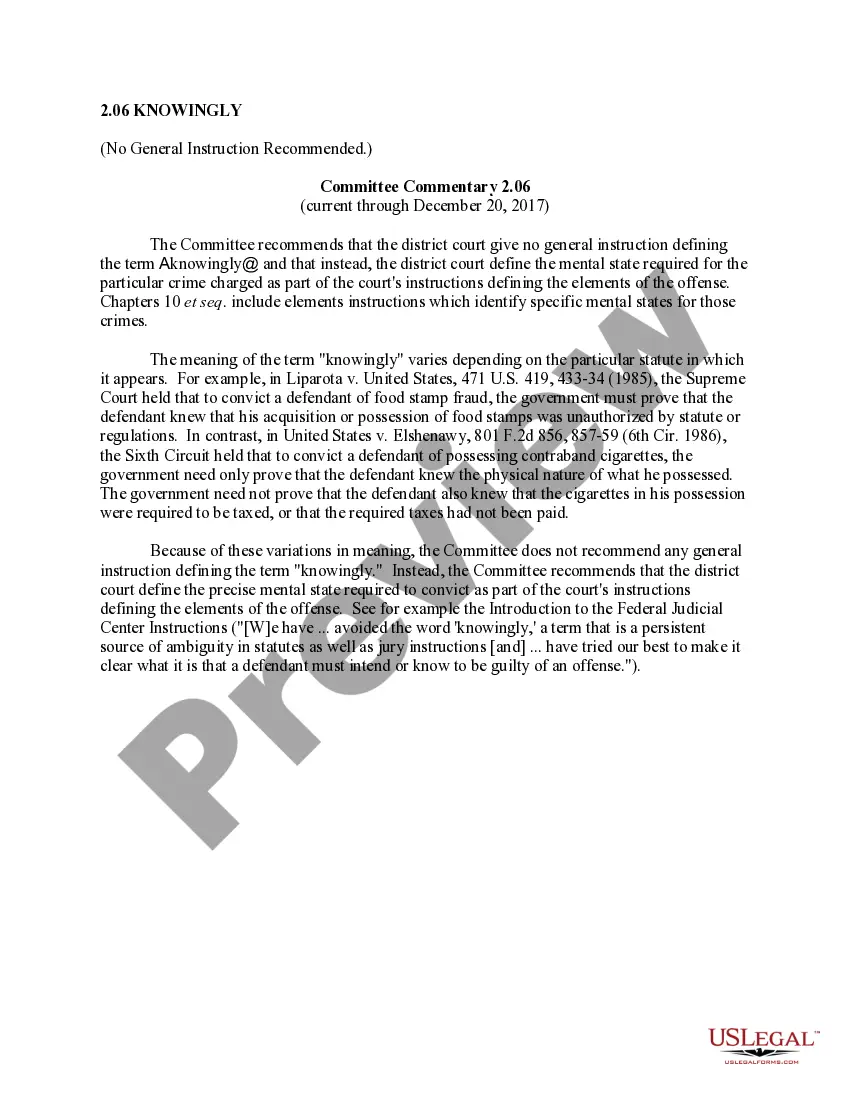
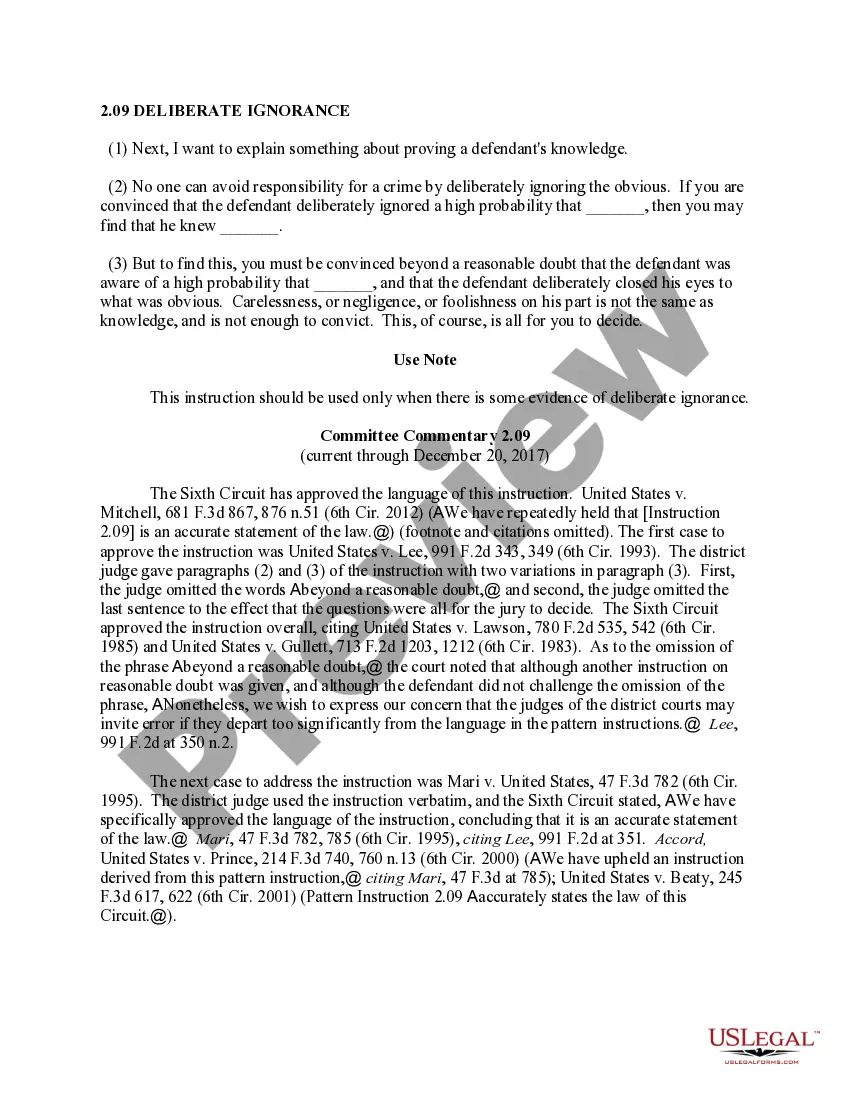
The Knowingly-Deliberate Ignorance form addresses situations in legal proceedings where a defendant may avoid knowledge of facts that could implicate them in a crime. This instruction helps juries determine whether a defendant's lack of awareness was intentional, indicating potential guilt. Unlike other forms that simply deal with negligence or accidental conduct, this form specifically tackles cases of conscious avoidance.
Key components of this form
- Definition of "knowingly": Clarifies that actions must be intentional and voluntary.
- Inference of knowledge: Details how knowledge can be inferred if a defendant deliberately avoids learning the facts.
- High probability awareness: Explains that knowledge may be inferred when there is a high likelihood of the existence of a fact.
- Judicial precedent: Includes references to important court cases that discuss the application of deliberate ignorance.
When to use this form
This form is used in criminal cases where the prosecution must establish that a defendant actively chose not to learn critical information to evade responsibility. It is especially relevant in cases involving fraud, conspiracy, or regulatory offenses where intent and awareness are central to proving guilt.
Intended users of this form
- Criminal defense attorneys representing clients accused of crimes where knowledge and intent are contested.
- Prosecutors needing to explain the concept of deliberate ignorance to a jury.
- Judges presiding over trials that involve elements of conscious avoidance in evidence.
How to prepare this document
- Read the definition of "knowingly" as it applies in your case.
- Evaluate the evidence presented to establish the defendant's intent.
- Consider the facts that led the defendant to deliberately avoid knowledge.
- Document any relevant judicial precedents that may impact the case's outcome.
- Review the entire instruction before presenting it to the jury for coherence.
Notarization requirements for this form
Notarization is generally not required for this form. However, certain states or situations might demand it. You can complete notarization online through US Legal Forms, powered by Notarize, using a verified video call available anytime.
Get your form ready online
Our built-in tools help you complete, sign, share, and store your documents in one place.
Make edits, fill in missing information, and update formatting in US Legal Forms—just like you would in MS Word.
Download a copy, print it, send it by email, or mail it via USPS—whatever works best for your next step.
Sign and collect signatures with our SignNow integration. Send to multiple recipients, set reminders, and more. Go Premium to unlock E-Sign.
If this form requires notarization, complete it online through a secure video call—no need to meet a notary in person or wait for an appointment.
We protect your documents and personal data by following strict security and privacy standards.

Make edits, fill in missing information, and update formatting in US Legal Forms—just like you would in MS Word.

Download a copy, print it, send it by email, or mail it via USPS—whatever works best for your next step.

Sign and collect signatures with our SignNow integration. Send to multiple recipients, set reminders, and more. Go Premium to unlock E-Sign.

If this form requires notarization, complete it online through a secure video call—no need to meet a notary in person or wait for an appointment.

We protect your documents and personal data by following strict security and privacy standards.
Avoid these common issues
- Assuming negligence equates to knowledge without sufficient evidence.
- Failing to connect the act of avoidance to potential guilt.
- Neglecting to reference applicable case law that supports the use of this instruction.
Advantages of online completion
- Quick access to standardized language drafted by legal professionals.
- Easy customization and downloading for immediate use in legal contexts.
- Maintains legal reliability, ensuring adherence to current laws and practices.
What to keep in mind
- The Knowingly-Deliberate Ignorance form is essential for establishing intent in criminal cases.
- Understanding the nuances of knowledge versus avoidance can significantly impact case outcomes.
- This form is useful for both defense and prosecution in relevant legal proceedings.
Looking for another form?
Form popularity
FAQ
(b) For purposes of this section, the terms "knowing" and "knowingly" mean that a person, with respect to information (1) has actual knowledge of the information; (2) acts in deliberate ignorance of the truth or falsity of the information; or (3) acts in reckless disregard of the truth or falsity of the information,
Examples of practices that may violate the False Claims Act if done knowingly and intentionally, include the following: Billing for services not rendered. Knowingly submitting inaccurate claims for services. Taking or giving a kickback for a referral.
(b) For purposes of this section, the terms "knowing" and "knowingly" mean that a person, with respect to information (1) has actual knowledge of the information; (2) acts in deliberate ignorance of the truth or falsity of the information; or (3) acts in reckless disregard of the truth or falsity of the information,
The deliberate ignorance instruction should be given only when evidence has been presented showing the defendant purposely contrived to avoid learning the truth. The defendant must deny knowledge and must engage in conduct which includes deliberate acts to avoid actual knowledge of the operant fact.
§ 3729(b). But proof of specific intent to defraud is not required. Therefore, person who acts in deliberate ignorance or reckless disregard of a false or fraudulent claim can be liable under the False Claims Act.
In a False Claims Act case premised on factual falsity, the falsity involves a claim for payment that misrepresents the goods or services actually provided.
A person acts in ?deliberate ignorance of the truth or falsity of the information? by intentionally avoiding learning whether a particular piece of information is true or false.