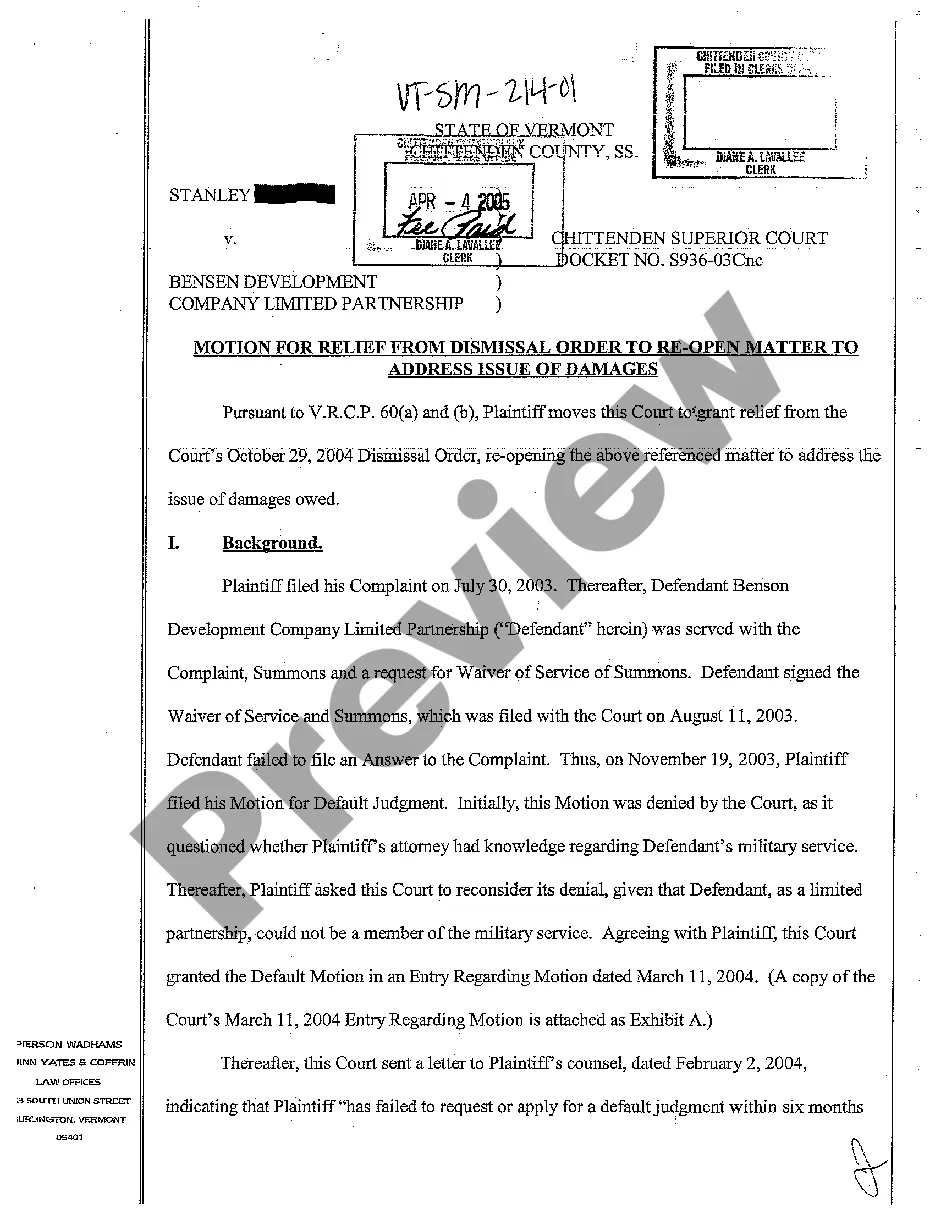
Agreement Between Adjoining Landowners Regarding Encroachment of a Building
About this form
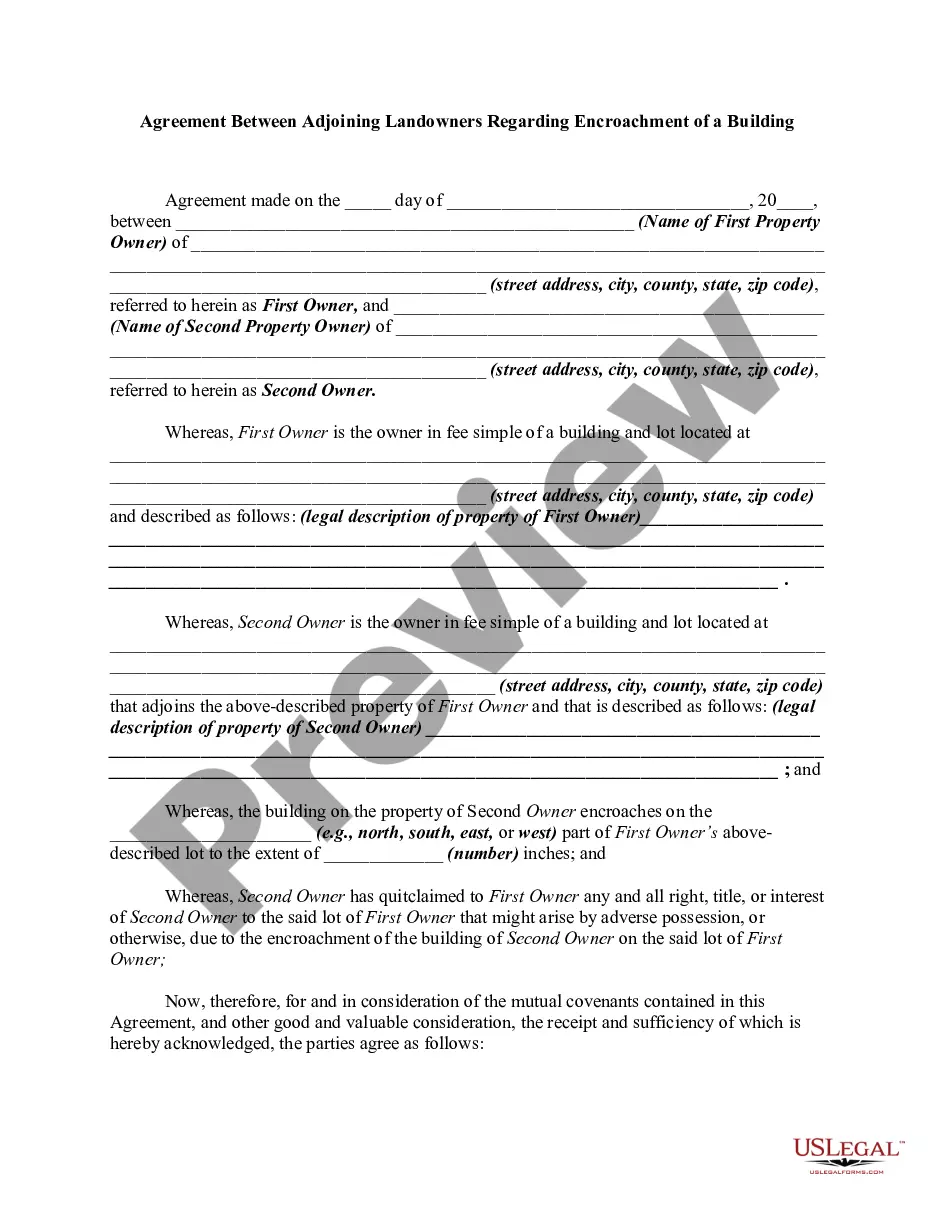
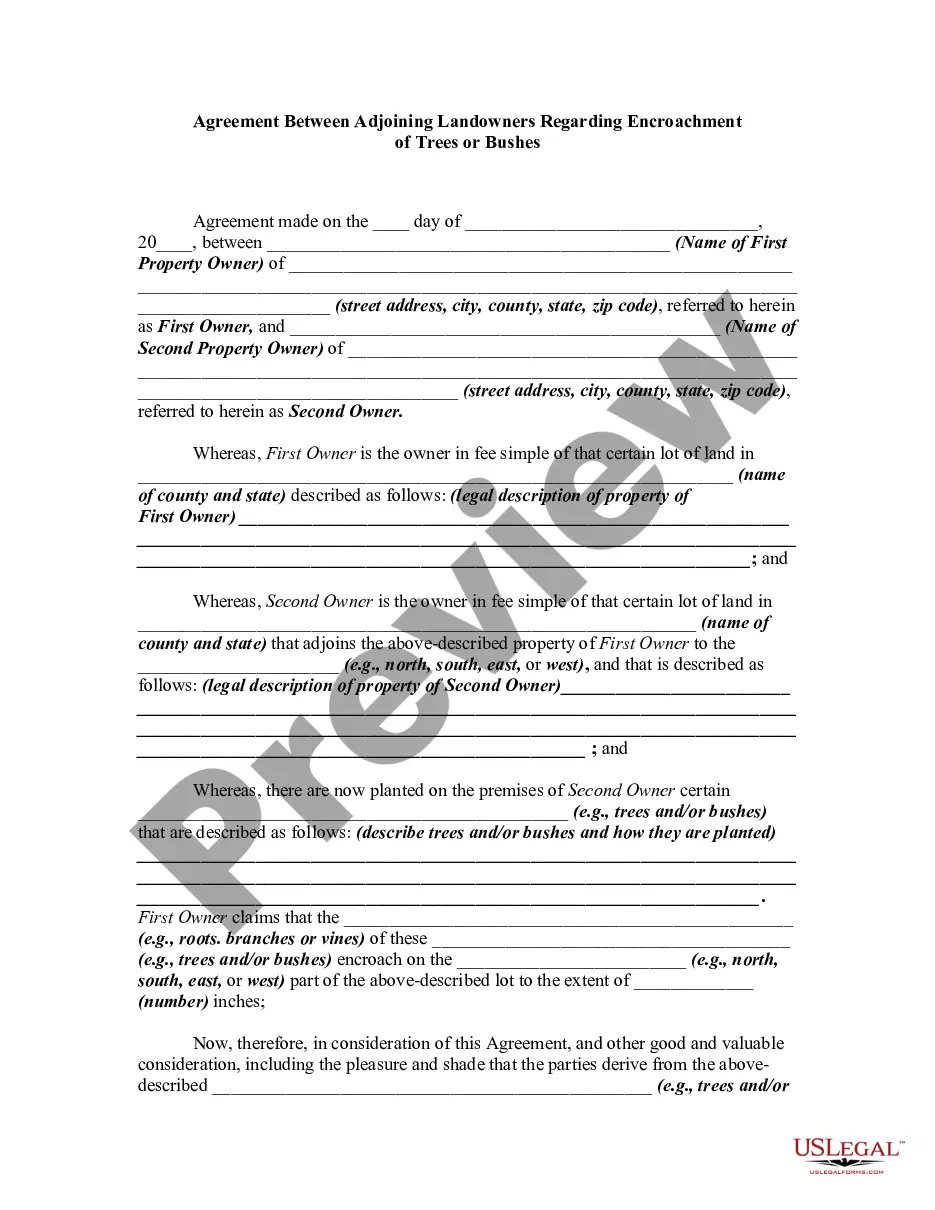
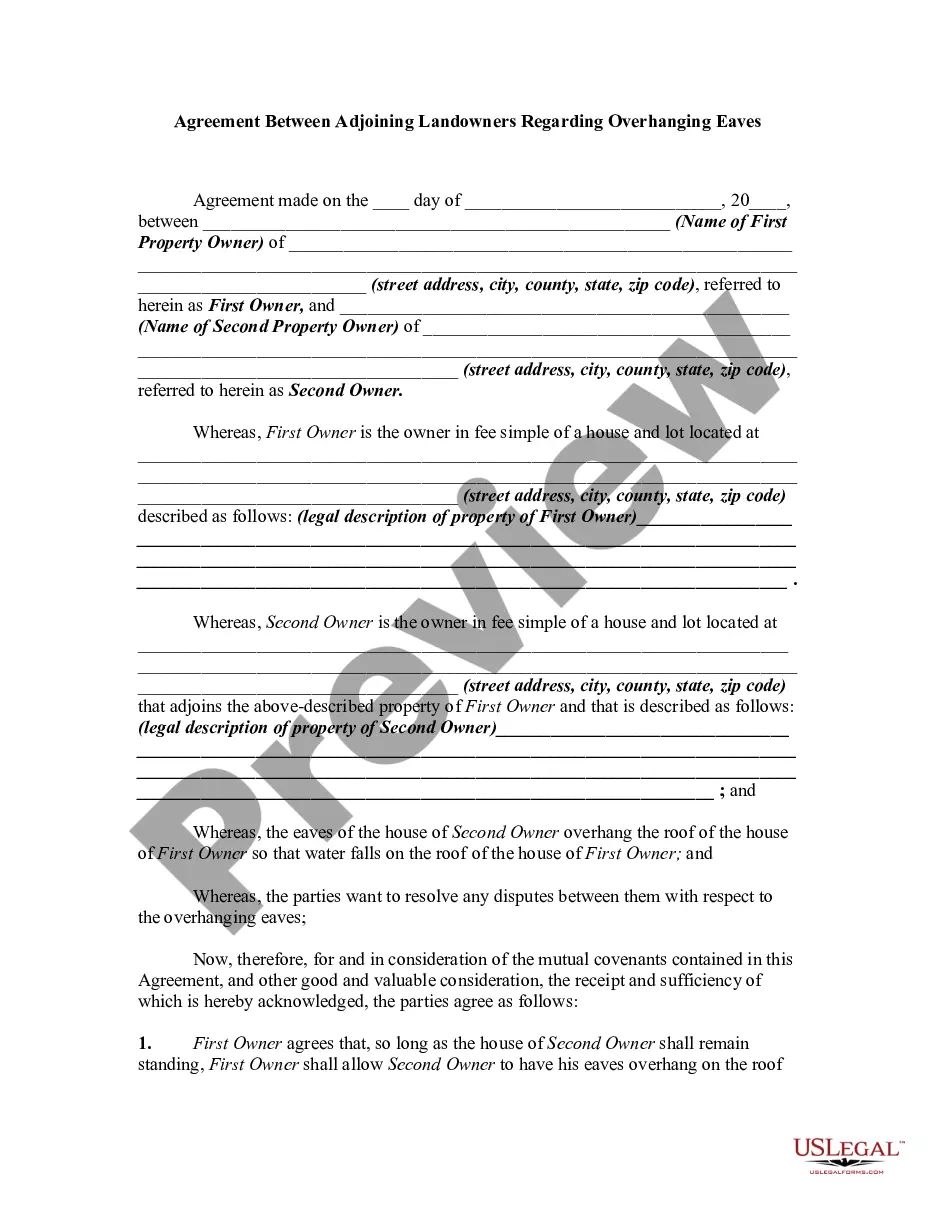
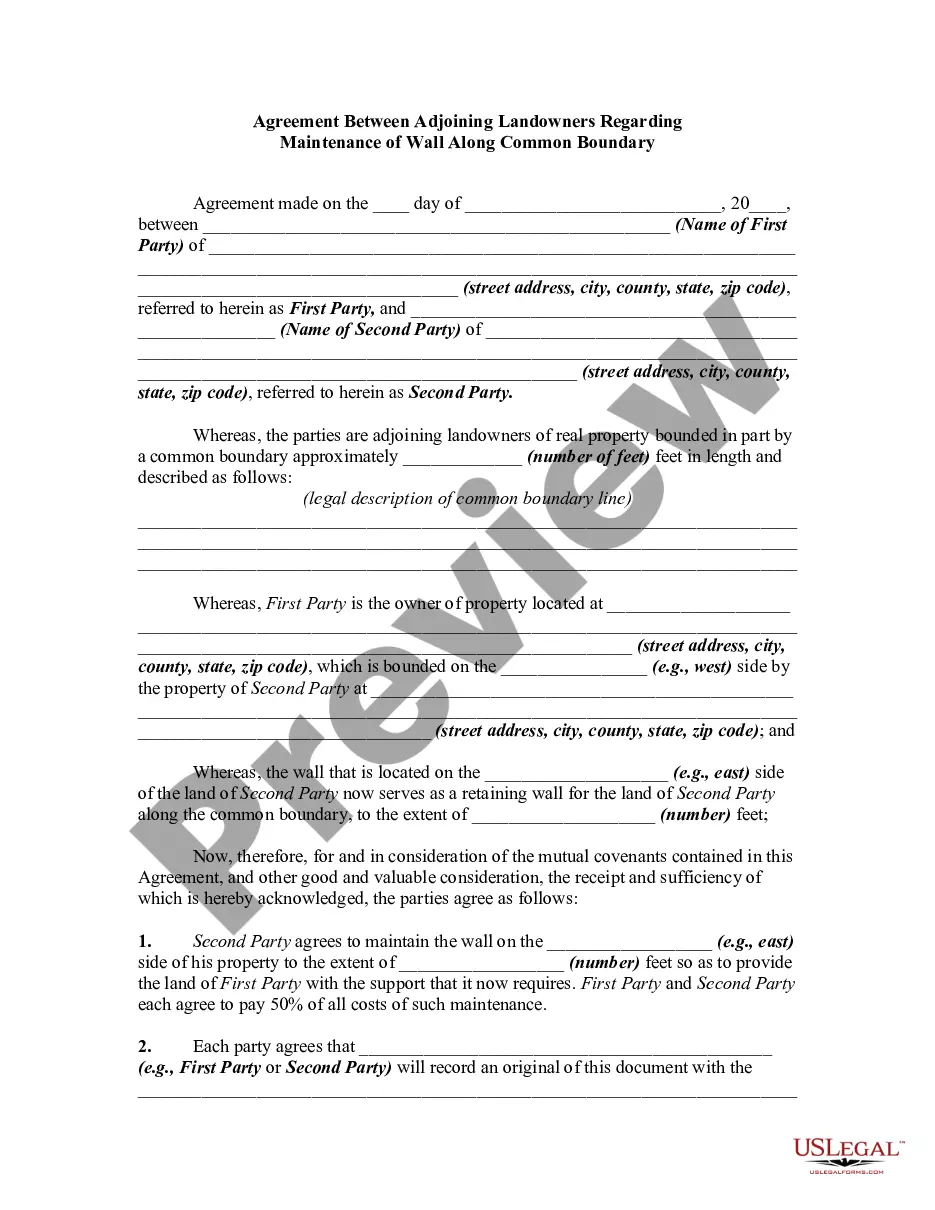
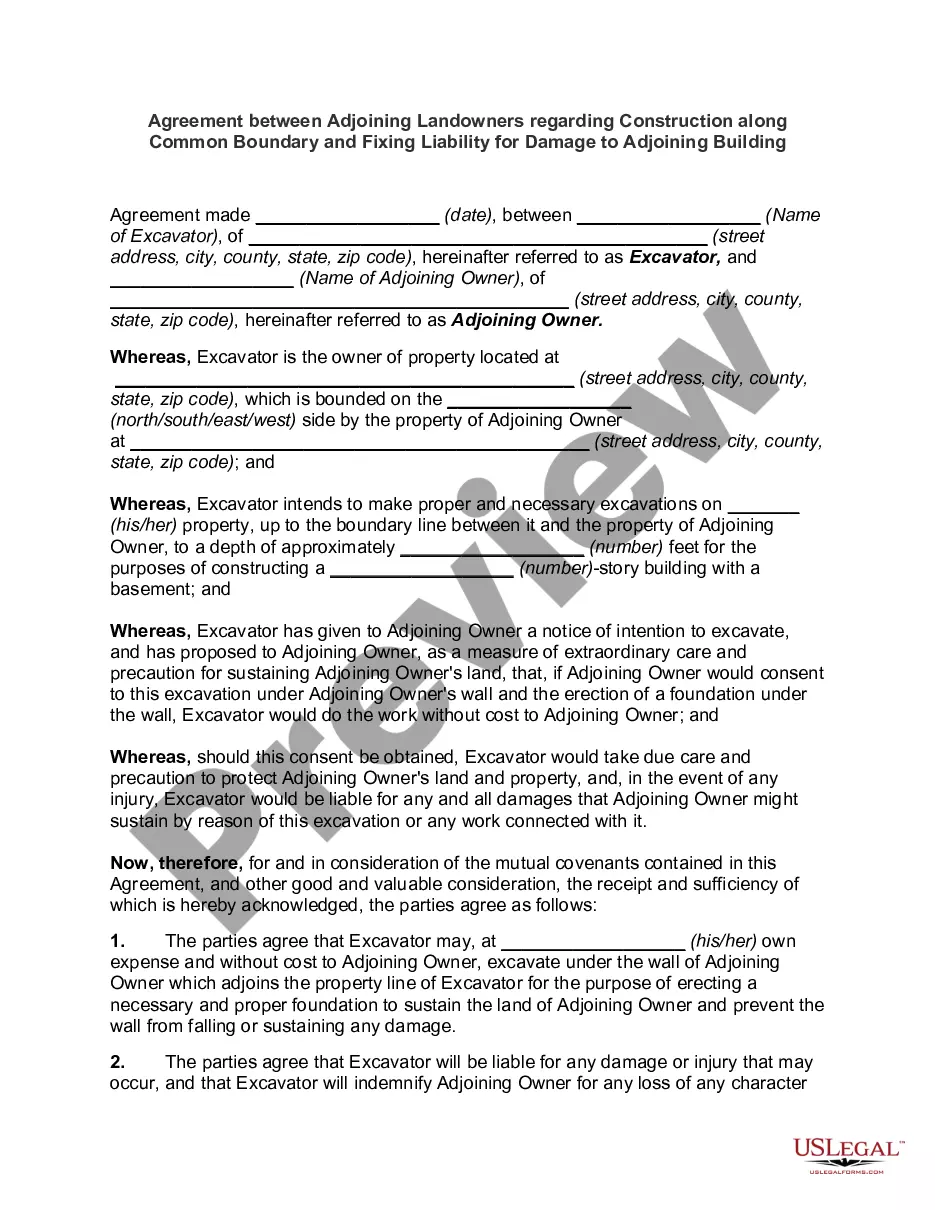
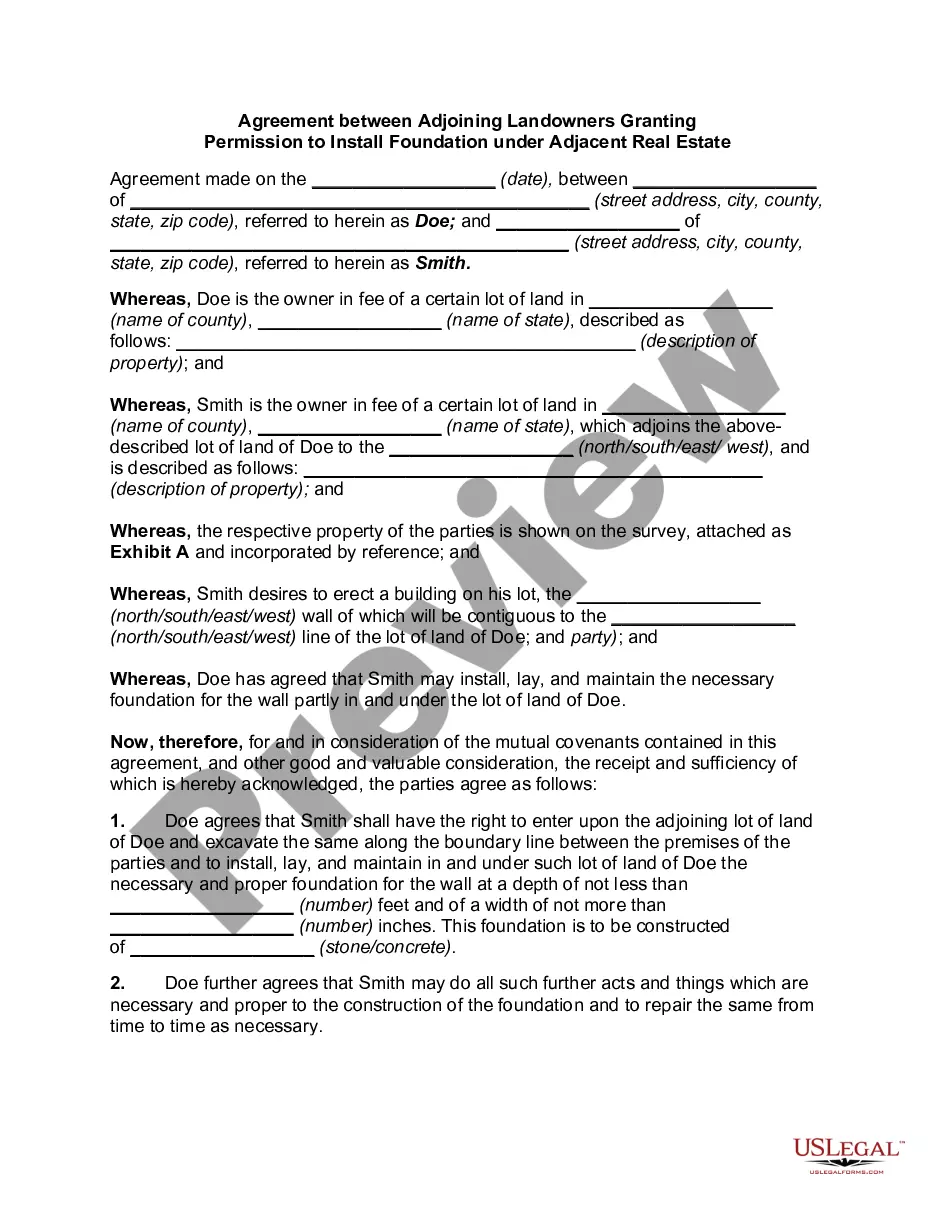
The Agreement Between Adjoining Landowners Regarding Encroachment of a Building is a legal document that formalizes the consent of one property owner to allow a structure from a neighboring property to encroach upon their land. This agreement protects both parties by clearly defining the terms of the encroachment, which can involve not just buildings but also other physical structures like fences or trees. It serves as an essential legal tool to prevent future disputes between landowners concerning overlapping properties.
Main sections of this form
- Identification of the parties involved, including their property details.
- Description of the encroaching structure and specifics regarding the amount of encroachment.
- Terms granting usage rights to the encroaching party as long as the structure remains standing.
- Conditions that terminate the agreement upon removal or destruction of the encroaching structure.
- Provision for successors, making the agreement binding on heirs and assigns.
Common use cases
This agreement is typically used when one neighbor's building, fence, or other structure extends over the property line into the adjacent property owner's land. It's ideal when both parties are in agreement about the encroachment and wish to formally document the arrangement to avoid misunderstandings or legal disputes in the future.
Who needs this form
- First property owners who have a structure that encroaches on a neighbor's land.
- Second property owners who wish to grant permission for an encroachment.
- Real estate professionals facilitating agreements between neighboring property owners.
Instructions for completing this form
- Identify and enter the names and addresses of both property owners.
- Specify the properties by including their legal descriptions.
- Clearly describe the nature and extent of the encroachment.
- Provide consent terms for the encroaching structure.
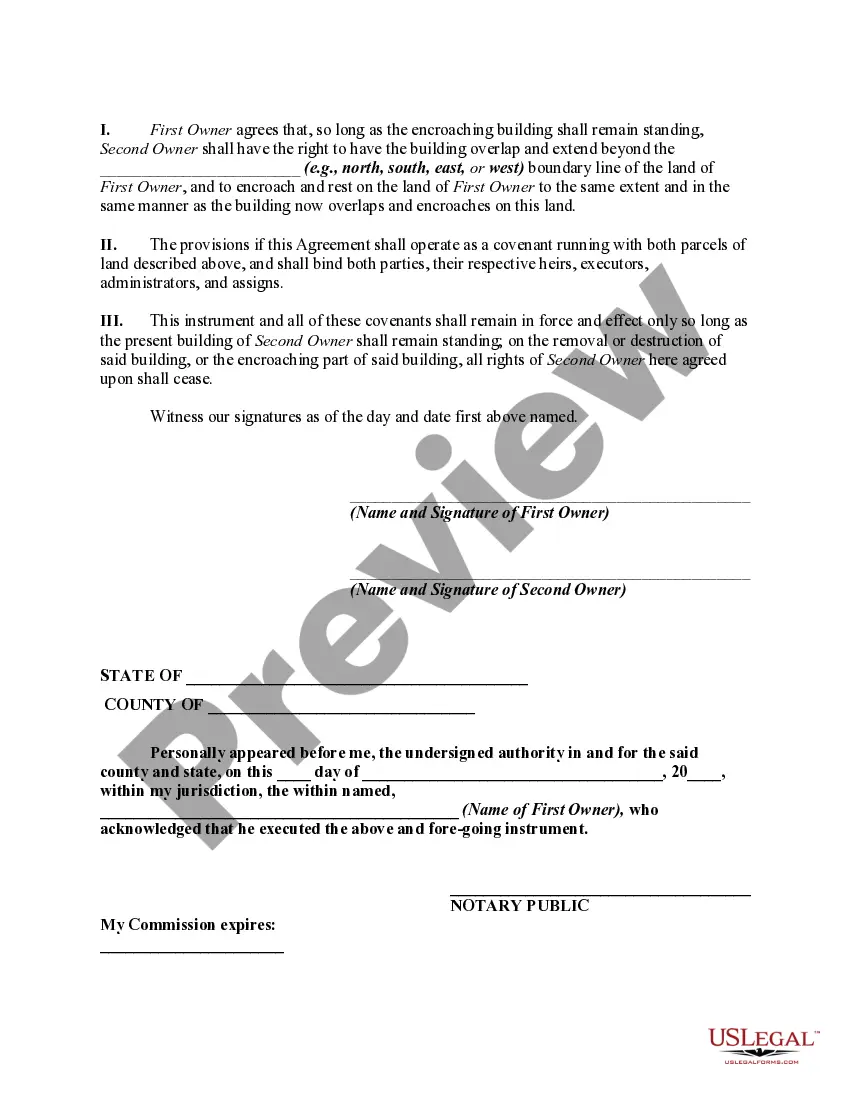
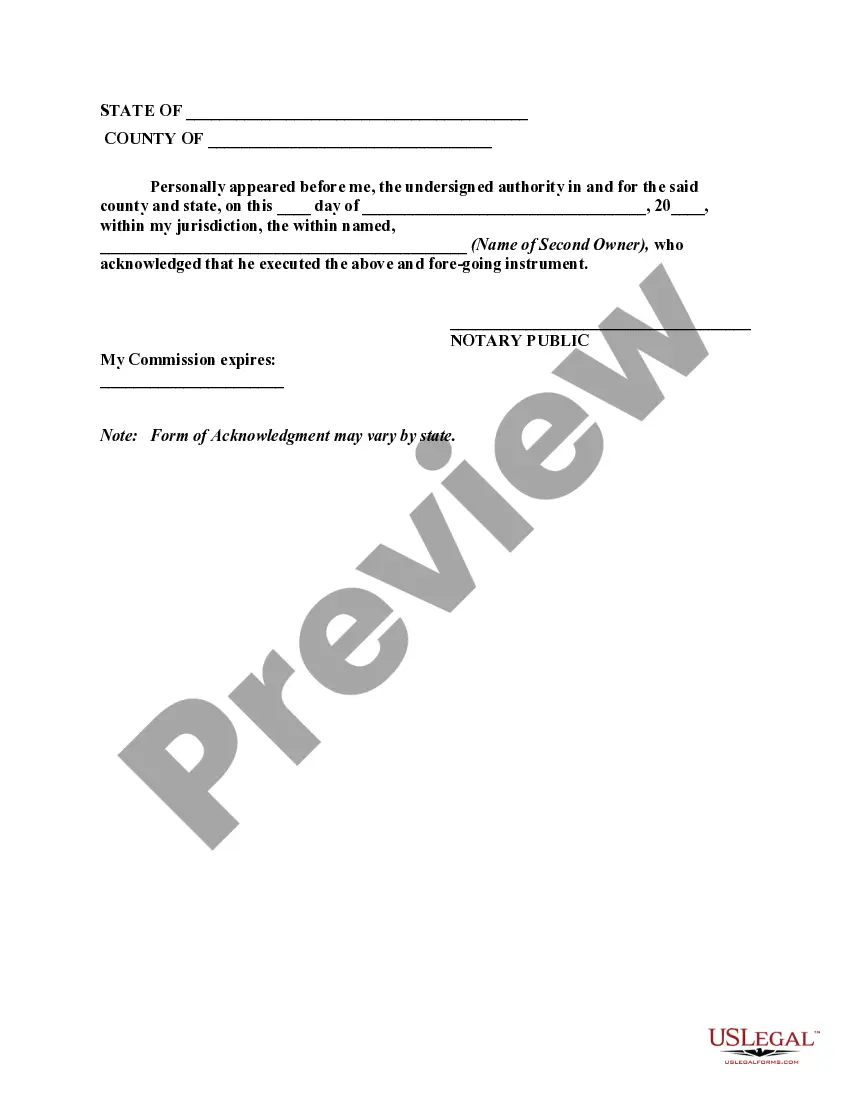
- Ensure both parties sign the document, and have it notarized if required.
Is notarization required?
This form must be notarized to be legally valid. US Legal Forms provides secure online notarization powered by Notarize, allowing you to complete the process through a verified video call.
Get your form ready online
Our built-in tools help you complete, sign, share, and store your documents in one place.
Make edits, fill in missing information, and update formatting in US Legal Forms—just like you would in MS Word.
Download a copy, print it, send it by email, or mail it via USPS—whatever works best for your next step.
Sign and collect signatures with our SignNow integration. Send to multiple recipients, set reminders, and more. Go Premium to unlock E-Sign.
If this form requires notarization, complete it online through a secure video call—no need to meet a notary in person or wait for an appointment.
We protect your documents and personal data by following strict security and privacy standards.

Make edits, fill in missing information, and update formatting in US Legal Forms—just like you would in MS Word.

Download a copy, print it, send it by email, or mail it via USPS—whatever works best for your next step.

Sign and collect signatures with our SignNow integration. Send to multiple recipients, set reminders, and more. Go Premium to unlock E-Sign.

If this form requires notarization, complete it online through a secure video call—no need to meet a notary in person or wait for an appointment.

We protect your documents and personal data by following strict security and privacy standards.
Typical mistakes to avoid
- Failing to accurately describe the extent of the encroachment.
- Not including legal property descriptions for both properties.
- Neglecting to have the agreement notarized when required.
- Using vague terms that could lead to future disputes.
Benefits of completing this form online
- Convenience: Downloadable and easy to access at any time.
- Editability: Customize the form to fit your specific needs.
- Reliability: Forms are drafted by licensed attorneys, ensuring legal validity.
Looking for another form?

Form popularity
FAQ
Dear insert neighbor's name, Please allow me to introduce myself, I'm your neighbor insert your name and I would love to talk with you about good outdoor lighting. I notice that you have installed outdoor lights on your property, and I applaud your desire to help improve our neighborhood.
Describe the violation. Explain that you are giving the neighbor notice that she needs to remove the encroaching structure. If relevant, mention other solutions such as selling the land or giving the neighbor permission to use the encroached-upon area.
As a last resort, if you feel confident that your property is being encroached upon, you can file a claim in court and ask a judge to decide the boundariesbut the more you involve the legal system, the more cost you will incur.
There is a term for this battle of land: encroachment. An encroachment happens when a fence or another piece of your neighbor's property crosses the property lines. Other examples of encroachments could involve trees, parts of a building, fencing or any other fixtures located on both pieces of property.
A Land Survey Works Wonders for Boundary Disputes. If you feel like your neighbor has or is developing on top of your land, you may want to get a professional land survey. Talk it Over and Offer Concessions. Bring on a Neutral Third Party. Hire a Qualified Estate Attorney.
A Land Survey Works Wonders for Boundary Disputes. If you feel like your neighbor has or is developing on top of your land, you may want to get a professional land survey. Talk it Over and Offer Concessions. Bring on a Neutral Third Party. Hire a Qualified Estate Attorney.
Have a Professional Land Survey Done. Talk Things Out and Offer Concessions. Seek Mediation or a Neutral Third Party. If all else fails, hire a qualified real estate attorney.