Option Agreement
Overview of this form
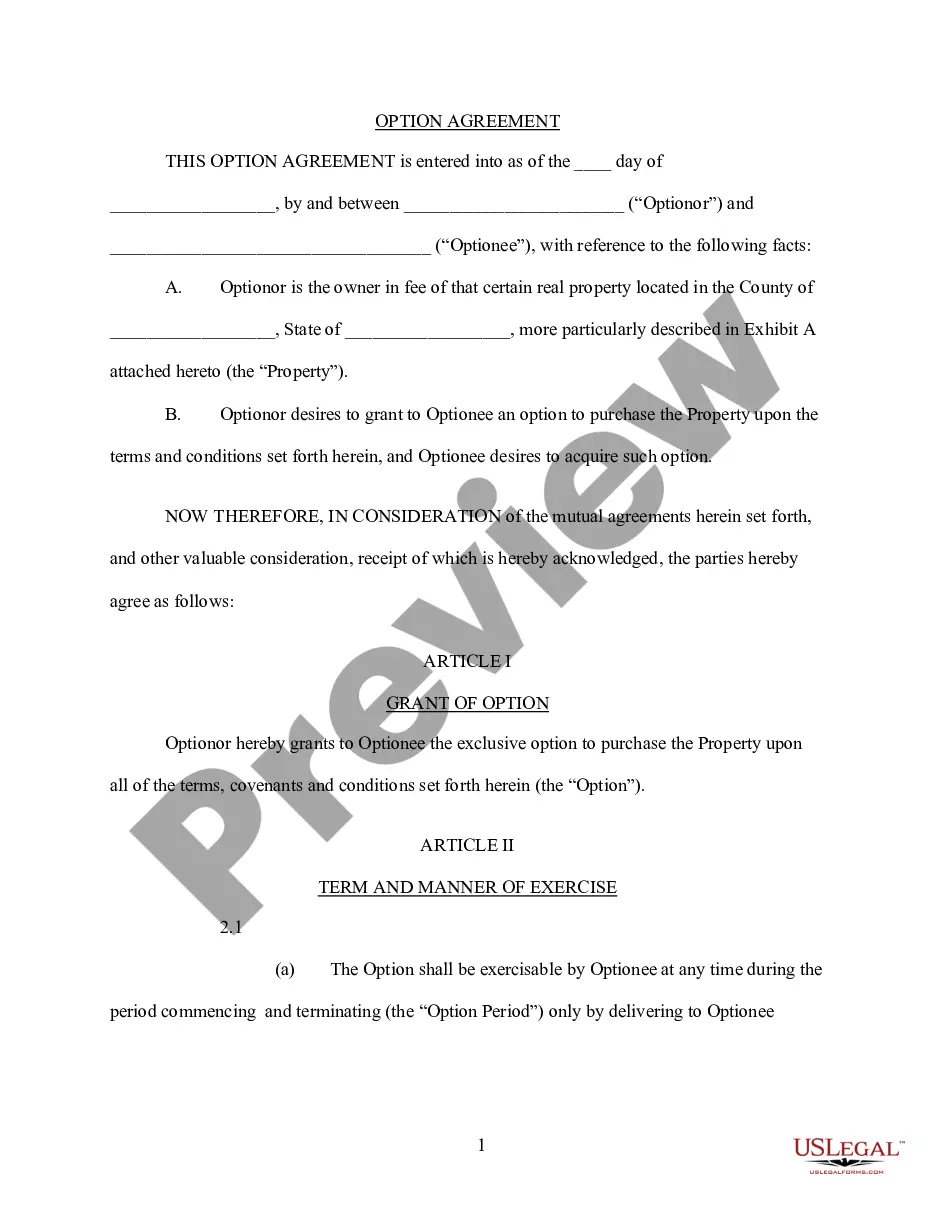
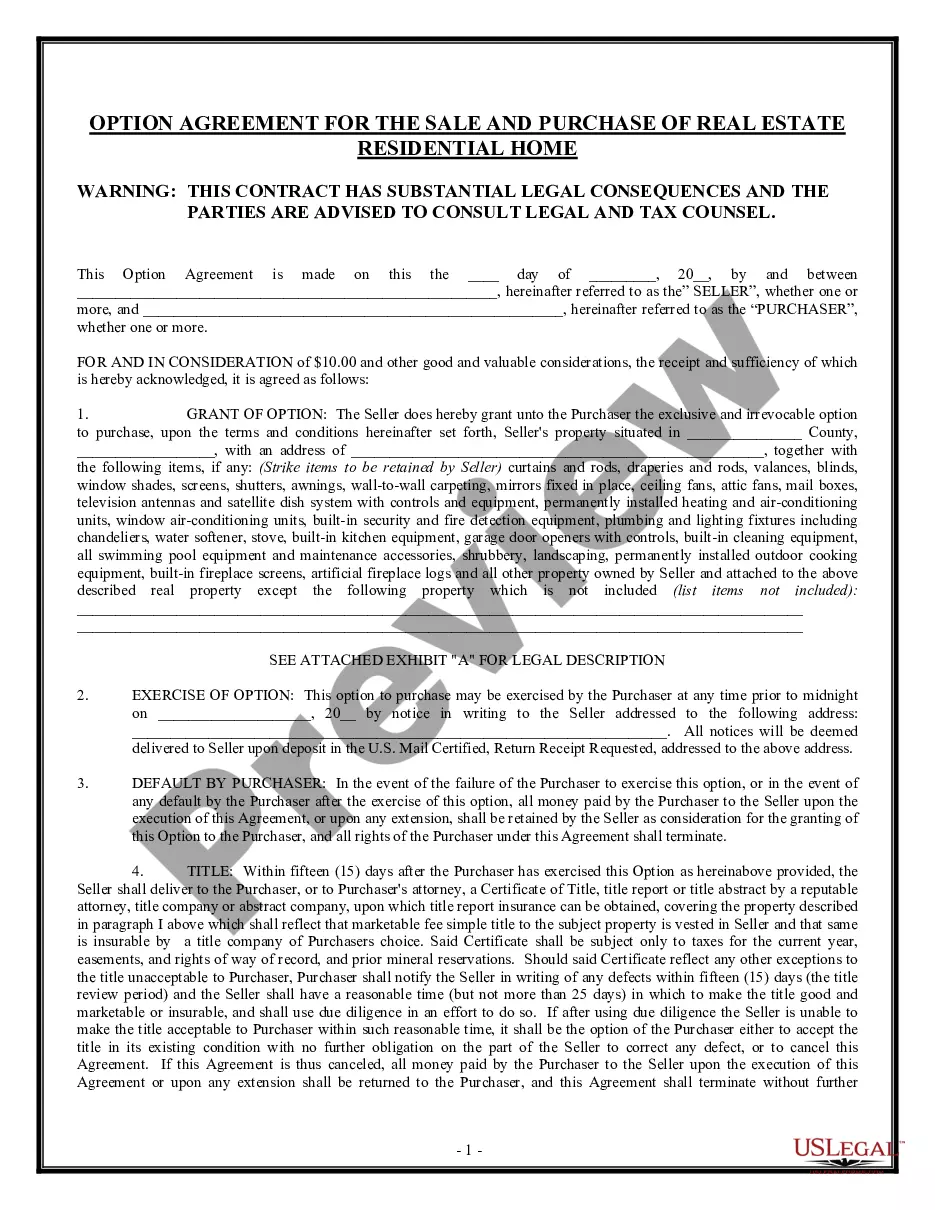
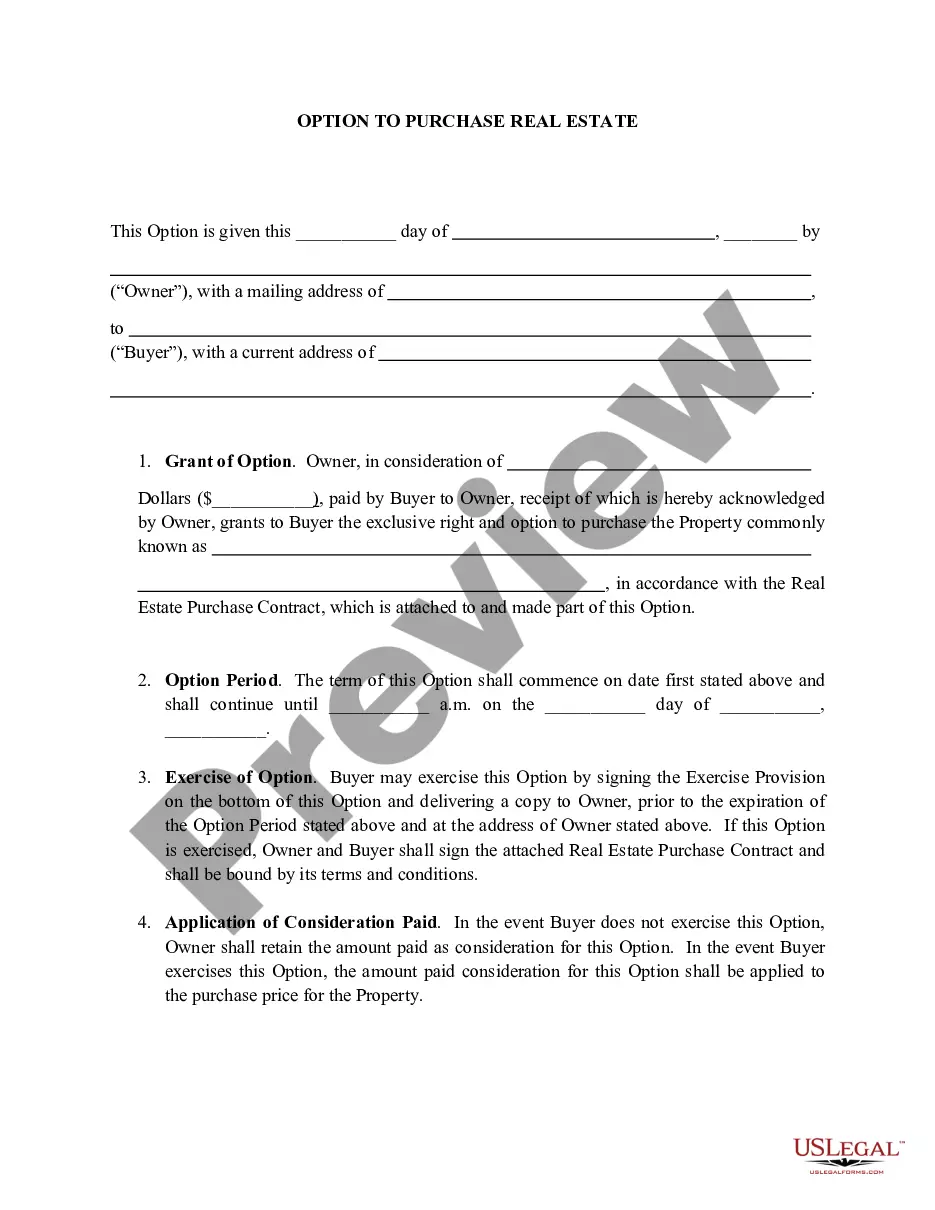
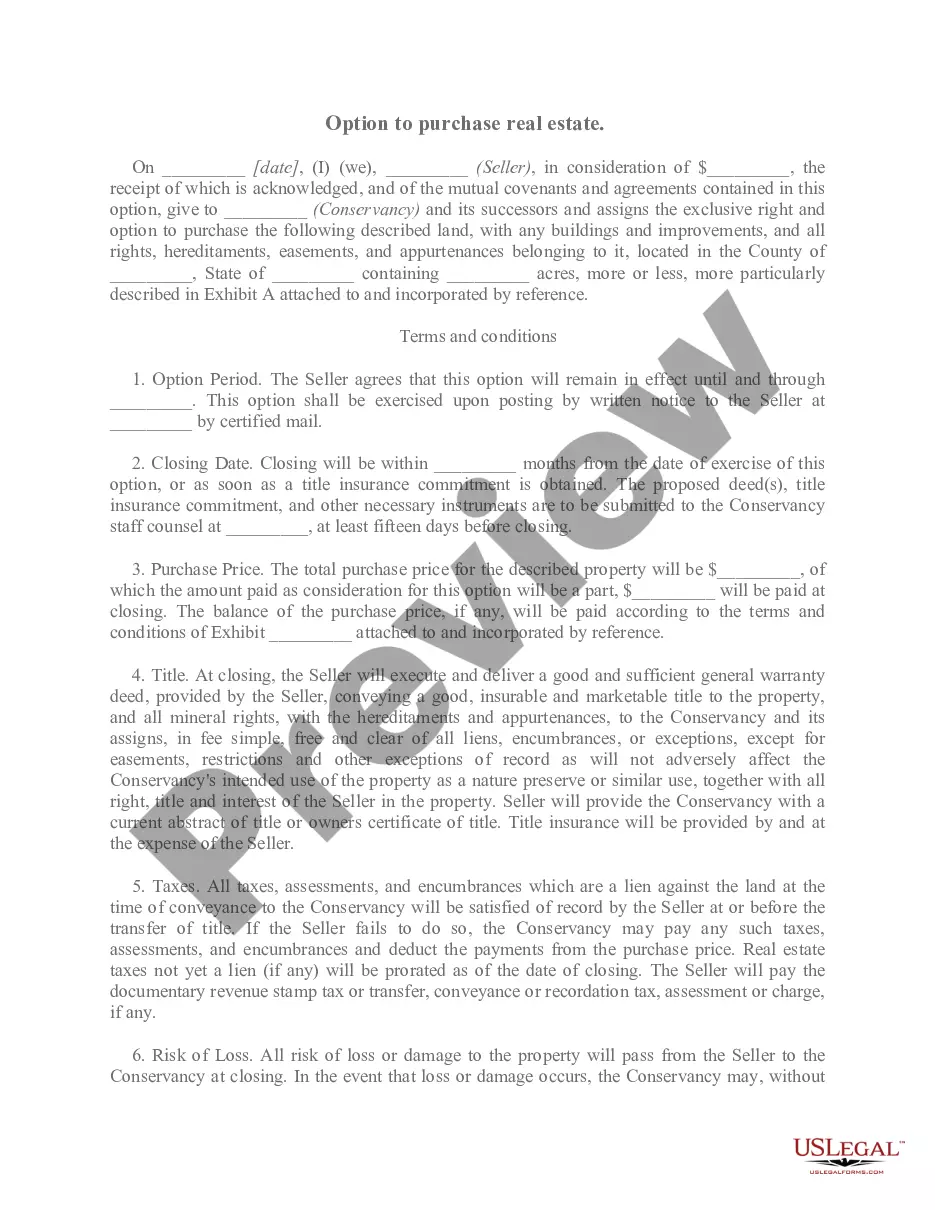
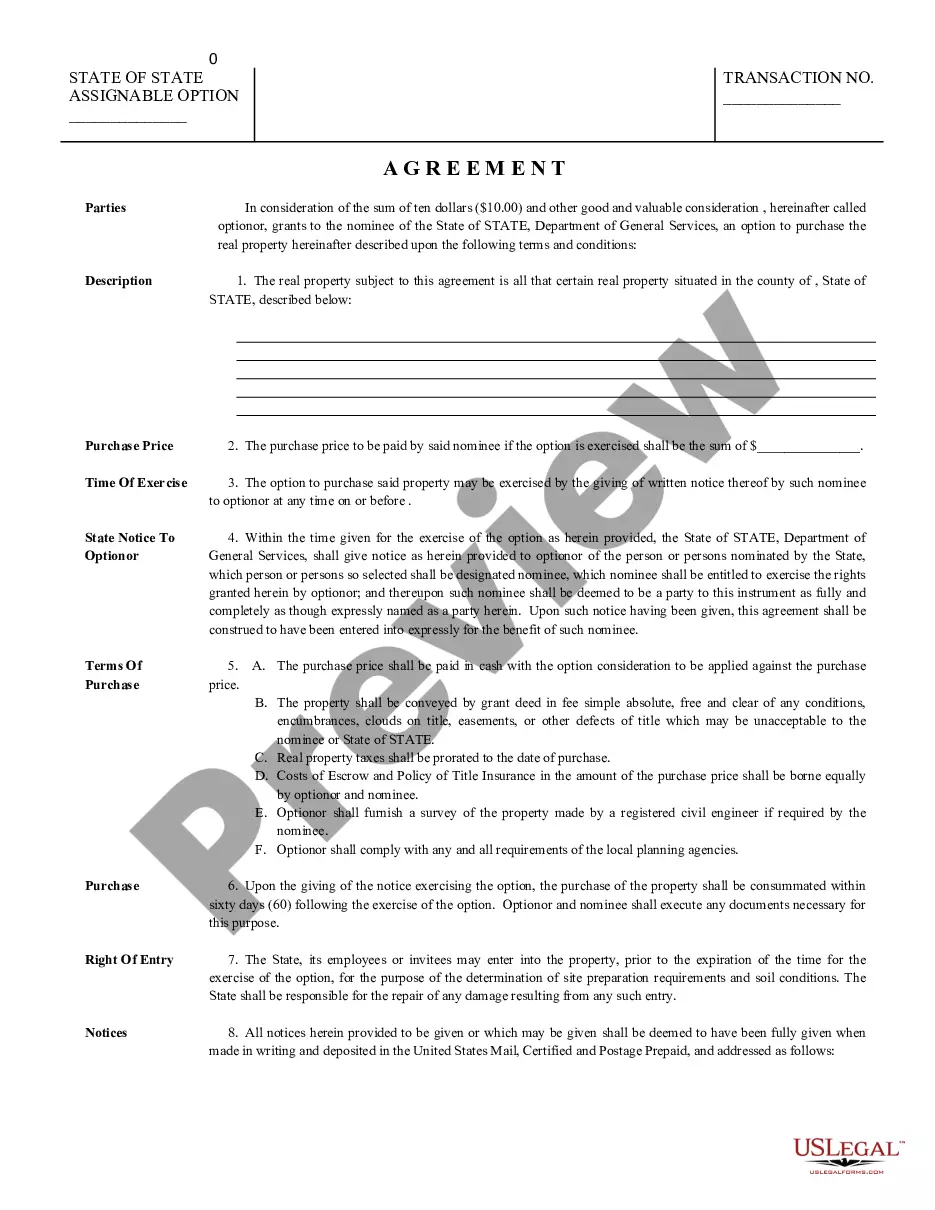
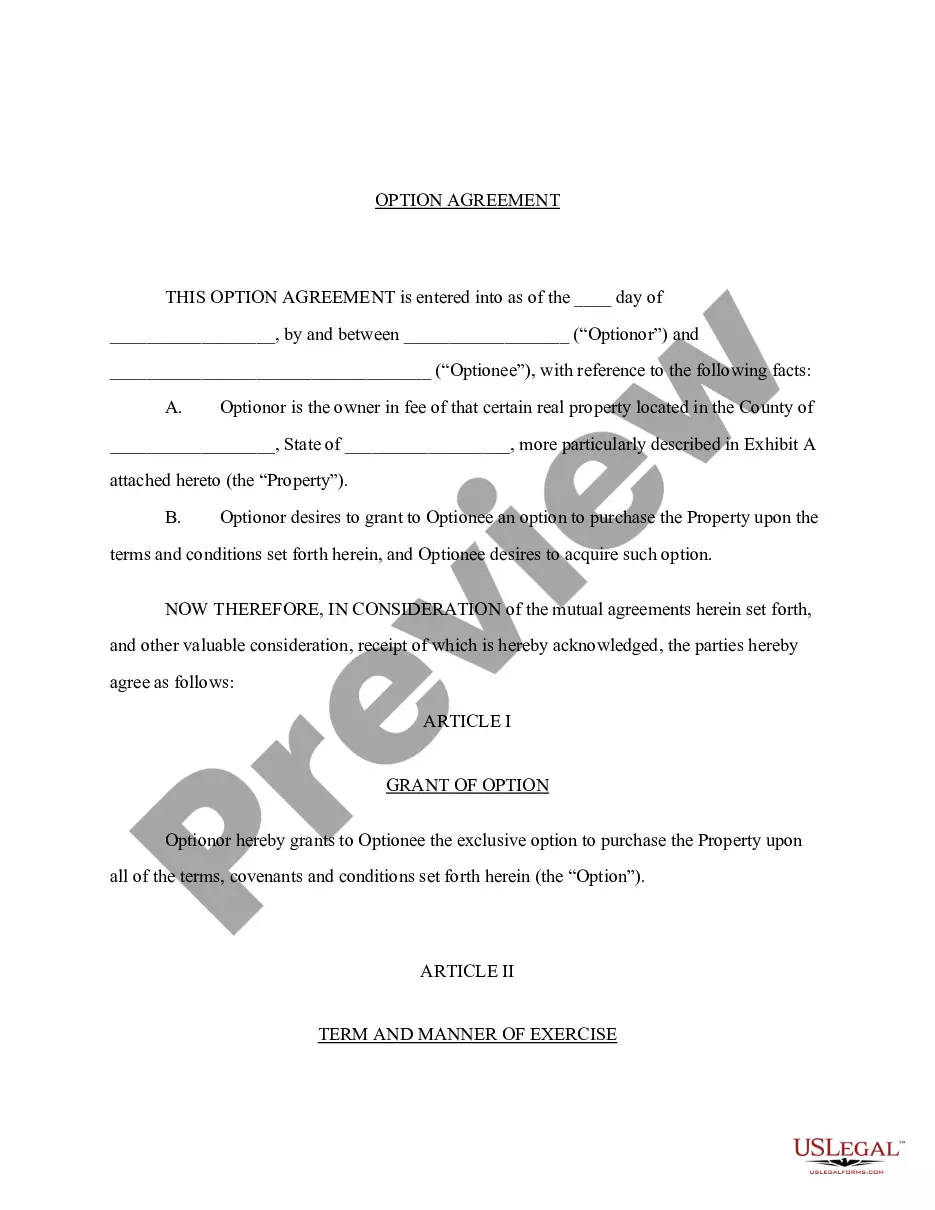
An Option Agreement is a legal document that outlines an arrangement between two parties, enabling one party (the Optionee) to purchase a specific asset or property from another party (the Optionor) at a predetermined price, within a certain timeframe. This agreement serves as a promise to sell the property, differentiating it from a standard purchase contract, making it particularly useful for buyers who want to secure a potential acquisition while negotiating terms or arranging financing.
Key parts of this document
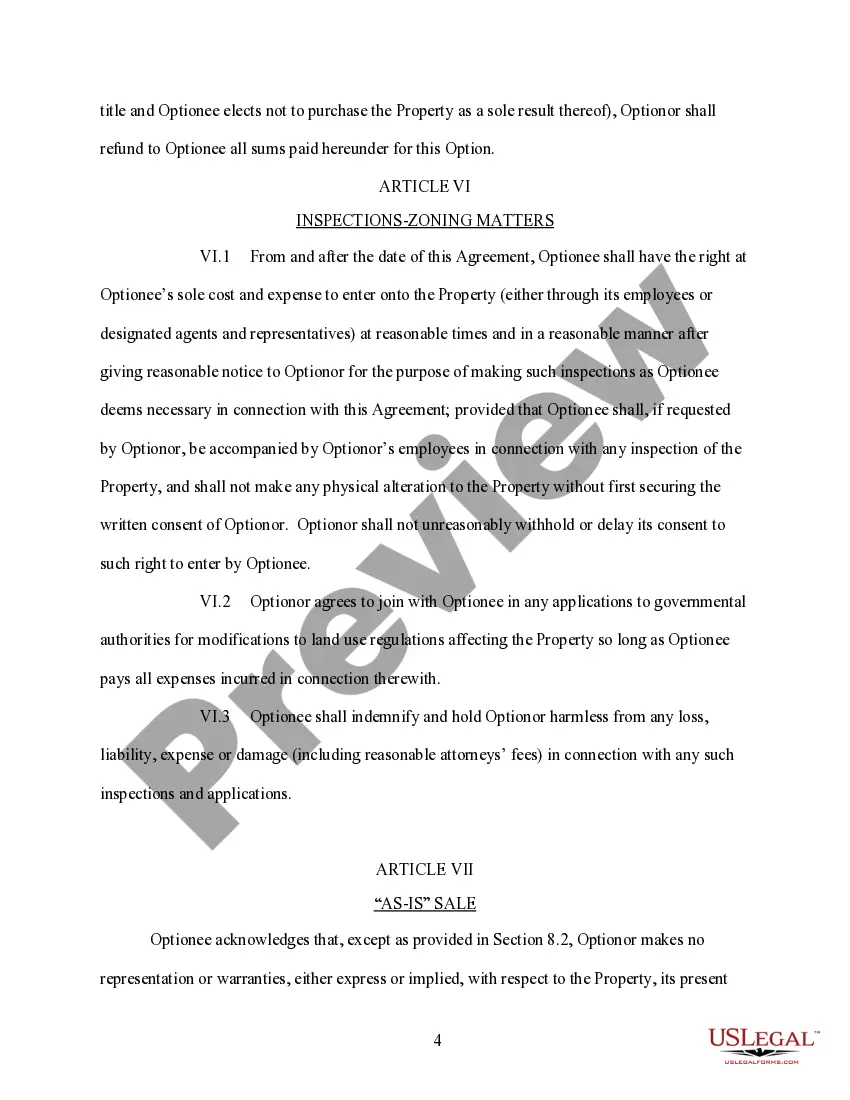
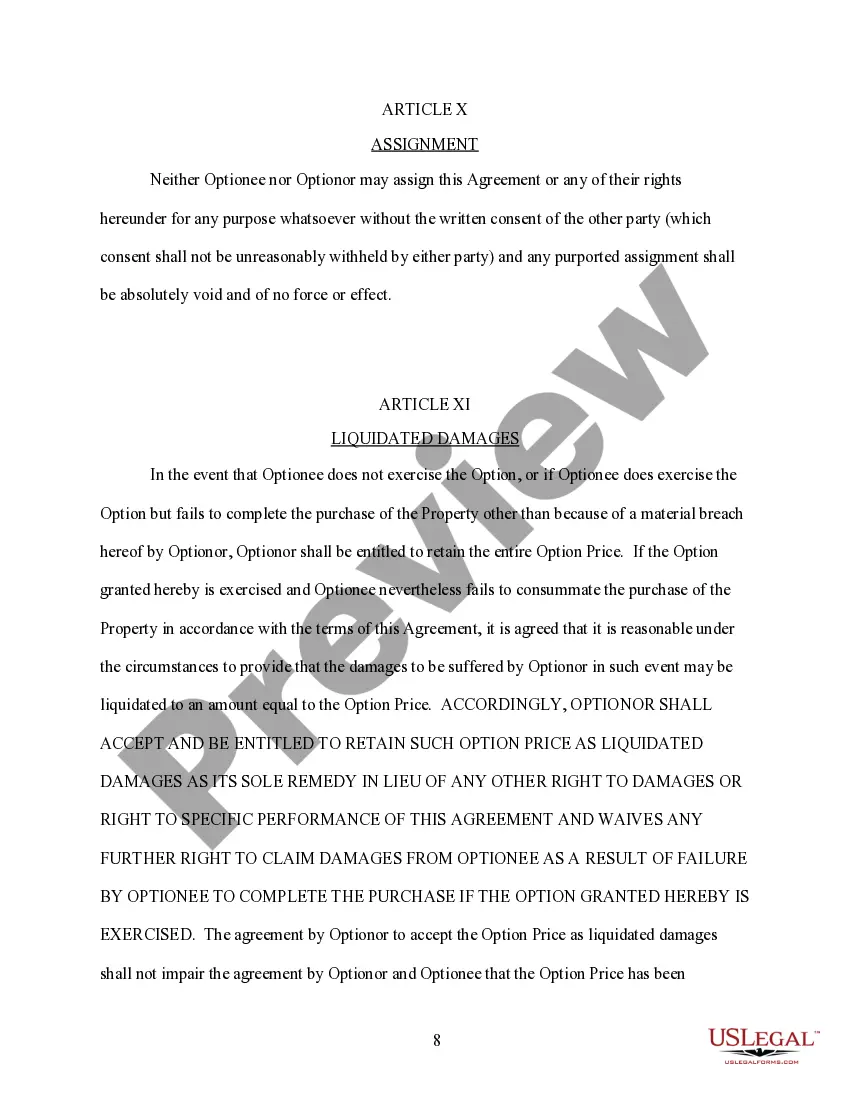
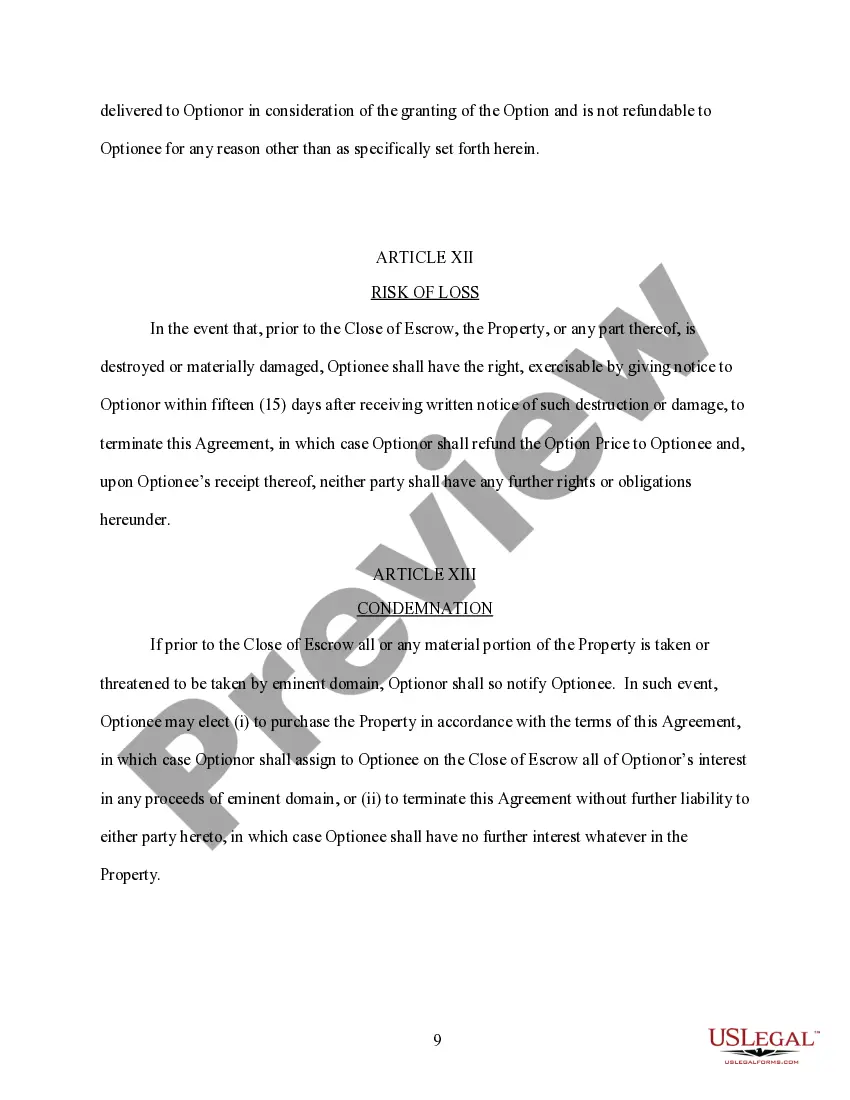
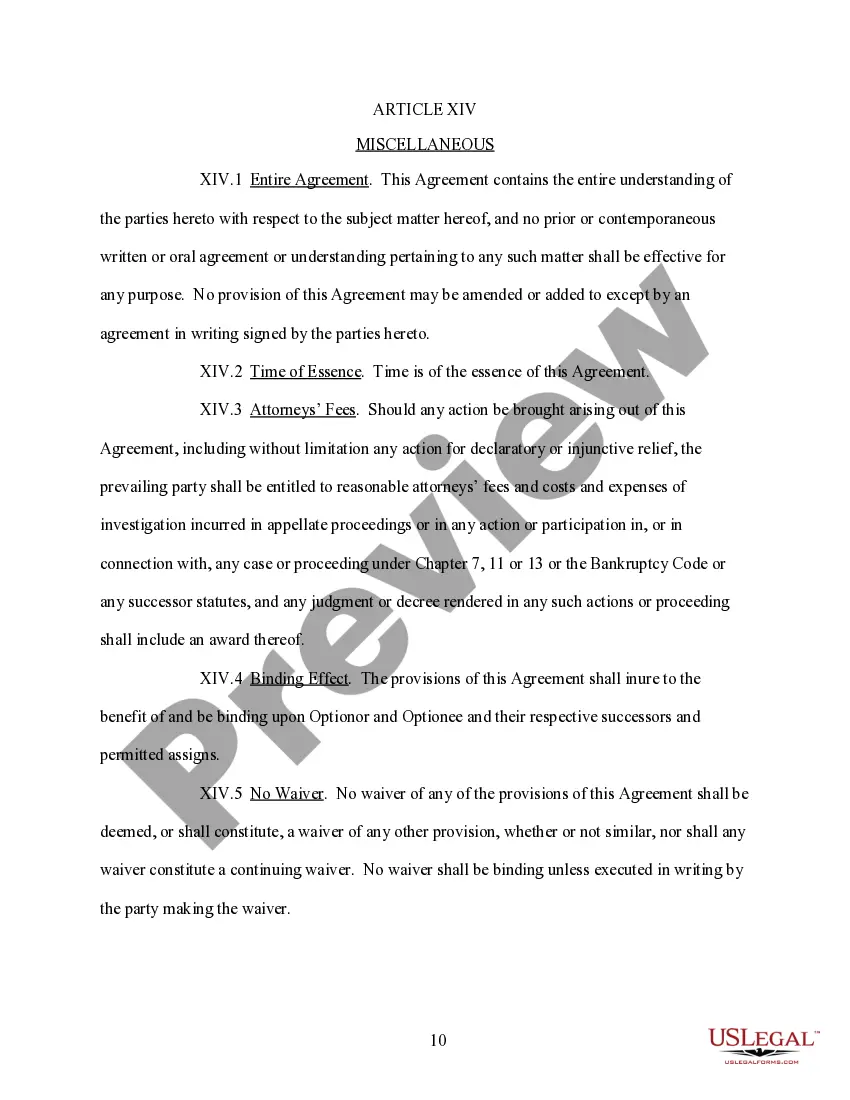
- Grant of option â Details the exclusive rights given to the Optionee to purchase the property.
- Term and manner of exercise â Specifies the time period during which the Optionee can exercise the option.
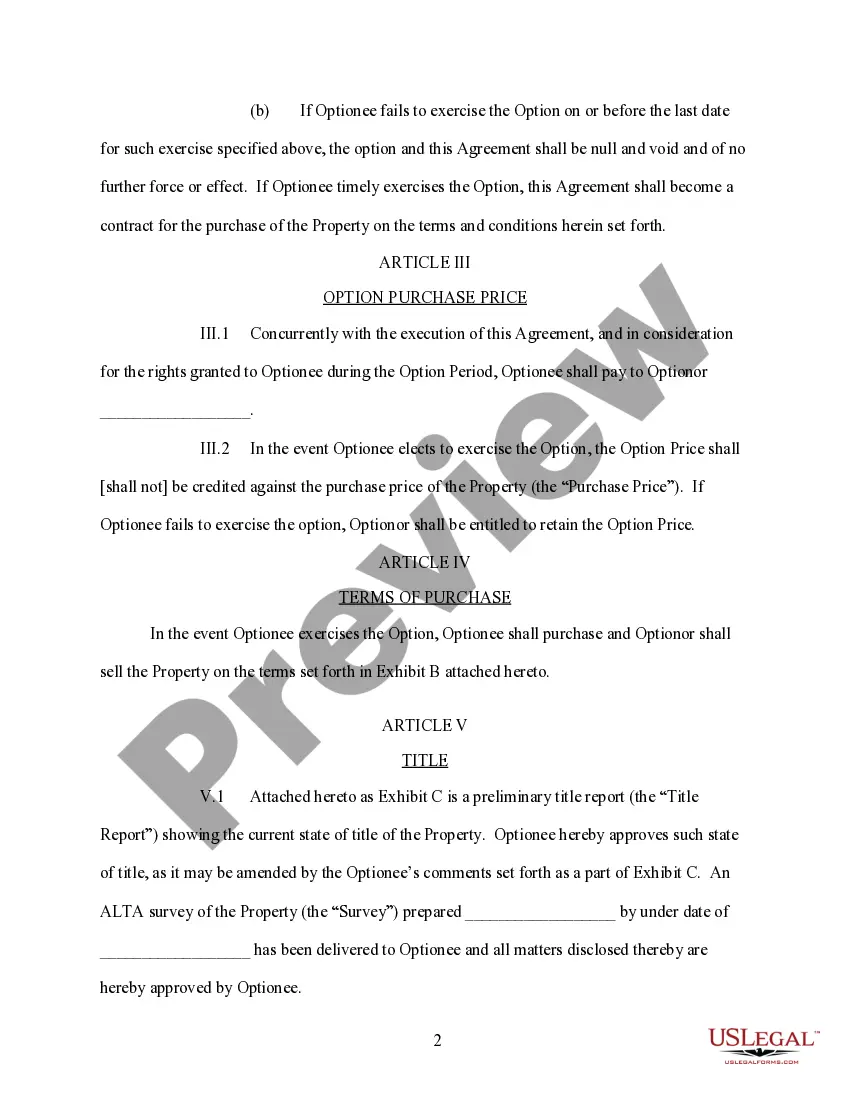
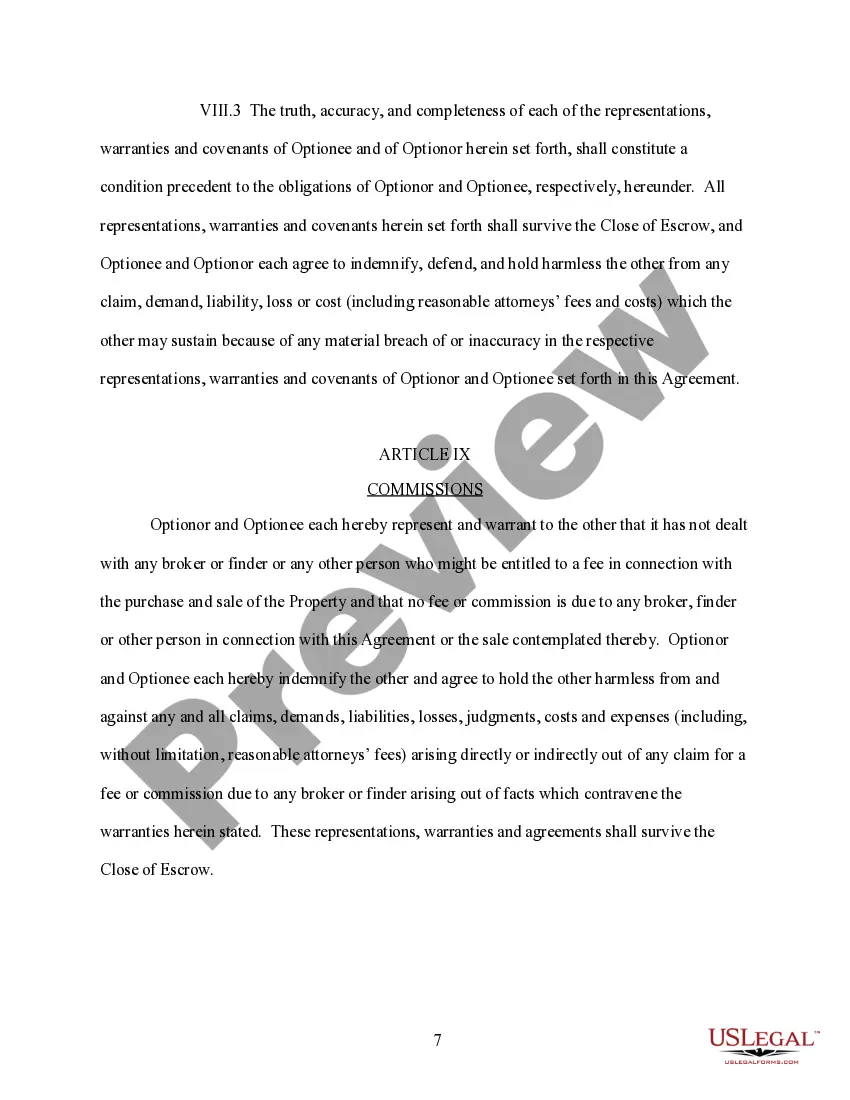
- Option purchase price â Outlines the initial fee paid to the Optionor, which may not be credited toward the final purchase price.
- Terms of purchase â Defines the conditions under which the property will be sold if the option is exercised.
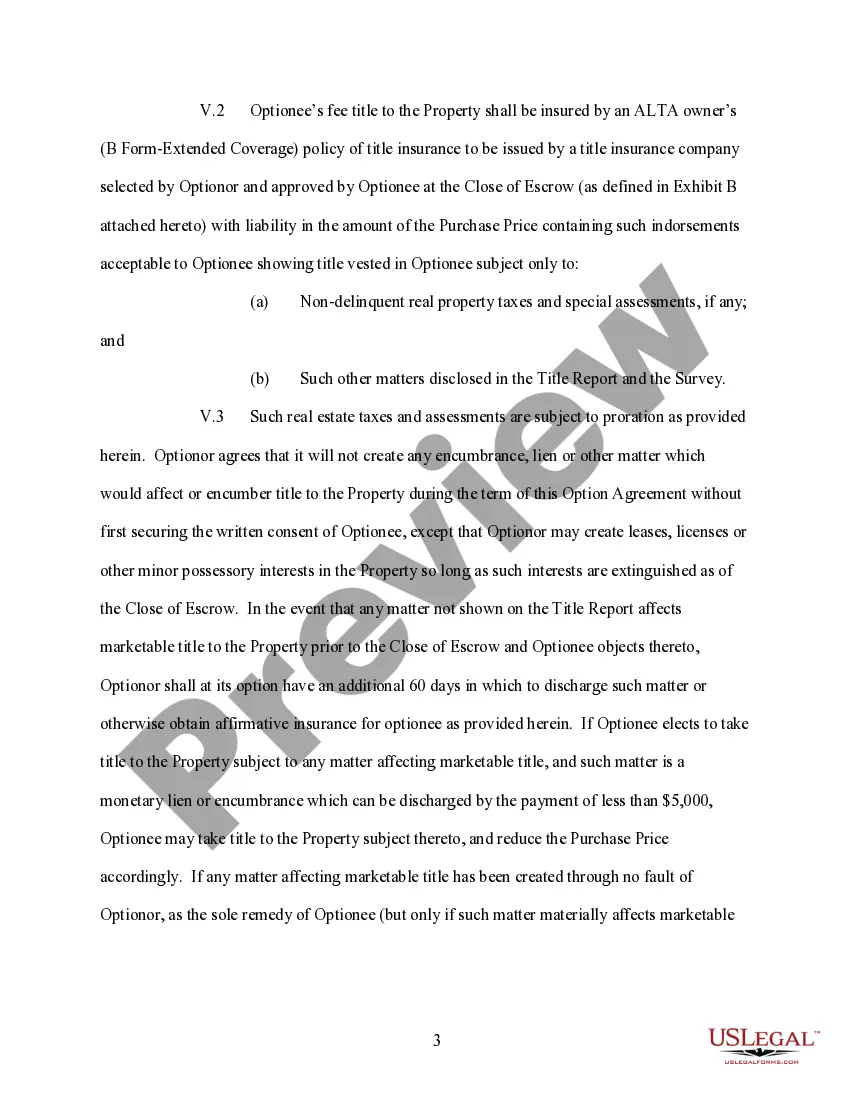
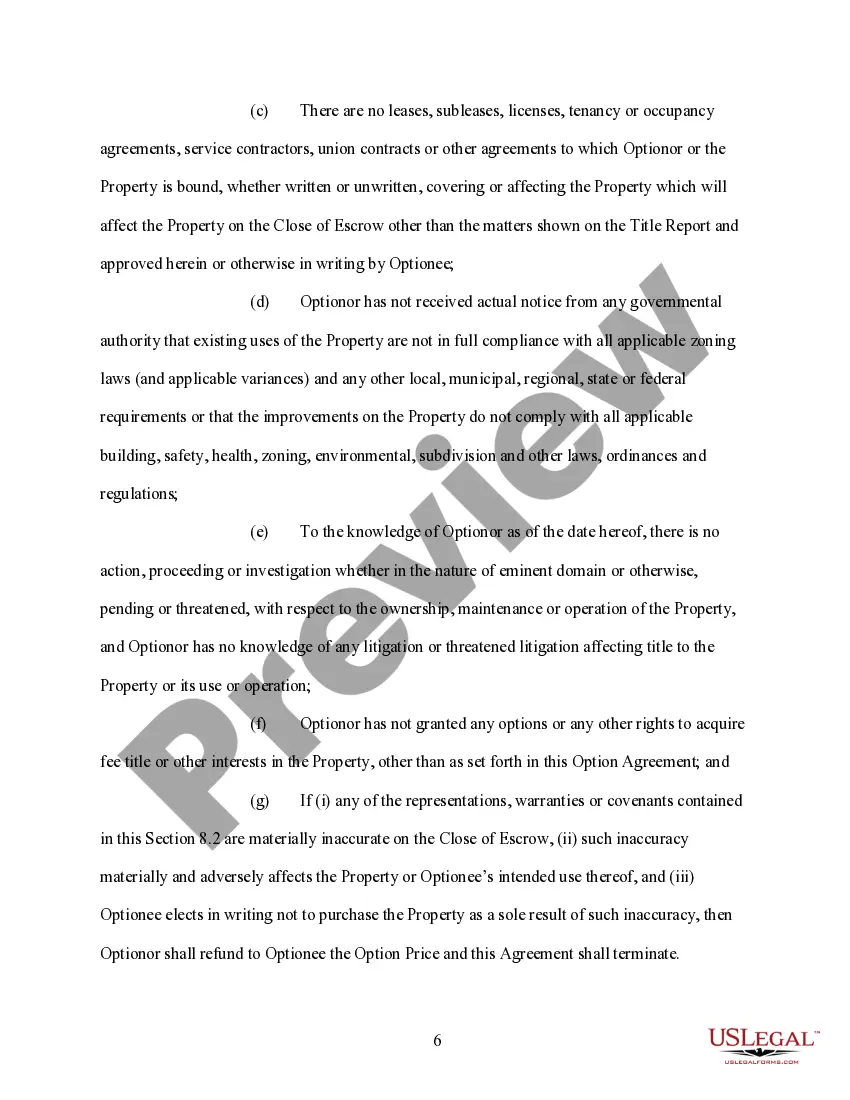
- Title â Addresses the state of the property's title, including requirements for title insurance.
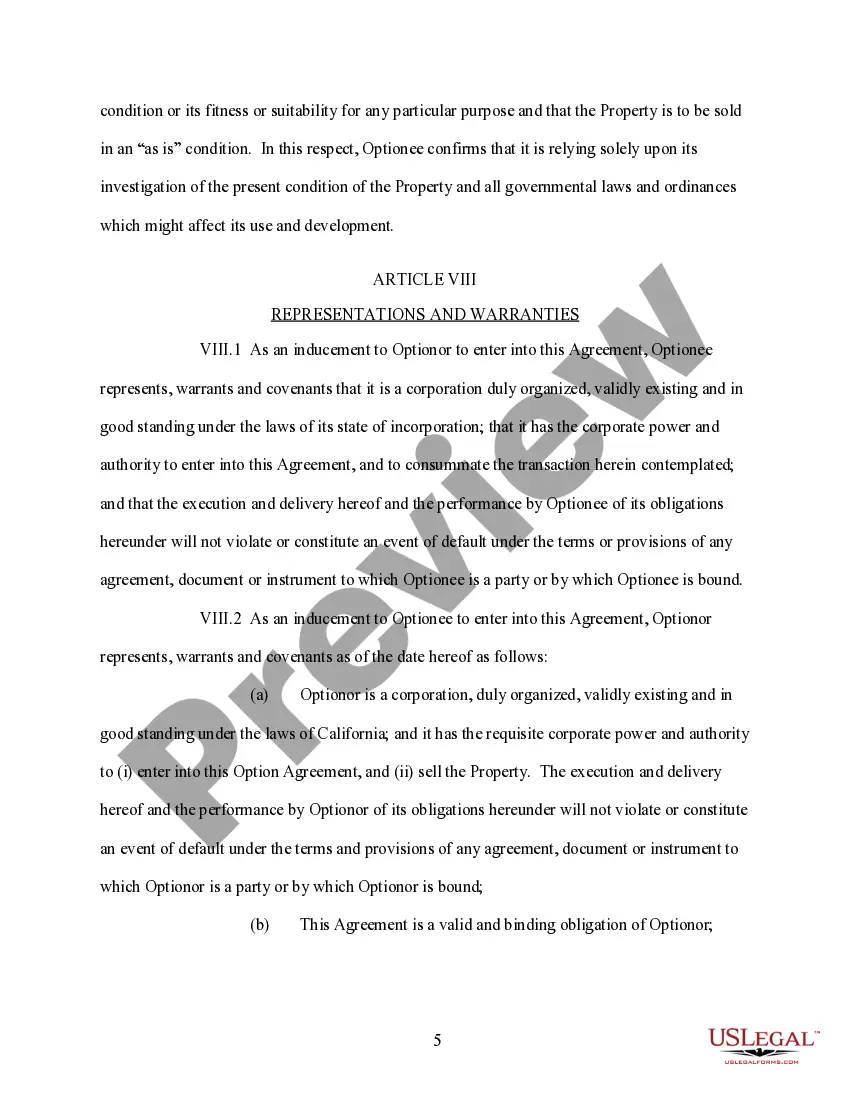
- As-is sale â Clarifies that the property is sold without warranties or guarantees regarding its condition.

Common use cases
This form should be used when a buyer is interested in purchasing property but needs additional time to conduct due diligence, secure financing, or negotiate further terms. It is particularly useful in real estate transactions where the market conditions may require a buyer to lock in a property price before formally acquiring it. An Option Agreement provides a beneficial framework for both parties to agree on terms while reducing risks associated with fluctuating property values.
Who can use this document
This form is ideal for:
- Real estate investors seeking to control property prices while assessing potential investments.
- Individuals looking to purchase residential or commercial real estate.
- Developers requiring time to secure planning or financing before closing a sale.
- Property owners wanting to maintain flexibility regarding their asset while exploring buyers.
How to complete this form
- Identify the parties â Fill in the names of the Optionor (seller) and the Optionee (buyer).
- Specify the property â Include the description of the property being sold, referencing any attached exhibits for clarity.
- Enter dates â Clearly state the date the agreement is executed, as well as the option period during which the Optionee can exercise the agreement.
- Detail the purchase price â Indicate the initial option price and confirm terms for the final purchase price if the option is exercised.
- Sign and date â Both parties must sign the document, indicating their agreement to the terms outlined in the Option Agreement.
Does this document require notarization?
This form does not typically require notarization unless specified by local law. However, having it notarized can provide additional legal protection and clarity in the transaction. If you choose to notarize, consider using US Legal Forms' integrated online notarization services for convenience and security.
Get your form ready online
Our built-in tools help you complete, sign, share, and store your documents in one place.
Make edits, fill in missing information, and update formatting in US Legal Forms—just like you would in MS Word.
Download a copy, print it, send it by email, or mail it via USPS—whatever works best for your next step.
Sign and collect signatures with our SignNow integration. Send to multiple recipients, set reminders, and more. Go Premium to unlock E-Sign.
If this form requires notarization, complete it online through a secure video call—no need to meet a notary in person or wait for an appointment.
We protect your documents and personal data by following strict security and privacy standards.

Make edits, fill in missing information, and update formatting in US Legal Forms—just like you would in MS Word.

Download a copy, print it, send it by email, or mail it via USPS—whatever works best for your next step.

Sign and collect signatures with our SignNow integration. Send to multiple recipients, set reminders, and more. Go Premium to unlock E-Sign.

If this form requires notarization, complete it online through a secure video call—no need to meet a notary in person or wait for an appointment.

We protect your documents and personal data by following strict security and privacy standards.
Typical mistakes to avoid
- Failing to specify the exact property description or attaching necessary exhibits.
- Not clearly defining the option period, leading to disputes about the exercise of the option.
- Overlooking the requirement for signatures, which can render the agreement unenforceable.
- Neglecting to obtain necessary title insurance or inspections before exercising the option.
- Misunderstanding the as-is sale clause which could lead to future liabilities post-purchase.
Benefits of using this form online
- Convenience â Easily access and download the form at any time without needing to visit a lawyerâs office.
- Editability â Customize the agreement to fit specific needs and circumstances before finalizing.
- Cost-effective â Save on legal fees by using professionally drafted templates instead of hiring a lawyer for custom agreements.
- Quick access to additional legal resources if needed, ensuring you have the best tools to complete your transaction.
Looking for another form?
Form popularity
FAQ
A real estate purchase option is a contract on a specific piece of real estate that allows the buyer the exclusive right to purchase the property. Once a buyer has an option to buy a property, the seller cannot sell the property to anyone else. The buyer pays for the option to make this real estate purchase.
The difference between a lease option and a lease purchase agreement is that the lease option only obligates the seller to sell. A lease purchase agreement commits both parties to the sale barring breach of contract or the buyer's inability to secure a mortgage.
A call option writer makes money from the premium they received for writing the contract and entering into the position. This premium is the price the buyer paid to enter into the agreement. A call option buyer makes money if the price of the security remains above the strike price of the option.
Disadvantages of option agreements for landowners The main disadvantage of option agreements for sellers is that there is no guarantee of sale, seeing as the buyer only has the option to buy. In addition, the property will not be put on the open market for third parties to make offers.
An option to purchase agreement gives a home buyer the exclusive right to purchase a property within a specified time period and for a fixed or sometimes variable price. This, in turn, prevents sellers from providing other parties with offers or selling to them within this time period.
An option is a contract giving the buyer the right?but not the obligation?to buy (in the case of a call) or sell (in the case of a put) the underlying asset at a specific price on or before a certain date. People use options for income, to speculate, and to hedge risk.
Options explained for dummies Part - 2 Option Contract - YouTube YouTube Start of suggested clip End of suggested clip Price over a certain period of time. However options are not the same thing as stocks. Because theyMorePrice over a certain period of time. However options are not the same thing as stocks. Because they do not represent ownership in a company.
The seller of a call option receives a premium when they assume the obligation to sell their shares at the strike price. The buyer benefits by getting the option to purchase the asset at the strike price, no matter if the value of the asset increases above that price in the period of time covered by the contract.