Agreement Between Adjoining Landowners Regarding Overhanging Eaves
What is this form?
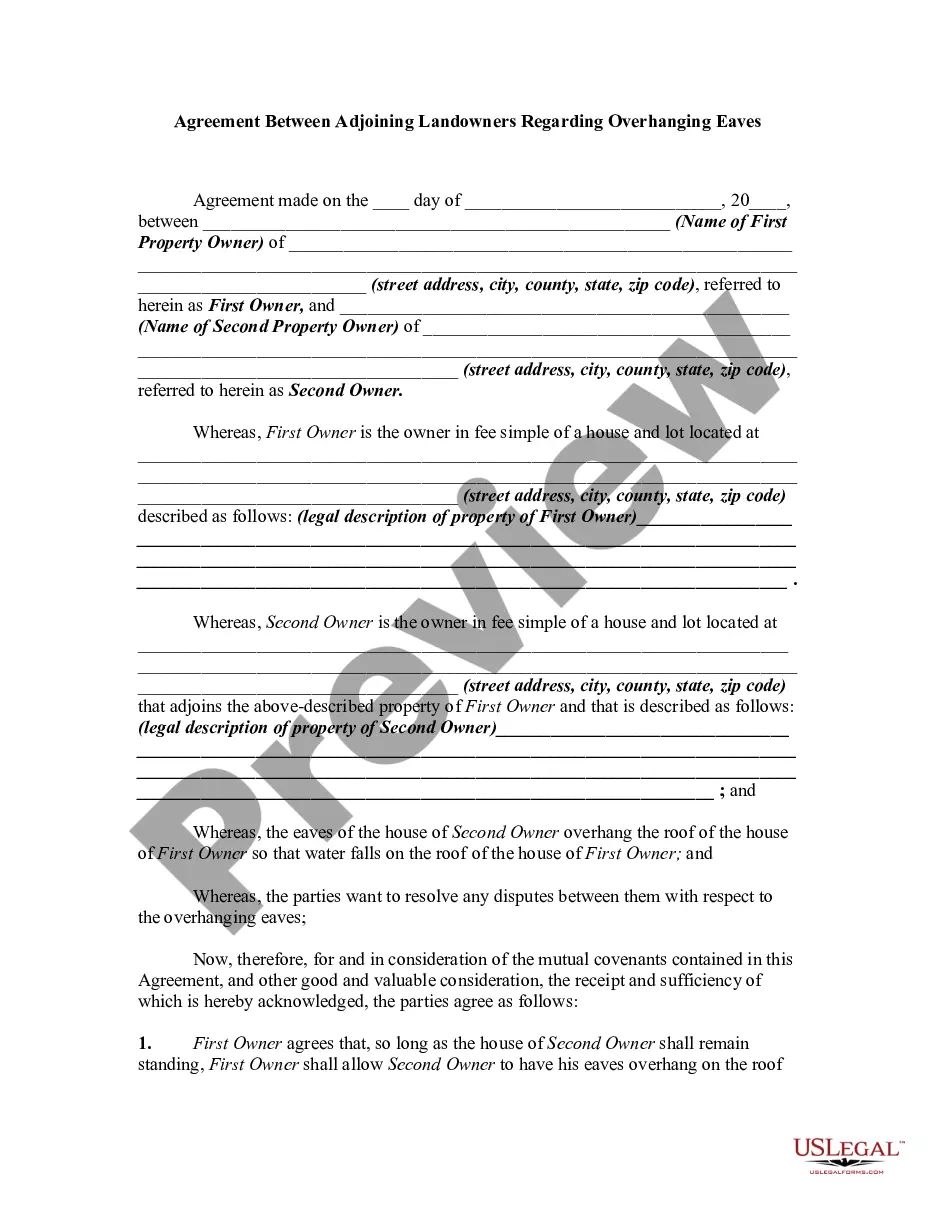
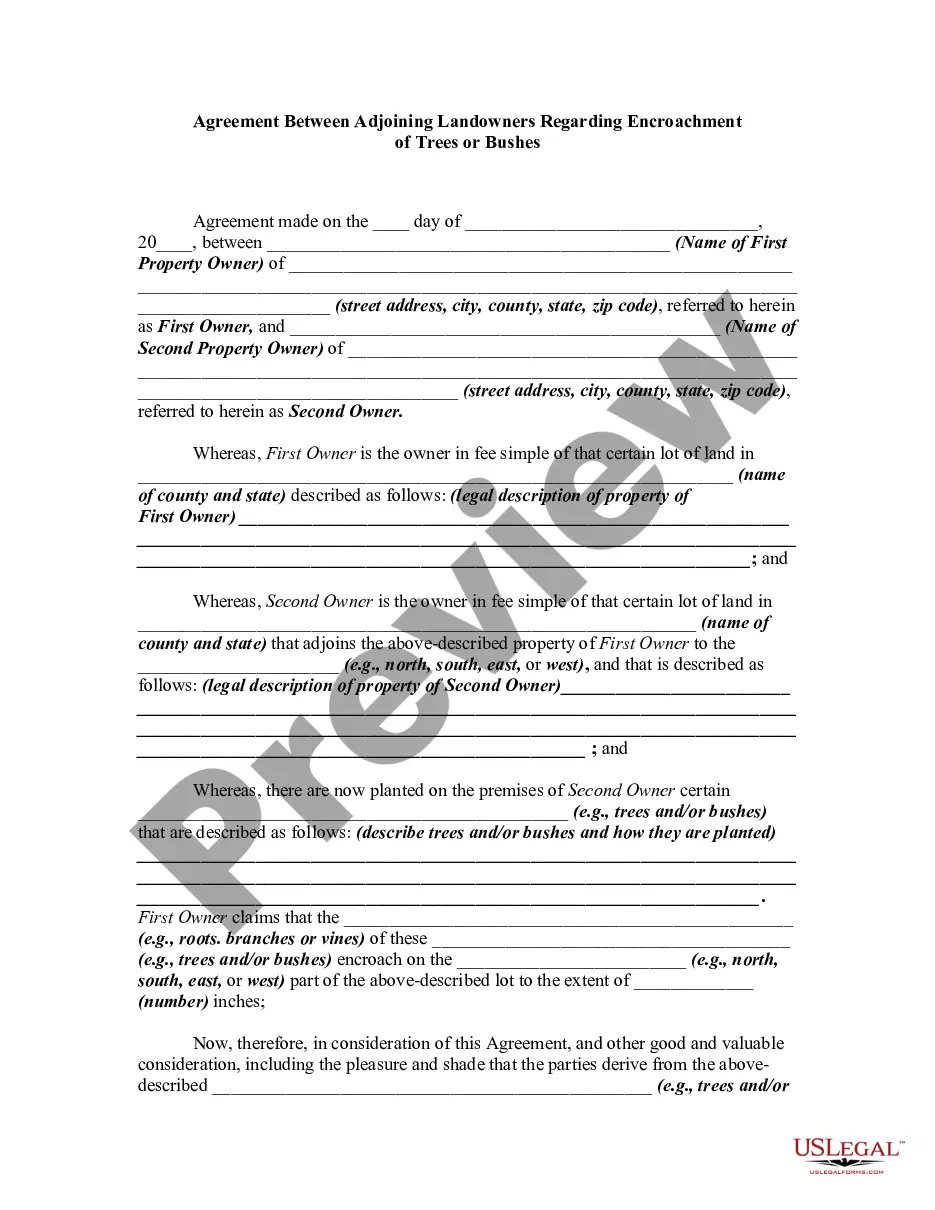
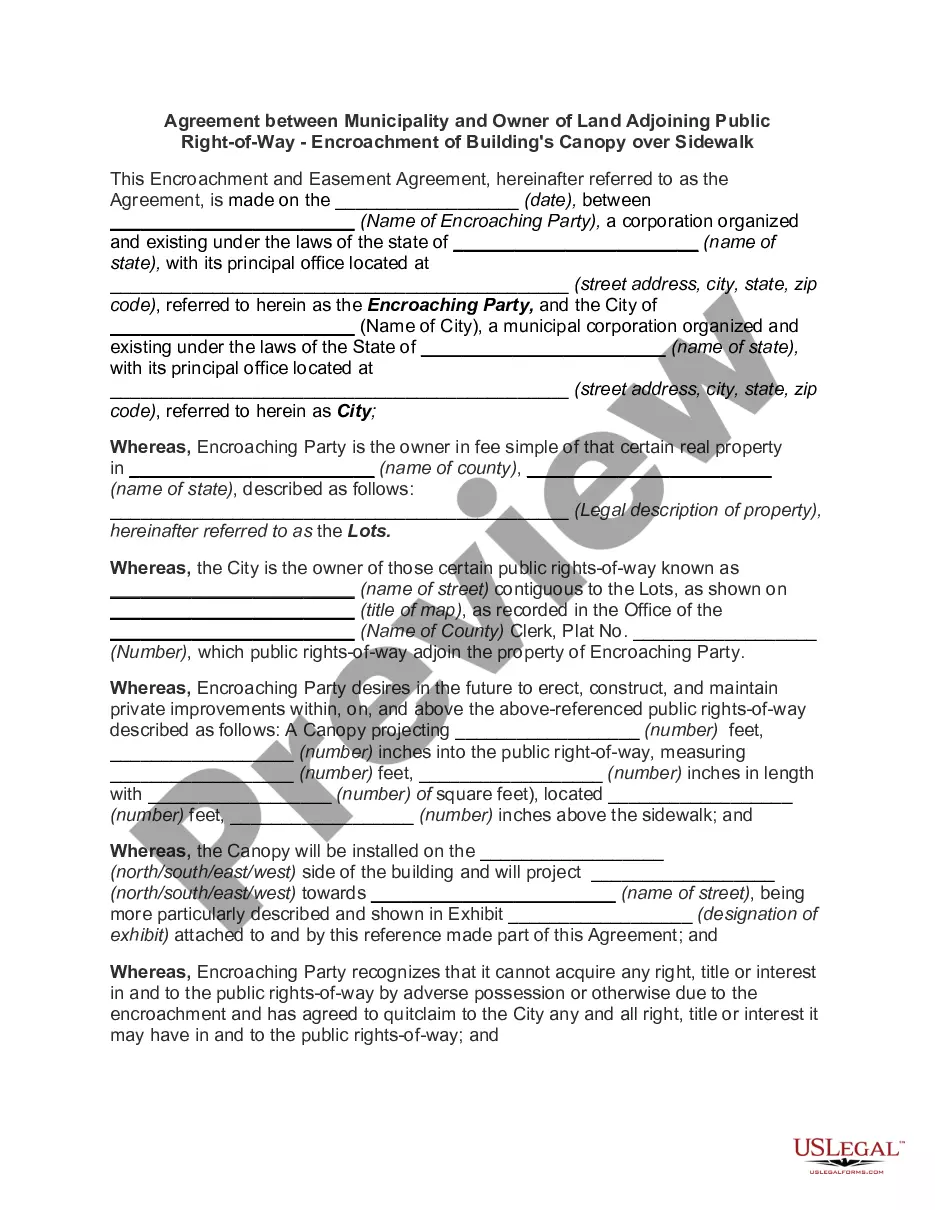
The Agreement Between Adjoining Landowners Regarding Overhanging Eaves is a legal document that allows one property owner (Owner B) to permit the overhanging eaves of another property owner's structure (Owner A) to extend over their property line. This agreement clarifies the rights and responsibilities of each party regarding the encroaching eaves and serves to prevent future disputes related to property boundaries and potential damages, distinguishing it from typical property agreements that do not address encroachments directly.
Form components explained
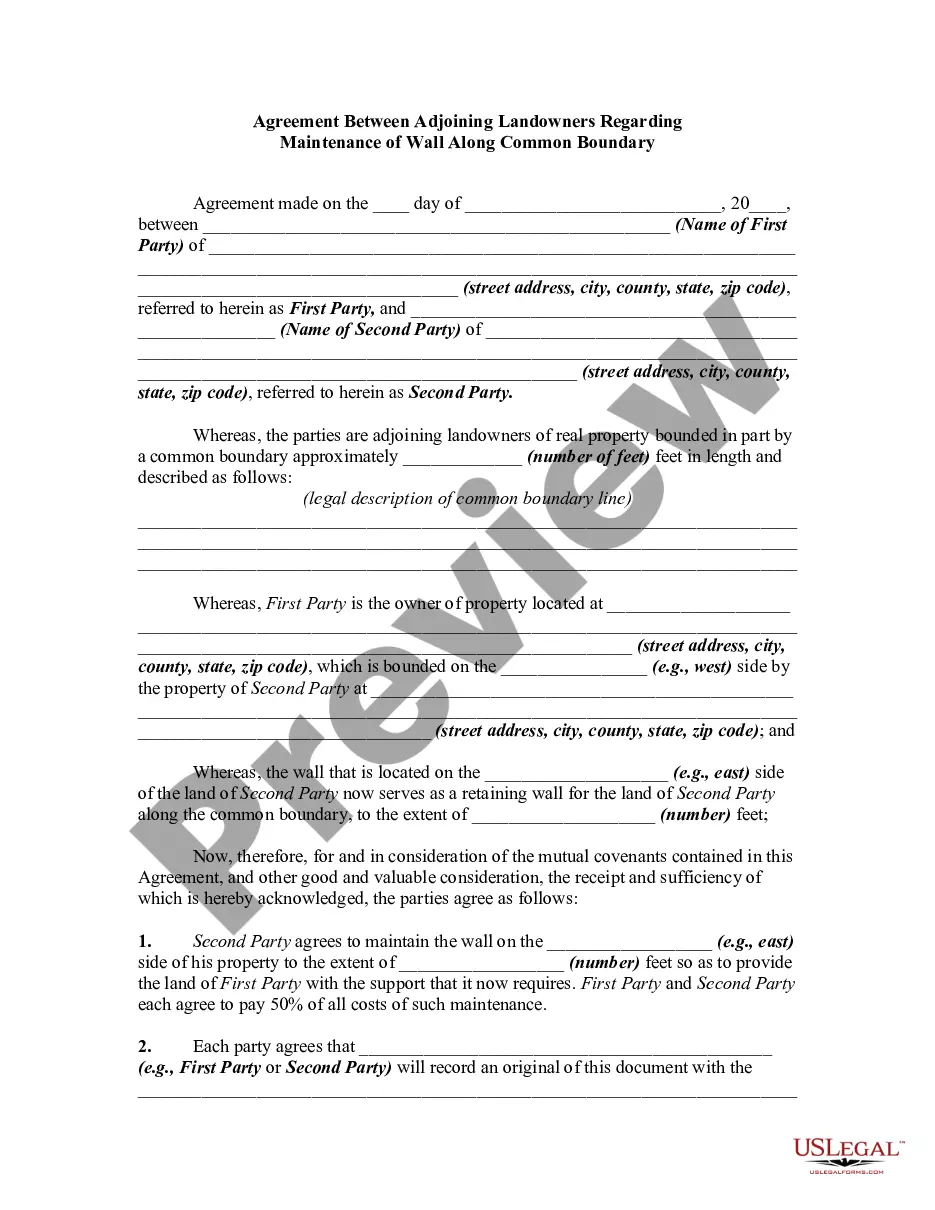
- Details of both property owners, including names and addresses.
- Legal descriptions of the properties involved.
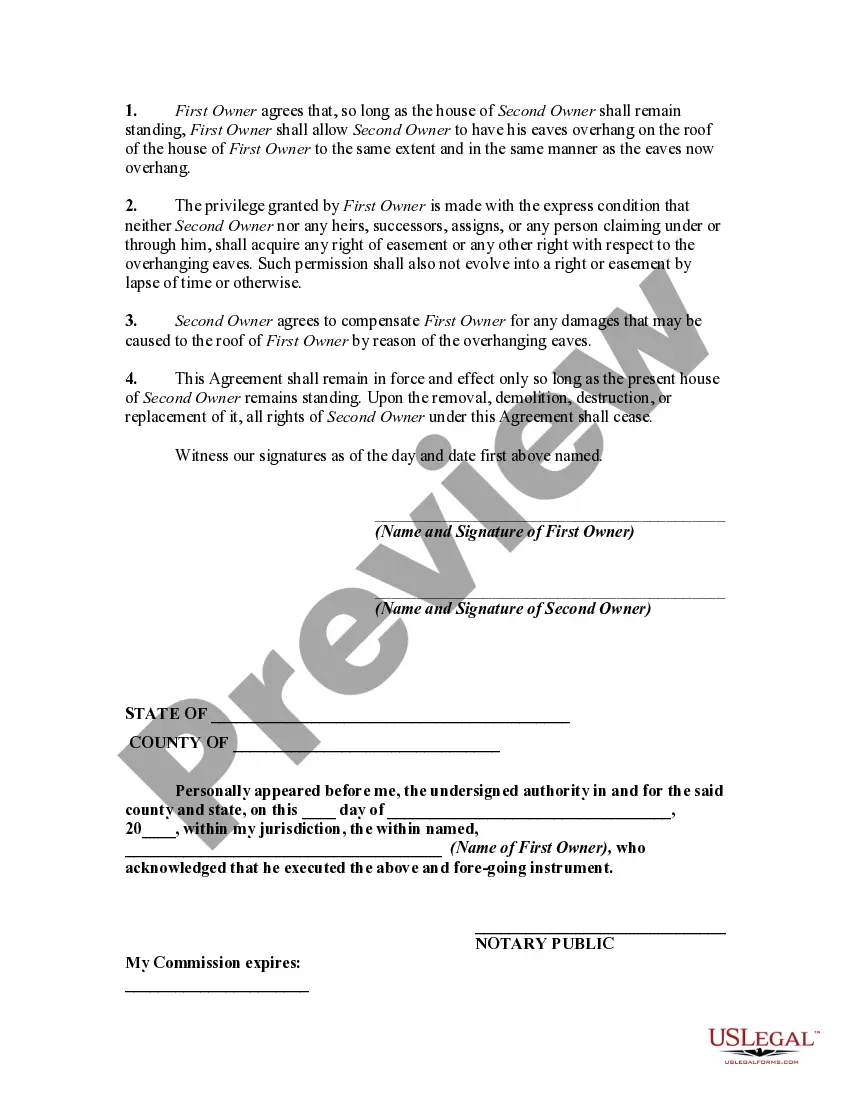
- Conditions under which the overhanging eaves may remain.
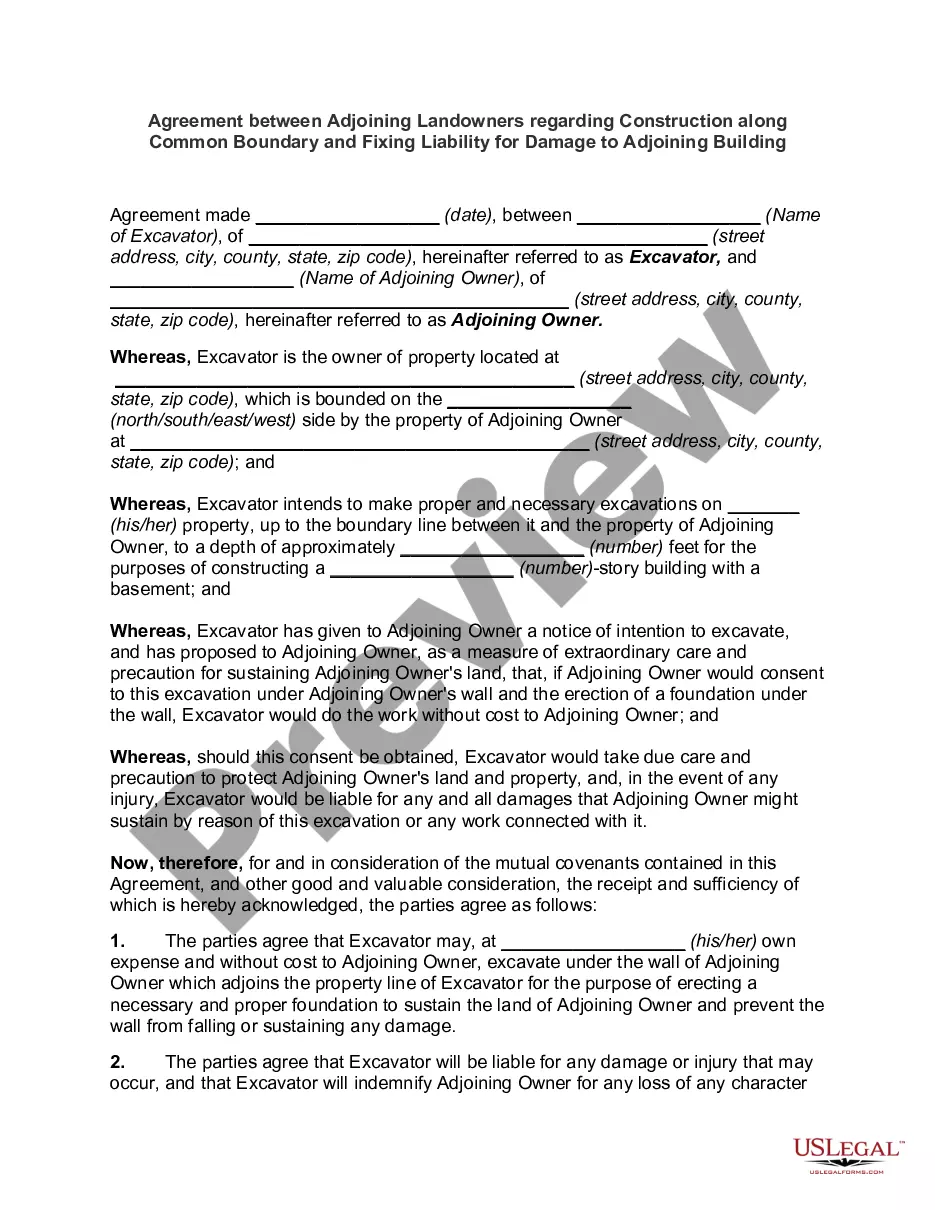
- Responsibilities of the second owner regarding damages caused to the first owner's property.
- Termination conditions of the agreement based on property modifications.
Common use cases
This form is needed in situations where two adjoining property owners have a structure (such as eaves) that extends over the property line of one owner. It is particularly useful when the second owner's structure causes potential water damage or other concerns for the first owner's property. By completing this form, both parties can formalize their agreement and avoid potential legal disputes in the future.
Who should use this form
- Property owners who are experiencing overhanging structures from neighboring properties.
- Owners looking to formalize an agreement about property encroachments.
- Individuals seeking to clarify maintenance responsibilities related to overhanging eaves.
How to complete this form
- Begin by entering the date of the agreement.
- Provide the names and addresses of both property owners involved in the agreement.
- Clearly describe the properties, including their legal descriptions.
- Specify the condition of the overhanging eaves and the agreement duration based on the second owner's structure.
- Ensure both parties sign and date the document, and have it notarized if required.
Notarization requirements for this form
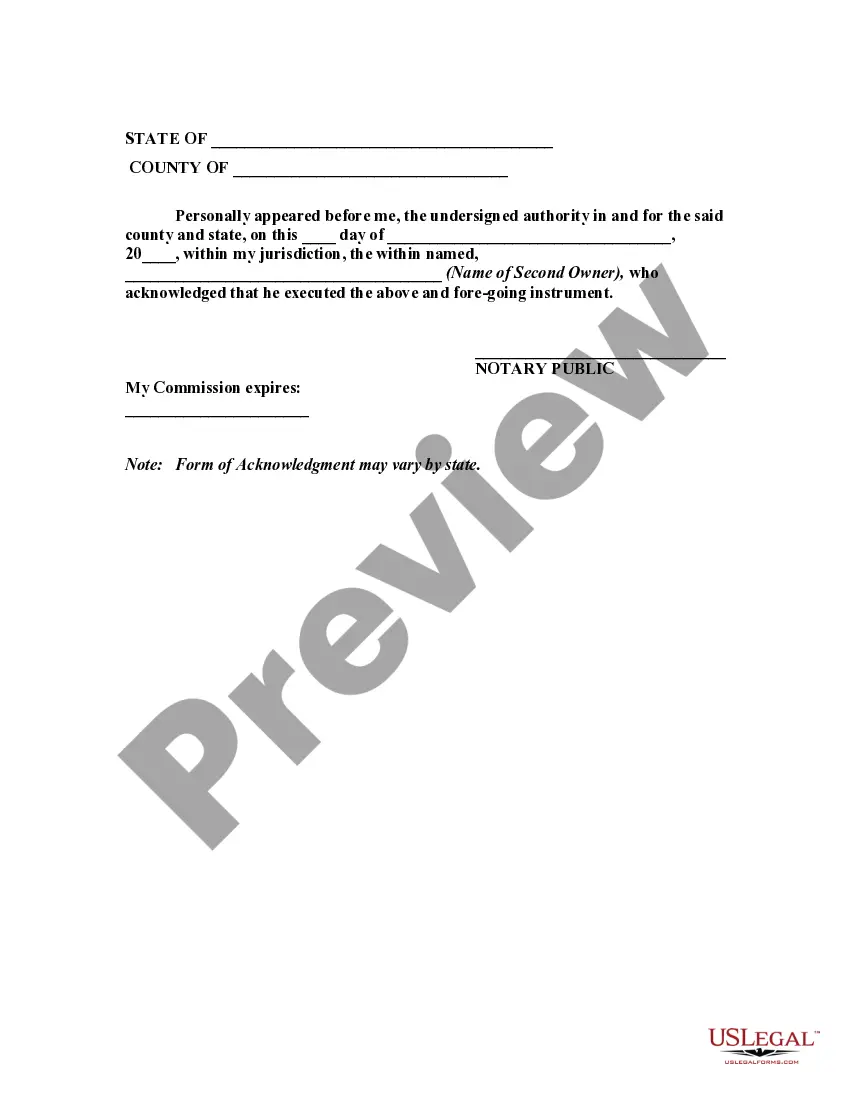
To make this form legally binding, it must be notarized. Our online notarization service, powered by Notarize, lets you verify and sign documents remotely through an encrypted video session.
Get your form ready online
Our built-in tools help you complete, sign, share, and store your documents in one place.
Make edits, fill in missing information, and update formatting in US Legal Forms—just like you would in MS Word.
Download a copy, print it, send it by email, or mail it via USPS—whatever works best for your next step.
Sign and collect signatures with our SignNow integration. Send to multiple recipients, set reminders, and more. Go Premium to unlock E-Sign.
If this form requires notarization, complete it online through a secure video call—no need to meet a notary in person or wait for an appointment.
We protect your documents and personal data by following strict security and privacy standards.

Make edits, fill in missing information, and update formatting in US Legal Forms—just like you would in MS Word.

Download a copy, print it, send it by email, or mail it via USPS—whatever works best for your next step.

Sign and collect signatures with our SignNow integration. Send to multiple recipients, set reminders, and more. Go Premium to unlock E-Sign.

If this form requires notarization, complete it online through a secure video call—no need to meet a notary in person or wait for an appointment.

We protect your documents and personal data by following strict security and privacy standards.
Typical mistakes to avoid
- Failing to accurately describe the properties involved.
- Neglecting to include necessary signatures from both property owners.
- Not specifying the conditions under which the agreement remains valid.
- Omitting details about any damages that may occur as a result of the encroachment.
Why complete this form online
- Immediate access to a professionally drafted agreement.
- Easy customization to fit your specific property circumstances.
- Secure, convenient download options for efficient completion.
- Reduced risk of errors with a clear, structured format.
Looking for another form?


Form popularity
FAQ
As a last resort, if you feel confident that your property is being encroached upon, you can file a claim in court and ask a judge to decide the boundariesbut the more you involve the legal system, the more cost you will incur.
A Land Survey Works Wonders for Boundary Disputes. If you feel like your neighbor has or is developing on top of your land, you may want to get a professional land survey. Talk it Over and Offer Concessions. Bring on a Neutral Third Party. Hire a Qualified Estate Attorney.
A Land Survey Works Wonders for Boundary Disputes. If you feel like your neighbor has or is developing on top of your land, you may want to get a professional land survey. Talk it Over and Offer Concessions. Bring on a Neutral Third Party. Hire a Qualified Estate Attorney.
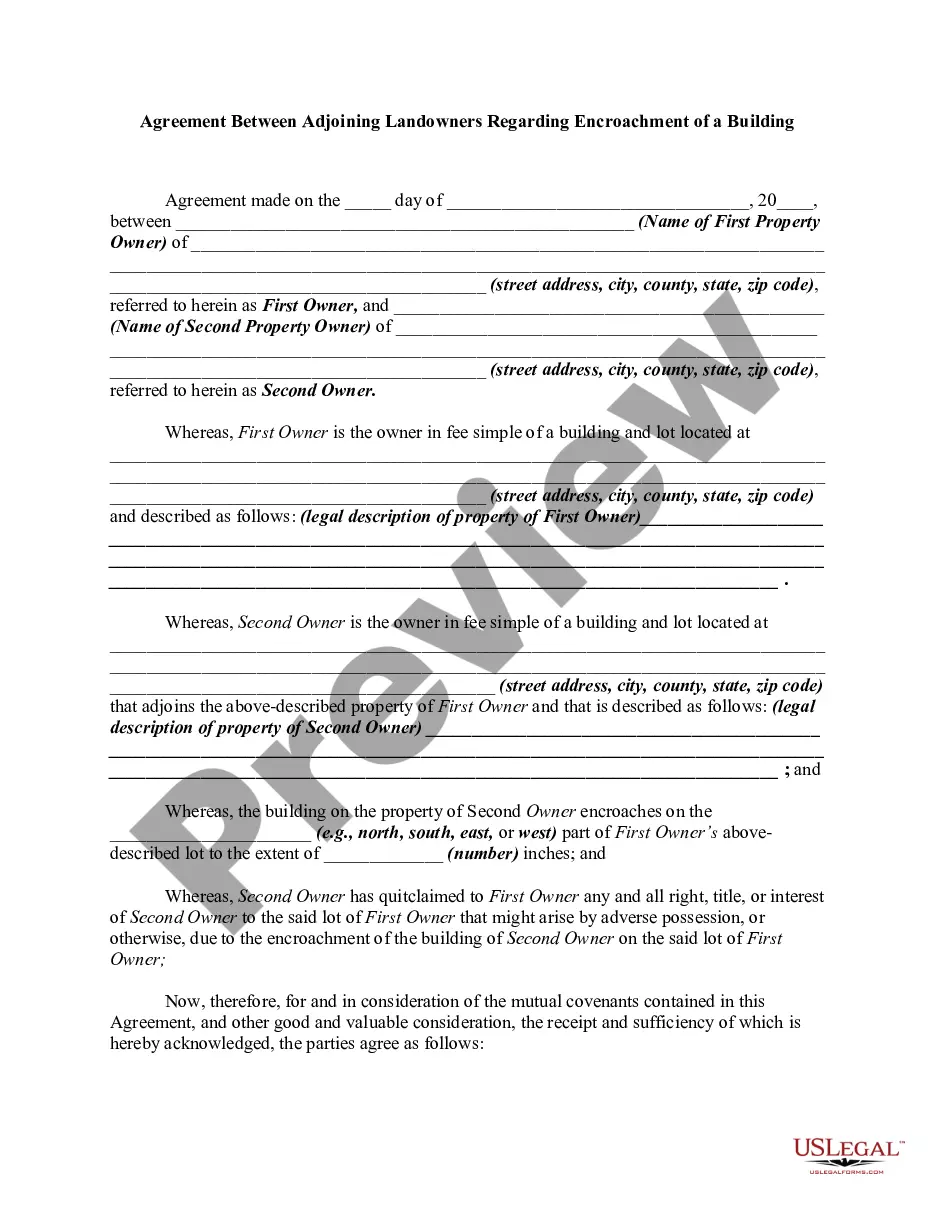
An encroachment occurs when part of a building or fixture from one property intrudes onto adjoining land. The encroachment may simply overhang or be physically attached to the adjoining property.
People often confuse encroachment is sometimes confused with easement. Both involve a property owner making extensions over their neighbor's property. While encroachments are the unauthorized use of the neighbor's property, easements are agreed upon by both parties.
A Land Survey Works Wonders for Boundary Disputes. If you feel like your neighbor has or is developing on top of your land, you may want to get a professional land survey. Talk it Over and Offer Concessions. Bring on a Neutral Third Party. Hire a Qualified Estate Attorney.
Legal approach: One can always take the legal route to get an injunction order or eviction notice from the court to do away with the illicit possession of your property. Out of court settlement: Legal assistance is not only expensive but also time taking.
Make sure it's really a problem. Keep a log of the behavior in question. Do some research on the rules. Find out what your other neighbors have to say.