Period-End Closing And Analysis
What is this form?
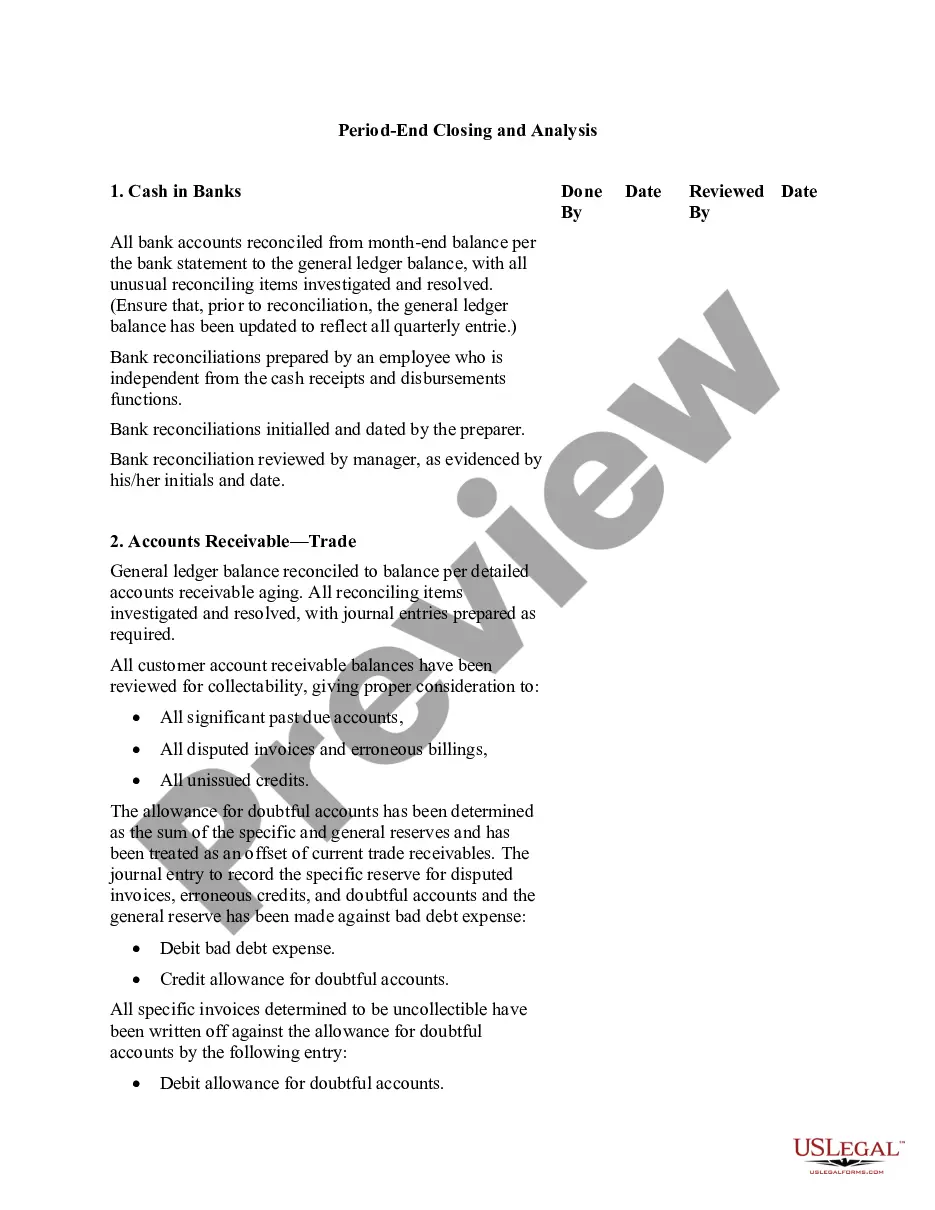
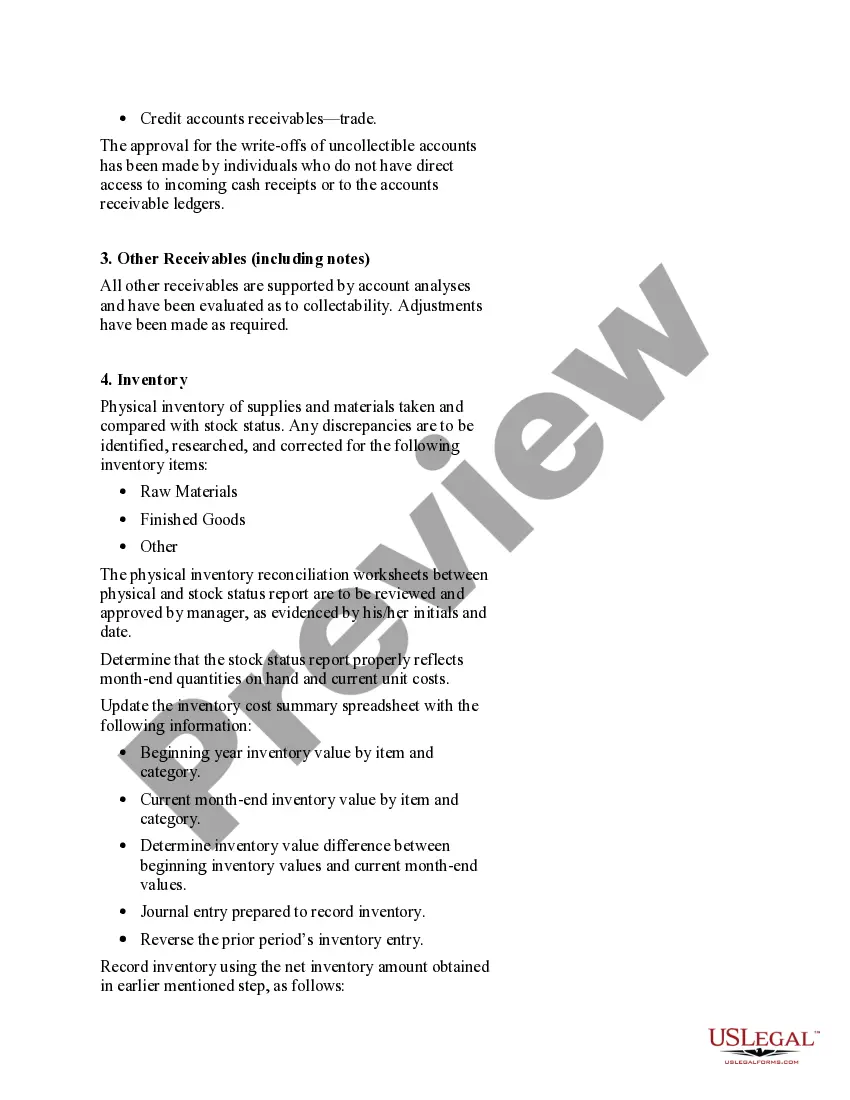
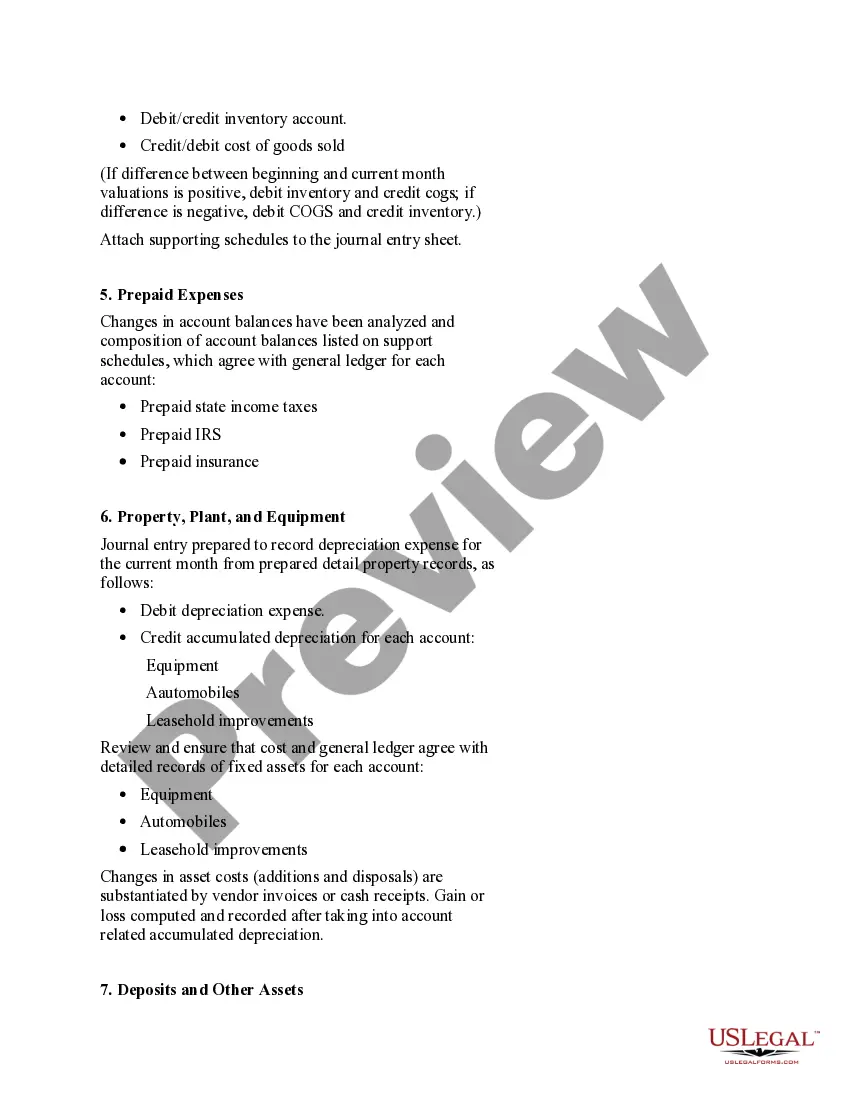
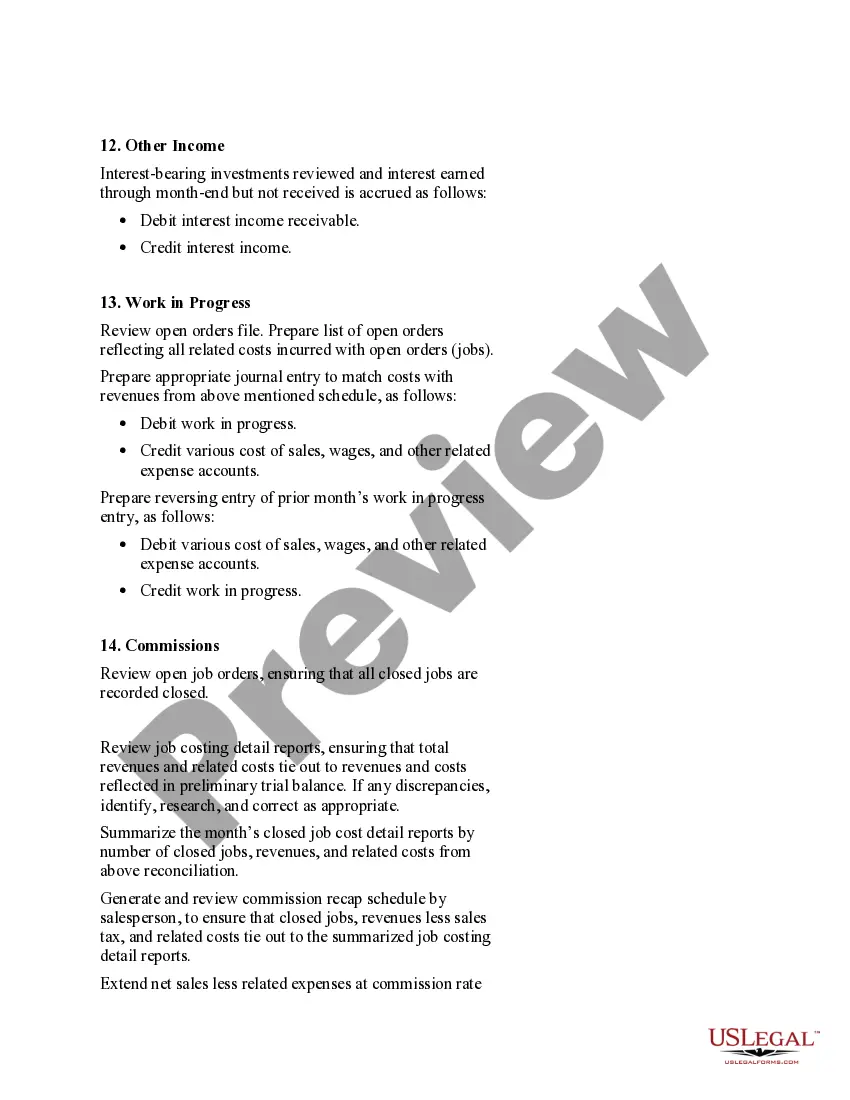
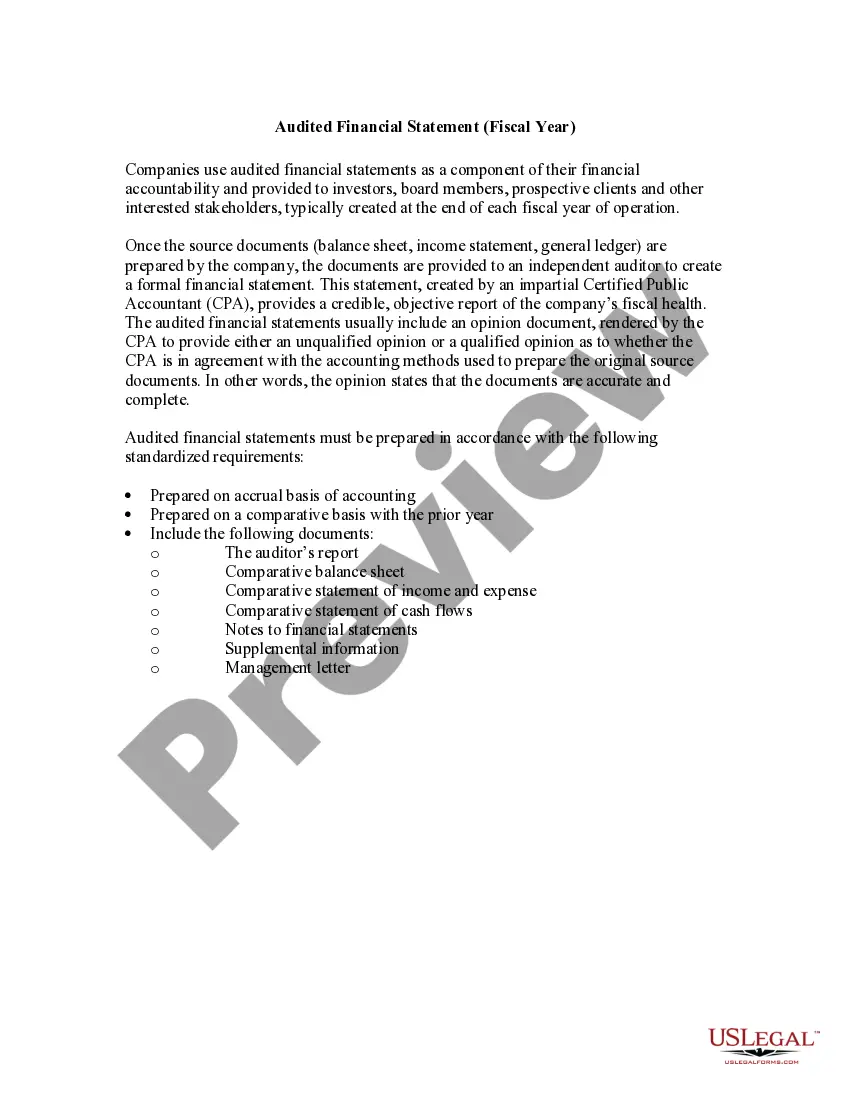
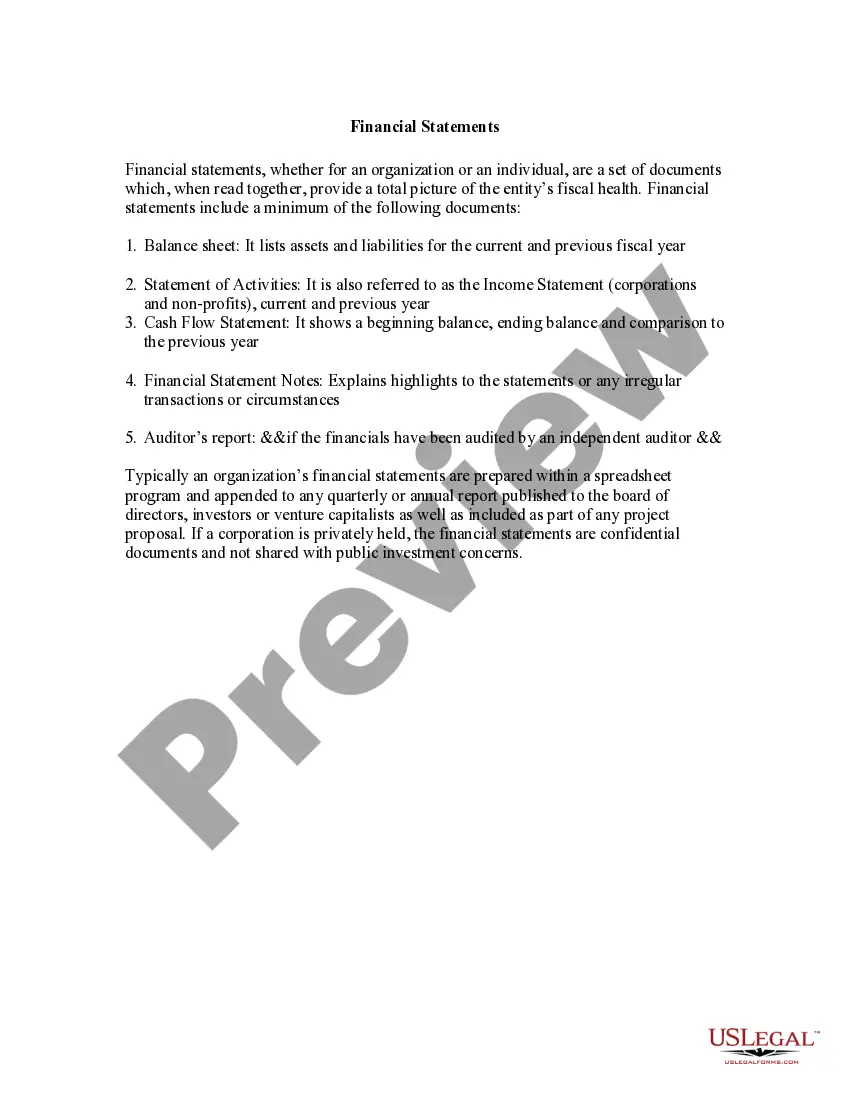
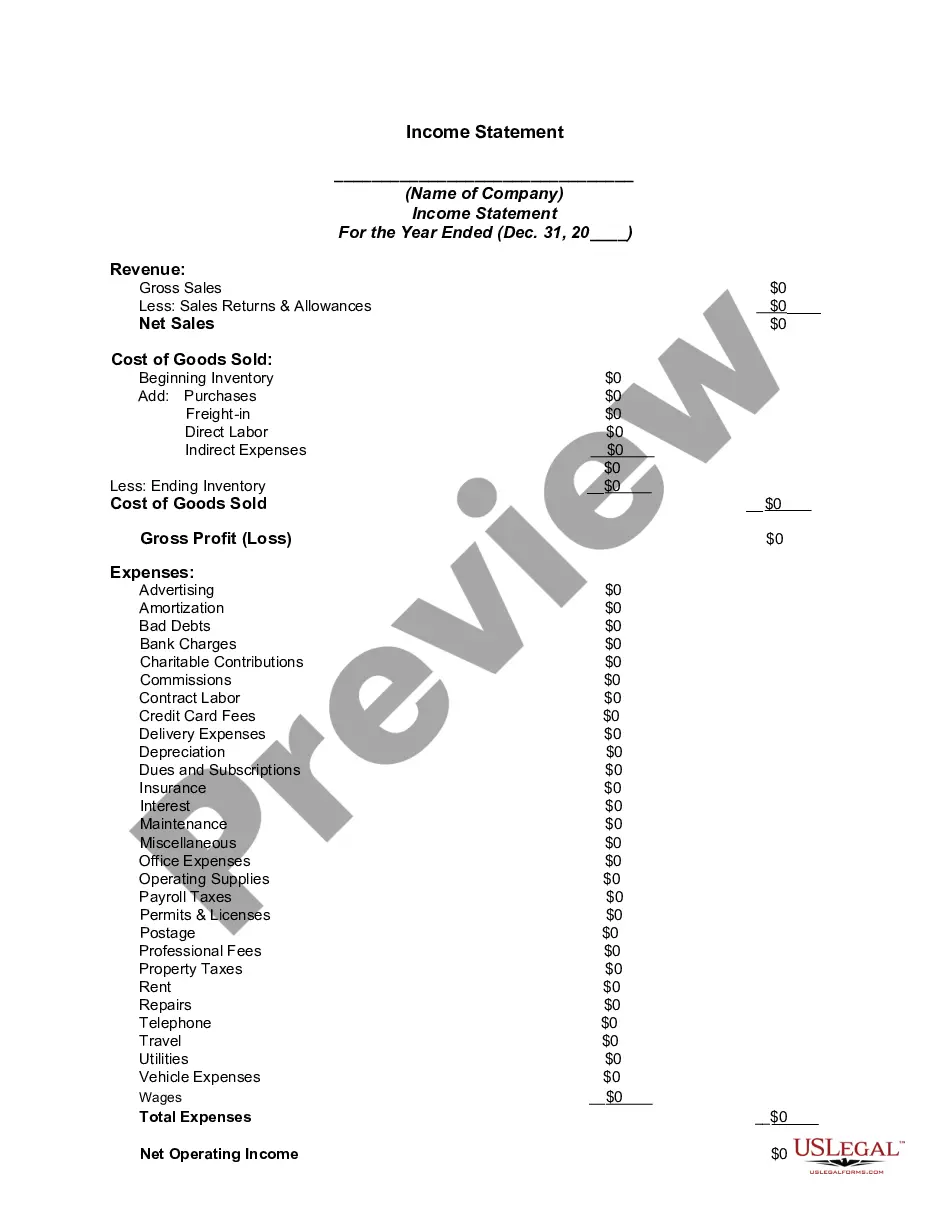
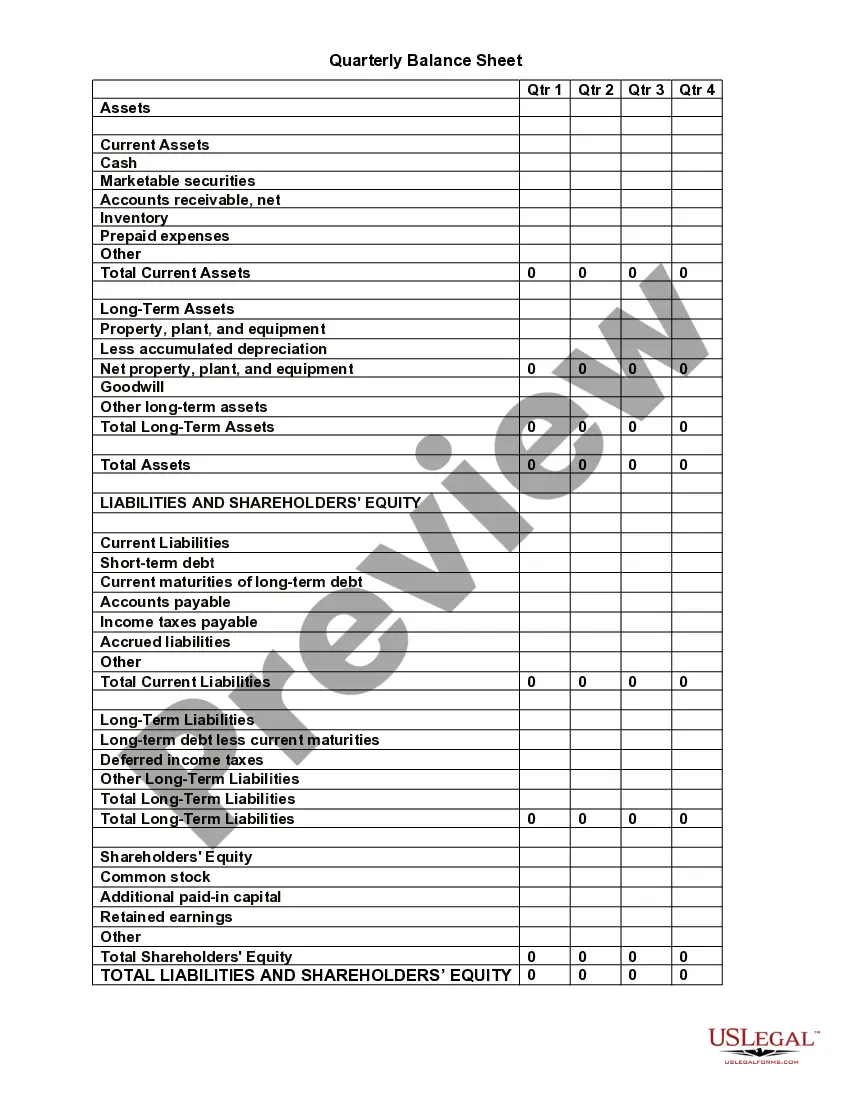
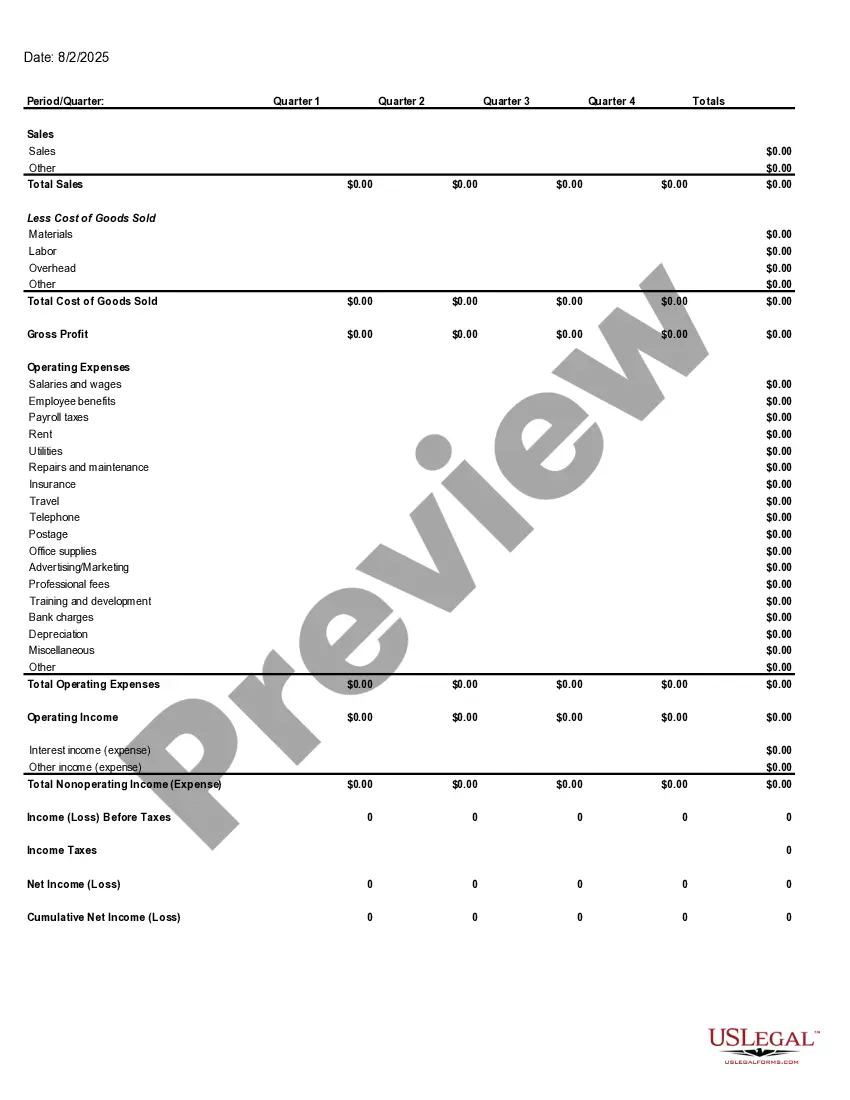
The Period-End Closing and Analysis form is a critical tool for ensuring accuracy and integrity in financial statements and the general ledger. This form serves as a checklist to confirm that all month-end tasks are completed and reviewed, distinguishing it from other financial documentation by focusing on internal controls and reconciliation processes necessary for sound financial reporting.
Form components explained
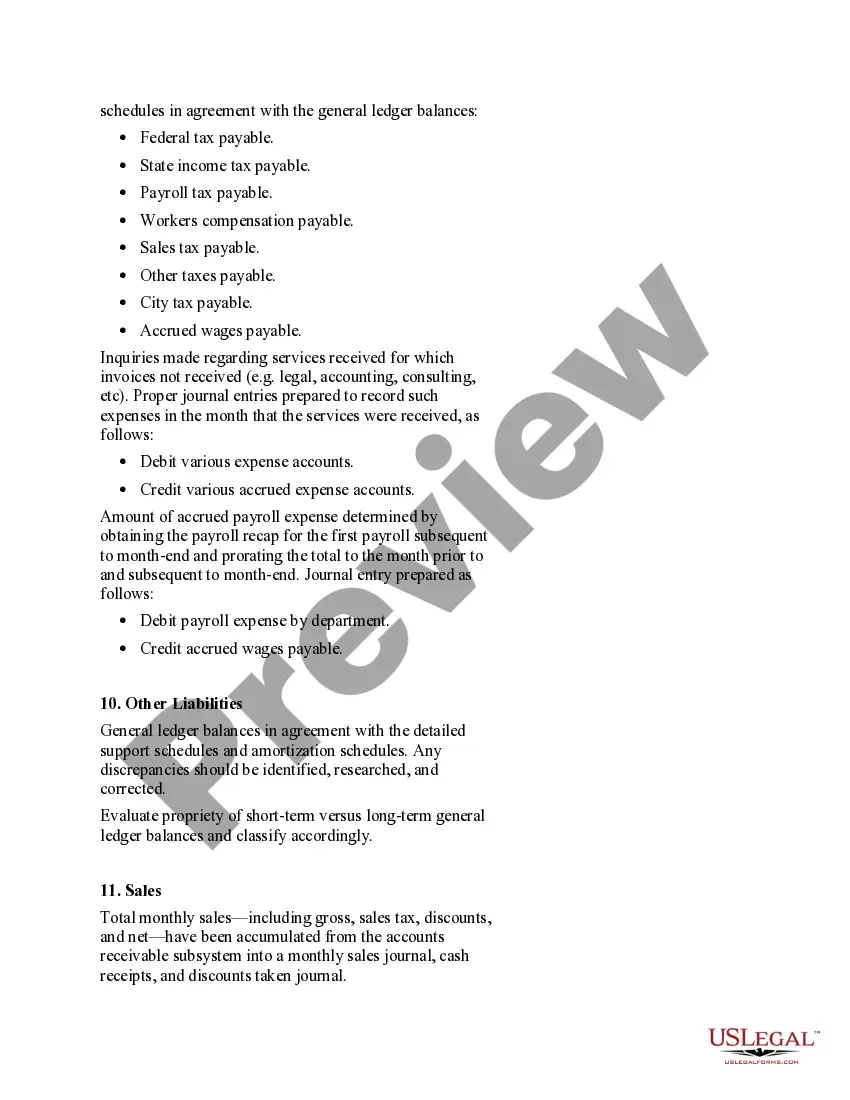
- Cash in Banks: Includes reconciliation of bank accounts and verification of unusual items.
- Accounts Receivable: Ensures customer balances are collectible and reserves for bad debts are recorded.
- Inventory: Involves physical counts of stock and adjustments to ensure accurate inventory values.
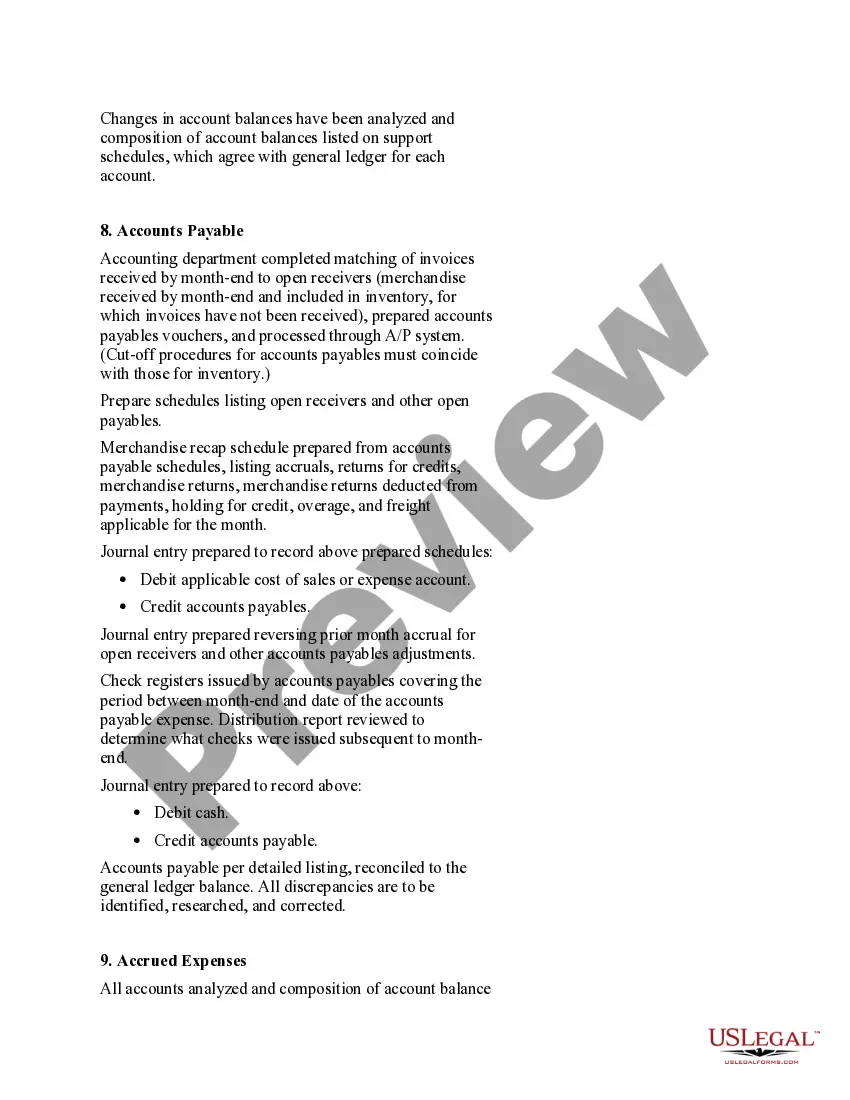
- Accounts Payable: Matches invoices to received merchandise and prepares necessary journal entries.
- Accrued Expenses: Analyzes accounts and records expenses for services received but not invoiced.
Common use cases
This form is essential for businesses conducting month-end financial closes. Use it to document and verify all transactions that have occurred within the accounting period, ensuring that all financial activities are recorded and reported accurately. It is particularly useful for accounting departments in both small businesses and larger organizations that need to maintain stringent financial oversight.
Intended users of this form
- Accounting professionals responsible for financial reporting.
- Finance managers who oversee month-end closing procedures.
- Internal auditors conducting checks on financial statements.
- Business owners who direct financial operations.
Steps to complete this form
- Gather all necessary financial documentation from the month.
- Reconcile cash accounts by comparing bank statements to the general ledger.
- Analyze accounts receivable for collectibility and adjust the allowance for doubtful accounts.
- Conduct physical inventory counts and record necessary adjustments.
- Review accounts payable to ensure all invoices match received merchandise.
Notarization requirements for this form
In most cases, this form does not require notarization. However, some jurisdictions or signing circumstances might. US Legal Forms offers online notarization powered by Notarize, accessible 24/7 for a quick, remote process.
Get your form ready online
Our built-in tools help you complete, sign, share, and store your documents in one place.
Make edits, fill in missing information, and update formatting in US Legal Forms—just like you would in MS Word.
Download a copy, print it, send it by email, or mail it via USPS—whatever works best for your next step.
Sign and collect signatures with our SignNow integration. Send to multiple recipients, set reminders, and more. Go Premium to unlock E-Sign.
If this form requires notarization, complete it online through a secure video call—no need to meet a notary in person or wait for an appointment.
We protect your documents and personal data by following strict security and privacy standards.

Make edits, fill in missing information, and update formatting in US Legal Forms—just like you would in MS Word.

Download a copy, print it, send it by email, or mail it via USPS—whatever works best for your next step.

Sign and collect signatures with our SignNow integration. Send to multiple recipients, set reminders, and more. Go Premium to unlock E-Sign.

If this form requires notarization, complete it online through a secure video call—no need to meet a notary in person or wait for an appointment.

We protect your documents and personal data by following strict security and privacy standards.
Typical mistakes to avoid
- Failing to reconcile bank statements fully, leading to unrecorded discrepancies.
- Omitting the review of accounts receivable for doubtful debts, which can misstate profits.
- Neglecting to account for inventory adjustments can cause inaccuracies in cost of goods sold.
- Not timely entering adjustments for accrued expenses, which can distort financial results.
Why use this form online
- Convenience of accessing the form and filling it out from any device.
- Editability allows for quick updates as bookkeeping needs change.
- Reliability from using professionally drafted templates ensures compliance with accounting standards.
Summary of main points
- The Period-End Closing and Analysis form is crucial for accurate financial reporting.
- It serves to document the completion of month-end tasks and reconciliations.
- Business owners and financial professionals should utilize this form to maintain fiscal integrity.
Looking for another form?

Form popularity
FAQ
The month-end close is an accounting procedure that finalizes and closes out all financial activity for a business for the preceding month. This timeframe represents a well-defined period for accounting purposes. The process involves reviewing, documenting, and reconciling all financial transactions for that period.
The period end dates the end of your financial year. The period (or month) end date is used to report your business activity.
The closing process involves four steps to make that happen. Close revenue accounts to Income Summary. Income Summary is a temporary account used during the closing process.Close expense accounts to Income Summary.Close Income Summary to Retained Earnings.Close dividends to Retained Earnings.
Period-end closing is the work carried out at the end of a period as a part of cost controlling. To perform period end closing, it is required to transfer the data from other SAP Components. You should perform all the posting in Finance Accounting.
The month-end close is an accounting procedure that finalizes and closes out all financial activity for a business for the preceding month. This timeframe represents a well-defined period for accounting purposes. The process involves reviewing, documenting, and reconciling all financial transactions for that period.