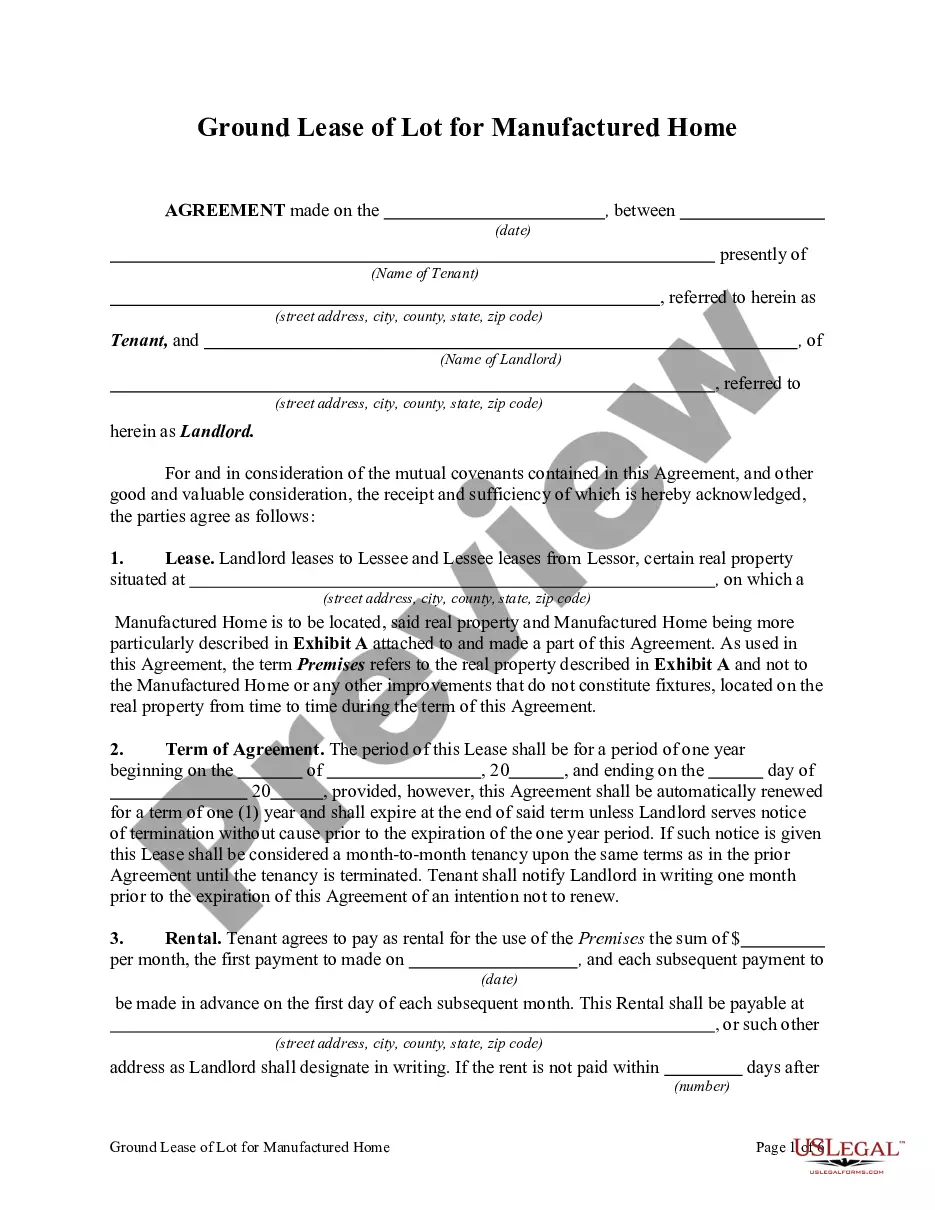
Washington Installments Fixed Rate Promissory Note Secured by Residential Real Estate
What this document covers
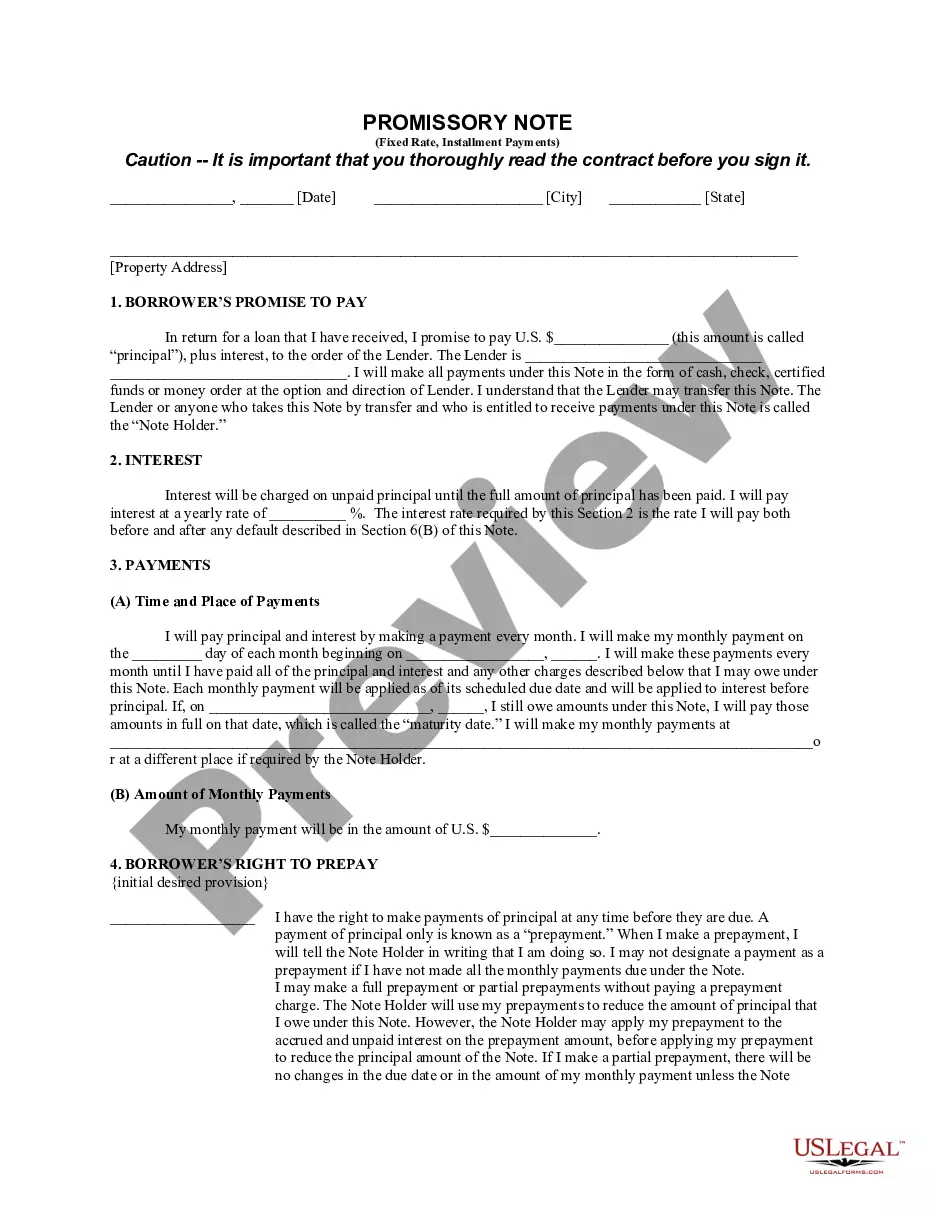
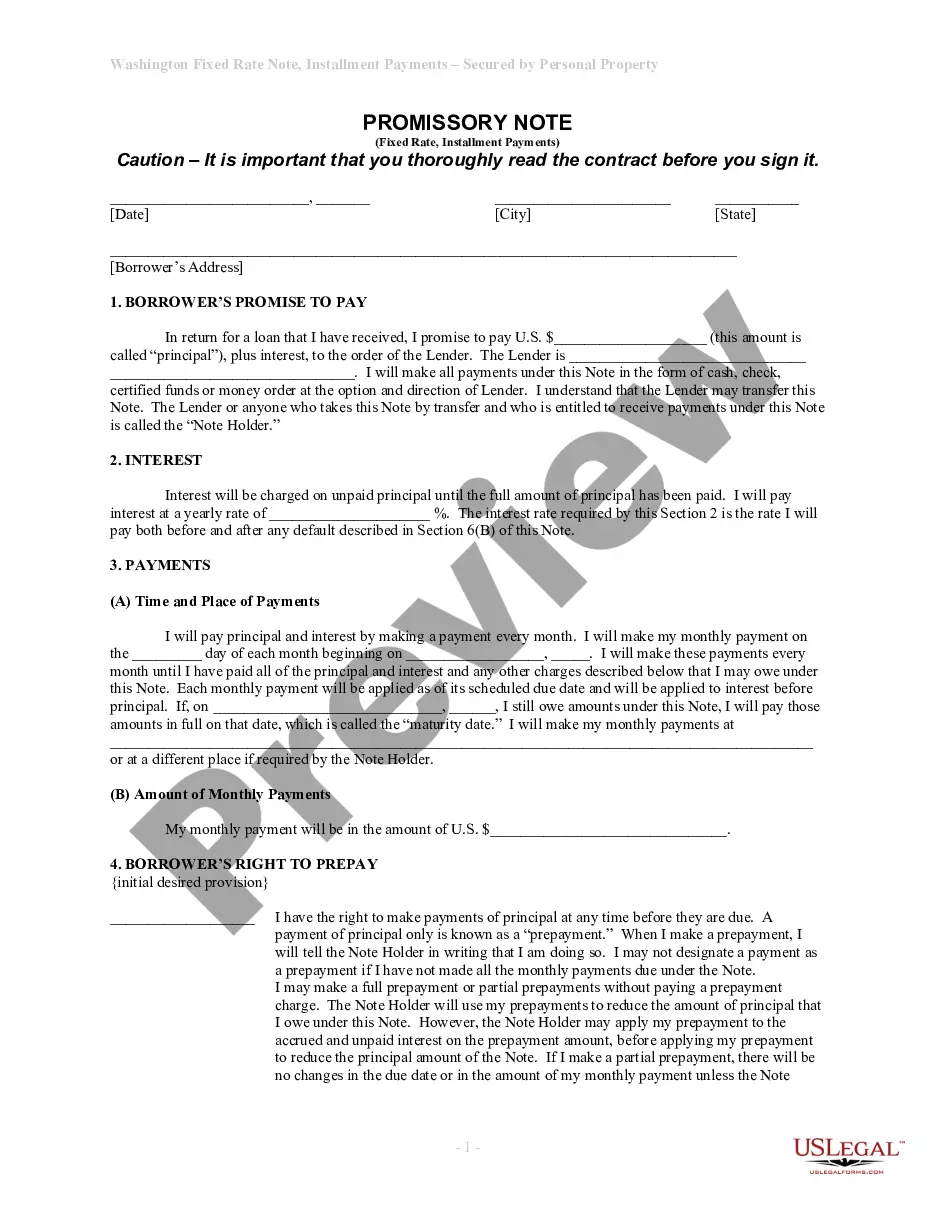
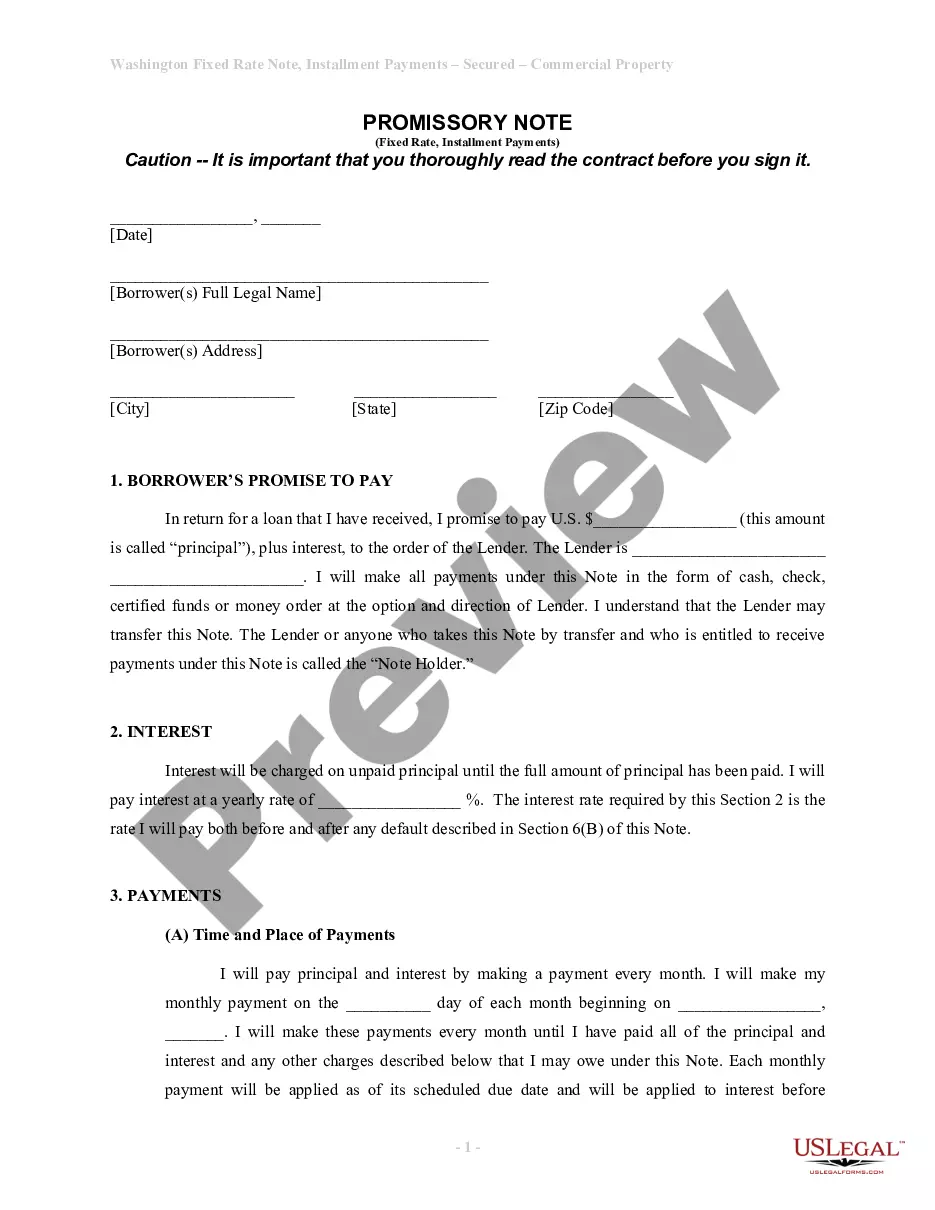
The Washington Installments Fixed Rate Promissory Note Secured by Residential Real Estate is a legal document that outlines a borrower's promise to repay a loan secured by residential property. This form serves as a written commitment to pay the principal amount, along with interest, over a specified period. Unlike other loan agreements, this note emphasizes fixed-rate payments and includes features important for securing the lender's interests through a mortgage or deed of trust.
Key parts of this document
- Borrower's promise to pay the principal amount and interest.
- Interest rate details, including conditions for default.
- Monthly payment schedule and the maturity date.
- Borrower's rights regarding prepayment of the principal.
- Consequences of failure to make timely payments, including late charges and default notices.
- Secured note provisions detailing the relationship with the related mortgage or deed of trust.


When this form is needed
This form is typically used when an individual or entity borrows money secured by a residential property. It is applicable in scenarios where a fixed-rate repayment structure is desired and the borrower intends to make regular monthly payments. This note can also be utilized when the lender seeks to establish clear terms for repayment, interest rates, and any applicable penalties for late payment, ensuring both parties understand their obligations and rights under the agreement.
Intended users of this form
- Homebuyers looking to finance the purchase of a home with a loan secured by the property.
- Borrowers refinancing an existing mortgage on residential real estate.
- Lenders providing loans that require security through a real estate mortgage.
- Individuals or businesses needing a clear repayment structure for loans involving real estate assets.
How to complete this form
- Identify the parties involved: include the borrower(s) and lenderâs names and addresses.
- Specify the loan amount: enter the principal amount to be borrowed.
- Set the interest rate: indicate the annual interest rate for the loan.
- Establish the payment schedule: choose the date for monthly payments and the start date.
- Detail prepayment rights: clarify whether and how the borrower can pay off the loan early.
- Sign and date the form: ensure all parties sign in the designated areas to validate the agreement.
Notarization requirements for this form
This form does not typically require notarization unless specified by local law. However, it is advisable to confirm with a legal professional to ensure compliance with all applicable regulations.
Get your form ready online
Our built-in tools help you complete, sign, share, and store your documents in one place.
Make edits, fill in missing information, and update formatting in US Legal Forms—just like you would in MS Word.
Download a copy, print it, send it by email, or mail it via USPS—whatever works best for your next step.
Sign and collect signatures with our SignNow integration. Send to multiple recipients, set reminders, and more. Go Premium to unlock E-Sign.
If this form requires notarization, complete it online through a secure video call—no need to meet a notary in person or wait for an appointment.
We protect your documents and personal data by following strict security and privacy standards.

Make edits, fill in missing information, and update formatting in US Legal Forms—just like you would in MS Word.

Download a copy, print it, send it by email, or mail it via USPS—whatever works best for your next step.

Sign and collect signatures with our SignNow integration. Send to multiple recipients, set reminders, and more. Go Premium to unlock E-Sign.

If this form requires notarization, complete it online through a secure video call—no need to meet a notary in person or wait for an appointment.

We protect your documents and personal data by following strict security and privacy standards.
Common mistakes
- Failing to correctly enter the interest rate, which can lead to disputes later.
- Omitting the property description, leading to challenges in enforcing the note.
- Not documenting the payment method, causing confusion about acceptable forms of payment.
- Neglecting to sign and date the document, which could invalidate the agreement.
Why use this form online
- Convenience: Easily download and complete the form at your own pace.
- Editability: Modify the form to suit your specific loan terms as needed.
- Reliability: Forms are prepared by licensed attorneys to ensure compliance with legal standards.
- Quick access to legal resources and support if questions arise during completion.
Legal use & context
- The promissory note serves as a legally binding agreement between the borrower and lender.
- It outlines the rights and obligations of both parties, making it enforceable in court if needed.
- Failure to comply with the terms may result in default, giving the lender the right to pursue legal action.
What to keep in mind
- The Washington Installments Fixed Rate Promissory Note is designed for loans secured by residential property.
- Clearly outline the payment terms, interest rate, and any prepayment rights.
- Ensure all parties sign the document to validate the loan agreement.
- Consult a legal professional if unsure about terms or requirements for notarization.
Looking for another form?



Form popularity
FAQ
A Deed of Trust is essentially an agreement between a lender and a borrower to give the property to a neutral third party who will serve as a trustee. The trustee holds the property until the borrower pays off the debt.
The following states use Deed of Trusts: Alaska, Arizona, California, District of Columbia, Georgia, Mississippi, Missouri, Nevada, North Carolina, and Virginia.
Deeds of trust are the most common instrument used in the financing of real estate purchases in Alaska, Arizona, California, Colorado, the District of Columbia, Idaho, Maryland, Mississippi, Missouri, Montana, Nebraska, Nevada, North Carolina, Oregon, Tennessee, Texas, Utah, Virginia, Washington, and West Virginia,
Promissory notes are ideal for individuals who do not qualify for traditional mortgages because they allow them to purchase a home by using the seller as the source of the loan and the purchased home as the source of the collateral.
Deeds of trust are used in conjunction with promissory notes. The deed of trust is the security for the amount loaned to finance the real estate purchase, and is secured by the underlying piece of real estate. The deed of trust is what secures the promissory note.
Small businesses frequently borrow money, or extend credit, in the course of their operations. A promissory note is the document that sets forth the terms of a loan's repayment. A promissory note can be secured with a pledge of collateral, which is something of value that can be seized if a borrower defaults.
A deed of trust is a written instrument with three parties: The trustor, who is the borrower and homeowner. The beneficiary, who is the lender. The trustee, who is a third party such as an insurance company or escrow management agency that holds actual title to the property in trust for the beneficiary.
1. What is the Difference Between the Note and Deed of Trust? A note, usually known as a promissory note, which is a written promise to repay a loan. Whereas, a trust deed is a document used to protect paying back of a loan that is being documented as a lien counter to the borrowers real estate.