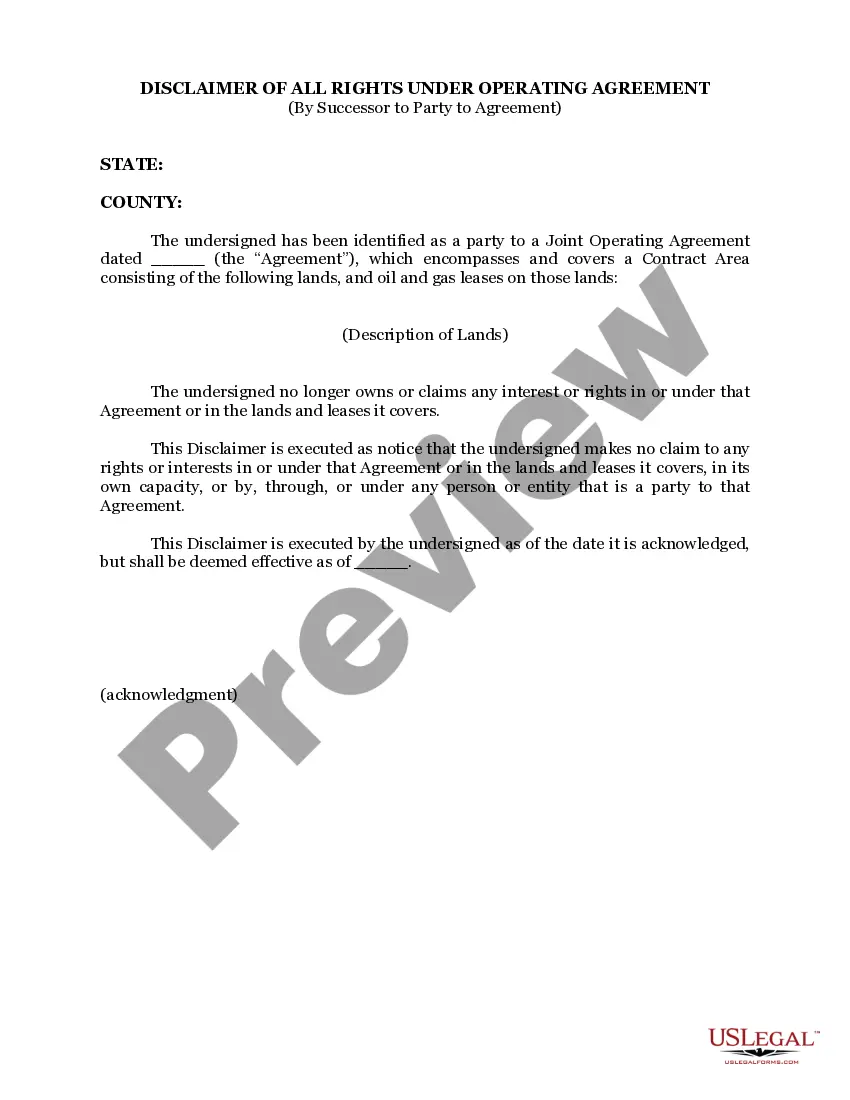
Condominium Master Deed - Residential Condo Development
Understanding this form
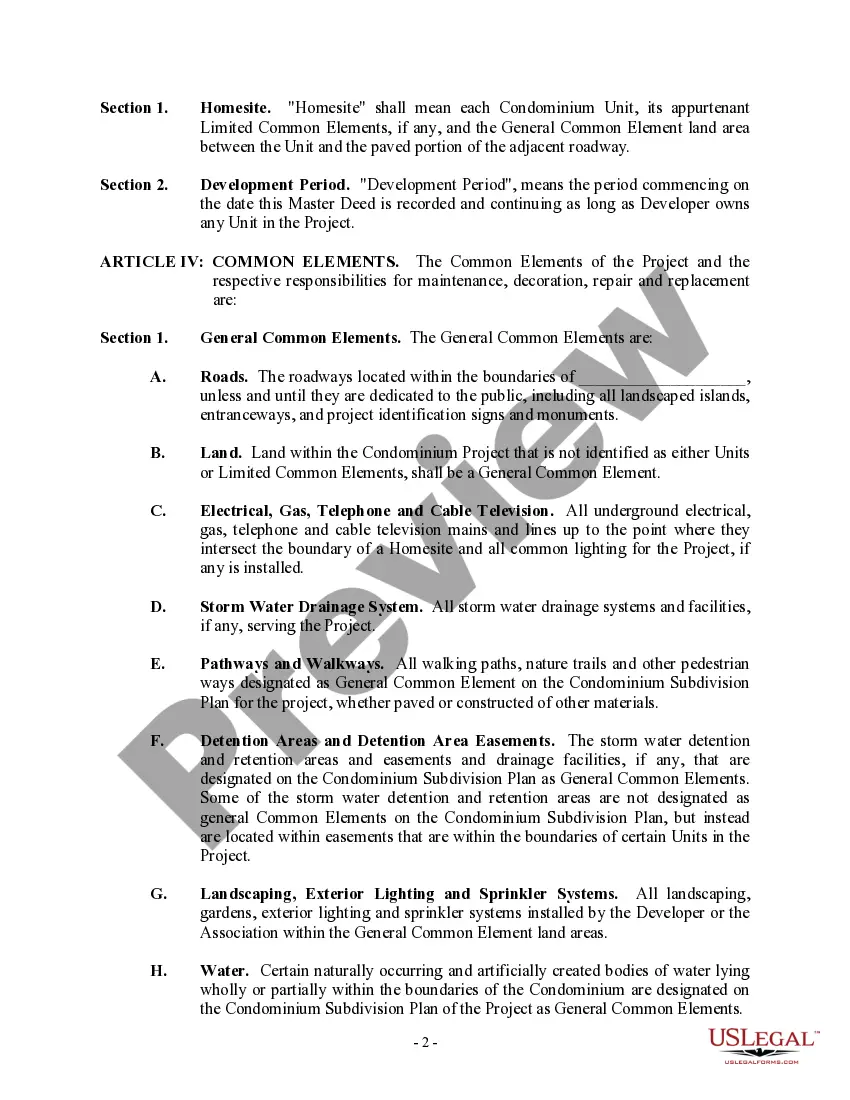
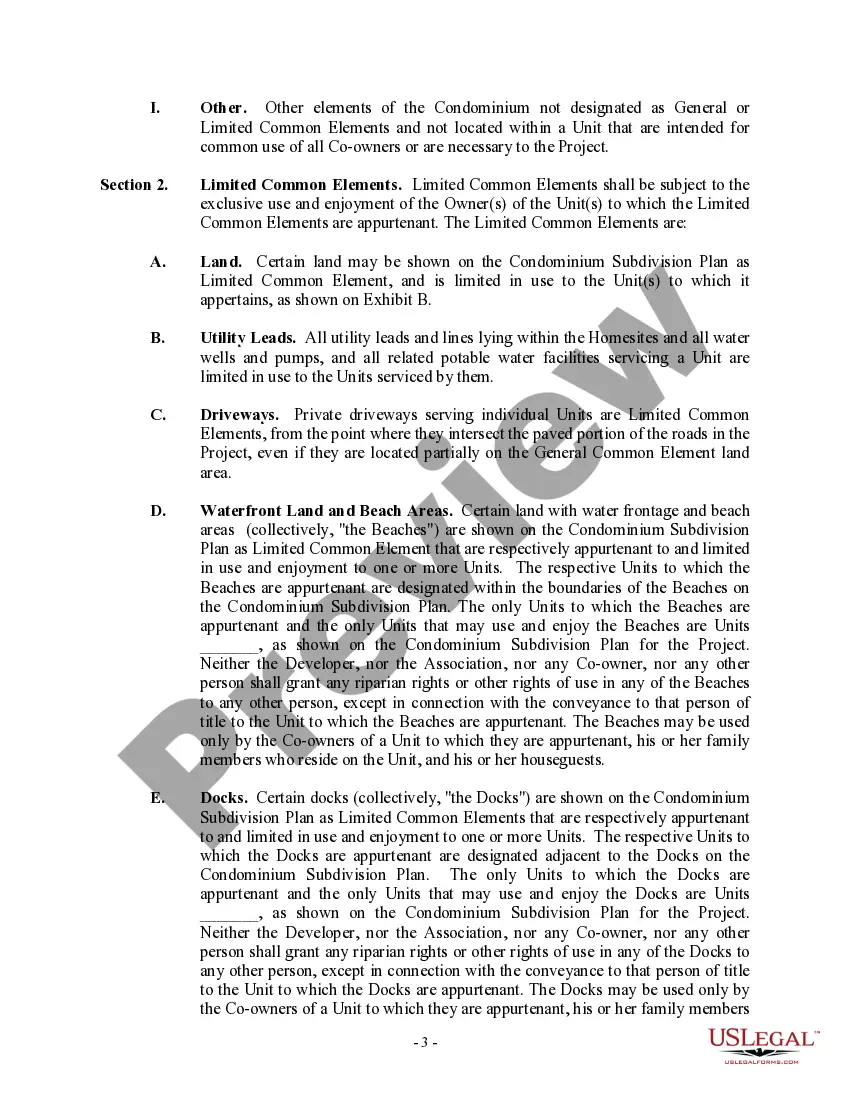
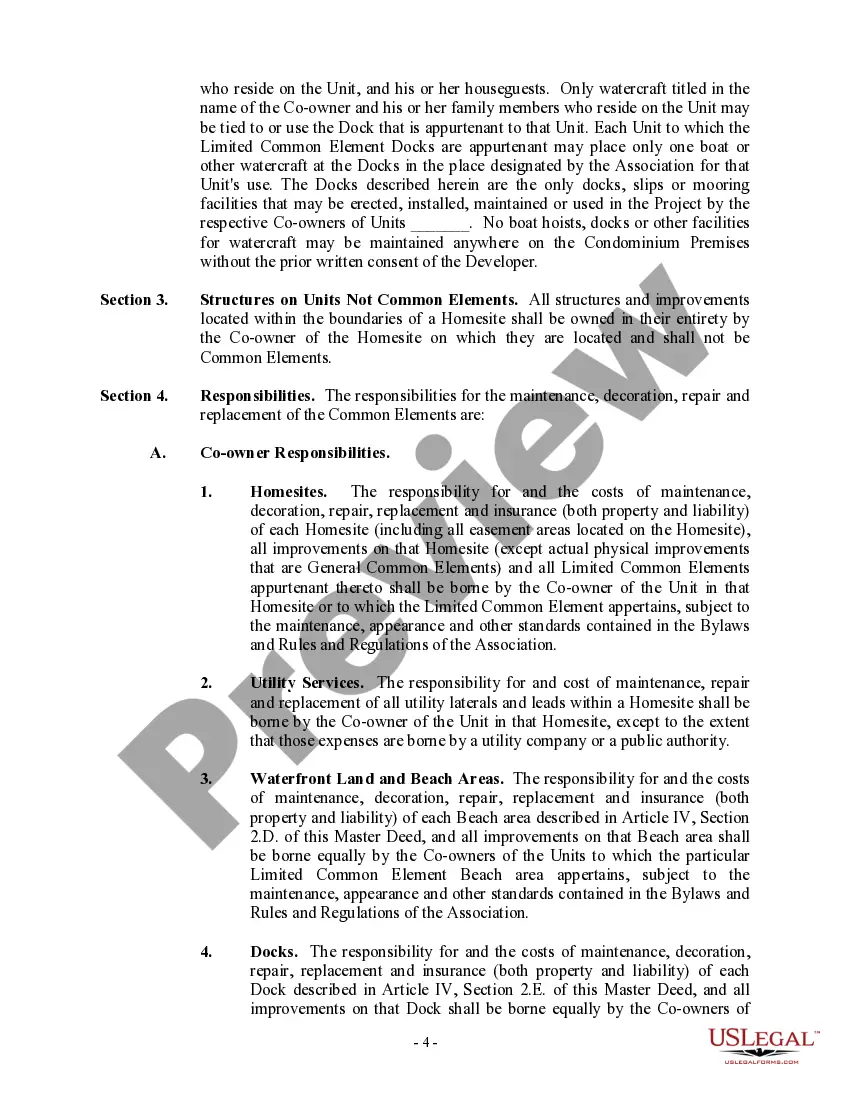
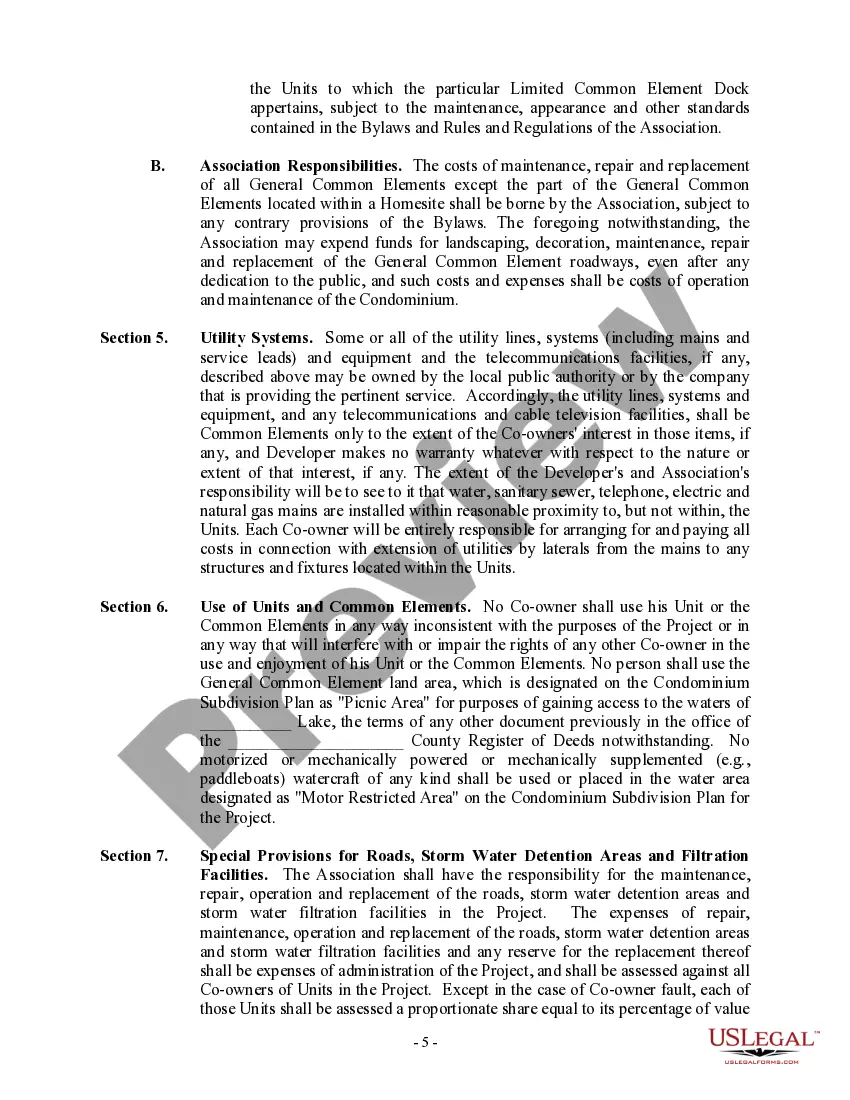
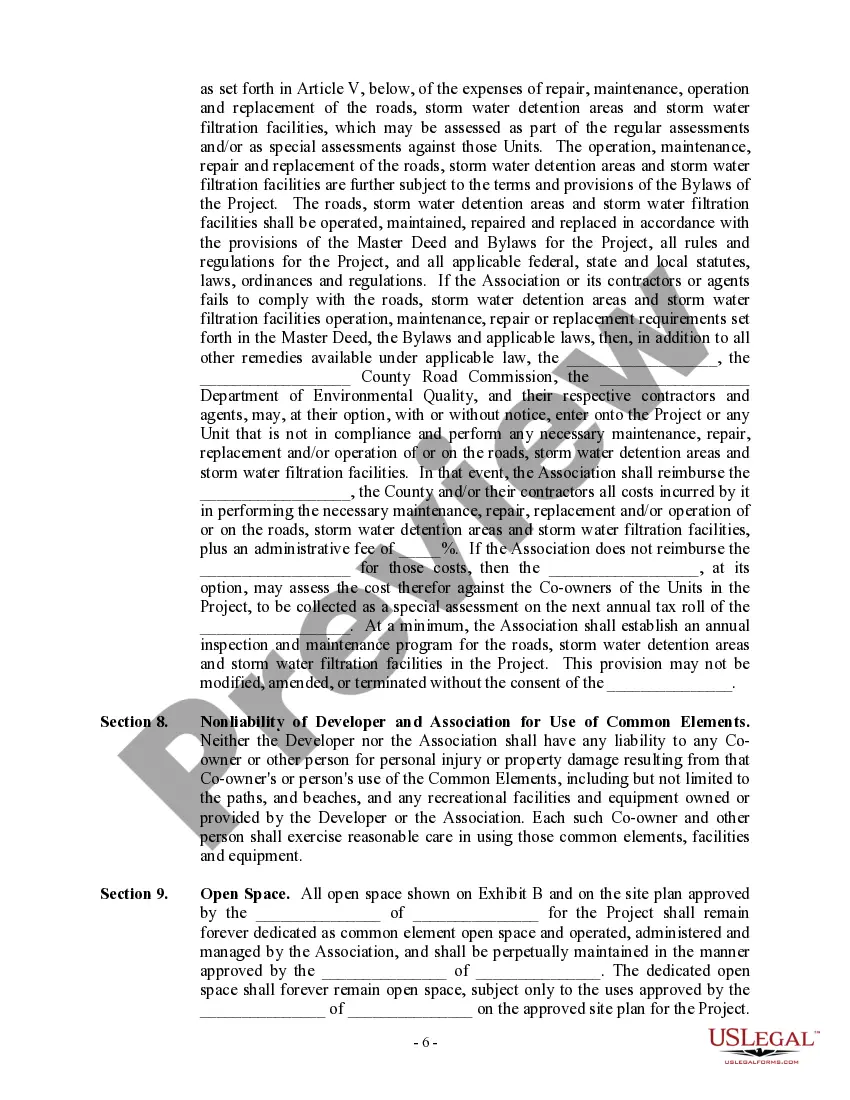
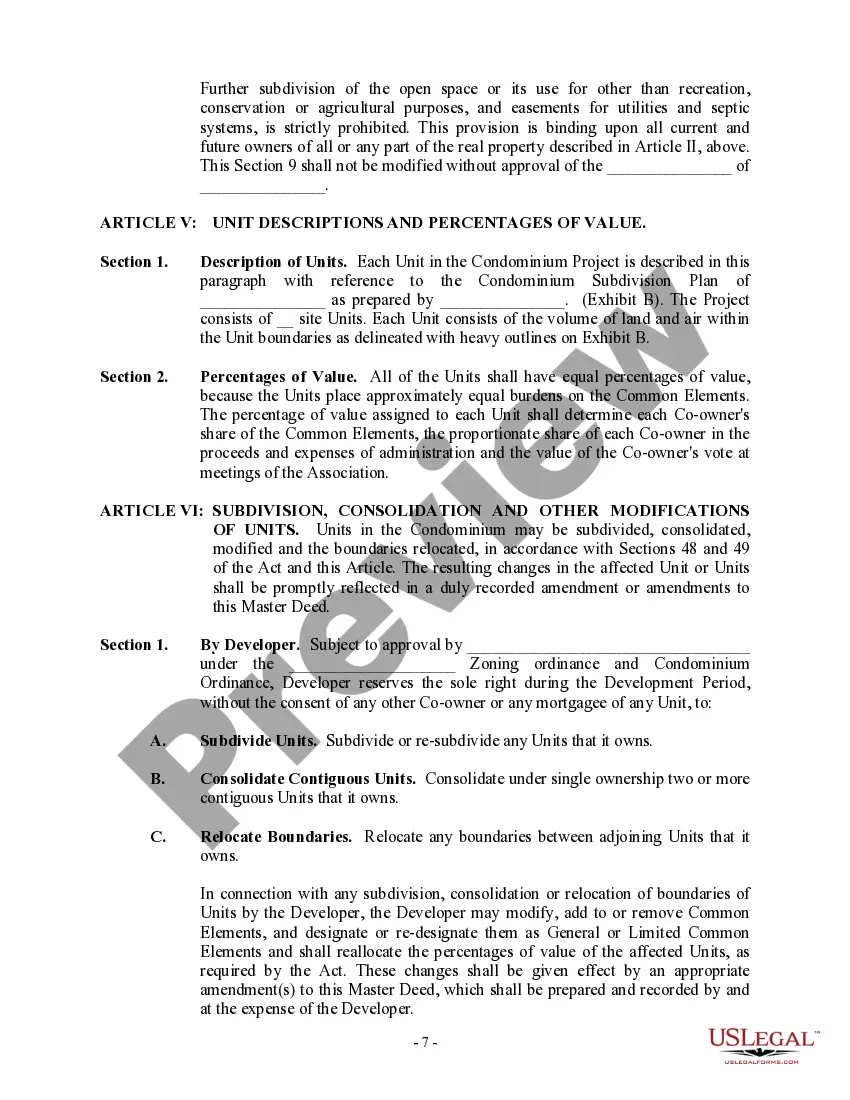
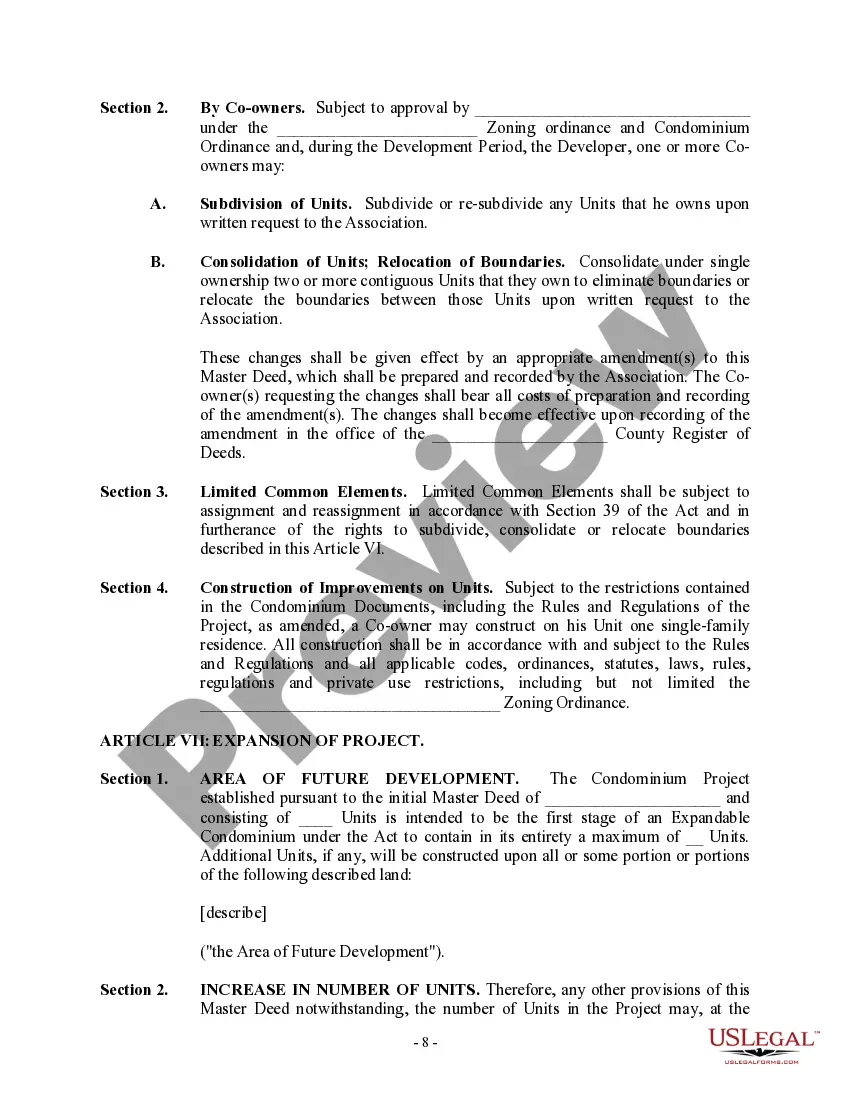
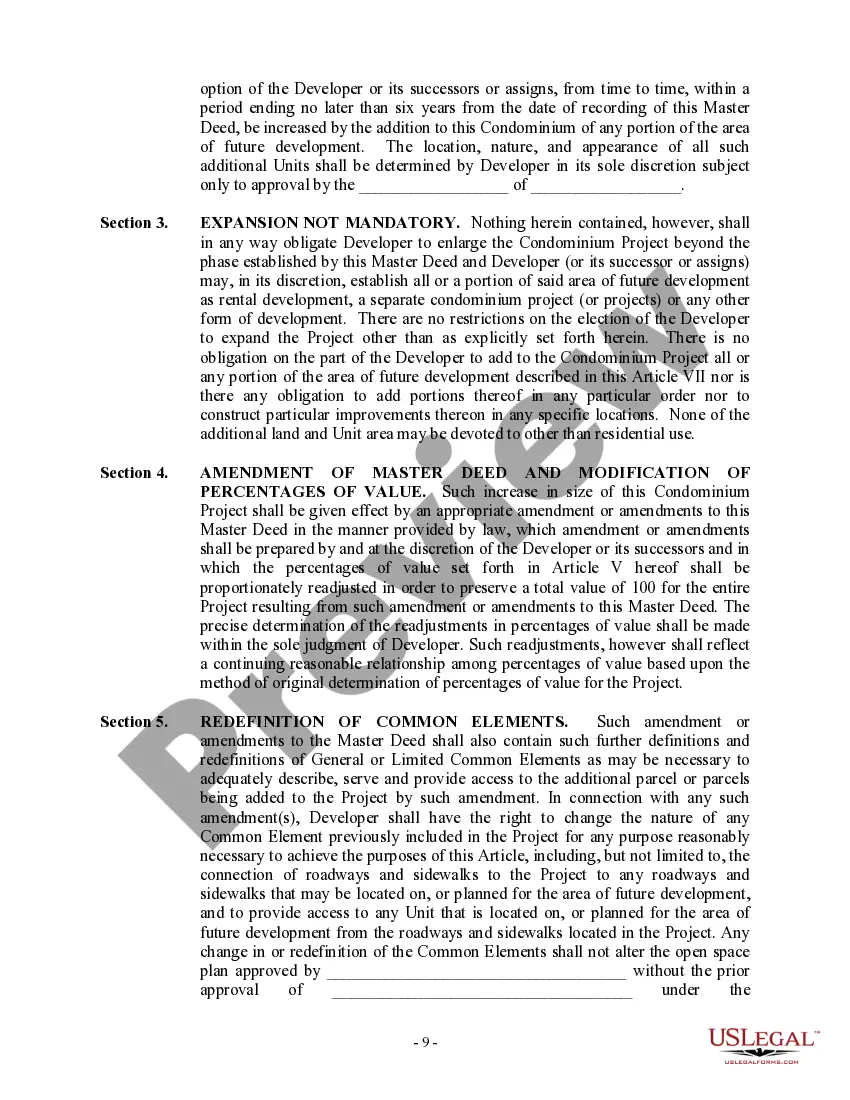
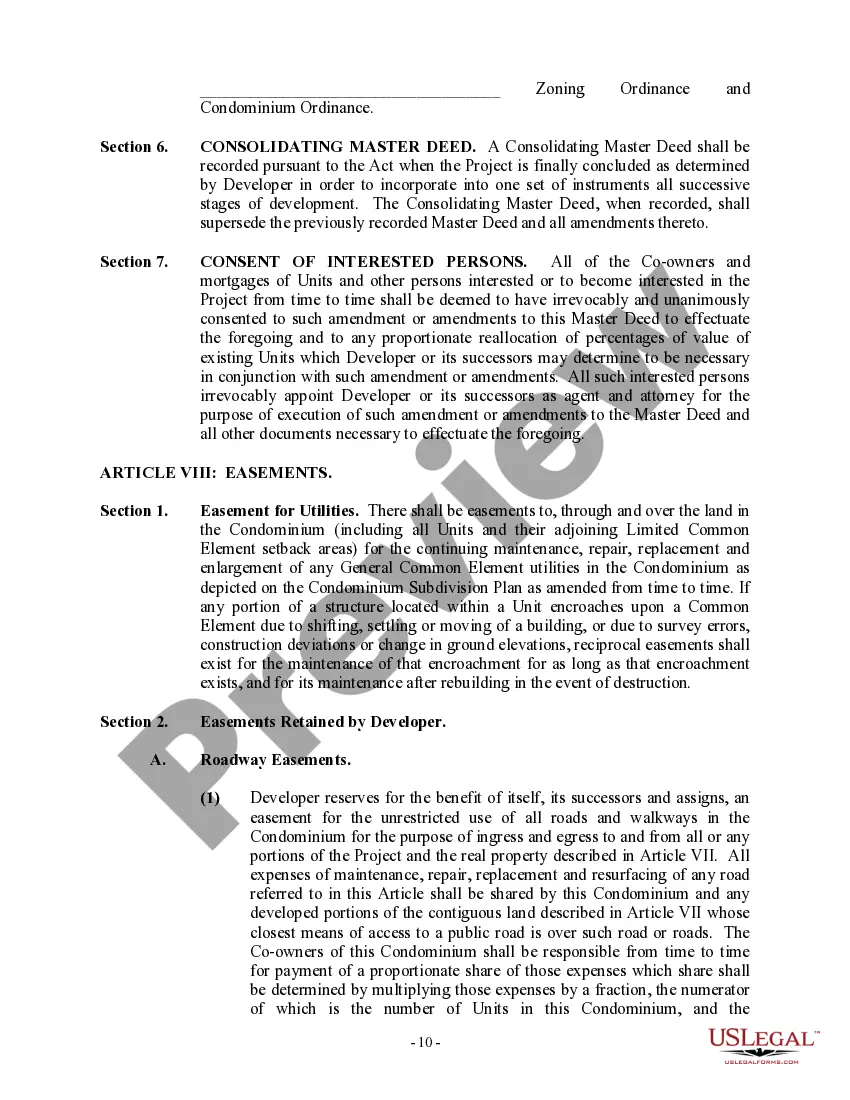
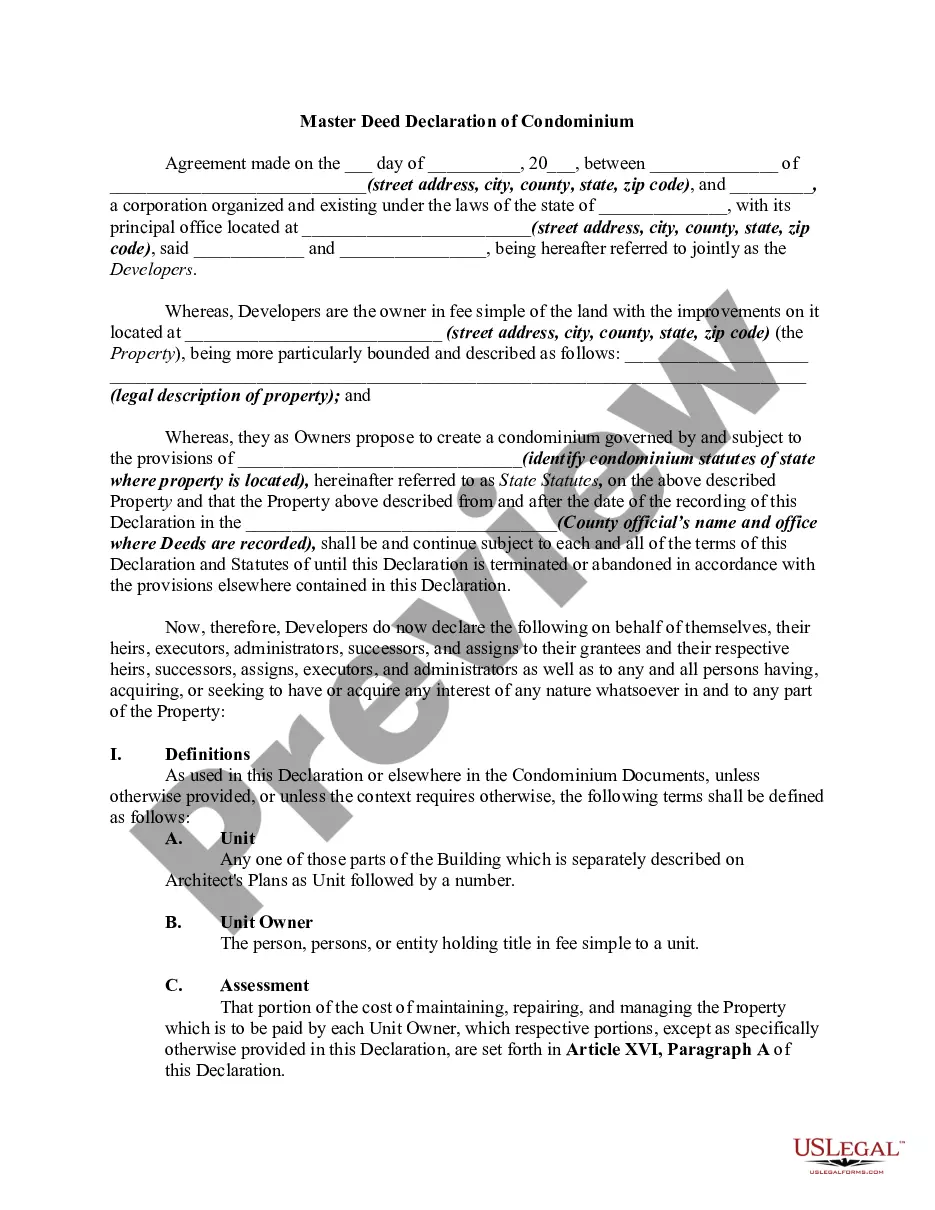
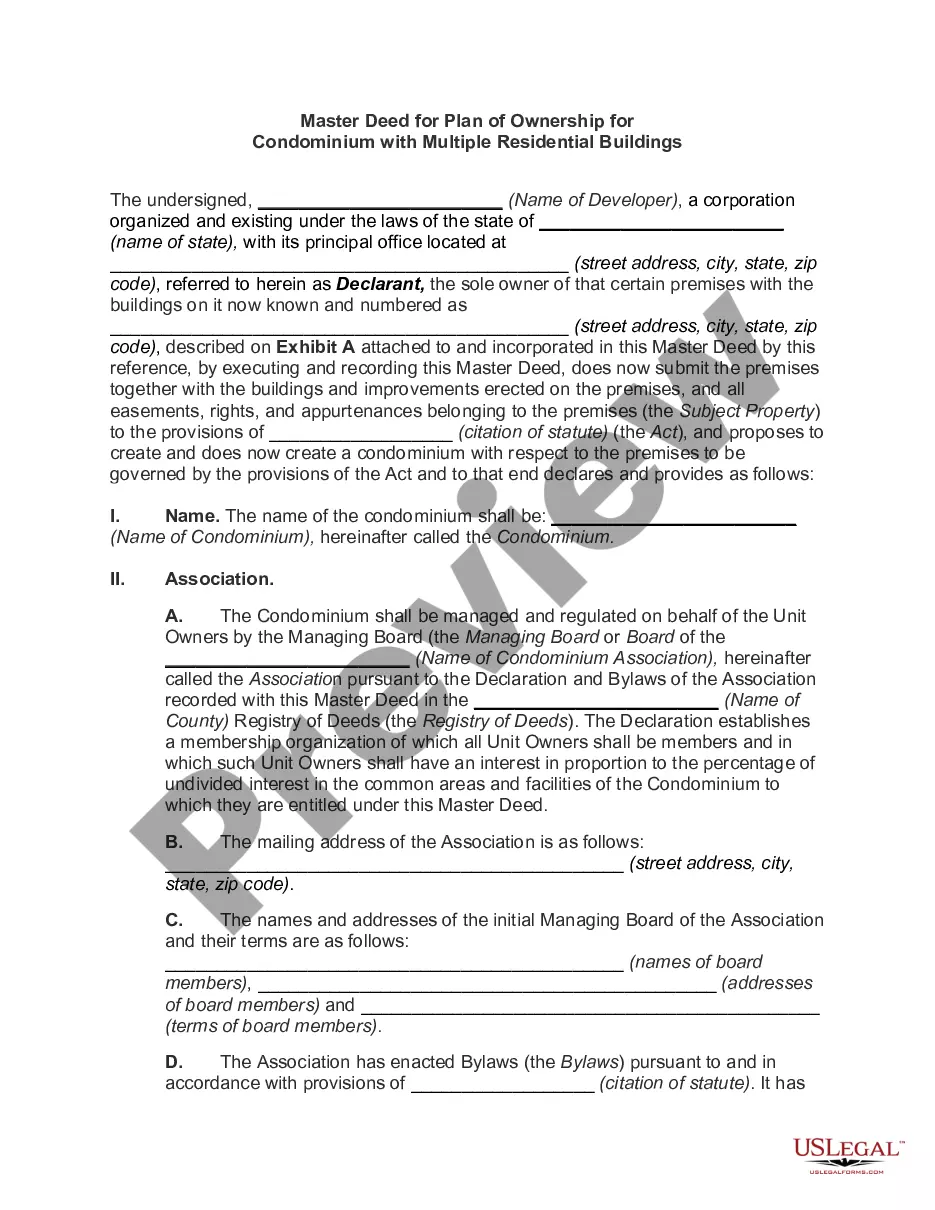
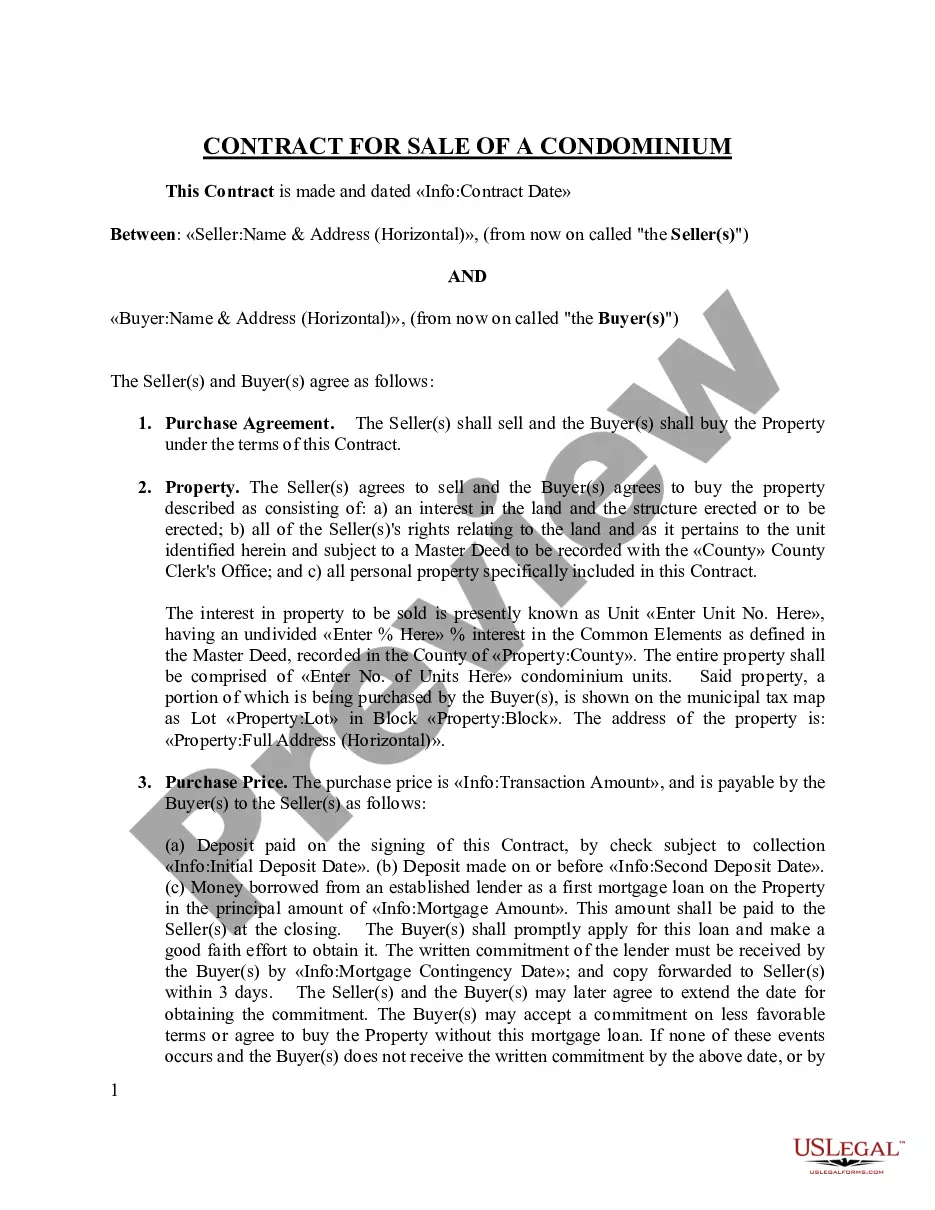
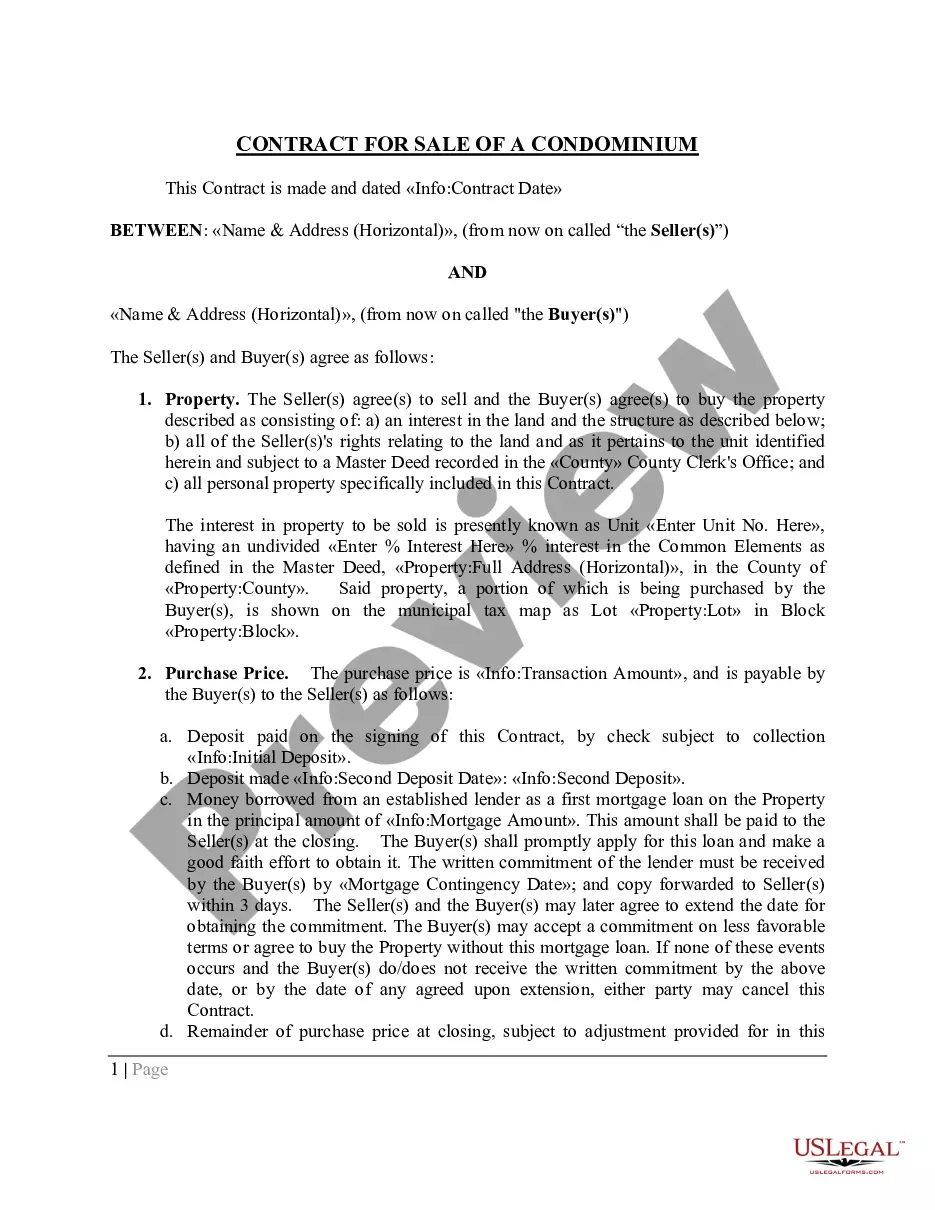
The Condominium Master Deed is a legal document executed by a developer to formally establish a residential condo development in accordance with the Condominium Act. This master deed outlines the legal description of the condominium property, as well as the rights, responsibilities, and obligations of each co-owner involved in the project. It differs from other forms by providing a comprehensive framework for managing and maintaining the communal aspects of the condominium project, ensuring harmonious living among co-owners.
Key components of this form
- Title and Nature: Details the project's identity and legal foundation.
- Legal Description: Identifies the physical boundaries and geography of the property.
- Common Elements: Specifies shared spaces and responsibilities for maintenance.
- Definitions: Clarifies terminology that will be used throughout the document.
- Unit Descriptions: Provides detailed information about each condominium unit.
- Easements: Outlines access rights for utilities and community needs.



Situations where this form applies
This form is necessary when a developer wishes to establish a condominium project, specifying how the property will be used, managed, and maintained by the co-owners. It is crucial when launching new residential developments or when existing structures are being converted into condominium units, ensuring all legal aspects are addressed to protect the interests of all parties involved.
Who should use this form
- Developers planning to create a new condominium project.
- Property owners who want to convert existing properties into condominiums.
- Real estate attorneys assisting clients with condominium regulations.
- Associations representing co-owners of existing condominium projects.
How to complete this form
- Identify the developer's name and legal address at the top of the form.
- Specify the date of execution of the master deed.
- Provide a detailed legal description of the condominium property.
- List the names and descriptions of common elements and limited common elements.
- Include definitions for specific terms used throughout the master deed.
- All parties must sign and date the document as part of the formal execution.
Does this form need to be notarized?
This form needs to be notarized to ensure legal validity. US Legal Forms provides secure online notarization powered by Notarize, allowing you to complete the process through a verified video call, available anytime.
Get your form ready online
Our built-in tools help you complete, sign, share, and store your documents in one place.
Make edits, fill in missing information, and update formatting in US Legal Forms—just like you would in MS Word.
Download a copy, print it, send it by email, or mail it via USPS—whatever works best for your next step.
Sign and collect signatures with our SignNow integration. Send to multiple recipients, set reminders, and more. Go Premium to unlock E-Sign.
If this form requires notarization, complete it online through a secure video call—no need to meet a notary in person or wait for an appointment.
We protect your documents and personal data by following strict security and privacy standards.

Make edits, fill in missing information, and update formatting in US Legal Forms—just like you would in MS Word.

Download a copy, print it, send it by email, or mail it via USPS—whatever works best for your next step.

Sign and collect signatures with our SignNow integration. Send to multiple recipients, set reminders, and more. Go Premium to unlock E-Sign.

If this form requires notarization, complete it online through a secure video call—no need to meet a notary in person or wait for an appointment.

We protect your documents and personal data by following strict security and privacy standards.
Typical mistakes to avoid
- Failure to provide a complete legal description of the property.
- Omitting signatures from all required parties.
- Inaccurate definitions of common and limited common elements.
- Not adhering to state-specific condominium regulations.
Advantages of online completion
- Convenience of accessing the form anytime, from anywhere.
- Editability to input specific project details as needed.
- Reliability of having a template drafted by experienced attorneys.
- Quick download options to facilitate prompt execution.
Looking for another form?

Form popularity
FAQ
A condominium, called condo for short, is a privately owned individual unit within a building of other units. Condo owners jointly own shared common areas, such as pools, garages, elevators, outside hallways and gyms, to name a few.Condominiums are often referred to as a 'common interest development. '
What happens after the building is eventually condemned as uninhabitable? Anyone's guess, but it might be that unless owners themselves have resources to rebuild the condo, it might just be demolished and land sold off, with whatever small remaining proceeds going to old condo owners.
Common elements are those parts of a condo complex that belong to all owners. With a few exceptions, they constitute everything except the units in which people live. Corridors, garbage rooms, lobbies, locker areas, garages, technical rooms, the roof, grounds, walkways are all common elements.
What Is a Condominium? A condominium is a form of property ownership involving multiple-unit dwellings where a person owns his or her individual unit, but the common areas are owned in common. All members share in the costs and maintenance of the common areas.
What is a condo? A condominium, (also known as a condo) is a private residential unit located in a building or community that is rented out to tenants. The unit itself is privately owned by an individual who becomes the landlord of that property.
Condominium documents are generally divided into three parts: Declaration, Articles of Incorporation, and Rules and Regulations. the basic rules under which the condominium operates. the condo's owner or developer.
An individual who purchases a unit in a condominium receives title to such unit in fee simple, owning it outright. The owner has all legal rights incident to ownership, including the right to sell, absent a Restrictive Covenant limiting its use.
What Is a Condominium? A condominium is a form of property ownership involving multiple-unit dwellings where a person owns his or her individual unit, but the common areas are owned in common. All members share in the costs and maintenance of the common areas.
Every homeowners association is governed by a master deed that establishes information about the units, common areas, bylaws and owners' rights according to state laws.The master deed provides for easements that outline the conditions in which the HOA or its management company or agent can enter a house or condo unit.