Data Entry Employment Contract - Self-Employed Independent Contractor
What is this form?
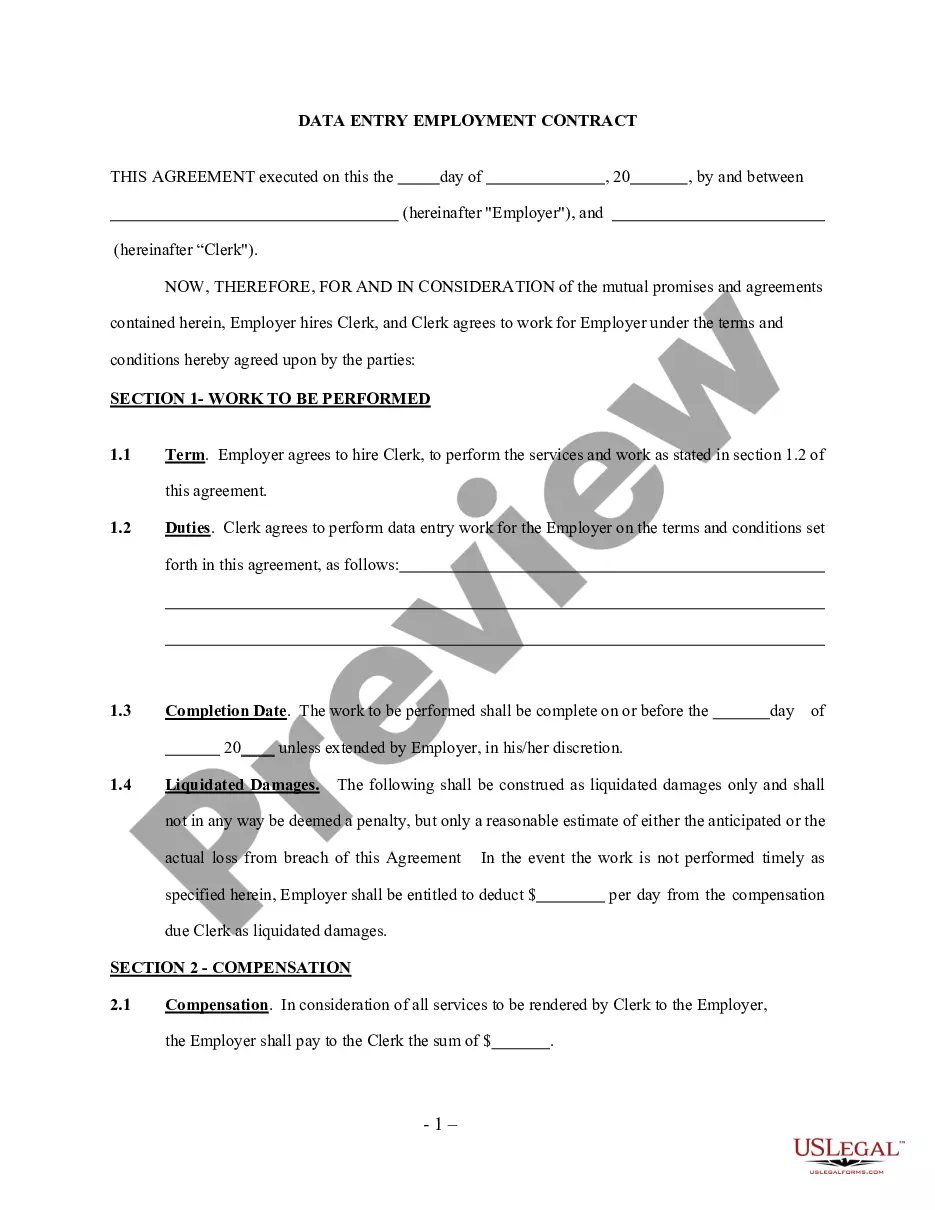
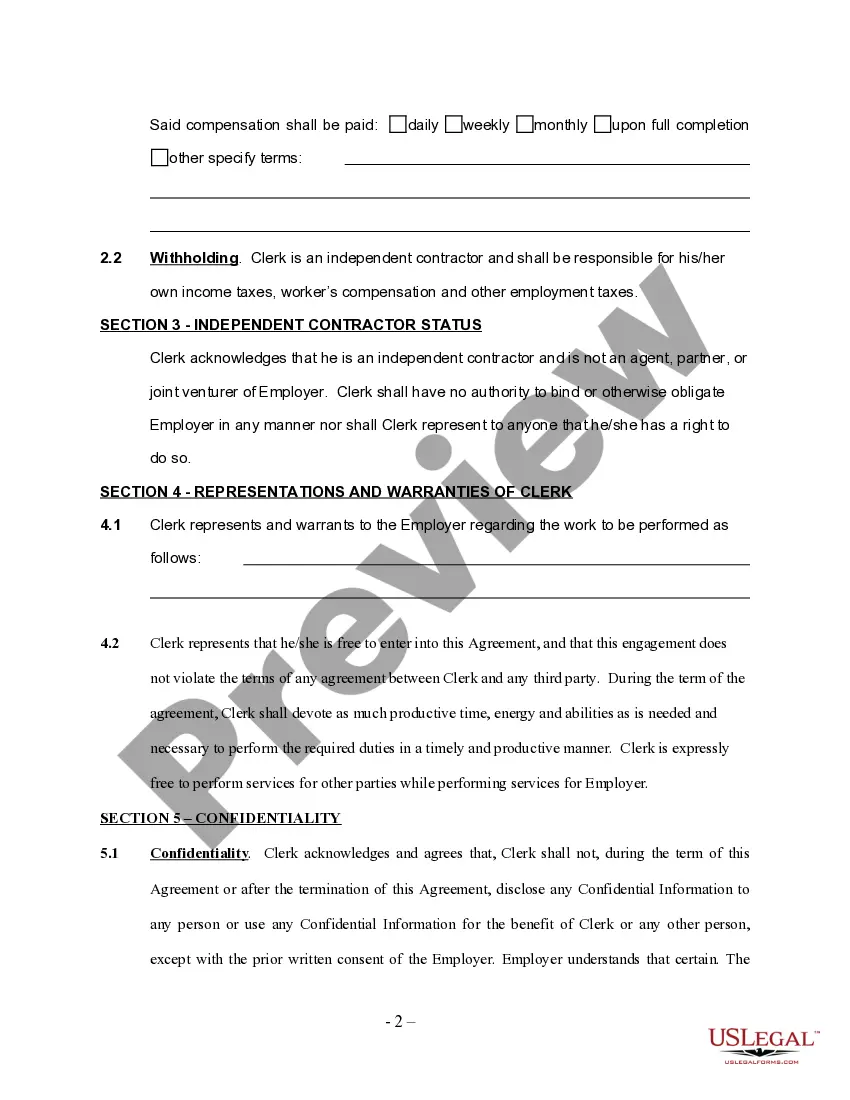
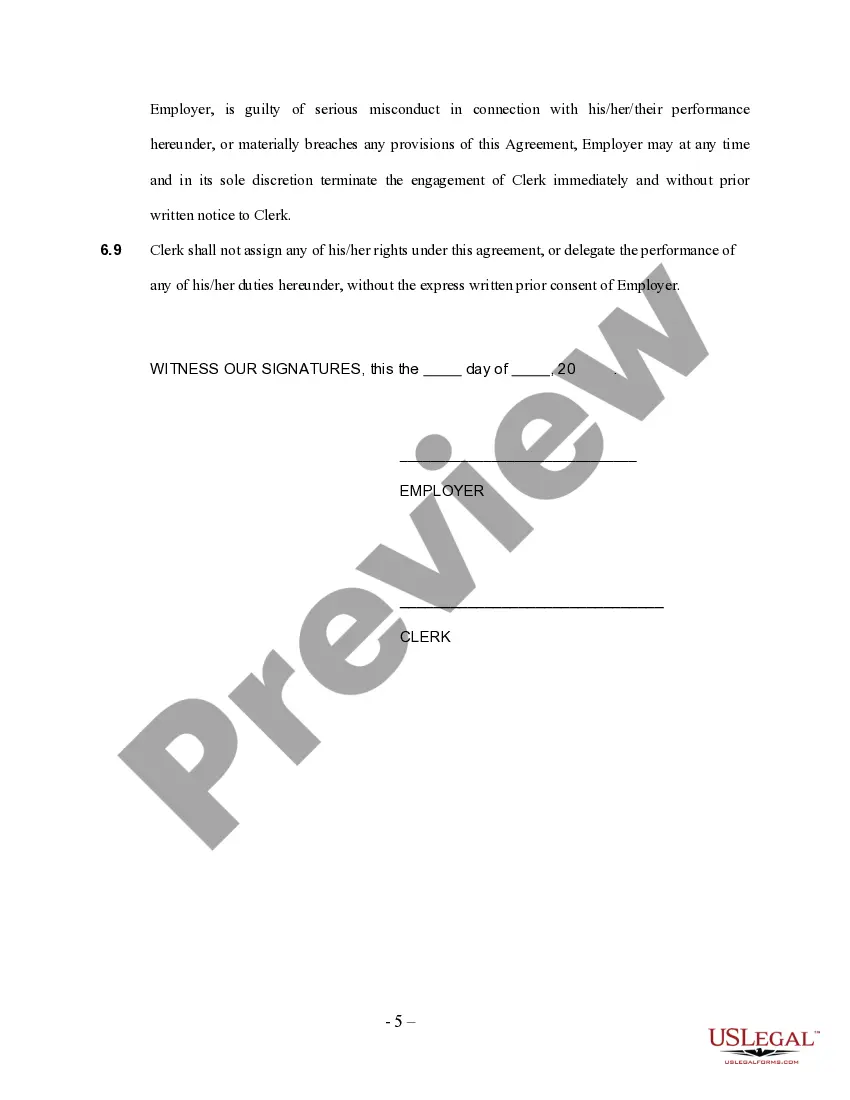
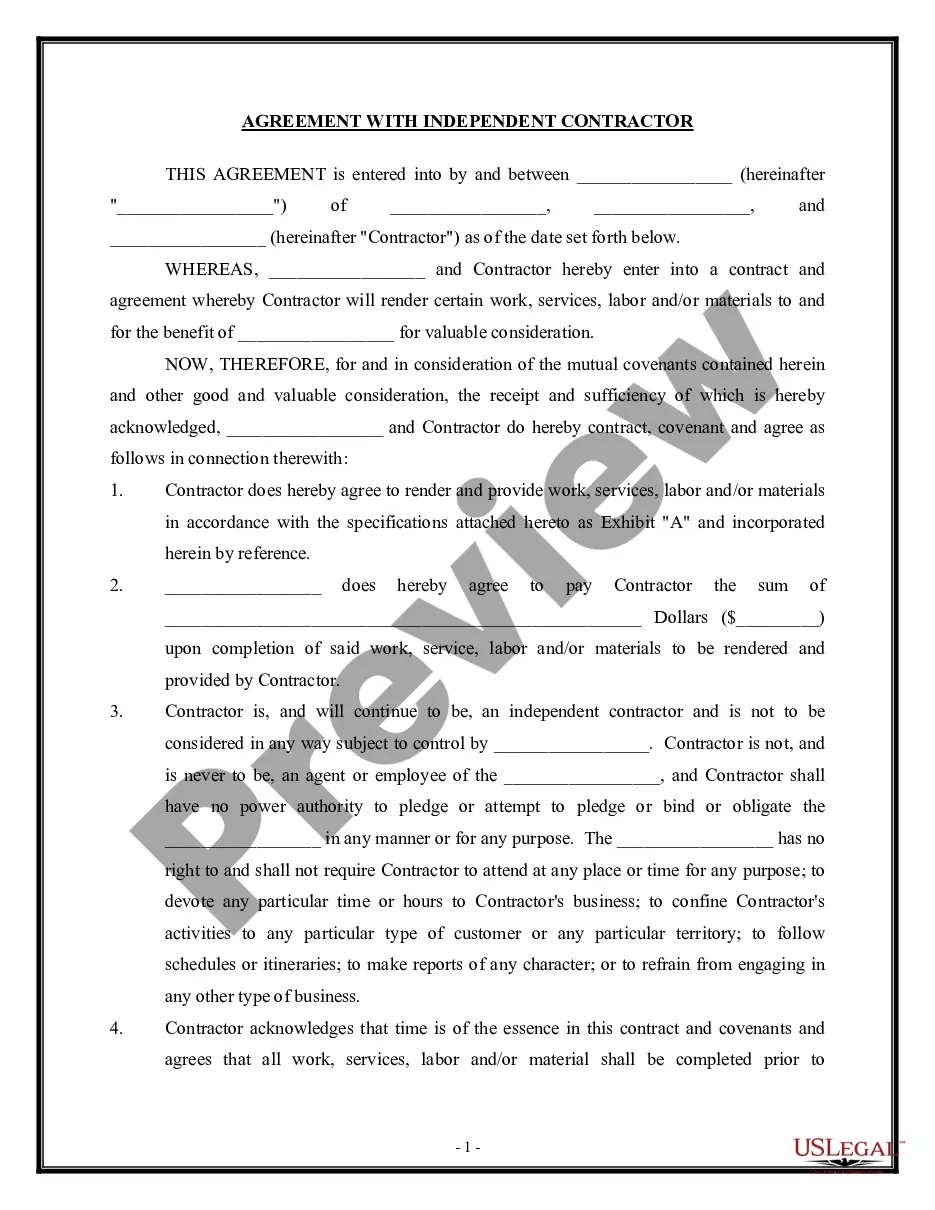
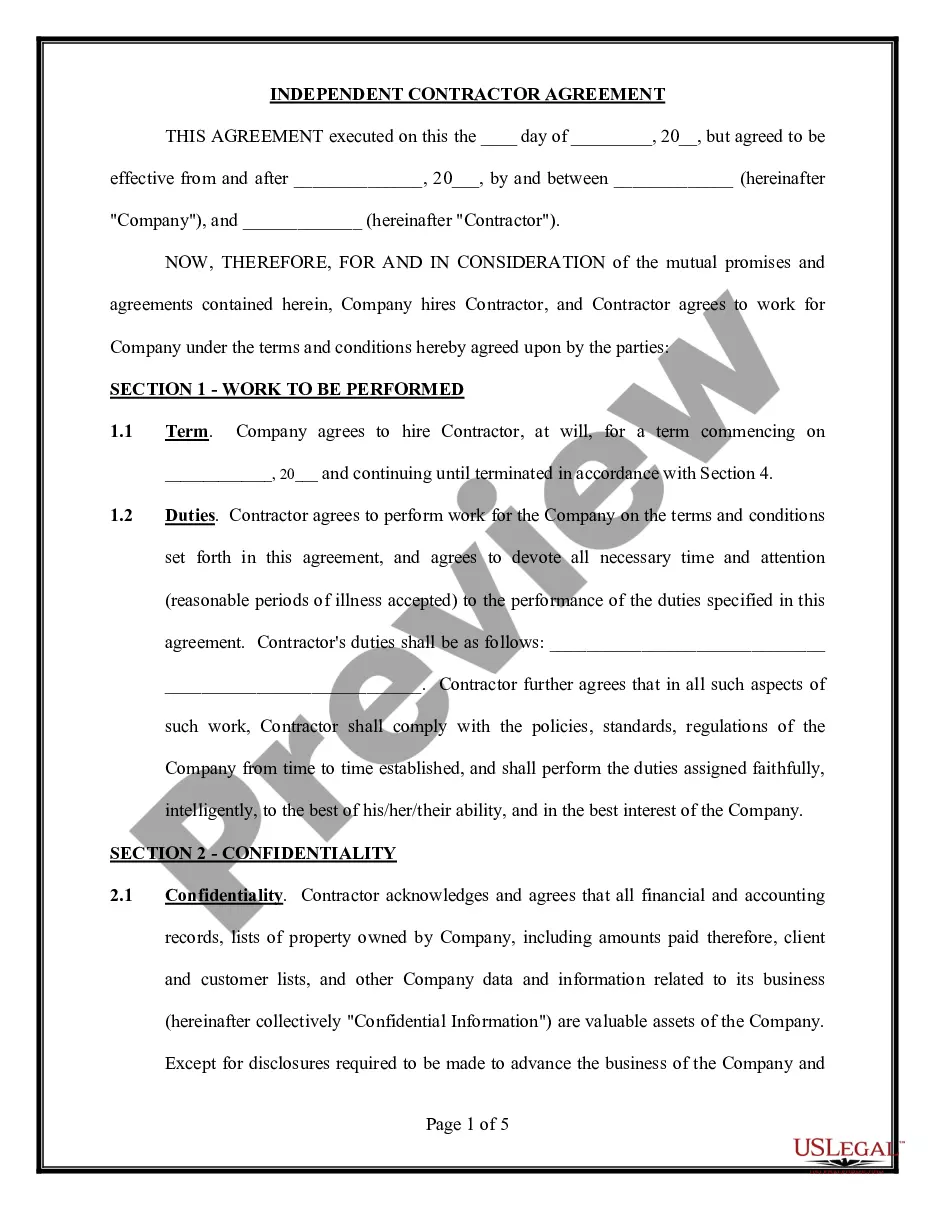
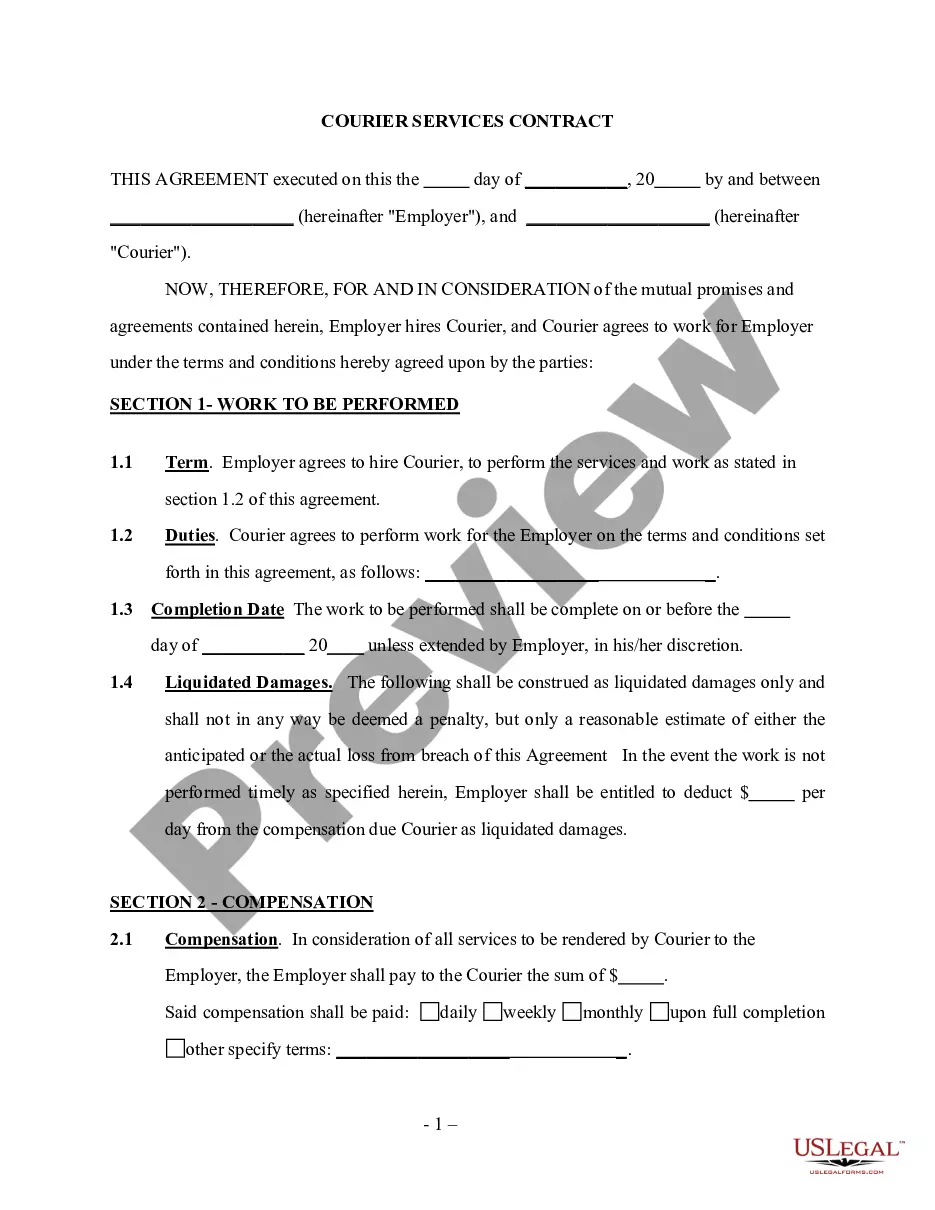
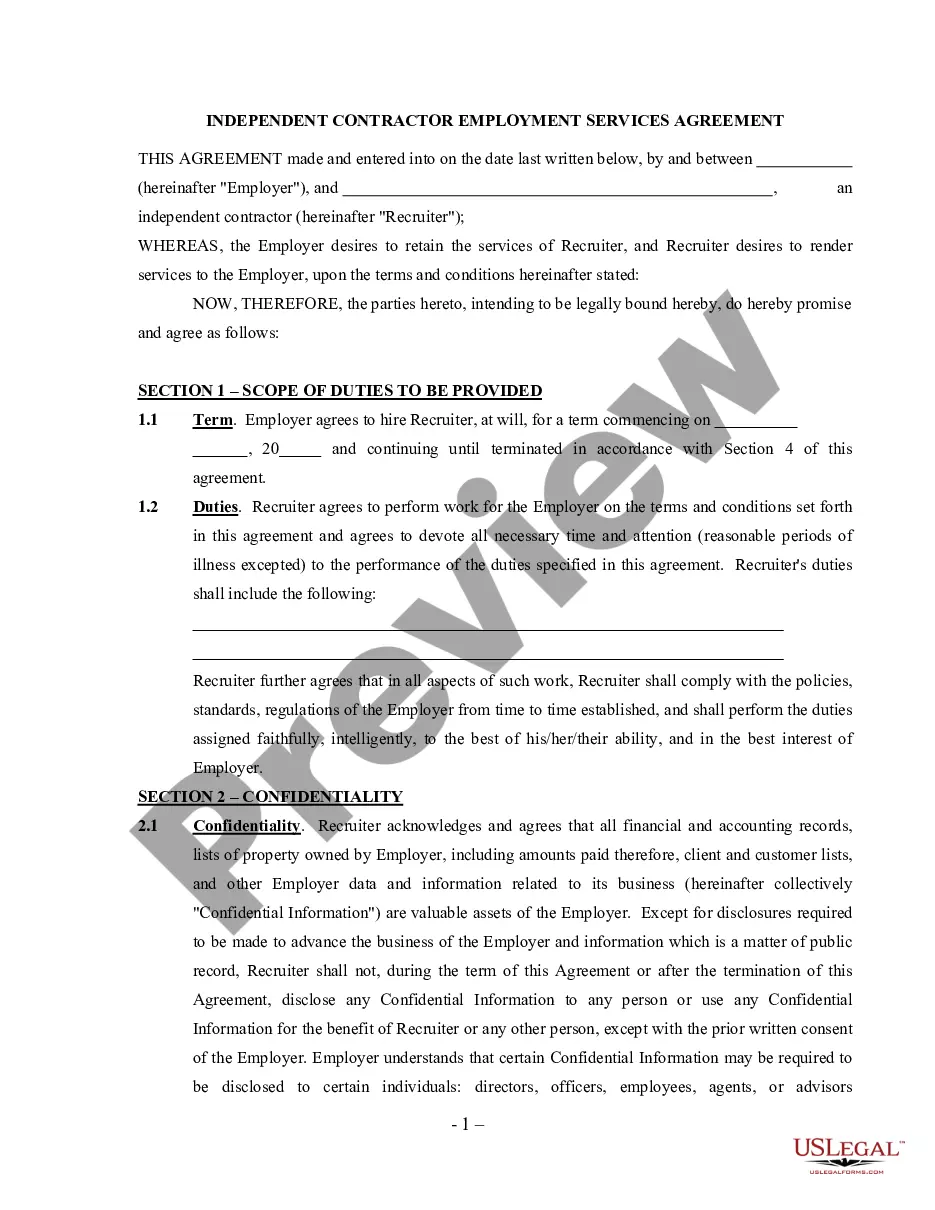
The Data Entry Employment Contract - Self-Employed Independent Contractor is a legal agreement between an employer and an independent contractor specifically for data entry services. This form outlines the terms of the contractor's engagement, ensuring a clear understanding of responsibilities, rights, and confidentiality obligations. Unlike traditional employee contracts, this form recognizes the contractor's independent status, providing flexibility for both parties while establishing essential legal protections.
Form components explained
- Work to be performed: Details the specific tasks and services the contractor agrees to perform.
- Independent contractor status: Confirms the contractorâs status and clarifies they have no authority to bind the employer.
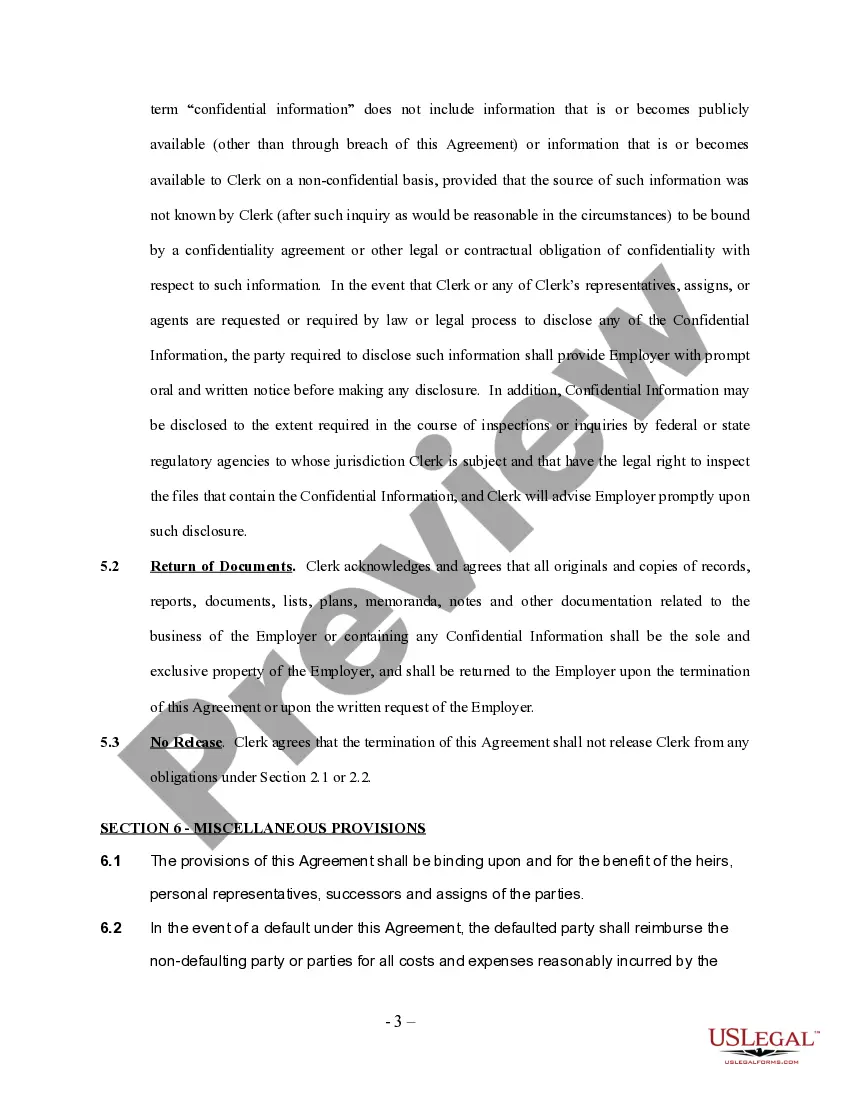
- Confidentiality: Outlines the contractor's obligations to maintain the confidentiality of sensitive information.
- Representations and warranties: Includes any assurances made by the contractor regarding their abilities or qualifications.
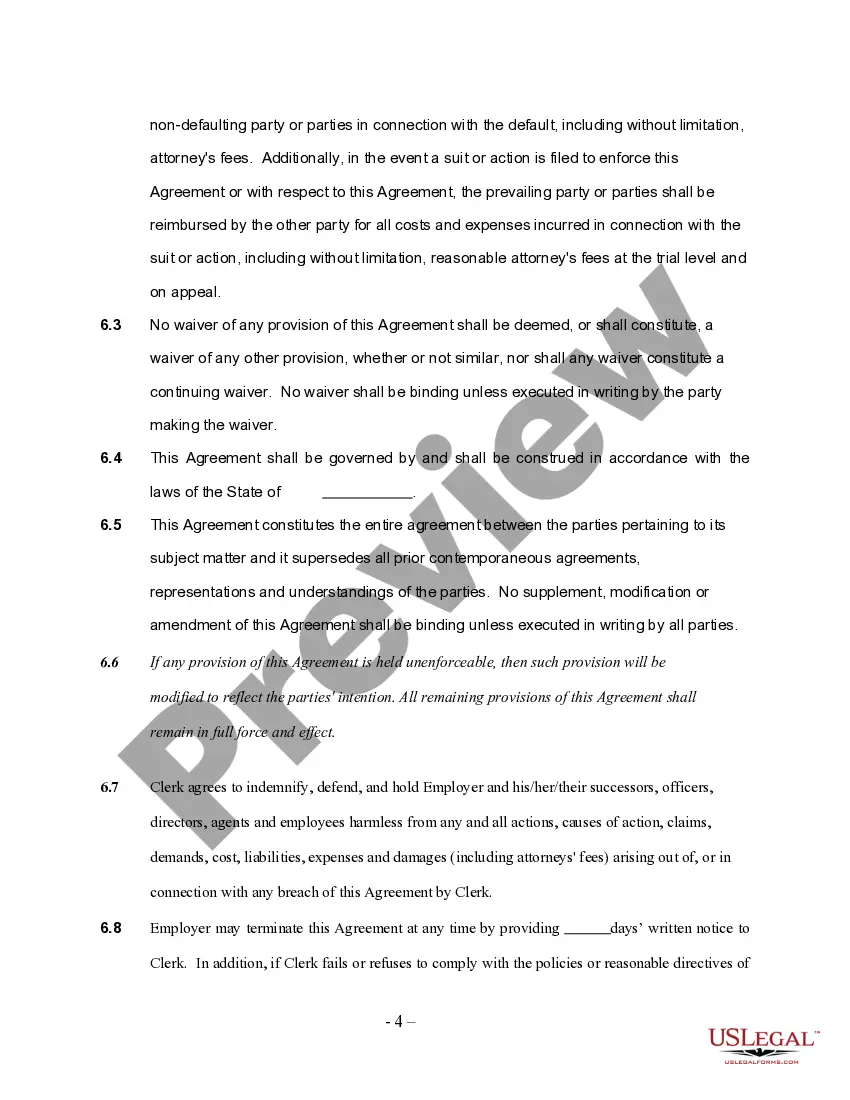
- Miscellaneous provisions: Covers various legal details including indemnification and assignments of rights.

Common use cases
This form should be used when an employer hires a self-employed independent contractor for data entry tasks. Scenarios include when a business needs to outsource data entry to enhance efficiency, when the employer requires specialized skills that a contractor possesses, or when using freelance contractors for temporary projects. Additionally, this form helps establish expectations regarding confidentiality and the nature of the working relationship.
Intended users of this form
- Employers who seek to engage independent contractors for data entry services.
- Self-employed individuals or freelancers specializing in data entry services.
- Business owners looking for a clear framework outlining terms of engagement with contractors.
How to complete this form
- Identify the parties: Enter the names and contact information of both the employer and the contractor.
- Specify the work: Clearly define the data entry tasks to be performed by the contractor.
- Set the term: Indicate the duration of the agreement, including start and end dates.
- Review confidentiality terms: Ensure both parties understand the confidentiality obligations outlined in the contract.
- Sign and date: Both parties should sign and date the agreement to finalize it.
Does this form need to be notarized?
This form does not typically require notarization unless specified by local law. However, having it notarized can enhance its enforceability and legitimacy in certain situations.
Get your form ready online
Our built-in tools help you complete, sign, share, and store your documents in one place.
Make edits, fill in missing information, and update formatting in US Legal Forms—just like you would in MS Word.
Download a copy, print it, send it by email, or mail it via USPS—whatever works best for your next step.
Sign and collect signatures with our SignNow integration. Send to multiple recipients, set reminders, and more. Go Premium to unlock E-Sign.
If this form requires notarization, complete it online through a secure video call—no need to meet a notary in person or wait for an appointment.
We protect your documents and personal data by following strict security and privacy standards.

Make edits, fill in missing information, and update formatting in US Legal Forms—just like you would in MS Word.

Download a copy, print it, send it by email, or mail it via USPS—whatever works best for your next step.

Sign and collect signatures with our SignNow integration. Send to multiple recipients, set reminders, and more. Go Premium to unlock E-Sign.

If this form requires notarization, complete it online through a secure video call—no need to meet a notary in person or wait for an appointment.

We protect your documents and personal data by following strict security and privacy standards.
Common mistakes to avoid
- Failing to clearly specify the work required, leading to misunderstandings.
- Not establishing confidentiality obligations, risking sensitive information exposure.
- Overlooking the independent contractor status, which can lead to misclassification issues.
Benefits of completing this form online
- Easy access to high-quality legal forms drafted by licensed attorneys.
- Convenient download and editing options, allowing customization to specific needs.
- Reliable formats that comply with standard legal requirements and practices.
Looking for another form?
Form popularity
FAQ
Name of contractor and contact information. Name of homeowner and contact information. Describe property in legal terms. List attachments to the contract. The cost. Failure of homeowner to obtain financing. Description of the work and the completion date. Right to stop the project.
An independent contractor is not considered an employee for Form I-9 purposes and does not need to complete Form I-9.
1. Not Having a Written Contract.The taxing, labor and employment, and insurance authorities expect a written contract that states that the worker is an independent contractor and will be paid as such with no tax withholding, no benefits, etc.
If you run a small business that hires 1099 contractors, also known as independent contractors, it is vital that you have them sign an independent contractor contract. This is because there is a significant gray area between who is classified as an independent contractor and who is classified as an employee.
Terms. This is the first section of any agreement or contract and states the names and locations of the parties involved. Responsibilities & Deliverables. Payment-Related Details. Confidentiality Clause. Contract Termination. Choice of Law.
Do employers need to complete employment verification checks for independent contractors? No.However, it is important to note that businesses and individuals may not hire independent contractors if they are aware that the independent contractor is not authorized to work in the United States.
For most types of projects you hire an independent contractor (IC) to do, the law does not require you to put anything in writing. You can meet with the IC, agree on the terms of your arrangement, and have an oral contract or agreement that is legally binding. Just because you can doesn't mean you should, however.
To set yourself up as a self-employed taxpayer with the IRS, you simply start paying estimated taxes (on Form 1040-ES, Estimated Tax for Individuals) and file Schedule C, Profit or Loss From Business, and Schedule SE, Self-Employment Tax, with your Form 1040 tax return each April.
Data entry jobs can be done in the office, but many companies offer online data entry positions that you can do from home.Many data entry jobs are suitable for entry-level employees. If you have more advanced data entry and typing experience, you can also look for work-from-home transcription and medical coding jobs.