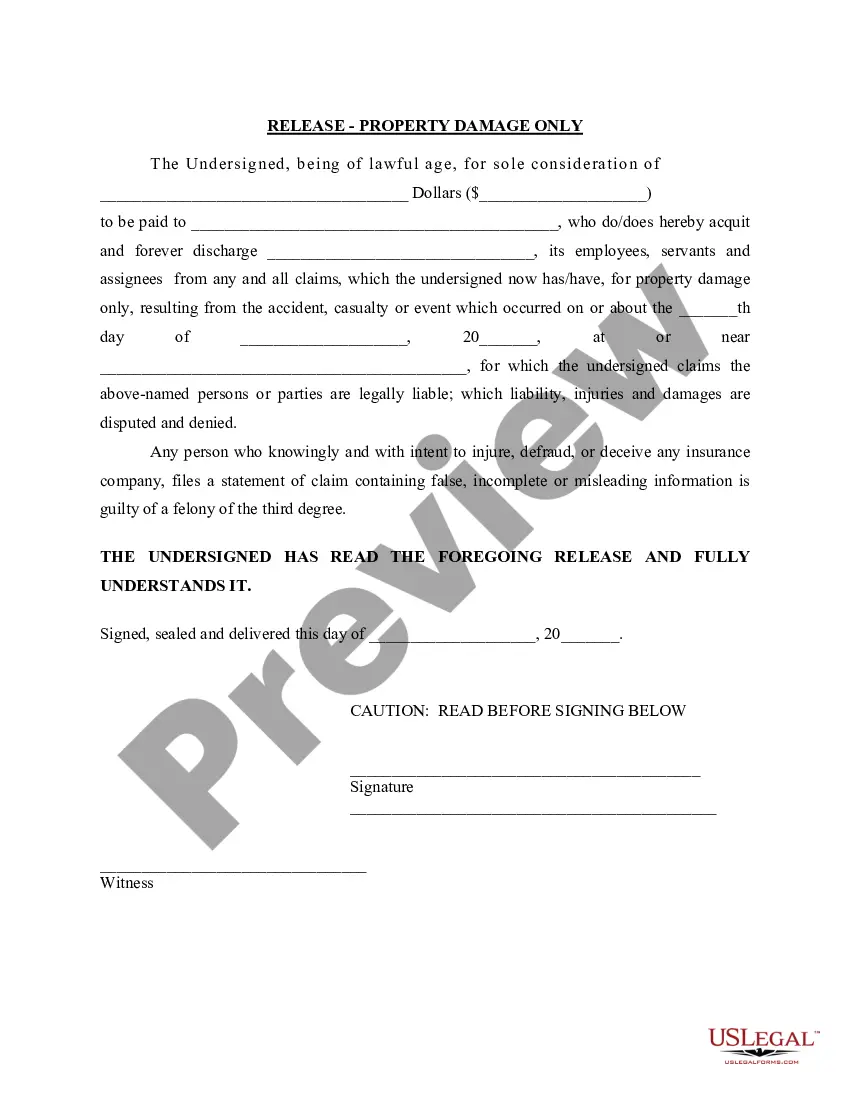
Virginia Letter to Lienholder to Notify of Trust
About this form
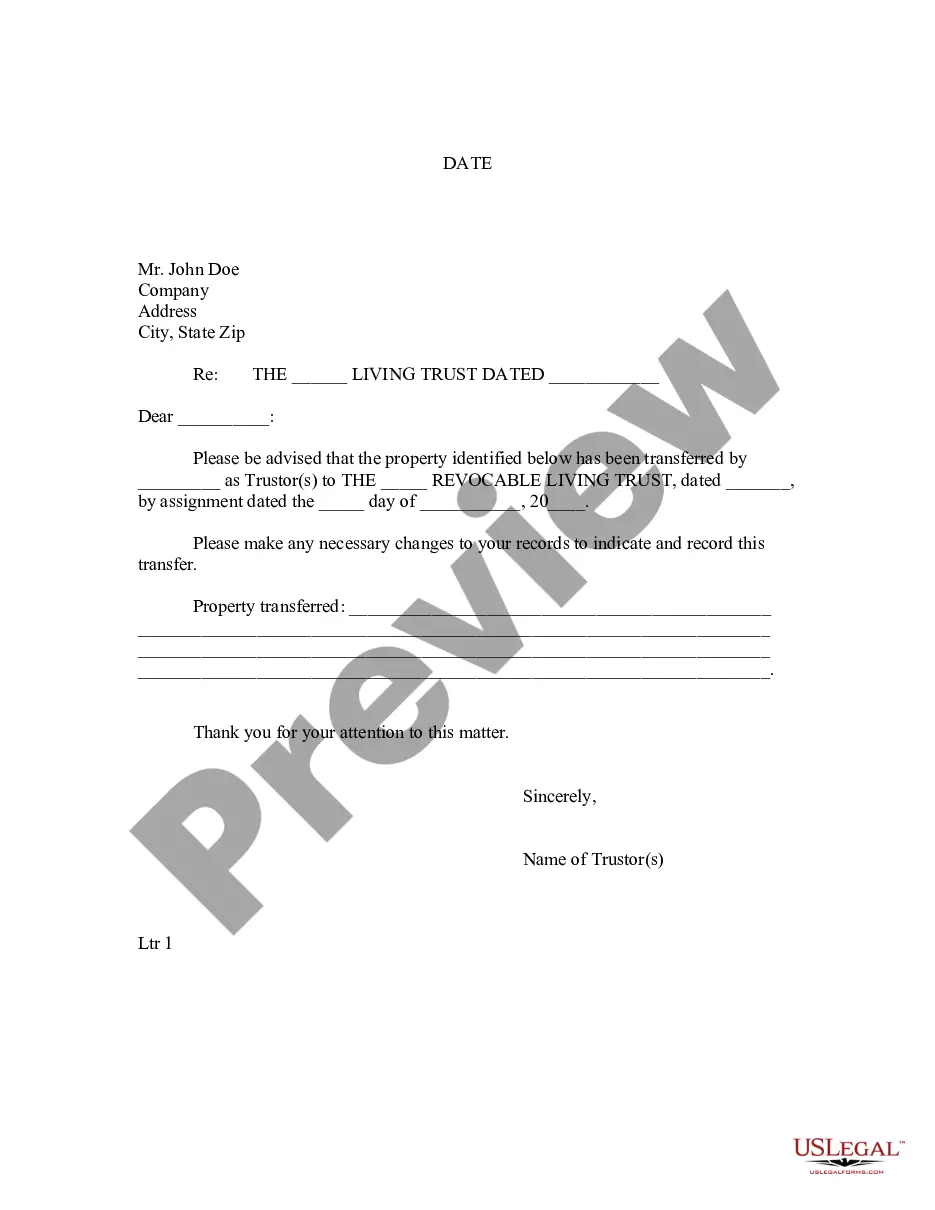
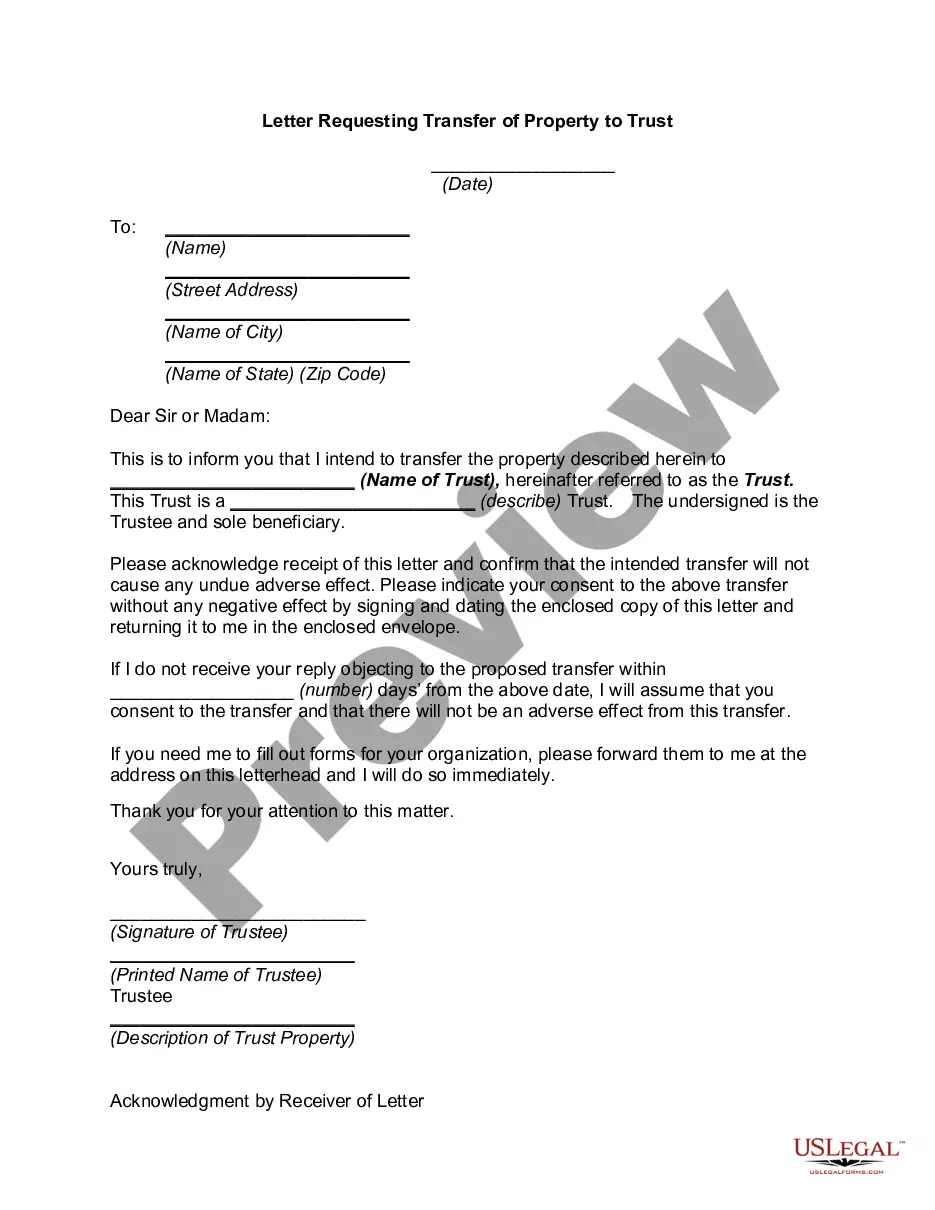
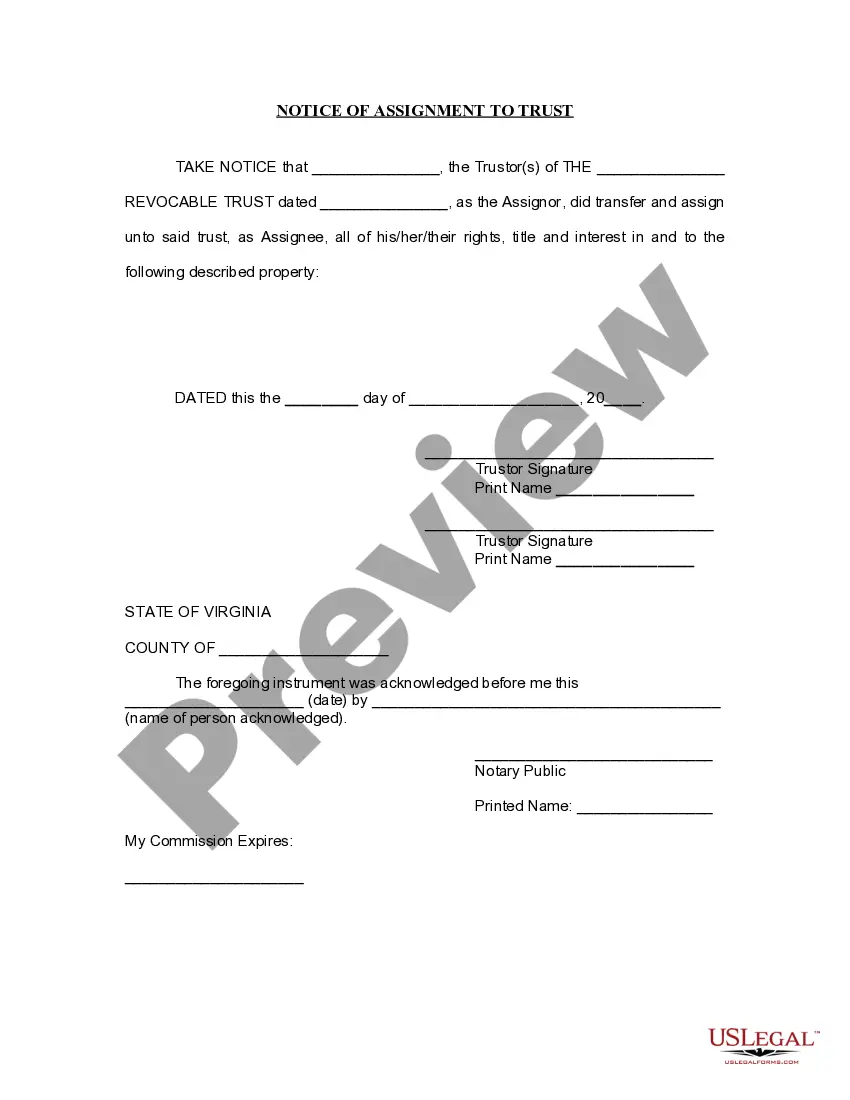
The Letter to Lienholder to Notify of Trust is a formal notice informing a lienholder that property has been transferred to a living trust. This type of trust is created during a person's lifetime for estate planning purposes. By using this form, the trustor can specify which property has been transferred to the trust, distinguishing it from other legal notifications regarding property ownership.
Main sections of this form
- Date of notice
- Trustor's name and address
- Reference to the specific living trust document
- Details of the property being transferred
- Signature of the trustor(s)
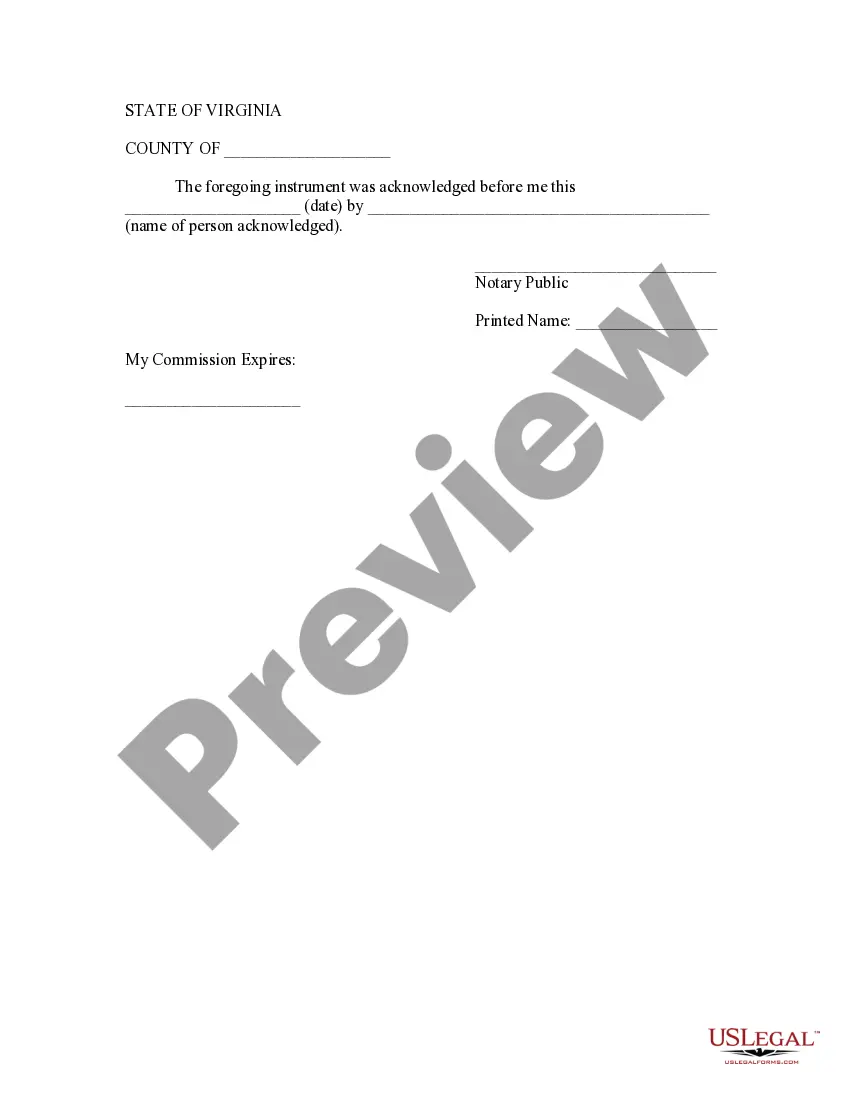
- Notary section for acknowledgment
When to use this document
This form should be used when a property owner transfers their assets into a living trust. It is important for notifying lienholders to update their records regarding the ownership and management of the property. This is particularly relevant in real estate transactions, estate planning activities, or when clarifying ownership following a trust's establishment.
Intended users of this form
- Individuals creating a living trust
- Trustors who wish to notify lienholders about the transfer of property
- Estate planners assisting clients with asset management strategies
- Legal professionals working with trusts and estates
Instructions for completing this form
- Identify the date of the letter.
- Enter the trustor's name and address at the top of the form.
- Specify the name of the living trust and its date.
- Detail the property being transferred to the trust.
- Sign the document as the trustor(s).
- Have the document notarized after signing, if necessary.
Notarization requirements for this form
To make this form legally binding, it must be notarized. Our online notarization service, powered by Notarize, lets you verify and sign documents remotely through an encrypted video session.
Get your form ready online
Our built-in tools help you complete, sign, share, and store your documents in one place.
Make edits, fill in missing information, and update formatting in US Legal Forms—just like you would in MS Word.
Download a copy, print it, send it by email, or mail it via USPS—whatever works best for your next step.
Sign and collect signatures with our SignNow integration. Send to multiple recipients, set reminders, and more. Go Premium to unlock E-Sign.
If this form requires notarization, complete it online through a secure video call—no need to meet a notary in person or wait for an appointment.
We protect your documents and personal data by following strict security and privacy standards.

Make edits, fill in missing information, and update formatting in US Legal Forms—just like you would in MS Word.

Download a copy, print it, send it by email, or mail it via USPS—whatever works best for your next step.

Sign and collect signatures with our SignNow integration. Send to multiple recipients, set reminders, and more. Go Premium to unlock E-Sign.

If this form requires notarization, complete it online through a secure video call—no need to meet a notary in person or wait for an appointment.

We protect your documents and personal data by following strict security and privacy standards.
Typical mistakes to avoid
- Failing to accurately describe the property transferred.
- Not including the date of the living trust.
- Omitting the trustor's signature.
- Neglecting to have the form notarized when required.
Benefits of using this form online
- Immediate access to a professionally drafted form.
- Editable template to customize for your specific needs.
- Convenient download for use at your discretion.
- Reliability and assurance of legal compliance.
Looking for another form?
Form popularity
FAQ
A lien release is a document that is filed in the public land records as the official notice that the lien is removed. Once payment has been received, a contractor has a duty to remove any lien that was filed against the property.
Write your name and return address in the top three lines of the letter. Insert the complete date (month, day, year). Enter the recipient's name, title, company name and address on the next five lines. Greet the reader by writing "Dear (recipient's name):" Skip two lines. State the subject in a subject line.
Depending on state laws, paper titles are generally mailed and electronic titles and/or liens are released to the motor vehicle agency approximately 10 business days after the payoff is received. Allow 15-30 days for receipt of your title based on mail time and/or motor vehicle agency process.
A lienholder is a lender that legally has an interest in your property until you pay it off in full. The lender which can be a bank, financial institution or private party holds a lien, or legal claim, on the property because they lent you the money to purchase it.
The car (vehicle) lien release form is a document that is used by a lending institution or entity after a borrower has paid the loan in full and the borrower would like to retrieve the title to their vehicle.
A Lien Release (also considered a Lien Cancellation or Release of Lien) is a legally binding document that is sent by the current lien holder, the individual who has leased the property or provided payment to secure the property, that informs any debt in relation to that property has been fulfilled and they relinquish
When a vehicle is deemed a total loss, the lienholder needs to be notified and they will provide a Letter of Guarantee that states what the current payoff is for the loan.
The lender will also notify the Department of Motor Vehicles (DMV) that the loan has been paid in full. If you don't receive the lien release, submit a request to your lender for proof that the loan has been satisfied. This request can be made through the DMV or directly to the lender.