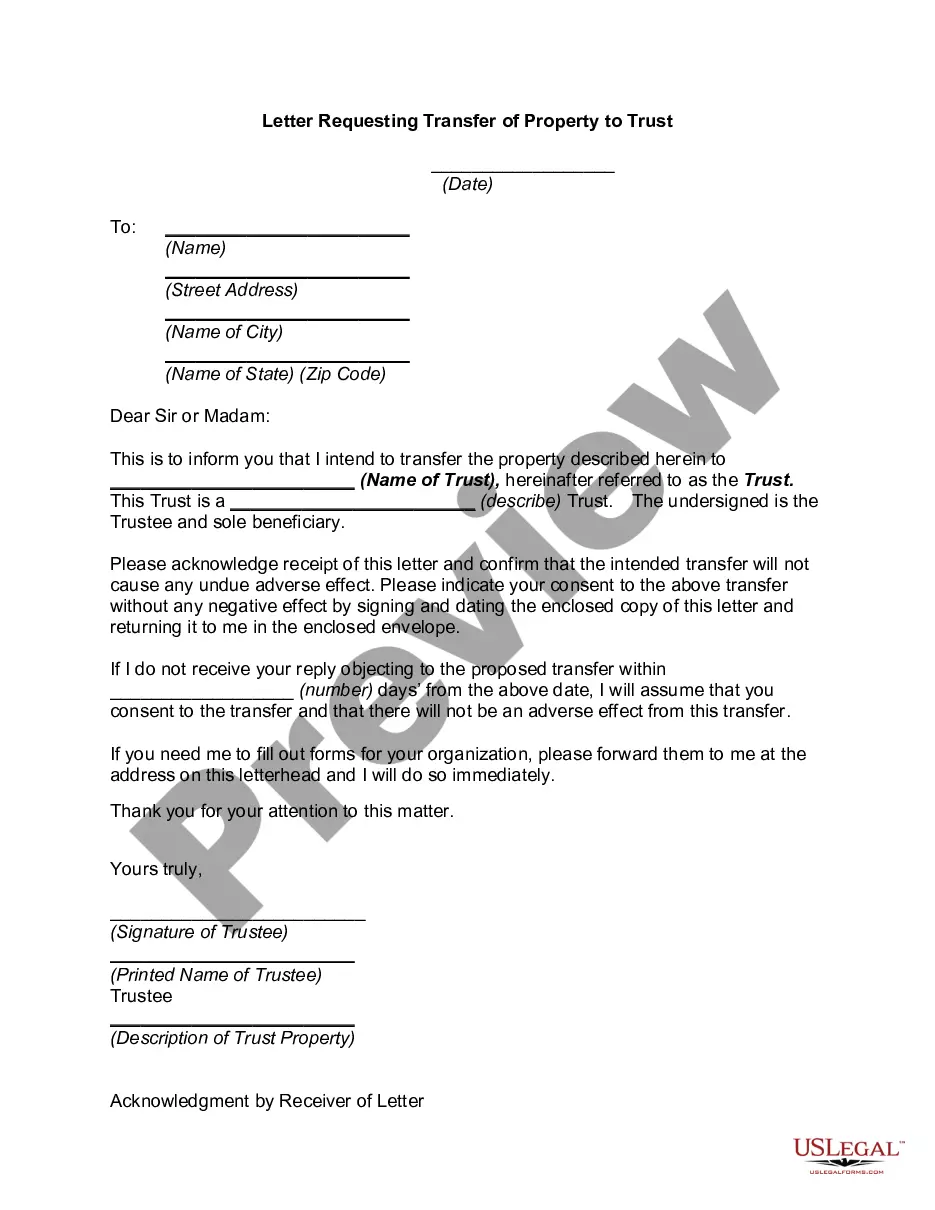
Letter Requesting Transfer of Property to Trust
Overview of this form
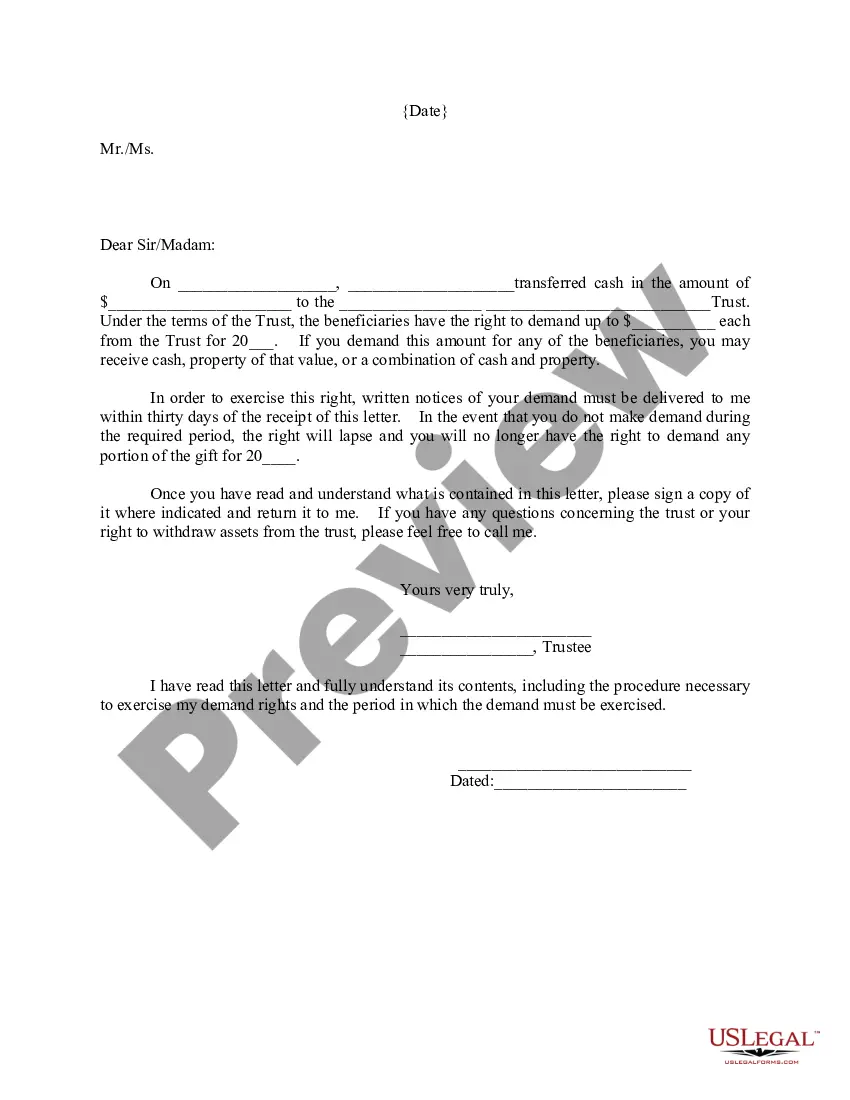
The Letter Requesting Transfer of Property to Trust is a formal communication from a trustee to a potential beneficiary. Its primary purpose is to inform the beneficiary about the intention to transfer specific property into a trust. This form is essential for ensuring all parties are aware of the transfer and to obtain consent, differentiating it from other trust documentation which may not require direct notification to beneficiaries.
Key parts of this document
- Sender's information: Includes the date and the trustee's contact details.
- Recipient's information: Contains the name and address of the potential beneficiary.
- Property description: Specifies the property intended for transfer.
- Trust details: Describes the nature of the trust involved in the transfer.
- Consent request: A section where the recipient is asked to acknowledge their consent.
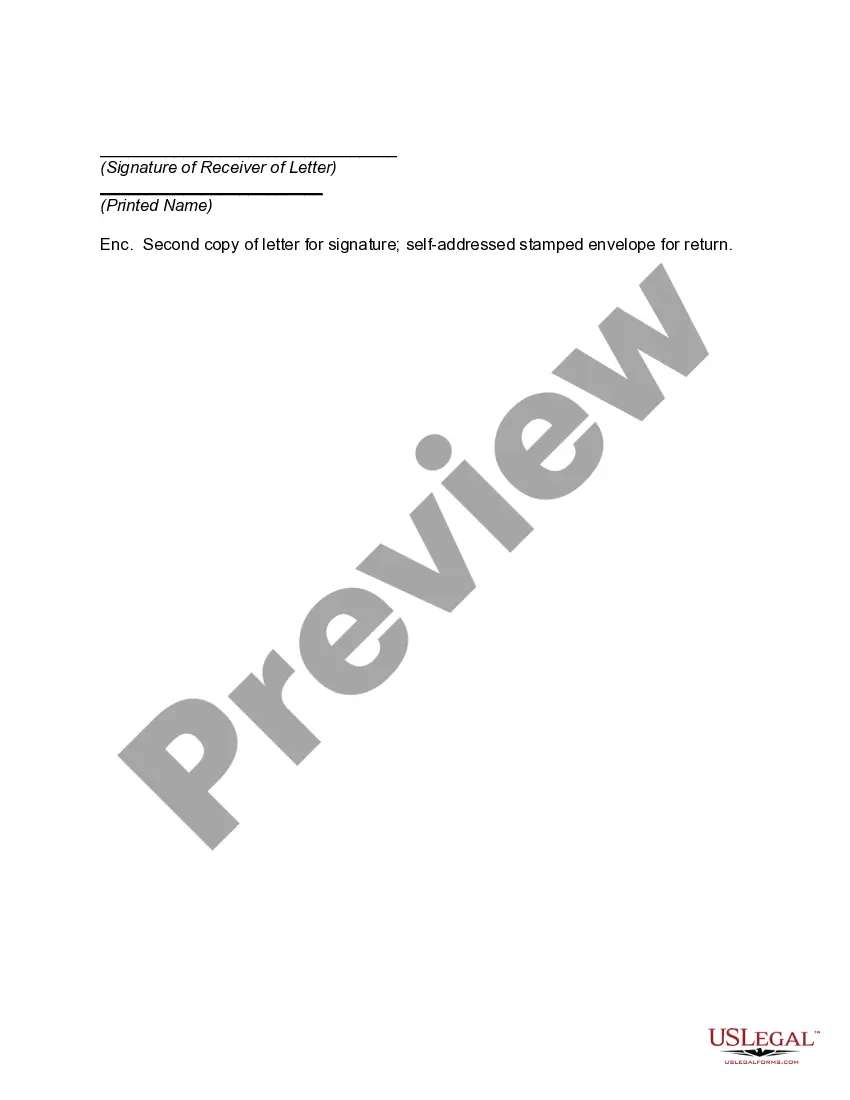
- Signatures: Areas for both the trustee and the recipient to sign and date.
Situations where this form applies
This form should be used when a trustee intends to transfer property to a trust and needs to inform designated beneficiaries. It is appropriate in various scenarios, such as updating trust assets, ensuring compliance with a trust agreement, or facilitating communication with beneficiaries about any changes in the trust's property. This ensures that all beneficiaries understand what is happening with their interests in the trust.
Who needs this form
- Trustees who manage a trust and wish to inform beneficiaries about property transfers.
- Individuals appointed as trustees in a family or personal trust arrangement.
- Beneficiaries of trusts who need to remain informed about changes to trust assets.
How to complete this form
- Fill in the date and your contact information at the top of the letter.
- Enter the name and address of the potential beneficiary.
- Specify the name of the trust and describe its nature.
- Provide details of the property that is being transferred to the trust.
- Request confirmation of receipt and consent from the beneficiary.
- Sign and print your name as the trustee before sending the letter.
Notarization guidance
This form does not typically require notarization unless specified by local law. However, it is advisable to check specific jurisdictional requirements to ensure compliance with local regulations.
Get your form ready online
Our built-in tools help you complete, sign, share, and store your documents in one place.
Make edits, fill in missing information, and update formatting in US Legal Forms—just like you would in MS Word.
Download a copy, print it, send it by email, or mail it via USPS—whatever works best for your next step.
Sign and collect signatures with our SignNow integration. Send to multiple recipients, set reminders, and more. Go Premium to unlock E-Sign.
If this form requires notarization, complete it online through a secure video call—no need to meet a notary in person or wait for an appointment.
We protect your documents and personal data by following strict security and privacy standards.

Make edits, fill in missing information, and update formatting in US Legal Forms—just like you would in MS Word.

Download a copy, print it, send it by email, or mail it via USPS—whatever works best for your next step.

Sign and collect signatures with our SignNow integration. Send to multiple recipients, set reminders, and more. Go Premium to unlock E-Sign.

If this form requires notarization, complete it online through a secure video call—no need to meet a notary in person or wait for an appointment.

We protect your documents and personal data by following strict security and privacy standards.
Avoid these common issues
- Failing to include necessary recipient information, which may cause delays in communication.
- Omitting the description of the trust or property, leading to potential confusion.
- Not obtaining a signature from the recipient, which may invalidate the consent process.
Advantages of online completion
- Convenient access to a ready-to-use template, saving time and effort in drafting.
- Editability allows you to tailor the document to your specific situation.
- Reliability, as the forms are drafted by licensed attorneys to ensure legal compliance.
Looking for another form?
Form popularity
FAQ
This form provides a template letter to request that property title be transferred into a trust. It is used by property owners or trustees to document the transfer request as part of estate or asset planning. The letter alone does not transfer ownership; it accompanies deeds or title updates. For state-specific steps, consult a licensed attorney.
The process isn’t complete with the letter alone. This form provides a template for requesting that property be transferred into a trust and may accompany deeds or title updates. The actual transfer requires proper deed revisions and recordation per state law. Consult a licensed attorney for the steps applicable in your state.
This template guides you to present property details, the trust name, and your request to transfer title into the trust. Include current owner(s), legal description, and relevant trust provisions. The letter should be dated and signed by the owner or authorized signer; however, verify with an attorney about local requirements.
Include the property description (address and legal description), current owner’s name, the trust’s name and effective date, and a clear statement requesting transfer of title into the trust. If applicable, reference the trust agreement and any IDs or parcel numbers. The letter should be signed and dated.
Use the letter when you want to initiate or document a transfer of property into a trust rather than executing a deed immediately. It’s typically used in conjunction with the trust instrument and deeds, and when communicating with a trustee or titleholder. Always verify with a local attorney for timing and requirements.
The letter is a communication requesting that a transfer occur, not the instrument that conveys title. It documents intent, identifies the property and trust, and may accompany deeds. A deed is the actual transfer of title. State rules vary; consult a licensed attorney for precise steps in your jurisdiction.