Bill of Transfer to a Trust
What is this form?
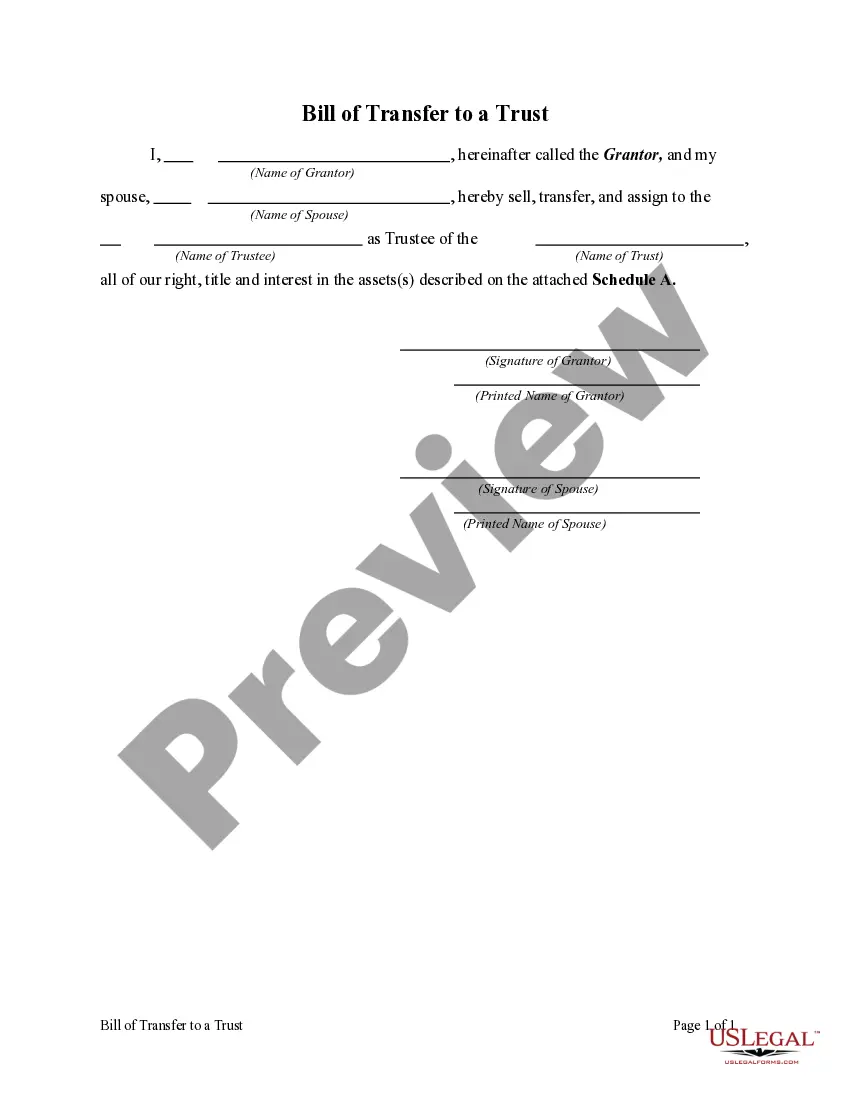
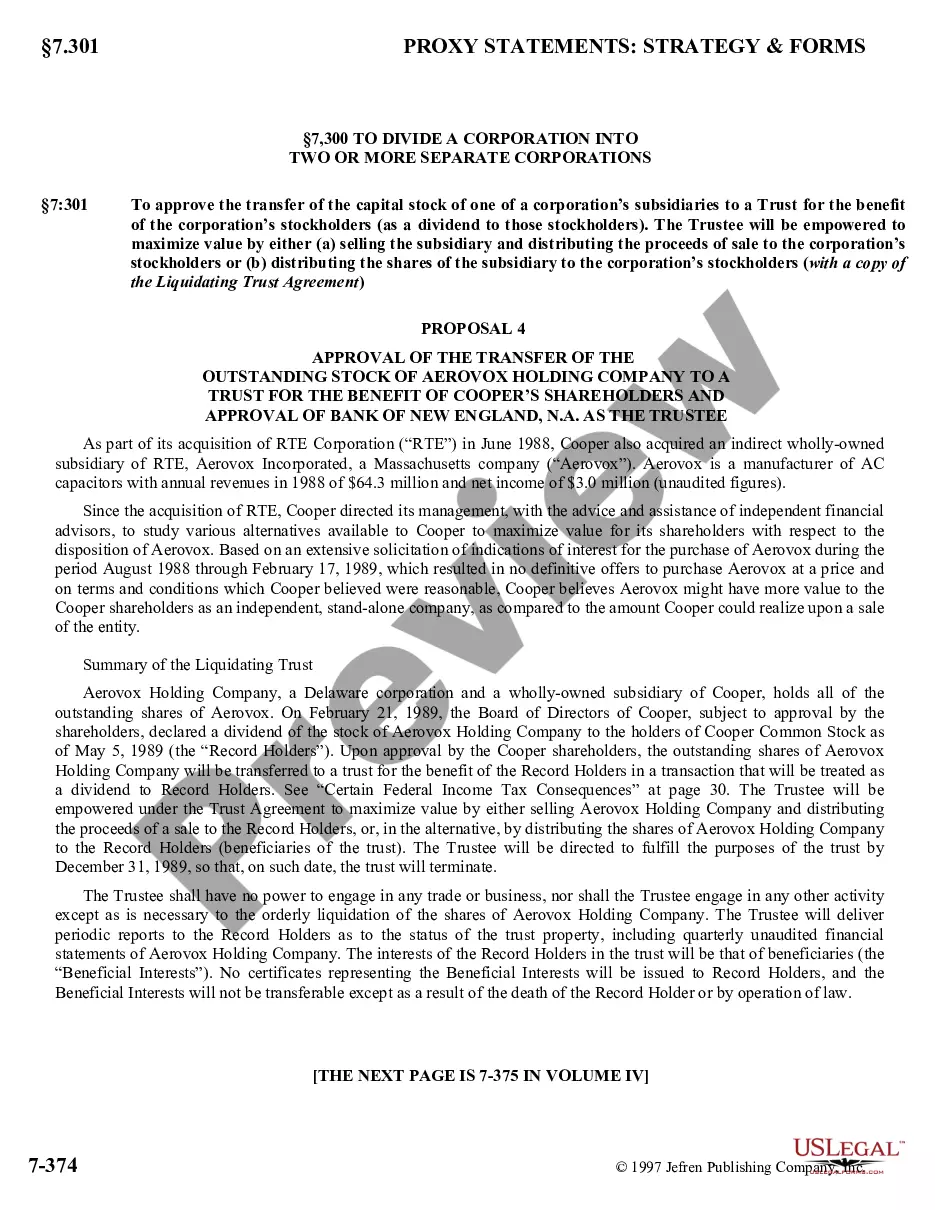
The Bill of Transfer to a Trust is a legal document used to transfer ownership of assets from an individual, known as the trustor, to a trust, which is administered by a designated trustee. This transfer can occur when the trust is created or at a later date during the trustor's lifetime. It is essential to complete this form to ensure that assets are properly managed within the trust, differentiating it from other forms that handle estate distribution after death or other types of asset transfers.
Key components of this form
- Names of the trustor and trustee.
- Description of assets being transferred to the trust.
- Date of the transfer and relevant signatures.
- Statements indicating the trustorâs intent to transfer ownership.
- Declarations that the assets are free from encumbrances.

When to use this document
This form should be used when a trustor wishes to formally transfer assets into a trust, either immediately upon the creation of the trust or at a subsequent time. Typical scenarios include individuals who have established a living trust for estate planning purposes, individuals who wish to streamline the management of their assets, or those who seek to avoid probate by placing their assets in a trust.
Who this form is for
- Trustors who have established a trust and wish to fund it with their assets.
- Individuals looking to manage their property efficiently during their lifetime.
- Anyone wanting to ensure that their assets are transferred according to their wishes and managed by a trusted individual or institution.
- Estate planners assisting clients in the creation and funding of trusts.
Instructions for completing this form
- Identify the trustor and trustee by entering their full names.
- Specify the assets being transferred by listing them accurately.
- Include the date of the transfer to document when the ownership change takes place.
- Have the trustor sign the document to express their intent clearly.
- Ensure that any witnesses or notarization requirements are met as per state law.
Is notarization required?
This form does not typically require notarization unless specified by local law. However, having a notary public witness the signing can add an extra layer of assurance regarding the authenticity of the signatures.
Get your form ready online
Our built-in tools help you complete, sign, share, and store your documents in one place.
Make edits, fill in missing information, and update formatting in US Legal Forms—just like you would in MS Word.
Download a copy, print it, send it by email, or mail it via USPS—whatever works best for your next step.
Sign and collect signatures with our SignNow integration. Send to multiple recipients, set reminders, and more. Go Premium to unlock E-Sign.
If this form requires notarization, complete it online through a secure video call—no need to meet a notary in person or wait for an appointment.
We protect your documents and personal data by following strict security and privacy standards.

Make edits, fill in missing information, and update formatting in US Legal Forms—just like you would in MS Word.

Download a copy, print it, send it by email, or mail it via USPS—whatever works best for your next step.

Sign and collect signatures with our SignNow integration. Send to multiple recipients, set reminders, and more. Go Premium to unlock E-Sign.

If this form requires notarization, complete it online through a secure video call—no need to meet a notary in person or wait for an appointment.

We protect your documents and personal data by following strict security and privacy standards.
Common mistakes
- Not clearly identifying all assets being transferred.
- Failing to sign the document, which can render the transfer invalid.
- Omitting the date of the transfer.
- Not confirming state-specific requirements for validity.
Advantages of online completion
- Convenience of accessing and completing the form from home.
- Ability to edit and customize the document to fit specific needs.
- Reliable templates drafted by licensed attorneys ensuring legal compliance.
- Time-saving, as users can complete the form at their own pace without scheduling in-person appointments.
Main things to remember
- The Bill of Transfer to a Trust is essential for transferring assets into a trust.
- Complete the form accurately to avoid common mistakes that could invalidate the transfer.
- Use the form to facilitate effective estate planning and management of assets.
- Verify state-specific requirements to ensure legal compliance.
Looking for another form?
Form popularity
FAQ
To transfer ownership, you will need to obtain a title change form from your DMV and complete it, naming the trustee (as trustee of your trust) as new owner. Sales tax should not apply to the transfer and if the clerk tries to apply it, you will need to speak to a supervisor.
Locate the deed that's in trust. Use the proper deed. Check with your title insurance company and lender. Prepare a new deed. Sign in the presence of a notary. Record the deed in the county clerk's office.
To transfer assets into a trust, the grantor must transfer titles from their name to the legal name of the trust. A grantor can create a living trust using an online legal document provider or by hiring an attorney. They can transfer almost any asset, including bank accounts, into a trust.
Visit your local bank branch and let the branch manager or representative know you want to transfer your bank account into the trust. Give the bank representative a signed and notarized copy of your trust document. The bank will need to confirm that you're the owner and verify the name of the trust.
Take the signed and notarized quitclaim deed to your county recorder's office to complete the transfer of title into your revocable trust. Check in two to four weeks to ensure it has been recorded. Include the address of the property on the asset list addendum attached to your trust.
You can sell it or move it back out of the trust as you see fit. You can completely undo the trust if you decide the arrangement isn't working for you after all. But all a revocable trust can do for you is avoid probate of the property it holds when you die.
A court can, when given reasons for a good cause, amend the terms of irrevocable trust when a trustee and/or a beneficiary petitions the court for a modification.Such modification provisions are common with charitable trusts, to allow modifications when federal tax law changes.
To transfer assets such as investments, bank accounts, or stock to your real living trust, you will need to contact the institution and complete a form. You will likely need to provide a certificate of trust as well. You may want to keep your personal checking and savings account out of the trust for ease of use.
Determine the Current Title and Vesting to Your Property. Prepare a Deed. Be Aware of Your Lender and Title Insurance. Prepare a Preliminary Change of Ownership Report. Execute Your Deed. Record Your Deed. Wait for the Deed to be Returned. Keep the Property in the Trust.