Virginia Settlor and Trustee Instructions for Revocable Trust
Understanding this form
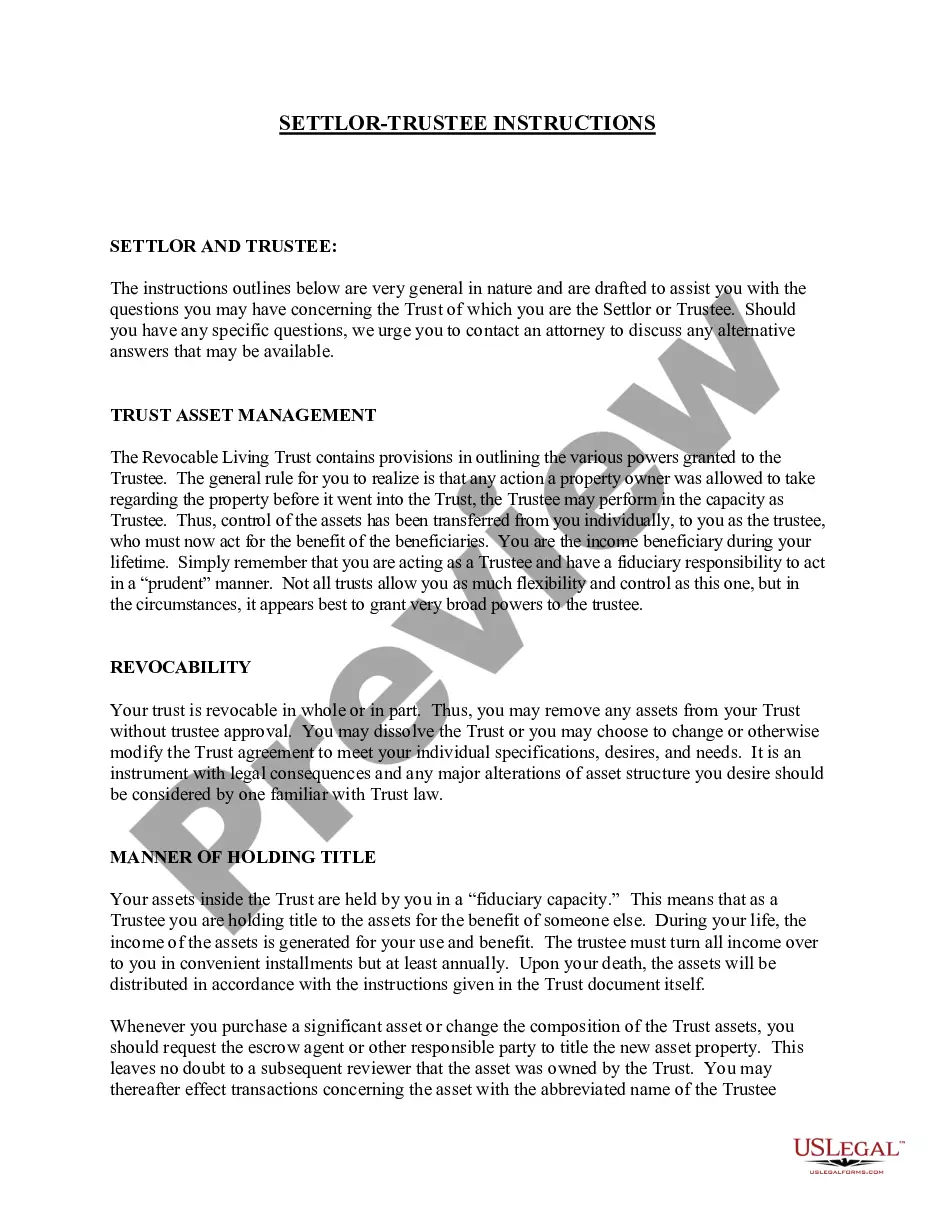
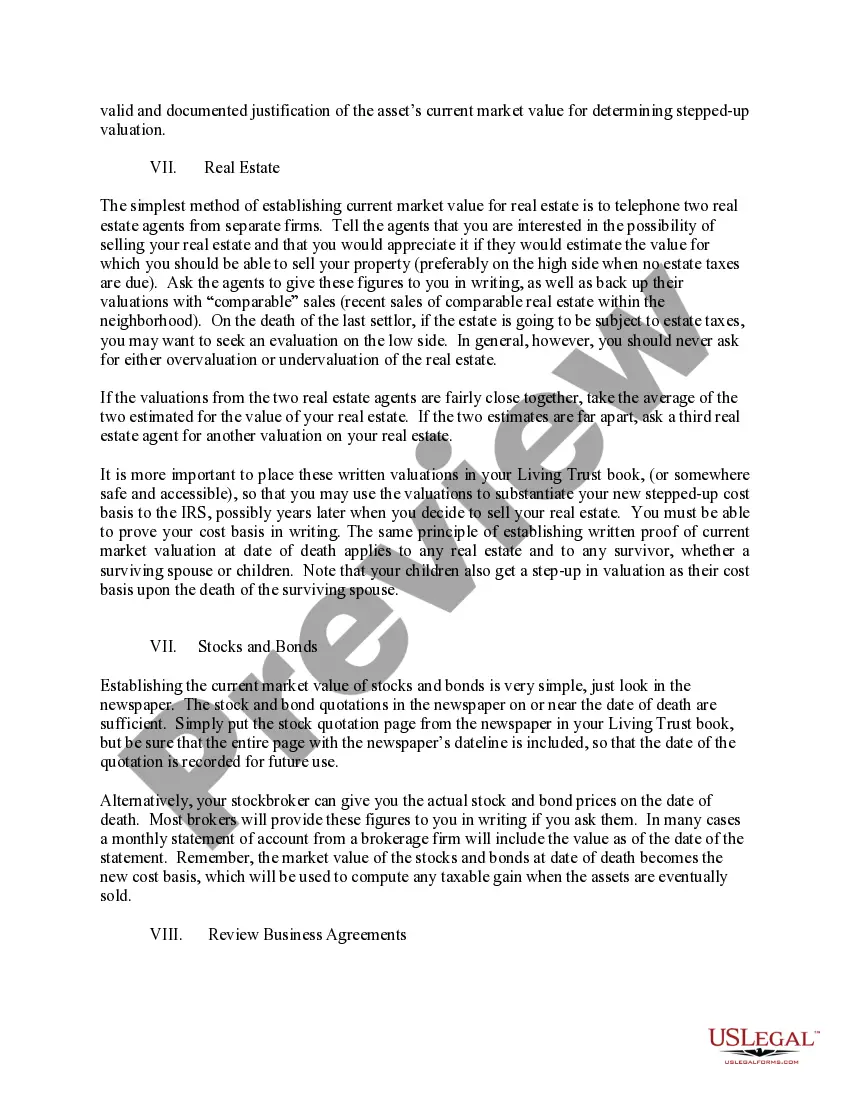
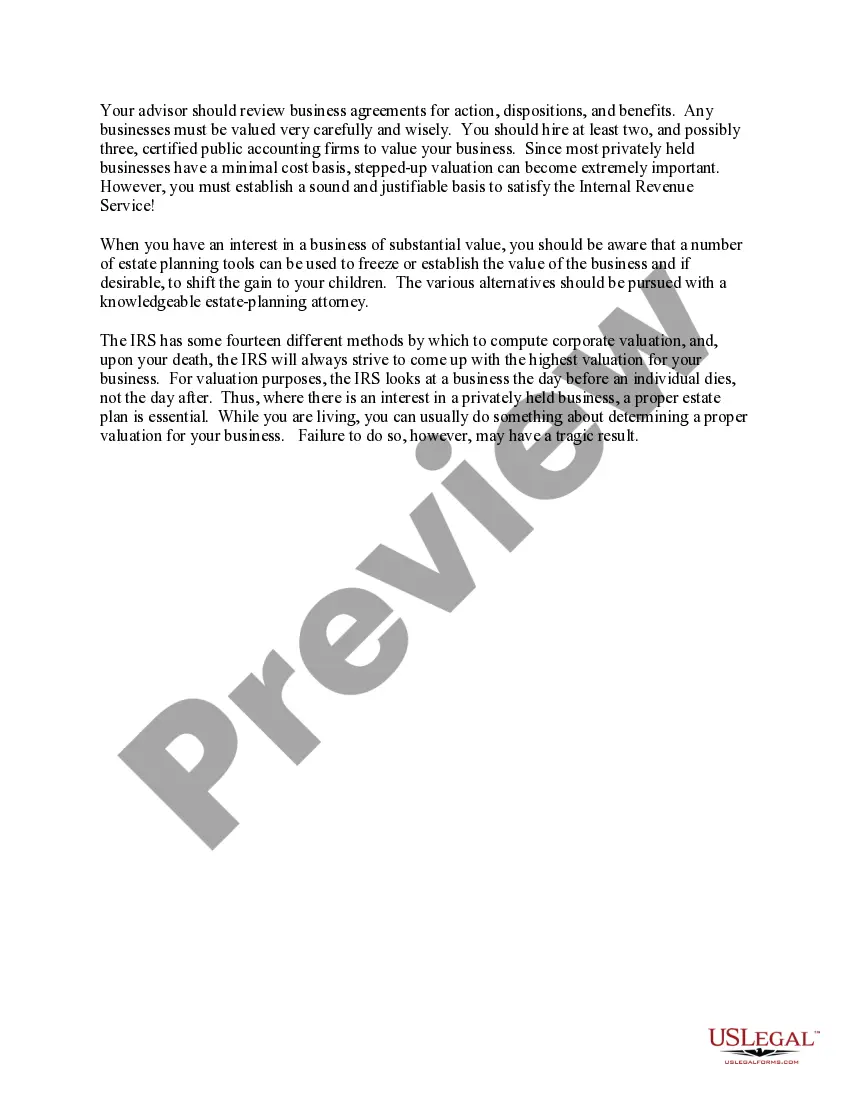
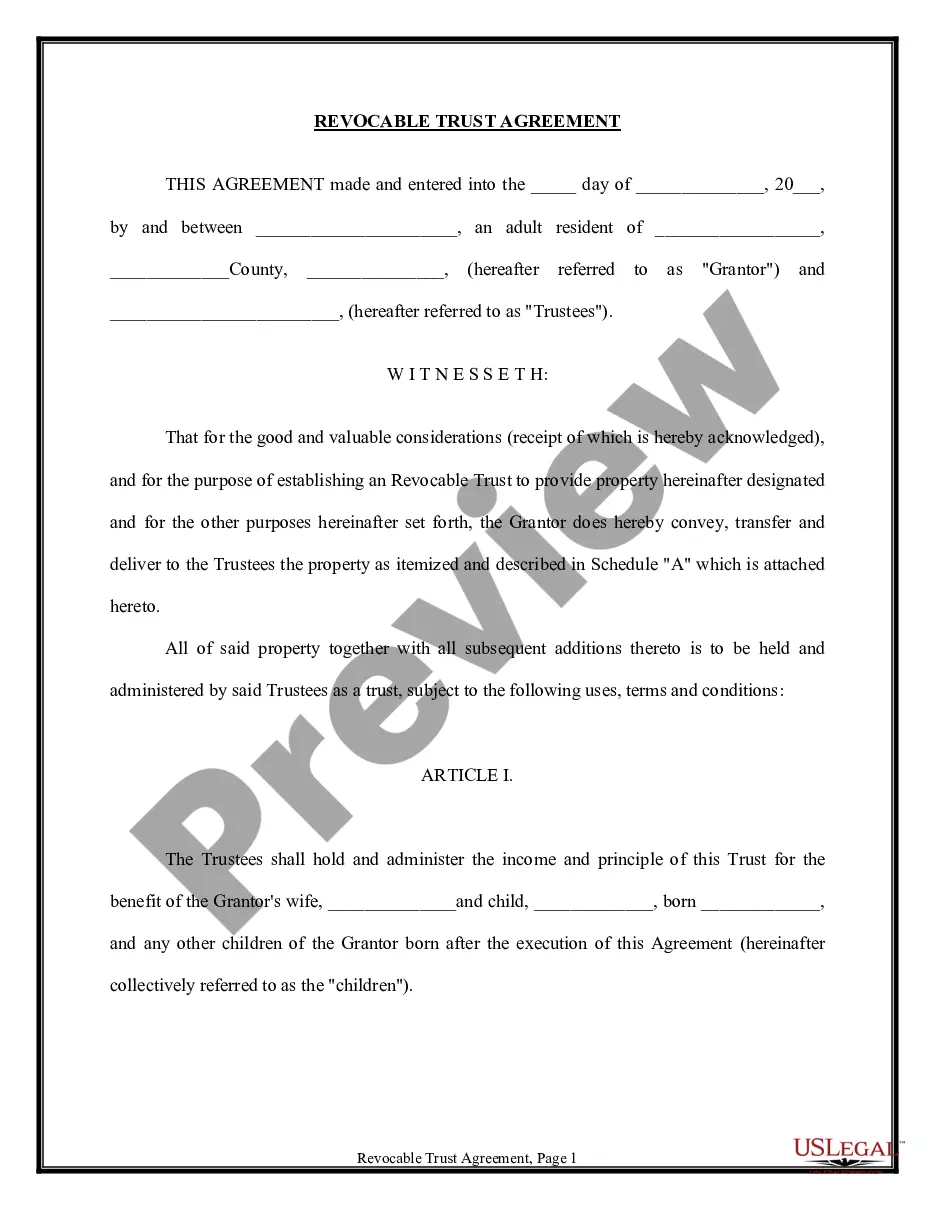
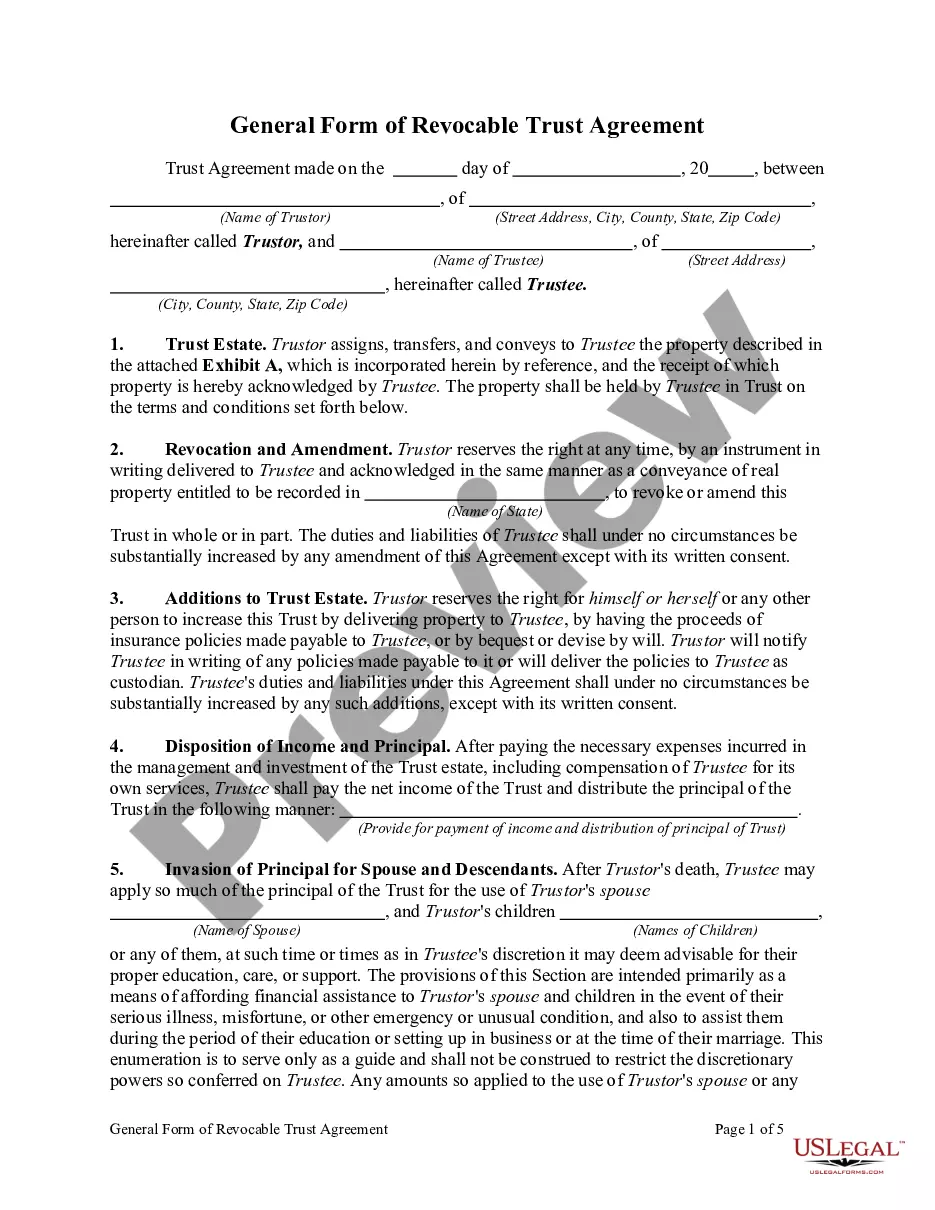
The Settlor and Trustee Instructions for Revocable Trust is a guide designed for individuals acting as the Settlor or Trustee of a revocable living trust in Virginia. This form provides vital information about trust management and governance, outlining the responsibilities and powers granted to the Trustee. It differs from other estate planning forms by specifically focusing on the revocable nature of the trust, allowing changes and removals of assets without additional approval, which facilitates flexibility in estate management.
Main sections of this form
- Overview of Settlor and Trustee roles and duties.
- Detailed guidance on trust asset management.
- Instructions on the revocability of the trust and how to modify it.
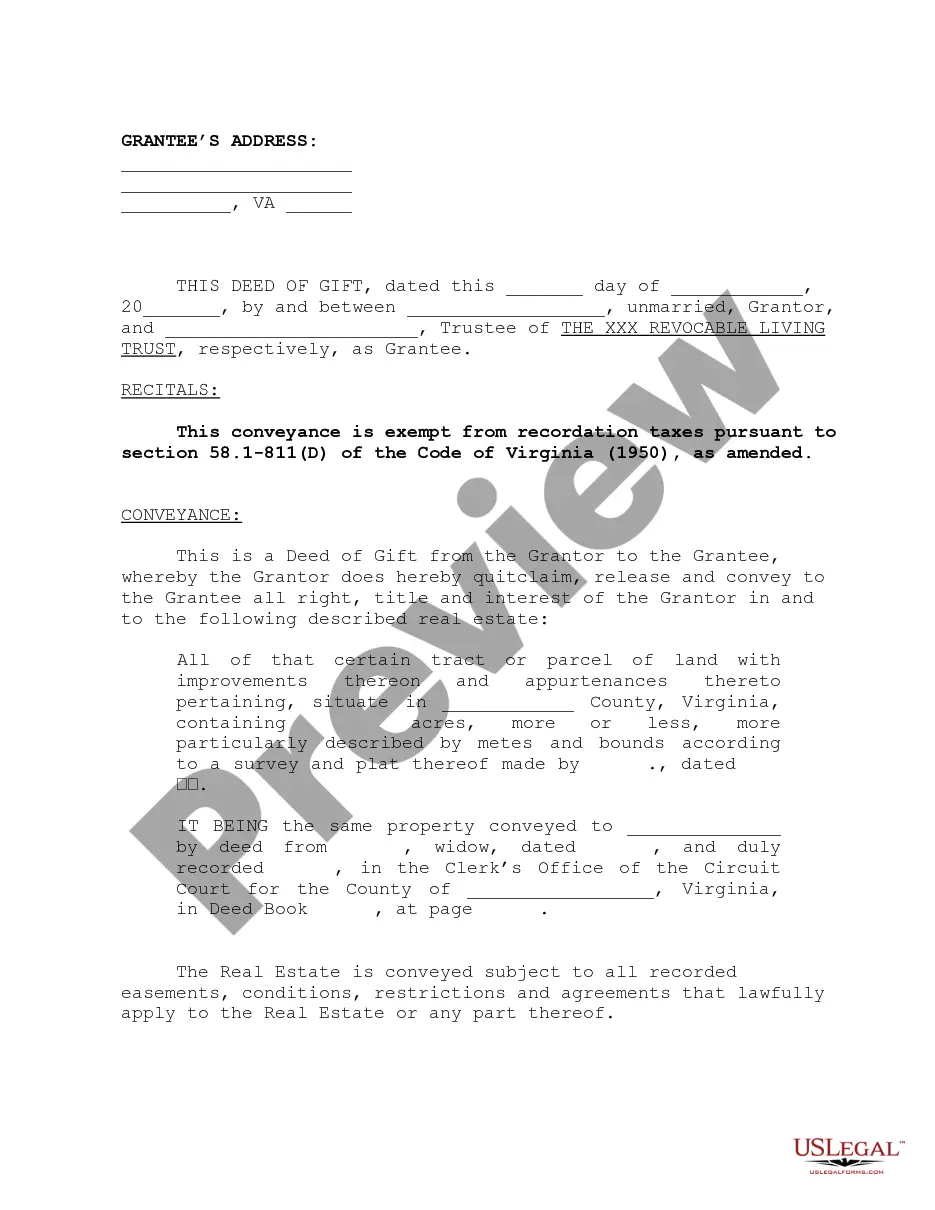
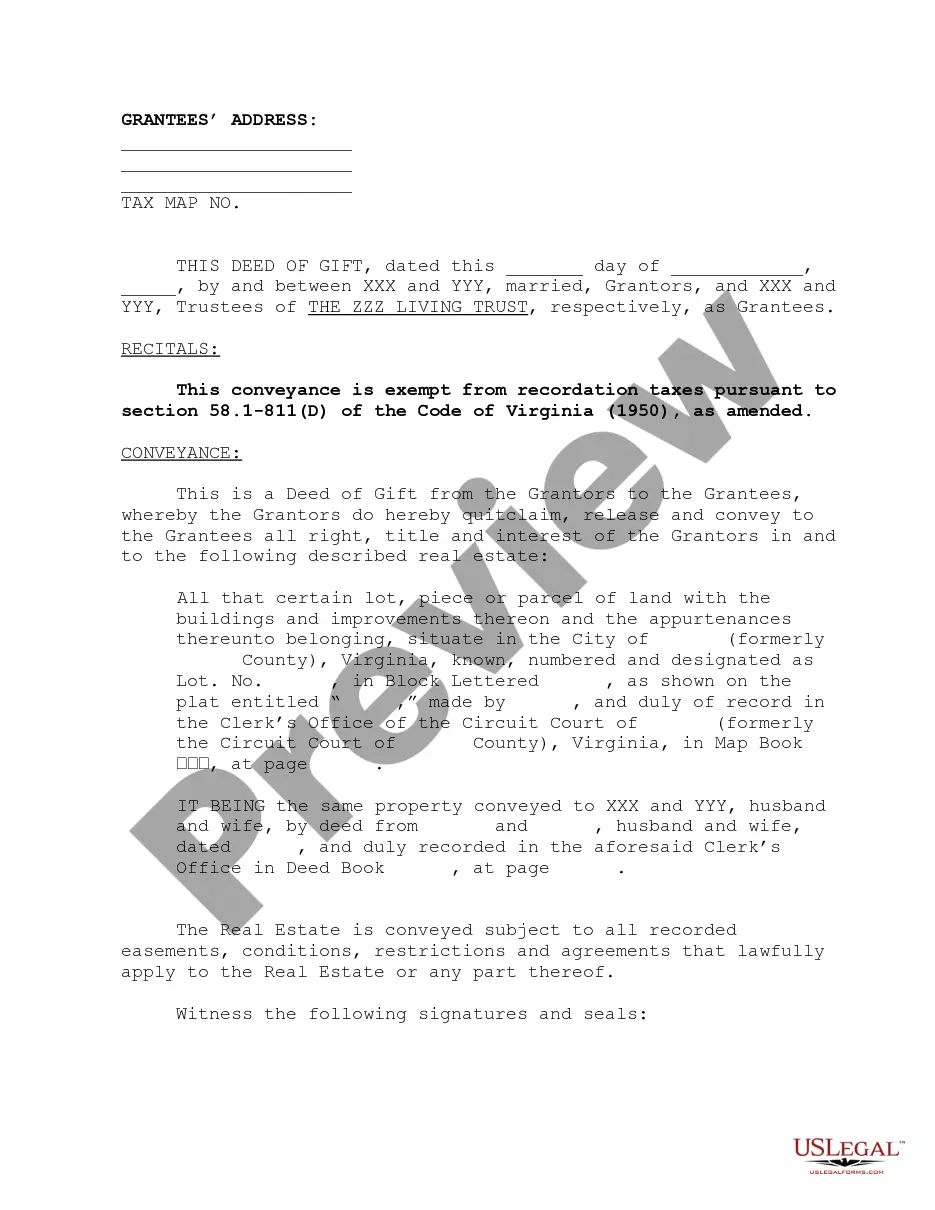
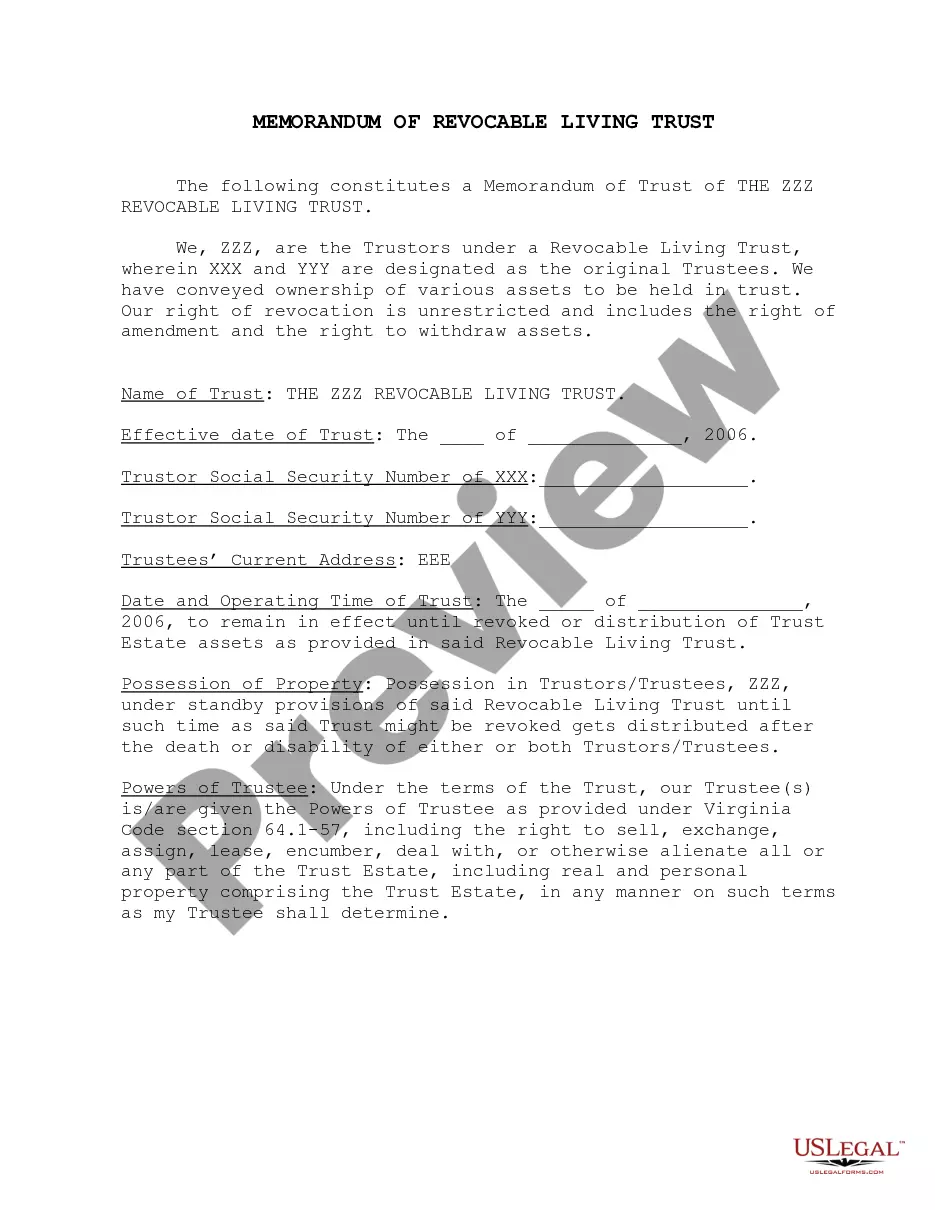
- Clarification on the manner of holding title to assets within the trust.
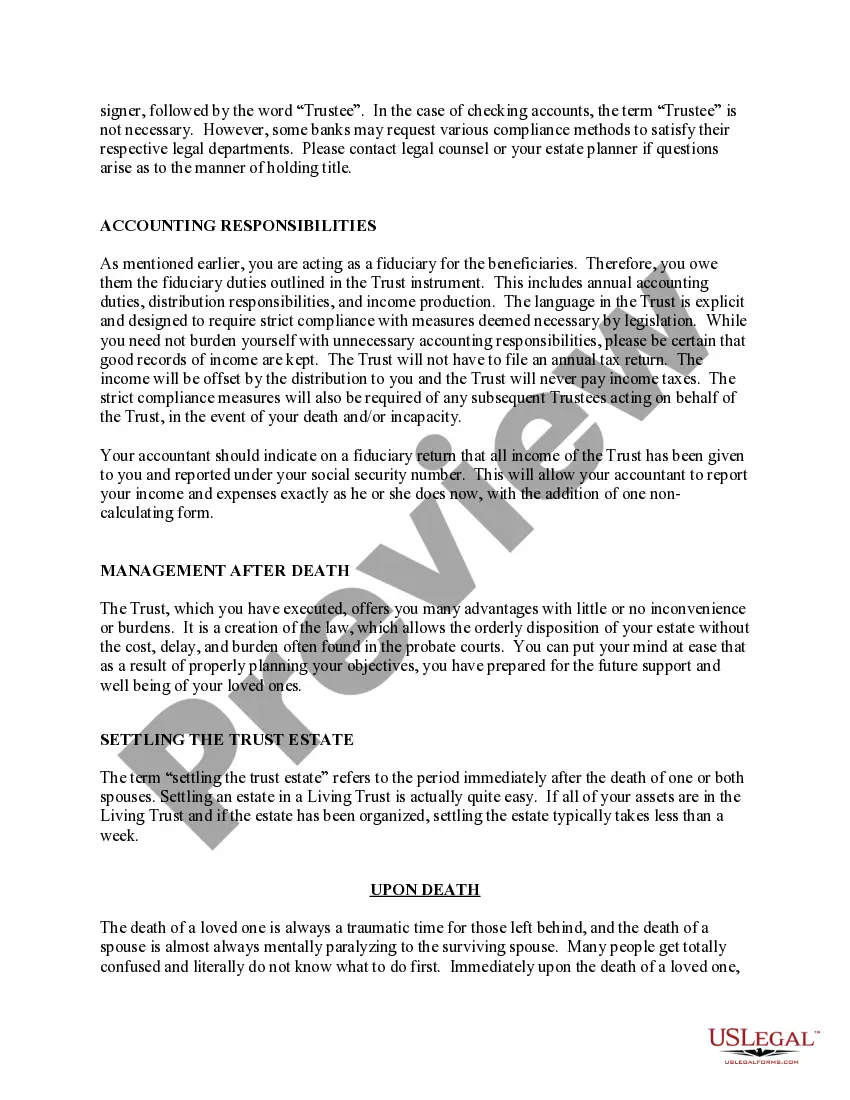
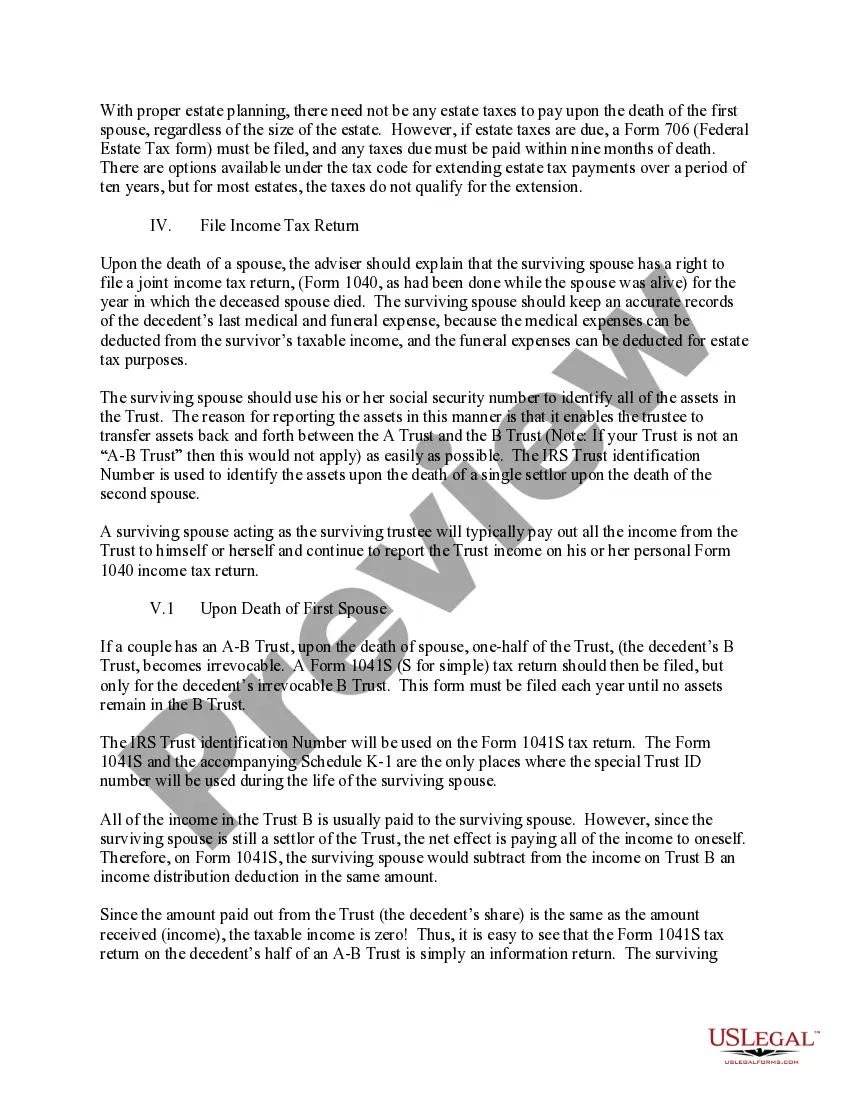
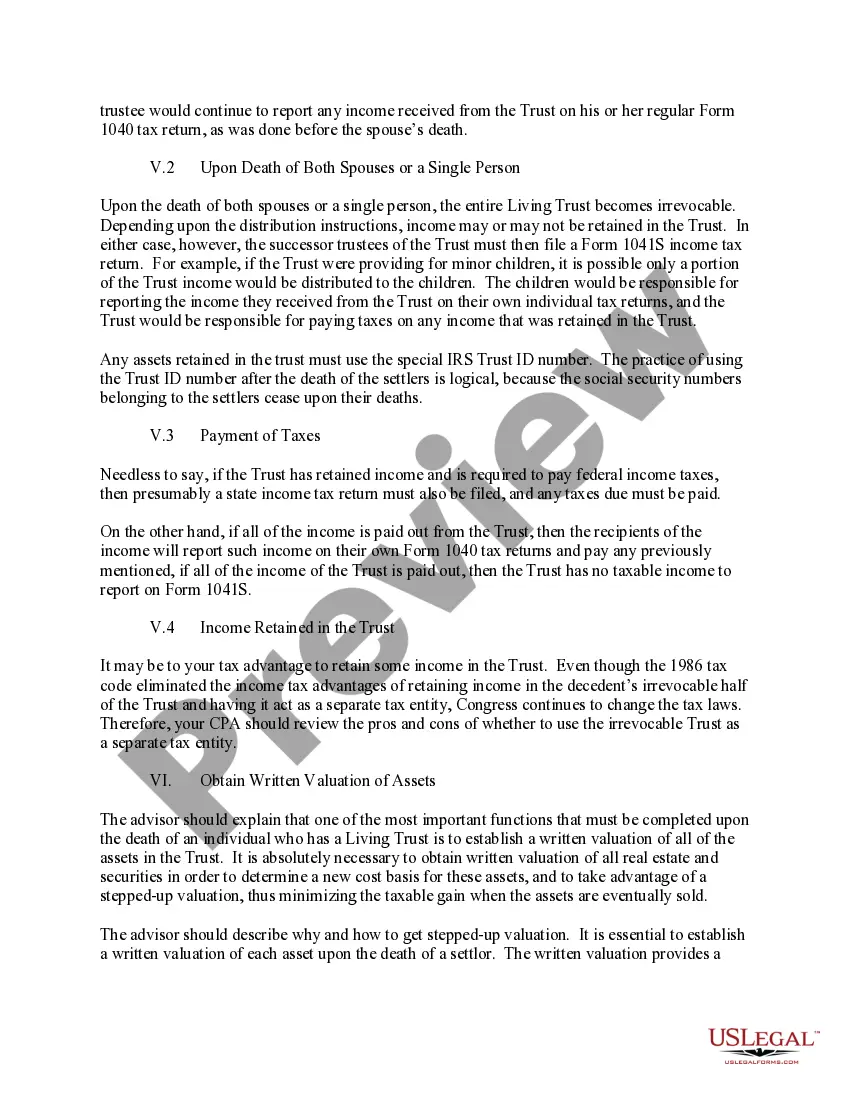
- Accounting responsibilities and tax implications for the trust.
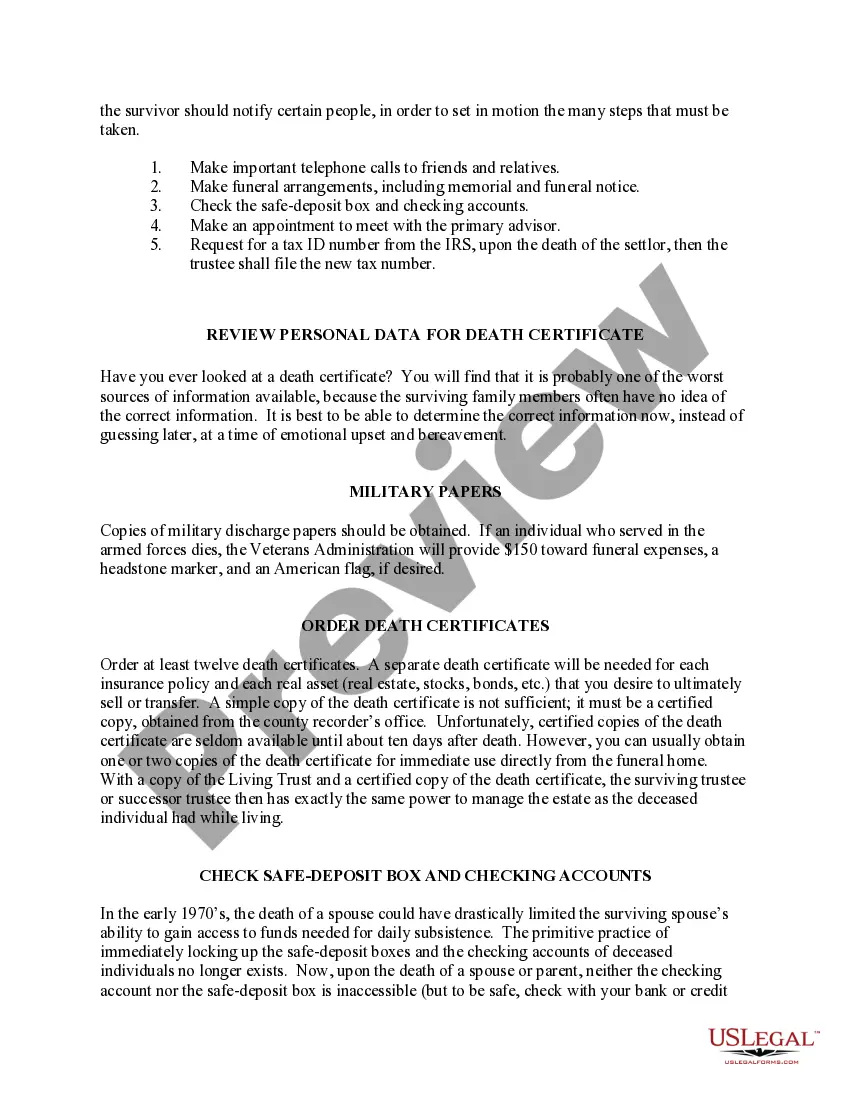
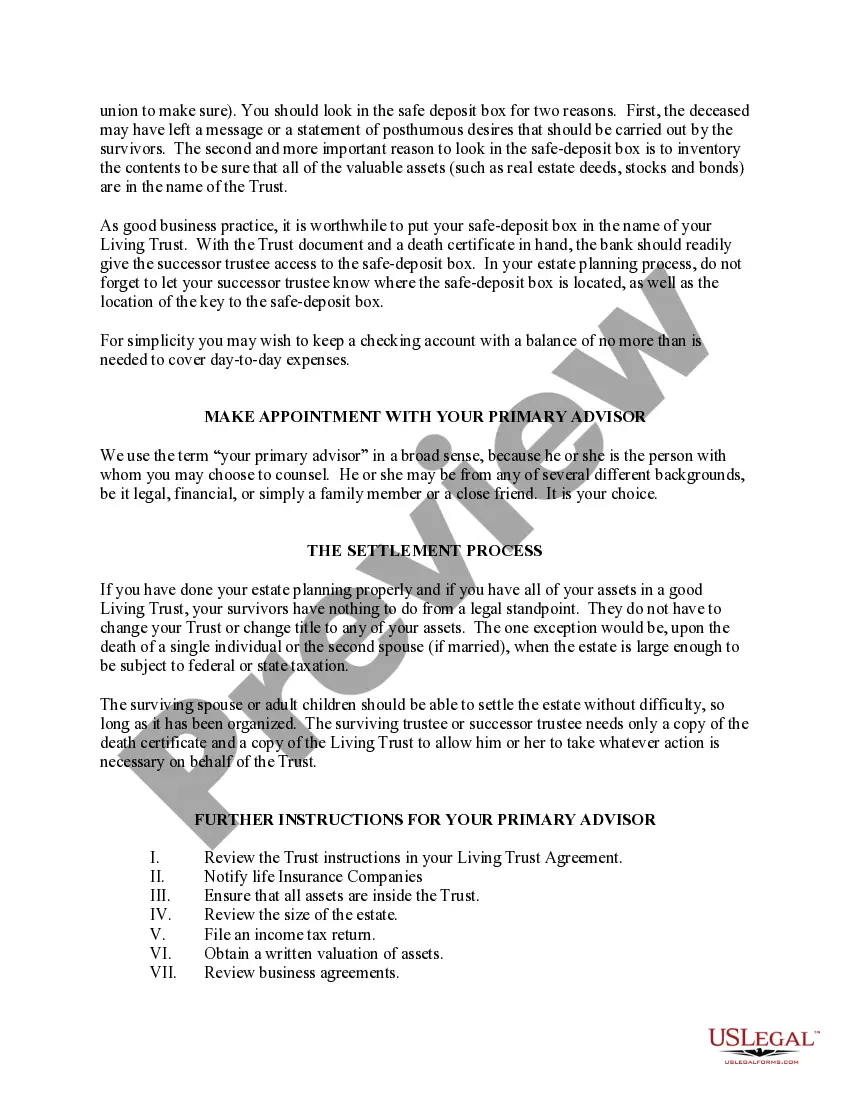
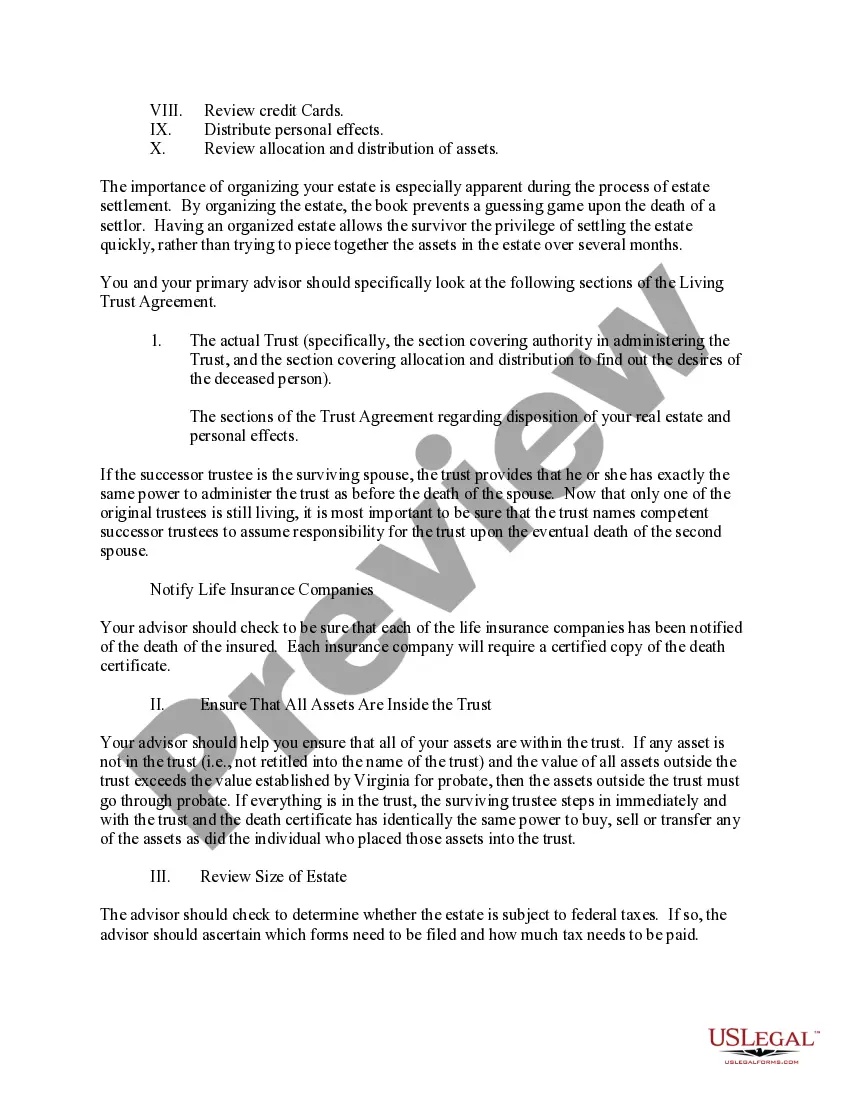
- Steps to settle the trust estate upon the death of the Settlor.

Situations where this form applies
This form is recommended when establishing or managing a revocable living trust, particularly if you are the Settlor or Trustee in Virginia. Use it to understand your roles in managing assets, handling income, and ensuring compliance with trust provisions. It serves as a resource for the completion and execution of duties related to the trust, especially during significant life events like the passing of the Settlor.
Who should use this form
- Individuals acting as Settlor or Trustee of a revocable living trust.
- People looking to understand their responsibilities and powers concerning trust management.
- Estates with specific conditions that require careful management following death.
- Anyone considering changes or amendments to their trust agreement.
How to prepare this document
- Identify the parties involved: Settlor, Trustee, and beneficiaries.
- Review the trust provisions outlining powers and restrictions on the Trustee.
- Document asset management strategies and specify how to handle income generated by trust assets.
- Collect necessary legal and personal information to prepare for potential amendments or revocations of the trust.
- Include clear instructions for settling the estate upon the Settlor's death.
Does this form need to be notarized?
This form usually doesn’t need to be notarized. However, local laws or specific transactions may require it. Our online notarization service, powered by Notarize, lets you complete it remotely through a secure video session, available 24/7.
Get your form ready online
Our built-in tools help you complete, sign, share, and store your documents in one place.
Make edits, fill in missing information, and update formatting in US Legal Forms—just like you would in MS Word.
Download a copy, print it, send it by email, or mail it via USPS—whatever works best for your next step.
Sign and collect signatures with our SignNow integration. Send to multiple recipients, set reminders, and more. Go Premium to unlock E-Sign.
If this form requires notarization, complete it online through a secure video call—no need to meet a notary in person or wait for an appointment.
We protect your documents and personal data by following strict security and privacy standards.

Make edits, fill in missing information, and update formatting in US Legal Forms—just like you would in MS Word.

Download a copy, print it, send it by email, or mail it via USPS—whatever works best for your next step.

Sign and collect signatures with our SignNow integration. Send to multiple recipients, set reminders, and more. Go Premium to unlock E-Sign.

If this form requires notarization, complete it online through a secure video call—no need to meet a notary in person or wait for an appointment.

We protect your documents and personal data by following strict security and privacy standards.
Common mistakes to avoid
- Failing to properly fund the trust with assets, which may necessitate probate.
- Not keeping detailed records of trust transactions and distributions.
- Ignoring the need for periodic reviews and updates to the trust agreement.
- Neglecting to notify beneficiaries of their rights and entitlements under the trust.
Advantages of online completion
- Convenience of accessing and downloading the form at any time.
- Editability allows customization based on individual trust needs.
- Reliability from trusted sources ensuring legal accuracy and compliance.
Legal use & context
- Establishes a clear framework for managing the trust and its assets.
- Avoids complications and delays associated with probate.
- Specifies the responsibilities of the Trustee, ensuring accountability.
Quick recap
- The Settlor and Trustee Instructions for Revocable Trust assists individuals in managing revocable living trusts effectively.
- Understanding your responsibilities as a Trustee is vital for compliance and effective asset management.
- Regular review and updates to trust documents can significantly simplify estate processes.
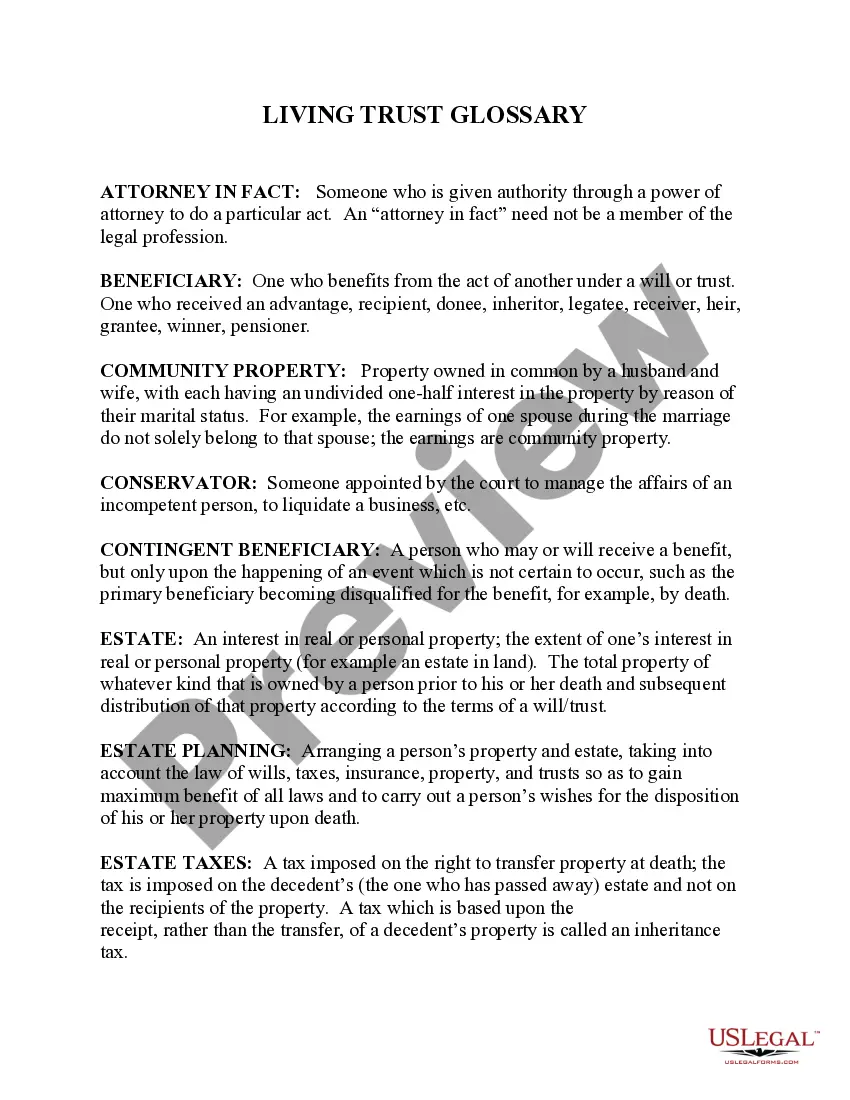
Glossary of terms used in this form
- Settlor: The person who creates the trust.
- Trustee: The individual or entity responsible for managing the trust assets.
- Beneficiary: An individual who benefits from the trust.
- Revocable Trust: A trust that can be altered or terminated by the Settlor during their lifetime.
Looking for another form?




Form popularity
FAQ
Select a type of trust. Inventory your assets and property. Choose a trustee. Put together your trust document. Visit a notary public and sign your living trust in front of them. Fund your trust.
No, you don't need a lawyer to set up a trust, but it might be a good idea to seek legal advice to ensure the trust is set up correctly and that you have considered all long-term financial and estate planning aspects of the trust.Some living trusts are revocable, which means the trust can be changed at any time.
Create an amendment to your trust. Type the amendment so that it specifically states the trustee that you wish to add. Indicate whether you wish to remove an existing trustee, in addition to naming a new one. Specify that the trustee you are adding is a co-trustee, rather than a successor trustee.
When there are joint Address Address Settlors, both Settlors will automatically be Trustees. The 'Trustees' shall mean the Settlor and the Additional Trustees and any other Trustees for the time being of this Trust.
The need for a lawyer to help with your estate has nothing to do with a Revocable Living Trust. If your executor could handle your estate alone, then there is no need for a lawyer even if you had no Revocable Living Trust.For example, with filing inheritance and estate tax returns or obtaining beneficiary releases.
The trustee acts as the legal owner of trust assets, and is responsible for handling any of the assets held in trust, tax filings for the trust, and distributing the assets according to the terms of the trust. Both roles involve duties that are legally required.
Establishing a trust requires serious legal help, which is not cheap. A typical living trust can cost $2,000 or more, while a basic last will and testament can be drawn up for about $150 or so.
The Process of Creating a Revocable Living Trust Start by taking an inventory of your assets. Then, think about who you want to inherit your assets and who you can assign as trustee. Once the document is drawn up, transfer any property you want covered into the trust.
Generally speaking, a living trust's grantor (the person who created the revocable living document) may appoint or remove trustees during their lifetime without hiring an attorney. The grantor can accomplish this by either creating an amendment to it or by revoking the original document and creating a new trust.