Application to Begin Canonical Process
Understanding this form
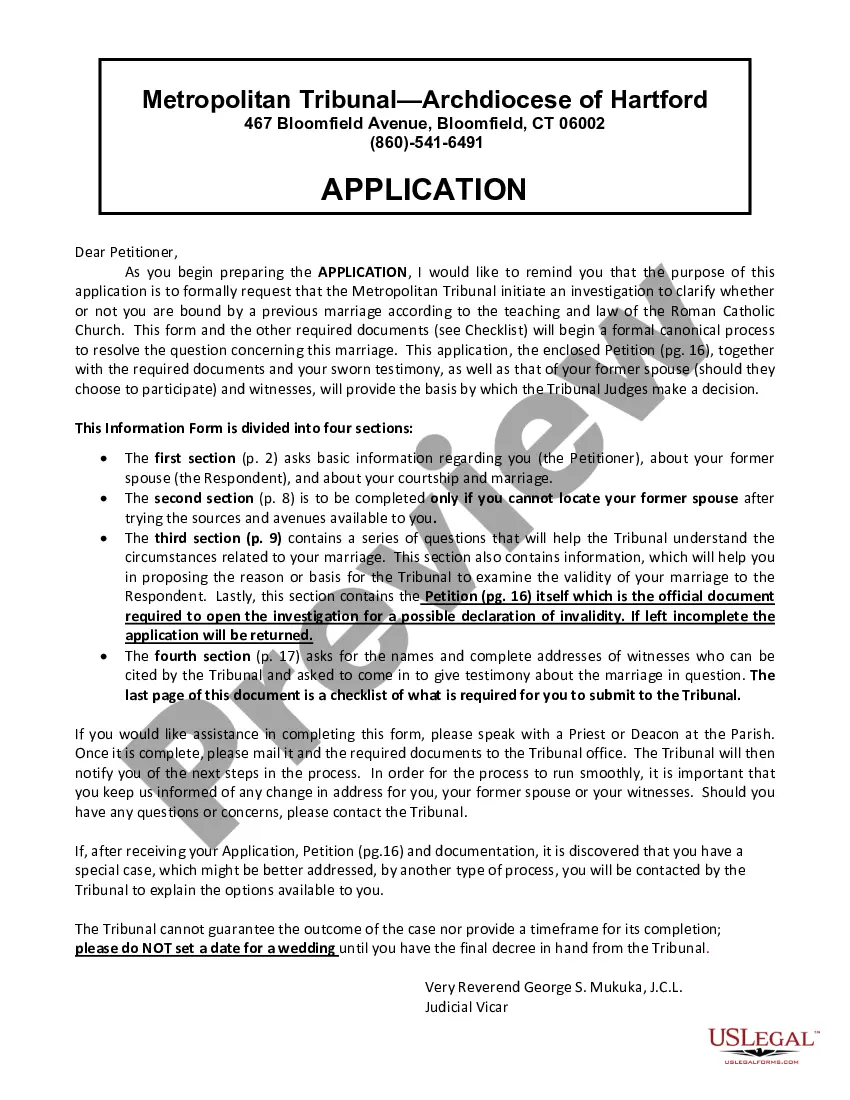
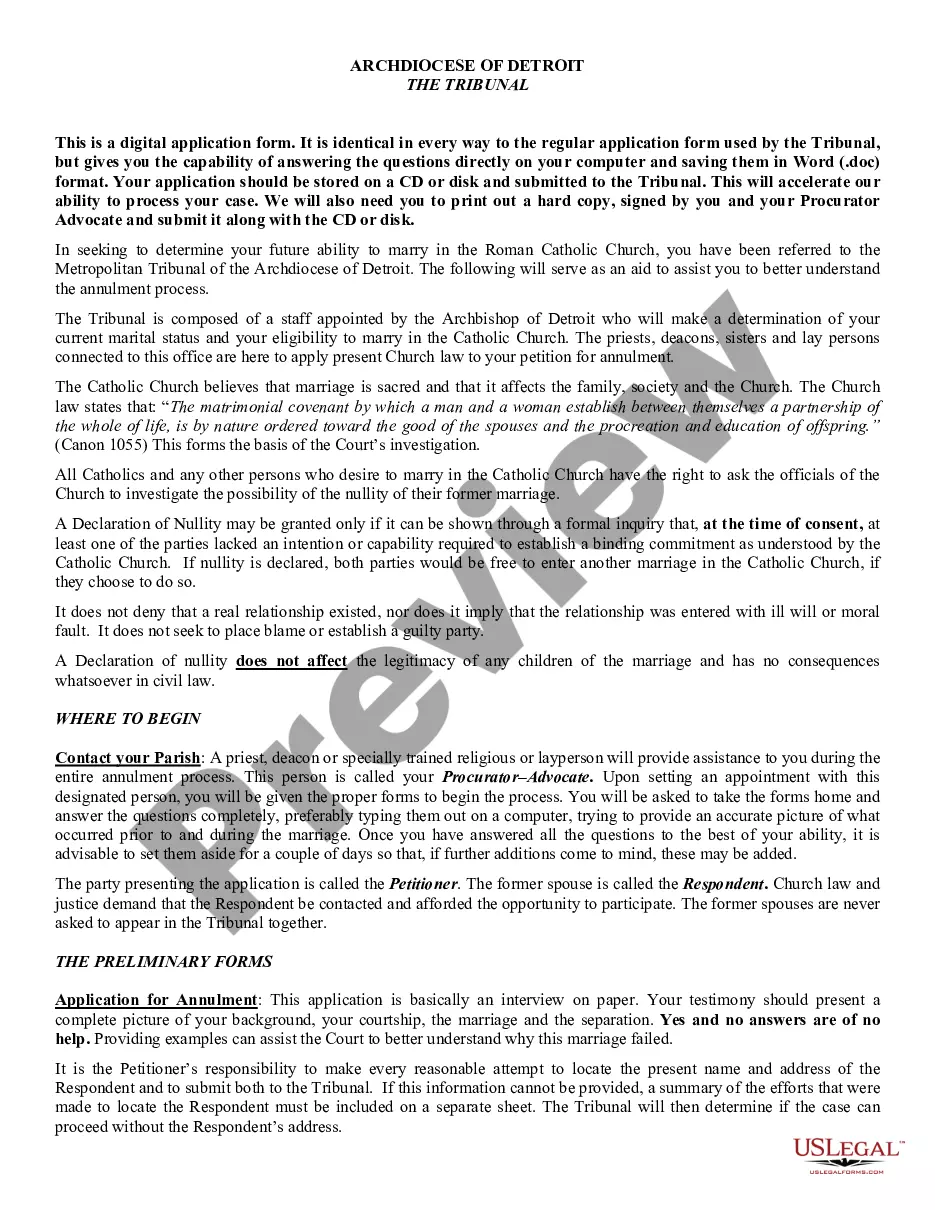
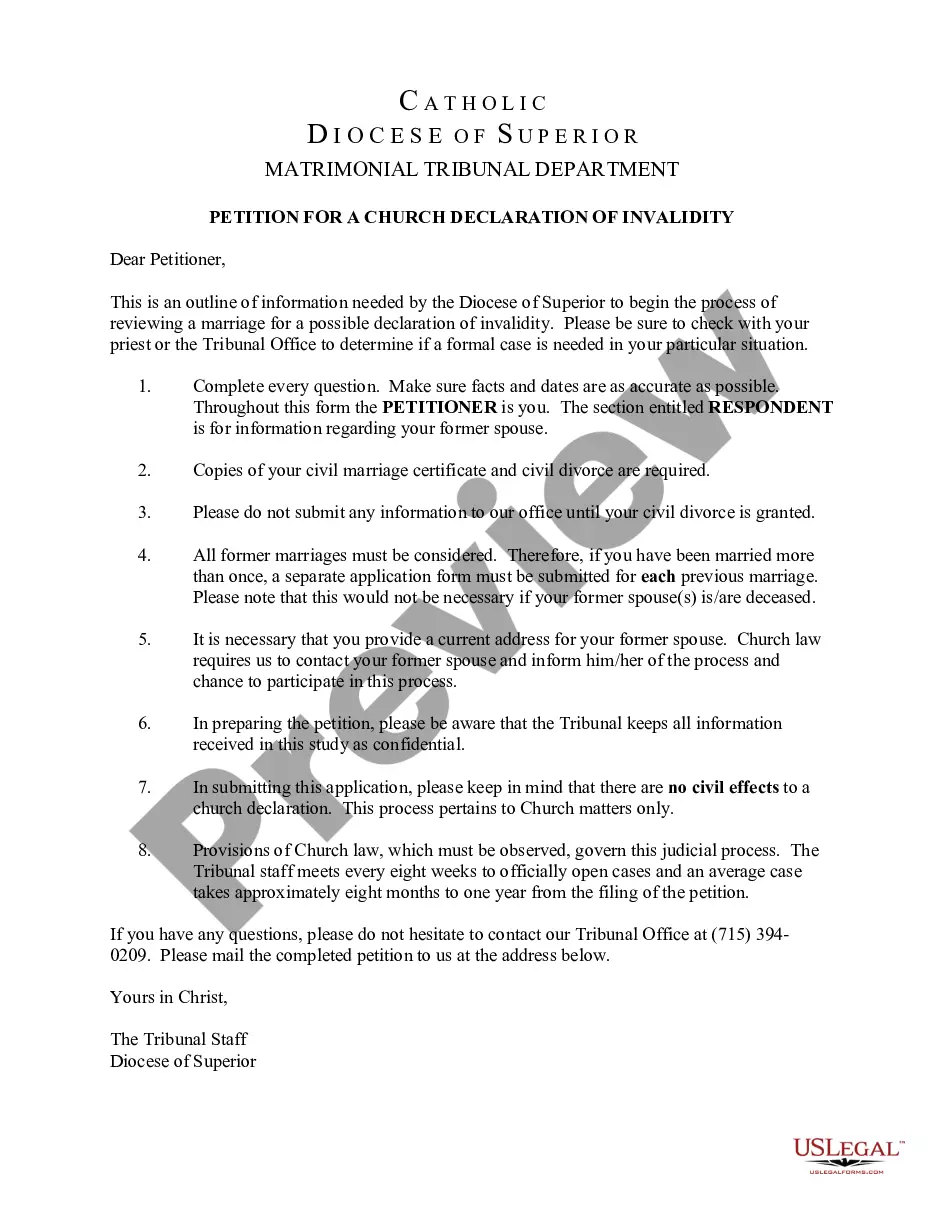
The Application to Begin Canonical Process is a formal request submitted to the Metropolitan Tribunal of the Archdiocese of Hartford. It aims to initiate an investigation into whether an individual is bound by a previous marriage according to the teachings and laws of the Roman Catholic Church. This application seeks to clarify issues related to the validity of the marriage and is distinct from other legal divorce or annulment processes, as it is rooted in ecclesiastical law rather than civil law.
Key components of this form
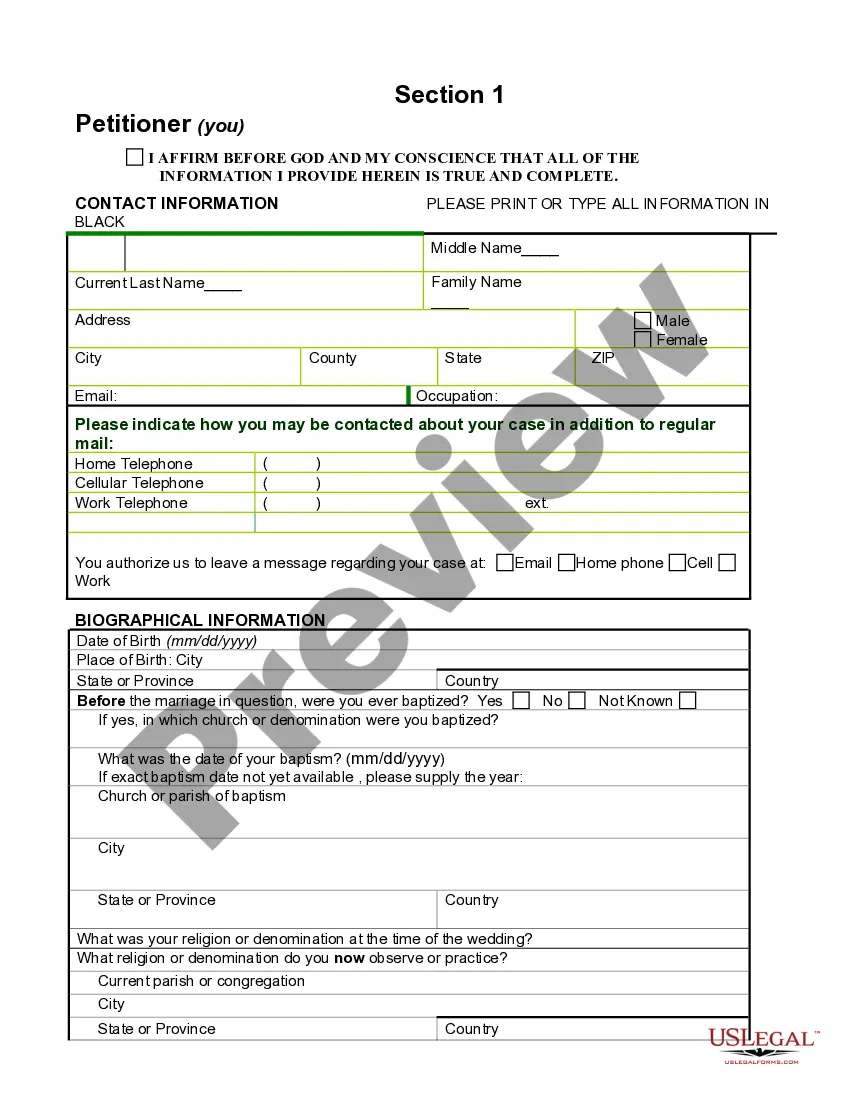
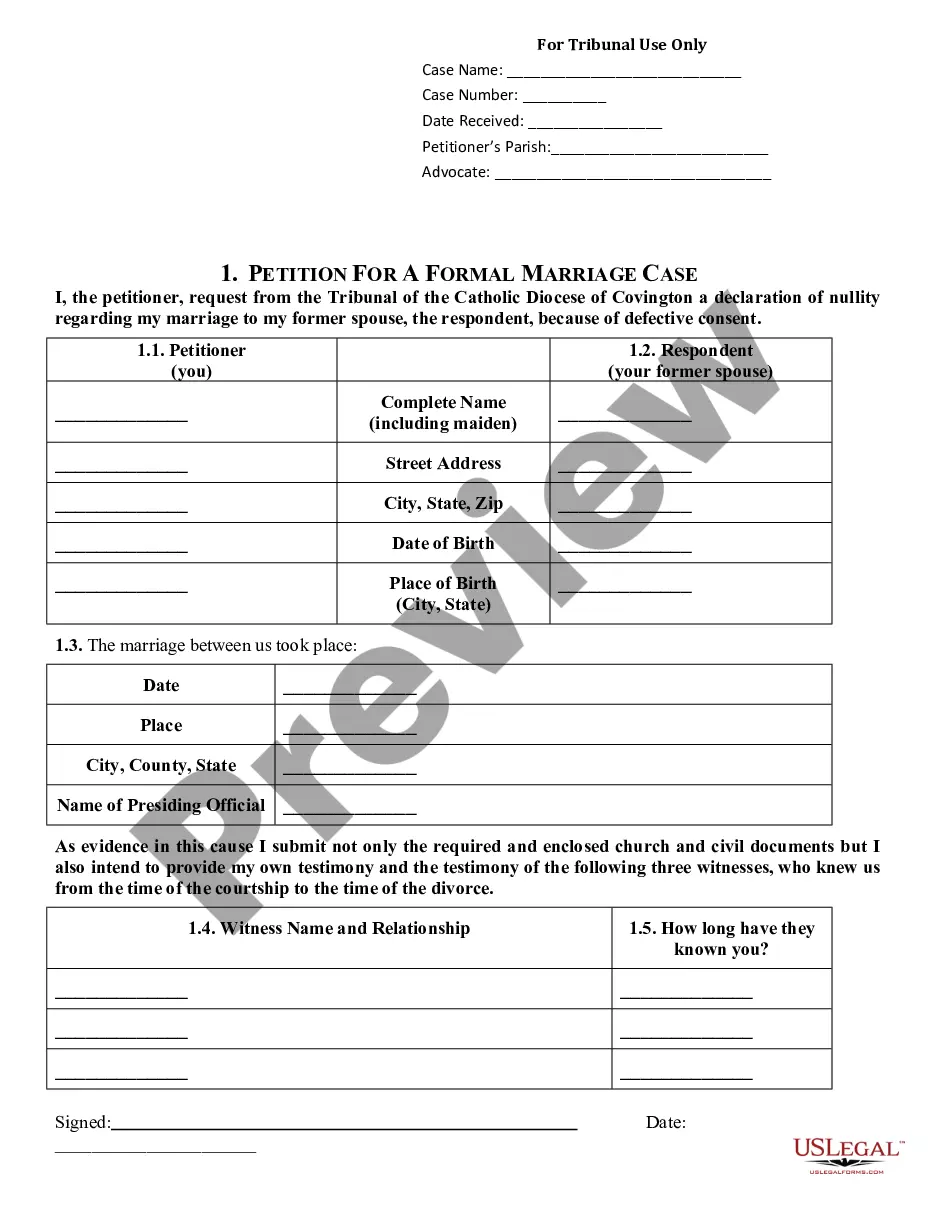
- Petitioner Information: Basic details about you and your former spouse, including names and contact information.
- Prior Marriages Details: Information regarding any previous marriages for both you and the respondent that is crucial for the tribunal's assessment.
- Witness Information: Names and addresses of witnesses who can testify about the circumstances surrounding the marriage.
- Grounds for Nullity: A section dedicated to stating the rationale for why the marriage is alleged to be invalid.
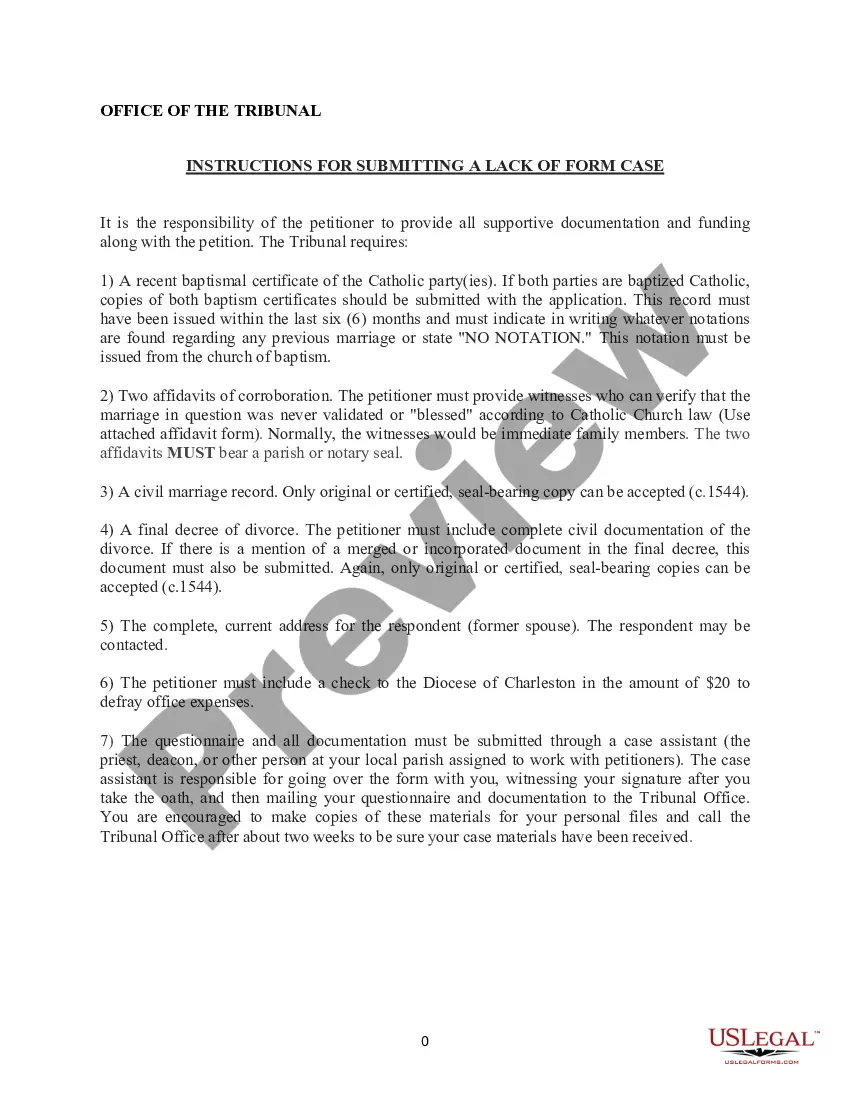
- Checklist: A list of required documents that must accompany your application to ensure it is complete before submission.
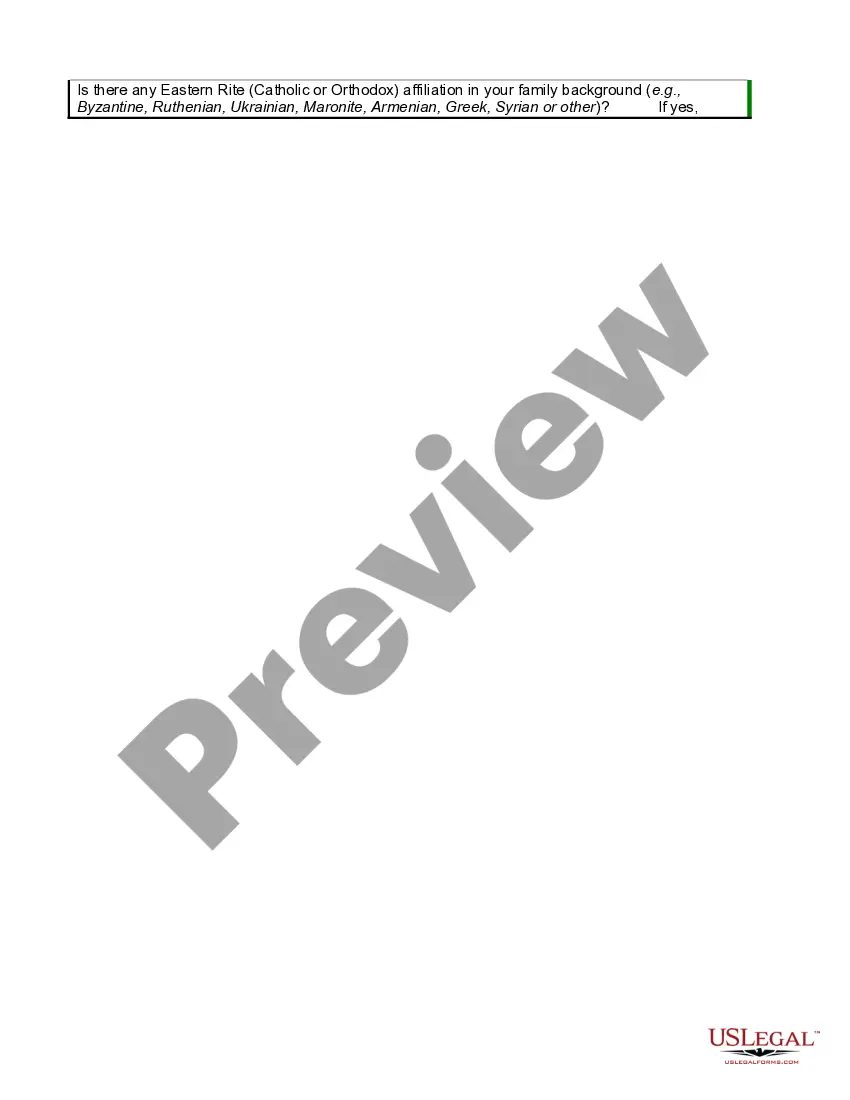
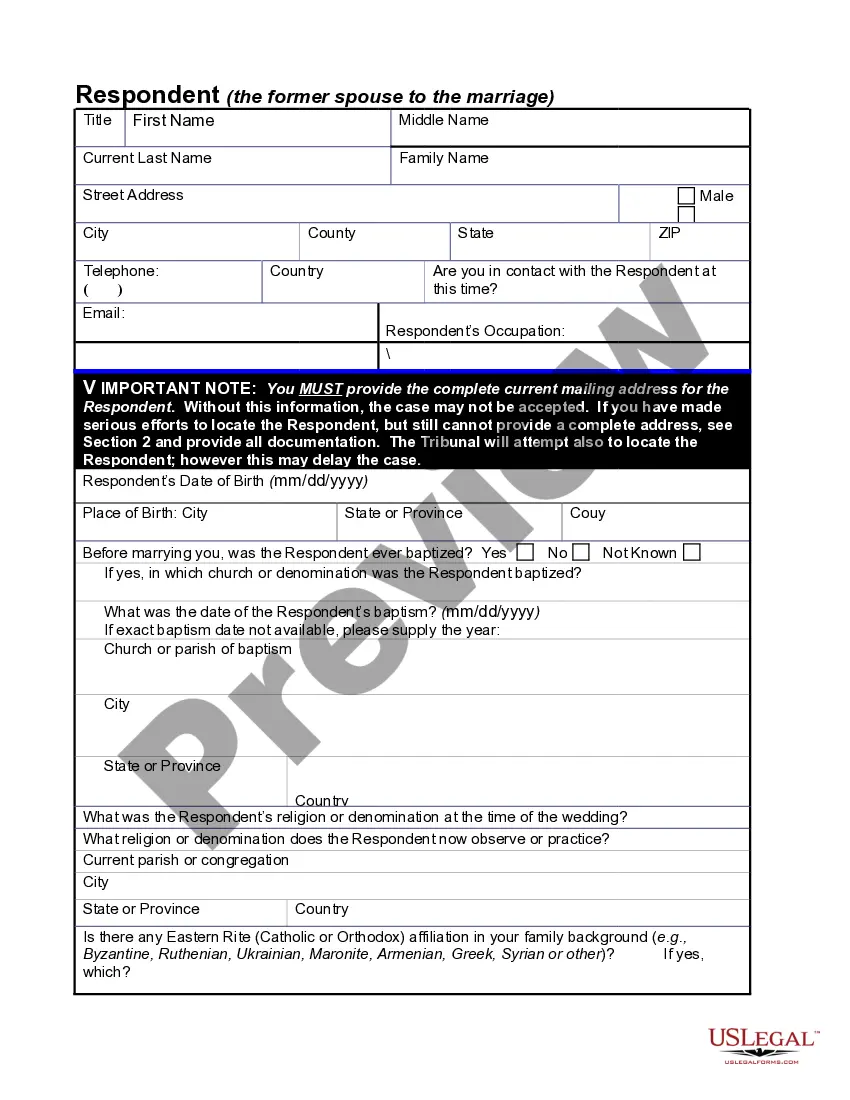
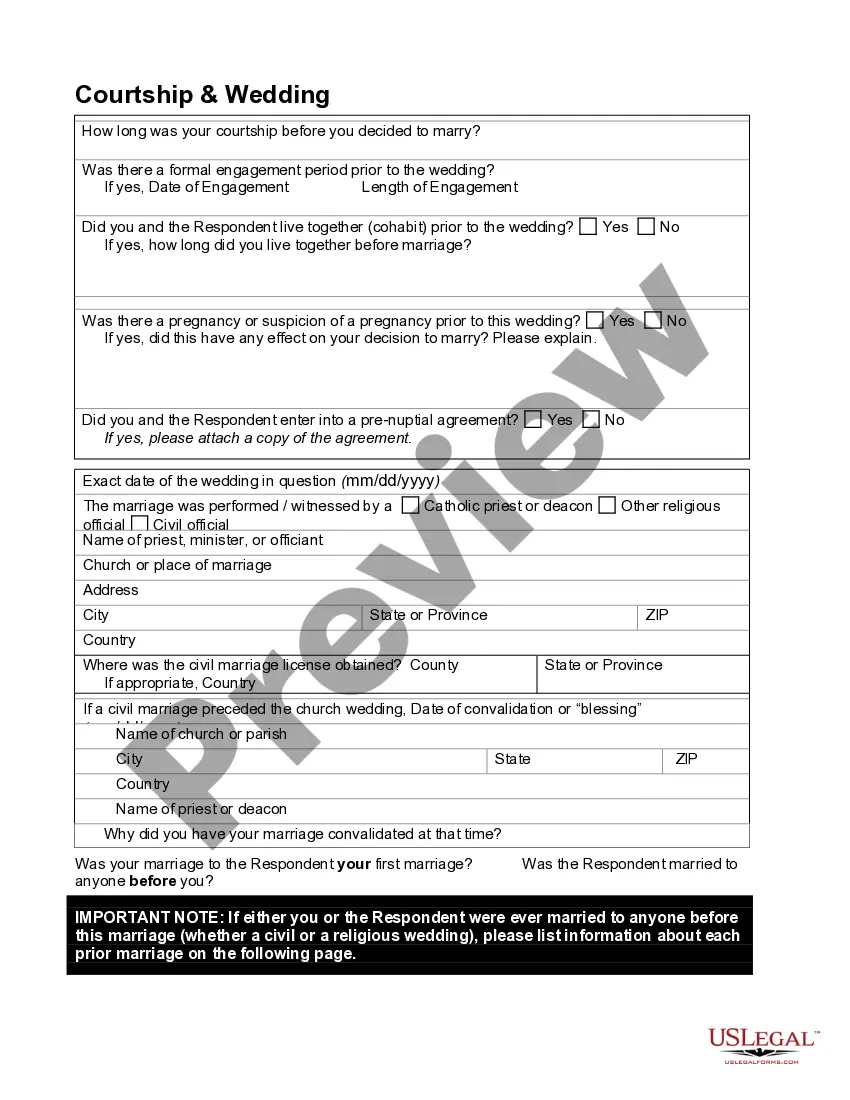
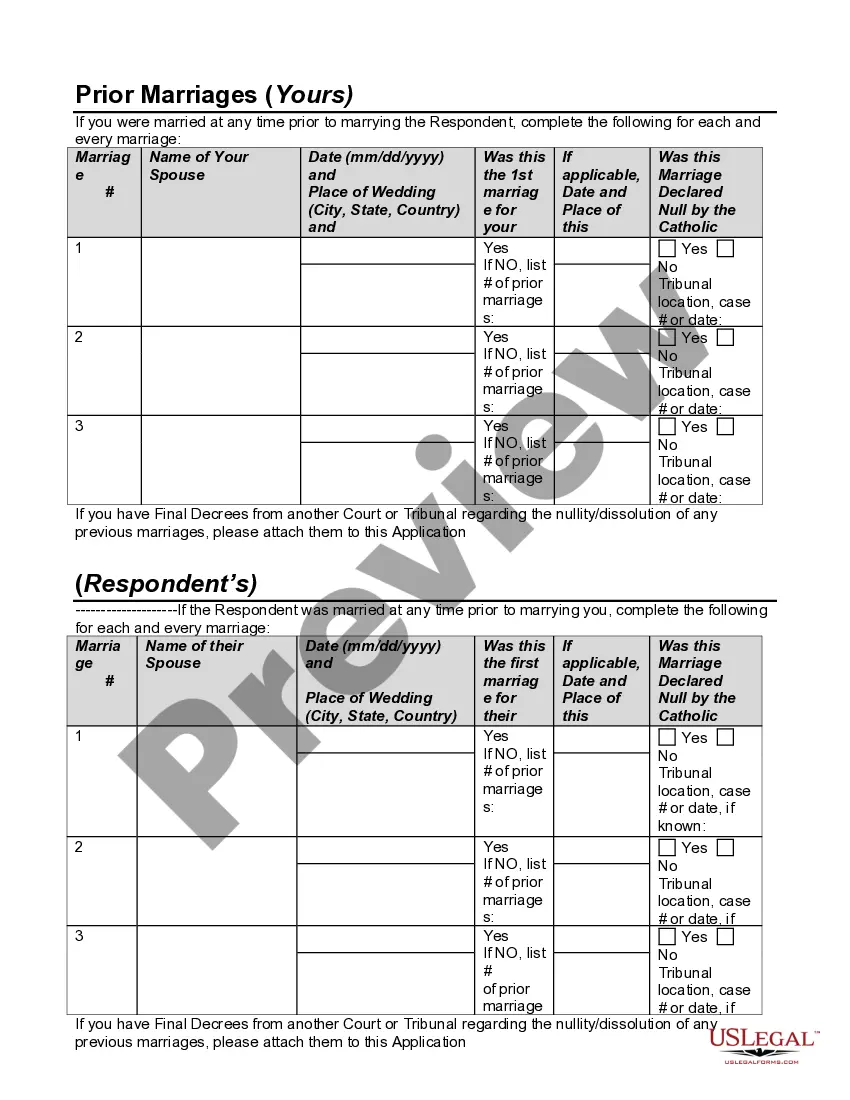
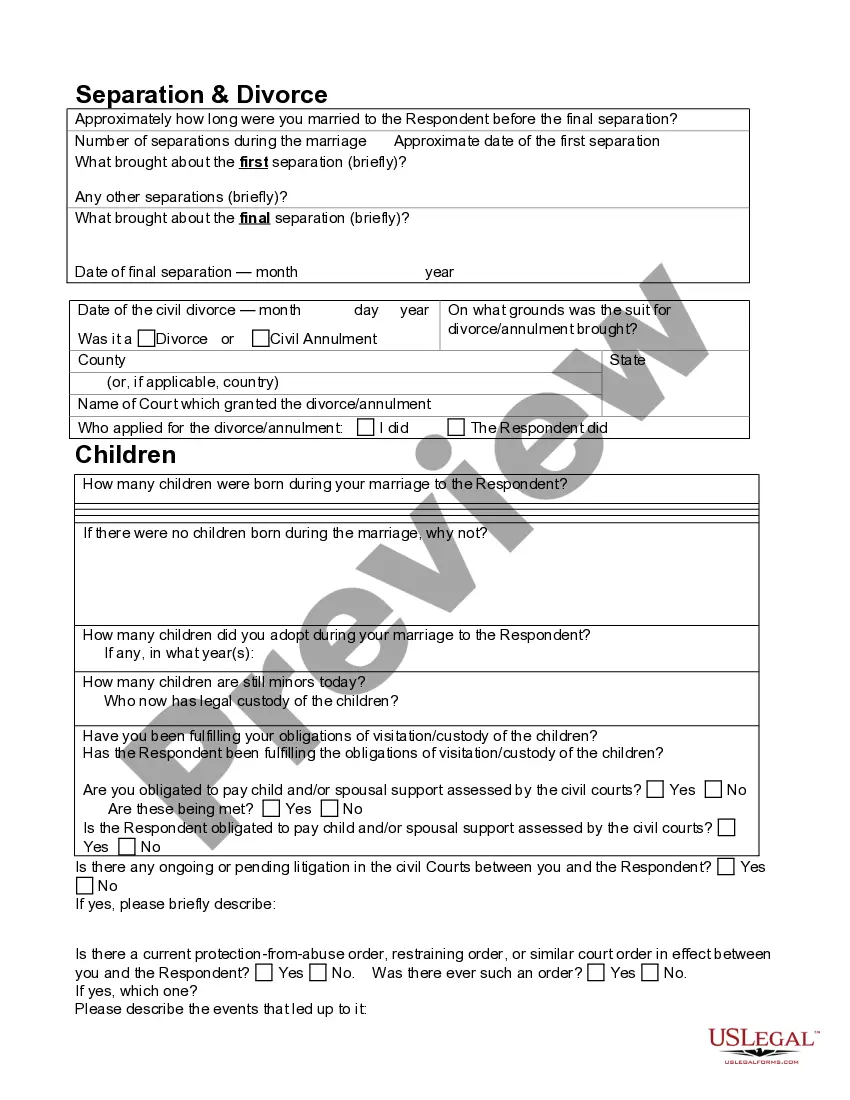
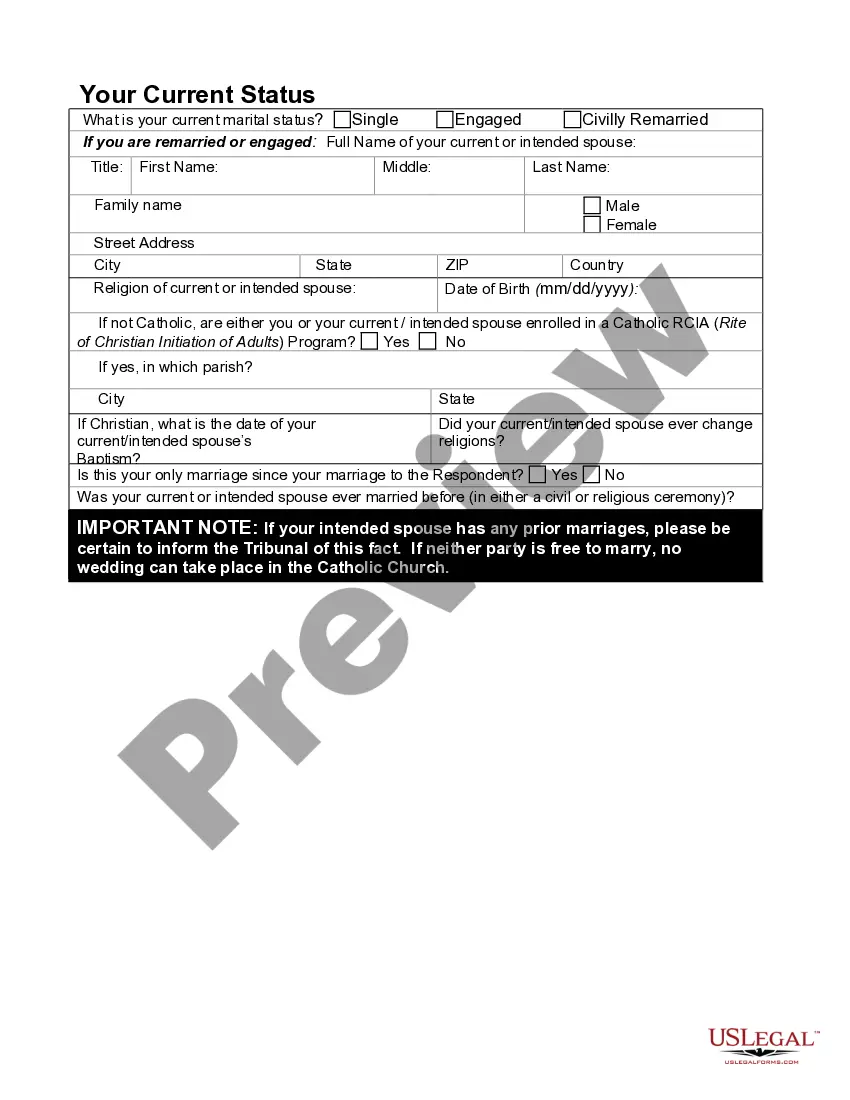
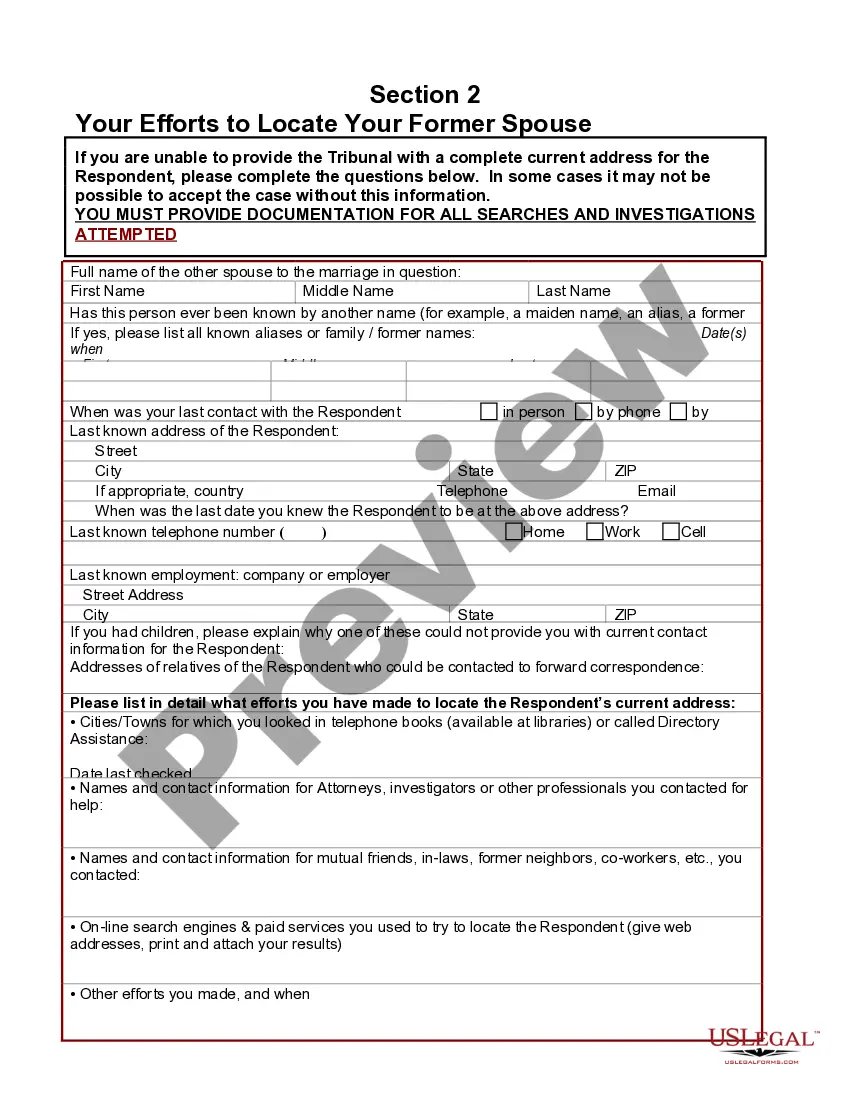
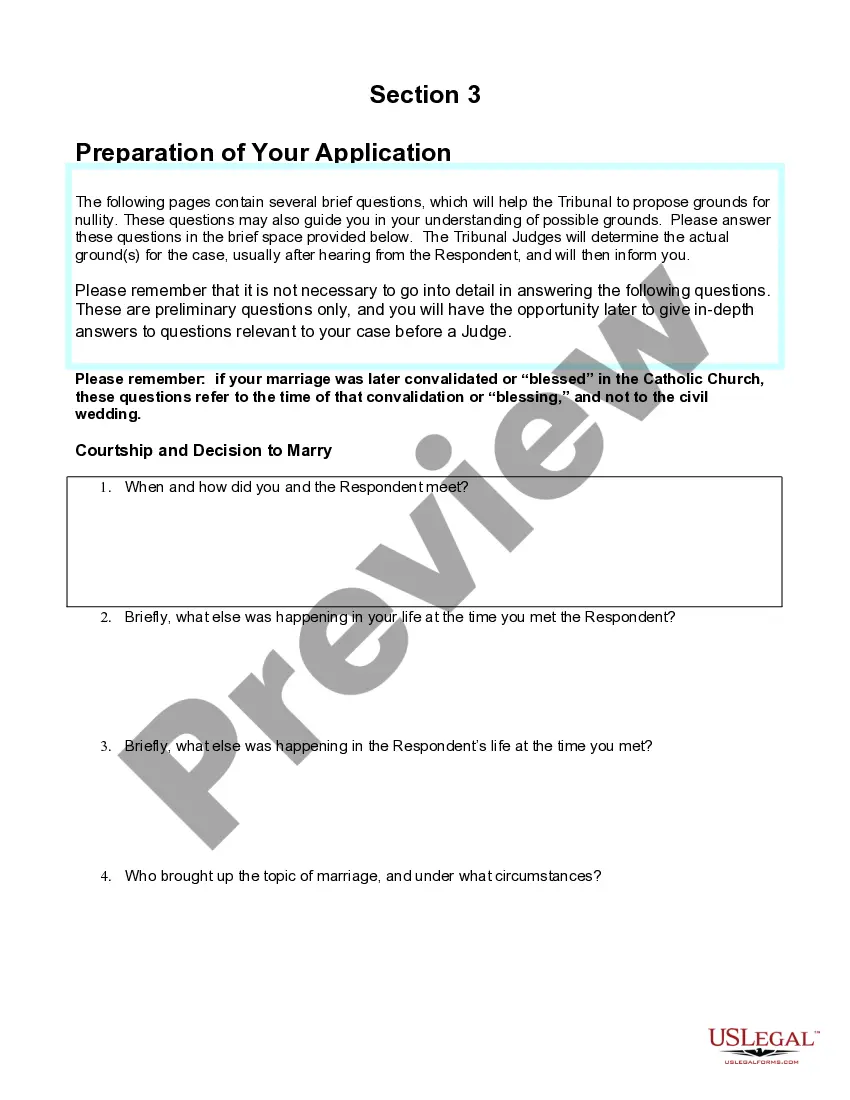

When to use this form
This form is necessary for individuals seeking clarity regarding the binding nature of a previous marriage, particularly if they wish to remarry in the Catholic Church. It is used when one believes that their previous marriage may not have been valid under Catholic principles and seeks a formal investigation by the Tribunal.
Intended users of this form
This form is intended for:
- Individuals who have been previously married and are seeking a declaration of nullity from the Catholic Church.
- Those looking to understand their marital status in the eyes of the Church before entering a new marriage.
- People who require formal intervention from ecclesiastical authority regarding their previous marital commitments.
Steps to complete this form
To complete the Application to Begin Canonical Process, follow these steps:
- Provide accurate personal information and your former spouseâs details in the designated sections.
- Detail any prior marriages under the appropriate section, ensuring to include necessary dates and places.
- List witnesses who can provide sworn testimonies regarding the marriage in question.
- Clearly outline the reasons you believe the marriage to be invalid, choosing the grounds for nullity carefully.
- Attach all required documents as outlined in the checklist provided in the application.
Does this document require notarization?
This form does not typically require notarization unless specified by local law. Always check with the tribunal to ensure compliance with any specific procedural requirements.
Get your form ready online
Our built-in tools help you complete, sign, share, and store your documents in one place.
Make edits, fill in missing information, and update formatting in US Legal Forms—just like you would in MS Word.
Download a copy, print it, send it by email, or mail it via USPS—whatever works best for your next step.
Sign and collect signatures with our SignNow integration. Send to multiple recipients, set reminders, and more. Go Premium to unlock E-Sign.
If this form requires notarization, complete it online through a secure video call—no need to meet a notary in person or wait for an appointment.
We protect your documents and personal data by following strict security and privacy standards.

Make edits, fill in missing information, and update formatting in US Legal Forms—just like you would in MS Word.

Download a copy, print it, send it by email, or mail it via USPS—whatever works best for your next step.

Sign and collect signatures with our SignNow integration. Send to multiple recipients, set reminders, and more. Go Premium to unlock E-Sign.

If this form requires notarization, complete it online through a secure video call—no need to meet a notary in person or wait for an appointment.

We protect your documents and personal data by following strict security and privacy standards.
Typical mistakes to avoid
- Failing to provide a complete address for the respondent, which can lead to application denial.
- Not including all necessary documents such as marriage certificates and divorce decrees.
- Leaving any sections of the application blank, which may cause a return of the application.
- Submitting the application without reviewing it with a church official or legal advisor for completeness.
Benefits of completing this form online
- Convenience of downloading and completing the form from home.
- Access to guidance from licensed attorneys who have drafted the forms.
- Editable format allows for correction and customization to your specific situation.
- Quick access to support and clarifications through online resources.
Looking for another form?

Form popularity
FAQ
Canonization is the process by which the books of the Bible were discovered as authoritative. Men did not canonize Scripture; men simply recognized the authority of the books that God inspired. The foundation of the Old Testament (and the entire Bible) is the Pentateuch.
Canonization is a papal declaration that the Catholic faithful may venerate a particular deceased member of the church. Popes began making such decrees in the tenth century.
The canonization process is a canonical (Church law) procedure by which the Church through the Pope solemnly declares a Catholic to be united with God in heaven, an intercessory to God on behalf of the living, and worthy of public and universal veneration.
The single most decisive factor in the process of canonization was the influence of Marcion (flourished c. 140), who had Gnostic tendencies and who set up a ?canon? that totally repudiated the Old Testament and anything Jewish.
Canonical. adjective. ca·?non·?i·?cal k?-?nan-i-k?l. : relating to or allowed by church law. : following a general rule or accepted procedure.
The canonization process is a canonical (Church law) procedure by which the Church through the Pope solemnly declares a Catholic to be united with God in heaven, an intercessory to God on behalf of the living, and worthy of public and universal veneration.
In official Church procedures there are three steps to sainthood: a candidate becomes "Venerable," then "Blessed" and then "Saint." Venerable is the title given to a deceased person recognized formally by the pope as having lived a heroically virtuous life or offered their life.
Formal beatification has entailed four general steps: an informative process, introduction of the cause, the apostolic process, and four definite judgments.