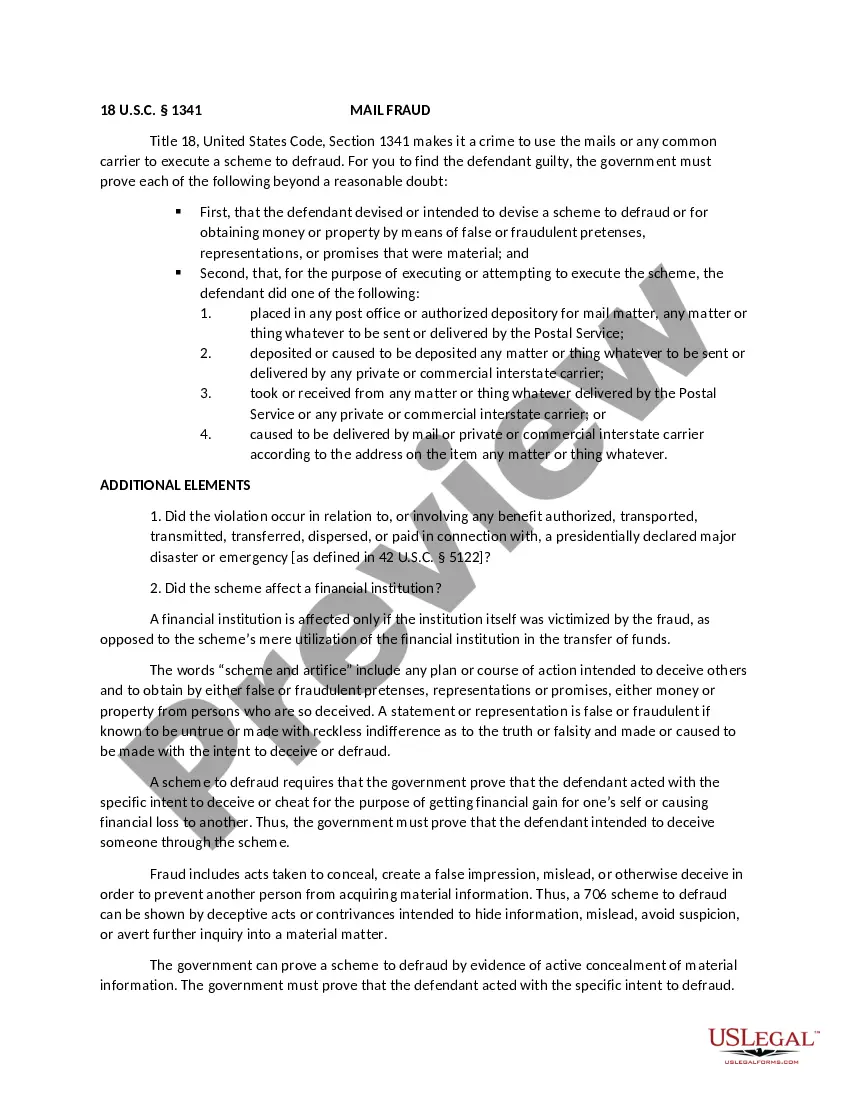
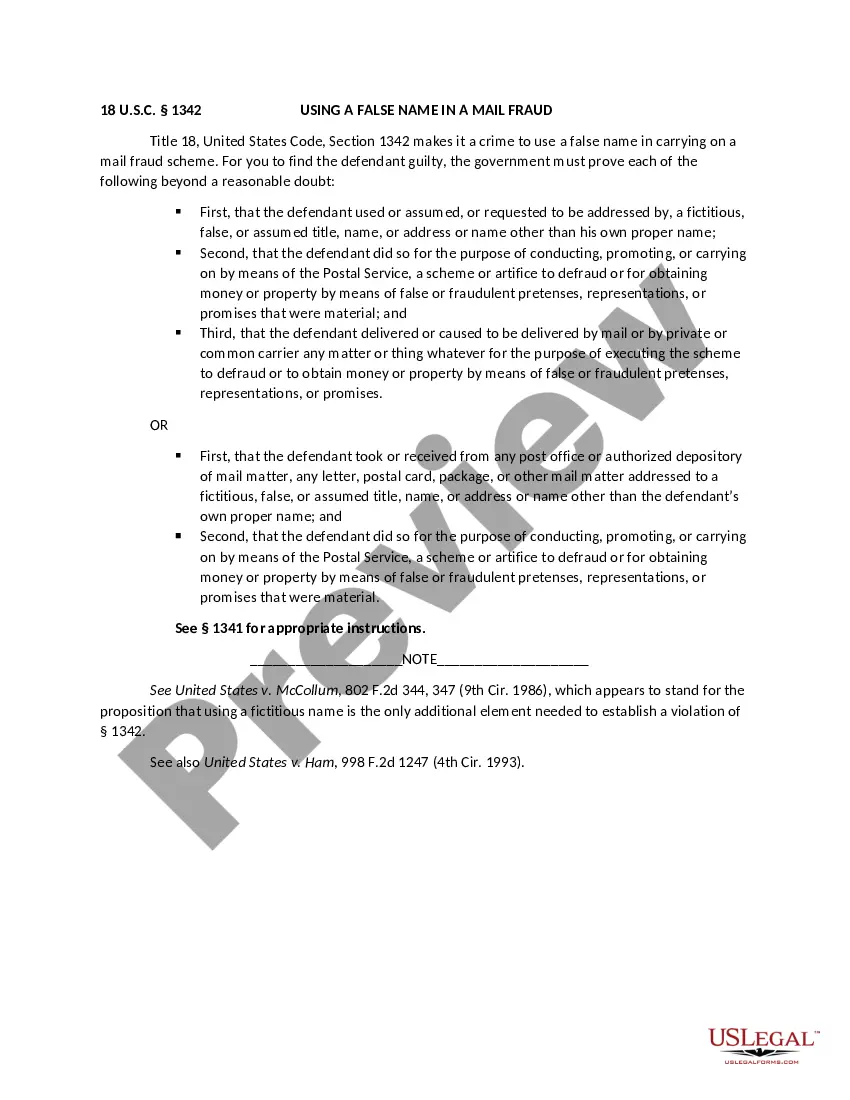
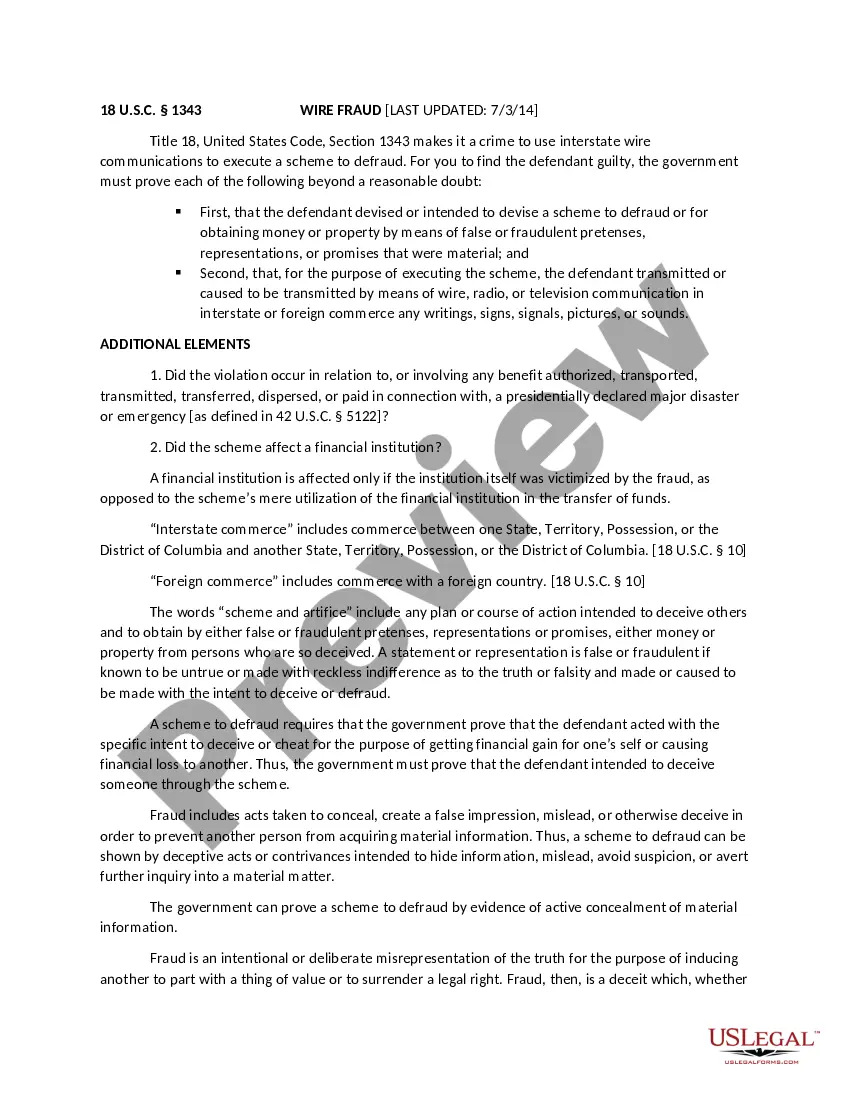
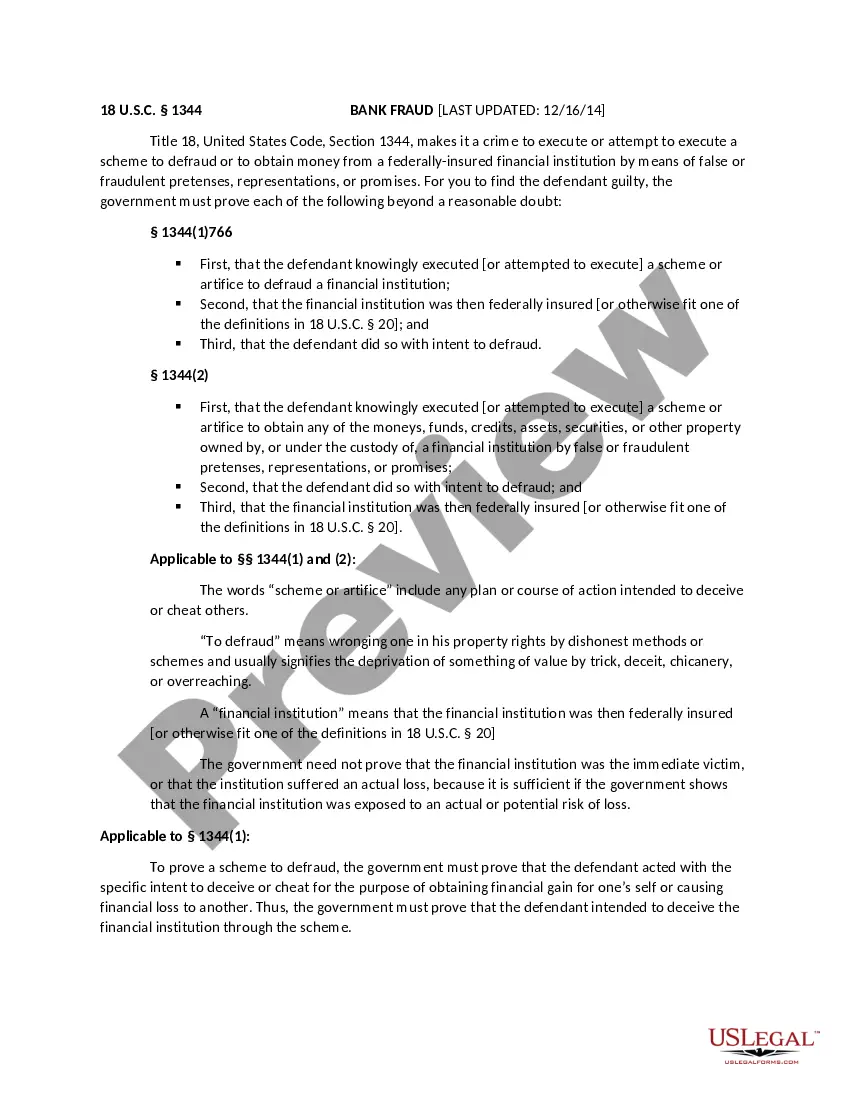
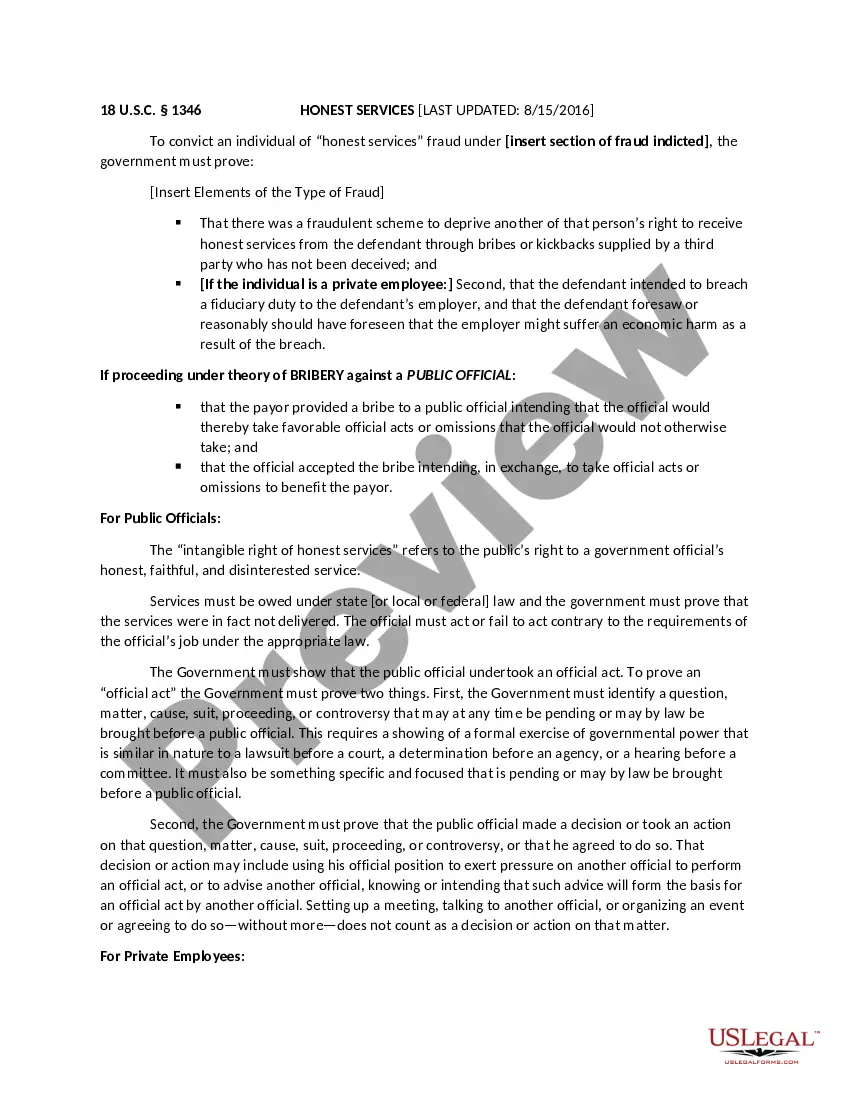
Petition for a Formal Marriage Case
About this form
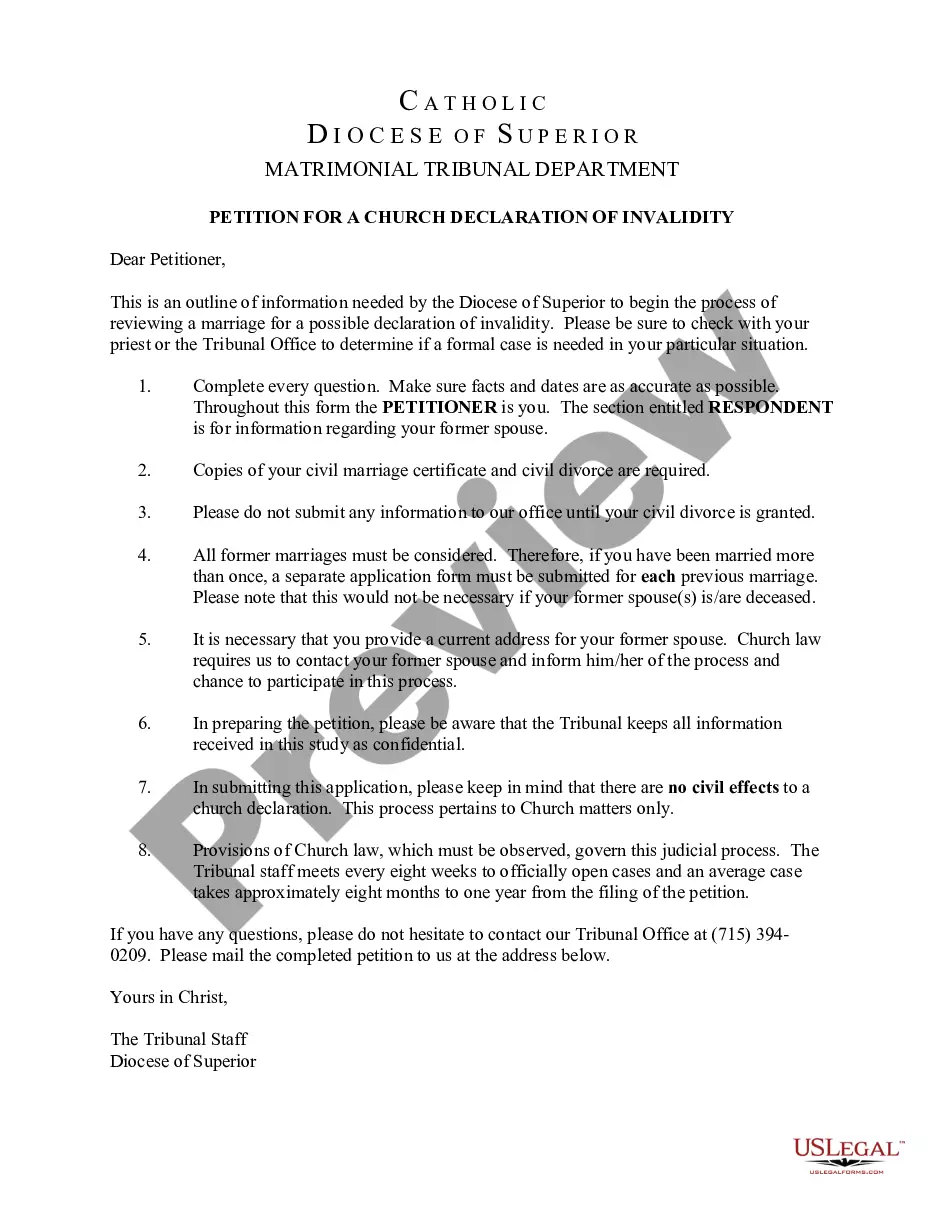
The Petition for a Formal Marriage Case is a specific legal document used within the Catholic Church to formally request an annulment, or declaration of nullity, of a marriage. This petition is essential for individuals who believe their marriage was invalid due to issues such as defective consent. Unlike a divorce, which ends a valid marriage, this form seeks to declare that a marriage was never valid in the eyes of the Church, allowing individuals to marry again in a Catholic ceremony if approved.
Form components explained
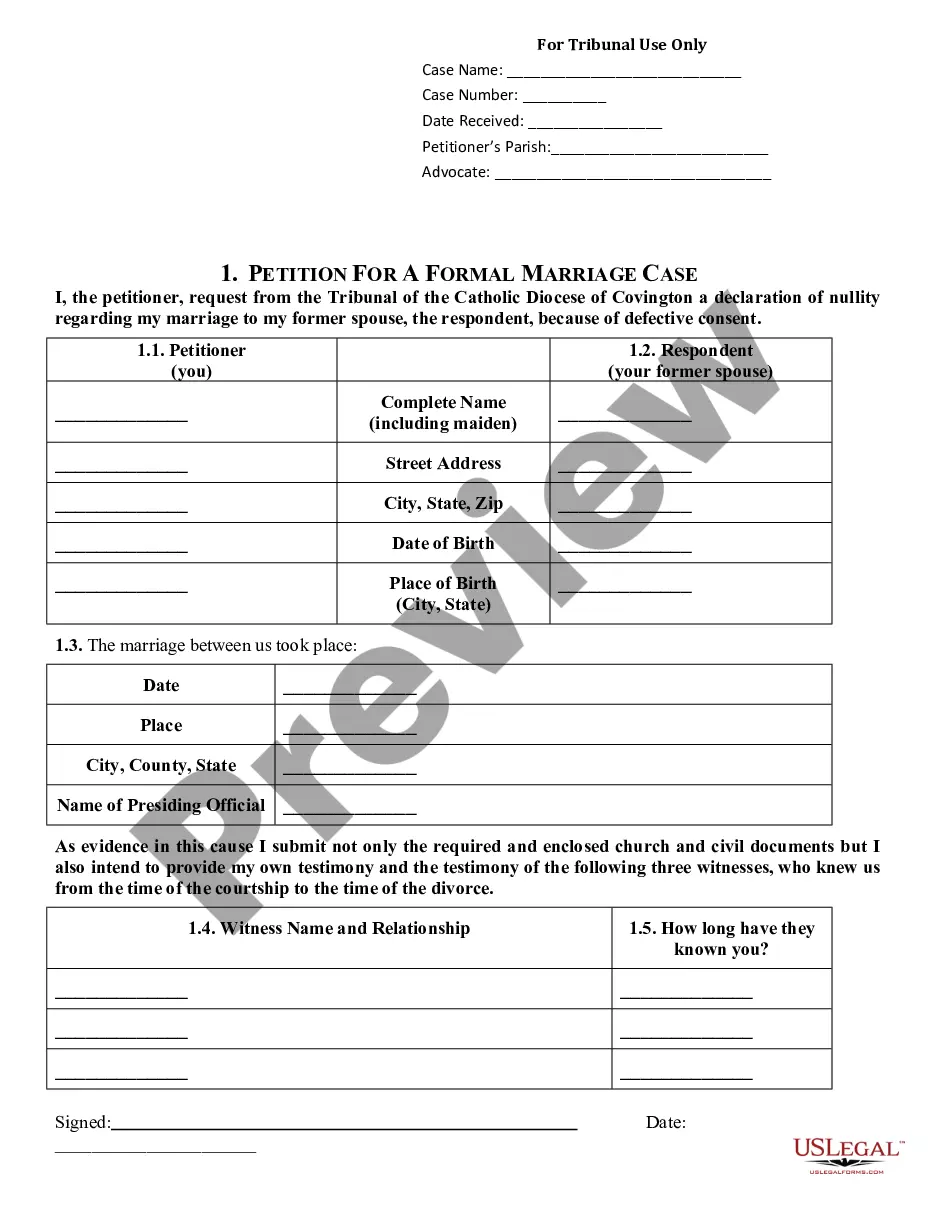
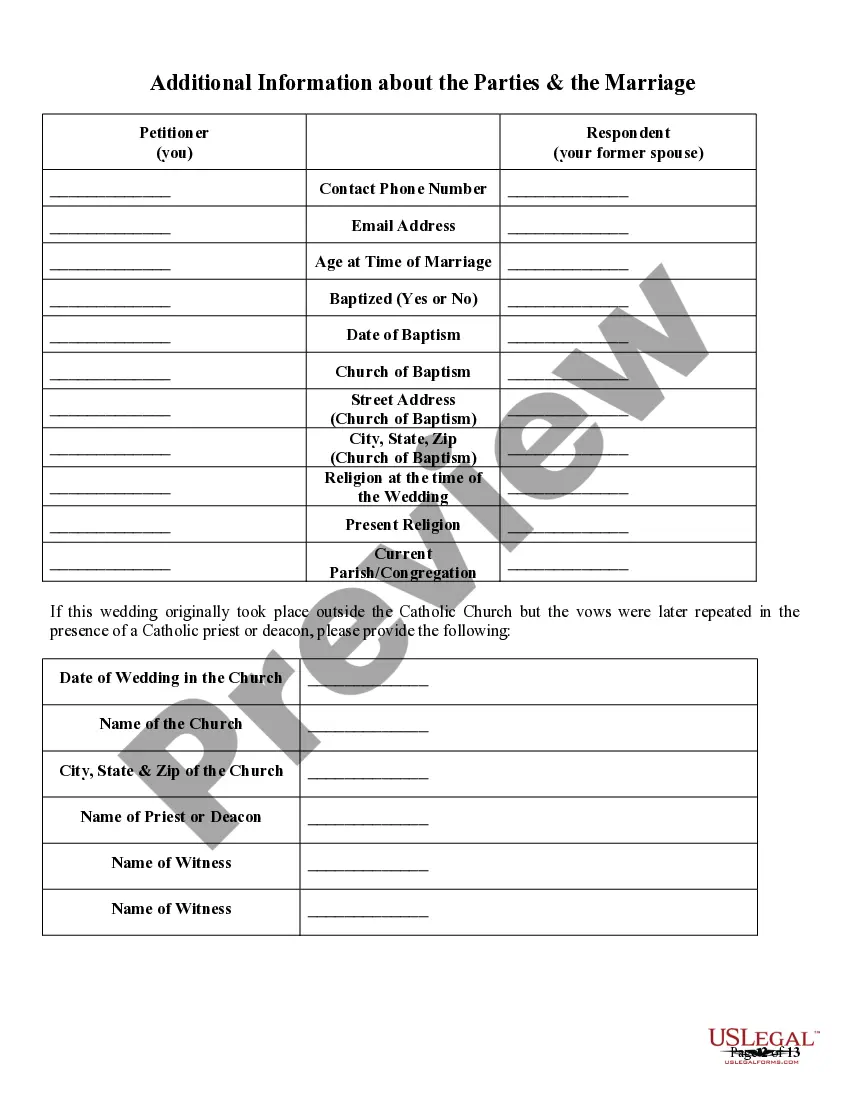
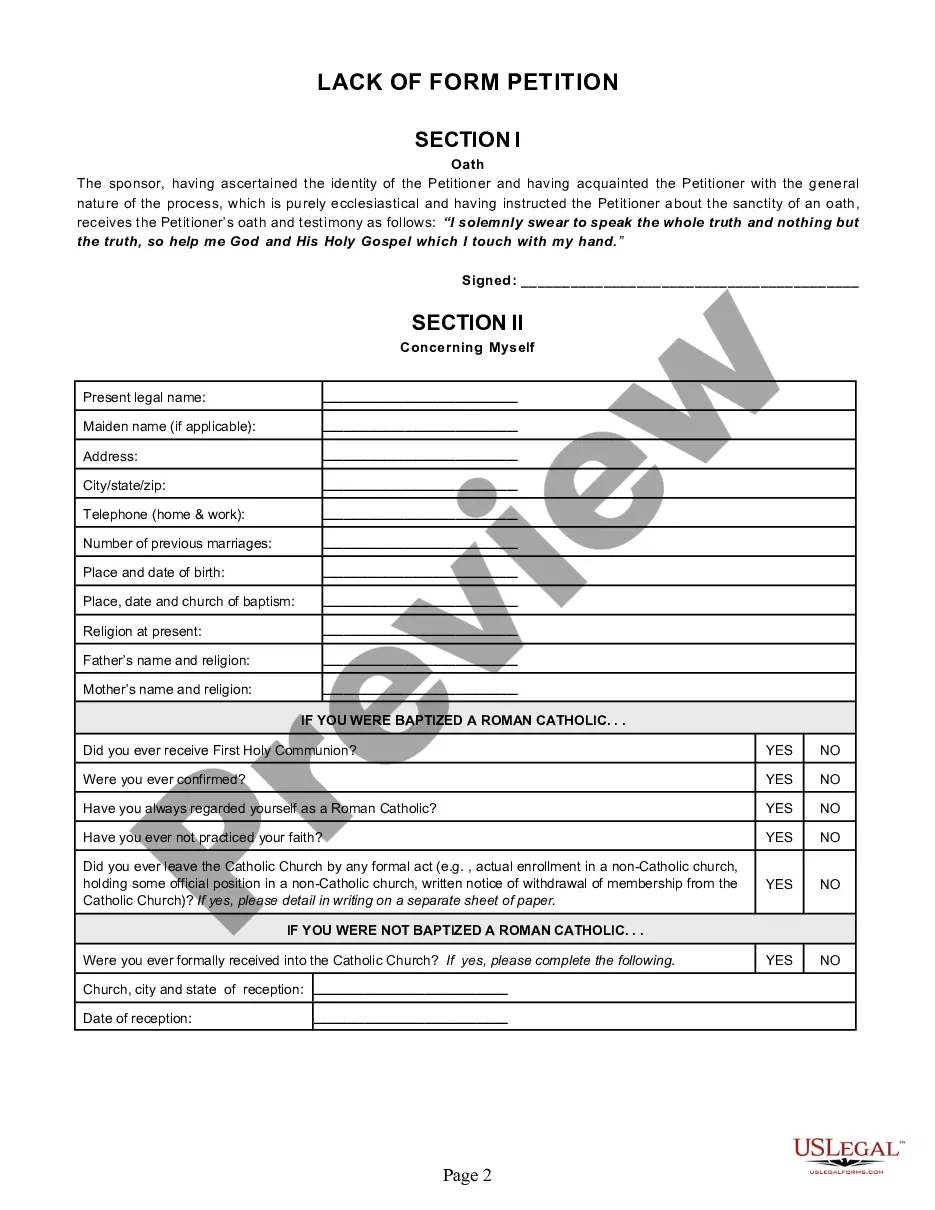
- Petitioner and Respondent information, including names, addresses, and dates of birth.
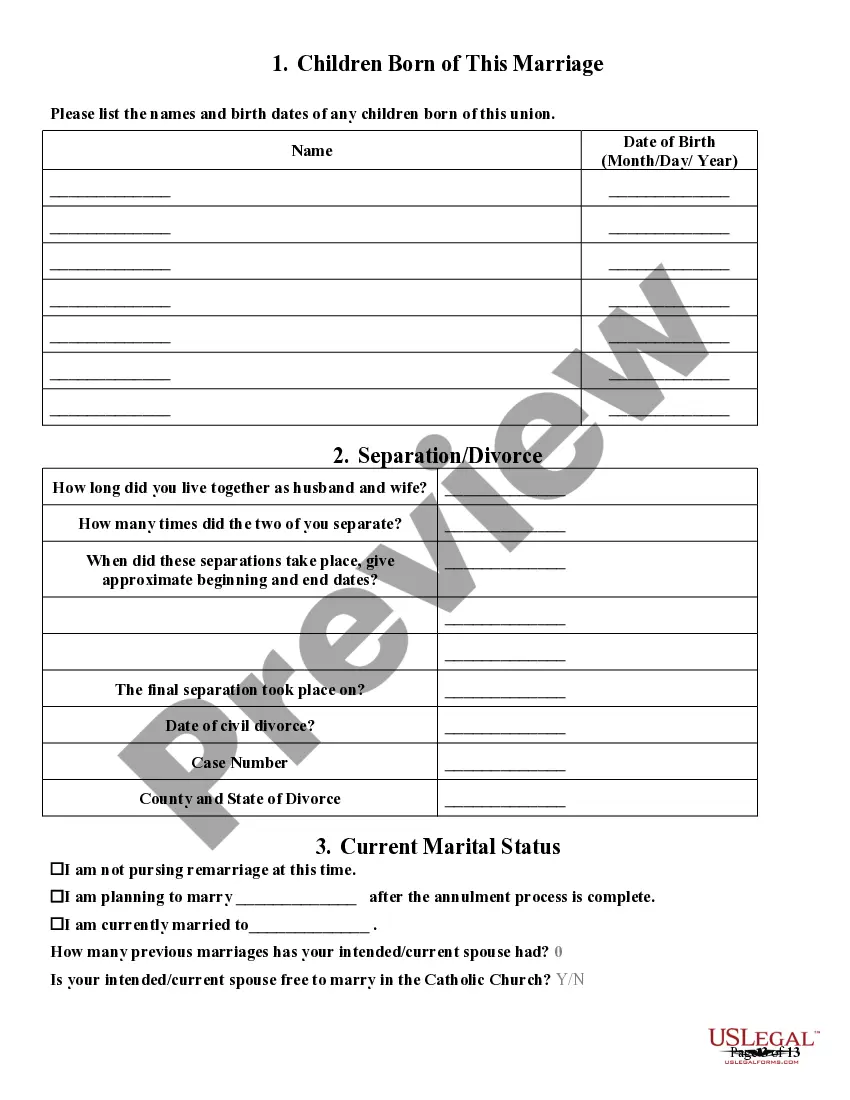
- Details about the marriage, such as date and place of marriage, and information on the presiding official.
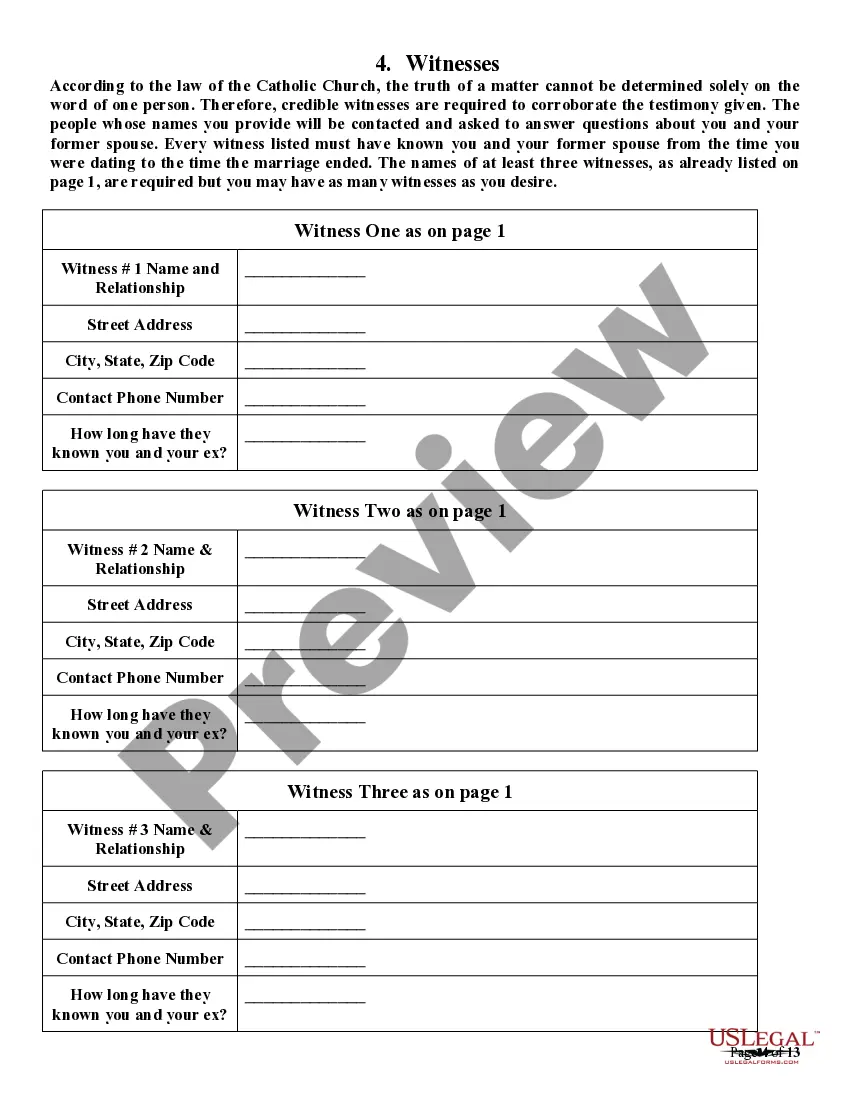
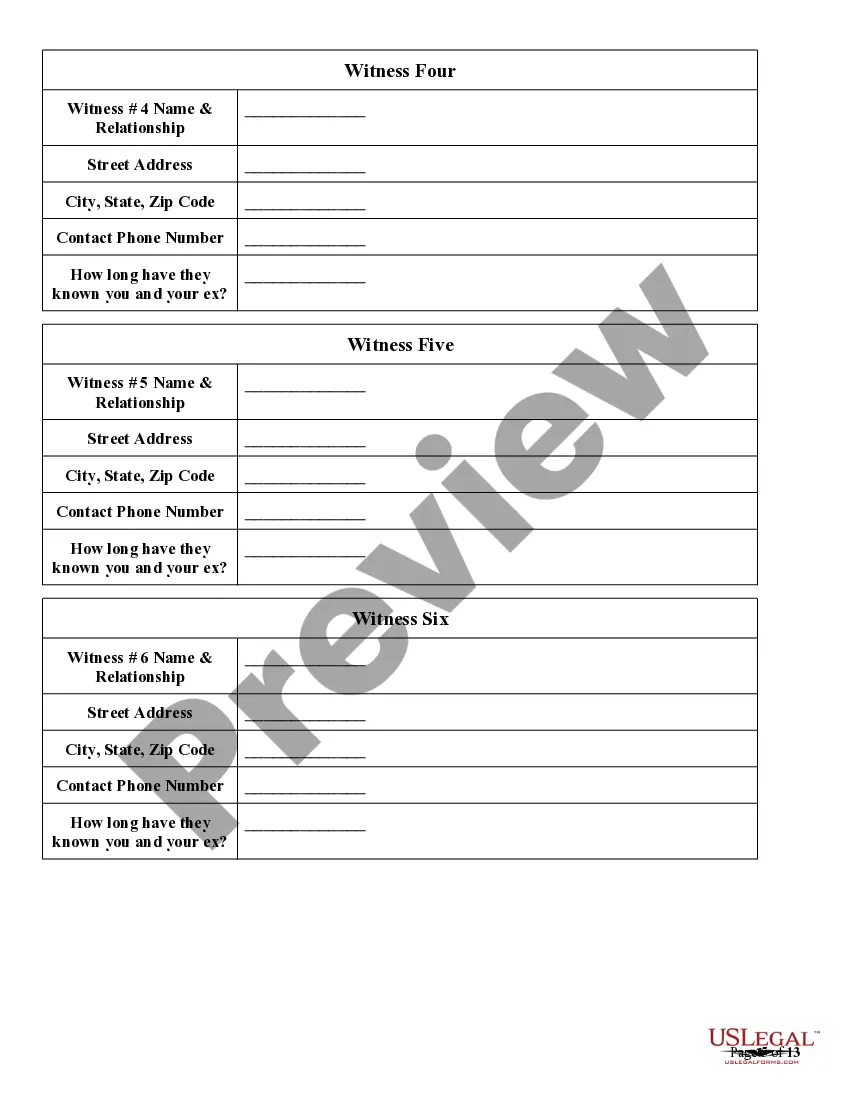
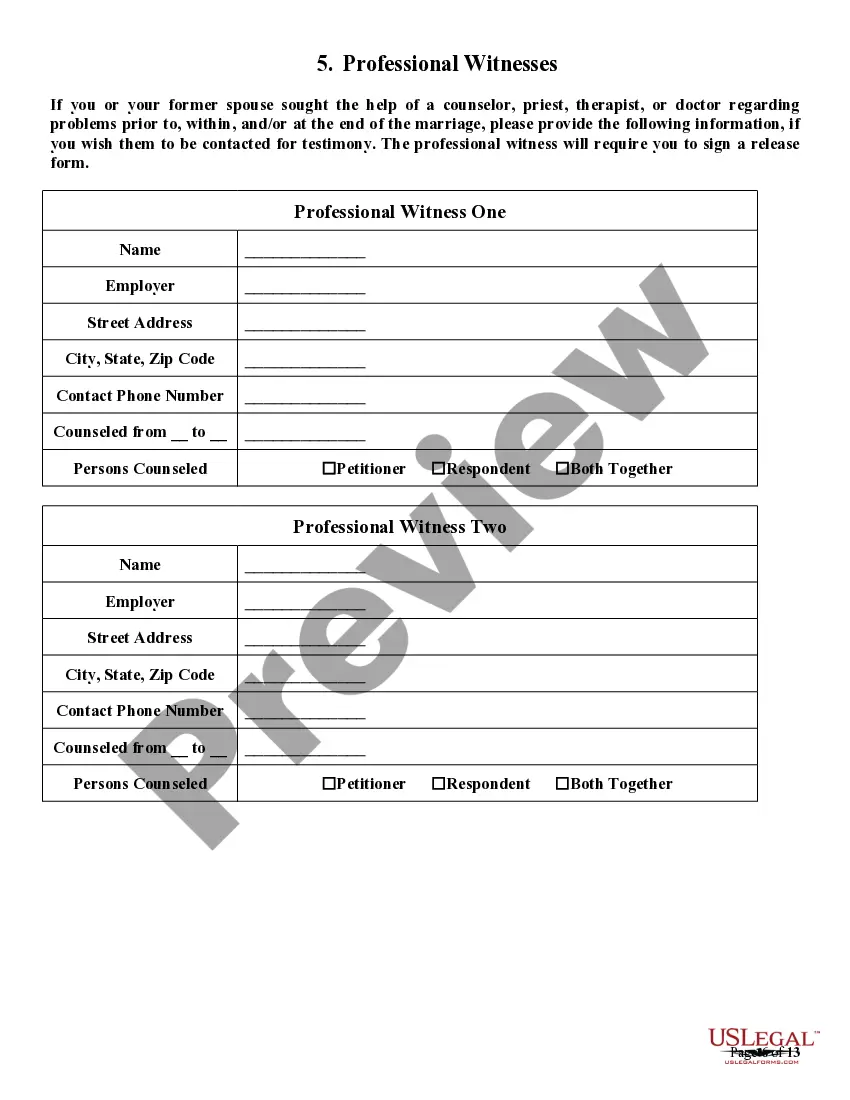
- Witness information to provide testimony regarding the marriage and its validity.
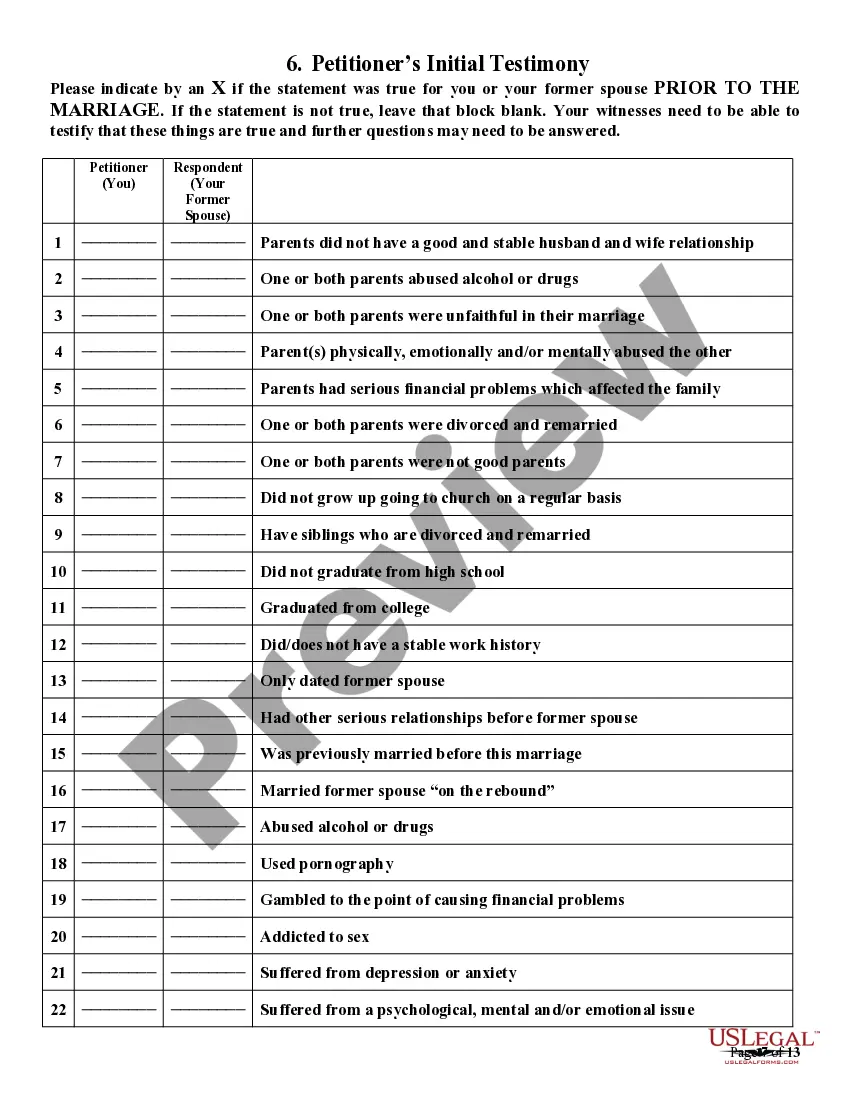
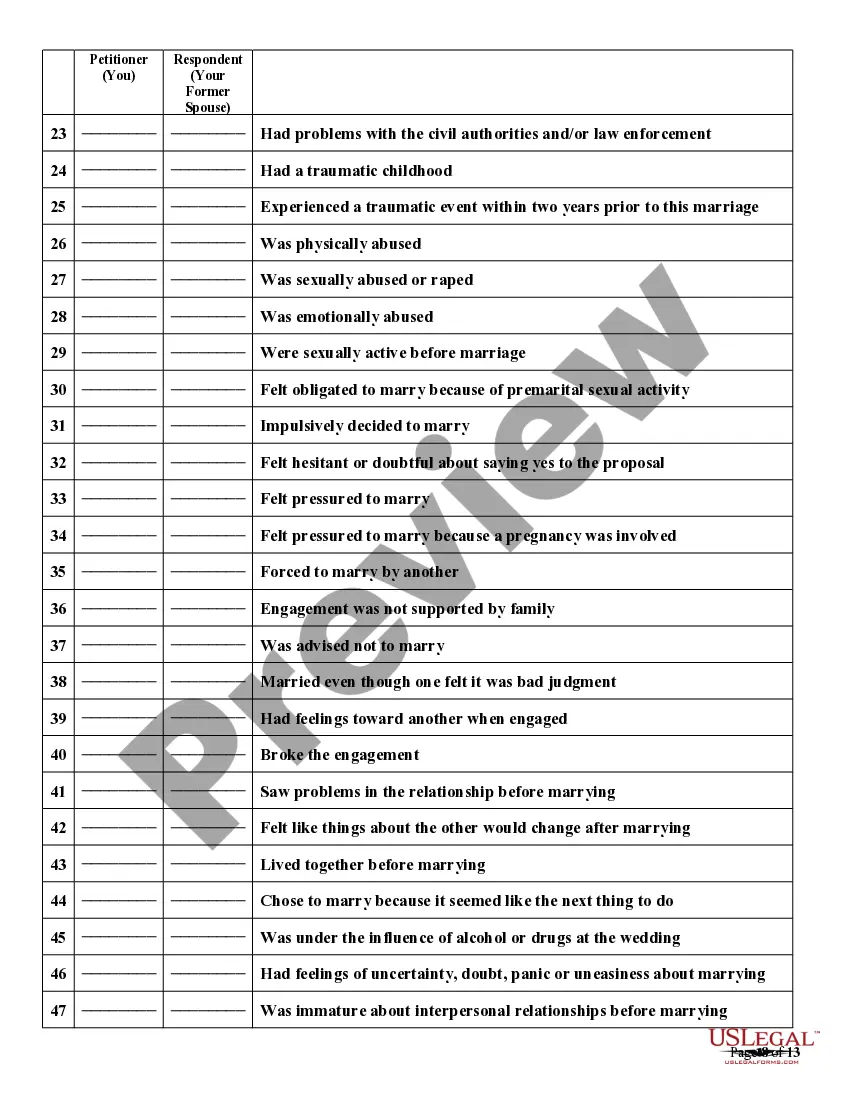
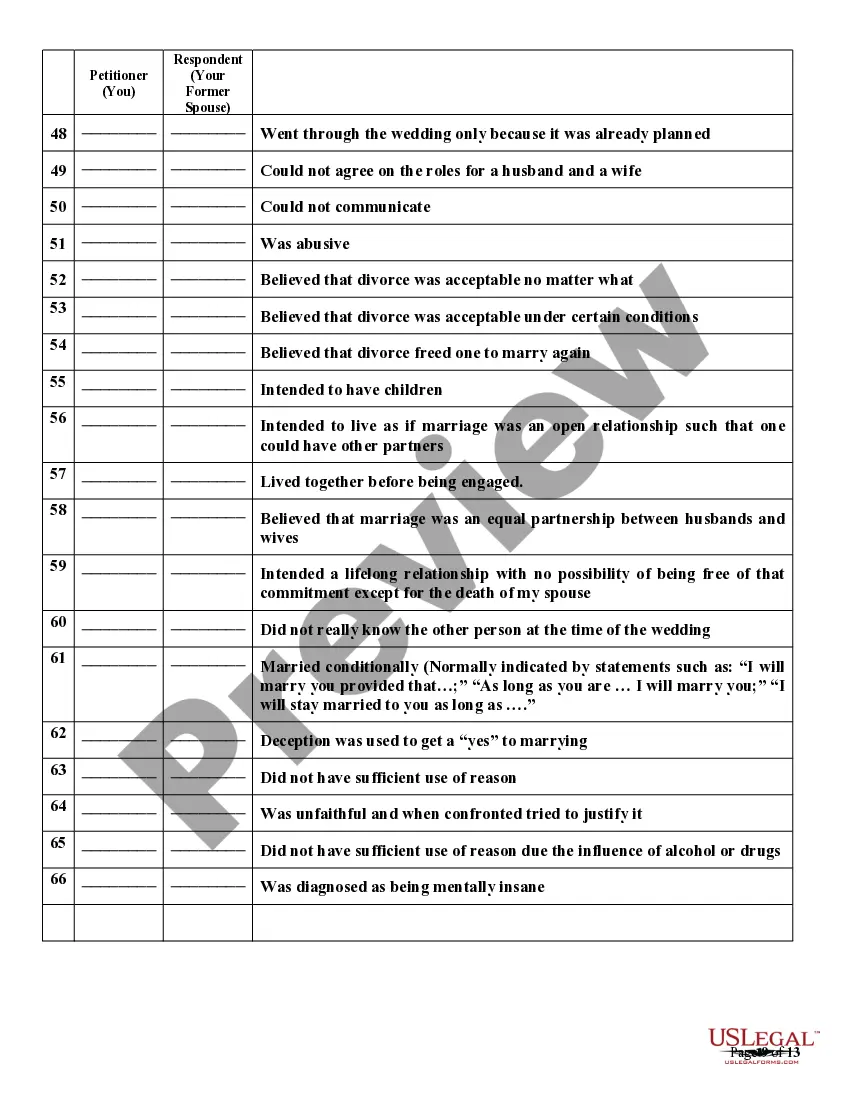
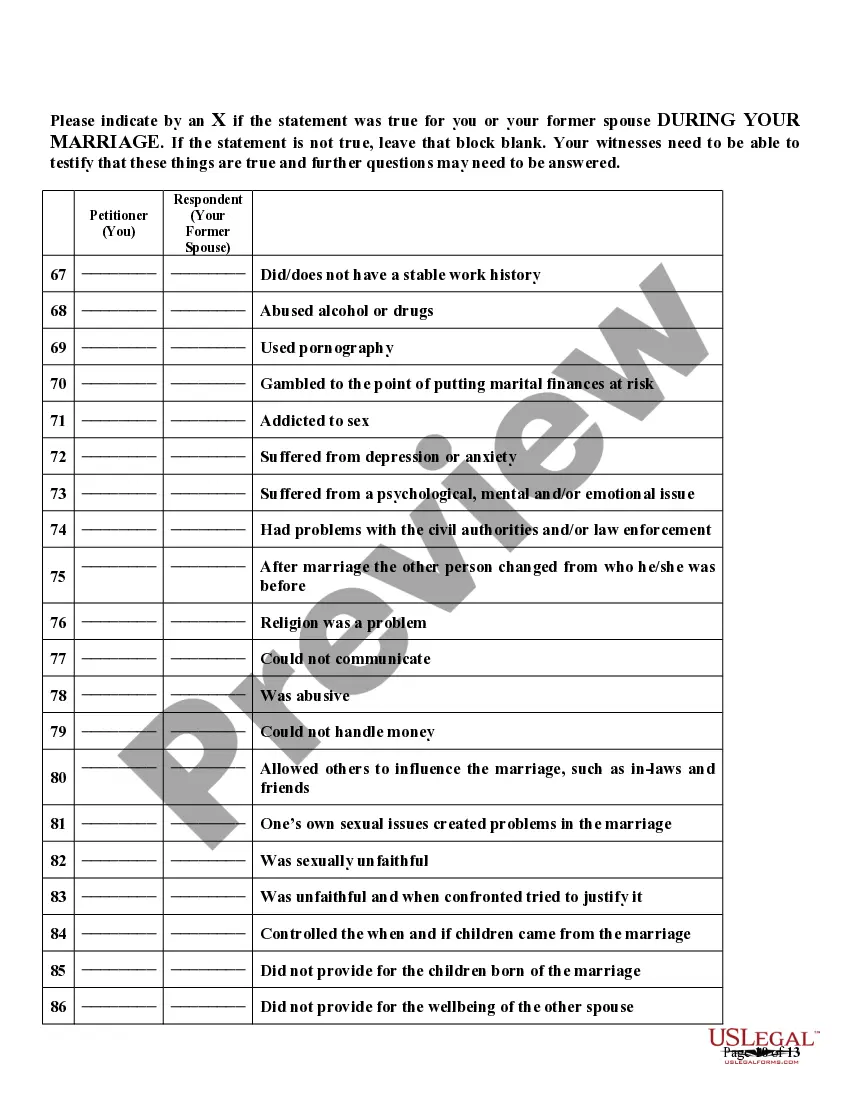
- Petitioner's narrative testimony about reasons for seeking annulment.
- Appointment of a procurator and advocate to assist in the annulment process.
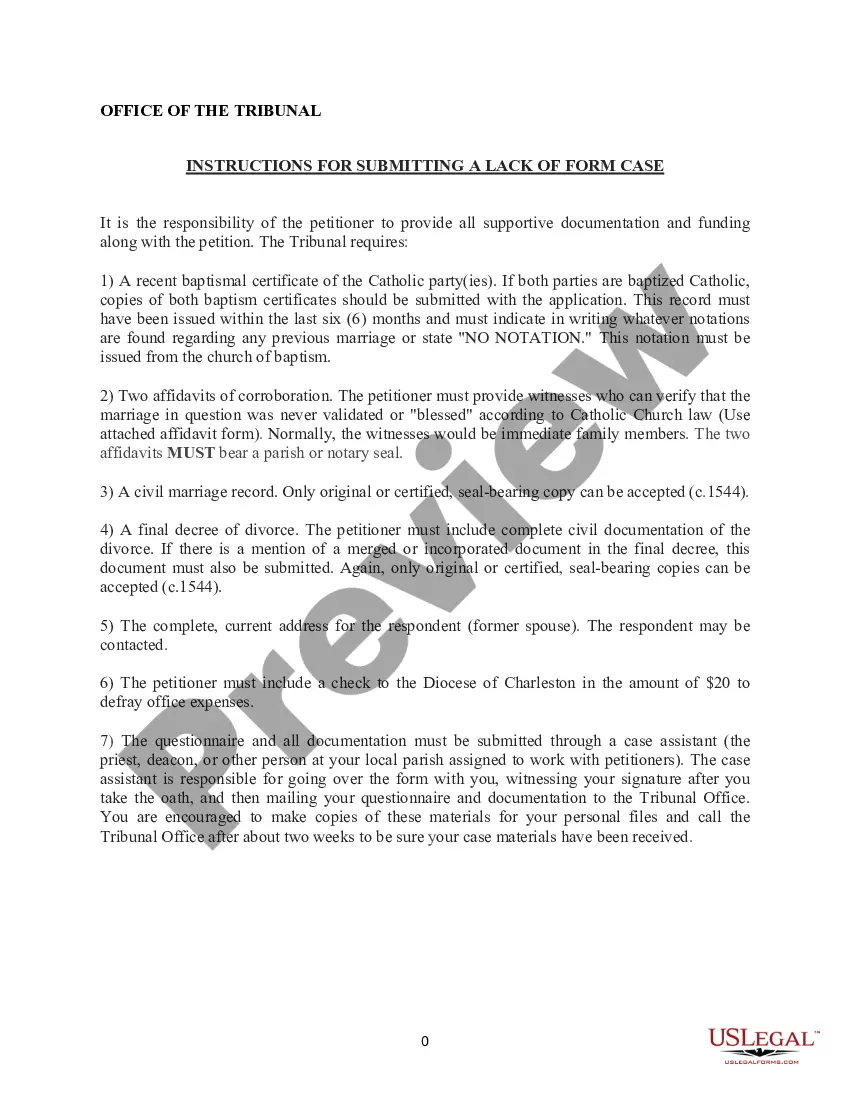
- Required documents checklist, including baptismal certificates and marriage licenses.

Common use cases
This form should be used when you wish to request an annulment of your marriage from the Catholic Church. It is particularly relevant if you believe that your marriage was not valid due to specific factors like lack of consent, psychological incapacity, or other canonical impediments. You may need to file this petition if you wish to remarry in the Catholic Church or to clarify your marital status in ecclesiastical matters.
Intended users of this form
- Individuals who are seeking an annulment of their marriage in the Catholic Church.
- Petitioners who believe their marriage was invalid due to reasons such as ineffective consent or other canonical issues.
- Those who wish to remarry within the Church after an annulment process.
- Individuals who have already experienced a civil divorce and require recognition of their marital status before the Church.
Completing this form step by step
- Identify the parties involved by entering personal details for both the petitioner and respondent.
- Complete the marriage details, including date and place of the marriage, and the name of the officiant.
- List the names and contact information of at least three witnesses who can attest to your relationship.
- Provide your testimony by answering narrative questions about the marriage and reasons for seeking annulment.
- Ensure all required documents are collected and included with the petition.
- Sign and date the petition, appointing a procurator and advocate as needed.
Does this form need to be notarized?
This form does not typically require notarization unless specified by local law. However, having a notarized signature can provide an extra layer of verification during the annulment process.
Get your form ready online
Our built-in tools help you complete, sign, share, and store your documents in one place.
Make edits, fill in missing information, and update formatting in US Legal Forms—just like you would in MS Word.
Download a copy, print it, send it by email, or mail it via USPS—whatever works best for your next step.
Sign and collect signatures with our SignNow integration. Send to multiple recipients, set reminders, and more. Go Premium to unlock E-Sign.
If this form requires notarization, complete it online through a secure video call—no need to meet a notary in person or wait for an appointment.
We protect your documents and personal data by following strict security and privacy standards.

Make edits, fill in missing information, and update formatting in US Legal Forms—just like you would in MS Word.

Download a copy, print it, send it by email, or mail it via USPS—whatever works best for your next step.

Sign and collect signatures with our SignNow integration. Send to multiple recipients, set reminders, and more. Go Premium to unlock E-Sign.

If this form requires notarization, complete it online through a secure video call—no need to meet a notary in person or wait for an appointment.

We protect your documents and personal data by following strict security and privacy standards.
Common mistakes to avoid
- Failing to include all required witness information or documentation.
- Omitting details about the marriage or separations.
- Not providing sufficient narrative responses for annulment reasoning.
- Leaving sections incomplete or not signing the form.
- Not consulting with an advocate about the specific requirements of your diocese.
Benefits of completing this form online
- Convenient access to the form anytime and anywhere.
- Editable digital format allows you to fill out information at your own pace.
- Reliable source of legally vetted templates drafted by licensed attorneys.
- Streamlined submission process that can save time and reduce errors.
- Guidance and instructions make it easier for those with little legal experience.
Looking for another form?


Form popularity
FAQ
An annulment is a legal procedure that can be used in both secular and religious legal systems to declare a marriage null and void, implying that it never existed in the eyes of the law. Although annulment is uncommon these days, the annulment procedure is available if the necessary legal grounds are present.
An annulment (or nullity) is when a judge says in a court order that your marriage or domestic partnership is not legally valid. This means something was legally wrong with the marriage from the start.
At the time of the marriage, there was a lack of consent. In other words, you or your spouse did not give free and fully informed consent to the marriage. This may be due to duress, for example, you were forced into the marriage, mistake, misrepresentation or fraud.
The case now goes to the Defender of the Bond, who writes his opinion (or 'Brief') of why the marriage is valid. Although the Defender is given one month to review the case, there are times when it takes longer.
The Church requires a declaration of nullity in order to establish that an essential element was missing in that previous union that prevented it from being a valid marriage, and thus the intended spouse is free to marry. This is often a difficult and emotional issue.
While annulments and divorces both end a relationship, the largest difference between the two is that a divorce legally ends a marriage, while an annulment claims the marriage was never valid.
In a Declaration of Nullity of Marriage, the marriage that is sought to be declared void ab initio or void from the beginning. Whereas in an Annulment, the marriage is considered voidable, or the marriage is valid but is susceptible of being voided pursuant to the grounds provided under the law.
In a Declaration of Nullity of Marriage, the marriage that is sought to be declared void ab initio or void from the beginning. Whereas in an Annulment, the marriage is considered voidable, or the marriage is valid but is susceptible of being voided pursuant to the grounds provided under the law.