Locate Data Sheet and Instructions
Overview of this form
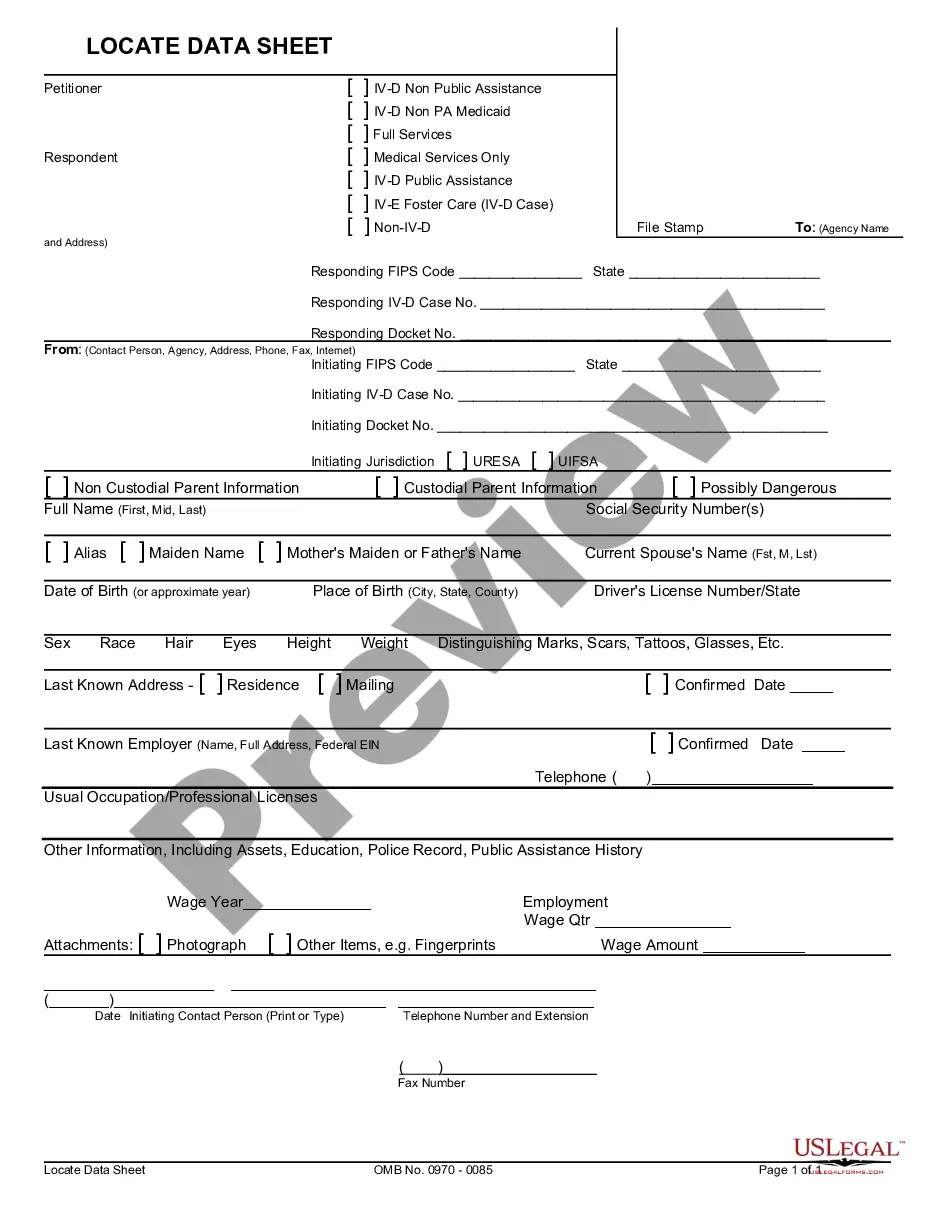
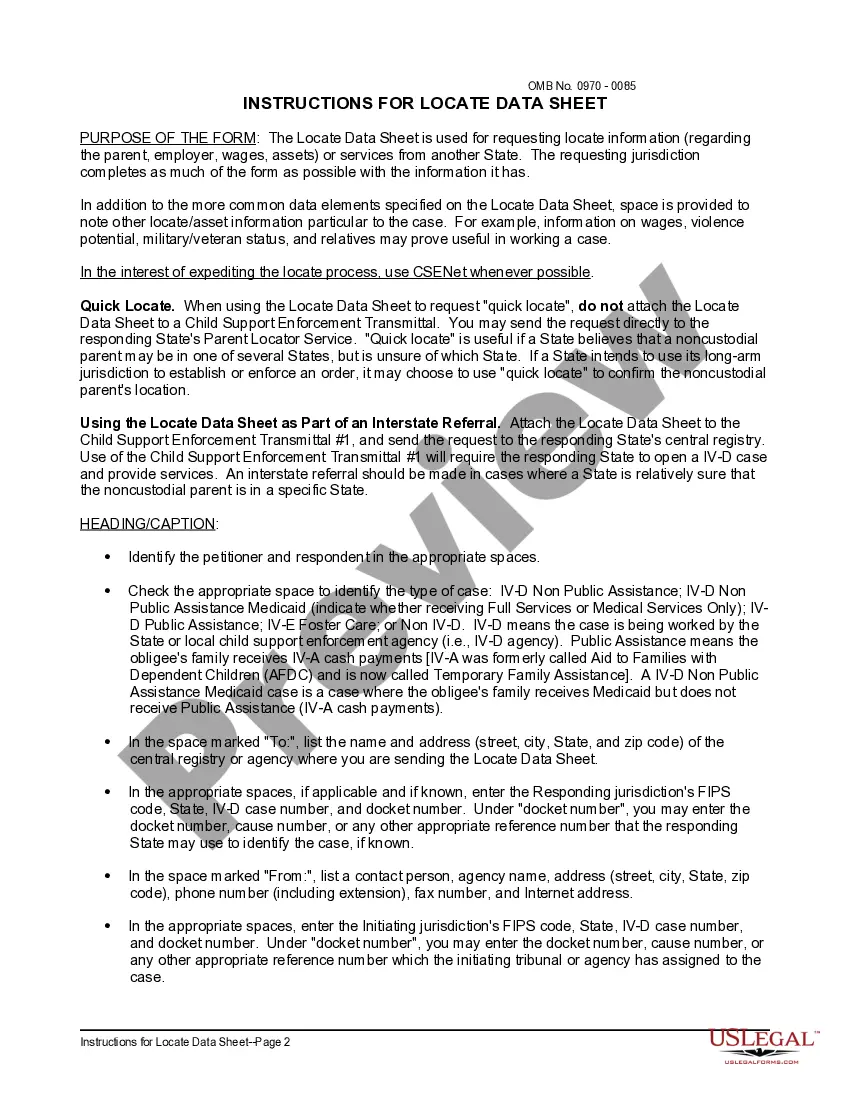
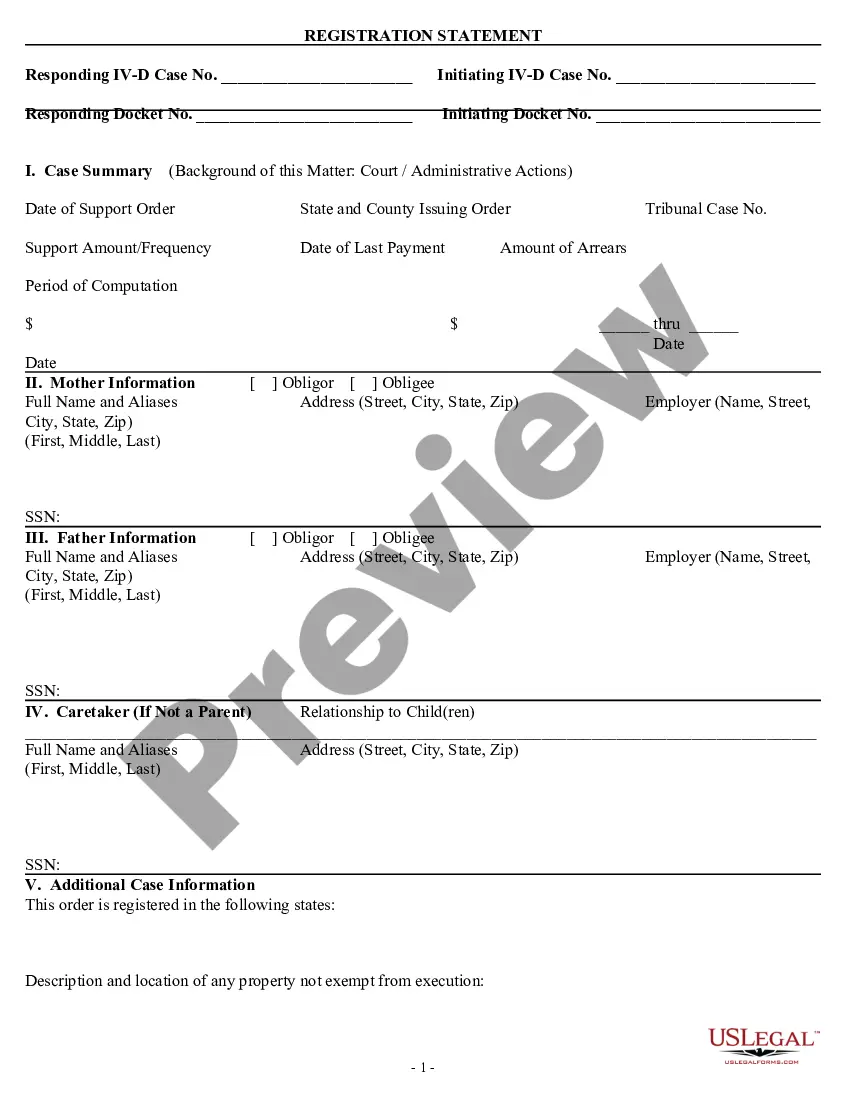
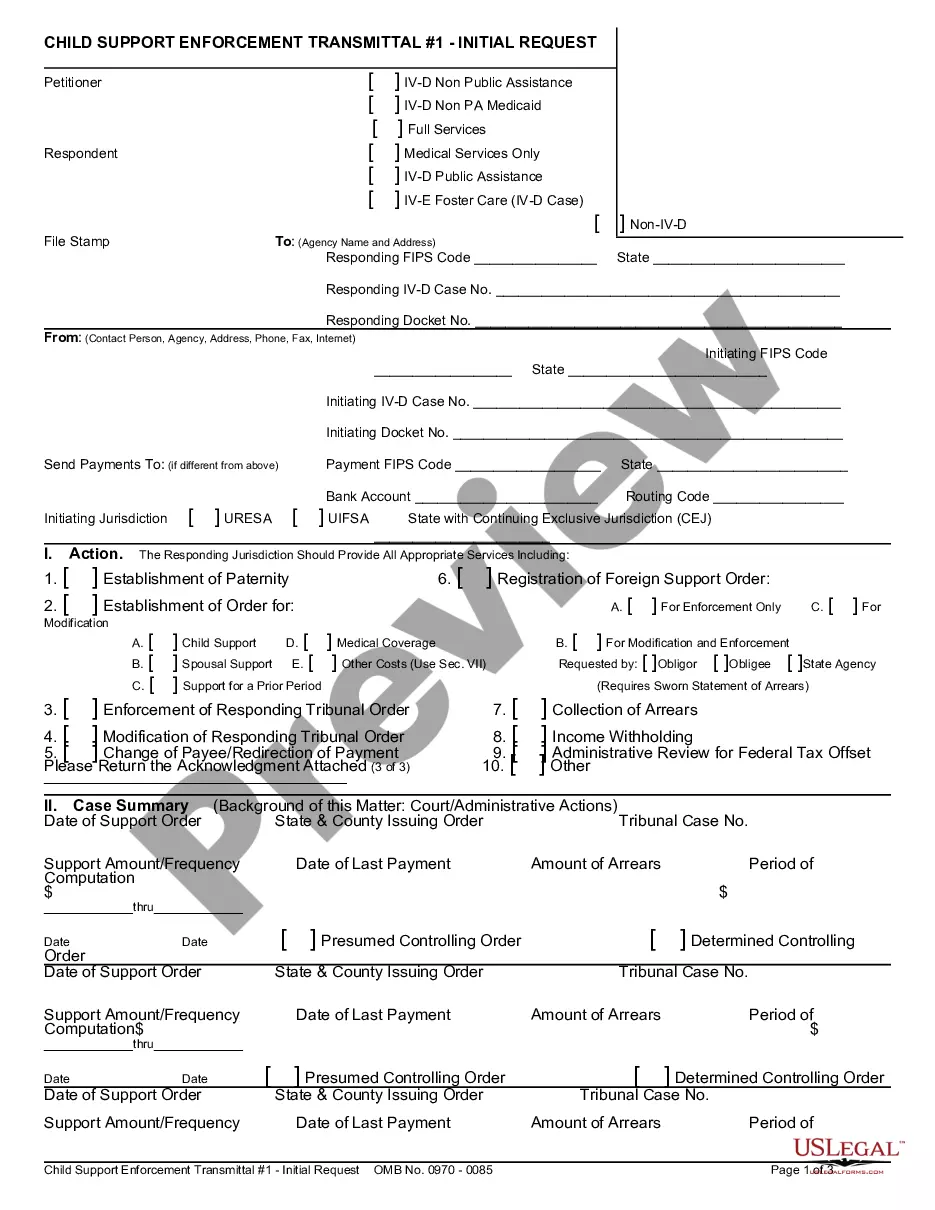
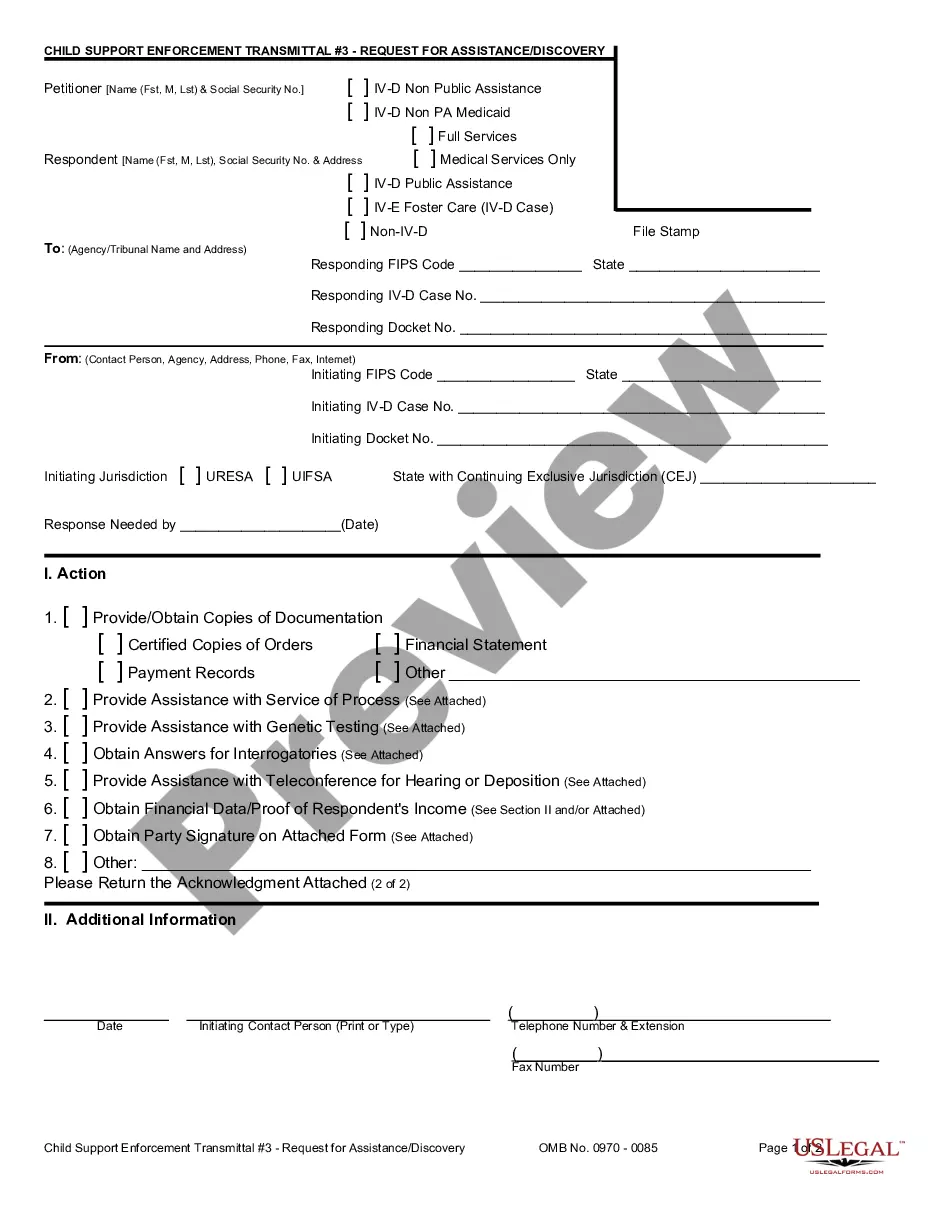
The Locate Data Sheet and Instructions is a legal document used by authorities to request locate information about a delinquent parent who has failed to pay child support. This form differs from other child support forms in that it focuses specifically on gathering detailed data that can assist in locating noncustodial parents, employers, and other necessary information for enforcement and compliance with child support obligations.
What’s included in this form
- Information about the initiating and responding jurisdictions, including FIPS codes and case numbers.
- Detailed personal information about the noncustodial parent, including aliases, social security numbers, and physical descriptions.
- Sections for last known addresses, employment history, and any distinguishing marks or characteristics.
- Fields for additional information, such as assets, education, and public assistance history.
- Attachment section for photographs or other relevant items that can aid in locating the individual.
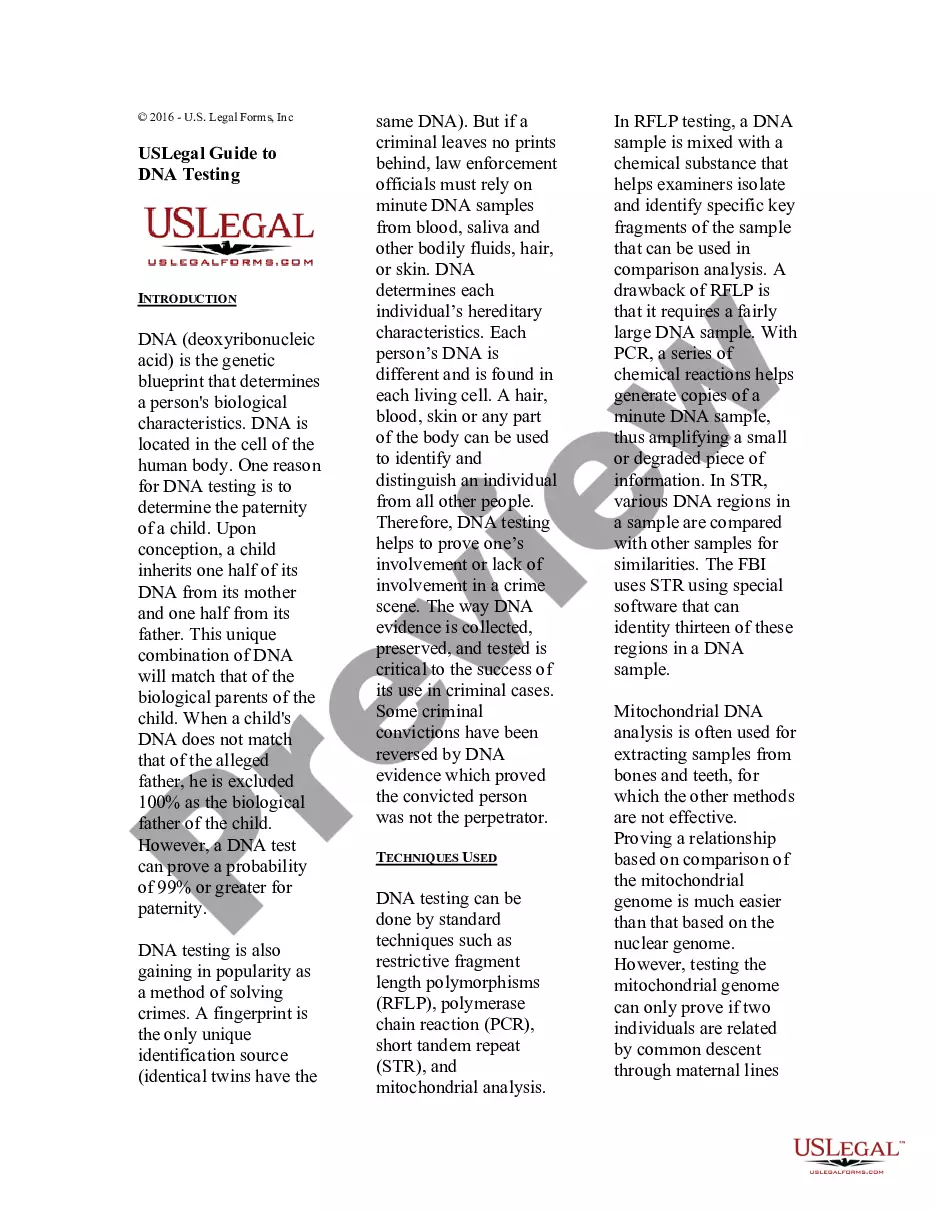
When this form is needed
This form should be used when authorities need to locate a noncustodial parent who is delinquent in child support payments. It is particularly useful in scenarios where the parent is suspected to be in another state or when information regarding their assets, employment, or location is ambiguous. It can facilitate both quick identifies and interstate referrals to ensure child support obligations are met.
Who should use this form
This form is intended for:
- Child support enforcement agencies seeking to locate noncustodial parents.
- Attorneys representing custodial parents in child support matters.
- Government agencies involved in child welfare and enforcement of child support laws.
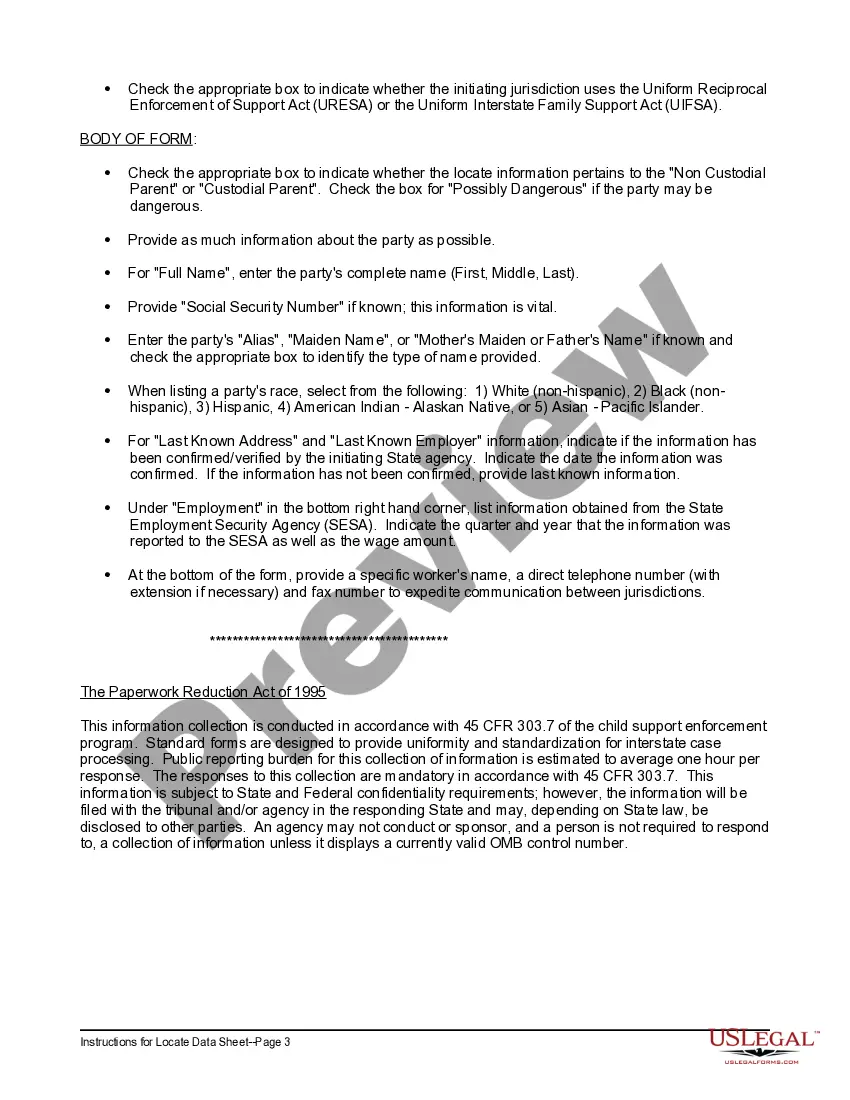
Steps to complete this form
- Identify the initiating and responding jurisdictions by completing the FIPS codes and case numbers.
- Provide detailed information about the noncustodial parent, including name, date of birth, and physical descriptors.
- Fill in the last known address and employer's details to assist in the locate process.
- Include any additional information that may be relevant, such as assets or previous law enforcement encounters.
- Submit the completed form to the appropriate agency along with any required attachments.
Does this form need to be notarized?
In most cases, this form does not require notarization. However, some jurisdictions or signing circumstances might. US Legal Forms offers online notarization powered by Notarize, accessible 24/7 for a quick, remote process.
Get your form ready online
Our built-in tools help you complete, sign, share, and store your documents in one place.
Make edits, fill in missing information, and update formatting in US Legal Forms—just like you would in MS Word.
Download a copy, print it, send it by email, or mail it via USPS—whatever works best for your next step.
Sign and collect signatures with our SignNow integration. Send to multiple recipients, set reminders, and more. Go Premium to unlock E-Sign.
If this form requires notarization, complete it online through a secure video call—no need to meet a notary in person or wait for an appointment.
We protect your documents and personal data by following strict security and privacy standards.

Make edits, fill in missing information, and update formatting in US Legal Forms—just like you would in MS Word.

Download a copy, print it, send it by email, or mail it via USPS—whatever works best for your next step.

Sign and collect signatures with our SignNow integration. Send to multiple recipients, set reminders, and more. Go Premium to unlock E-Sign.

If this form requires notarization, complete it online through a secure video call—no need to meet a notary in person or wait for an appointment.

We protect your documents and personal data by following strict security and privacy standards.
Common mistakes to avoid
- Leaving critical fields blank, which may delay the locate process.
- Failing to provide accurate jurisdiction information, which can result in misdirected requests.
- Not including any known aliases or previous names that the noncustodial parent may have used.
Why complete this form online
- Convenient access to the form from anywhere at any time, allowing for quicker submissions.
- Editability to ensure all fields can be filled accurately and updated as needed.
- Assured compliance with legal standards as the form is reviewed and drafted by licensed attorneys.
Legal use & context
- This form is recognized under federal law and applicable for state-level child support enforcement cases.
- It facilitates the collecting and sharing of locate information necessary for legal action.
- Confidentiality of the personal information provided is protected under federal guidelines, although it may be disclosed per state law requirements.
Looking for another form?

Form popularity
FAQ
Is a 14 a good ACT score? A score of 14 is definitely low. It places you in the bottom 13th percentile nationally out of the 2 million test takers of the ACT entrance exam. The score indicates you've done a very poor job answering the questions on the English, Math, Reading and Science sections of the test.
A score of 24 means you've scored better than about 74% of students. A 28 means you've scored better than 88% of students, and a 30 means you've scored better than 93% of them! Anything 35 or above is in the 99th percentilea truly phenomenal score.
Students who earned an ACT Composite score of 12 in 7th grade scored at the national mean (an ACT Composite score of 211), on average, in grade 11 or 12. For 7th grade scores of 20 or higher, median scores for grades 11/12 are 30 or higher.
Is a 17 a good ACT score? A score of 17 is pretty low. It places you in the bottom 31st percentile nationally out of the 2 million test takers of the ACT entrance exam. The score indicates you've done a well below average job answering the questions on the English, Math, Reading and Science sections of the test.
Nationally, What's a Bad ACT Score? If you look at the ACT percentiles, any composite score below 20 (the 50th percentile) is below average. (For more on how the ACT is scored and how the composite is calculated, see our guide.) In other words, to be above average nationally, you need at least a 21 ACT composite score.
Both ACT and SAT scores are used for college admissions decisions and awarding merit-based scholarships. Most colleges do not prefer one test over the other. Neither the SAT or ACT is harder than the other. Different students tend to do better on one test over the other.
With a 12 ACT score, you're already strongly competitive for these schools. You're very likely to get admitted if you apply. If you improve your ACT score, your Safety Schools will get better and better.
Students who earned an ACT Composite score of 12 in 7th grade scored at the national mean (an ACT Composite score of 211), on average, in grade 11 or 12. For 7th grade scores of 20 or higher, median scores for grades 11/12 are 30 or higher.
Composite ACT score which is 20 or below 20 is known to be below average in terms of National average.So, nationally stating, 17 ACT scores may be considered as bad ACT scores. This indicates that you got to score more than 17 as an ACT score if you don't want it to be considered below average.
Even if you don't think you're eligible for scholarships, it doesn't hurt to check2026and double-check. With a GPA of 3.0 and a 24 ACT score (remember, the average is 21), you could still get up to $7,000 a year at Oklahoma State University. Get that score even higherabove 30and you can get up to $12,500 a year.