Child Support Enforcement Transmittal #1 - Initial Request and Instructions
What is this form?
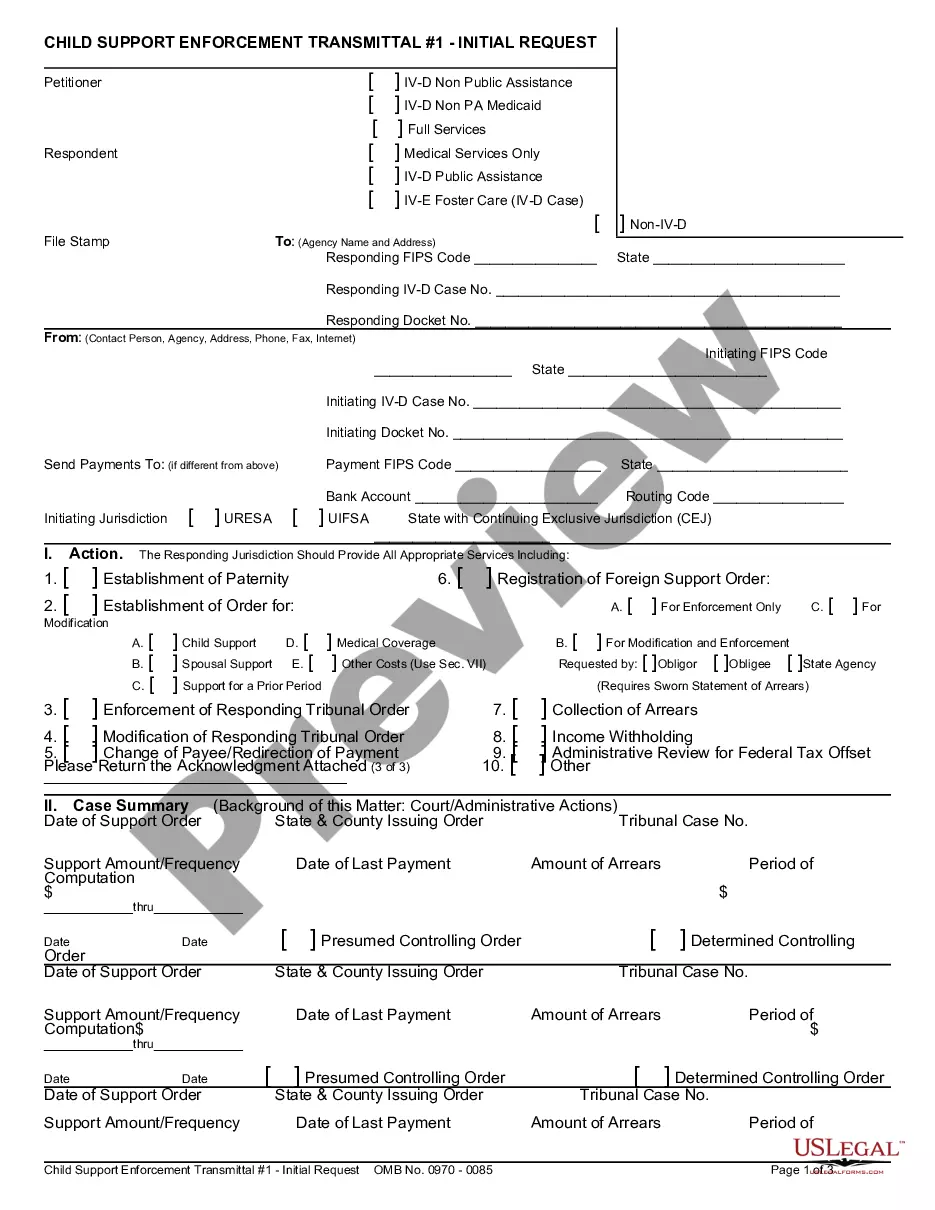
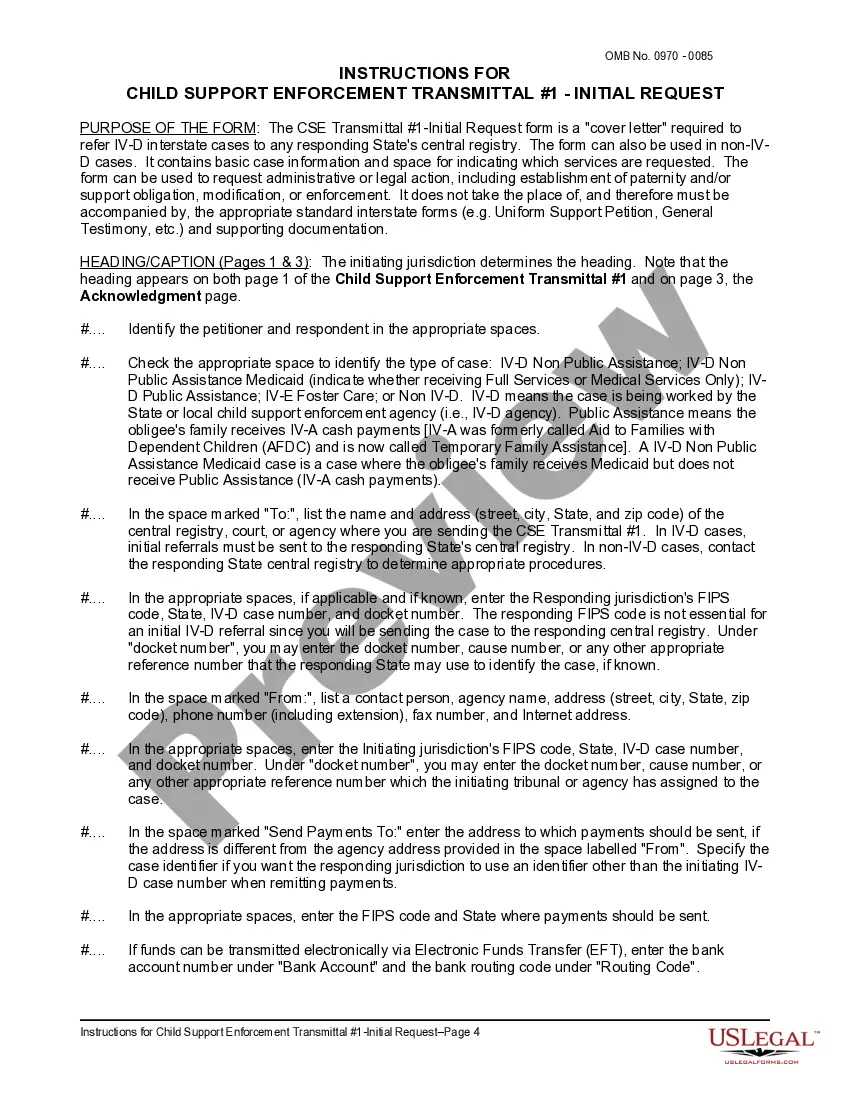
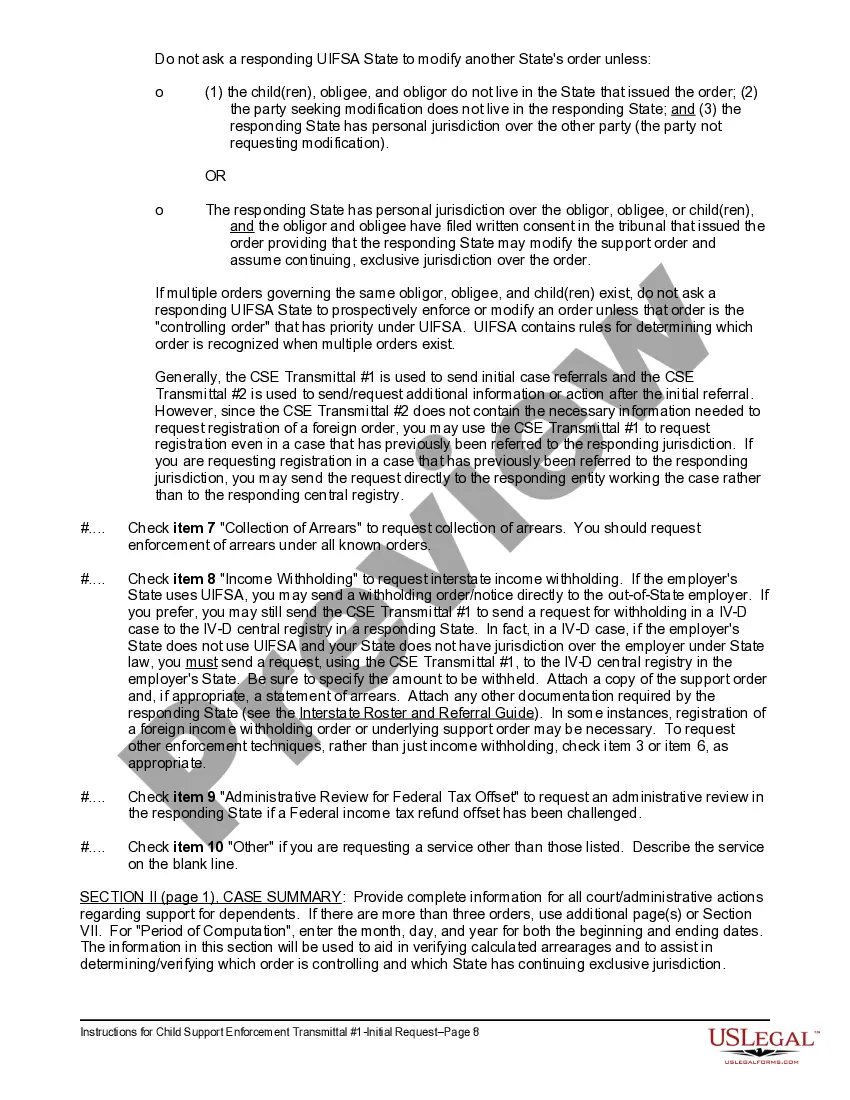
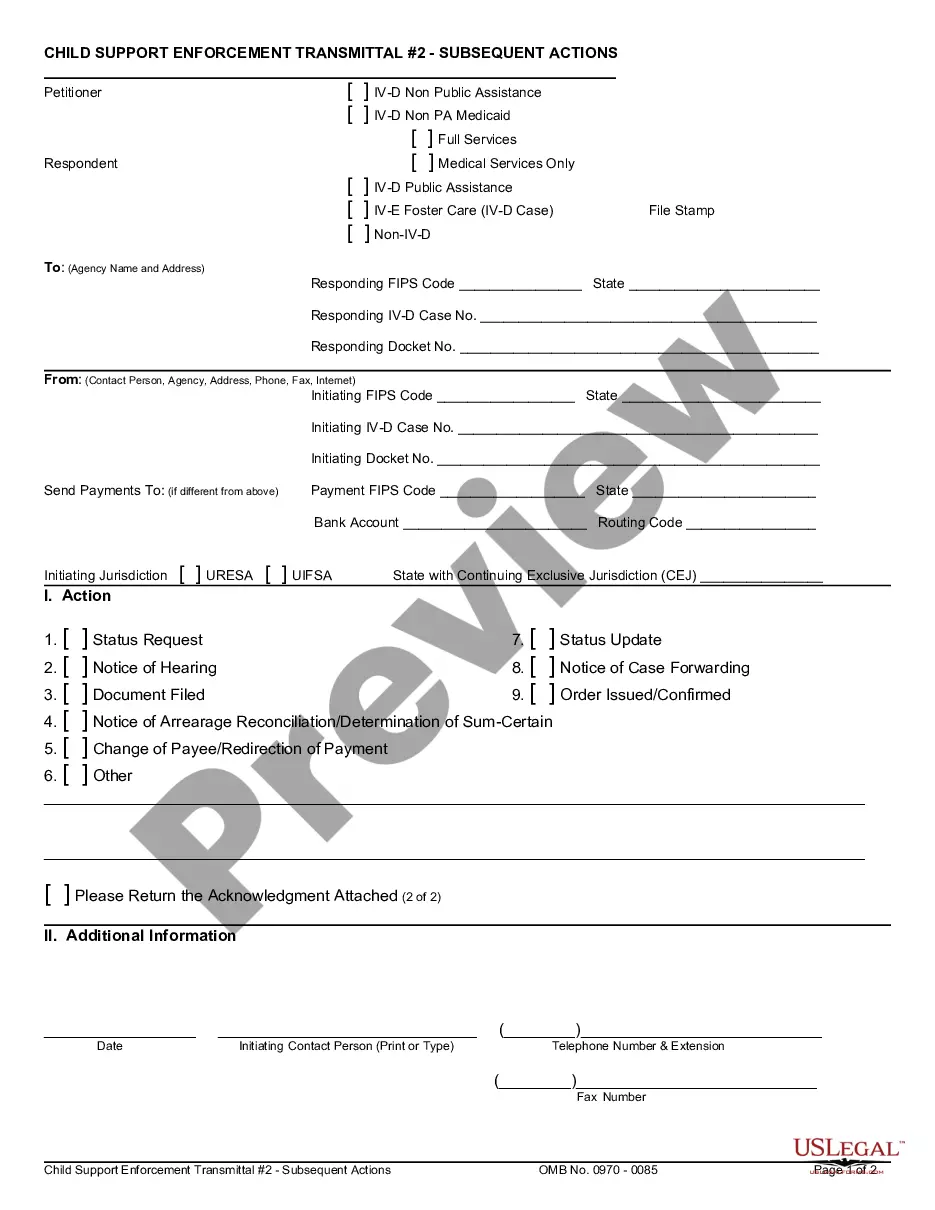
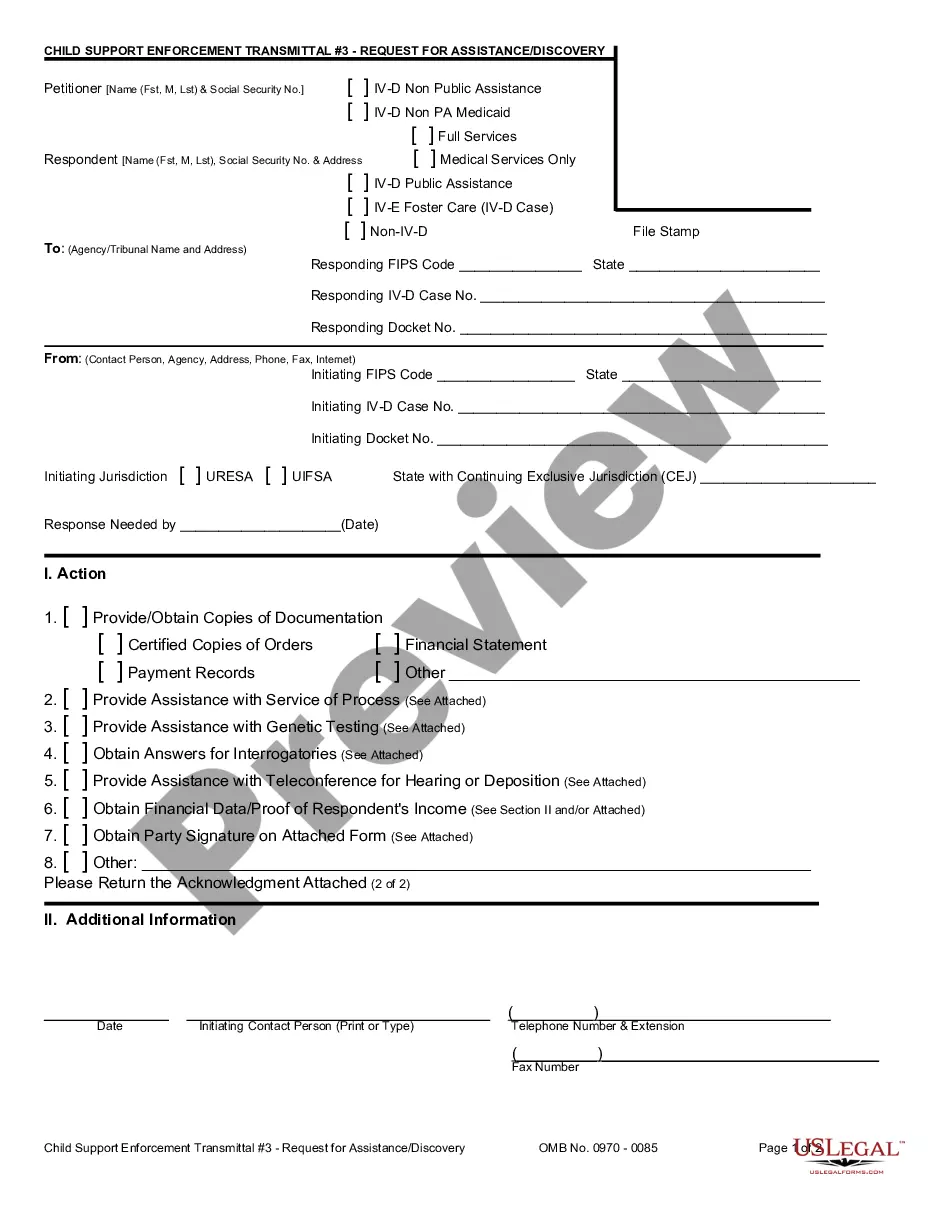
The Child Support Enforcement Transmittal #1 - Initial Request form is a crucial document used to refer child support cases across different states. This form facilitates communication between jurisdictions, enabling the enforcement of child support orders and the establishment of paternity and support obligations. It differs from other child support forms as it specifically addresses interstate matters, ensuring all parties are informed and necessary actions are taken efficiently.
Form components explained
- Petitioner and Respondent Information: Includes names, addresses, and contact details of the parties involved.
- Case Summary: Provides a background overview, including existing court orders, support amounts, and payment history.
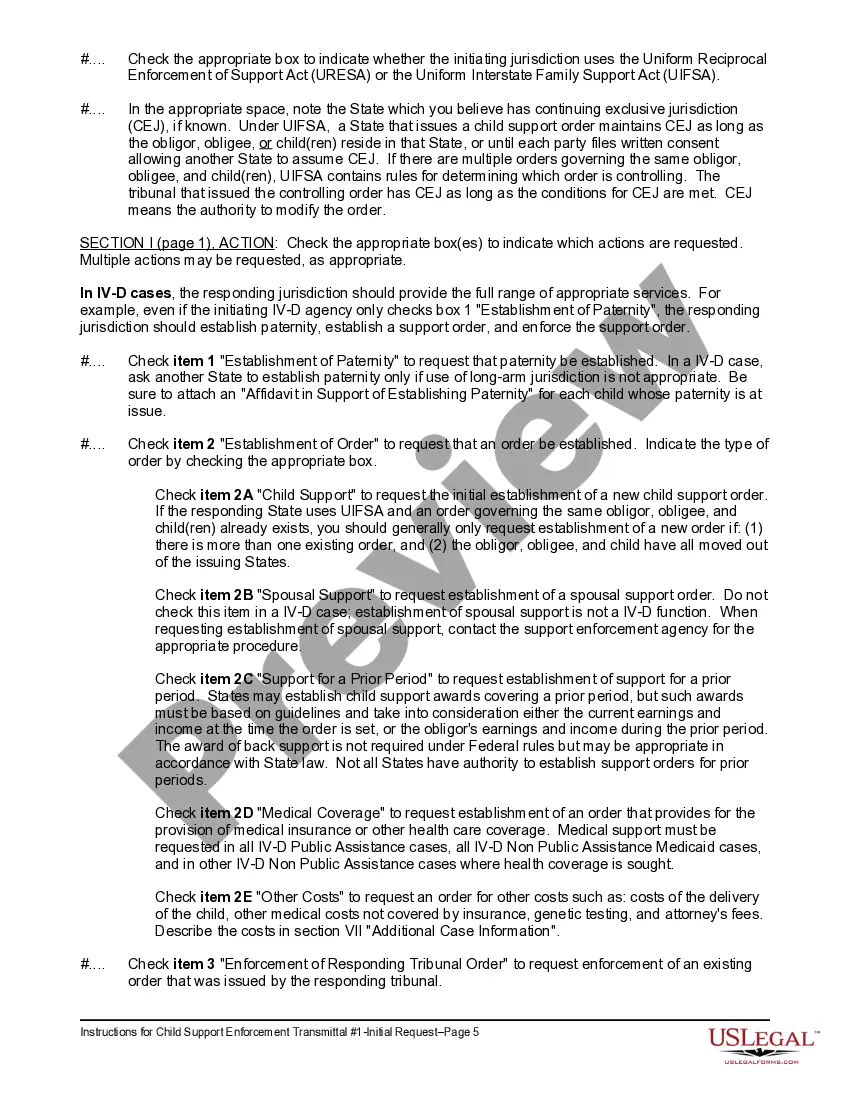
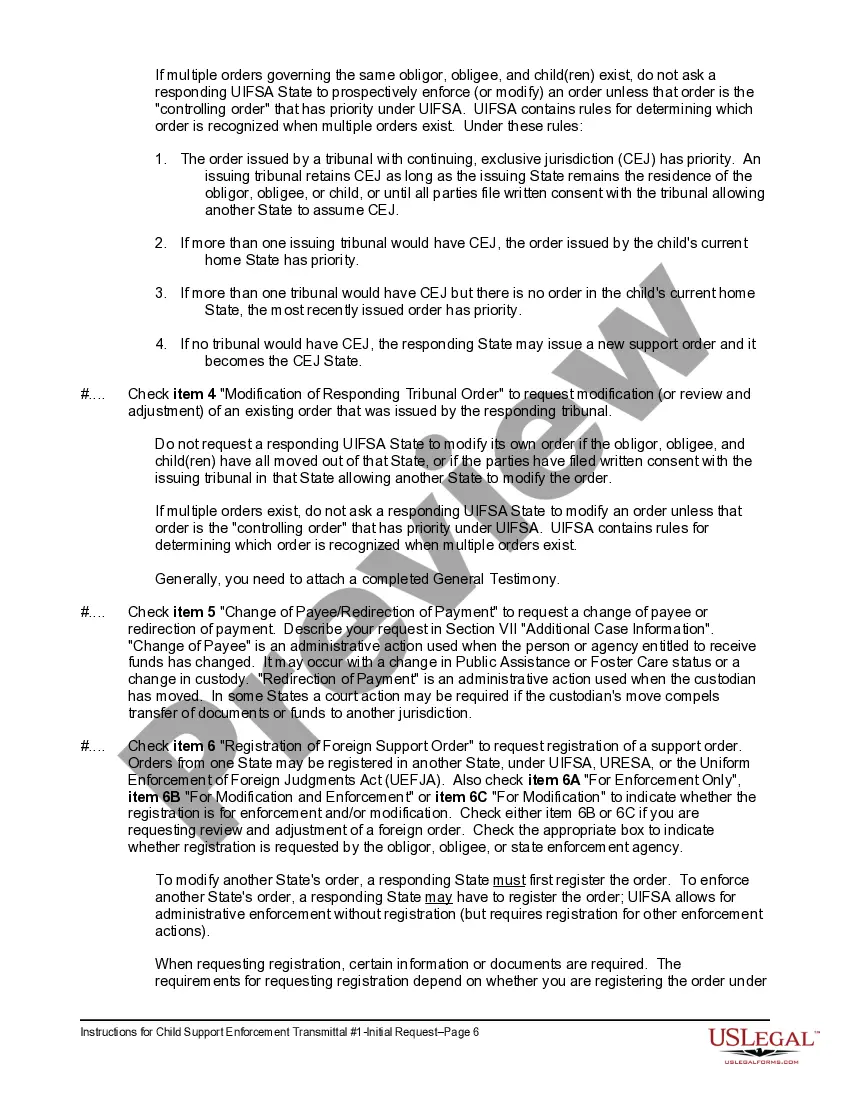
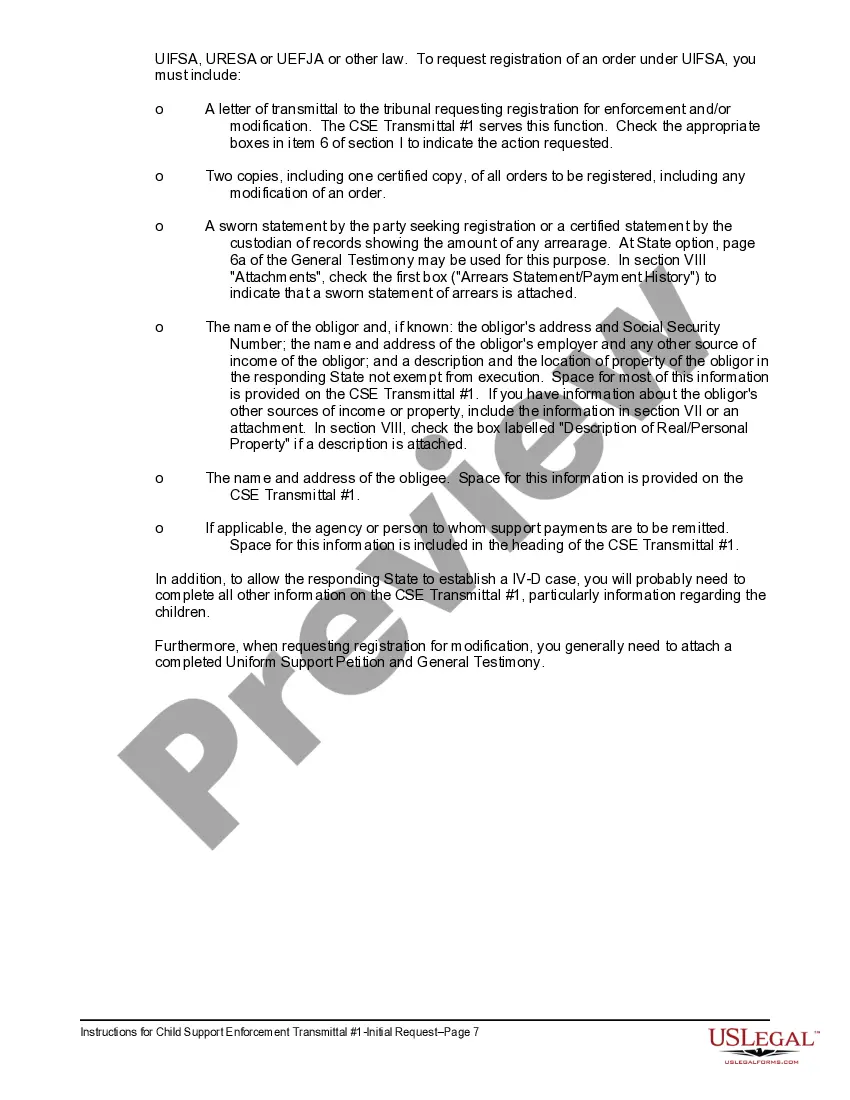
- Requested Actions: Specifies services to be performed, such as establishment of paternity, enforcement, and modification of support orders.
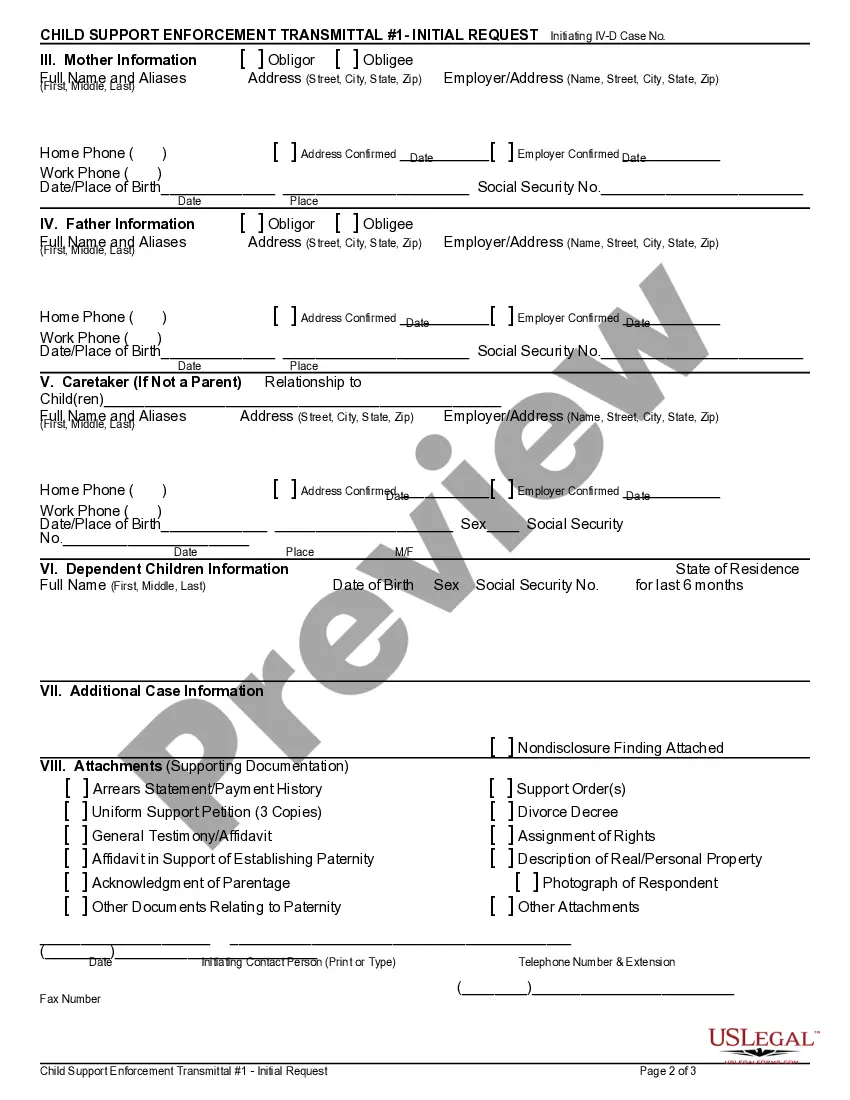
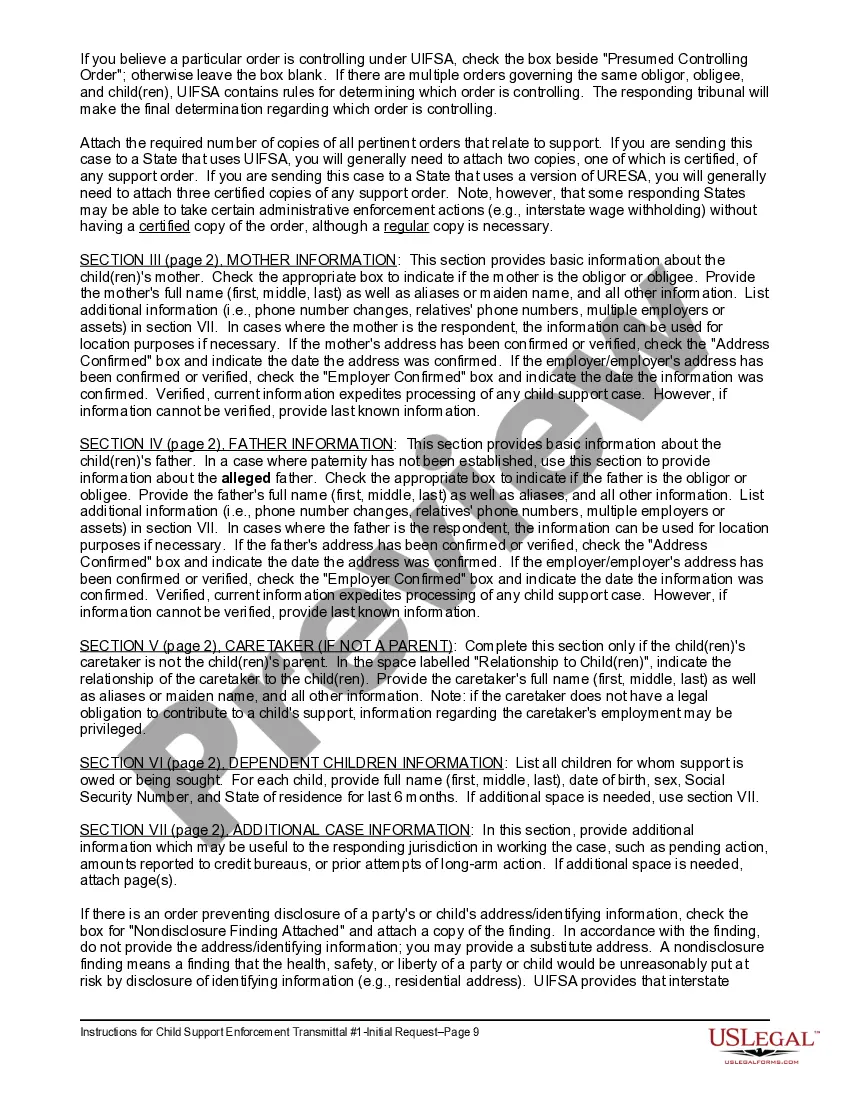
- Mothers and Fathers Information: Detailed sections for both parents, including aliases, contact information, and employment details.
- Dependent Children Information: Lists all children covered by the support request, including their dates of birth and Social Security Numbers.
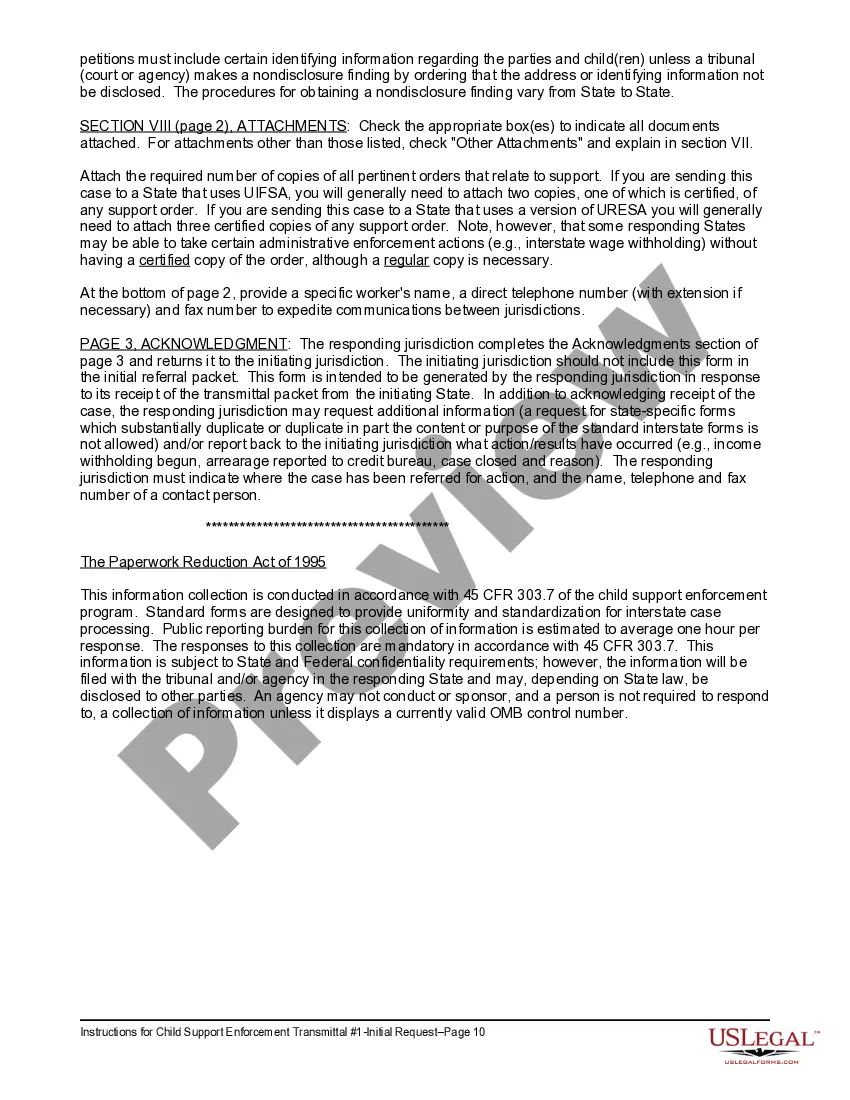
- Attachments: Indicates necessary supporting documents to be included, like payment histories and existing support orders.
When to use this form
This form should be used when a child support case requires referral between different states, particularly when establishing paternity or enforcing existing support orders. It is needed when legal actions regarding child support are necessary, such as in situations where one parent lives in a different state from the other or when moving jurisdictions complicates enforcement of court orders.
Who can use this document
- Parents or legal guardians seeking to establish or modify child support across state lines.
- State or local child support enforcement agencies managing interstate child support cases.
- Individuals involved in child support disputes who require legal enforcement through another state.
Instructions for completing this form
- Identify the parties: Fill in the names and addresses of the petitioner and respondent in the designated areas.
- Provide case details: Record all relevant case information, including existing support orders and payment details.
- Specify requested actions: Check the boxes for all enforcement or establishment actions you wish to request.
- Enter parent information: Complete the motherâs and fatherâs sections with accurate personal details.
- List dependent children: Include details for all children involved in the case.
- Attach supporting documents: Ensure that all necessary attachments, such as payment histories and orders, are included with your submission.
Notarization guidance
This form does not typically require notarization unless specified by local law. It is advisable to check with your state regulations to confirm any notarization requirements that may apply.
Get your form ready online
Our built-in tools help you complete, sign, share, and store your documents in one place.
Make edits, fill in missing information, and update formatting in US Legal Forms—just like you would in MS Word.
Download a copy, print it, send it by email, or mail it via USPS—whatever works best for your next step.
Sign and collect signatures with our SignNow integration. Send to multiple recipients, set reminders, and more. Go Premium to unlock E-Sign.
If this form requires notarization, complete it online through a secure video call—no need to meet a notary in person or wait for an appointment.
We protect your documents and personal data by following strict security and privacy standards.

Make edits, fill in missing information, and update formatting in US Legal Forms—just like you would in MS Word.

Download a copy, print it, send it by email, or mail it via USPS—whatever works best for your next step.

Sign and collect signatures with our SignNow integration. Send to multiple recipients, set reminders, and more. Go Premium to unlock E-Sign.

If this form requires notarization, complete it online through a secure video call—no need to meet a notary in person or wait for an appointment.

We protect your documents and personal data by following strict security and privacy standards.
Common mistakes to avoid
- Failing to include complete information for both parents and children.
- Omitting required attachments or not providing the correct number of copies.
- Not checking all relevant actions that need to be requested.
- Using outdated or incorrect contact information for the responding agency.
Benefits of using this form online
- Convenience: Downloadable and fillable form allows users to complete it at their own pace.
- Editability: Users can easily make changes as needed to ensure accurate information before submission.
- Reliability: Access to forms drafted by licensed attorneys ensures compliance with legal requirements.
Legal use & context
- The form must be accompanied by standard interstate forms such as the Uniform Support Petition and General Testimony for legal validity.
- It serves as a cover letter to facilitate the initiation of enforcement proceedings among states.
- Providing accurate and complete information is essential for the form to be enforceable.
What to keep in mind
- The Child Support Enforcement Transmittal #1 is essential for initiating and enforcing child support across state lines.
- Accurate completion and proper documentation are critical for successful processing of the request.
- Be aware of state-specific rules that may affect how the form should be used.
Key terms explained
- Obligor: The person who is required to pay child support.
- Obligee: The person who is entitled to receive child support.
- IV-D Case: A case involving child support services provided by the state.
- Jurisdiction: The legal authority of a court or agency to enforce laws and make decisions.
Looking for another form?
Form popularity
FAQ
Retroactive Child Support Summary To conclude, Georgia does not provide for retroactive child support or back child support.
In Georgia, child support arrearage cannot be waived, dropped or forgiven by the custodial parent.
MO Statute of Limitations on Back Child Support Payments (Arrears) Missouri's statute of limitations on child support enforcement is 10 years from last payment on court record or other form of revival of order on court record.
For parents interested in more information or to obtain child support services, contact the Department of Revenue, Florida's designated child support agency. The Department of Revenue's contact number for child support matters is (850) 488-5437.
If the child support owed exceeds $10,000 or is overdue by more than two years, the offense is a felony that carries up to a two-year prison sentence.
If you fail to pay child support in Georgia, you could face some serious consequences, ranging from being in contempt of court to losing your driver's license.If a court finds the non-paying parent is in contempt, a judge could impose fines and even jail the parent.
In this situation, there is a temptation to withhold child support, but this is not allowed. Child support payments and visitation are considered by law to be separate issues.You have an obligation to financially support your children, regardless of any visitation issues.
Criminal prosecution possible if paying parent fails to pay child support for six months within a twelve-month period or an aggregate delinquency of more than five thousand dollars is a felony. Criminal nonsupport charges punish the failure to pay, but they do not result in a new order for payment.
Class D Felony for attempting to leave state to avoid payment, or $2,500 in past-due support and 4 months of consecutive non-payment, or has previously been convicted of nonsupport.